Kayaking in Auckland: Rangitoto, the harbour and beyond
Auckland: Full day kayak hike to rangitoto island summit
Can beginners go kayaking in Auckland?
Yes — guided tours to Rangitoto Island and harbour paddles use stable, forgiving kayaks and include instruction, so no prior experience is needed. Expect a genuine physical workout on longer crossings, but not technical skill.
| Where | Waitematā Harbour crossing to Rangitoto Island |
| Distance | around 3.5-4km each way |
| Time needed | half-day (sunset paddle) or full day (kayak + summit hike) |
| Fitness needed | reasonable fitness, no prior kayaking experience required |
| Best time | summer & shoulder seasons; winter sees more cancellations |
Paddling out from the city centre
Auckland’s position on two harbours makes it a genuinely good kayaking city, and the standout trip is the paddle across the Waitematā Harbour to Rangitoto Island — a roughly 3.5-4km open-water crossing that most first-timers find achievable with a guided group and a bit of a workout rather than a technical challenge. This guide covers the main kayaking options, what fitness level you actually need, and what to expect on the water.
Most guided trips depart from the city waterfront around Viaduct and Wynyard Quarter or from beaches further east, putting you on the water within minutes of leaving your hotel if you’re staying centrally — see our Auckland waterfront guide for more on the harbour-front area where most tours meet.
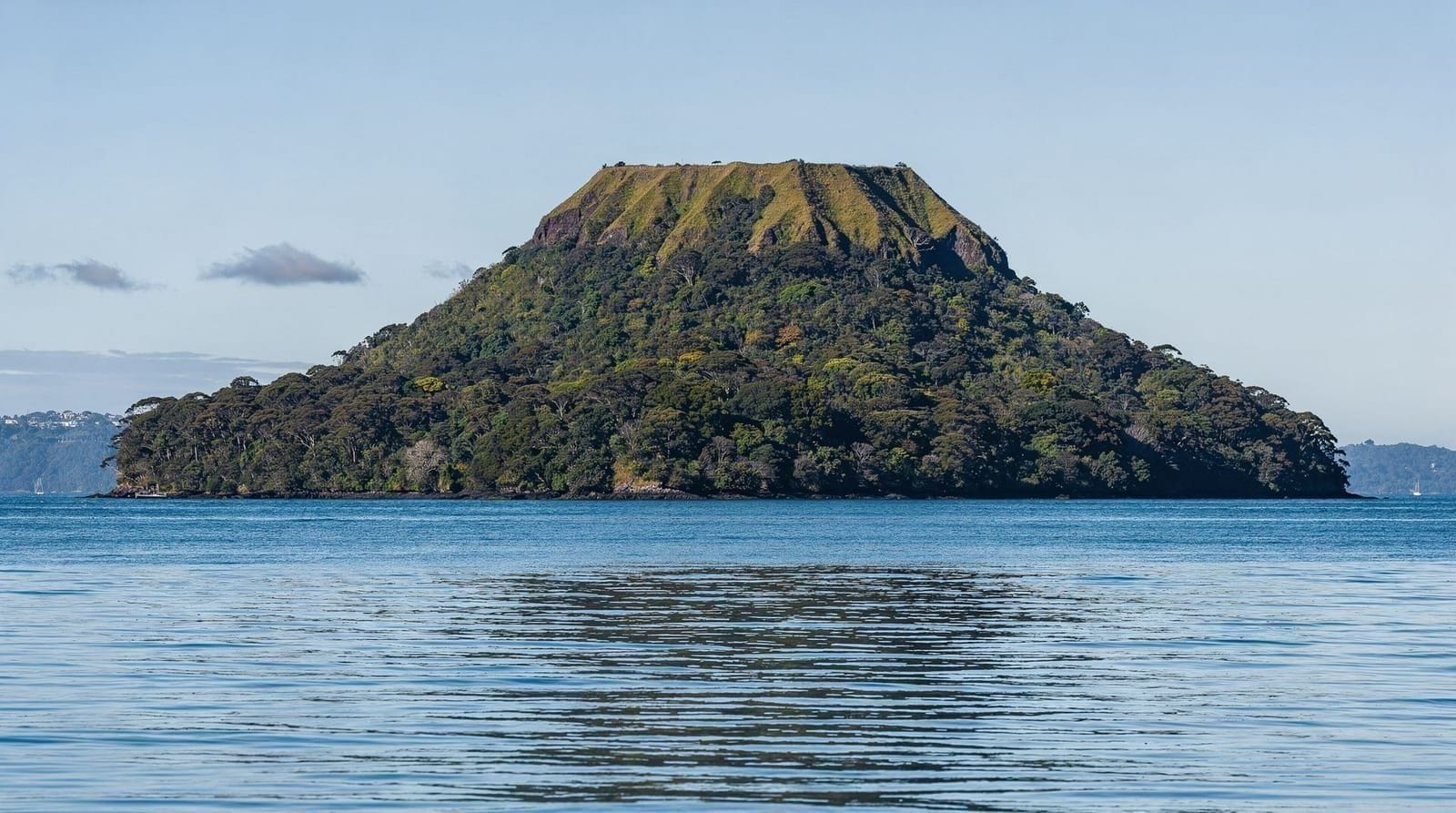
The crossing itself follows a route Māori paddled by waka long before European settlement; Waitematā, the harbour’s name, is generally translated as “sparkling waters,” while Rangitoto’s name is usually rendered as “the bloody sky,” a reference either to a battle fought nearby or to the red glow the volcano would have thrown across the horizon during its last eruption roughly 600 years ago — making it one of the youngest of Auckland’s roughly 50 volcanic cones. Paddling toward an island that young, with bare lava rock still visible through the scrub in many places, gives the trip a slightly different character than kayaking toward an older, more thoroughly forested landform.
For context on how this fits into a wider Hauraki Gulf trip, the same stretch of water separates the city from dozens of other islands — see our Hauraki Gulf islands overview and, for a bird-focused alternative a bit further out, our Tiritiri Matangi guide, a predator-free sanctuary island reachable by ferry rather than kayak but worth knowing about if wildlife interests you as much as the paddling itself.
Kayak and hike to Rangitoto summit
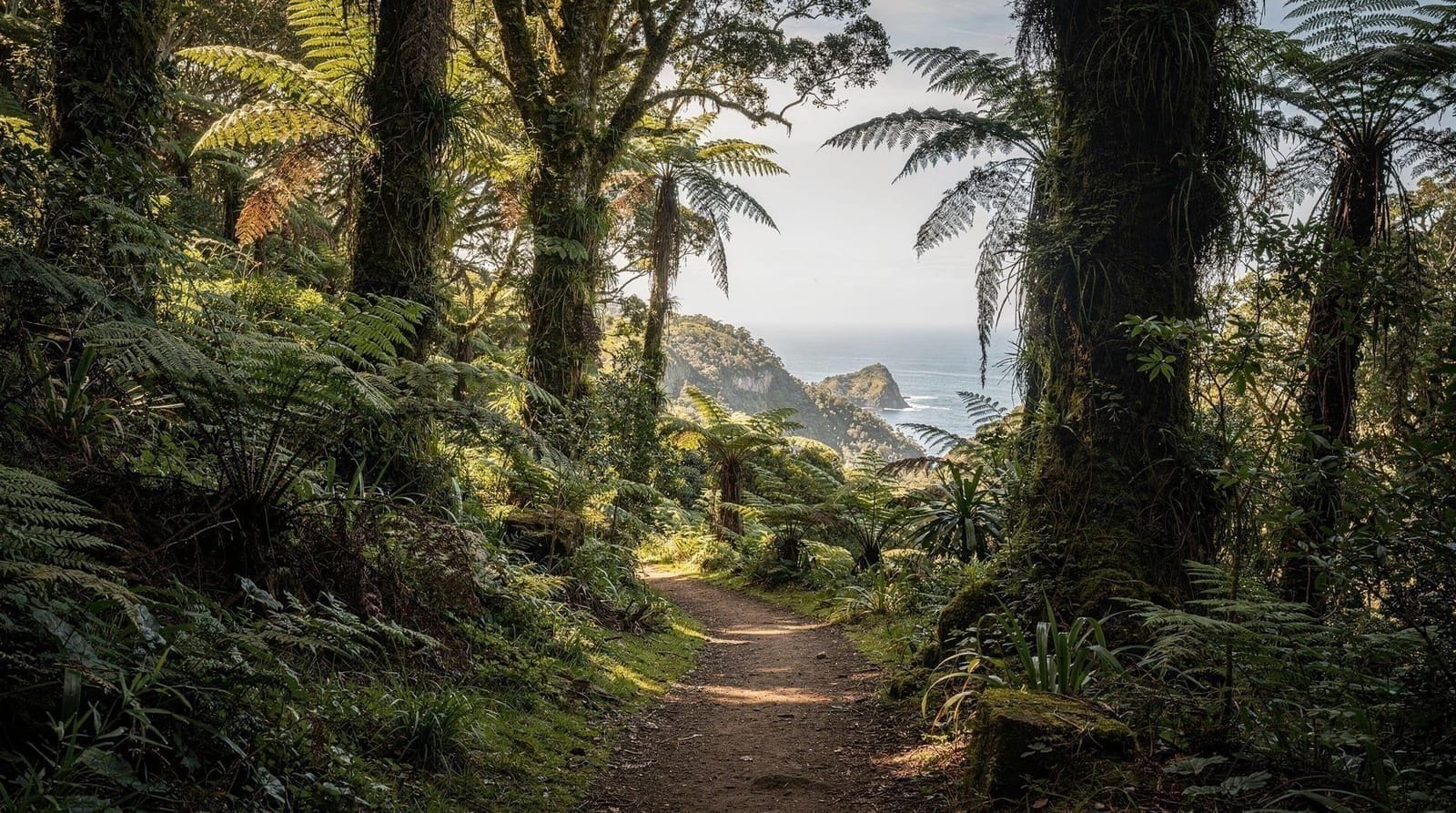
The signature Auckland kayak trip combines the harbour crossing with the island’s summit hike: paddle out in a guided group (usually double kayaks, so you’re sharing the effort with a partner), land on Rangitoto, then walk the lava-field track to the 260-metre summit for a view back at the city skyline before paddling home.
It’s a full-day commitment — the full-day kayak and hike to Rangitoto summit typically runs most of a day between paddling, hiking and breaks — but it’s consistently rated as one of Auckland’s most memorable single activities precisely because it combines two very different challenges (paddling and hiking) with genuinely spectacular scenery at both ends. No prior kayaking experience is required; guides handle route-finding and safety, and the double-kayak format means a stronger paddler can compensate for a less experienced one.
Sunset and night kayak to Rangitoto
A quieter, more atmospheric alternative skips the daytime hike in favour of paddling out as the sun sets and returning after dark. The sunset and night sea kayak tour to Rangitoto trades the summit view for a completely different experience of the harbour — city lights reflecting on calm evening water, and on the right night, visible bioluminescence stirred up by your paddle strokes. It’s shorter than the full-day option and suits visitors who want the paddling experience without the hiking component, or who simply prefer evenings to full days in the sun.
What fitness level do you need?
Guided Rangitoto paddles are genuinely accessible to reasonably fit adults without prior kayaking experience — you’ll be sharing a stable double kayak, given a safety briefing, and paddling in a supervised group rather than navigating independently. That said, a 3.5-4km open-water crossing each way is a real physical effort, particularly if wind picks up; expect sore arms and shoulders the next day if you’re not used to paddling. Children typically need to be reasonably capable swimmers and old enough to sit still and follow instructions for an extended period — check the specific operator’s age guidelines when booking.
If you have limited mobility, existing shoulder or back issues, or are travelling with very young children, it’s worth being honest with yourself before booking — getting in and out of a kayak from a beach launch requires a reasonable range of motion, and there’s no way to end a crossing early once you’re a kilometre offshore. Operators can usually advise on this by phone before you book, and it’s a far better conversation to have in advance than on the beach on the morning of the trip. Families travelling with toddlers or very young children are generally better served by a gentler activity closer to shore; our Auckland with kids guide has age-appropriate alternatives, and whale and dolphin watching covers similar waters from the comfort of a boat deck rather than a kayak seat.
What to bring
Quick-dry clothing (you will get splashed, and possibly wet if conditions are choppy), a hat secured with a strap since a loose one will end up in the harbour, sunscreen reapplied partway through the trip since sun exposure over water is more intense than on land, and a full change of dry clothes to leave in the car or at the departure point for afterward. Operators typically supply life jackets, spray skirts and paddles, but confirm exactly what’s included when booking.
Where tours depart from and getting there
Departure points vary by operator, but most Rangitoto kayak tours meet at a beach or waterfront location within walking distance of the CBD, with a smaller number departing from spots further east toward Mission Bay. If you’re staying centrally, you can typically walk to the meeting point; if you’re staying further out, check whether the tour includes pickup or whether you’ll need to arrange your own transport — our getting around Auckland guide covers buses, the AT HOP card and ride-share options for the last mile. Parking near the main departure beaches is limited and fills up on weekends and in peak summer, so if you’re driving yourself, arrive with 20-30 minutes of buffer to find a spot rather than cutting it close to the departure time.
There is no need to arrange your own transport to Rangitoto itself — the kayak is the transport — but if you’d rather reach the island by boat and walk instead of paddling, the regular passenger ferries that serve the Hauraki Gulf run a separate, unguided route to Rangitoto’s wharf.
What happens if the weather turns
Wind is the main variable that affects Rangitoto kayak tours, far more than rain — a light shower on an otherwise calm day changes very little, but a strong northerly or southerly can make the open-water crossing genuinely unsafe for double kayaks, and operators will cancel or reschedule rather than run a trip in marginal conditions. This is a safety call, not a customer-service inconvenience: the crossing has no shelter partway across, and conditions that feel manageable from shore can be considerably rougher a kilometre offshore. Most operators check conditions the morning of departure (sometimes the evening before for early trips) and will contact you directly if your trip is affected, typically offering a reschedule to another day or a full refund rather than a partial one.
Because of this, it’s worth avoiding booking a kayak trip on your last full day in Auckland if you have any flexibility at all — a rebooked trip is only useful if there’s another day left to use it. For the same reason, travellers visiting in winter (June-August) should treat a kayak tour as a “nice if it happens” activity rather than the anchor of a tightly scheduled day; see Auckland weather by month and best time to visit Auckland for the fuller seasonal picture.
Other Auckland kayaking options
Beyond Rangitoto, several operators run shorter guided paddles closer to the CBD along the Waitematā Harbour waterfront, and self-guided rental options exist at spots like Mission Bay for visitors who’d rather explore independently at a gentler pace without committing to an open-water crossing. Paddling toward Devonport from the city side, or across from Devonport’s own beaches, is another option some independent paddlers use, taking in views of the historic naval base and North Head along the way, though this is far less commonly packaged as a guided tour than the Rangitoto crossing.
If you’d rather cover ground on land instead of water for your active half-day, the Waiheke self-guided e-bike tour with ferry tickets is a solid land-based alternative that pairs a ferry crossing with independent exploring.
Combining kayaking with other Hauraki Gulf activities
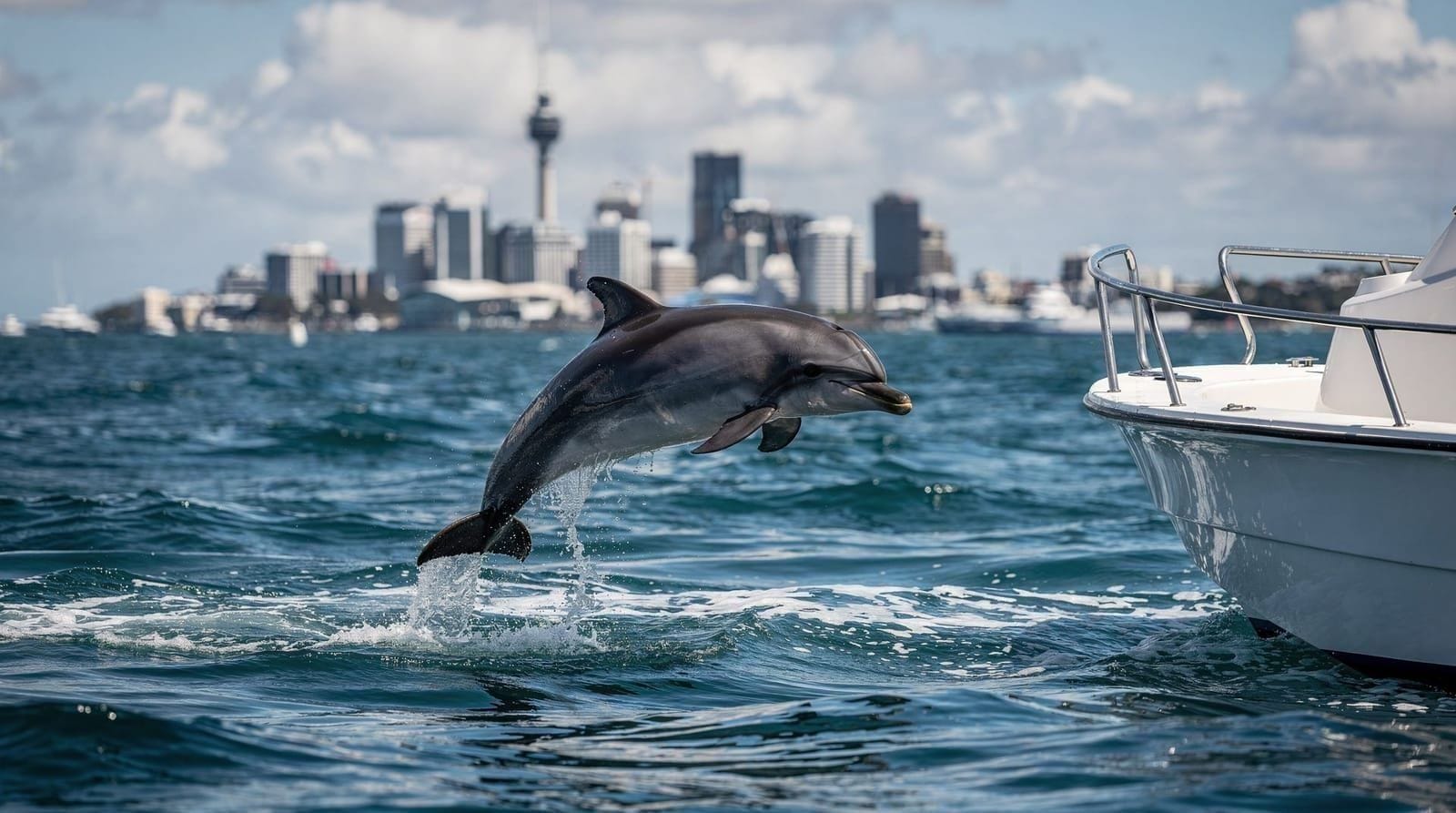
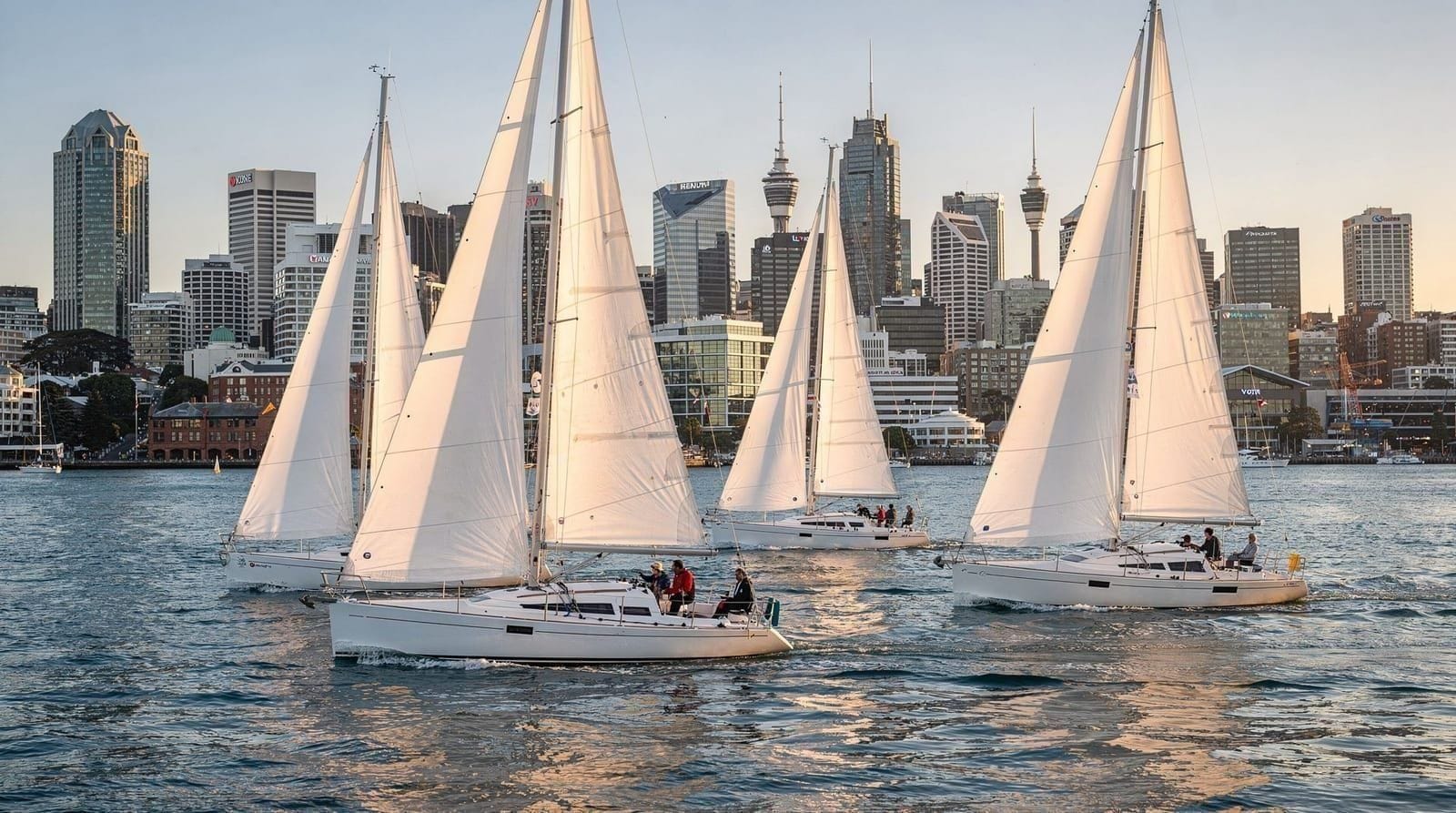
If wildlife is more your priority than the physical challenge of paddling, our whale and dolphin watching guide covers boat-based options covering the same waters with much less physical effort involved. If you’d rather be under sail than paddling, see our sailing Auckland harbour guide. And for the full walking-only version of the Rangitoto trip without the paddle, our Rangitoto hike guide covers the standard ferry-and-summit-walk option.
Kayaking versus other ways onto the Hauraki Gulf
It’s worth being clear-eyed about what kayaking adds over the alternatives, since it’s the most physically demanding of the water-based options and not automatically the best choice for everyone. A jet boat trip covers far more of the gulf in far less time and requires zero fitness, but trades the quiet, self-propelled intimacy of a kayak for speed and noise — it’s a fundamentally different kind of experience, closer to a thrill ride than a nature outing. Sailing gives you the harbour’s scale and the chance to help crew a yacht, but you’re a passenger rather than the engine, which suits travellers who want the scenery without the workout.
The standard Rangitoto ferry-and-hike, covered in our Rangitoto Island guide, gets you the same summit view for a fraction of the physical effort and at a lower price, which makes it the better choice if the hike is what you’re really after and the crossing itself doesn’t matter to you. Kayaking earns its place specifically because the crossing is the point — you arrive at the island having earned the view under your own power, in a way none of the boat-based alternatives replicate, and that’s either a compelling reason to book it or a reason to skip it, depending on what kind of traveller you are.
Budget: what kayaking in Auckland costs
Guided kayak tours sit in the mid-to-upper range of Auckland activity pricing, generally more expensive than a self-guided ferry-and-hike day but less expensive than a full-day chartered boat trip. Expect the full-day kayak-and-hike combination to cost noticeably more than the shorter sunset or night paddle, reflecting the extra hours, the summit guide component and the more substantial equipment and safety staffing a full crossing-plus-hike requires. If you’re weighing this against the rest of your trip budget, our is Auckland expensive and Auckland budget guide articles put activity costs like this one in the context of accommodation, food and transport, which is useful if you’re trying to work out how many “splurge” activities your trip can realistically absorb.
As a rule of thumb, kayaking is worth prioritising as one of your bigger single-activity spends if the physical, self-propelled nature of the trip genuinely appeals to you, and worth skipping in favour of the cheaper ferry-and-hike if it’s really the summit view you’re after.
Common mistakes first-time kayakers make
The most frequent mistake is underestimating sun exposure — the glare off open water is considerably more intense than on land, and travellers who apply sunscreen once before departure and never again often end up with a burn on the backs of their hands, forearms and the tops of their ears by the return crossing. Reapplying partway through, even mid-paddle, is worth the awkwardness. The second common mistake is showing up without a genuine change of clothes; even a “dry” crossing usually involves some splash, and sitting in damp clothing for the rest of the day is avoidable with five minutes of packing beforehand — see our Auckland packing list for the fuller list of what to bring on trips like this one.
The third mistake is booking a tight connecting activity straight after a full-day kayak-and-hike trip; the physical fatigue is real, arms and shoulders in particular, and travellers who schedule, say, a big dinner reservation or another activity immediately afterward often find themselves too tired to enjoy it. Build in downtime after a full-day paddle rather than treating it as just another line item in a packed itinerary — our first-time Auckland tips guide has more on pacing a trip realistically.
If you only have a half-day
Travellers with limited time who still want the kayaking experience should default to the sunset or night paddle rather than the full-day kayak-and-hike combination — it delivers the core experience (the open-water crossing, the harbour views, the sense of paddling under your own power) in roughly half the time commitment, without the summit hike that makes the full-day version a genuinely long day out.
This is also the better choice if you’re trying to fit kayaking around another activity on the same day, such as a morning at the Auckland Museum or a walk around the waterfront, since the shorter evening slot leaves your daylight hours free. If you have genuinely only two or three hours and no flexibility on timing, kayaking may not be the right activity at all — the transport, briefing and paddling time add up quickly, and a shorter, higher-density activity closer to the CBD will usually serve a tight schedule better than any kayak option.
When to go
Kayak tours run year-round, but conditions matter more here than for most Auckland activities — wind and swell can force cancellations, particularly in winter (June-August). Summer (December-February) and the shoulder months (March-May, September-November) offer the most reliable paddling conditions and the calmest water, making them the safer bet if you have limited flexibility in your itinerary.
Broken down by month, December through February is peak season — warm water, the longest daylight hours (useful for the night kayak, which needs genuine darkness to fall before it becomes worthwhile), and the most reliable settled weather, though also the busiest tours and the highest demand for booking slots. March through May is a strong shoulder-season choice, with water still comfortably warm from summer, crowds thinning out, and winds generally more settled than the spring months bring. June through August is winter — still runs tours, but with the highest chance of cancellation due to wind and swell, colder water and air temperatures that make the crossing considerably less comfortable, and shorter daylight hours that compress the timing of the night kayak.
September through November is spring, with conditions gradually improving through the season but still more variable than summer; early spring (September) carries some of the same cancellation risk as winter, while late spring (November) starts to resemble early summer. If your trip dates are fixed and fall in winter, it’s worth treating the kayak tour as an optional add-on you’ll confirm closer to the date rather than a locked-in centrepiece of your itinerary.
Solo paddlers versus couples and groups
Guided Rangitoto kayak tours are typically run in double kayaks, which means solo travellers are usually paired with another solo paddler or a guide rather than left to manage a single kayak alone across open water. This works well in practice — most solo travellers report the pairing adds a social element to the trip rather than feeling like a compromise, and it means a stronger paddler can share the physical load with a less experienced partner regardless of how the pairing came about. Couples and small groups can usually request to be paired together when booking, though on a busy departure this isn’t always guaranteed, so it’s worth confirming directly with the operator if paddling with your own travel companion specifically matters to you.
Kayaking with a GoPro or waterproof camera
If you want your own footage of the crossing rather than relying on the guide’s photos, a chest- or head-mounted waterproof camera works far better than trying to hold a phone while paddling — both hands are needed for the crossing itself, and a dropped device in open water is unrecoverable. Secure any camera with a floating strap, since even a mounted device can come loose during a rough patch of water. Some operators offer their own photo packages if you’d rather not manage your own gear mid-paddle; ask when booking if this matters to you.
Environmental considerations on the crossing
Rangitoto itself is a predator-free conservation area, and part of what makes the paddle across worthwhile is arriving somewhere genuinely protected rather than just scenic. Guides typically brief paddlers before landing on basic biosecurity practices — checking footwear and bags for seeds or pests before stepping onto the island, since Rangitoto’s ecosystem (young, still recovering from the last eruption roughly 600 years ago) is more fragile than it might appear from the boat. This is a minor part of the pre-departure briefing but worth taking seriously, since it protects the very landscape you’re paddling to see.
Kayaking as an active start or end to an Auckland day
Because the Rangitoto crossing typically departs early morning or at sunset, kayaking works well bookending a day rather than sitting in the middle of it. A morning kayak-and-hike trip leaves the afternoon free for a calmer activity like a wander through Auckland Museum or the Auckland Art Gallery, while the sunset paddle pairs naturally with an earlier day spent at Mission Bay or exploring the CBD on foot. Structuring your itinerary this way avoids the common mistake of scheduling something demanding immediately before or after a full-day paddle, when arm and shoulder fatigue is at its worst.
How kayaking compares to a Waiheke day for a different kind of active outing
Travellers deciding between a kayak day and a Waiheke wine day are really choosing between two very different kinds of “active” — kayaking is physically demanding and self-propelled, while Waiheke’s own active options, like the self-guided e-bike tour mentioned above, are active but far gentler, with wine tasting built in rather than open-water paddling. Neither is objectively better; it depends on whether you want a genuine physical challenge (kayaking) or a scenic, food-and-wine-forward day with lighter activity (Waiheke).
Frequently asked questions about kayaking in Auckland
How far is the kayak to Rangitoto Island?
About 3.5-4km across the Waitematā Harbour from the city, which guided full-day tours typically complete in around 1-1.5 hours of paddling each way, with breaks.
Do I need kayaking experience to join a Rangitoto paddle tour?
No — reputable operators provide a safety briefing and paddling instruction before departure, and most trips use stable double kayaks. Reasonable fitness is more important than prior experience.
What should I wear kayaking in Auckland?
Quick-dry clothing, a hat that won’t blow off (or a strap), sunscreen reapplied after time on the water, and a change of dry clothes for afterward. Operators typically provide life jackets and spray skirts.
Is the night kayak to Rangitoto worth doing?
Yes, if you want something different from the daytime hike — paddling at sunset and into darkness offers a quieter, more atmospheric experience of the harbour, sometimes with visible bioluminescence in the water.
Can you kayak in Auckland year-round?
Yes, tours operate year-round, though winter (June-August) sees more trip cancellations due to wind and swell. Summer and shoulder seasons offer the most reliable conditions.
Should I book the full-day kayak-and-hike or the shorter sunset paddle?
Choose the full-day option if you want the summit hike included and have the fitness and time for it; choose the sunset paddle if you want the core crossing experience in roughly half the time.
Is kayaking to Rangitoto better than the ferry-and-hike option?
Neither is objectively better — kayaking adds the physical challenge and sense of self-propelled achievement, while the ferry-and-hike gets you the same summit view for less effort and lower cost.
Top experiences
Bookable activities with verified prices and instant confirmation on GetYourGuide.