Auckland ferries guide: routes, timetables and tickets
Auckland: Rangitoto island ferry roundtrip pass
How do Auckland's ferries work?
Ferries depart from the downtown terminal (Queens Wharf/Ferry Building area), operated mainly by Fullers360, running to Devonport, Waiheke Island, Rangitoto and other Hauraki Gulf islands. Devonport takes AT HOP; Waiheke and Rangitoto typically need a separate return ticket booked directly or through a tour.
Auckland’s ferry network is one of the city’s genuine transport highlights rather than just a functional way to get around — the Hauraki Gulf is dotted with islands, and a short boat trip is often the fastest, cheapest and most scenic way to reach them. This guide covers the main routes, how tickets and timetables work, and what to expect on each crossing.
| Where | Downtown ferry terminal, Queens Wharf |
| Cost | AT HOP fare for Devonport; NZD 25-60 return for other islands |
| Time needed | 25-40 minutes each way depending on route |
| Getting there | Short walk from the CBD to the terminal |
| Best time | Book ahead for Waiheke/Rangitoto on summer weekends |
The main routes compared
| Route | Crossing time | Ticket | Best for |
|---|---|---|---|
| Devonport | ~12 min | AT HOP | Quick, spontaneous half-day |
| Rangitoto | ~25 min | Separate ticket | Volcano summit hike |
| Waiheke | ~40 min | Separate ticket | Wine, beaches, full day |
| Tiritiri Matangi / Great Barrier | Longer, limited schedule | Separate ticket | Wildlife, multi-day trips |
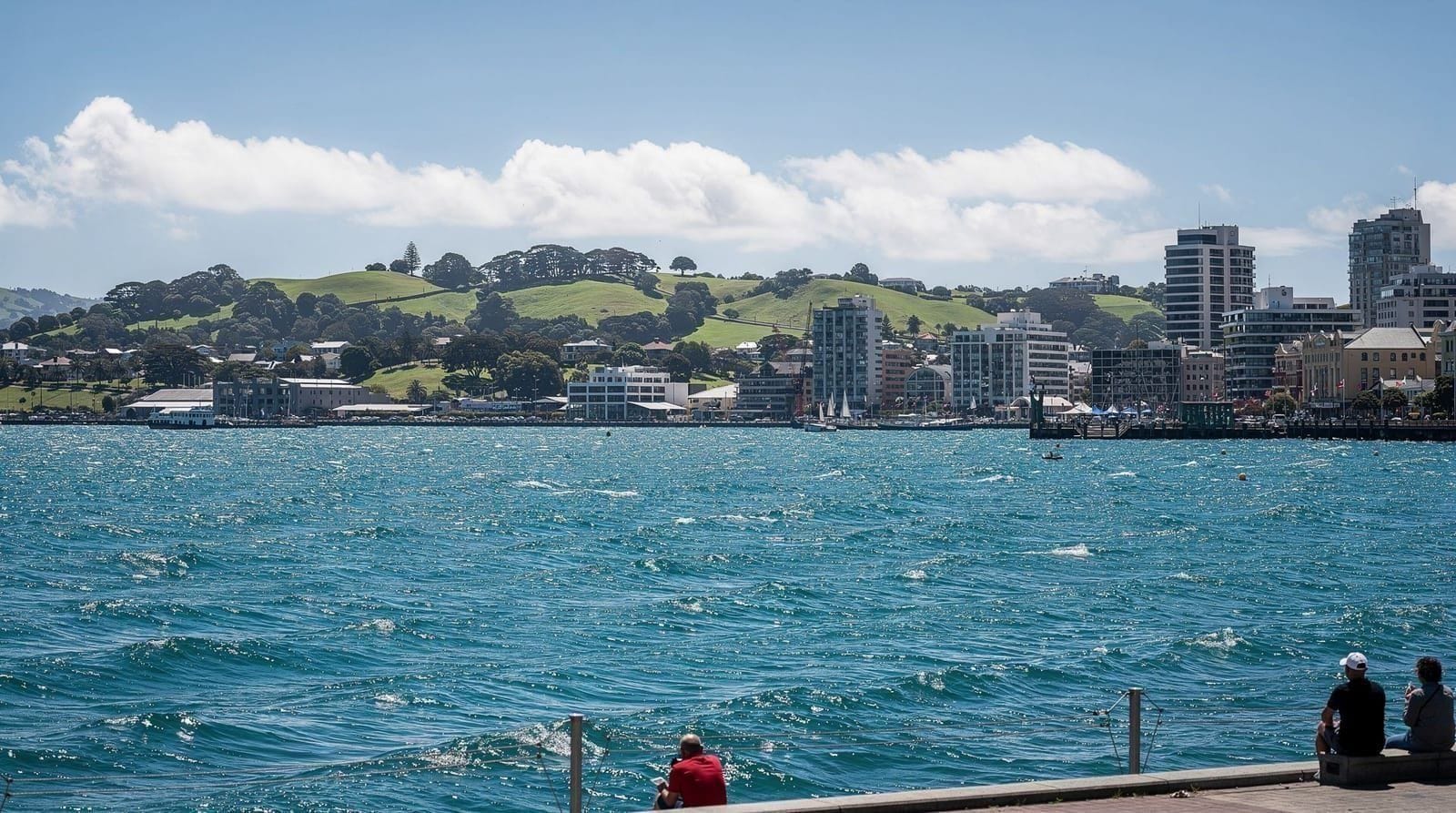
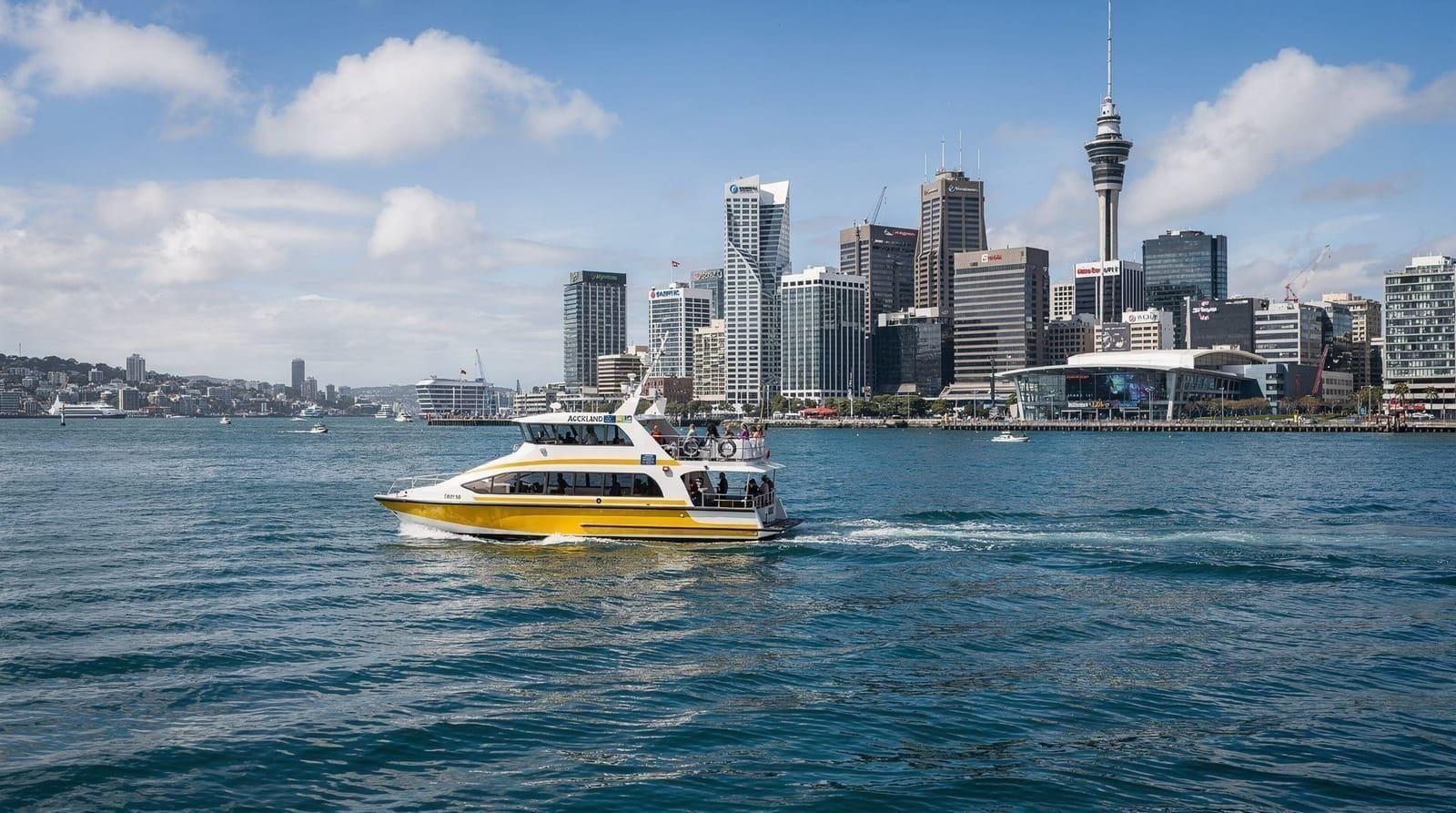
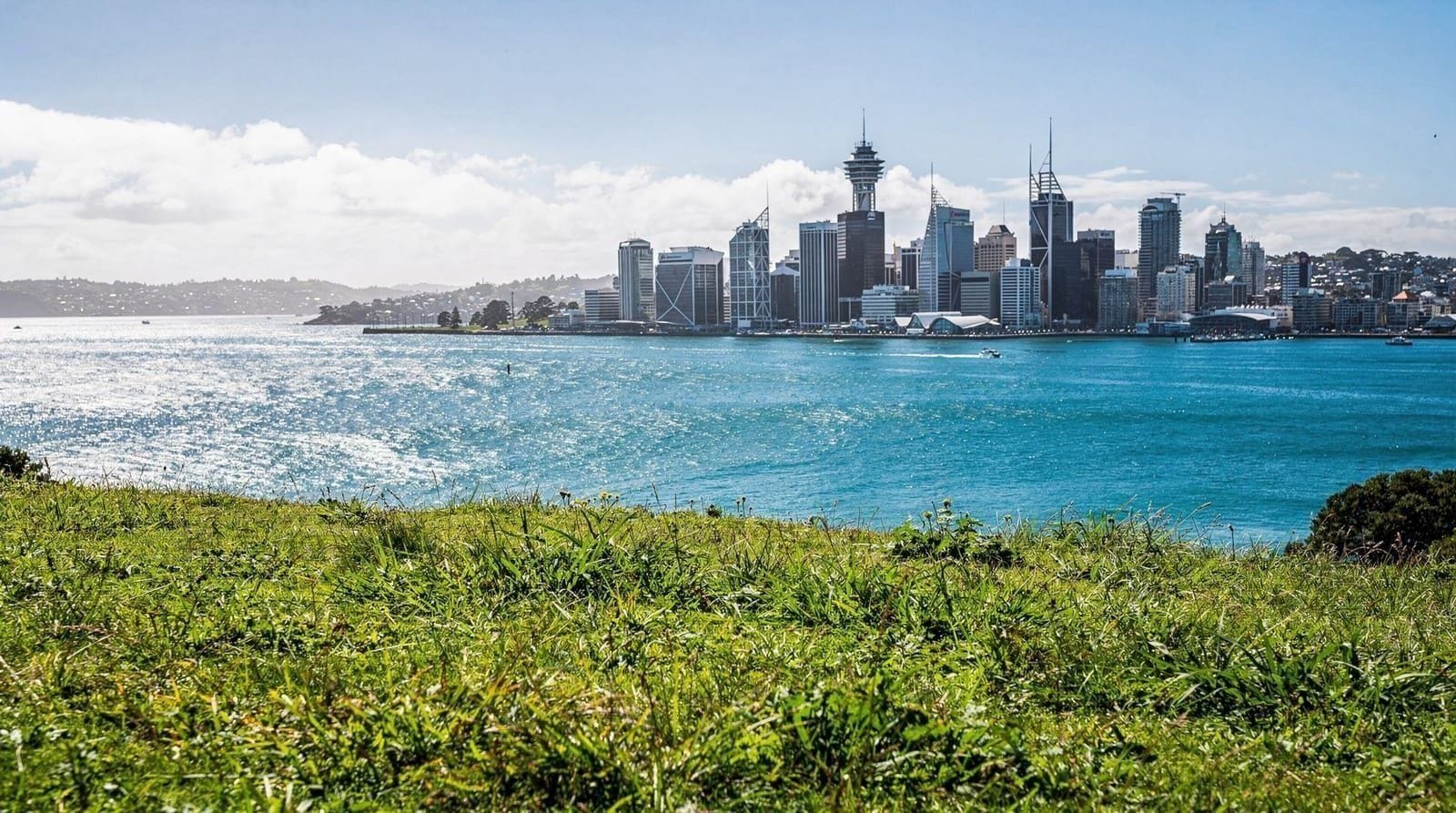
Few cities have a natural harbour setting quite like Auckland’s, and the ferry network is really the best way to appreciate it. Rather than viewing the water purely as a backdrop, treat at least one ferry crossing as an activity in its own right during your stay — the skyline views, the passing container ships and yachts on Waitematā Harbour, and the sense of Auckland’s identity as a genuinely maritime city all come through much more clearly from a ferry deck than from any land-based lookout.
The downtown ferry terminal
Nearly all Auckland ferry services depart from the downtown terminal at Queens Wharf, a short walk from the CBD and well signposted from the waterfront; our Auckland waterfront guide covers what to see around the terminal before or after your sailing. It’s a straightforward hub — multiple berths, clear departure boards, and ticket offices for the main operator, Fullers360, right at the terminal if you haven’t booked online in advance. Arrive 15-20 minutes before a scheduled departure during peak periods (weekday mornings, summer weekends) to allow time for ticketing and boarding without rushing.
Devonport: the classic short crossing
The ferry to Devonport, on the North Shore, is Auckland’s most frequent and commuter-oriented ferry route — a roughly 12-minute crossing that runs throughout the day at regular intervals. It’s covered by the AT HOP card, making it the simplest of all the ferry routes to use spontaneously without pre-booking. The crossing itself offers good skyline views back toward the CBD and Sky Tower, making it worthwhile as a scenic trip even beyond its practical use for reaching Devonport’s cafés, historic streets and Mount Victoria lookout.
Waiheke Island: the wine-country ferry
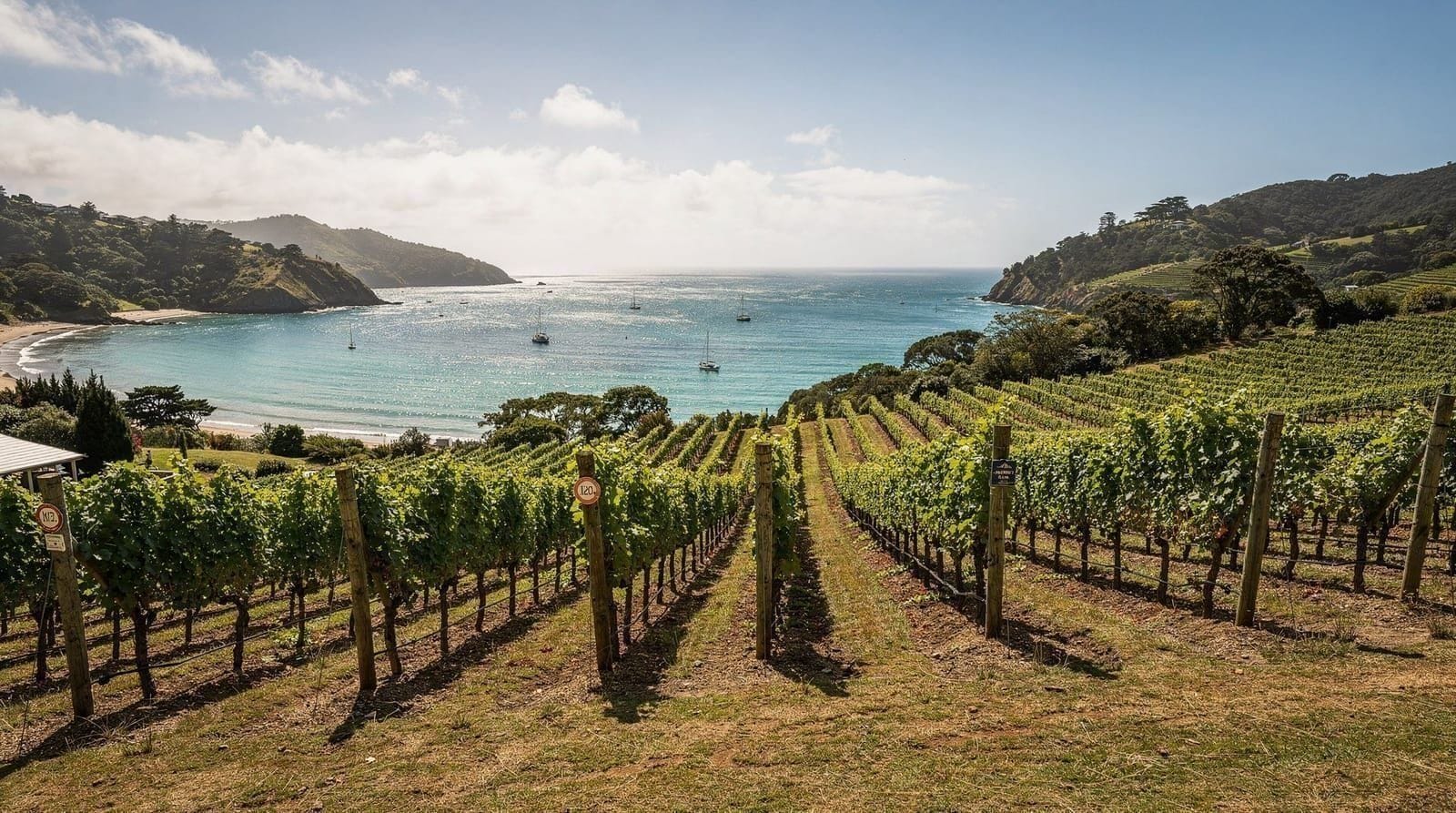
Waiheke Island is roughly a 40-minute fast-ferry crossing from downtown Auckland, and it’s one of the most popular day-trip routes in the entire network thanks to the island’s wineries, beaches and relaxed pace. Book the Waiheke return fast ferry ticket — a return adult fare typically runs NZD 50-60, and while HOP isn’t the standard payment method for this route, tickets are easy to buy online in advance or at the terminal.
Once on the island, a local bus network and the Waiheke hop-on hop-off bus connect the ferry wharf to the main villages and vineyard areas, since Waiheke itself is too spread out to explore on foot from the wharf alone. See our Waiheke day trip guide for a full day-planning breakdown, the Waiheke Island guide for the island itself, and Waiheke wine tours if vineyards are the reason you’re going.
Rangitoto Island: the quick volcano trip
At about 25 minutes each way, the ferry to Rangitoto Island is one of the shortest crossings in the network and makes for an easy half-day outing rather than a full-day commitment. Book the Rangitoto ferry roundtrip . There’s no settlement or facilities beyond a small kiosk near the wharf, so bring water and food if you’re planning the full summit hike. See our dedicated Rangitoto hike guide for trail details, the wider Rangitoto Island guide for background, or Rangitoto as a half-day trip if you’re short on time.
Other Hauraki Gulf islands
Beyond Devonport, Waiheke and Rangitoto, Fullers360 and other smaller operators run less frequent services to islands including Tiritiri Matangi (a predator-free wildlife sanctuary) and Great Barrier Island (a longer, more remote crossing better suited to a multi-day visit than a day trip). These routes run on a more limited schedule than the main three, so check timetables well in advance if one of these islands is on your itinerary, since services can be as infrequent as a few times a week outside peak season. Our Hauraki Gulf islands overview and the guide to lesser-known Gulf islands help you decide which of these is worth the extra planning.
Taking a car on the ferry
For Waiheke specifically, a vehicle and passenger ferry service (operated by SeaLink) runs alongside the passenger-only fast ferry, letting you bring a car across. It’s slower and considerably pricier than the passenger ferry, and most visitors find it’s not worth the cost or hassle — Waiheke has its own bus network, taxis, and rental car and scooter options on the island itself, making it easier to simply leave your mainland rental car behind (our ferry vs drive to Waiheke comparison covers the trade-offs in detail) and pick up local transport once you arrive. Rangitoto has no vehicle access at all; it’s walking-only beyond the wharf.
Tickets, timetables and booking ahead
Devonport’s high-frequency commuter service rarely needs advance booking — just turn up and tap your HOP card or buy a ticket at the terminal. Waiheke and Rangitoto, particularly on summer weekends and around public holidays, can sell out specific sailings, so booking online in advance is worth it if you have a fixed schedule and don’t want to risk being bumped to a later departure. Fullers360’s website and app show live timetables and let you book ahead for any route; it’s the most reliable source for current schedules, since sailing frequency changes seasonally, with more frequent services in summer and reduced timetables in winter.
Weather and cancellations
Auckland’s ferries are generally reliable, but conditions in the outer Hauraki Gulf can occasionally cause delays or cancellations, particularly in winter when stronger winds and swell are more common. If you’re travelling during a period of forecast rough weather, check the operator’s live status page on the morning of travel rather than assuming your booked sailing will run exactly on schedule — this matters most for longer or more exposed routes like Great Barrier Island, less so for the sheltered, short Devonport and Rangitoto crossings.
Onboard: what to expect
Auckland’s passenger ferries are modern, comfortable catamarans with both indoor seating (useful in wind or rain) and outdoor deck space that most visitors gravitate to for the views on a clear day. Most routes have a small onboard café or snack bar, though it’s worth bringing water for longer trips like Waiheke rather than relying on it. Toilets are available on all main routes. Luggage racks accommodate day-trip bags easily; if you’re bringing larger luggage (heading to Waiheke for an overnight stay, for instance), there’s generally enough space, but it’s worth checking with the operator if you’re travelling with several large suitcases during a busy period.
Ferries versus other transport for the same destinations
For Waiheke and Rangitoto specifically, the ferry isn’t just the easiest option — it’s effectively the only practical one, since neither island has a road bridge connection to the mainland. For Devonport, a road route does exist via the Harbour Bridge, but the ferry is almost always faster and more pleasant than driving and parking, especially during peak traffic. If you’re deciding between a self-guided ferry trip and a bundled tour that includes ferry transport plus a guided experience on the island, the trade-off comes down to flexibility versus convenience: a self-guided ferry trip lets you set your own pace and stay as long as you like, while a bundled tour handles logistics and often includes activities (wine tastings, guided walks) that would otherwise need separate booking once you’re on the island.
Seasonal timetable changes
Ferry frequency shifts noticeably between seasons. Summer (December-February) sees the most frequent sailings across all routes, reflecting peak tourist demand and generally calmer sea conditions. Shoulder seasons (autumn and spring) maintain reasonably good frequency on the main routes (Devonport, Waiheke, Rangitoto) but may reduce services to the smaller, less-visited islands. Winter (June-August) brings the leanest timetables, particularly for outer Hauraki Gulf routes, and occasional weather-related disruptions become more common. If your trip falls in winter and a specific island is a priority, check the live timetable close to your travel date rather than relying on a general schedule found earlier in your planning.
Combining ferry trips into a wider Auckland itinerary
Ferries pair naturally with a range of Auckland’s best sights — a Devonport morning followed by a Rangitoto afternoon is achievable in a single, easy day without needing a car, and Waiheke deserves at least a half-day, ideally a full day, given the island’s size. If you’re building a broader multi-day itinerary, see our getting around Auckland guide for how ferries fit alongside buses, trains and rental cars, and our AT HOP card guide for the details on which routes the card actually covers.
Frequently asked questions about Auckland ferries
How much does the Waiheke ferry cost?
A return adult fare typically runs NZD 50-60, with the crossing taking about 40 minutes each way. Prices and schedules are set by Fullers360 and can vary by time of day and season.
How long is the ferry to Rangitoto Island?
About 25 minutes each way from the downtown terminal, making it one of the shortest and easiest ferry trips in the Hauraki Gulf — a realistic half-day outing rather than a full-day commitment.
Does the AT HOP card work on all Auckland ferries?
It works on most Fullers360 commuter routes, including Devonport, but not necessarily on every tourist or outer-island service. Waiheke and Rangitoto tickets are commonly booked separately online or at the terminal rather than through HOP. Check your specific route before travelling.
Can you take a car on the Waiheke ferry?
Yes, via a separate vehicle and passenger ferry service (SeaLink), which is slower and pricier than the passenger-only fast ferry. Most visitors leave the car on the mainland and use Waiheke’s local bus, shuttle or rental options once on the island instead.
Are Auckland’s ferries reliable, and do they run in bad weather?
Generally yes, though services can be delayed or occasionally cancelled in severe weather, particularly for the outer Hauraki Gulf routes. Check the operator’s live status page on the day if conditions look rough, especially in winter.
Do I need to book Auckland ferry tickets in advance?
For Devonport and other frequent commuter-style routes, no — just turn up and tap on or buy at the terminal. For Waiheke and Rangitoto during peak summer weekends, booking ahead is worth it to avoid a sold-out sailing.
Top experiences
Bookable activities with verified prices and instant confirmation on GetYourGuide.