Jet boating on Auckland's harbour
Auckland: Waitemata harbour jet boat ride
Duration: 35 minutes
What is jet boating on Auckland's harbour like?
A roughly 35-minute high-speed ride on the Waitematā Harbour featuring sharp turns, 360-degree spins and close passes near the Harbour Bridge and CBD waterfront — a short, intense burst of speed rather than a scenic cruise.
A short, sharp burst of speed on the harbour
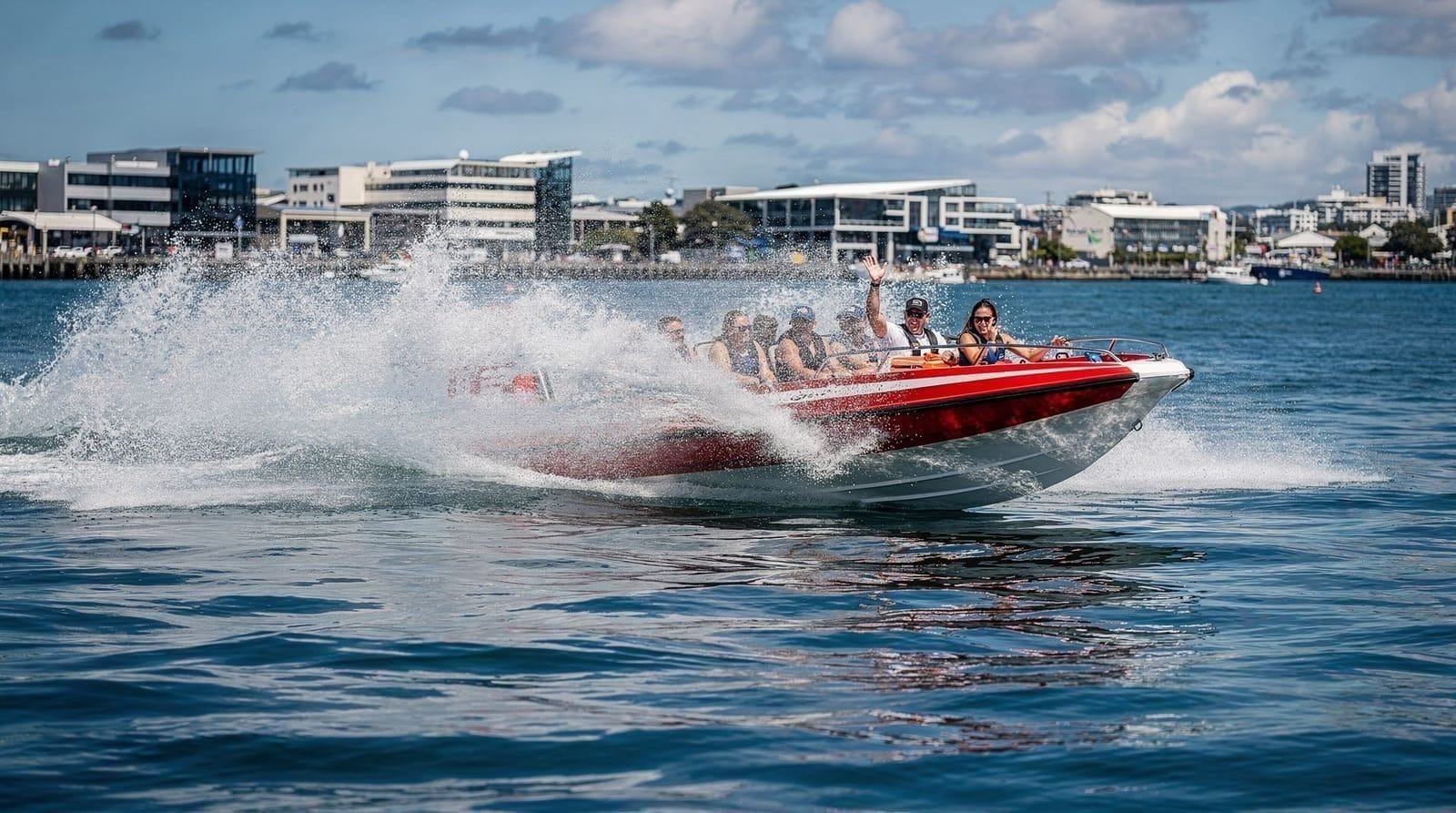
Jet boating is Auckland’s most compact adventure activity — most rides run around 35 minutes, making it easy to fit into even a tightly scheduled CBD day, but the experience itself is genuinely intense: full-throttle runs across the Waitematā Harbour broken up by 360-degree spins and hard, close turns that put an experienced driver’s control of the boat on full display. It’s a New Zealand tourism staple, and Auckland’s version puts the city skyline and Harbour Bridge in the background rather than a remote river gorge.
| Where | departs CBD waterfront, Viaduct/Downtown Ferry Terminal |
| Cost | around NZD 89-99 |
| Time needed | about 1 hour incl. check-in and gear-up |
| Best for | short, intense adrenaline on a tight schedule |
| Booking | recommended ahead, especially weekends and summer |
The jet boat itself was a genuine New Zealand invention — engineer Bill Hamilton developed the technology in the 1950s specifically to navigate the country’s shallow, fast-flowing braided rivers, where a conventional propeller would foul on rocks and gravel within minutes. A jet boat instead draws water in through an intake and expels it under pressure through a steerable nozzle at the stern, meaning it can operate in water as shallow as 10cm and pivot on the spot in a way no propeller-driven boat can match. That history is why jet boating became a South Island river tourism staple long before Auckland adapted the same technology for a harbour setting — the tight, close-quarters spins you feel on an Auckland ride are a direct descendant of a design built to thread narrow braided river channels, not a novelty invented for tourists.
Auckland’s harbour as a jet boat setting
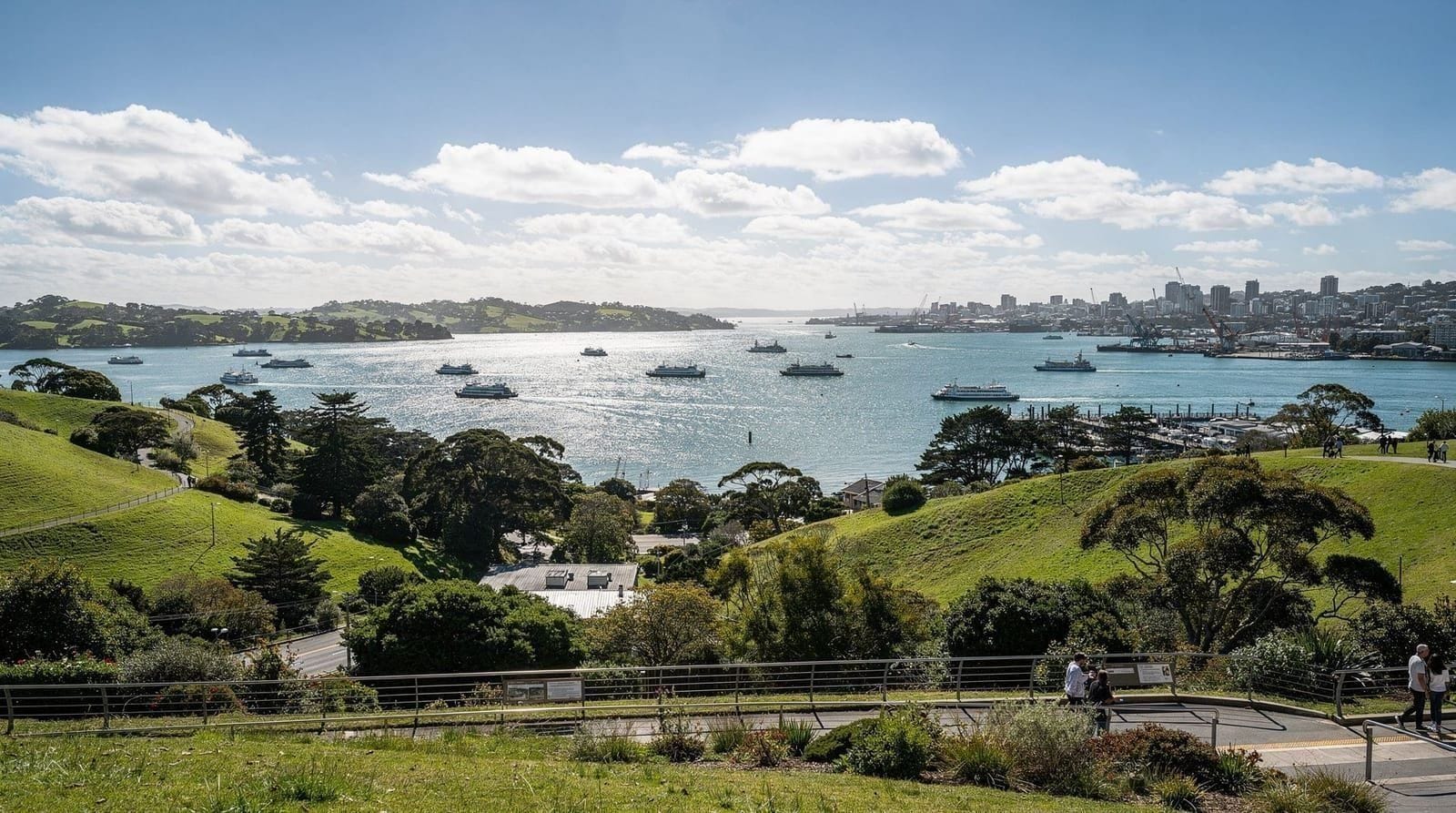
What makes the Auckland version distinctive within New Zealand’s broader jet boating scene is the setting itself. Most jet boat operations elsewhere in the country run on rivers — Shotover, Waimakariri, Kawarau — framed by gorge walls and mountains. Auckland’s Waitematā Harbour is open water with a working port, a skyline, and constant ferry and pleasure-craft traffic, so the ride feels less like wilderness adrenaline and more like an urban thrill ride, weaving past the Harbour Bridge, along the CBD waterfront and out toward the harbour mouth depending on the route and conditions that day. It’s a genuinely different flavour of jet boating from the South Island rivers most visitors picture when they hear the term, and worth knowing going in if you’ve done a river-based jet boat trip elsewhere and are wondering how Auckland’s compares.
What actually happens on board
You board at a departure point near the CBD waterfront, get fitted with a life jacket (and typically a waterproof jacket, since spray is a given), and the boat heads out onto open harbour water for a mix of high-speed straight runs and tight manoeuvres — sharp turns that send a wall of spray over the boat, and full spins that leave you disoriented in a genuinely fun way rather than an unpleasant one. Drivers are experienced and the routes are well-practised, so despite the intensity, this is a controlled, repeatable activity rather than anything genuinely risky.
The Waitematā Harbour jet boat ride is the standard 35-minute option and suits most visitors well. If you want more of the same at greater intensity, the harbour extreme jet boat ride pushes the spins and speed further for visitors specifically chasing a bigger adrenaline hit.
Who it suits
Jet boating works well for visitors with limited time who still want a genuine adventure activity — the whole experience, including check-in and gear-up, rarely takes more than an hour, which makes it easy to slot into a CBD morning or afternoon alongside sightseeing. It also suits families reasonably well, since most operators set the minimum age around 5-6 rather than requiring the fitness or nerve thresholds of activities like bungy jumping or SkyJump. That said, if you or anyone in your group is prone to motion sickness, the sharp turns and spins can trigger it quickly — consider timing the ride away from a big meal, or taking motion sickness remedies beforehand if you’re susceptible.
It’s also worth being honest about who it doesn’t suit. If you have a bad back or neck, the jolting from sharp turns and the bracing required during spins can be uncomfortable rather than fun — this isn’t a smooth, gentle ride, and operators generally advise against it for anyone with recent spinal injuries or during pregnancy. Nervous swimmers who dislike the idea of being close to open water at speed sometimes find the anticipation worse than the ride itself once underway, since the life jacket and the boat’s stability mean the actual risk of ending up in the water is very low — but if the idea alone is enough to spoil your day, a calmer harbour option is the better call.
What if the weather turns
Wind and sea state matter more to a jet boat ride than rain does. A bit of drizzle changes nothing meaningful — you’re getting wet from spray regardless — but genuinely strong wind chops up the harbour surface and can make the ride rougher, sometimes prompting operators to shorten the route or, in the more severe cases, postpone or cancel the trip for safety.
Auckland’s harbour is more sheltered than open coastal water, so cancellations are relatively infrequent compared to ocean-based activities, but they do happen, particularly during the more unsettled weather of autumn and winter (April-August) when fronts move through more often. Most operators offer a rebooking or refund if they cancel for weather; check the specific policy on your booking confirmation before you go, and if you’re travelling with a tight schedule, consider booking your jet boat ride earlier in your trip rather than on your last available day, so a weather cancellation doesn’t cost you the activity entirely.
Jet boating month by month
Jet boating runs year-round in Auckland, since the harbour doesn’t freeze and the ride itself is short enough that cooler air temperature is a minor factor compared to, say, a multi-hour sailing trip.
Summer (December-February) is the busiest period, with the warmest air and water temperatures making the inevitable spray genuinely pleasant rather than bracing — this is when booking ahead matters most, particularly on weekends. Shoulder seasons (March-May and September-November) offer a good middle ground: fewer crowds, generally settled weather, and only a marginally cooler ride. Winter (June-August) sees the fewest bookings and coolest conditions — the ride itself is unchanged, but standing around damp afterward in a Auckland winter is noticeably less pleasant than in summer, so bring a warm layer to change into if you’re booking a winter slot. See our Auckland weather by month guide for a fuller seasonal breakdown if you’re planning around specific conditions.
Common mistakes to avoid
The most common mistake is treating a jet boat ride like a sightseeing cruise and bringing an unprotected phone or camera to capture photos throughout — spray during the sharp turns is sudden and genuinely soaks anything not in a waterproof case, and replacing a drowned phone is a miserable way to spend the rest of your holiday. The second is booking a jet boat ride immediately before or after a meal if anyone in the group is prone to motion sickness; the spins in particular are disorienting in a way that catches some people off guard even if they don’t normally get seasick. Third, some visitors underestimate how genuinely wet they’ll get and turn up in clothes they mind ruining — treat it the way you would a water park visit, not a harbour stroll.
Budget tiers
The standard 35-minute ride represents the accessible end of Auckland’s adventure activity pricing — cheaper than bungy jumping, SkyJump or a full black water rafting tour, and comparable to or slightly less than a scenic sailing cruise of similar length. The extreme version costs more for the added intensity but still sits within the same rough bracket rather than jumping into a different price tier entirely. If you’re weighing up how a jet boat ride fits into an overall Auckland activity budget, see our Auckland budget guide and Auckland trip cost breakdown guides for where adventure activities typically sit relative to accommodation, food and transport costs.
If you only have a few hours in Auckland
Because it’s short and centrally located, jet boating is one of the better adventure activities to slot into a genuinely tight Auckland itinerary — see our Auckland in a day guide for how it fits alongside the city’s other must-see stops if you’re working with limited time. Pairing it with a walk along the waterfront before or after, rather than a separate car trip somewhere else in the city, keeps the logistics simple: check in, ride, dry off, and continue your CBD day without losing much time to transit.
Jet boat vs sailing vs a scenic cruise
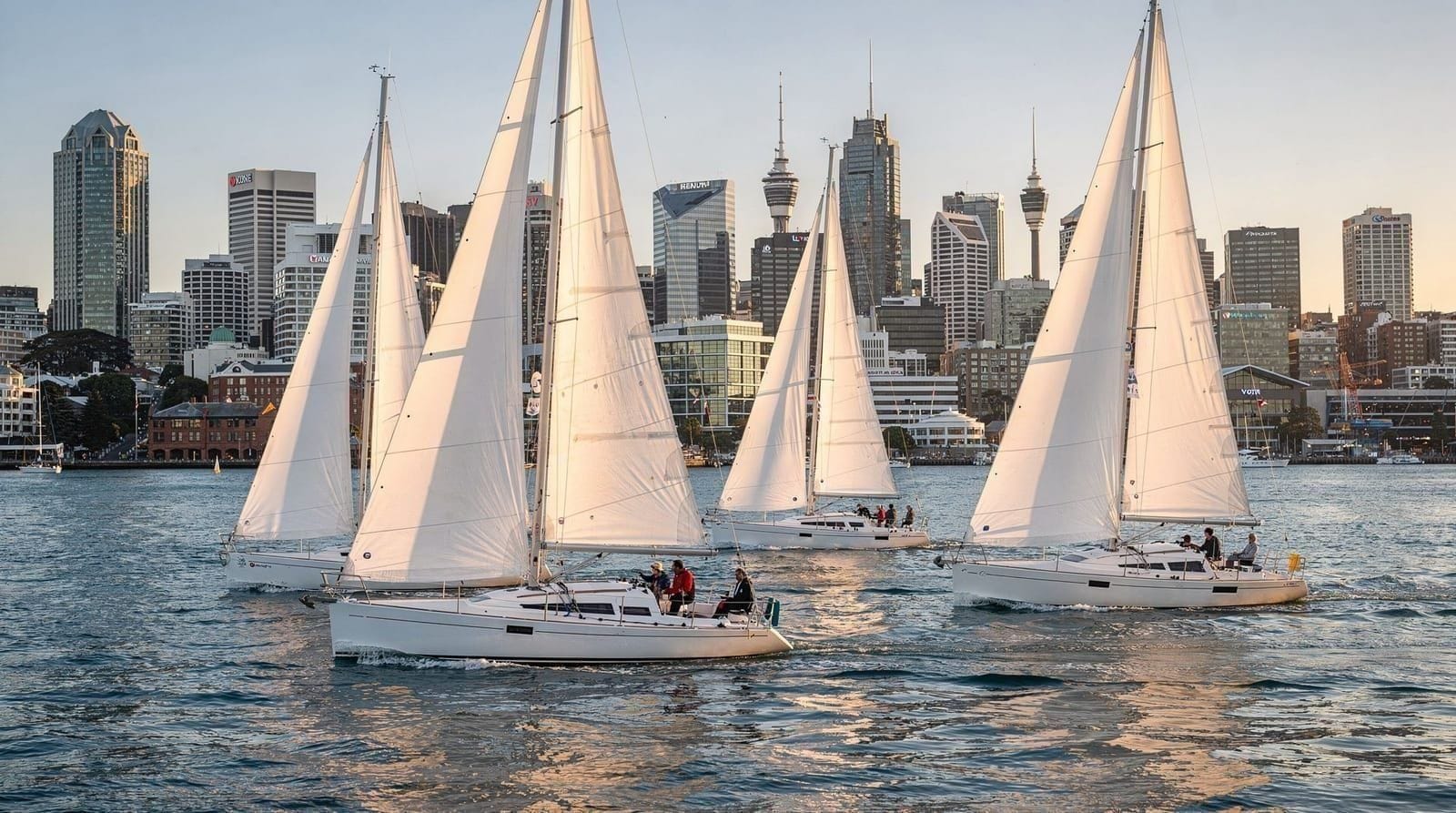
Auckland’s Waitematā Harbour supports several very different water-based experiences, and it’s worth understanding how jet boating fits among them. If you want speed and adrenaline in a short window, jet boating wins. If you want a longer, more relaxed way to see the harbour — genuinely sailing under canvas rather than powering across the water — see our sailing Auckland harbour guide, which covers everything from casual sightseeing cruises to genuine America’s Cup-style racing experiences. They’re complementary rather than competing: many visitors do a jet boat ride for the thrill and a sunset sail later the same trip for the calmer version of the same harbour.
Price and duration
Expect the standard jet boat ride to run roughly NZD 89-99 (about USD 55-60) for around 35 minutes on the water, including gear. The extreme version typically costs a little more given the extended intensity and sometimes slightly longer duration. Check the current price on the linked booking pages, since rates shift periodically.
What to bring
Wear clothes you don’t mind getting wet, and bring a change of clothes if you have somewhere to be immediately after (this isn’t an activity you do in your smart-casual dinner outfit). Sunglasses with a strap are worth considering both for glare off the water and to avoid losing them during a spin. Cameras and phones should be secured in a waterproof pouch or left with a non-riding companion — spray during the turns is genuinely enough to soak an unprotected device.
If you’re travelling light and don’t own a waterproof phone pouch, cheap ones are sold at several souvenir and outdoor stores around the CBD, or you can simply leave devices at your hotel and trust the operator’s own photo package if one is offered — many jet boat operators run an onboard camera and sell a photo or video package afterward, which is a reasonable way to get shots of the ride without risking your own gear. It’s also worth packing a hair tie if you have long hair; the combination of speed and spray makes for a memorably tangled ride otherwise, and it’s a small, easily-forgotten detail that makes a real difference to comfort.
How it compares to Auckland’s other adventure activities
Auckland has a small but genuine cluster of adventure activities within a few minutes of each other in the CBD, and jet boating is worth placing alongside them rather than considering in isolation. Compared to the SkyJump and SkyWalk at Sky Tower, jet boating is faster to complete and cheaper, but delivers a different kind of thrill — controlled speed and disorientation rather than a controlled fall from height.
Compared to bungy jumping off the Harbour Bridge, jet boating is considerably less intense and doesn’t involve any personal decision-making moment (you’re a passenger throughout, not the one stepping off a platform), making it the better choice for anyone who wants adventure without a genuine fear-confrontation element. If you’re trying to choose just one adventure activity for a short Auckland stay, jet boating is arguably the easiest entry point of the three — short, reliably fun, and low on the psychological build-up that bungy or SkyJump involve.
Safety: what if something goes wrong
Auckland’s harbour jet boat operators run under New Zealand’s adventure activity safety regulations, which require operators to hold a certified safety audit and follow documented operating procedures — this isn’t an informal or unregulated activity despite how casual a 35-minute ride might sound. Drivers are experienced and routes are chosen specifically to avoid other harbour traffic during high-speed sections. Life jackets are worn throughout, and in the unlikely event of someone going overboard during a manoeuvre, boats are equipped and drivers trained to recover a person from the water quickly. Genuine incidents are rare; the far more common “problem” on a jet boat ride is a lost hat, a dropped (unsecured) phone, or someone feeling briefly queasy after a string of spins — not anything approaching a safety emergency.
Accessibility notes
Jet boating requires the ability to sit upright, hold on securely during sharp manoeuvres, and board and disembark a moving boat, generally via a short step down from the dock — it isn’t set up for wheelchair users or visitors with significant mobility restrictions, and most operators are upfront about this when asked directly. If mobility is a concern, a seated, stable option like a scenic sailing cruise (see our sailing Auckland harbour guide) is a considerably more accommodating way to get out on the water. Visitors with inner-ear conditions or vertigo issues should also weigh the spinning sections carefully before booking, since they’re a core, unavoidable part of the experience rather than an optional add-on.
Parking and getting there
Most CBD jet boat departure points sit within walking distance of central hotels, and given how central the Viaduct and Downtown Ferry Terminal precincts are, driving and parking yourself is rarely the easiest option — see our getting around Auckland guide for how the CBD’s public transport and walking network fits together. If you are driving, several paid parking buildings serve the Viaduct area, but expect CBD parking rates rather than suburban ones; budget accordingly or consider a rideshare or the bus network instead, particularly if you’re only in the area briefly for the ride itself. For visitors arriving straight from the airport, our Auckland airport to city guide covers transfer options that can drop you close to the waterfront directly.
Where it departs from
Most Auckland jet boat operators depart from the CBD waterfront near the Viaduct or Downtown Ferry Terminal area, an easy walk from most central hotels. Check your specific booking confirmation for the exact departure point, since operators occasionally shift berths.
Jet boating as part of a wider harbour day
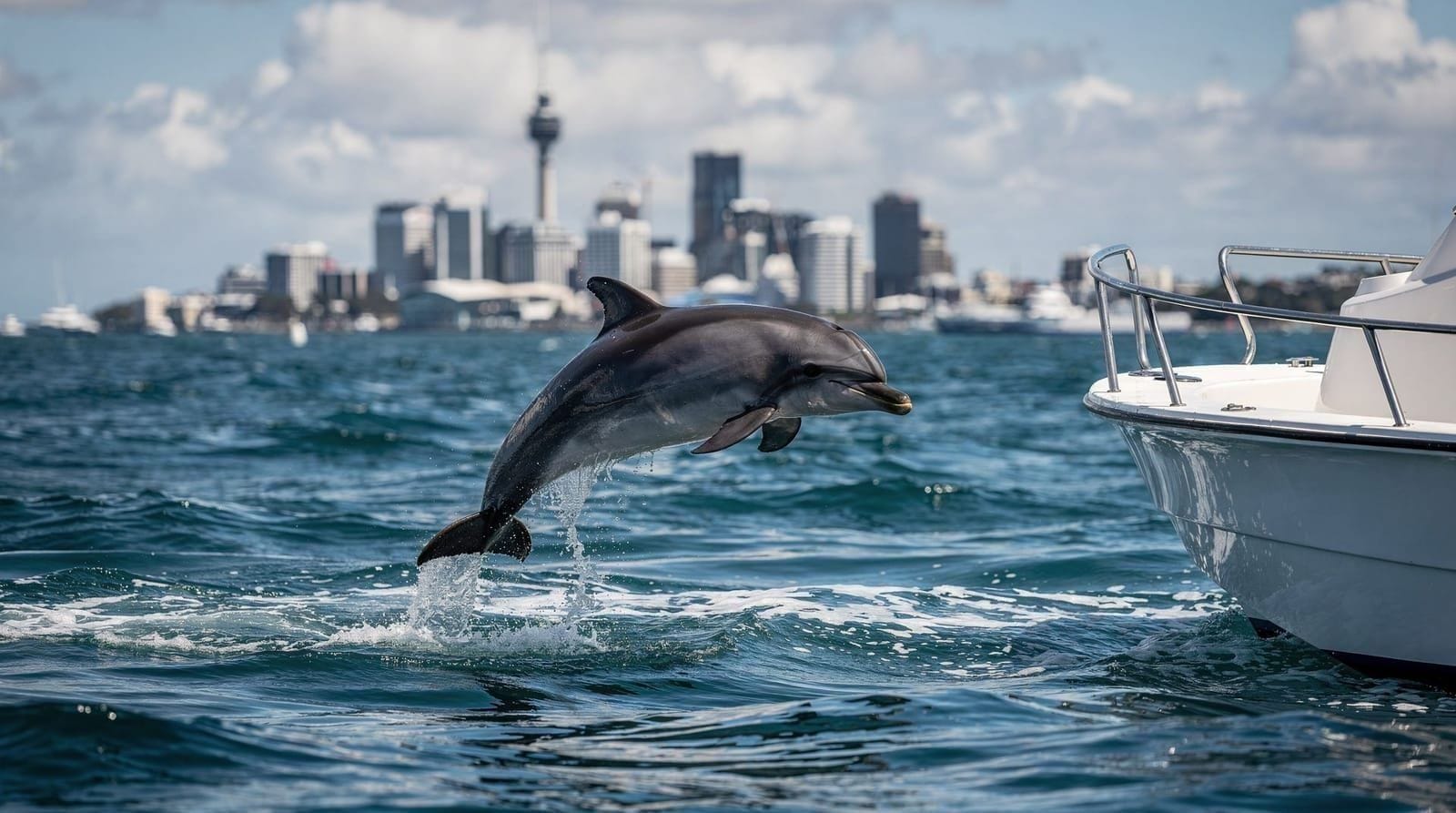
Rather than treating jet boating as an isolated booking, several visitors build it into a fuller Auckland waterfront day. A morning jet boat ride followed by lunch at Viaduct or Wynyard Quarter, then an afternoon ferry to Devonport or a walk along Mission Bay, makes efficient use of a single CBD-based day without much backtracking. If your itinerary has room for more than one water-based activity, our whale and dolphin watching guide covers a calmer alternative for the same afternoon, and kayaking Auckland covers the self-propelled version of a harbour outing if you’d rather trade the engine noise for your own paddling effort on a different day of your trip.
What a jet boat photo package actually gets you
Many operators run an onboard camera and sell a photo or video package after the ride, and it’s worth weighing this against bringing your own protected device. The upside is professional-angle shots taken during the exact spins and turns you can’t safely photograph yourself; the downside is the added cost on top of the ride price, and the fact that the footage is generic rather than framed to your preference. For a short 35-minute ride where you’ll be too busy holding on to shoot much yourself anyway, the package is a reasonable option if you specifically want photo evidence of the experience rather than relying on memory alone.
Jet boating for first-time visitors versus repeat trips
First-time Auckland visitors with limited time tend to get the most value from jet boating, since it delivers a genuine adventure activity without the logistics overhead of a day trip out of the city — you can do it in a single free hour without rearranging the rest of your itinerary. Repeat visitors who’ve already done the standard ride sometimes upgrade to the extreme version for a more intense repeat experience, or skip jet boating altogether in favour of something they haven’t yet tried, like bungy jumping or a longer sailing trip. Neither approach is wrong; it depends mostly on how much repeat novelty matters to you compared to simply enjoying a well-run, reliably fun activity twice.
Group bookings and private charters
Larger groups — bachelor or bachelorette parties, corporate outings, extended families — are a genuinely common booking type for Auckland jet boat operators, and most run private charter options alongside their standard shared-departure rides. A private charter costs more per person than joining a scheduled group departure, but removes the wait for other passengers and lets the group choose timing more flexibly. If you’re organising a group activity as part of a longer Auckland stay, it’s worth asking the operator directly about private options when booking, since availability and minimum group sizes vary and aren’t always listed clearly online.
Frequently asked questions about jet boating in Auckland
Will I get wet jet boating in Auckland?
Yes, expect spray, particularly during spins and sharp turns. Operators typically provide waterproof jackets, but you should expect to get at least partially wet regardless.
Is jet boating suitable for children?
Most operators set a minimum age (commonly around 5-6 years) and the ride’s intensity — sharp turns and spins — makes it better suited to children who enjoy fast, thrilling rides rather than those easily frightened by sudden movement.
How fast does the jet boat go?
Speeds vary by section, but harbour jet boats can reach around 80km/h on open stretches, with the more memorable moments being the tight turns and full 360-degree spins rather than straight-line speed.
Do you need to book jet boating in advance?
Booking ahead is recommended, particularly for weekend and summer (December-February) departures, since popular time slots can fill.
Is jet boating better than a scenic harbour cruise?
They serve different purposes — jet boating is a short, adrenaline-focused activity, while a scenic cruise or sailing trip is a longer, more relaxed way to see the harbour. Many visitors do both on the same trip since they’re complementary rather than competing experiences.
Can I book a private jet boat charter for a group?
Yes — most operators offer private charter options alongside scheduled shared departures, useful for bachelor/bachelorette parties or corporate groups; ask directly when booking, since minimum group sizes and pricing vary by operator.
Can I combine jet boating with other Auckland waterfront activities in one day?
Yes, easily — its short duration makes it simple to pair with a ferry crossing, a waterfront walk, or another CBD activity on the same day without losing much time to logistics.
Top experiences
Bookable activities with verified prices and instant confirmation on GetYourGuide.