Auckland's volcanic cones: a guide to the maunga
Auckland: Sunrise tour mount eden summit morning views
Which Auckland volcanic cone has the best view?
Mount Eden (Maungawhau), at 196 metres the highest natural point in the city, has the most complete 360-degree panorama over the CBD, harbour and out to Rangitoto. North Head at Devonport is the closest rival, adding WWII tunnels to explore.
A city built on volcanoes
Auckland sits on the Auckland Volcanic Field, a cluster of around 50 volcanic cones and craters scattered across the isthmus, most of them dormant grass-covered hills now enclosed within suburban parks. It’s one of the more unusual features of the city — nowhere else do you get quite this density of accessible, climbable volcanoes within a metropolitan area — and several of them offer genuinely excellent free views with minimal effort. This guide covers the best ones to prioritise.
| Cost | Free, all four core cones |
| Time needed | 20 min (Mount Victoria) to 1-2 hours (One Tree Hill/Cornwall Park) |
| Best cone for views | Mount Eden (Maungawhau), 196m |
| Getting there | CBD/bus for Mount Eden & One Tree Hill; ferry to Devonport for North Head & Mount Victoria |
| Best time | Early morning or evening, year-round |
Mount Eden (Maungawhau) — the essential one
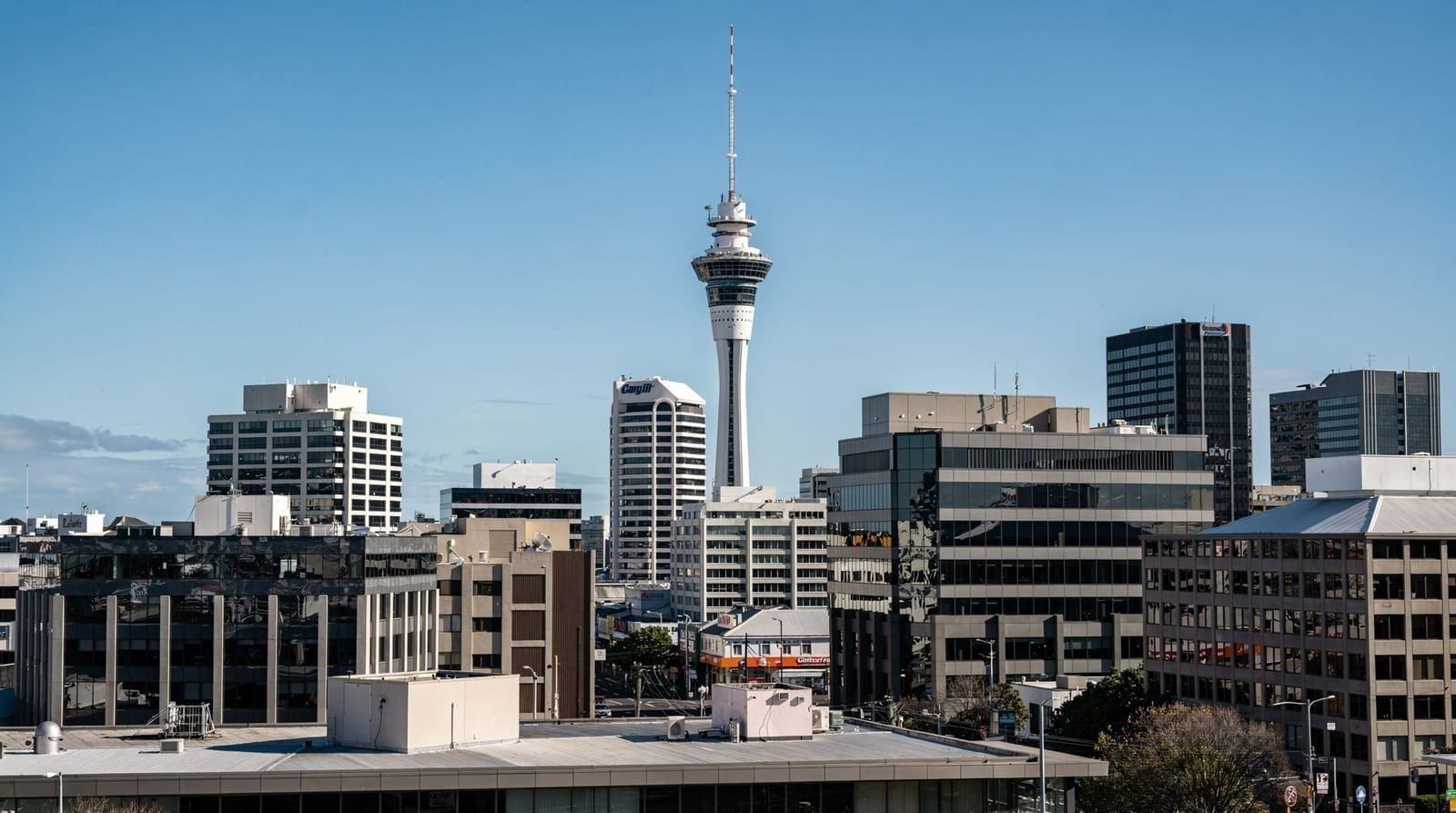
At 196 metres, Mount Eden is Auckland’s highest natural point and the single best view in the city for the effort required. A paved path climbs about 20 minutes from the car park (vehicle access to the summit itself is restricted) to a crater rim with an unbroken 360-degree panorama — the CBD skyline and Sky Tower to the north-east, the volcanic field spreading south and west, and the Hauraki Gulf and Rangitoto Island visible on a clear day. The crater itself, a deep grassy bowl, is a striking sight in its own right and considered tapu (sacred) — visitors are asked not to walk down into it, out of respect for its significance as a former pā (fortified Māori settlement) site.
If you’d like the geological and cultural context explained as you go, the sunrise Mount Eden summit tour gets you up before the crowds with a guide who covers both.
Mount Eden’s summit car park is small and the first thing to fill on weekends and public holidays, typically by mid-morning in summer. If you find it full, the sensible backup is to park in Mount Eden Village at the base and walk up — it adds roughly 15 minutes each way but avoids circling residential streets looking for a park, and the walk through the village and up the lower slopes is pleasant in its own right. The paved summit path itself is genuinely steep in sections since vehicle access to the top was removed, so despite the short overall time, it’s more of a workout than the 20-minute estimate might suggest, particularly in summer heat with essentially no shade on the upper slopes.
Sunrise and sunset are the two best times to be at the summit — not just for light, but because the crowds thin dramatically outside the main tourist hours of late morning through mid-afternoon. A weekday sunrise visit can mean having the crater rim largely to yourself, a genuinely different experience from a Saturday midday visit shared with several tour groups at once.
One Tree Hill (Maungakiekie)
Sitting inside the much larger Cornwall Park, One Tree Hill offers a gentler, longer walk than Mount Eden — through grazing paddocks and stands of old pōhutukawa and oak — to a summit obelisk marking the site of one of the largest pā in pre-European Auckland. Terracing from the original settlement is still visible on the slopes, giving a clearer sense of the scale of historic Māori occupation than most of the other cones. The surrounding Cornwall Park is a pleasant standalone destination too, with a farm, gardens and cafés, making this the pick if you want a longer, more relaxed outing rather than a quick summit-and-back.
The summit obelisk itself, visible from much of the surrounding area, was built as a memorial and marks the site where the pā’s most significant structures once stood; the terracing cut into the hillside for defensive purposes and food storage is still clearly visible if you know to look for it, giving Cornwall Park one of the most legible pre-European archaeological landscapes anywhere in the city. The name “One Tree Hill” itself has a slightly awkward history — the original prominent tree (not the current one) was a sacred tōtara removed by colonial settlers, and a subsequent pine planted in its place was felled in the 1990s and 2000s in acts connected to Māori grievances over land and the tree’s symbolism; the summit is currently marked by native plantings rather than a single dominant tree, which visitors sometimes find puzzling if they’re expecting the “one tree” the name promises.
Cornwall Park’s farm animals — sheep and cattle graze freely across much of the park — make this the most kid-friendly of the four cone walks, and the flat, wide paths through the lower park (as distinct from the summit path itself) are manageable with a pushchair, unlike anywhere else on this list.
North Head (Maungauika) — volcano plus WWII history
Across the harbour at Devonport, North Head combines a volcanic cone walk with a genuinely interesting layer of military history: gun emplacements, tunnels, and underground magazines built during coastal defence preparations from the late 1800s through WWII, several of which you can walk into. The summit view over the harbour entrance and out to Rangitoto rivals Mount Eden’s, and the combination of geology and history makes this one of the more varied short walks on this list. Pair it with Mount Victoria, a five-minute drive or 20-minute walk away, for two cones in one visit.
North Head’s tunnels are genuinely worth allowing extra time for — several are open for public exploration with basic lighting, and they add a good 20-30 minutes beyond the summit walk itself if you go through more than one. Bring a phone torch regardless, since the lighting inside can be dim, and be aware the tunnels have low ceilings and uneven floors in places, which isn’t ideal for anyone with mobility or balance concerns. The reserve is also one of the better spots in Auckland to watch ferries and cargo ships moving through the harbour entrance, a detail photographers particularly appreciate.
Mount Victoria (Takarunga)
The smallest and quickest of the four cones covered here, Mount Victoria sits right in the middle of Devonport village, making it the easiest to combine with a café stop or ferry trip. The summit view is more modest than Mount Eden’s or North Head’s but still worthwhile, and the short walk (10-15 minutes) suits visitors short on time or energy.
Because it sits so close to the Devonport ferry wharf and the village’s café strip, Mount Victoria works well as the “extra” stop tacked onto a Devonport visit that’s primarily about the village itself rather than the volcano — most visitors spend more time in Devonport’s shops and cafés than on the summit, and that’s a perfectly reasonable way to structure the visit. There are old gun emplacements here too, on a smaller scale than North Head’s, for visitors who enjoy that layer of history without wanting the fuller North Head experience.
Mangere Mountain and further options
Beyond the four core cones, Mangere Mountain in South Auckland is a less-visited but genuinely impressive volcano with extensive pā terracing and a lava cave, worth knowing about if you’re spending extended time in the city or have a specific interest in Māori pā archaeology. It’s further from the main visitor areas, so most short-stay visitors will get more value prioritising Mount Eden and North Head first.
Rangitoto Island, Auckland’s youngest and most dramatic volcanic cone, is deliberately not covered in full here because the ferry logistics and half-day time commitment set it apart from the quick walks in this guide — see our dedicated Rangitoto hike guide for the full breakdown. If you’re trying to decide how to allocate limited time between Rangitoto and the mainland cones, the short version is: prioritise Mount Eden if you only have an hour or two spare in the city, and add Rangitoto only if you have a genuine half-day free, since it’s a different kind of outing entirely rather than a quick add-on.
If you only have time for one or two
If you can only fit in one cone, Mount Eden wins on view-to-effort ratio and central location. If you can fit in two and you’re staying centrally, pair Mount Eden with One Tree Hill for a contrast between a sharp volcanic summit and a gentler historic park landscape. If you’re spending time in Devonport anyway — perhaps as part of a Devonport day trip — North Head and Mount Victoria are a natural pair, walkable from each other and both close to the ferry wharf, cafés, and Cheltenham Beach if you want to extend the outing further. For a broader look at how these fit alongside Auckland’s other free attractions, see our free things to do in Auckland guide.
Common mistakes visitors make
The most common mistake is underestimating Mount Eden’s gradient because the walk is short — 20 minutes of steady uphill on a warm day with no shade is more demanding than the time suggests, and visitors in unsuitable footwear or without water sometimes find it harder going than expected. A second mistake is not checking Mount Eden’s crater access rules — walking down into the crater itself is discouraged out of respect for its significance as a former pā site and, more practically, because the slopes are steep and unstable; stick to the rim path. A third mistake, specific to North Head, is not allowing enough time for the tunnels and assuming the visit is just the summit walk — budget extra time if the military history interests you at all, since rushing through means missing most of what makes North Head distinctive compared to the other cones.
What a cone-walking day costs
All four core cones are entirely free to visit, with no entry fee and free parking at every trailhead covered here (subject to availability). This makes volcanic cone walking one of the best value activities in Auckland — genuinely comparable views and experiences to some paid attractions, at zero cost beyond however you get there. Guided options add cost in exchange for context and convenience: expect roughly NZ$80-150 per person for a short guided summit tour, rising toward NZ$200+ for full-day city highlights tours that bundle in several cones alongside other Auckland sights. For where this fits within a broader daily budget, see our Auckland budget guide and is Auckland expensive guides.
Accessibility
Cornwall Park around One Tree Hill has the most accessible paths of the four, with flat, wide tracks through the lower park suitable for pushchairs and manageable for many wheelchair users, even though the summit path itself climbs more steeply toward the top. Mount Eden, North Head and Mount Victoria all involve genuine gradient with unpaved or partially paved surfaces in places, and none are realistically wheelchair accessible to the summit. If accessibility is a hard requirement, Cornwall Park’s lower paths are the best option on this list, and the Devonport waterfront itself (rather than the North Head or Mount Victoria summits) offers flat, scenic walking with harbour views as a substitute.
Cultural context: these are maunga, not just hills
Nearly all of Auckland’s volcanic cones were significant pā sites for Māori before European settlement, and several remain under co-governance arrangements between Auckland Council and mana whenua (local iwi with customary authority) today. Treat the summits with the same respect you would any culturally significant site: stay on formed paths, don’t climb on or disturb any earthworks or terracing, and follow any signage about restricted areas like Mount Eden’s crater. For a broader introduction to respectful engagement with Māori culture during your trip, see our respectful Māori tourism guide.
Are these volcanoes dangerous?
The Auckland Volcanic Field is monitored continuously by GNS Science and classified as active but with long dormancy periods — the most recent eruption, which formed Rangitoto, was around 600 years ago. There’s no elevated near-term risk to visitors; this is a well-understood, closely watched geological system, not an imminent hazard. If anything, the volcanic soil is a big part of why the surrounding land is so fertile and green.
Getting between the cones
Mount Eden and One Tree Hill sit within a short drive or bus ride of the CBD — see our getting around Auckland guide for public transport basics. North Head and Mount Victoria both sit in Devonport, reachable by a scenic 12-minute ferry from the Downtown Ferry Terminal, which makes combining a harbour crossing with two volcano walks an easy half-day.
If you’d rather cover several cones with a guide handling logistics, the private city tour with Mount Victoria and Mount Eden or the full-day city highlights tour including Mount Eden both build cone visits into a wider sightseeing day. For a more active option, the classic electric bike tour reaches several cones under your own power without the climb feeling like hard work.
When to go
Cone walks are genuinely a year-round activity, since none of them depend on tide, ferry timing, or seasonal wildlife the way some other Auckland outings do — the main variable is comfort rather than access. Summer (December-February) delivers the clearest long-distance views but also the most exposed, hottest conditions on the shadeless upper sections of Mount Eden and North Head; an early morning or early evening visit is noticeably more comfortable than a midday one. Autumn (March-May) often brings Auckland’s calmest, clearest air, arguably the best season for photography from the summits.
Winter (June-August) is cooler and wetter, with paths sometimes slick after rain, but the crowds thin substantially and a clear winter’s day can deliver views just as good as summer’s, without the queue for photos at the top. Spring (September-November) sees improving weather and is a reliable middle-ground choice. For a fuller seasonal breakdown across the whole trip, see our best time to visit Auckland and Auckland weather by month guides.
How the cones compare to Rangitoto and Waitākere
If you’re trying to decide how volcanic cone walks fit alongside Auckland’s other hiking options, the honest comparison is this: the mainland cones are shorter, free, and require no planning beyond showing up, which makes them ideal for filling a spare hour or two around other commitments. Rangitoto and the Waitākere Ranges are bigger commitments — a half-day minimum each — but deliver a different kind of experience: raw lava field and genuine forest immersion rather than a quick summit-and-view.
Most visitors on a multi-day trip end up doing at least two mainland cones plus one of the bigger half-day options, rather than treating them as competing choices. See our Auckland hikes guide for the full comparison across all of Auckland’s walking options, and our Waitākere Ranges hiking guide for the forest-and-waterfall alternative to a cone summit.
Frequently asked questions about Auckland’s volcanic cones
Which Auckland volcanic cone has the best view?
Mount Eden (Maungawhau), at 196 metres the highest natural point in the city, has the most complete 360-degree panorama over the CBD, harbour and out to Rangitoto. North Head at Devonport is the closest rival, adding WWII tunnels to explore.
How many volcanoes does Auckland have?
Around 50, collectively known as the Auckland Volcanic Field. Most are dormant, low, grass-covered cones now sitting inside parks and suburbs, and the field as a whole is considered geologically active but low-risk, with the last eruption (Rangitoto) around 600 years ago.
Can you drive to the top of Mount Eden?
No — as of recent years, vehicle access to the summit is restricted and visitors walk up from a car park partway up the slope. The walk itself takes about 20 minutes.
Are the volcanic cones free to visit?
Yes, all of the cones covered in this guide are free public parks with open access during daylight hours.
Is Auckland at risk from volcanic eruption?
The Auckland Volcanic Field is monitored continuously by GNS Science and is considered active but with long intervals between eruptions — centuries to millennia apart. There’s no elevated near-term risk for visitors.
Which cone is best for a quick visit with limited time?
Mount Eden, since it delivers the single best view for the shortest, easiest walk and sits close to the CBD.
Do the volcanic cones have cultural significance?
Yes — most were significant pā (fortified settlement) sites for Māori, and many carry Māori names reflecting that history (Maungawhau, Maungakiekie, Maungauika). Terracing from historic pā sites is still visible on several cones, including One Tree Hill.
Can I visit more than two cones in a single day?
Yes, comfortably, if you plan around geography — Mount Eden and One Tree Hill sit close together in central Auckland and can be done back to back in a morning, while North Head and Mount Victoria pair naturally on a Devonport half-day. Trying to combine a central cone with a Devonport one in the same short window is possible but adds ferry and travel time that most visitors would rather spend actually walking.
Photography tips for the summits
Each of the four cones offers a genuinely different photographic subject beyond the standard skyline shot. Mount Eden’s crater rim gives the most dramatic wide-angle composition, particularly with the crater bowl itself in the foreground against the CBD skyline behind. North Head rewards a longer lens for capturing ships and ferries moving through the harbour entrance, a detail many visitors miss while focused purely on the summit view. Golden hour — the hour or so around sunrise or sunset — consistently produces the best light at all four cones, both for the warmer tones on the city skyline and for avoiding the flat, harsh light of midday that tends to wash out long-distance harbour views on brighter days.
What to wear and bring
None of the four core cone walks require specialist gear, but a few sensible choices make the outing noticeably more comfortable. Closed, comfortable walking shoes matter more than the short distances suggest, particularly on Mount Eden’s steeper paved sections and North Head’s uneven tunnel floors. Bring water, since none of the summits have facilities beyond Mount Eden’s car park area, and sun protection year-round given the largely shadeless upper slopes on Mount Eden and North Head specifically. A light jacket is worth carrying even on a warm-looking day, since exposed summit conditions can be noticeably windier and cooler than street level in the surrounding suburbs. If you’re combining a cone walk with Devonport’s cafes and ferry crossing, comfortable everyday shoes suit both parts of the outing without needing to change footwear partway through.
Rangitoto’s crater rim, for comparison
Auckland’s cone-walking scene doesn’t stop at the mainland four covered above — Rangitoto Island, visible from almost every one of them, offers the region’s most dramatic crater rim walk, just reached by ferry rather than a short drive. Standing on Mount Eden’s summit and picking out Rangitoto’s distinctive silhouette across the harbour is one of the small pleasures of doing the mainland cones first; several visitors report that seeing Rangitoto from Mount Eden is what convinces them to make the extra half-day trip out to it. Our Rangitoto hike guide has the full logistics if the mainland cones leave you wanting more.
Top experiences
Bookable activities with verified prices and instant confirmation on GetYourGuide.