Getting around Auckland: the complete transport guide
Auckland: Hop on hop off explorer bus ticket
What is the best way to get around Auckland?
For the city centre, waterfront and inner suburbs, buses, trains and ferries with an AT HOP card cover everything you need. For west coast beaches, Waiheke's interior, and day trips like Hobbiton or Waitomo, a rental car or organised tour is the practical choice, since public transport doesn't reach those areas.
Auckland’s transport network is more capable than its reputation suggests, but it’s genuinely split into two zones: the city centre and inner suburbs, where buses, trains and ferries cover almost everything, and everywhere else, where a car (or organised tour) becomes the practical option. Understanding which zone your itinerary falls into before you arrive saves a lot of wasted planning time. This guide covers every mode of transport in Auckland and when to use each one.
| City transport | Bus, train, ferry — all covered by one AT HOP card |
| Cost | Around NZD 4-8 per city trip, roughly NZD 50 cap over 7 days |
| Day trips | Rental car or organised tour required (Hobbiton, Waitomo, west coast) |
| Airport transfer | SkyBus around NZD 18 one-way, or taxi/rideshare |
| Driving side | Left-hand side, as throughout New Zealand |
Unlike some larger cities where public transport and driving are roughly interchangeable for most trips, Auckland’s sprawl and hilly, volcanic geography mean the two options serve genuinely different itineraries. Visitors who try to force a car-free plan onto a trip that includes multiple North Island day trips end up frustrated by limited or nonexistent bus and train coverage outside the metro area; visitors who rent a car for a purely city-based stay often find themselves paying for parking and dealing with one-way CBD streets for no real benefit over walking and the ferry network. Matching your transport plan to your actual itinerary, rather than defaulting to whichever mode you’re most used to at home, makes a meaningful difference to how smoothly the trip runs.
First impressions: arriving without a plan
If you land in Auckland without having researched transport in advance, the good news is you don’t need to have it all figured out before arrival. Auckland Airport has AT HOP cards, SkyBus tickets, taxi ranks and rideshare pickup zones all clearly signposted, and most accommodation can point you toward the nearest bus stop or ferry terminal within a few minutes of check-in. The city rewards a bit of on-the-ground figuring out more than an over-engineered pre-trip transport spreadsheet — a short walk around your accommodation’s neighbourhood on arrival, checking which bus routes pass nearby, usually tells you more than trying to memorise the full network map in advance.
The AT HOP card: your default for the city
Auckland Transport’s rechargeable AT HOP card covers bus, train and ferry travel across the region and is worth getting on day one if you’re spending any time in the city itself. It’s sold at the airport, most supermarkets (Countdown, New World) and convenience stores, and gives roughly 20% off cash fares with a rolling 7-day spending cap around NZD 50 — useful if you’re moving around a lot. Full setup and top-up details are in our AT HOP card guide.
Buses, trains and ferries
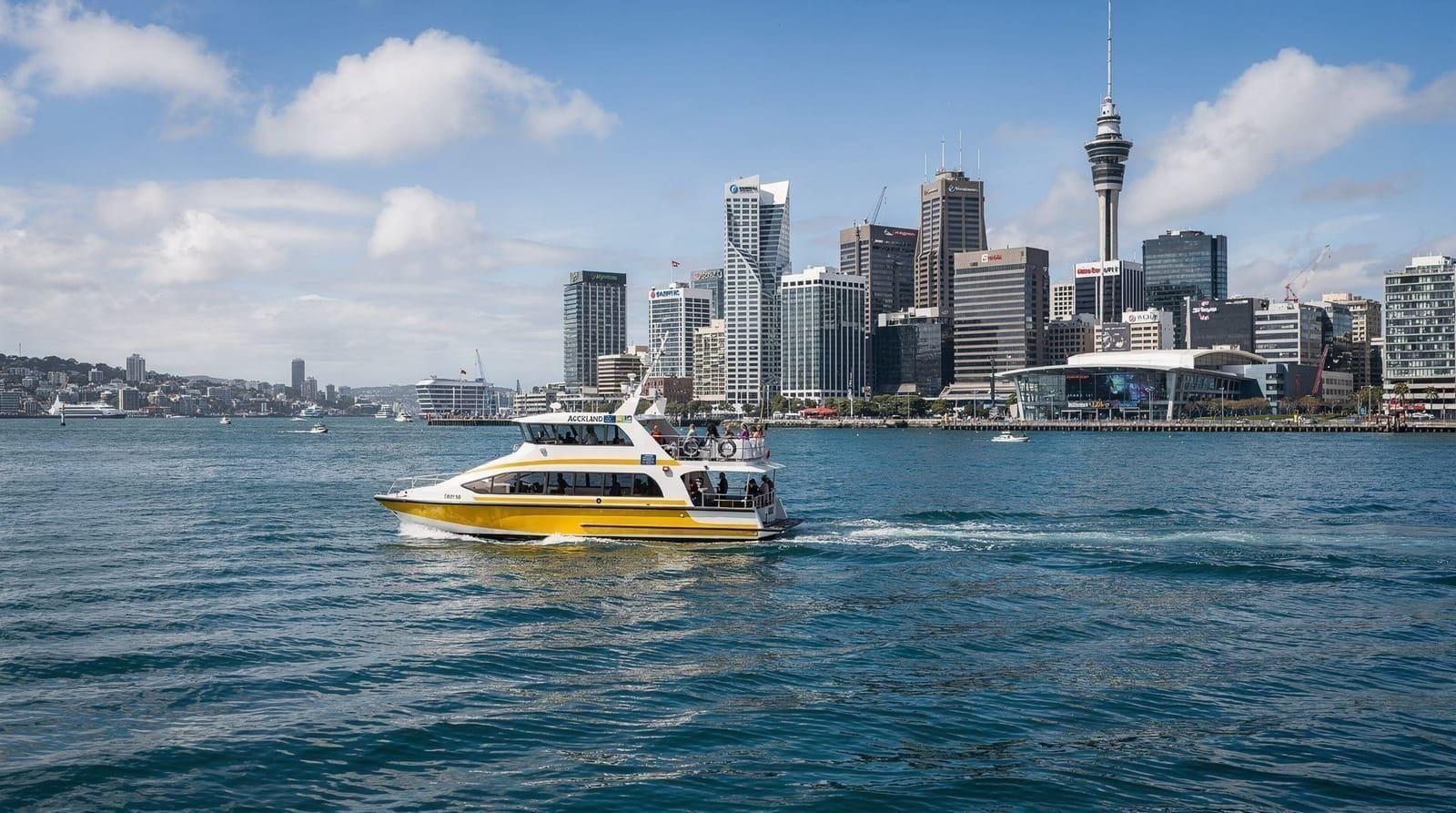
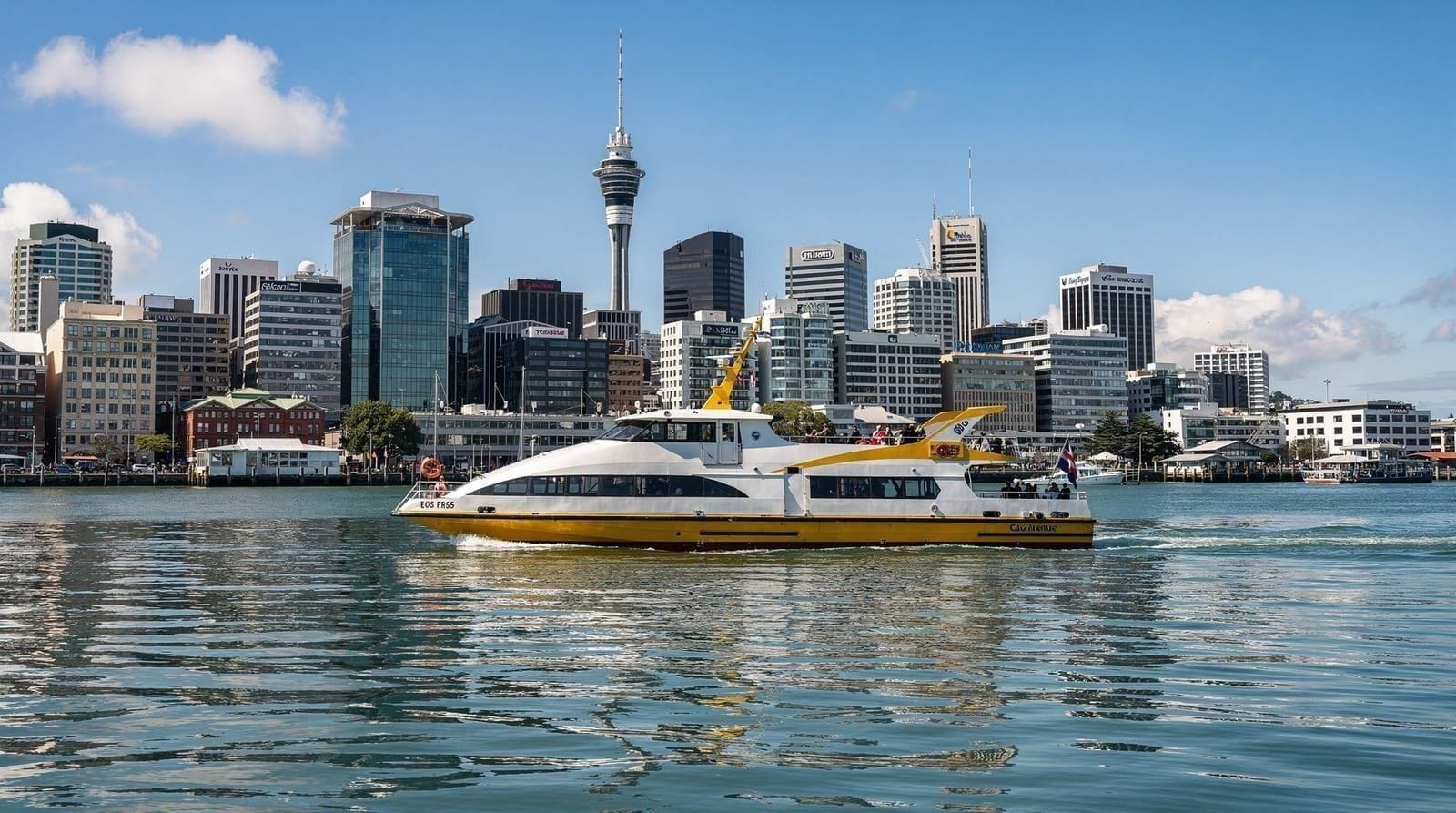
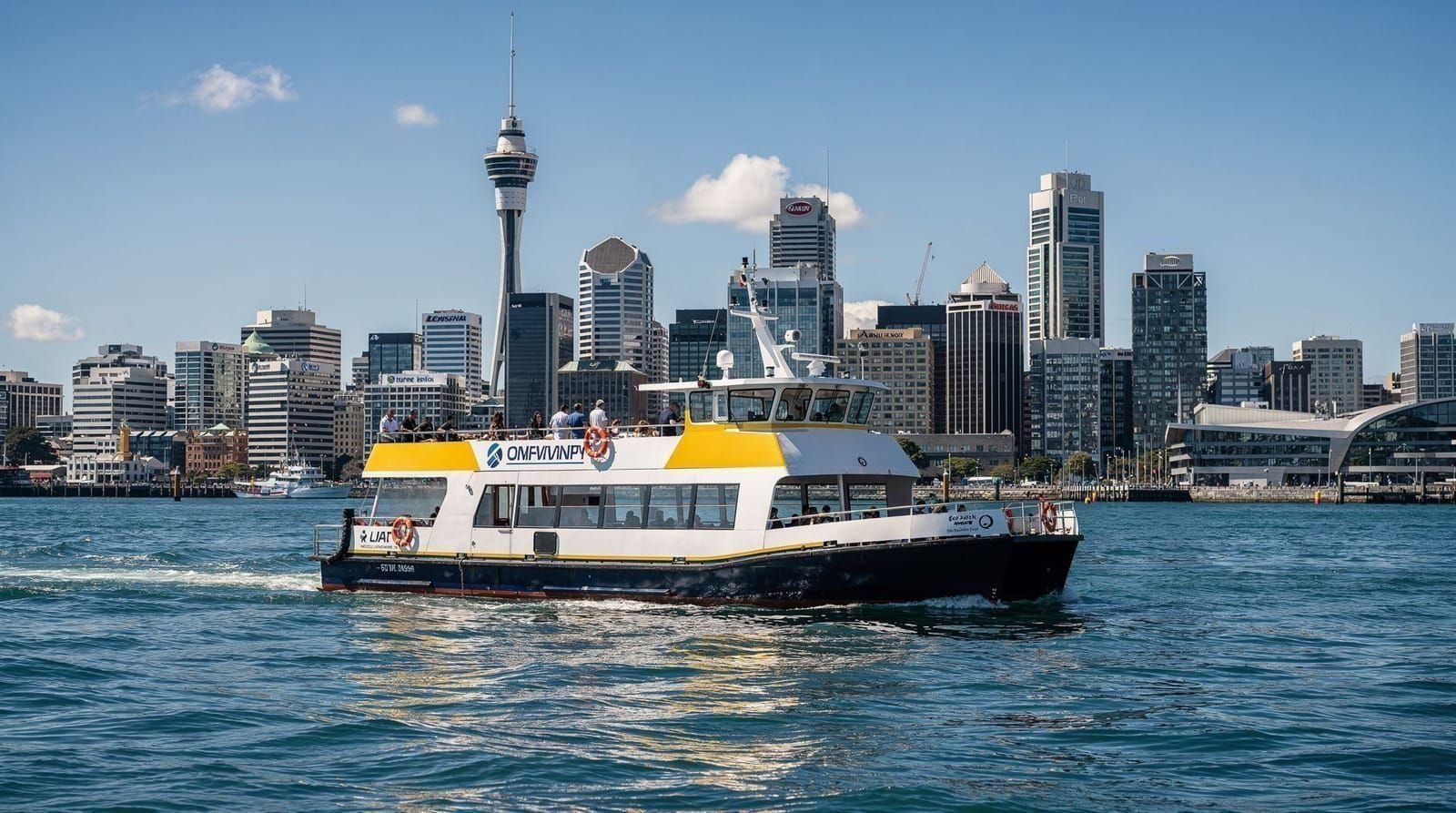
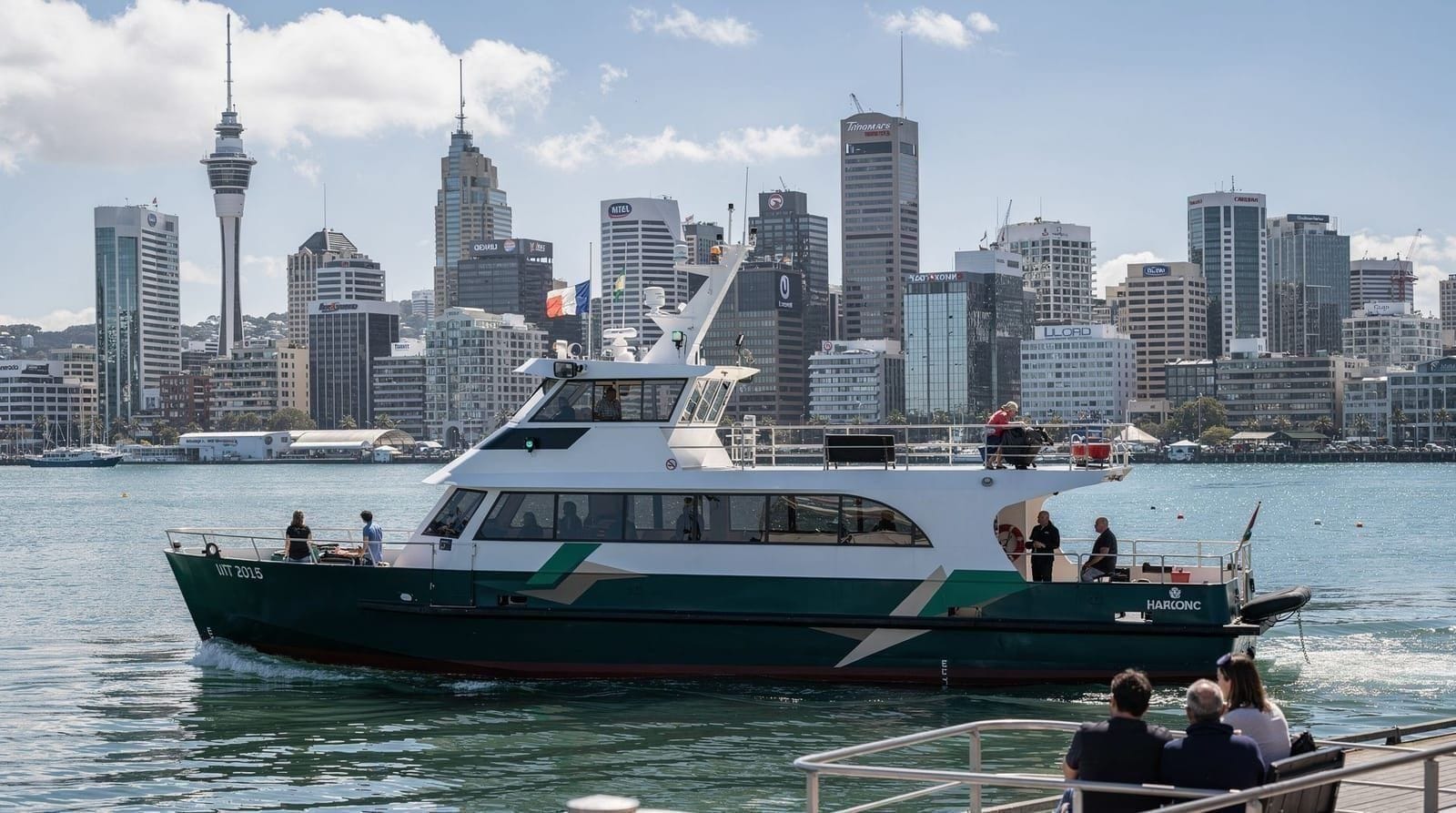
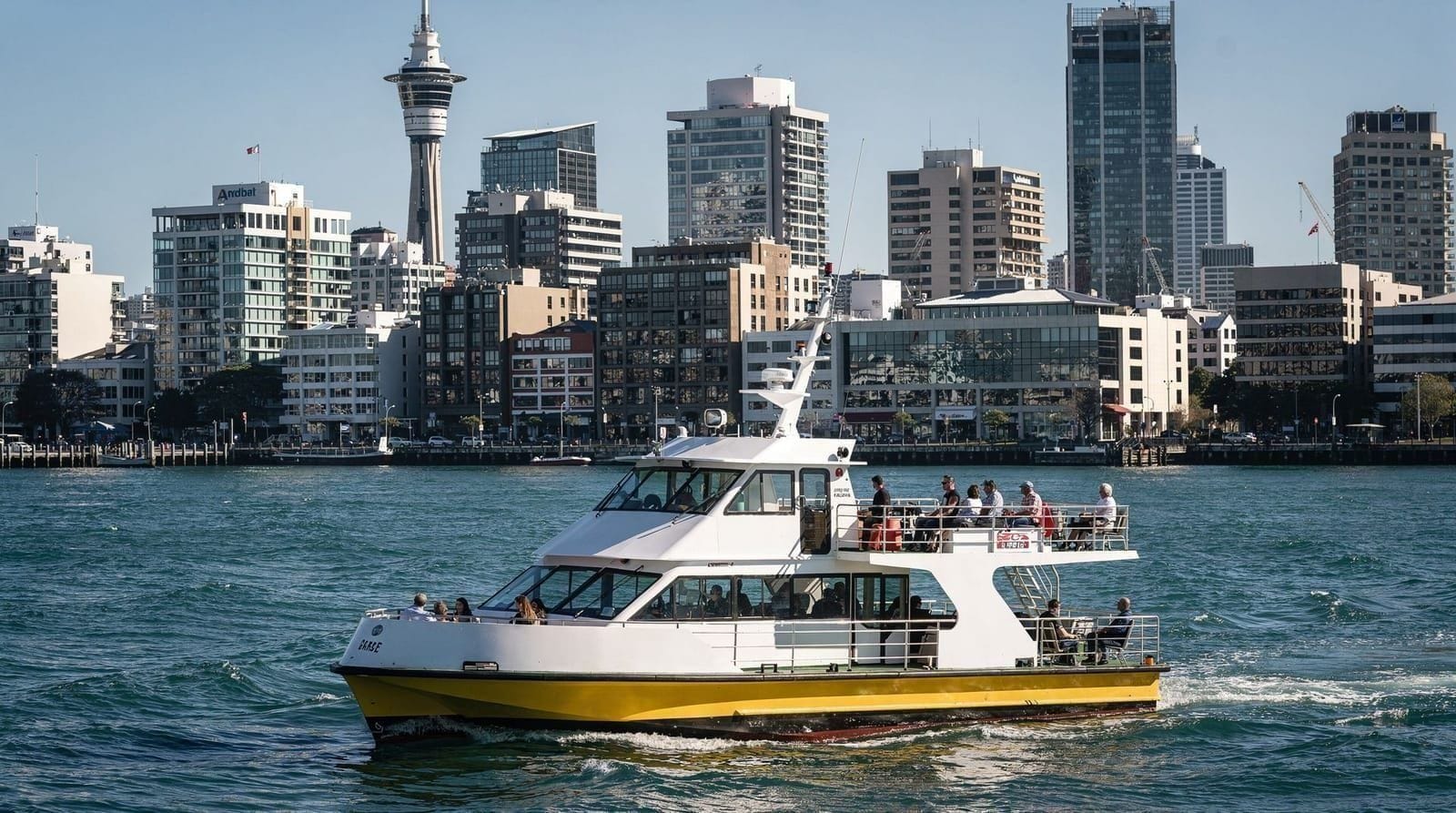
Buses cover the widest area, including routes to Mission Bay, Takapuna and most inner suburbs, though schedules can be less frequent outside peak commuter hours. Trains run on the City Link, Western, Eastern and Southern lines, are modern and reasonably frequent (roughly 15-20 minutes at peak), and are the most comfortable option for longer trips within the network — useful if you’re staying somewhere near a train station. Ferries, operated mainly by Fullers360, connect downtown Auckland to Devonport, Waiheke Island, Rangitoto and other Hauraki Gulf islands — for many visitors, a ferry trip is as much a sightseeing activity as a transport leg. See our dedicated Auckland ferries guide for routes, timetables and pricing.
If you’d rather see the city’s layout without committing to specific bus routes, the hop-on hop-off bus ticket loops past most major sights with flexible stops — a reasonable option on a first day when you’re still getting oriented.
Walking
The CBD, waterfront (Viaduct, Wynyard Quarter, Queens Wharf) and several inner suburbs (Ponsonby, Parnell, Newmarket) are genuinely walkable, and Auckland’s compact centre means many first-time visitors underestimate how much they can cover on foot in a day. Footpaths are generally good quality, though Auckland’s hilly terrain (it’s built across dozens of extinct volcanic cones) means some routes involve real elevation change — check a map before committing to a long cross-town walk.
Rideshare and taxis
Uber and local rideshare apps operate reliably across Auckland and are a sensible choice for late-night travel when public transport has stopped running, direct airport transfers, or trips where the bus or train routing is awkward. Fares run noticeably higher than public transport, so they work best as a supplement rather than your primary transport mode for a multi-day stay.
Transport modes compared
| Mode | Best for | Typical cost | Notes |
|---|---|---|---|
| Bus | Inner suburbs, Mission Bay, Takapuna | NZD 2-6/trip with AT HOP | Widest coverage, less frequent off-peak |
| Train | City Link, Western, Eastern, Southern lines | NZD 2-7/trip with AT HOP | Comfortable, 15-20 min frequency at peak |
| Ferry | Devonport, Waiheke, Rangitoto | NZD 8-25 return | Also a sightseeing activity in itself |
| Rental car | Day trips, west coast beaches, North Island loop | From ~NZD 45/day plus fuel | Only practical way to reach Piha, Hobbiton, Waitomo |
| Rideshare/taxi | Late-night trips, airport, awkward routings | Notably higher than transit | Best used as a supplement, not primary mode |
If you’re planning a full circuit beyond the city, our Auckland attractions guide and best day trips from Auckland roundup are useful for mapping which mode you’ll need on which day.
Getting from the airport
Auckland Airport sits about 23km south-east of the city centre, roughly 30-40 minutes by car depending on traffic. SkyBus runs a direct airport-to-city service (NZD 18 one-way), and taxis or rideshare cost more but offer door-to-door convenience with luggage. Full details, including which option suits different group sizes and arrival times, are in our Auckland airport to city guide.
When you actually need a car
Public transport does not reach several of the region’s best-known attractions in any practical way. West coast beaches (Piha, Muriwai, Karekare), the Waitākere Ranges, and day trips to Hobbiton, Waitomo, Rotorua or the Coromandel all require a rental car or an organised tour. See our car rental Auckland guide for booking and cost details, and our driving in New Zealand guide for what to expect on the road, including left-hand driving and rural road conditions. If you’re weighing whether to rent a car for your whole trip or rely on public transport plus the occasional tour, our public transport vs car comparison breaks down the trade-offs by itinerary type.
Cycling and e-scooters
Auckland has expanded its cycling infrastructure in recent years, with dedicated lanes along parts of the waterfront and inner suburbs, and e-scooter share schemes (rentable via app) are common in the CBD and nearby areas. Neither is a primary way to get around for most visitors, but both are worth knowing about for short hops — a scooter from the waterfront to a nearby restaurant, for instance — where waiting for a bus feels like overkill and walking feels slow. Auckland’s hilly terrain, a product of its volcanic geology, makes cycling more physically demanding in some directions than others; check elevation before committing to cycle a longer cross-town route, particularly with luggage.
Ferries as a sightseeing activity, not just transport
It’s worth reframing Auckland’s ferries mentally: for many visitors, a ferry trip is one of the best free (or near-free) sightseeing experiences in the city, not just a way to get from A to B. The short Devonport crossing offers skyline views back toward the CBD, and longer trips to Waiheke or Rangitoto turn transport time into part of the day’s activity rather than dead time to be minimised. Building a ferry crossing into your itinerary deliberately — rather than just using it as the fastest way to reach an island — is a genuinely good use of an otherwise ordinary transport leg.
Parking in central Auckland
If you do have a rental car for part of your stay, CBD parking is metered and runs roughly NZD 4-6 per hour, with parking buildings offering flat daily rates that often work out cheaper than metered street parking for a full day. Many visitors find it more practical to park the car once near accommodation and rely on walking or public transport for city-based days, reserving the car specifically for days when you’re driving out of the city to a day trip destination — this avoids paying for both a rental car and repeated CBD parking fees on days when you don’t actually need to drive anywhere.
Combining transport modes across a multi-day stay
Most visitors end up using several transport modes across a single trip rather than settling on just one. A typical pattern: walking and public transport for city-based days, a ferry day for Waiheke or Rangitoto, and a rental car picked up specifically for one or two day-trip days before being dropped back off. This mix-and-match approach is usually more cost-effective than renting a car for the entire stay if a meaningful portion of your itinerary stays within the city, and our public transport vs car guide walks through exactly how to decide which days need which mode.
A rough guide by itinerary
If you’re staying entirely within Auckland city (museums, waterfront, Mission Bay, Devonport, a Waiheke or Rangitoto day trip), public transport and ferries alone will cover your needs comfortably — skip the rental car and save the money. If your itinerary includes even one or two North Island day trips beyond a ferry-accessible island, a short-term rental car for those specific days, combined with public transport for the rest of the stay, is usually the most cost-effective approach. If you’re planning an extended North Island loop beyond Auckland (Rotorua, Bay of Islands, Coromandel), a rental car for the full trip makes more sense than trying to combine tours for every leg.
Transport for visitors with mobility needs
Auckland’s public transport network has made progress on accessibility, with most buses low-floor and wheelchair-accessible, and newer train carriages designed with step-free boarding at platform level on most stations. Ferries vary more by vessel and route, so it’s worth checking accessibility specifics for your planned crossing directly with Fullers360 ahead of travel if this is a concern. For visitors who need door-to-door transport without navigating public transport accessibility features, rideshare and taxi services remain the most reliable fallback, and most rental car companies can arrange hand controls or other adaptations with sufficient advance notice.
Transport apps worth downloading
The official AT Mobile app (Auckland Transport) shows live bus, train and ferry times, lets you top up an AT HOP card digitally on newer phones, and plans multi-leg journeys across all three modes — it’s the single most useful download for a car-free stay. Google Maps also pulls Auckland Transport’s live data reasonably well for point-to-point journey planning, so between the two you rarely need a paper timetable. If you’re renting for a day trip, a separate navigation app with offline maps downloaded in advance is worth having, since coverage thins out in parts of the Waitākere Ranges and rural Coromandel.
Transport and where you stay
Your choice of neighbourhood affects how much you’ll lean on transport day to day. Staying in the city centre or Ponsonby/Grey Lynn puts you within walking distance of most sights and on top of the bus and train network, while a base further out trades convenience for quieter surroundings and usually means a bus or car for most days. Our where to stay in Auckland guide breaks down the trade-offs by neighbourhood, and it’s worth reading before booking accommodation if minimising transport time matters to you.
Travelling with kids or limited mobility
Buses and trains both accommodate pushchairs, and ferries have lift access on most Fullers360 vessels, though it’s worth checking your specific crossing if you’re travelling with a wheelchair. Families doing a lot of city-based sightseeing often find the AT HOP card genuinely simplifies the day compared with juggling cash fares with kids in tow — see our Auckland with kids guide for how this fits into a family itinerary, including which attractions are realistically walkable versus which need a bus or car.
Island and harbour days without a car
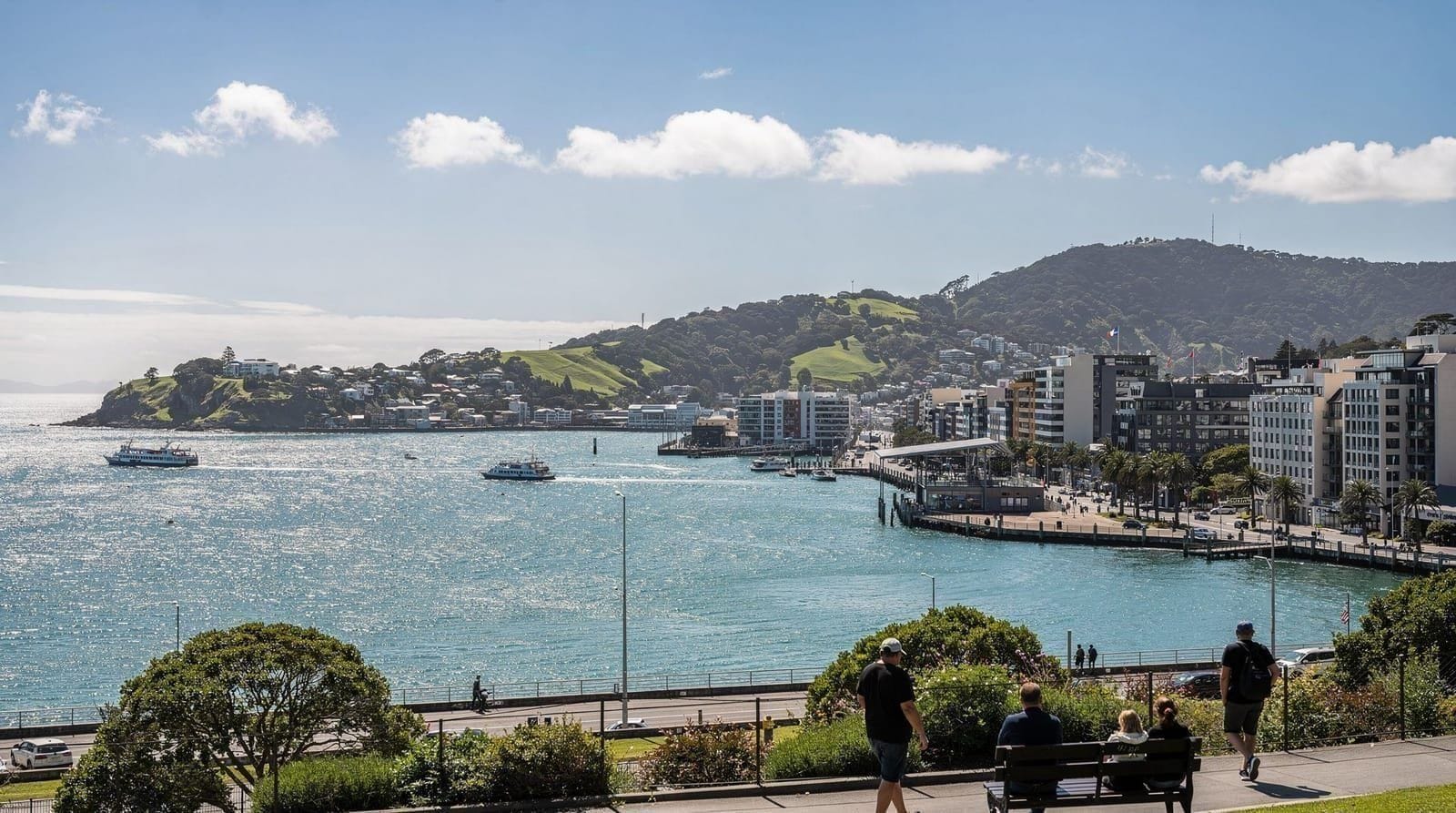
The Hauraki Gulf is where Auckland’s ferry network earns its keep. A day on Waiheke Island works well on foot and by local bus once you’ve crossed, and our ferry vs drive to Waiheke comparison explains why most visitors leave the car on the mainland, and if the local bus feels limiting, a self-guided e-bike tour with ferry tickets is an easy way to cover more ground. For a wilder island, the Rangitoto Island hike pairs naturally with a ferry ticket, and Devonport makes an easy, low-effort half day that needs nothing more than a ferry and comfortable shoes. If the gulf appeals beyond the big names, the Hauraki Gulf islands guide shows what else the same ferry terminal opens up.
Using transport to plan your days
A good habit is to cluster your days by transport type. Keep one day for the waterfront and Viaduct and Wynyard Quarter, all of it on foot. Give another to the beaches along Mission Bay and Tamaki Drive, which a bus handles easily. Then save the car or tour for the day that really needs it. If you’re short on time, the Auckland in a day and 3-day Auckland itinerary pages show how this kind of clustering looks in practice, and the Auckland neighbourhoods guide helps you pick a base that suits it.
Day trips: car or tour?
Once you decide you’re leaving the metro area, the question becomes whether to drive yourself or let someone else do it. Our self-drive vs tour day trips guide weighs the two honestly. A tour removes parking, navigation and left-hand driving from the day, which suits a trip like Hobbiton or Waitomo where you want to relax. Driving gives you freedom to linger, which suits the Piha and Waitākere day trip or the Coromandel. For Rotorua, the Auckland to Rotorua transport options page lays out the choices if you’d rather not drive the whole way.
Budget and transport
Transport is one of the easier parts of a trip budget to control, because the AT HOP cap and the ferry fares are predictable and a car is only a cost on the days you choose it. If you want to see where it sits against accommodation and food, the Auckland budget guide and the trip cost breakdown put it in context.
Frequently asked questions about getting around Auckland
Do I need a car in Auckland?
Not for the city itself — the CBD, waterfront and inner suburbs are walkable, and public transport (bus, train, ferry) covers Devonport, Mission Bay, Takapuna and more. You’ll want a car or tour for west coast beaches, the Waitākere Ranges, and any North Island day trip beyond a ferry-accessible island.
How does the AT HOP card work?
AT HOP is a rechargeable prepaid card covering bus, train and ferry travel across Auckland, sold at the airport, supermarkets and convenience stores, and topped up at machines, online or in-app. It gives roughly 20% off cash fares and caps most travellers’ costs at NZD 50 over a rolling 7-day period. See our full AT HOP card guide for setup details.
Is Uber available in Auckland?
Yes, Uber and local rideshare apps operate throughout Auckland and are a reasonable option for late-night travel, airport transfers, or trips that don’t align well with bus or train schedules, though fares run higher than public transport.
How do you get to Waiheke Island or Rangitoto from Auckland?
Both are ferry-only from the downtown terminal — no bridge or road access. Waiheke’s ferry takes about 40 minutes, Rangitoto’s about 25 minutes. See our Auckland ferries guide for schedules and operators.
Is driving in Auckland difficult for visitors?
New Zealand drives on the left, which takes most visitors a day or two to adjust to. Auckland’s CBD has one-way streets and metered parking, but outside the centre, driving is generally straightforward. See our driving in New Zealand guide for the specifics that trip up visitors most often.
Do I need a rental car for the whole trip, or just some days?
Most visitors only need a car for specific day-trip days, not the whole stay. If your itinerary is mostly city-based with one or two excursions to places like Hobbiton or the west coast beaches, a short-term rental for just those days combined with public transport for the rest is usually cheaper and less hassle than renting for the entire trip. Our public transport vs car guide breaks this down by itinerary type.
Top experiences
Bookable activities with verified prices and instant confirmation on GetYourGuide.