Auckland packing list: what to bring by season
Auckland: City highlights tour with hotel pickup
What should I pack for Auckland?
Layers year-round, SPF 50+ sunscreen and a hat regardless of season (New Zealand's UV is extreme), a light rain jacket, comfortable walking shoes, swimwear, and a Type I power adapter. Summer needs less warm layering; winter needs a proper insulated jacket for evenings.
Why Auckland’s climate makes packing genuinely different
If you’d rather see the main sights without gambling on the weather, a city highlights tour with hotel pickup or a private four-hour city tour keeps you moving between viewpoints and indoor stops whatever the sky does.
Visitors arriving from destinations with a single dominant season sometimes underestimate how much Auckland’s maritime, changeable weather actually affects a packing strategy. The city sits between two harbours, and weather systems roll through quickly — a bright, still morning can turn to wind and light rain by early afternoon, and back to sun before dinner, all within the same day and often within the same season. This isn’t a warning sign of a “bad” climate, just a genuinely different pattern from destinations with long, stable dry or wet seasons, and it’s the single biggest reason layering beats packing for one expected condition. Locals rarely leave home without at least a light jacket within arm’s reach, even in the middle of summer, and visitors who adopt the same habit are noticeably less caught out than those who pack based on the seasonal average alone.
| Non-negotiables | SPF 50+ sunscreen, rain jacket, comfortable shoes |
| Power adapter | Type I (Australia/NZ standard, 230V) |
| Cost if forgotten | around NZD 10-20 locally |
| Best strategy | light layers, check the forecast daily |
| Laundry | plan a load partway through trips of 2+ weeks |
This variability also means checking a short-range forecast the night before each day of your trip is genuinely worthwhile, rather than relying purely on the seasonal generalities in this guide. A forecast showing rain doesn’t necessarily mean a washout — Auckland rain is frequently a passing shower rather than an all-day event — but it does mean packing (or carrying) the rain jacket that day rather than leaving it at the hotel.
The non-negotiables, regardless of season
Three things belong in every Auckland packing list no matter when you’re travelling: strong sun protection, a light rain layer, and comfortable walking shoes. New Zealand’s UV levels are genuinely among the highest in the world — not marketing hyperbole — and Auckland’s weather brings rain year-round even during the “dry” summer months. Getting these three right does more for your trip comfort than almost anything else on this list.
Sun protection: the non-negotiable
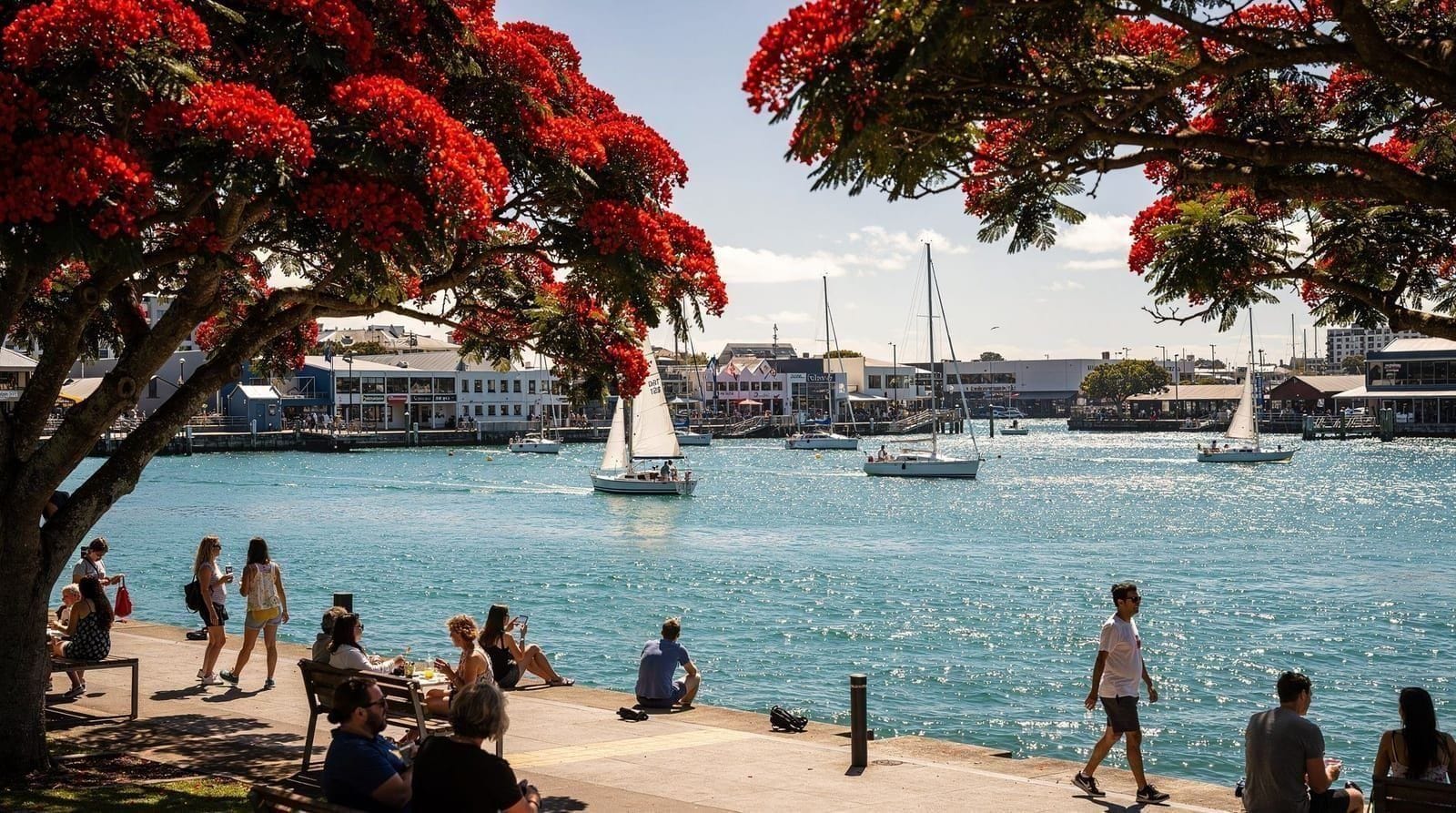
SPF 50+ sunscreen, reapplied every two hours when outdoors, is essential in every season, including overcast days — UV radiation passes through cloud cover more than most visitors expect, and sunburn can happen within 20 minutes of exposure in summer. Pair it with a wide-brimmed hat and UV-rated sunglasses; New Zealand’s own public health guidance summarises this as “slip, slop, slap, wrap” — slip on clothing, slop on sunscreen, slap on a hat, wrap on sunglasses. This matters even for a short city walk, not just beach days or hikes.
Layers, for every season
Auckland’s maritime climate shifts quickly, and even summer days can start cool and warm up fast, or vice versa. A packing strategy built around light layers — a t-shirt, a light long-sleeve, and a packable insulated or fleece layer — handles most of the year. Add a packable rain jacket regardless of season; Auckland gets rain in every month, and June-July are genuinely the wettest.
Summer (December-February): lighter layering overall, but still pack one warmer layer for cooler evenings or a rainy day. Shorts, t-shirts, swimwear and a light jacket cover most needs.
Shoulder seasons (March-April, September-November): this is where layering matters most — mornings can be crisp while afternoons warm up considerably. A mix of short and long sleeves, plus a proper mid-layer, works well. See our Auckland weather by month guide for month-specific temperature ranges.
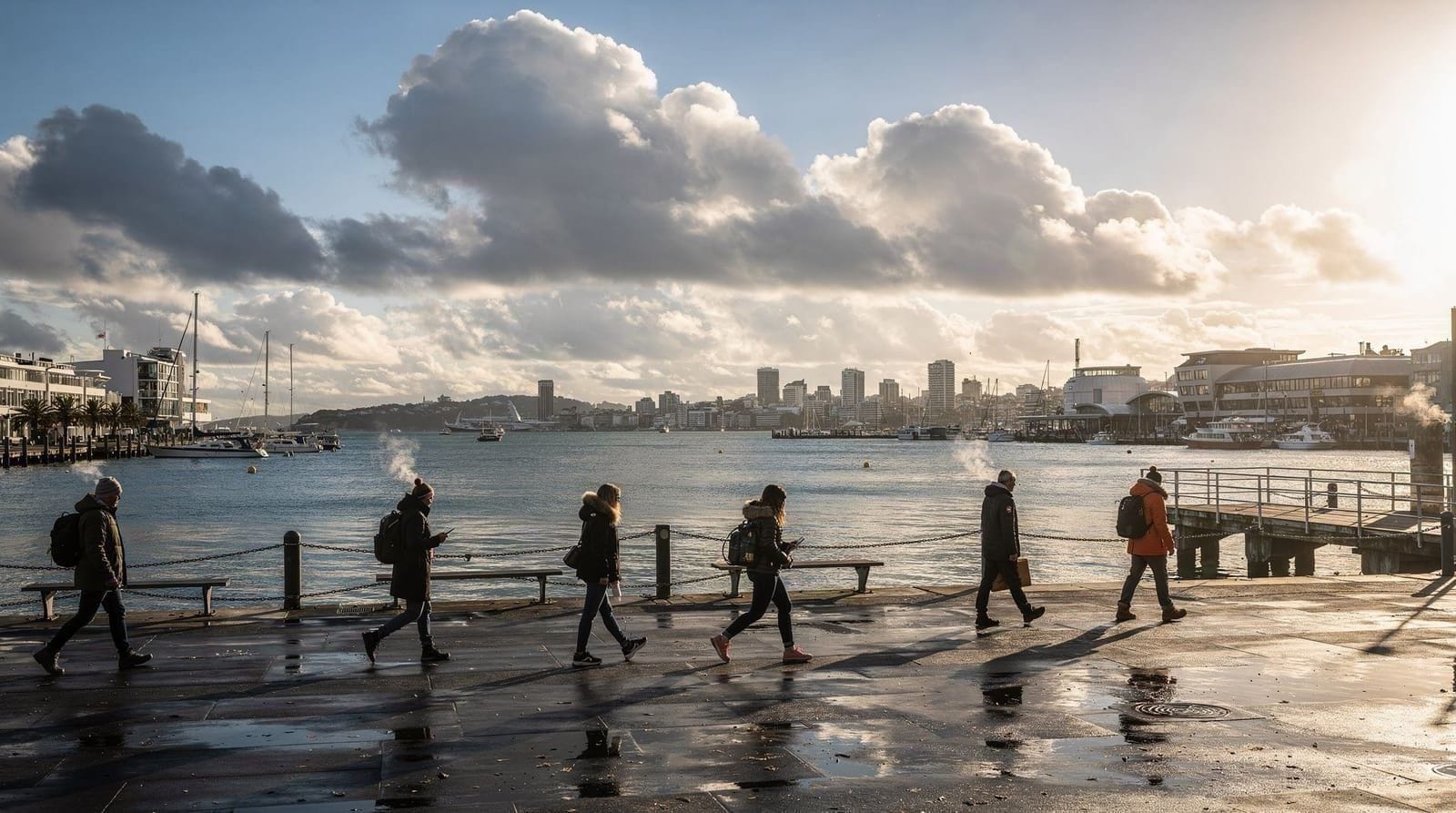
Winter (June-August): pack a proper insulated jacket, warm layers for evenings (sunset as early as 4:30pm), and a sturdy umbrella alongside the rain jacket, since this is the wettest stretch of the year. Our Auckland in winter guide has the full seasonal breakdown, and Auckland in summer covers the opposite end of the year.
| Season | Key items | Skip |
|---|---|---|
| Summer (Dec-Feb) | Shorts, swimwear, one warm layer, light jacket | Heavy layers, insulated jacket |
| Shoulder (Mar-Apr, Sep-Nov) | Mix of short/long sleeves, proper mid-layer | Single-condition outfits |
| Winter (Jun-Aug) | Insulated jacket, umbrella, warm evening layers | Shorts-only packing |
Footwear
Comfortable walking shoes or trainers cover the vast majority of an Auckland-based trip, including city walking, most volcanic cone hikes, and the Cathedral Cove coastal walk from Hahei. Add a pair of sandals or reef shoes for beach days at Piha, Mission Bay or Hot Water Beach. Proper hiking boots are only necessary if your itinerary includes the Tongariro Alpine Crossing or multi-day tramping tracks — for a standard Auckland-and-day-trips itinerary, sturdy trainers are genuinely sufficient.
Swimwear and beach gear
Swimwear is worth packing even outside summer, since several attractions — thermal pools in Rotorua, Hot Water Beach’s self-dug thermal pools — work year-round. A reusable water bottle is also useful; New Zealand’s tap water is safe to drink everywhere, so refilling rather than buying bottled water is both cheaper and more sustainable.
Toiletries and health items
Sunscreen, while sold everywhere in Auckland, is genuinely worth bringing a bottle of from home if you already have a formula you trust, since New Zealand pharmacy and supermarket sunscreen is priced similarly to elsewhere but ranges widely in quality and finish. Beyond SPF, pack any prescription medication in its original packaging with enough supply for the full trip plus a few extra days as a buffer against delays, along with a printed or digital copy of the prescription if it’s a controlled substance — New Zealand customs takes this seriously for certain medication categories. Basic over-the-counter items like paracetamol, antihistamines and motion sickness tablets are all easily available at Auckland pharmacies (chemists) if you’d rather not pack a full kit, but having a small supply on day one avoids a pharmacy detour during your first jet-lagged morning.
Insect repellent is worth a small bottle for evenings near bush walks or the volcanic cones, mostly for mosquitoes rather than anything more serious — New Zealand has no venomous snakes, spiders of real concern, or other dangerous wildlife, which is a genuine point of relief for travellers used to packing for destinations with more hazards. A small supply of hand sanitiser and tissues rounds out a sensible toiletries kit for day-trip days when facilities can be basic, particularly around Waitomo and rural Coromandel stops.
Packing for families with kids
Families travelling with children should pack much the same core kit — sun protection is if anything more important for kids given how quickly young skin burns in New Zealand’s UV levels, so pack a higher-SPF, kid-specific sunscreen and consider UV-rated swimwear (rash guards) for beach and pool days rather than relying on sunscreen reapplication alone. A wide-brimmed hat with a chin strap survives car trips and windy ferry crossings better than a cap. For long day-trip car rides to Hobbiton, Waitomo or Rotorua, pack snacks, entertainment and a travel pillow, since these are genuinely multi-hour drives each way. If your children are young enough to need them, nappies (diapers) and formula are widely available in Auckland supermarkets and pharmacies, so there’s no need to over-pack a full trip’s supply from home — bring enough for the first day or two and restock locally.
Packing an Auckland-specific tech kit
Beyond the standard phone charger and adapter, a few Auckland-specific tech considerations are worth thinking through before you fly. Download offline maps for the wider Auckland region and any planned day-trip routes before you go, since mobile coverage genuinely drops out in parts of the Waitomo and Coromandel countryside, and relying entirely on live data can leave you stranded on a rural road without directions. A local SIM card or eSIM, picked up at Auckland Airport or a city phone shop on arrival, is generally cheaper than international roaming for a trip of a week or more — this is worth researching before you leave rather than defaulting to your home carrier’s roaming rate, which can be steep.
If you’re planning to drive, having your rental confirmation, International Driving Permit (if required for your nationality) and physical driving licence together in one easily accessible spot saves fumbling at the rental counter after a long-haul flight — our car rental Auckland and driving in New Zealand guides cover the practical side of this in more depth.
Practical extras people forget
A Type I power adapter (the same angled flat-pin standard used in Australia, 230V) is essential — New Zealand doesn’t share a plug standard with the UK, US or most of Europe. Buy one before you travel or pick one up locally for NZD 10-20 if needed. A basic first-aid kit is worth including if your itinerary involves hiking, along with insect repellent for evenings near bush areas, though New Zealand has no dangerous wildlife to worry about beyond occasional mosquitoes. A day pack is genuinely useful for day trips, since most involve some walking between parking areas and attractions.
Beyond the obvious, a handful of smaller items consistently earn their space in an Auckland packing list. A portable phone charger or power bank is genuinely useful on longer day-trip days — Hobbiton and Waitomo excursions can run 8-10 hours door to door, and you’ll want your phone alive for photos and navigation the entire time. A microfibre travel towel is handy for beach days and Hot Water Beach’s self-dug thermal pools, where facilities are minimal. If you’re bringing any electronics with a UK-style three-pin or US-style two-pin plug, double-check your adapter is a genuine Type I converter rather than a universal multi-country adapter that doesn’t actually fit New Zealand’s angled sockets properly — a surprising number of “universal” adapters sold overseas don’t include New Zealand and Australia’s specific pin configuration.
Packing by trip length
A long weekend (3-4 days), likely spent entirely within Auckland city and perhaps one day trip, needs the smallest kit: one weather-appropriate outfit set per day, the sun-protection basics, one pair of comfortable shoes, and swimwear if a Waiheke or Mission Bay visit is planned. Carry-on-only is realistic for this length of trip in most seasons.
A one to two week trip covering Auckland plus a North Island loop through Hobbiton, Waitomo, Rotorua and possibly Bay of Islands needs more flexibility: pack for a wider range of activities in a single bag, since you’ll likely be living out of a rental car or a rotating set of hotels rather than unpacking fully at each stop. This is where the layering strategy above earns its keep — a handful of interchangeable pieces cover city days, thermal park visits, cave tours and coastal walks without needing a different outfit for each.
For longer trips (two weeks or more), especially ones extending to the South Island, plan on doing at least one laundry load partway through rather than packing enough clothing for the entire trip. Most hotels offer laundry service, and larger towns have self-service laundromats — packing seven days of clothing for a three-week trip, with a laundry stop or two, is far more practical than hauling three weeks of clothes in one bag.
Packing for specific Auckland activities
Different day trips genuinely call for different kit, and it’s worth thinking through your specific itinerary rather than packing generically.
Hobbiton: comfortable walking shoes for the hillside paths (not sandals — the Shire’s paths are grass and gravel), a light layer since you’re outdoors for roughly two hours regardless of weather, and a camera or phone with charge, since this is one of the most photographed stops on a North Island trip.
Waitomo glowworm caves: warm layers even in summer, since underground cave temperatures stay cool and consistent year-round — expect a noticeable temperature drop from the surface. Closed-toe shoes are required for most cave tours, and if you’re doing a black-water rafting or wetsuit-based tour, the operator supplies the wetsuit, so swimwear underneath is all you need to bring yourself.
Waiheke Island wine tours: smart-casual clothing works well for vineyard restaurant lunches, and a light layer for the ferry crossing, which can be breezy even on a warm day. Sunglasses and sunscreen matter here as much as anywhere, since much of a Waiheke day is spent outdoors on terraces and in vineyard gardens.
Rotorua’s geothermal parks and hot pools: swimwear and a towel are essential if you’re visiting the geothermal spa pools, plus a change of clothes for afterwards. The sulphur smell around Rotorua’s geothermal areas can linger on fabric, so older clothing you don’t mind exposing to it is a reasonable choice for this leg of a trip.
Coastal walks and beach days (Piha, Cathedral Cove, Mission Bay): sturdy trainers for the walk in, sandals for the beach itself, plenty of water, and — again — serious sun protection, since these are typically multi-hour exposed outdoor stretches with little shade.
Carry-on vs checked luggage
For trips of a week or less confined mostly to Auckland and nearby day trips, carry-on-only is genuinely achievable and simplifies domestic transfers if your itinerary includes an internal flight to Queenstown or Wellington. Pack sun protection, one warm layer and any medications in your carry-on regardless of your overall luggage strategy, since checked bags occasionally go missing or get delayed, and these are the items you don’t want to be without on day one. If you’re checking a bag, keep a change of clothes and toiletries in your carry-on as a backup.
For longer North Island loops involving a rental car, checked luggage is more practical, since you’re not constrained by cabin storage limits the way you would be threading through multiple flights. Soft-sided duffel bags pack more efficiently into a rental car boot than a rigid hard-shell suitcase, which is worth considering if your trip involves several days of driving and hotel-hopping between Auckland, Hobbiton, Waitomo and Rotorua.
What you don’t need to pack
Skip heavy hiking boots unless you’re doing serious tramping, skip an excess of formal wear (Auckland’s dining scene is casual by international standards), and don’t overpack for cold — even winter in Auckland is mild by many Northern Hemisphere standards, at 10-15°C rather than genuinely freezing. If you’re travelling on to the South Island afterwards, that’s a different and considerably colder packing list, but for an Auckland-and-North-Island trip, moderate layering is enough.
Formal business attire is rarely needed even for upscale dinners — Auckland’s best restaurants lean smart-casual rather than jacket-and-tie, and a single nicer outfit covers the whole trip if you’re planning one or two special meals. Similarly, there’s no need to pack specialist snorkelling or diving gear unless you already own it and have a specific dive booked; most water-based tours and thermal pool visits provide or rent whatever specialist equipment is needed on-site, and buying gear specifically for a single trip rarely makes sense compared to renting locally for the day.
If your visit falls in winter, our Auckland in winter guide has month-specific detail worth cross-checking against this list, and if you’re still deciding when to travel in the first place, best time to visit Auckland helps you weigh weather against price and crowds before you commit to dates — which, in turn, determines exactly how much of this list you’ll actually need.
Packing tips from a practical planning angle
Read our Auckland weather by month guide before finalising your packing list, since the difference between a March and a July trip genuinely changes what’s worth prioritising in your bag. If your itinerary is Auckland-focused with day trips rather than a multi-city New Zealand tour, our first-time Auckland tips guide, how many days in Auckland and Auckland travel guide cover the wider planning picture alongside this packing-specific advice — and if you haven’t sorted your entry paperwork yet, our NZeTA visa guide is worth reading alongside this one, since both belong on the same pre-departure checklist.
And if budget is a factor in what you buy before departure versus what you pick up locally, our Auckland budget guide and is Auckland expensive guides give useful context — items like sunscreen, adapters and even swimwear are all readily available in Auckland’s shops and pharmacies if you’d rather buy on arrival than pack from home.
Matching your bag to your itinerary
Once you know what you plan to do, the list above gets easier to trim. Each of these guides will tell you which parts of your kit will actually see use.
- Beach and water days: the best beaches near Auckland and Auckland beaches guides help you decide how much swimwear and beach gear to bring. If you’re travelling with little ones, kid-friendly beaches in Auckland is worth a look before you pack sun shirts and sandals. Kayaking in Auckland is another reason to keep a quick-dry layer in your bag.
- Walking and volcanic cones: the Auckland hikes and volcanic cones of Auckland guides show what kind of terrain to expect, which is how you decide between trainers and something sturdier. The Rangitoto Island hike is an exposed walk, so hat, water and sunscreen matter there.
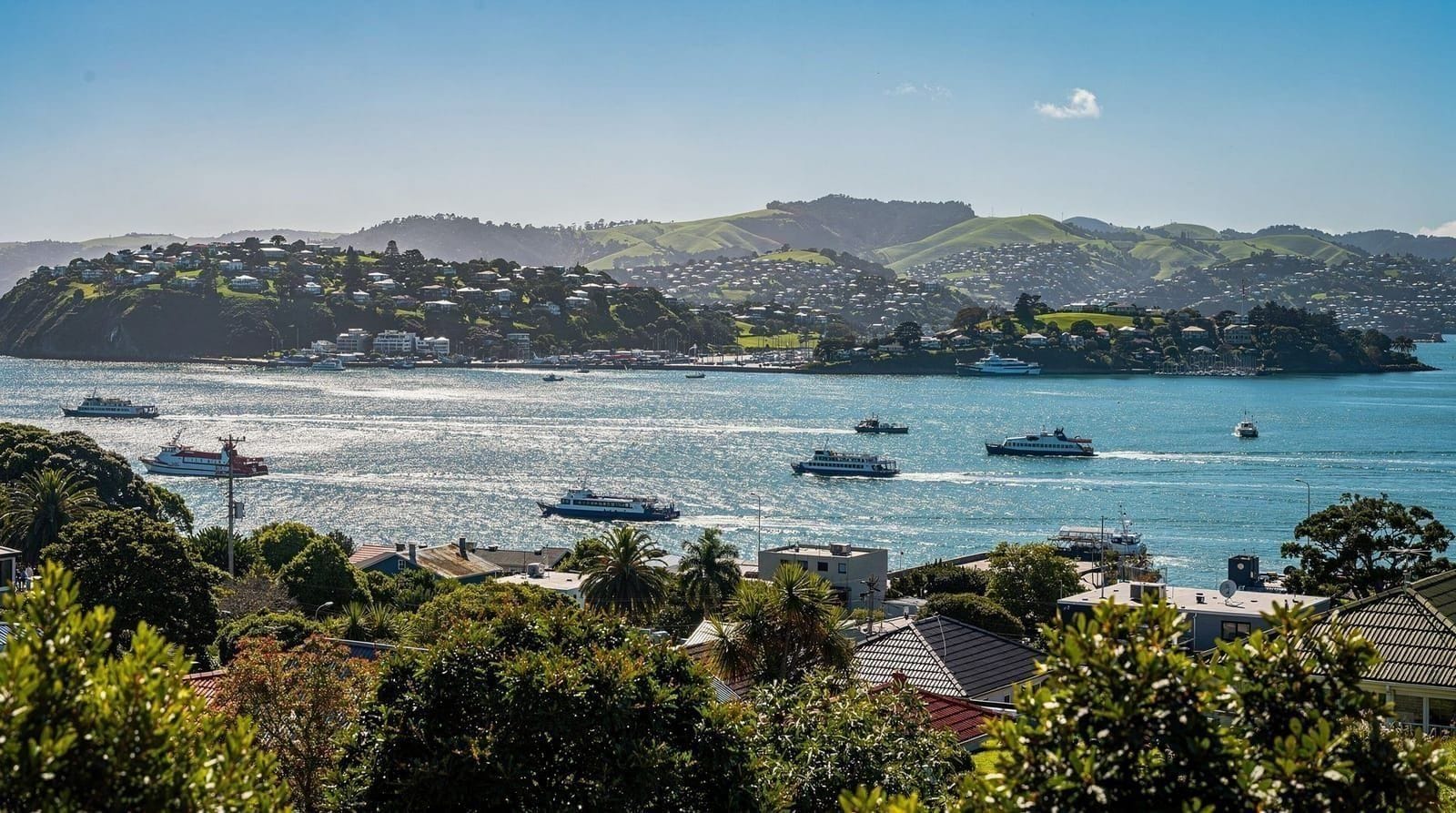
- Island days: the Waiheke Island guide and the Auckland ferries guide are useful for planning what to carry on board, since you’ll usually be moving between ferry decks, vineyards and beaches with one small bag.
- Getting around: if you’re leaning on buses, trains and ferries, the AT HOP card guide and getting around Auckland explain how to keep your daily kit light. Your first stop is likely to be the airport, so Auckland airport to city is worth reading before you decide what goes in your carry-on.
- Rainy days: if the forecast turns, the rainy day activities for kids in Auckland guide and the Auckland Museum guide give you indoor options, and they’re a good reminder of why a packable rain layer earns its place.
None of this changes the core kit. Sun protection, a rain layer and comfortable shoes still come first, and the activity-specific items are the ones you adjust once your plans are settled.
A quick reference checklist
- SPF 50+ sunscreen, hat, UV sunglasses (every season)
- Packable rain jacket (every season)
- Light layers: t-shirt, long sleeve, mid-layer
- Comfortable walking shoes or trainers
- Sandals or reef shoes for beaches
- Swimwear (useful year-round for thermal pools)
- Type I power adapter
- Reusable water bottle
- Day pack for excursions
- Winter only: insulated jacket, umbrella, warmer evening layers
Frequently asked questions about packing for Auckland
Do I need to pack for rain in Auckland even in summer?
Yes — Auckland gets rain year-round, and even summer months see occasional showers. A packable light rain jacket is worth including regardless of when you visit.
Is sunscreen really necessary in Auckland?
Essential, not optional. New Zealand has some of the highest UV radiation levels globally, and sunburn can occur within 20 minutes of exposure in summer, even under light cloud cover. SPF 50+ is the standard recommendation.
What power adapter do I need for New Zealand?
Type I — the same angled flat-pin plug used in Australia, at 230V. Bring a universal adapter or buy one locally for around NZD 10-20 if you forget.
Should I pack hiking boots for Auckland?
Sturdy trainers or light hiking shoes cover most Auckland-area trails, including Cathedral Cove and volcanic cone walks. Proper hiking boots only become necessary for the Tongariro Alpine Crossing or serious multi-day tramping.
What should I pack differently for winter in Auckland?
Add a proper insulated jacket, a warm layer for evenings (sunset is as early as 4:30pm in June-July), and a sturdy umbrella alongside your rain jacket, since winter is the wettest season.
Do I need special gear for Waitomo’s glowworm caves?
No special gear beyond warm layers — cave temperatures stay cool and consistent year-round. If you’re doing black-water rafting or a wetsuit-based tour, the operator provides the wetsuit and equipment.
Can I buy sunscreen, adapters and swimwear in Auckland if I forget them?
Yes — all three are widely available in Auckland pharmacies, supermarkets and shops, so it’s not worth stressing over a forgotten item. A Type I adapter typically costs NZD 10-20 locally.
Is a day pack really necessary for day trips?
Genuinely useful rather than essential — most day trips (Hobbiton, Waitomo, Rotorua) involve walking between parking areas and attractions, and a small day pack for water, sunscreen and a layer makes the day noticeably more comfortable.