Auckland budget guide: what a trip really costs
Hobbiton Movie Set: Movie set guided tour
Duration: 2.5 hours
What is a realistic daily budget for Auckland?
Budget travellers spend NZD 100-150/day (hostel, self-catering, public transport, free attractions), mid-range travellers NZD 250-350/day (hotel, casual dining, a few paid activities), and luxury travellers NZD 600-1,000+/day. Add roughly NZD 120 per person upfront for the NZeTA and IVL entry fees.
The three budget tiers
New Zealand pricing sits closer to Australia or a mid-sized US city than to Southeast Asia, but it’s genuinely manageable at any budget level if you plan around it. If you haven’t already worked out how many days your trip needs, our how many days in Auckland guide is worth reading alongside this one, since trip length changes the total more than most people expect. Three rough daily tiers, per person, excluding flights:
- Budget: NZD 100-150/day — hostel dorm bed, self-catering or cheap eats, AT HOP public transport, mostly free attractions
- Mid-range: NZD 250-350/day — comfortable hotel room, casual restaurant meals, a paid attraction or two, occasional taxi/rideshare
- Luxury: NZD 600-1,000+/day — four-star-plus hotel, fine dining, private tours, premium experiences
| Budget tier | NZD 100-150/day |
| Mid-range tier | NZD 250-350/day |
| Luxury tier | NZD 600-1,000+/day |
| Upfront costs | ~NZD 117-123/person (NZeTA + IVL) |
| Biggest lever | Shoulder-season travel and self-catering |
These numbers exclude the one-off entry costs covered below and any multi-day rental car or day-trip tours, which are worth budgeting separately since they don’t scale neatly with “per day” spending. For a longer discussion of whether these numbers make Auckland expensive relative to other destinations, see our is Auckland expensive guide.
None of these tiers are fixed categories you’re locked into for the whole trip, either — plenty of travellers mix tiers by day, spending a budget day after a splurge, or treating accommodation as mid-range while eating and travelling on a budget-tier footing. The tiers are a planning tool for estimating a realistic total, not a lifestyle you have to commit to uniformly.
What a real day looks like at each budget tier
Numbers are more useful with a concrete day attached to them, so here’s what NZD 100-150, NZD 250-350 and NZD 600-1,000+ actually buy on the ground.
A budget day (NZD 100-150): a hostel dorm bed (NZD 25-35), self-catered breakfast and a packed lunch from a supermarket (NZD 15-20), a casual dinner or a second self-catered meal (NZD 15-25), an AT HOP day of travel (well under the NZD 50 weekly cap), and a free attraction — a volcanic cone hike or a beach afternoon — filling the rest of the day. There’s little room for a paid attraction on the tightest version of this budget, but Auckland’s free options are genuinely good enough that it doesn’t feel like a compromise.
A mid-range day (NZD 250-350): a comfortable hotel room (NZD 150-220 as a rough per-person share of a double), a flat white and pastry breakfast (NZD 10-12), a casual restaurant lunch (NZD 15-20), a proper dinner with a drink (NZD 40-60), local transport, and room for one paid attraction — a Sky Tower visit or a half-day tour — most days.
A luxury day (NZD 600-1,000+): four-or-five-star accommodation (NZD 350-600+ per person share), fine dining across two meals (NZD 150-250), private transport or a rideshare rather than public transport, and a premium experience — a private tour, a harbour cruise with drinks, or a high-end day trip — built into most days rather than reserved for one splurge.
Upfront costs before you even arrive
Almost every visa-waiver visitor needs an NZeTA (NZD 17 via app, NZD 23 via website) plus the International Visitor Conservation and Tourism Levy of NZD 100 — a combined NZD 117-123 per person, valid two years. This is a fixed cost regardless of trip length, so it matters more for short trips proportionally. Full details are in our NZeTA visa guide.
Accommodation
Hostel dorm beds run NZD 25-35/night, budget hotel rooms NZD 100-150/night, and mid-range four-star hotels NZD 200-350/night. Location matters for value — CBD and Viaduct hotels command a premium for walkability, while Ponsonby or Mount Eden often offer better value with a short bus or ride-share into the centre. Our where to stay in Auckland guide breaks down neighbourhoods by price and traveller type.
Food and drink
A flat white costs NZD 5-6.50, a casual lunch NZD 12-16, and a casual dinner at a café or bistro NZD 20-30. A proper restaurant dinner for two with drinks runs NZD 100-150, and a pint at a bar is NZD 8-12. Self-catering (a weekly grocery shop runs NZD 100-180) is the single biggest lever for budget travellers, since Auckland’s supermarkets are well-stocked and hostel kitchens are common. Tipping isn’t culturally expected in New Zealand, which helps keep dining costs predictable — 10-15% for exceptional service is appreciated but genuinely optional, not assumed.
Transport
An AT HOP card cuts fares by 20% versus cash and caps spending at NZD 50 over any 7-day period across bus, train and ferry — genuinely the best single transport purchase you can make in the city. The SkyBus airport transfer costs NZD 18 one-way. For day trips, rental cars run NZD 40-80/day plus NZD 15-25/day insurance, and petrol is roughly NZD 2.20-2.50/litre. Rideshare trips within the CBD typically run NZD 15-30 depending on distance and time of day, a reasonable occasional substitute for public transport rather than a daily habit at mid-range or budget spending levels. Our getting around Auckland and AT HOP card guide go into the specifics.
For anyone weighing a rental car against public transport plus occasional tours, the breakeven point is usually somewhere around three to four day trips — below that, tours or one-off rideshares typically cost less once you factor in insurance, petrol and parking; above that, a rental car for the whole trip generally wins on both cost and flexibility, provided you’re comfortable driving on the left on unfamiliar roads.
Food courts and casual Asian eateries, particularly around the CBD and Newmarket, offer some of the best value-for-money meals in the city, often NZD 12-18 for a genuinely filling dish — worth knowing if restaurant pricing starts to feel repetitive after a few days. Farmers’ markets on weekends are another underused option: fresh produce and prepared food stalls at a fraction of restaurant prices, and a pleasant way to spend a morning regardless of budget tier.
Attractions and day trips
City attractions are moderate: Sky Tower entry runs NZD 35-40, the Auckland Museum has a suggested donation for New Zealand residents but a fixed entry fee for international visitors, and a Skywalk with Sky Tower entry ticket bundles the view with an added activity for a moderate premium.
Day trips are where costs add up fastest. A Hobbiton Movie Set guided tour runs around NZD 130 including the Green Dragon Inn drink; a Waitomo Glowworm Caves guided boat tour is NZD 45-80 depending on the operator and format; a Bay of Islands Hole in the Rock cruise runs NZD 70-100+; and a Waiheke ferry return alone is NZD 50-60 before any wine tour is added. Combined day tours covering two or three destinations in one trip (Hobbiton plus Waitomo, for example) typically cost NZD 200-280 but save considerably on transport and time compared to booking each separately.
Hidden and easy-to-forget costs
A few costs don’t fit neatly into the “per day” framing above but still need budgeting for. Travel insurance is worth treating as non-negotiable rather than optional — New Zealand’s healthcare, while good, isn’t free for visitors outside specific reciprocal agreements, and adventure activities common on North Island itineraries (black-water rafting at Waitomo, for instance) often require it as a condition of booking. A local SIM or eSIM runs roughly NZD 30-50 for a trip-length data package. CBD parking, if you’re renting a car and staying centrally, adds up fast at NZD 4-6/hour — worth checking whether your accommodation includes parking before assuming a rental car is cost-neutral.
Luggage storage, if you have a long layover or an awkward gap between checkout and a flight, typically costs NZD 10-15 per bag per day at the airport or CBD storage services. None of these are large individually, but together they can add NZD 100-200 to a week-long trip that a simple daily-rate calculation misses.
Group and family budgeting
Travelling as a family or group changes the maths in ways worth planning around. Accommodation is the biggest lever — a family room or apartment-style stay often costs less per person than two separate hotel rooms, and self-catering becomes far more attractive once you’re splitting a kitchen across four people rather than cooking for one. Day trips also get cheaper per person in a group: a rental car split three or four ways is frequently more cost-effective than the equivalent per-person tour price, provided someone in the group is comfortable driving on the left. On the other hand, family-oriented attractions and larger accommodation can push the mid-range tier toward its upper bound, so it’s worth budgeting NZD 300-400 per person per day for a family trip that wants some comfort and flexibility rather than assuming the standard mid-range figure scales down neatly for children.
Free and low-cost ways to cut costs
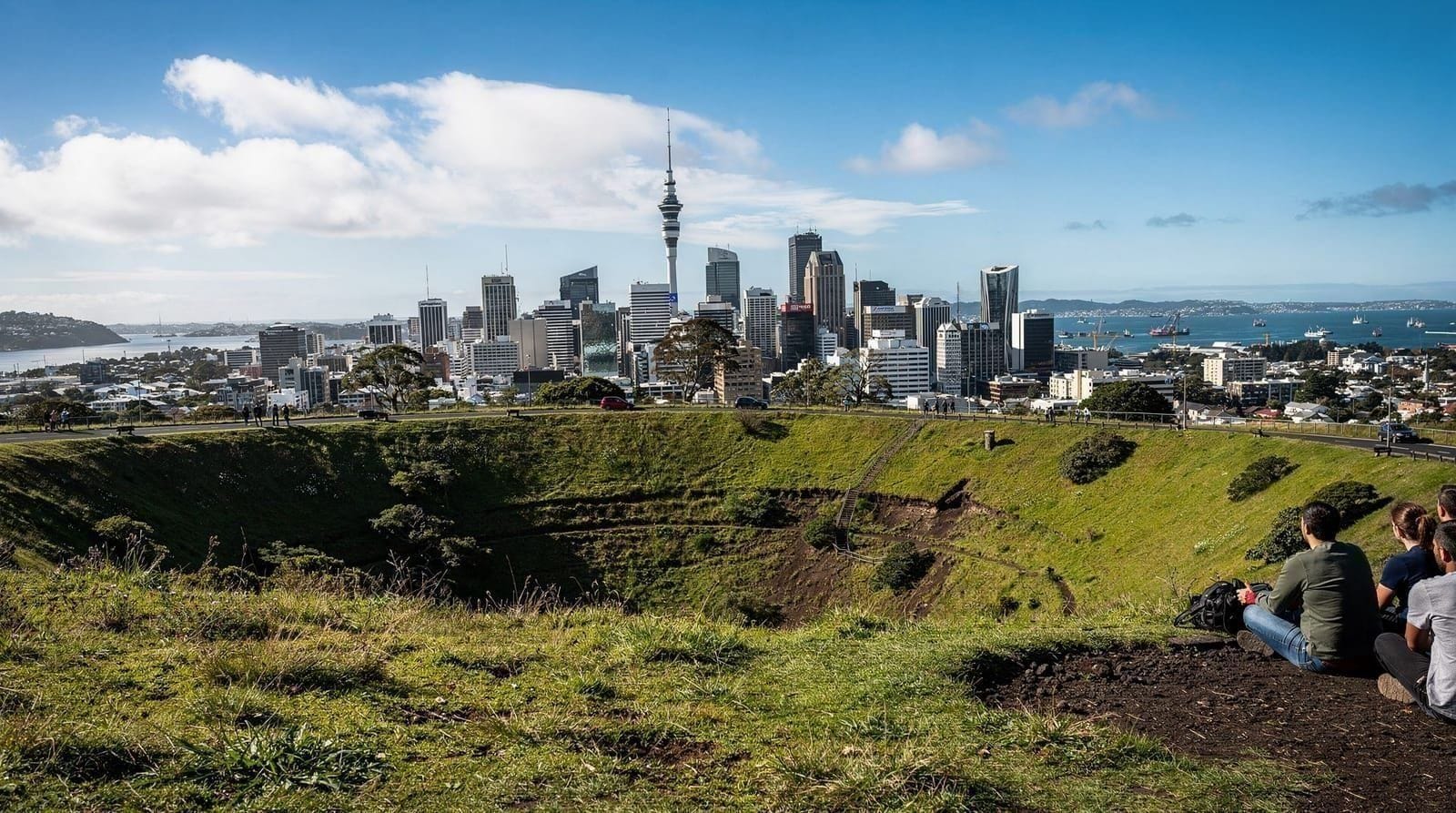
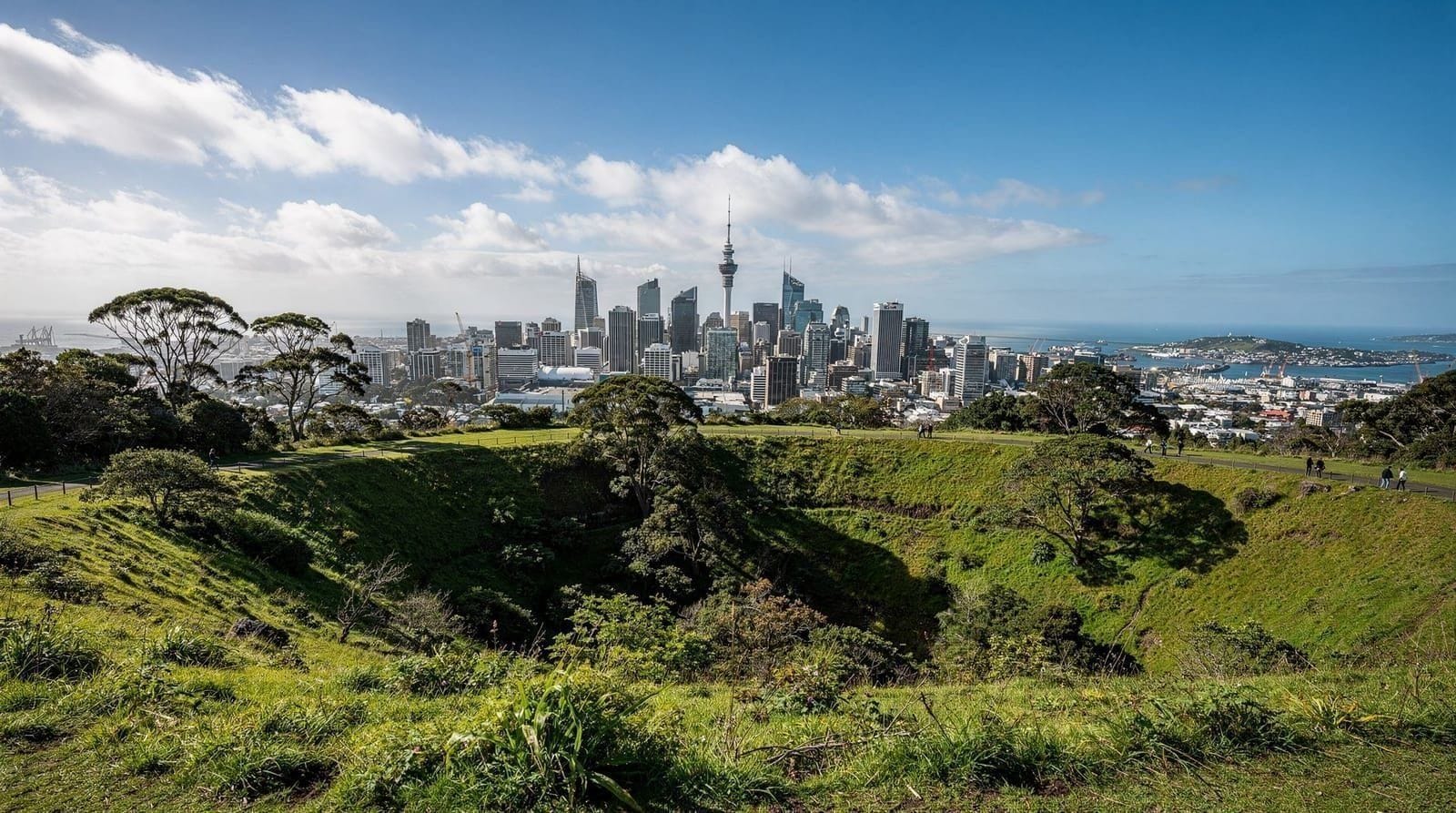
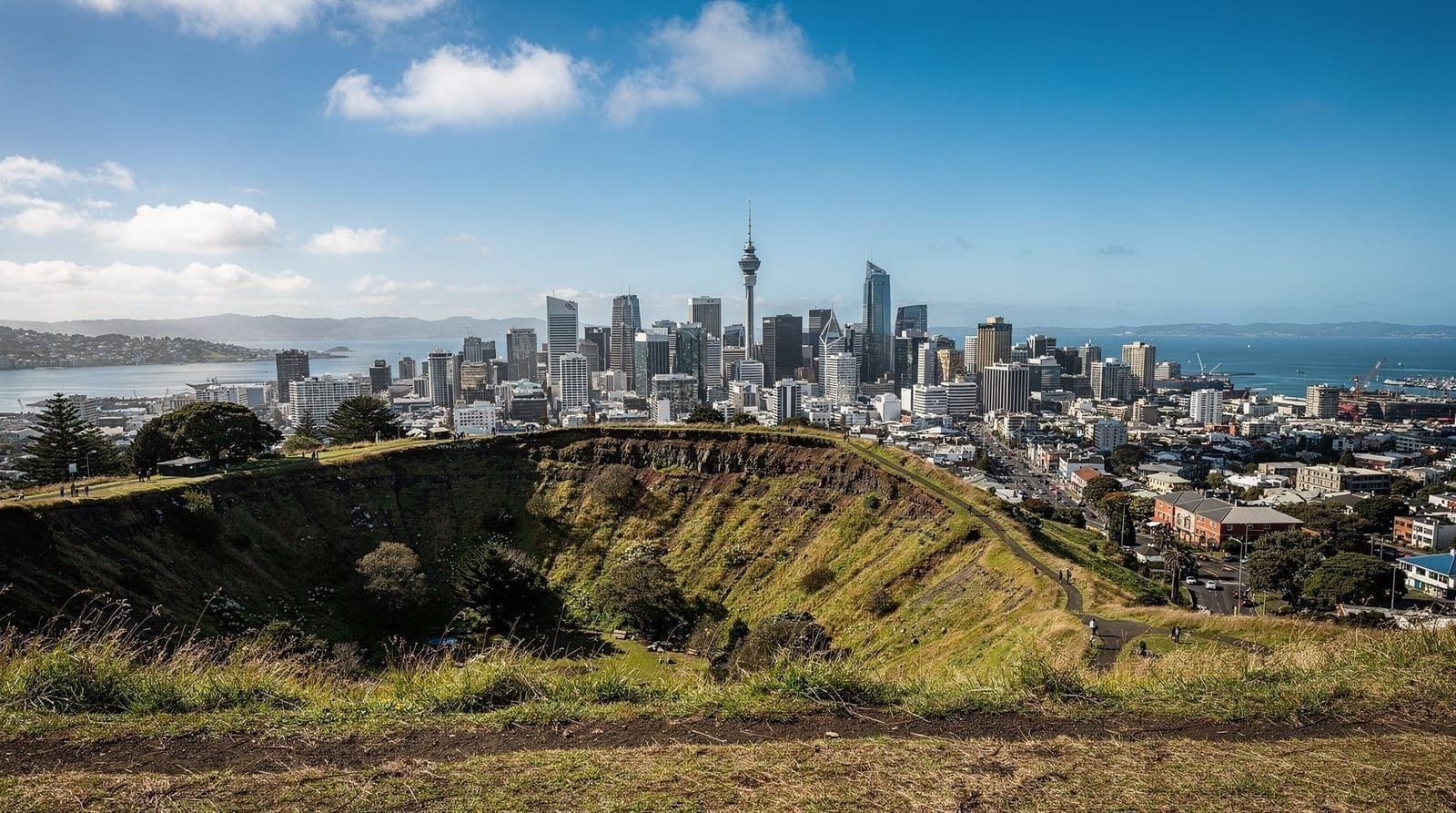
Auckland has more free attractions than its price reputation suggests. Volcanic cone hikes (Mount Eden, One Tree Hill, Mount Victoria in Devonport) offer some of the city’s best views at zero cost. Most beaches — Mission Bay, Devonport’s Cheltenham, Piha, Muriwai — are free to visit, with only parking or food costs attached. Farmers’ markets, the Domain’s parkland, and many gallery spaces are also free or low-cost. Our free things to do in Auckland guide rounds up the full list, and it’s a genuinely useful way to keep a mid-range trip closer to budget-tier spending without sacrificing much.
How trip length changes total cost
Longer trips don’t scale linearly, and it’s worth understanding why before budgeting a week the same way you’d budget three days. Fixed costs — the NZeTA and IVL, a rental car’s base rate for the days you actually need it, and one-off purchases like an AT HOP card — get spread across more days on a longer trip, effectively lowering the average daily cost. Day-trip tours, on the other hand, are usually priced per trip rather than per day, so a week that includes a Hobbiton-Waitomo combo and a separate Waiheke day adds a defined lump sum rather than a smooth daily increase.
In practice, this means a 3-day trip and a 7-day trip built around the same travel style don’t differ by a simple multiple of 2.3x — the shorter trip carries proportionally more fixed-cost weight, while the longer trip benefits from economies of scale on transport and accommodation deals. Our Auckland trip cost breakdown walks through several trip lengths side by side if you want the exact comparison for your own itinerary.
Money-saving strategies beyond the free attractions
A handful of less obvious moves make a meaningful dent in an Auckland budget. Booking day-trip tours online in advance rather than through a hotel concierge or a walk-up desk typically saves 10-20%, since concierge bookings often carry a commission built into the price. Travelling in shoulder season (March-April or September-November) rather than peak summer routinely brings accommodation prices down 20-30% without a significant weather trade-off — this is arguably the single biggest lever available to a budget-conscious traveller, bigger than any individual spending decision once you’re on the ground. Choosing accommodation with a kitchen, even a modest kitchenette, pays for itself within two or three self-catered meals given how quickly restaurant costs add up.
And combining day trips rather than booking them separately — a Hobbiton-Waitomo combo instead of two standalone bookings — saves on both the tour price and the transport time that would otherwise mean paying for two separate travel days.
Timing also matters for city attractions. Some museums and cultural sites offer reduced-price or donation-based entry on specific days or times, worth checking directly before assuming the standard international visitor rate applies. And if Sky Tower views are a priority but the daytime price feels steep, checking whether a bundled ticket with an added activity — like the Skywalk experience — offers better overall value than admission alone is worth the five minutes it takes to compare.
A sample mid-range week
Combining these figures: a mid-range week (7 days) in Auckland including 2-3 city days and a Hobbiton-Waitomo day-trip combo runs roughly NZD 1,750-2,450 per person, excluding international flights but including accommodation, food, local transport and the major attractions. Trim this by self-catering more meals and choosing budget accommodation, and NZD 1,200-1,500 is achievable without feeling deprived. Our Auckland trip cost breakdown walks through this exact calculation in more granular, day-by-day detail.
Practical money tips
Contactless card payments are close to universal in Auckland, so there’s rarely a need to carry large amounts of cash — a card with low or no foreign transaction fees is worth arranging before you travel, since standard bank fees on international purchases can quietly add 2-3% to every transaction over a full trip. ATMs are common throughout the CBD and suburbs, though it’s worth comparing your bank’s withdrawal fees against a currency conversion service if you’re taking out cash regularly. Dynamic currency conversion — where a card terminal offers to charge you in your home currency instead of NZD — almost always works out worse than letting your own bank handle the conversion, so it’s worth declining that option whenever it’s offered.
Our first-time Auckland tips guide covers a few more of these small practicalities beyond money specifically. Budgeting apps or a simple daily spreadsheet help more than most travellers expect on a New Zealand trip specifically, because costs here are unusually front-loaded: the NZeTA, IVL, a chunk of accommodation, and often one or two day-trip tours all get paid before or on day one, which can make early spending look alarming compared to the smoother daily costs of the rest of the trip. Separating “one-off” costs from “daily” costs when you track spending gives a much more accurate read on whether you’re on budget than a simple running total.
Common budgeting mistakes to avoid
The most frequent mistake is treating day-trip tours as an afterthought rather than a core line item — a Hobbiton-Waitomo combo and a Bay of Islands cruise together can easily exceed a week’s worth of accommodation costs, and travellers who budget carefully for hotels but loosely for “some tours” are often surprised by the total. The second is under-budgeting for food by assuming Southeast Asia or South American price points; a realistic Auckland food budget, even for a disciplined traveller, rarely drops meaningfully below NZD 40-50/day without cooking most meals yourself. The third is booking accommodation in peak summer without checking shoulder-season pricing first — the same hotel room can be 20-30% cheaper just a few weeks either side of the December-February peak.
And the fourth, more of a logistics mistake than a spending one, is renting a car for the entire trip when it’s only needed for specific day trips — a car sitting in a CBD car park at NZD 4-6/hour while you explore on foot is an easy way to overspend on something you’re not even using.
Frequently asked questions about budgeting for Auckland
How much does a week in Auckland cost?
A mid-range week runs roughly NZD 1,750-2,450 per person excluding flights, or NZD 700-1,050 on a tight budget using hostels and self-catering. Add day trips like Hobbiton (NZD 130) or Waitomo (NZD 45-80) on top.
Is Auckland cheaper than Sydney?
They’re broadly comparable, with Auckland often slightly cheaper on accommodation and similar on food and attractions. Both sit well above Southeast Asian destinations but below London, Zurich or Tokyo.
What’s the biggest cost in an Auckland trip?
Accommodation, typically 35-45% of a mid-range daily budget. Day-trip tours (Hobbiton, Waitomo, Rotorua) are the second-largest single cost, running NZD 100-300 per person depending on the combination chosen.
Can I do Auckland on a tight budget?
Yes — hostel dorms run NZD 25-35/night, public transport with an AT HOP card is cheap and capped at NZD 50 per week, and several genuinely good attractions (volcanic cone hikes, most beaches) are free.
How much should I budget for day trips from Auckland?
Individually, NZD 45-80 for Waitomo caves, NZD 130 for Hobbiton, NZD 50-100+ for Bay of Islands cruises, and NZD 50-60 for a Waiheke ferry return before any wine tour costs. Combined tours typically run NZD 200-280.
Does tipping affect the budget in Auckland?
Not really — tipping isn’t culturally expected in New Zealand. 10-15% for exceptional service is appreciated but genuinely optional, which keeps dining costs more predictable than in tipping-heavy destinations.
Is a rental car worth the extra cost?
For groups of two or more doing multiple day trips, usually yes — NZD 40-80/day plus insurance often works out cheaper and more flexible than booking several separate organised tours, though it adds the stress of unfamiliar driving. See our self-drive vs tour for day trips guide for the full comparison.
Top experiences
Bookable activities with verified prices and instant confirmation on GetYourGuide.