First-time Auckland tips: what to know before you go
Auckland: Skywalk with sky tower entry ticket
What should first-time visitors to Auckland know?
Get an AT HOP card immediately for cheap public transport, apply for your NZeTA before you fly, use SPF 50+ daily regardless of weather, book Hobbiton and Waitomo tours 2-3 months ahead in summer, and don't over-allocate city days — the day trips are usually the highlight.
Before you fly
Apply for your NZeTA and pay the IVL at least a few days before departure — see our NZeTA visa guide for the full process, and don’t leave this to the airport. If your itinerary includes Hobbiton, Waitomo or a Bay of Islands cruise during the December-February peak season, book those 2-3 months ahead; they’re consistently among the most sold-out tours in the country. Shoulder and winter seasons need less lead time, but booking a few weeks out still avoids disappointment.
| Before you land | NZeTA + IVL, book peak-season tours 2-3 months ahead |
| Day one | AT HOP card, local SIM/eSIM, gentle jet-lag-friendly plan |
| Daily habit | SPF 50+ sunscreen, even on cloudy days |
| City time | 2-3 days is usually enough; prioritise day trips |
| Emergency number | 111 |
Money and payment
Contactless card and phone payments work almost everywhere in Auckland, including cafés, public transport and most market stalls, so you’ll rarely need cash. It’s still worth carrying a small amount for the occasional exception. Tipping isn’t culturally expected — 10-15% for genuinely exceptional service is appreciated but optional, a meaningful difference from tipping-heavy destinations like the US. ATMs are widely available if you do need cash. Our Auckland budget guide has full daily cost expectations if you’re building a spending plan.
A practical note on cards: notify your bank of your travel dates before departure to avoid a fraud-flag decline on your first purchase, and check whether your card charges a foreign transaction fee — a fee-free travel card can save a meaningful amount over a week or two of daily purchases. Most Auckland businesses accept Visa and Mastercard without issue; American Express is accepted more patchily, so it’s worth carrying a second card type as a backup. Splitting a bill across multiple cards at a restaurant is generally accepted without fuss, more so than in some countries where it’s treated as an inconvenience. For a fuller sense of what things actually cost day to day, our Auckland trip cost breakdown walks through a real sample itinerary line by line.
Where to base yourself
Where you stay shapes how much of these tips apply day to day. The CBD and Viaduct/Wynyard Quarter put you within walking distance of the waterfront, Sky Tower and most public transport hubs, which suits first-timers who want to minimise transit time between attractions. Ponsonby and Grey Lynn offer a more residential, café-and-restaurant-driven base with a genuinely different character, a short bus or rideshare from downtown.
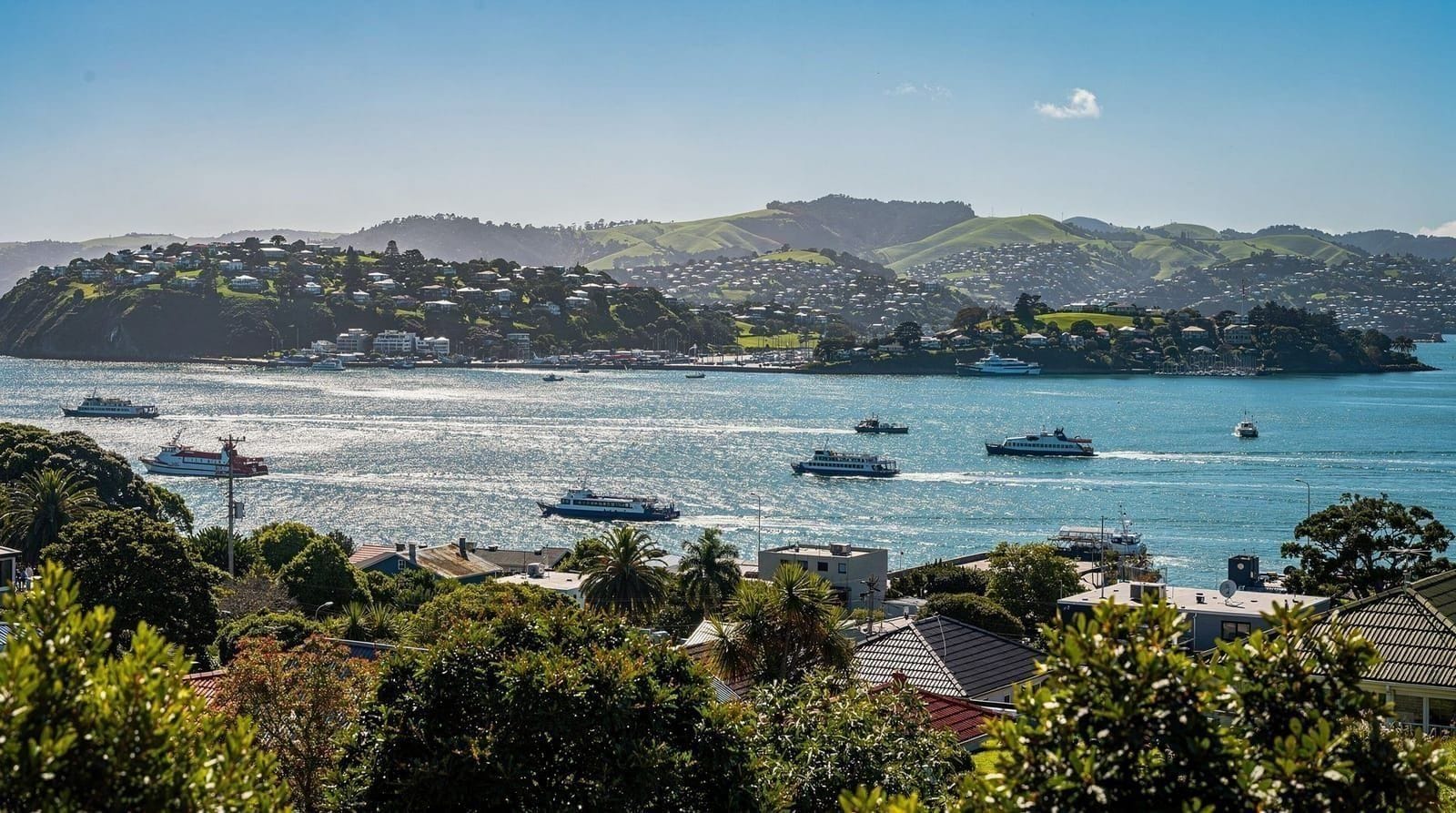
Devonport, a ferry ride across the harbour, trades some convenience for a quieter, villagey feel and excellent harbour views back toward the city. Our where to stay in Auckland guide breaks down these neighbourhoods properly, including which suits families, couples and budget travellers best — worth reading before booking accommodation, since the “best” area genuinely depends on your travel style rather than having one universal right answer.
Transport basics
Get an AT HOP card on day one — it’s available at the airport, supermarkets and convenience stores, gives a 20% discount over cash fares, and caps your spending at NZD 50 over any 7-day period across bus, train and ferry. The SkyBus connects the airport to the city for NZD 18 one-way. If you’re planning day trips beyond the city, a rental car (NZD 40-80/day) or organised tour is far more practical than public transport, which doesn’t extend meaningfully past greater Auckland. New Zealand drives on the left. Our getting around Auckland guide covers all of this in more depth.
Weather and sun
Pack layers regardless of season — Auckland’s weather shifts quickly and rain is possible year-round. SPF 50+ sunscreen is a daily habit, not a beach-day-only precaution; New Zealand’s UV levels are among the highest globally, and sunburn can happen within 20 minutes even under cloud cover. See our Auckland packing list for a full seasonal breakdown.
Timing your trip in the first place also shapes how much of this matters — visiting during the best time to visit Auckland in shoulder season generally means milder, more predictable conditions than a midsummer or midwinter trip, both of which come with their own trade-offs in price, crowds and weather intensity. Whatever season you land in, checking a short-range forecast each morning is more useful than relying on the seasonal averages alone, since a “sunny” week can still include a passing afternoon shower, and a “wet” week rarely means rain all day, every day.
Phone, connectivity and staying online
Getting connected on arrival makes the rest of these tips easier to act on. A local eSIM or physical SIM, available at Auckland Airport or city phone shops, is generally cheaper than international roaming for trips beyond a few days — it’s worth comparing your home carrier’s roaming rate against a local prepaid plan before you fly, since roaming charges can add up fast over a week or more. Free wifi is widely available in cafés, malls and many public spaces around the CBD and waterfront, but coverage genuinely thins out once you’re driving toward Hobbiton, Waitomo or the Coromandel, so download offline maps for your planned routes before you leave the city. This matters more than it sounds — relying on live navigation on a rural road with no signal is a common and avoidable frustration for first-time visitors.
Jet lag and your first 24 hours
Most long-haul flights into Auckland land in the morning, and the instinct to crash in your hotel room is understandable but usually counterproductive. Pushing through to a normal local bedtime on day one — even with a short, deliberate nap rather than a full sleep — resets your body clock faster than giving in to jet lag entirely. A gentle first day helps: a walk around the waterfront, a coffee at a café, maybe the Auckland Museum if you want something low-key and indoors, rather than booking a demanding full-day tour for the day you land. Save Hobbiton, Waitomo or a full city walking day for day two or three once you’re genuinely adjusted, not because the tours themselves are demanding, but because jet lag dulls the experience of anything you’d otherwise remember vividly.
Food and dining customs
Auckland’s dining scene is casual, diverse and genuinely excellent for a city its size, reflecting New Zealand’s mix of Pacific, Asian and European influences. Reservations aren’t always necessary outside peak season, but it’s worth booking ahead for popular spots on Friday and Saturday nights, especially in Ponsonby, Britomart and the Wynyard Quarter. Café culture is a genuine local institution — a flat white (NZD 5-6.50) is the default order, and Aucklanders take their coffee seriously enough that it’s worth seeking out an independent café over a chain. Portion sizes tend toward generous, and splitting a main or ordering a few shared plates is common practice rather than unusual. BYO (bring your own wine) is offered at some casual restaurants, worth asking about if you want to save on a dinner bill, since restaurant wine markups in New Zealand can be steep.
Driving tips for first-timers
If your itinerary includes day trips beyond the city, renting a car is usually the most flexible option, and it’s worth planning for a few New Zealand-specific quirks before you get behind the wheel. New Zealand drives on the left, which takes most visitors from right-hand-drive countries a short adjustment period — roundabouts in particular deserve extra care on your first day.
Speed limits are lower than many visitors expect on rural highways, and posted limits are enforced with real speed cameras, not just occasional patrols. Fuel (petrol) runs roughly NZD 2.20-2.50 per litre, and rental cars typically come with GPS or you can rely on offline maps as covered above. Our driving in New Zealand and car rental Auckland guides go deeper into permit requirements, insurance excess and one-way rental fees if a road trip is part of your plan.
Culture and etiquette
Te reo Māori is genuinely present in everyday life — Tāmaki Makaurau is Auckland’s Māori name, and greetings like “kia ora” are common in both formal and casual contexts. A few etiquette points matter: avoid touching people’s heads without invitation, ask before photographing people, and respect rāhui (temporary closures, often for cultural or conservation reasons) as genuinely off-limits, not a photo opportunity. Our respectful Māori tourism guide covers this properly, and it’s worth reading before any cultural experience like a hāngī or marae visit.
Safety basics
Auckland is a very safe city by global standards — petty theft in busy tourist areas is the main practical risk, not violent crime. The two genuine safety considerations are sun exposure (covered above) and ocean conditions: rip currents are common at unpatrolled beaches, and if caught in one, swim parallel to the shore rather than against the current. Lifeguard-patrolled swimming (typically October-April) meaningfully reduces risk at popular beaches. The emergency number is 111.
Standard travel common sense applies beyond that: keep valuables out of sight in a parked rental car, particularly at trailheads and beach car parks, which are occasionally targeted for opportunistic break-ins precisely because they’re known to hold tourists’ luggage and cameras. Travel insurance is worth having for the usual reasons — trip disruption, medical cover and gear loss — even though New Zealand’s ACC scheme covers accidental injury costs for visitors in a way many countries don’t, which surprises some first-timers used to a different insurance landscape. New Zealand has no dangerous wildlife to speak of, which is a genuine point of relief if you’re used to planning around venomous snakes or large predators elsewhere.
Booking strategy for day trips
Book Hobbiton and Waitomo separately or as a combo depending on your time budget — a Hobbiton Movie Set guided tour alone takes half a day including travel, while a combined Hobbiton-Waitomo tour extends into a full day. Our hobbiton and Waitomo combo guide compares the trade-offs. For getting oriented in the city itself before day trips, an Auckland Skywalk with Sky Tower entry ticket gives a genuinely useful overview on day one.
Don’t over-allocate city time
This is the single most common planning mistake for first-time visitors: booking 5-7 days entirely within Auckland’s city limits. The city’s genuine highlights are covered comfortably in 2-3 days — our how many days in Auckland guide breaks this down by traveller type. Extra time is almost always better spent on North Island day trips, which are widely considered the most memorable part of an Auckland-based itinerary. See best day trips from Auckland for the full ranked list.
Tourist traps worth skipping
Not every well-known Auckland attraction is worth first-timers’ limited time. A handful of spots trade on name recognition more than genuine experience quality, and knowing which ones to deprioritise frees up time for the destinations that consistently earn their reputation. Our dedicated Auckland tourist traps guide covers this in detail, but the short version: some harbourside dining strips charge a real premium for mediocre food purely on the strength of the view, and a few “must-see” viewpoints are genuinely outclassed by a short walk to a quieter, equally scenic spot nearby.
This isn’t to say skip everything popular — Sky Tower and the major museums earn their place — but it’s worth reading a second opinion before assuming every highly-marketed attraction is automatically worth the queue and the price. Our overrated vs underrated Auckland guide takes this further if you want a fuller comparison before finalising your itinerary.
Weekday vs weekend planning
Auckland’s rhythm shifts noticeably between weekdays and weekends, and it’s worth timing certain activities accordingly. The CBD is busiest and most commercially “on” on weekdays, when the office-worker lunch crowd fills cafés between 12 and 1:30pm — arriving just before or after this window avoids the worst of it. Weekends bring a different energy to the waterfront and inner-city markets, with more locals out for leisure and generally longer queues at popular brunch spots in Ponsonby and Mission Bay. If flexibility allows, booking major attractions like the Sky Tower or Auckland Museum for a weekday morning generally means thinner crowds than a Saturday afternoon, which matters more in peak summer than in shoulder or winter seasons.
What to book ahead vs decide on arrival
Beyond Hobbiton and Waitomo (covered above), it’s worth distinguishing what genuinely needs advance booking from what can wait until you land. Popular restaurant reservations for weekend evenings, any accommodation during New Zealand’s own summer holiday period (late December to mid-January), and premium or small-group tours are worth locking in ahead of time. Conversely, things like Sky Tower entry, museum visits, ferry tickets to Waiheke or Devonport, and most casual dining can genuinely be decided day-to-day once you’re in Auckland and have a feel for the weather and your energy levels. Overplanning every hour of a first Auckland trip tends to backfire — building in some unstructured time to follow the weather or a local recommendation is one of the more consistently good pieces of advice past visitors pass on.
| Book ahead | Decide on arrival |
|---|---|
| Hobbiton, Waitomo, Bay of Islands tours (peak season) | Sky Tower entry |
| Weekend restaurant reservations | Museum visits |
| Accommodation over New Zealand’s summer holidays | Waiheke/Devonport ferry tickets |
| Premium or small-group tours | Most casual dining |
What first-timers regret not doing
A handful of small, low-cost decisions come up repeatedly when past visitors reflect on their first Auckland trip. Not budgeting enough day-trip time is the most common regret by far, echoing the point above about over-allocating city days. Skipping travel insurance because New Zealand “feels safe” is another — ACC covers accidental injury costs, but it doesn’t cover trip cancellation, lost luggage or medical evacuation, gaps a standard travel policy fills. Underestimating how much daylight and energy jet lag consumes on day one, then booking a demanding tour for that same day, is a subtler but genuinely common regret. None of these are dealbreakers, but knowing about them before you land is easy insurance against a few avoidable frustrations.
Combining Auckland with the wider North Island
Most first-time visitors don’t stay entirely within Auckland — a loop through Hobbiton, Waitomo and Rotorua is the natural extension, and increasingly Bay of Islands too if time allows. Thinking about this combined itinerary from the start, rather than treating Auckland as a standalone trip and day trips as an afterthought, tends to produce a better-paced result.
Our best day trips from Auckland guide ranks the options, and if you’re weighing a longer loop against individual day trips, north Island 7-day loop and Auckland-Rotorua 3-day itineraries show how a multi-day version comes together in practice. Deciding this early also affects your accommodation and rental car bookings, since a one-way rental drop-off in Rotorua, for instance, is worth arranging in advance rather than discovering the option only once you’re already in Auckland.
Packing priorities for a first trip
Beyond the sunscreen and layers already covered, a few items make a genuinely outsized difference for first-time visitors. A reusable water bottle saves money and plastic given how easy tap water is to drink across Auckland. Comfortable, broken-in walking shoes matter more here than in a purely urban destination, since even a “city” day often includes a volcanic cone walk or a waterfront stroll longer than expected. A light rain jacket earns its space in any bag regardless of season, given how quickly Auckland’s weather can shift within a single afternoon. See our Auckland packing list for the complete seasonal rundown.
Small things that catch people out
New Zealand’s power sockets are Type I (230V), the same standard as Australia but different from the UK, US or most of Europe — bring an adapter. Restaurant service is more relaxed than in tipping-heavy countries, and dinner reservations aren’t always necessary outside peak season, though it’s still worth booking ahead for popular spots on weekends. Petrol stations and supermarkets are the easiest places to top up an AT HOP card if you can’t reach a dedicated retailer.
A few more small but genuinely useful details: New Zealand time zone catches some visitors off guard when booking calls or flights home, since it’s ahead of most of the world (12 hours ahead of UK time in New Zealand winter, up to 13 during New Zealand daylight saving) — double-check flight departure times against local time rather than your home time zone when reconfirming bookings. Shops in the CBD generally close by 6-7pm on weekdays, later on Thursday and Friday nights, and many close earlier on Sundays, so plan any essential shopping accordingly rather than assuming late-night hours as a default. And while English is the primary language everywhere, picking up a few common te reo Māori words and place names — beyond kia ora — genuinely enriches the trip and is warmly received locally, since it signals a level of interest and respect beyond the average visitor’s.
Frequently asked questions about first-time Auckland travel
What’s the biggest mistake first-time Auckland visitors make?
Booking too many days in the city itself and not enough for day trips like Hobbiton, Waitomo or Rotorua, which are widely considered the most memorable part of a North Island trip.
Is tipping expected in Auckland?
No — tipping isn’t culturally expected in New Zealand. 10-15% for exceptional service is appreciated but genuinely optional, unlike in the US where it’s assumed.
Do I need cash in Auckland?
Rarely. Contactless card and phone payments are accepted almost everywhere, including small cafés and public transport. Carrying a small amount of cash is still sensible for the occasional market stall or rural stop.
How far in advance should I book Hobbiton or Waitomo tours?
2-3 months ahead for summer (December-February) visits, since these are New Zealand’s most popular tours and sell out. Shoulder and winter seasons need less lead time, often just a few weeks.
Is Auckland walkable?
The CBD and waterfront are genuinely walkable, but greater Auckland is spread out and low-density, so getting between neighbourhoods generally requires public transport or a car rather than walking.
What should I know about Māori culture before visiting?
Te reo Māori is present in everyday signage and greetings, and a few etiquette points — avoiding head-touching, asking before photographing people, respecting rāhui closures — go a long way. Our dedicated respectful Māori tourism guide covers this in full.
Do I need travel insurance for New Zealand if ACC covers accidents?
Yes. ACC covers accidental injury treatment costs for visitors, but it doesn’t cover trip cancellation, lost or delayed luggage, or medical evacuation — a standard travel insurance policy fills those gaps.
What should I do on my first day to beat jet lag?
Push through to a normal local bedtime with a gentle day — a waterfront walk, coffee, maybe the Auckland Museum — rather than booking a demanding full-day tour or crashing for a long nap.
Top experiences
Bookable activities with verified prices and instant confirmation on GetYourGuide.