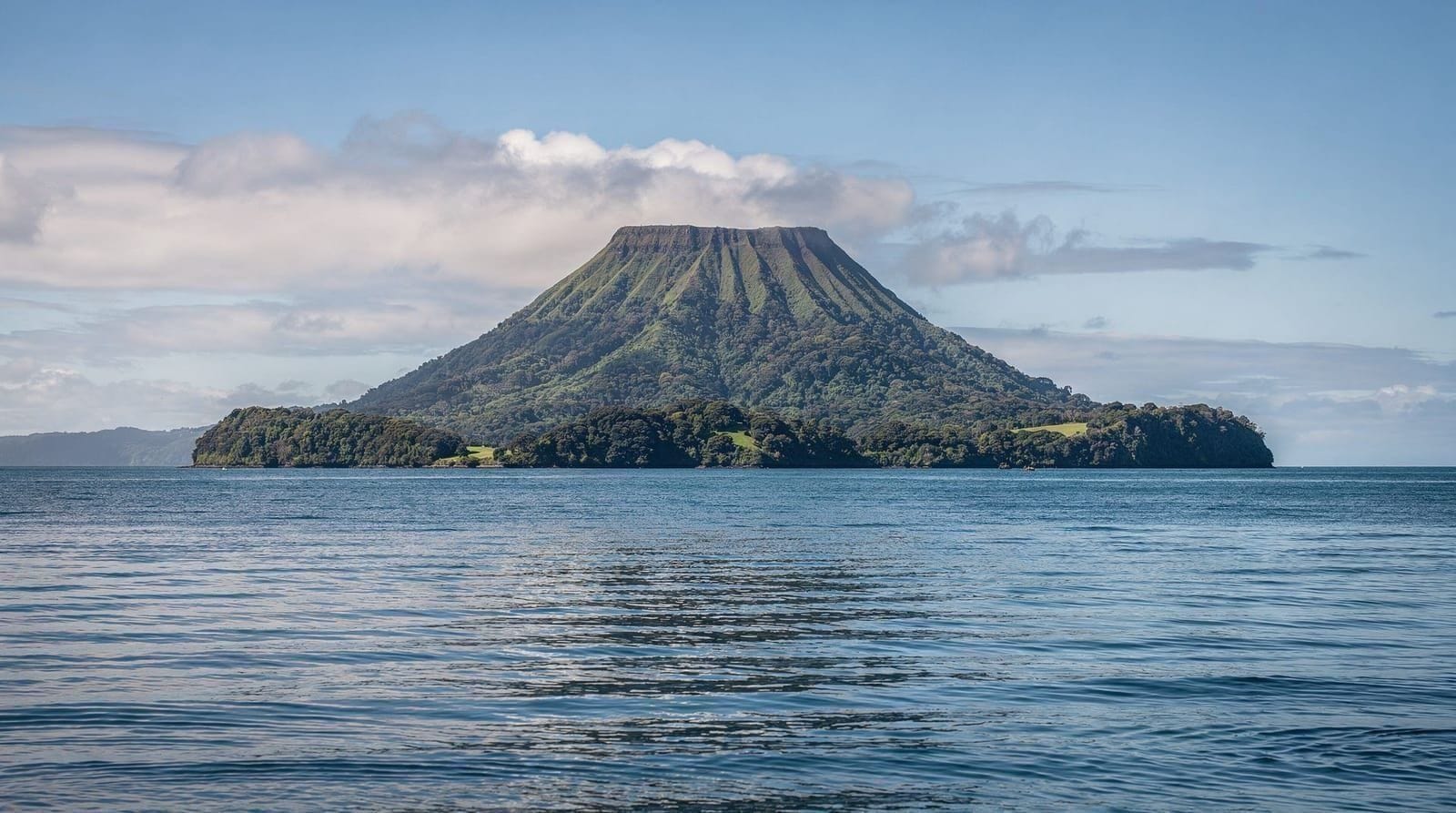
Rangitoto Island guide: hiking Auckland's youngest volcano
Auckland: Rangitoto island ferry roundtrip pass
How long does it take to hike Rangitoto Island?
The summit walk from the wharf takes about 1-1.5 hours each way at a moderate pace, so budget 2.5-3 hours round trip if you go straight up and back, or a full half-day if you add the lava caves or a longer loop track.
| Where | Hauraki Gulf, 25-min ferry from downtown Auckland |
| Cost | Ferry only — around NZD 45-50 return, no island entry fee |
| Time needed | Half-day (2.5-3 hours for the summit hike alone) |
| Getting there | Fullers360 passenger ferry from the Ferry Terminal |
| Best time | Morning sailings, shoulder season for cooler hiking |
What makes Rangitoto worth a half-day
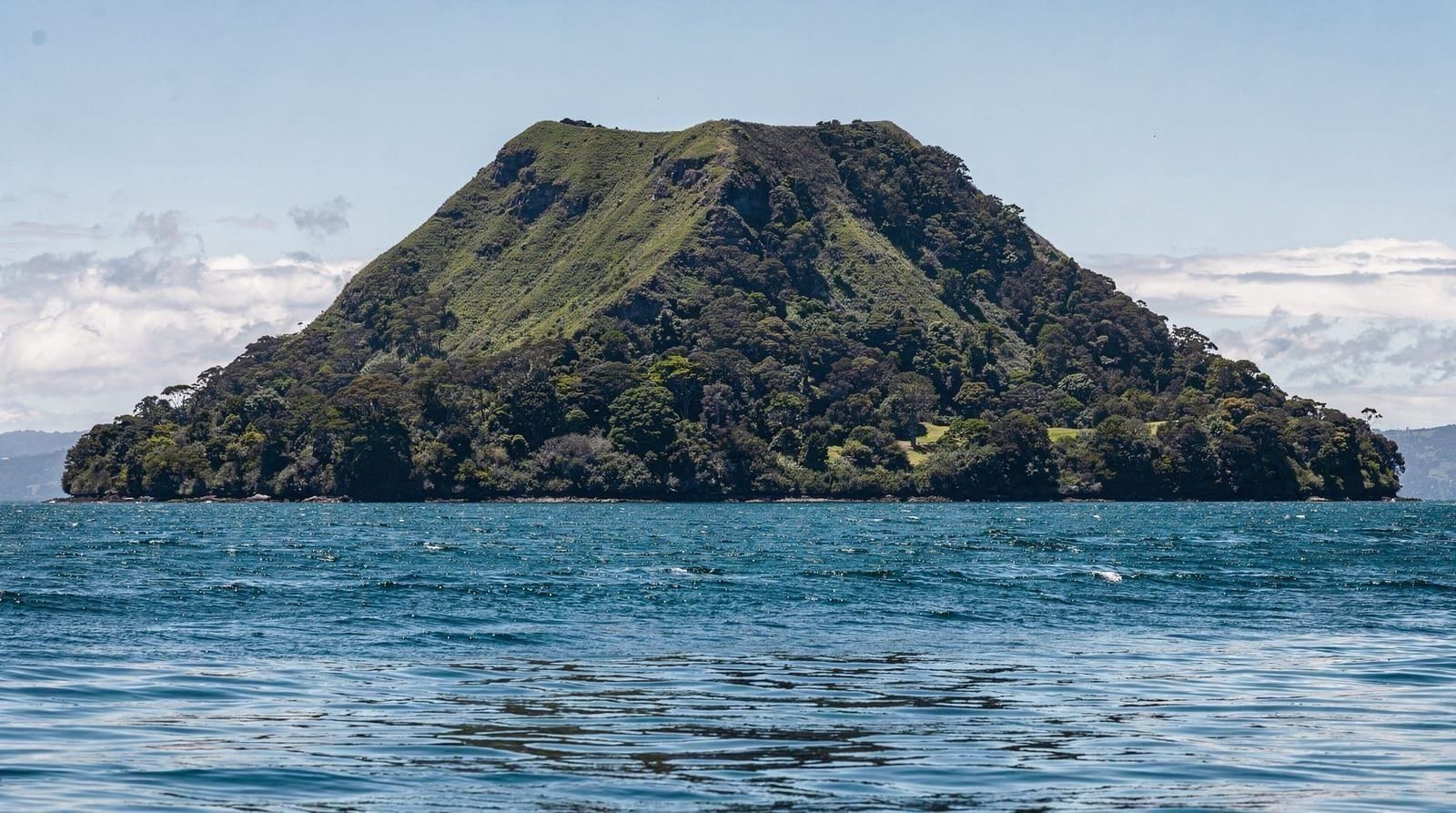
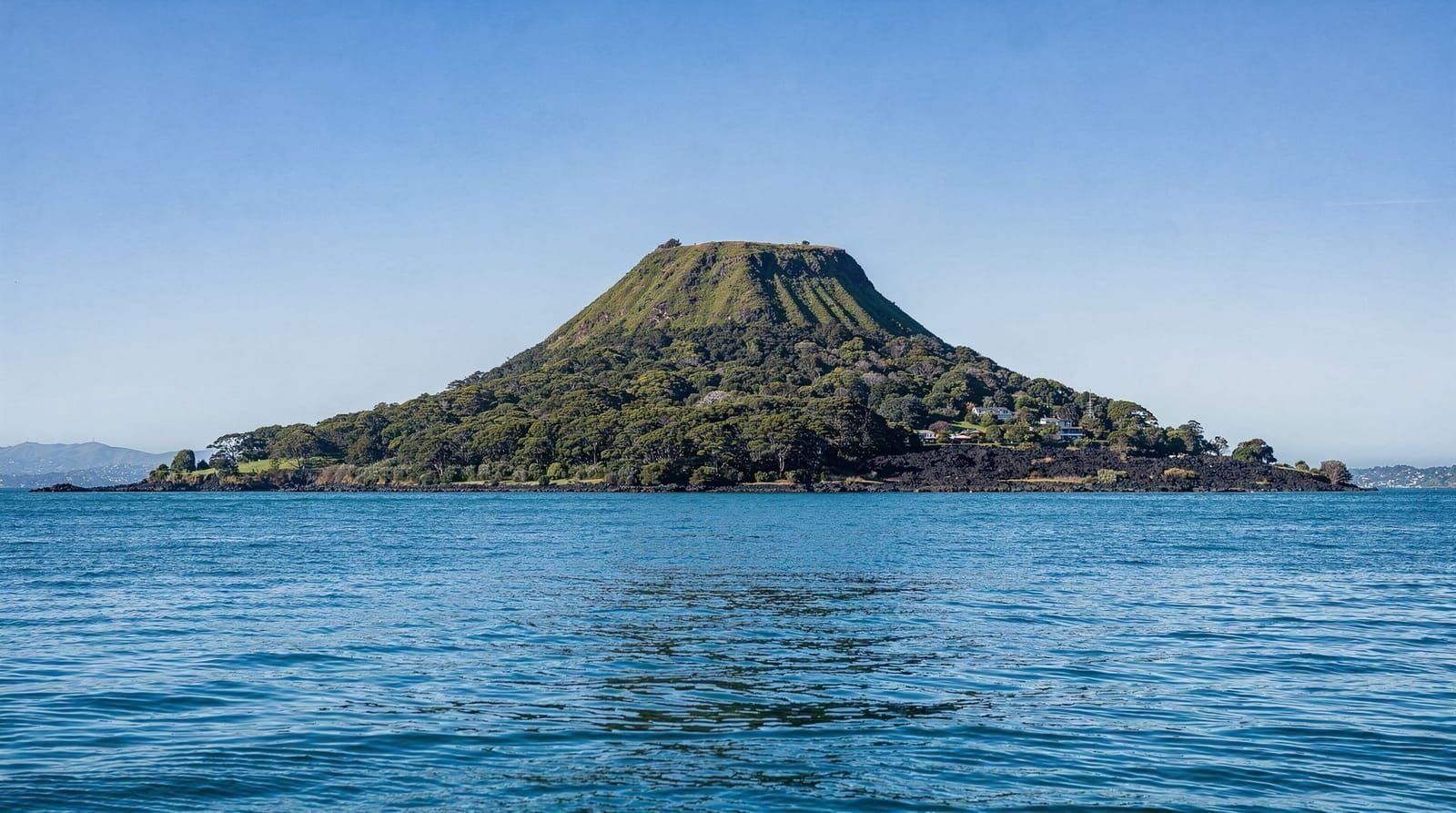
Rangitoto Island is, geologically speaking, a baby — New Zealand’s youngest and largest volcanic cone in the Auckland volcanic field, formed in a series of eruptions roughly 600-700 years ago, well within the span of Māori occupation of the region. That youth is exactly what makes it fascinating to visit: rather than the softened, heavily vegetated volcanic cones found elsewhere around Auckland, Rangitoto’s slopes are still covered in raw black lava fields, and the island’s forest — remarkably, the world’s largest pōhutukawa forest growing directly on volcanic rock — has established itself in a genuinely striking, almost otherworldly landscape of jagged basalt and twisted tree roots.
Sitting close to the city and reachable by a short ferry ride, Rangitoto delivers one of the more distinctive half-day outings available from Auckland without needing a car, a tour booking, or a full day of your itinerary. This guide covers the hike, what to expect, and how to plan a visit that suits your fitness level and time budget.
Getting there
Fullers360 operates the passenger ferry from downtown Auckland’s Ferry Terminal, with the crossing taking about 25 minutes each way — one of the shortest and most convenient Hauraki Gulf ferry rides available. This return ferry ticket is the simplest way to book this in advance. Sailings run less frequently than the Waiheke or Devonport routes, so check the timetable carefully and plan your day around the specific departure and return times available, since missing your intended return sailing means a longer wait for the next one given there is nowhere to shelter, eat, or drink on the island itself.
The summit hike
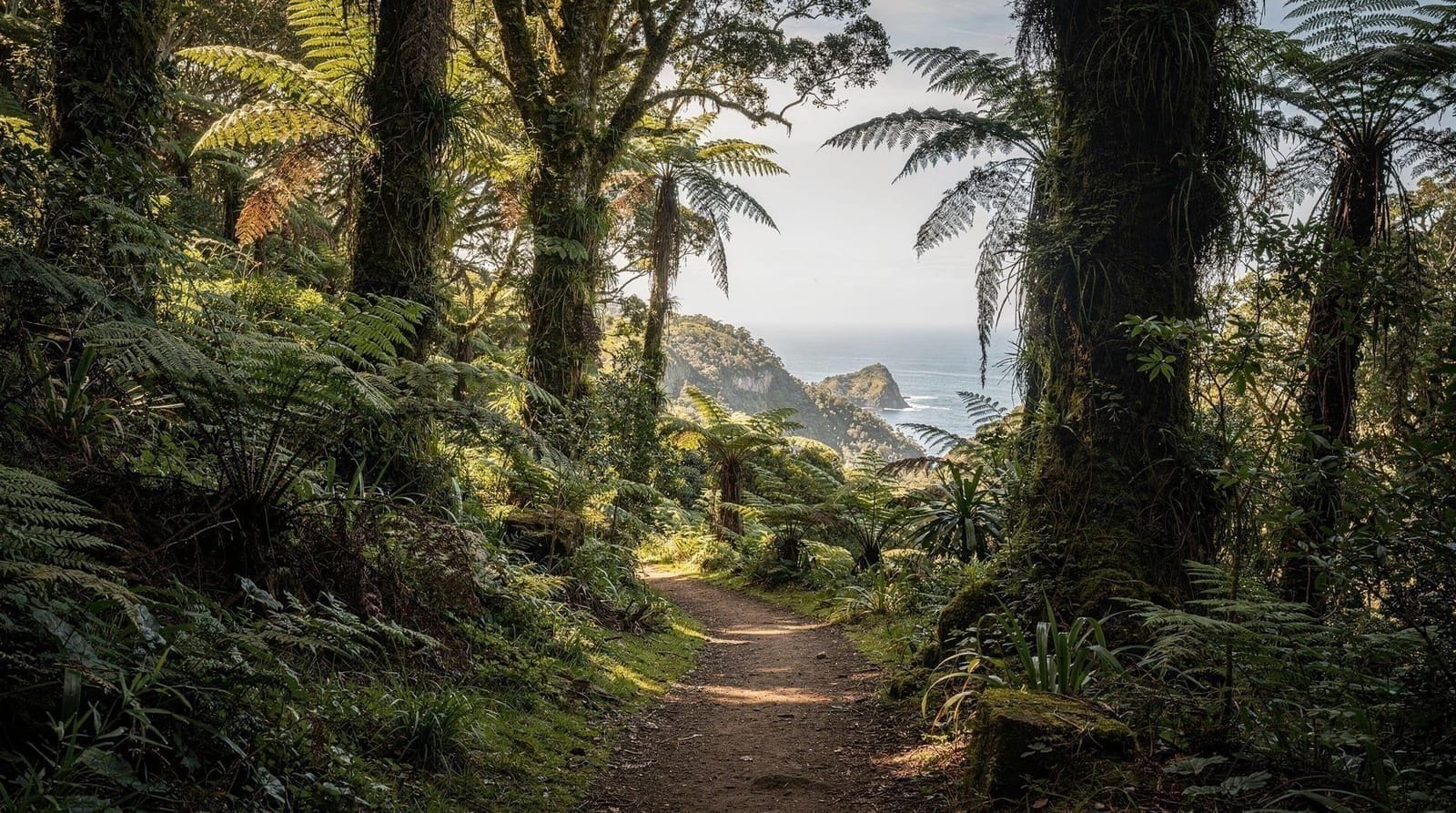
The main track from the wharf to the summit takes roughly 1-1.5 hours each way at a moderate pace, climbing steadily over well-formed but genuinely uneven volcanic rock terrain. It is not a technically difficult hike, but the surface underfoot — sharp, broken lava rock — makes sturdy, closed-toe shoes essential rather than optional; sandals or thin-soled shoes make for a miserable and potentially dangerous walk. There is minimal shade for most of the route, so sun protection matters even on an overcast day given New Zealand’s high UV levels. Budget 2.5-3 hours round trip for a straightforward there-and-back summit hike, factoring in time to actually enjoy the view once you arrive rather than turning around immediately.
The view from the top
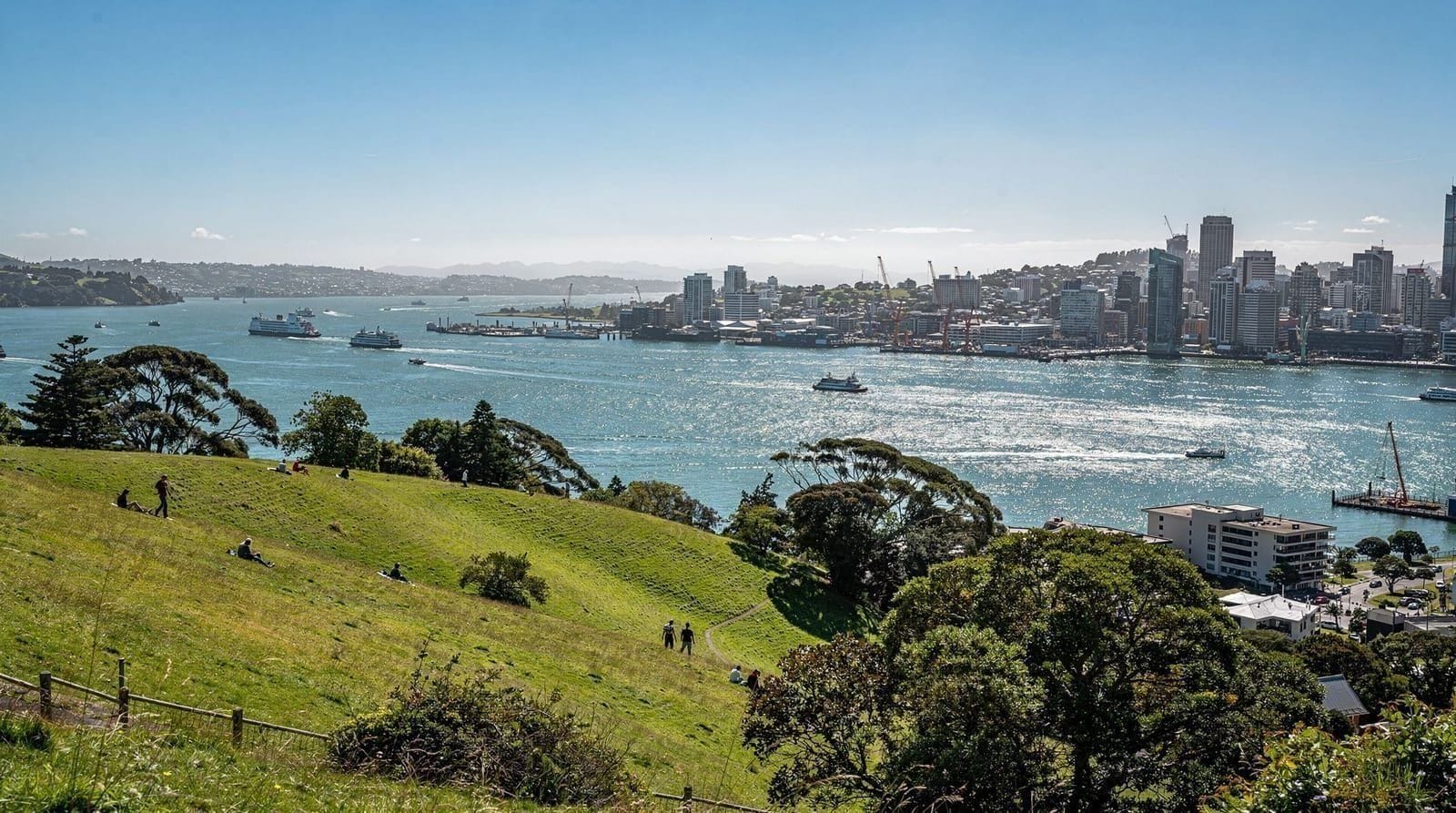
The payoff for the climb is a genuine 360-degree panorama across the Hauraki Gulf — the Auckland skyline to the southwest, neighbouring Waiheke Island to the east, and on a clear day, a sweep of the gulf’s smaller islands scattered across the water. It is one of the better vantage points available near Auckland for photographing the city skyline from a distance, particularly in the softer light of early morning or late afternoon sailings. Our Auckland volcanic cones guide covers how this view compares to the city’s other volcanic lookouts, including Mount Eden and One Tree Hill, if you want to compare vantage points across your trip.
The lava caves
A worthwhile detour from the main summit track leads to Rangitoto’s lava caves — tube-like formations created as the surface of flowing lava cooled and hardened while molten rock continued moving beneath it, eventually draining away and leaving hollow tunnels behind. Exploring them requires a torch (bring your own; there is no lighting) and adds roughly 30-45 minutes to your visit depending on how much of the cave network you explore. The caves are a genuine highlight for visitors interested in geology or simply wanting something beyond the summit view, and they are one of the more distinctive features that sets a Rangitoto visit apart from Auckland’s other, more conventional volcanic cone walks.
What to bring
There are no shops, cafes, or drinking water sources anywhere on Rangitoto — this is genuinely undeveloped conservation land managed for its ecological and geological value rather than built out as a tourist facility. Bring more water than you think you will need, particularly in summer heat reflected off the dark volcanic rock, plus snacks or a packed lunch if your visit will run more than a couple of hours. Sturdy closed shoes, sun protection, and a torch if you plan to explore the lava caves round out the essential packing list. Basic toilets are available near the wharf, but that is the extent of the facilities you will find.
History and Māori significance
Rangitoto’s name comes from the fuller Māori name Ngā Rangi-i-totongia-a-Tama-te-kapua, referencing a legend tied to Tamatekapua, captain of the Te Arawa canoe, though the details of the story vary between accounts. The island’s relatively recent volcanic formation means its eruption occurred within the timeframe of Māori settlement of the region, and archaeological evidence on nearby Motutapu Island shows footprints preserved in volcanic ash from that eruption period, a genuinely rare direct record of the event’s impact on people living in the area at the time.
This history adds real depth to a Rangitoto visit for anyone interested in the human as well as geological story behind the landscape, and it is worth a moment’s reflection at the summit that the raw black rock underfoot was actively erupting well within the span of organised human settlement in the region — a very different timescale from most volcanic landscapes visitors might have seen elsewhere in the world.
Best time of day and season to visit
Morning ferries deliver the coolest hiking conditions and the best light for photography, both on the way up and from the summit itself, and are the generally recommended choice for the physically demanding climb, particularly in summer when afternoon heat reflecting off the dark volcanic rock can make the ascent considerably more taxing. Shoulder season (March-May, September-November) offers comfortable hiking temperatures with smaller crowds than the December-February peak, when both the ferry and the summit track can feel considerably busier. Winter (June-August) sees fewer sailings and cooler conditions, but the hike remains entirely doable with appropriate layers, and the reduced crowds can make for a more contemplative visit if solitude matters to you.
Photography on Rangitoto
The island rewards photographers on several fronts: the raw, otherworldly texture of the lava fields up close, the twisted pōhutukawa root systems that have adapted to grow directly on volcanic rock, and the wide-angle Hauraki Gulf panorama from the summit. Pōhutukawa trees flower with a vivid crimson bloom in December, giving the island’s forest canopy a striking seasonal colour that photographers specifically time visits around — if this interests you, aim for a summit hike in the first half of December for the best chance of catching the bloom at its peak.
Guided options if you want more structure
For a more active, varied day that adds paddling to the hiking, this full-day kayak and hike to the summit tour combines a sea kayak crossing to the island with the summit hike itself, a genuinely memorable way to experience Rangitoto for visitors comfortable with a full day of physical activity.
For something more atmospheric and less physically demanding, this sunset and night sea kayak tour paddles around the island’s coastline rather than hiking to the summit, a good option if you want the Rangitoto experience without the uphill walk. This Rangitoto explorer tour offers a guided, more structured version of the standard ferry-and-hike itinerary if you would prefer commentary along the way rather than navigating independently.
Rangitoto vs Auckland’s other volcanic cones
Auckland sits on a genuinely active volcanic field with around 50 volcanic cones scattered across the wider region, and Rangitoto stands apart from the mainland cones — Mount Eden, One Tree Hill, and others — by virtue of both its youth and its island setting. The mainland cones are quicker to reach (no ferry required) and generally shorter climbs, making them a better fit if your schedule is very tight, but they lack Rangitoto’s raw lava field landscape and lava cave network. If you have time for only one volcanic cone experience during your Auckland stay and enjoy a proper hike, Rangitoto is the more distinctive choice; if you want a quick lookout stop without dedicating half a day, one of the mainland cones covered in our volcanic cones guide makes more sense.
Combining Rangitoto with Motutapu Island
Rangitoto connects to neighbouring Motutapu Island via a causeway, accessible on foot from the same trail network, opening up longer walking options for visitors with more time and energy than the standard summit-and-back hike requires. Motutapu is a working farm island with its own walking tracks and a very different, more pastoral landscape from Rangitoto’s volcanic terrain — worth exploring if you have a full day rather than a half-day available and want to see genuinely more of the Hauraki Gulf’s ecological variety in one visit. Our lesser-known Hauraki Gulf islands guide covers Motutapu and other under-visited options in more depth.
Fitness level and who should skip it
The summit hike suits reasonably fit adults and older children comfortable with 1-1.5 hours of sustained uphill walking on uneven ground. It is not well suited to prams, wheelchairs, very young children, or anyone with significant mobility limitations, given the rough volcanic rock surface and lack of any paved or smoothed pathway. If a full summit hike is not realistic for your group, some visitors choose to simply explore the lower, flatter sections near the wharf and turn back before the steeper climbing begins — still a worthwhile taste of the island’s landscape without the full commitment.
Booking and timetable tips
Because sailings run less frequently than on the busier Waiheke and Devonport routes, and because there is genuinely nowhere to wait comfortably on the island beyond your planned return time, check the ferry timetable carefully before committing to a specific hike plan, and build in a buffer rather than cutting your return connection tight. Weekday visits are generally quieter than weekends, and booking your ferry ticket ahead — rather than relying on walk-up availability — is a sensible precaution during the busier summer months when demand for gulf ferry sailings peaks alongside every other Hauraki Gulf destination.
Fitting Rangitoto into a wider Auckland itinerary
Because it takes a half-day rather than a full one, Rangitoto pairs naturally with a CBD morning or a Devonport afternoon, rather than needing its own dedicated day the way a Waiheke wine day or a mainland day trip like Hobbiton typically does. Our best day trips from Auckland roundup places Rangitoto alongside Auckland’s other excursion options, and our Auckland in a day and how many days in Auckland guides both help figure out where a Rangitoto half-day fits if your overall stay is limited. If budget is a factor, Rangitoto is one of the more affordable Hauraki Gulf outings available — the ferry fare is the only unavoidable cost, since the island itself has no paid attractions, entry fees, or facilities to spend money on once you arrive.
Rangitoto with the family
Older children who can manage a sustained uphill walk generally find Rangitoto genuinely exciting rather than a chore — the lava caves in particular tend to be a highlight, and the novelty of walking across an actual volcanic landscape resonates more with kids than a standard park or beach visit might. Our Auckland with kids and family day trips from Auckland guides both cover how Rangitoto compares to the region’s other family-friendly options, and if the hike itself feels too ambitious for younger children, our kid-friendly beaches guide lists gentler alternatives closer to the mainland.
Rangitoto within Auckland’s broader hiking scene
For hikers, Rangitoto is one of several genuinely good trail options within reach of the city, alongside mainland routes through the Waitakere Ranges and other regional parks. Our Auckland hikes guide places the Rangitoto summit track in context against these other options, useful if you are trying to decide how to spend a limited number of hiking days during your stay, and our dedicated Rangitoto hike guide goes deeper into trail-specific detail, including alternative routes and combining the summit track with the Motutapu causeway walk.
What else is nearby in the Hauraki Gulf
If Rangitoto has whetted your appetite for more of the gulf’s islands, it sits within the same ferry network as Waiheke, Devonport, and several lesser-visited islands further out. Our Hauraki Gulf islands guide gives the full regional picture, and whale and dolphin watching tours depart from the same downtown ferry terminal if you want to extend a Hauraki Gulf day beyond Rangitoto itself — see our whale and dolphin watching guide for how that pairs with an island visit on a longer day out.
Our honest take
Rangitoto delivers one of the more genuinely distinctive half-day experiences available near Auckland, and its short ferry ride and lack of any need for advance tour bookings make it one of the easier Hauraki Gulf islands to fit into a spare morning or afternoon. Go in prepared — proper shoes, water, sun protection — and it rewards the effort with a summit view and lava landscape unlike anything else within easy reach of the city. Skip it only if a sustained uphill hike on rough terrain is genuinely not manageable for your group, in which case one of Auckland’s flatter, quicker mainland volcanic cones is a more practical substitute.
Weather and swell: when a sailing might be affected
Because Fullers360’s Rangitoto service crosses open Hauraki Gulf water rather than the more sheltered inner harbour, sailings can occasionally be delayed or cancelled in genuinely rough weather — strong wind or significant swell — more often than the short Devonport crossing. This is uncommon outside winter storm systems, but if your visit falls during an unsettled forecast, check the Fullers360 status page on the morning of your trip rather than assuming the timetable is fixed. A cancelled sailing with no realistic same-day alternative is one more reason not to leave a Rangitoto visit for your very last morning in Auckland if your schedule has any flexibility at all.
Frequently asked questions about Rangitoto Island guide: hiking Auckland's youngest volcano
How do I get to Rangitoto Island?
Fullers360 runs a passenger ferry from downtown Auckland's Ferry Terminal, taking about 25 minutes each way. There is no accommodation, food, or drinking water on the island, so plan around the ferry timetable and bring supplies with you.Is Rangitoto Island hard to hike?
The main summit track is moderate rather than difficult — well-formed but uneven volcanic rock underfoot, with some sun exposure and minimal shade. Sturdy closed shoes are strongly recommended given the sharp, uneven lava rock surface.Can I bring food and water to Rangitoto?
Yes, and you should — there are no shops, cafes, or drinking water sources on the island. Bring more water than you think you need, especially in summer, plus snacks or a packed lunch if you plan to spend more than a couple of hours there.Are there facilities on Rangitoto Island?
Basic toilets are available near the wharf, but there are no shops, cafes, or water fountains anywhere on the island. This is genuinely undeveloped conservation land, not a tourist-facility-equipped destination.What will I see from the summit of Rangitoto?
A 360-degree view across the Hauraki Gulf, the Auckland skyline, and neighbouring islands including Waiheke and Motutapu, which is connected to Rangitoto by a causeway and accessible on foot from the same trail network.Is Rangitoto suitable for kids?
Older children who can manage a 1-1.5 hour uphill walk on uneven volcanic rock will generally enjoy it, particularly the lava cave detour, but it is not well suited to prams, toddlers, or anyone who struggles with sustained uphill walking on rough terrain.
Top experiences
Bookable activities with verified prices and instant confirmation on GetYourGuide.