Auckland weather by month: a complete guide
Auckland: Museum general admission entry
What is Auckland's weather like month by month?
Auckland has a mild, maritime climate with rain possible year-round. Summer (Dec-Feb) runs 20-25°C, autumn (Mar-May) 15-20°C, winter (Jun-Aug) 10-15°C with June-July the wettest months, and spring (Sep-Nov) 12-18°C. No month is truly dry.
Auckland’s climate in brief
This guide breaks Auckland’s weather down month by month with real temperature ranges, rainfall patterns and daylight hours, so trip planning can work around the actual conditions rather than a generic “it’s mild” assumption. Auckland has a mild, maritime, temperate climate shaped by its position on a narrow isthmus between two harbours. There is no genuinely dry season — every month sees rainfall — but temperatures stay moderate year-round compared to continental climates, ranging roughly from 10°C in the depths of winter to 25°C at the height of summer. Humidity is a bigger factor in summer than most visitors expect, and weather can shift within a single day, which is why locals default to layering regardless of the forecast, checking the sky rather than a single morning forecast before committing to outdoor plans.
The city divides fairly neatly into four Southern Hemisphere seasons, each with its own character rather than a single “good” or “bad” stretch. Summer (December-February) is warm, humid and expensive. Autumn (March-May) is widely regarded as the shoulder sweet spot, with clearer skies and easing prices. Winter (June-August) is mild by global standards but wet, with the year’s shortest days. Spring (September-November) brings freshening winds and blooming gardens as the city warms back up. Our Auckland in summer and Auckland in winter guides go deeper on those two bookend seasons specifically, including what each one is genuinely best and worst suited for.
None of these seasons rule a trip out — Auckland works as a destination in any month — but each one changes what a trip should be built around. Visitors chasing beach weather and long evenings should lean toward summer despite the cost; those who value quiet, low prices and don’t mind a jacket often end up preferring winter once they’ve actually experienced it, rather than treating it as a fallback choice.
| Warmest months | January-February, 20-25°C |
| Coldest month | July, 10-15°C |
| Wettest months | June-July |
| Shortest days | June-July, sunset ~4:30pm |
| Best value + weather balance | April or November |
| Month | Temp |
| Jan | 20-25°C |
| Feb | 20-25°C |
| Mar | 15-20°C |
| Apr | 15-20°C |
| May | 13-18°C |
| Jun | 10-15°C |
| Jul | 10-15°C |
| Aug | 10-15°C |
| Sep | 12-16°C |
| Oct | 13-17°C |
| Nov | 14-18°C |
| Dec | 18-22°C+ |
January
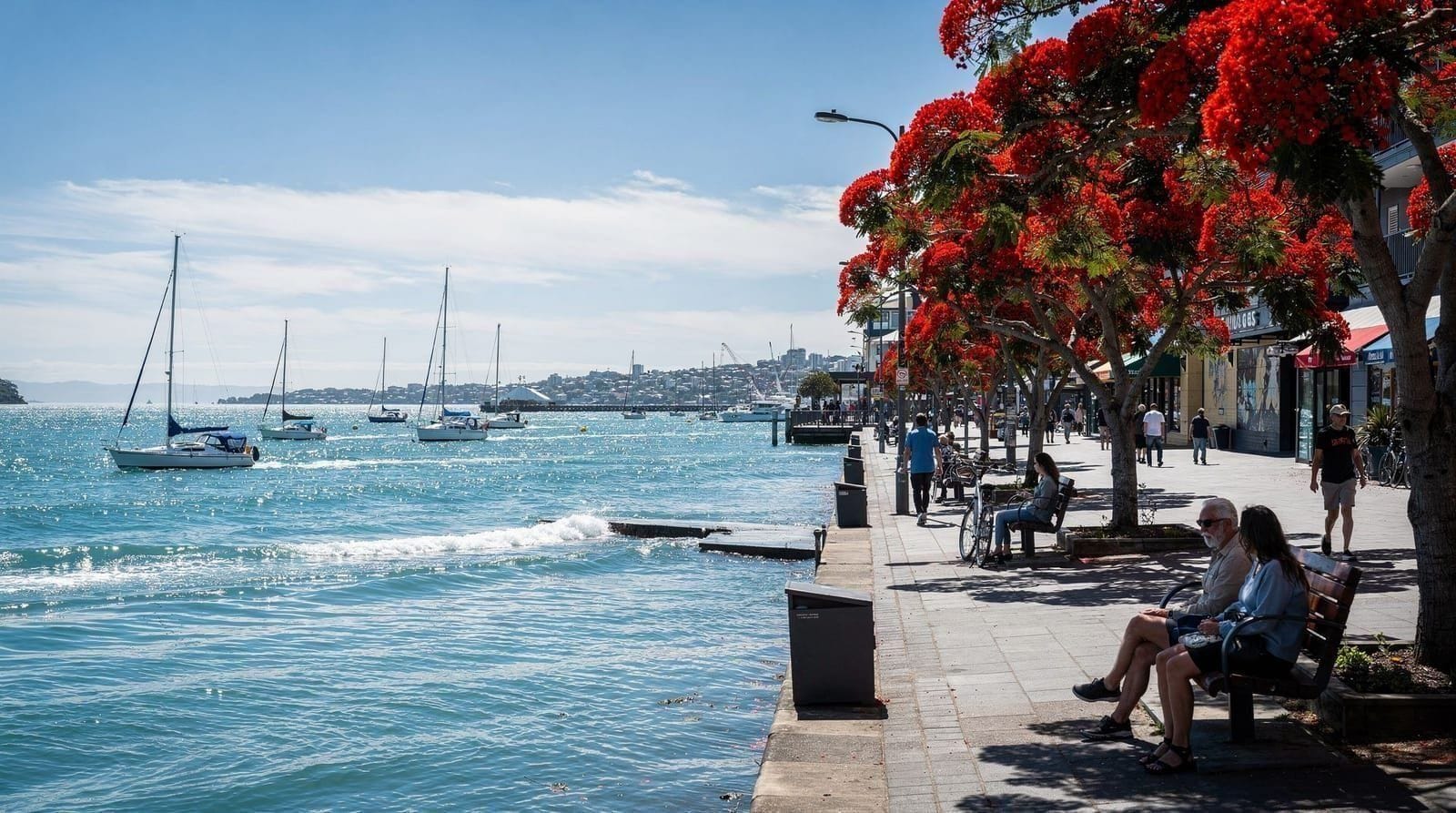
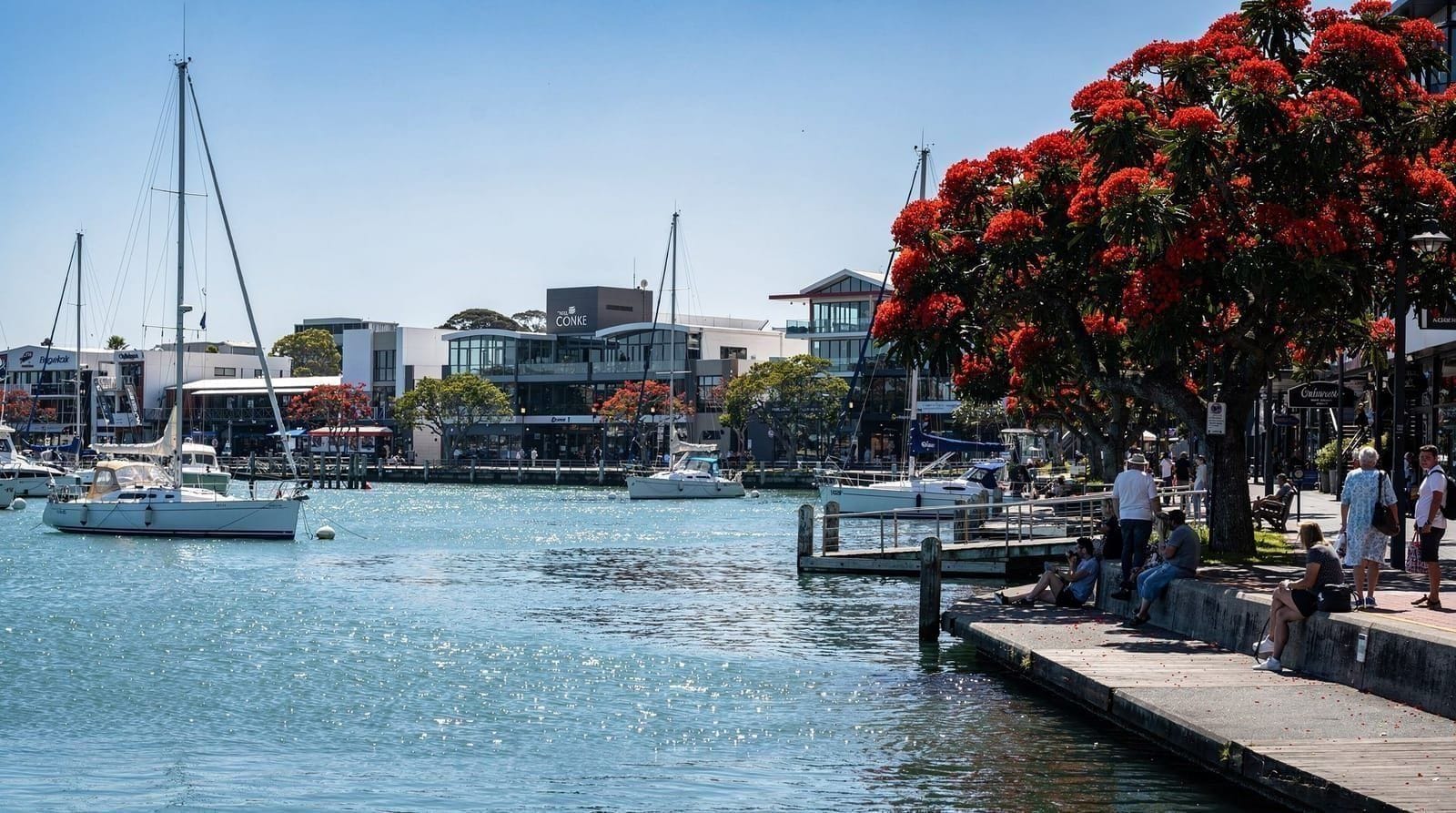
Peak summer. Average 20-25°C, warm and often humid, with New Zealand’s own summer holidays overlapping this month, pushing beaches and attractions to their busiest. Rain is possible but generally brief, often clearing within an hour. Best for beach days, harbour cruises and outdoor dining — Mission Bay and Piha are both at their liveliest. Pack light, breathable layers, SPF 50+ and a hat rather than heavy clothing; a light rain shell still earns its place in the bag for the odd afternoon shower. Expect the year’s busiest queues at Hobbiton and the Waiheke ferry, so booking ahead matters more this month than any other. February eases the crowds slightly while keeping the same warm, humid character.
February
Still firmly summer, 20-25°C, typically slightly less crowded than January as local school holidays wind down, though still peak international tourist season. One of the more reliably warm, dry-leaning months, and a strong window for whale and dolphin watching in the Hauraki Gulf, when newborn dolphin calves are more commonly spotted. Waiheke’s vineyards and beach clubs are in full swing — see our Waiheke day trip guide — though both ferries and popular wineries book out on weekends. Evenings stay warm enough for outdoor dining well past sunset, one of the genuine perks of visiting this deep into summer.
March
Early autumn, transitioning from summer’s 20-25°C toward a more moderate 15-20°C by month’s end. Skies start clearing noticeably compared to summer’s humidity, and prices begin easing from peak as New Zealand’s own school holidays end. A genuinely strong month for outdoor activities, from vineyard visits to walking Auckland’s waterfront without summer’s crowds. It’s also festival season — the Pasifika Festival and Auckland Arts Festival both typically land in March, adding cultural events on top of already-pleasant weather; see our Auckland events calendar for timing. Pack for warm days but slightly cooler evenings, since the temperature swing through the day becomes more noticeable than in peak summer.
April
Mid-autumn, 15-20°C, often cited as one of the best all-round months — clear skies, comfortable temperatures, and a meaningful drop in both crowds and prices from summer. Good vineyard weather on Waiheke Island, and comfortable conditions for longer day trips — Hobbiton and Rotorua both suit April’s mild, settled weather well, without summer’s booking pressure. Easter typically falls in March or April, bringing a public holiday weekend worth checking against your dates. Evenings start cooling more noticeably than March, so a light jacket earns a permanent place in the day bag.
May
Late autumn, cooling toward winter, roughly 13-18°C. Still pleasant for city walking and day trips, with occasional crisper mornings signalling the approach of winter. Crowds and prices continue easing from the summer peak, making it a genuinely good month for first-time visitors who want comfortable weather without paying peak-season rates. Outdoor day trips remain fully workable, though it’s worth packing a warmer layer for early starts than you’d need in March or April. This is roughly the last settled-weather month before winter’s rain pattern takes hold in June.
June
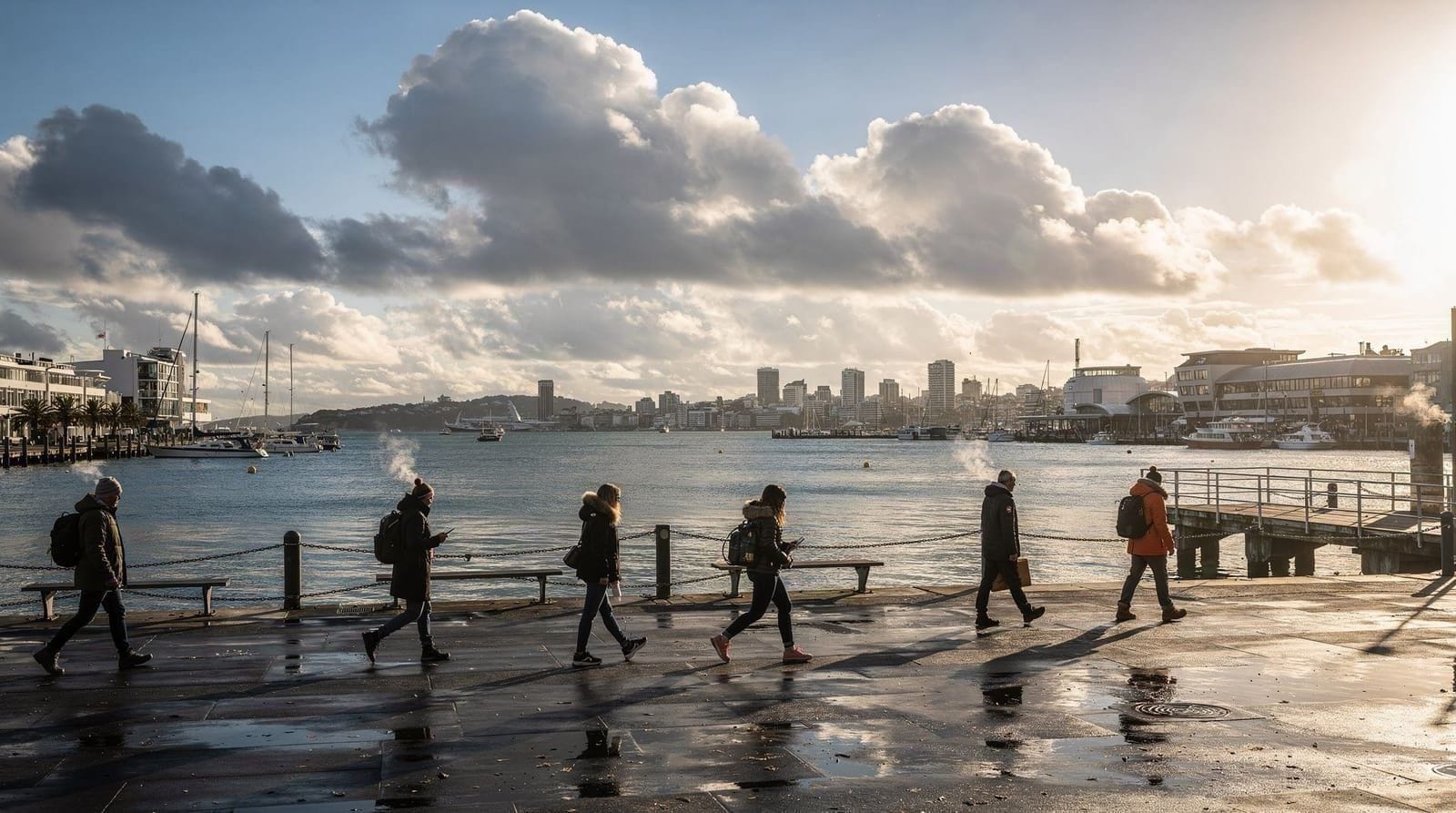
Early winter, 10-15°C, and the start of the year’s wettest stretch. Daylight shortens noticeably, with sunset around 4:30-5pm, so building in earlier starts for day trips is worth planning for. Good for museum visits, geothermal spas and cosy city exploration rather than long outdoor days — see our Auckland Museum guide for a strong wet-afternoon option, or book Auckland Museum general admission directly. Also the start of the humpback whale migration season in Hauraki Gulf, alongside Matariki, the Māori New Year, typically observed in late June with cultural events across the city. Pack a proper insulated jacket rather than just layers; this is where Auckland’s winter starts to feel genuinely wet rather than just cool.
July
The coldest and typically wettest month, 10-15°C with the shortest days of the year. Not a month to plan an outdoor-heavy itinerary around, but genuinely fine for city-based trips, Rotorua’s geothermal warmth — a Polynesian Spa hot spring bathing experience is a genuinely good winter pairing — and whale watching, which peaks through winter — see whale and dolphin watching near Auckland for the winter case.
Elemental AKL, the city’s winter light and dining festival, typically runs through July, giving a specific reason to embrace rather than avoid the month. It’s also the strongest month of the year for value: accommodation and tour pricing sit at their annual low, and queues at Hobbiton and Waitomo thin out considerably. Waitomo in particular is unaffected by the wet, cold surface weather, since the glowworm caves maintain a stable underground climate year-round.
August
Late winter, still 10-15°C and rainy, but daylight begins extending again toward month’s end, a welcome shift after June and July’s short days. The last of the low-price, low-crowd winter window before spring bookings pick up — a good month to lock in where to stay and tours at winter rates before demand starts climbing. Elemental AKL typically runs into August, and geothermal experiences around Rotorua feel particularly worthwhile in the lingering cold. By the final week, the shift toward spring becomes noticeable in longer afternoons, even if rain hasn’t yet eased.
September
Early spring, 12-16°C, freshening winds and the first blooms in the city’s gardens. A transitional month — pack layers, since mornings can still feel wintery even as afternoons warm. Prices and crowds remain low, similar to winter, but with noticeably more daylight and the first genuinely warm afternoons of the year. It’s a strong window for day trips that got compressed by winter’s short days, since usable daylight hours start stretching out again. Wind is the defining feature more than rain this month — a windproof outer layer is worth prioritising over a heavier jacket.
October
Mid-spring, 13-17°C, gardens in fuller bloom, and a genuinely pleasant month for outdoor exploration as daylight extends and rain frequency starts to ease from winter levels. Lifeguard patrols typically begin returning to Auckland’s beaches around this time, a sign the season is turning. The Auckland Diwali Festival often lands toward the end of October, adding a cultural highlight on top of improving weather. Hobbiton’s hillside gardens are building toward their spring peak, making this a strong month to combine good scenery with still-reasonable crowd levels ahead of the summer surge.
November
Late spring, 14-18°C, widely regarded as one of the best single months to visit — warm enough for most outdoor plans, blooming parks and gardens, and still ahead of December’s price and crowd surge. The Santa Parade typically marks the start of the festive season in late November, a fun free event if your dates align. It’s also a strong window for booking a Coromandel day trip or a trip to the Bay of Islands before summer’s premium pricing kicks in. If you’re weighing how many days in Auckland makes sense, November’s reliable weather makes it easier to commit to ambitious multi-stop itineraries without a wet-weather backup plan.
December
Early summer, temperatures climbing toward 20°C+ by month’s end, with the back half of the month overlapping New Zealand’s own summer holiday season, pushing prices and crowds up sharply in the final two weeks. The first half of December still carries shoulder-season pricing and thinner crowds, making early December a genuine sweet spot if your dates are flexible. Christmas in the Park and the tail end of the Santa Parade season add festive events to the calendar — see our Auckland events calendar for details. If your trip spans the Christmas-New Year fortnight specifically, booking Hobbiton, Waitomo and accommodation as far ahead as possible is essential, since this is the single busiest stretch of the entire year, discussed further in our Auckland in summer guide.
Regional weather variation across Auckland
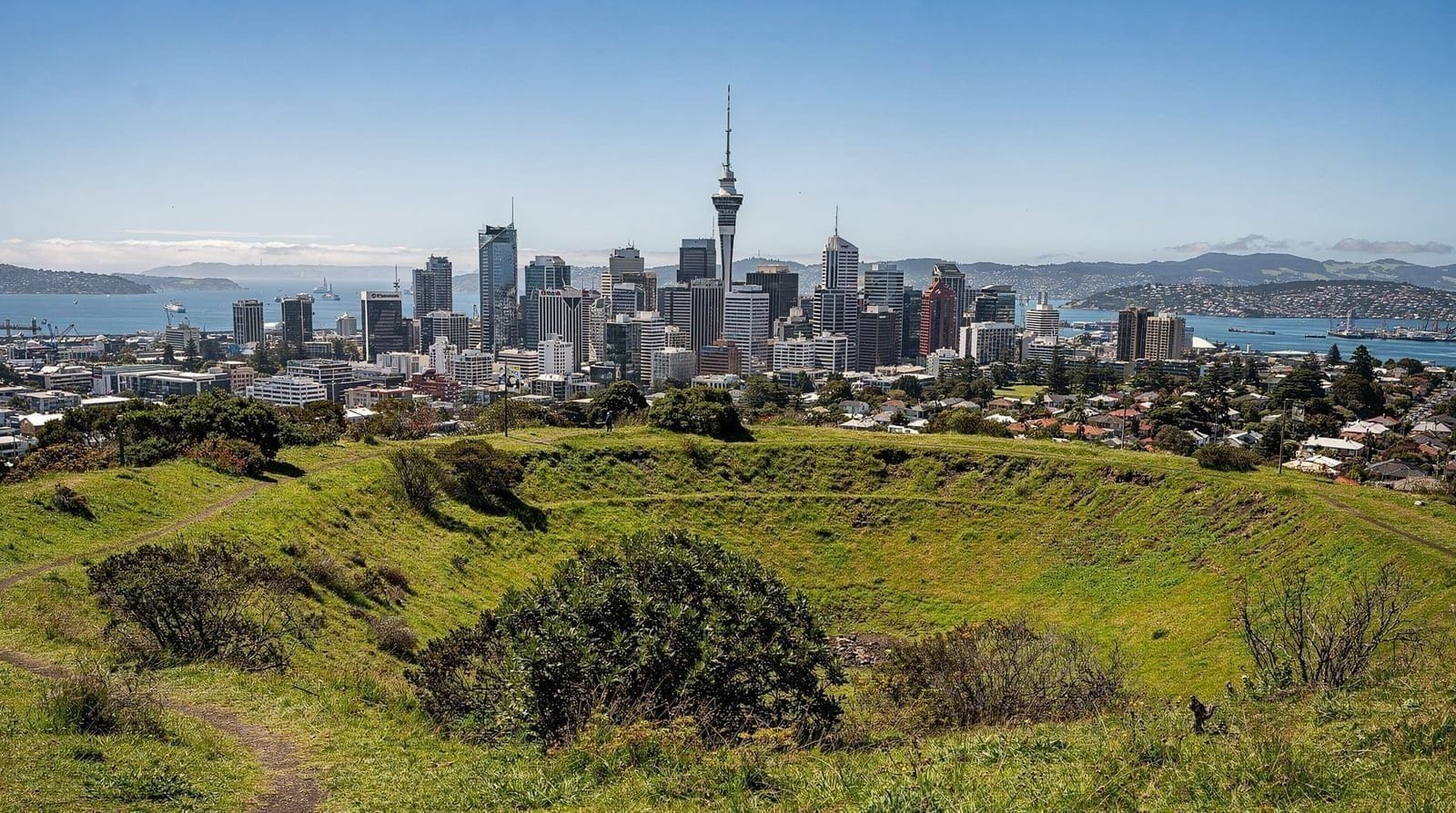
Auckland’s weather isn’t perfectly uniform across the city, largely because of its position on a narrow isthmus between the Tasman Sea to the west and the Pacific-facing Hauraki Gulf to the east. The west coast beaches sit more exposed to Tasman Sea weather systems, and tend to feel windier and more changeable than the sheltered eastern harbour suburbs. The eastern side of the city, around Mission Bay, Devonport and the inner Waitematā Harbour, is generally calmer and sunnier, protected by the volcanic cones and headlands that ring the harbour. It’s genuinely common to experience a grey, blustery morning on the west coast and a clear, still afternoon back in the city centre, or vice versa, within the same day.
This matters practically: if a west coast beach day looks marginal on the forecast, an eastern harbour walk or a trip to Waiheke Island is often a safer bet for the same day, and the reverse applies too. Waiheke itself, further out in the gulf, often runs slightly drier and sunnier than the mainland city centre, one reason its vineyards do so well. None of this changes the broader monthly patterns above — it simply means a single day’s forecast for “Auckland” is really an average across several distinct microclimates, and checking conditions for your specific destination, not just the city centre, is worth the extra step before a day trip.
Even within the central isthmus, suburbs like Ponsonby and Grey Lynn can feel noticeably different from the waterfront on a windy day, simply because they sit slightly higher and further from the harbour’s moderating effect. None of these differences are dramatic enough to derail trip planning, but they explain why a local checking the forecast for a specific suburb or beach, rather than a single citywide number, will usually get a more useful read than a visitor relying on one app’s city-level summary.
How Auckland’s weather compares to other parts of New Zealand
Auckland sits in the upper North Island, which makes it meaningfully milder and less prone to extremes than much of the rest of the country. Destinations further north again, such as the Bay of Islands, run slightly warmer and drier still, benefiting from an even more subtropical-leaning position. Areas further south and inland, including Rotorua and Taupo, sit at higher elevation, which typically means cooler nights and mornings than Auckland even when daytime temperatures look comparable on paper; Rotorua’s geothermal activity adds its own distinct climate quirks on top of elevation. The South Island, while outside the scope of a North Island-focused itinerary, runs considerably cooler and more seasonally extreme than anywhere covered here, with genuine winter cold in places Auckland never sees.
For a North Island trip built around Auckland, the practical implication is that day trips heading inland or south are worth packing an extra layer for, beyond what Auckland’s own forecast suggests, especially for early starts or evening returns. Coastal day trips in the other direction, toward the Coromandel or Bay of Islands, tend to track close to Auckland’s own conditions, since they share a similar coastal, maritime climate. Auckland’s central position and mild profile make it a genuinely sensible base for a North Island loop, since it avoids the more extreme swings you’d encounter basing a trip further south or further inland.
This is also part of why Auckland works well as a base for a longer North Island itinerary rather than just a single-city stop — its weather rarely rules out a day trip entirely, even if it shifts what that day trip should be. A wet forecast in the city centre doesn’t necessarily mean a wet day in Rotorua or the Coromandel, and vice versa, so it’s worth checking conditions for the specific destination rather than cancelling plans based on Auckland’s own forecast alone.
Rain, humidity and daylight: the three variables that matter most
Temperature gets most of the attention when people plan around Auckland’s weather, but it’s rarely the variable that actually changes a trip. Rain is present in every month, so the real question is frequency and duration rather than whether it happens at all — June and July see the most persistent rain, while summer showers tend to be shorter and clear faster. Humidity matters more than the raw temperature number in December-February, since a 24°C humid January afternoon can feel more draining than a dry 24°C day elsewhere; light, breathable fabrics handle this better than technical outdoor layers designed for drier climates.
Daylight is the variable most visitors underestimate: Auckland’s winter sunset as early as 4:30pm genuinely compresses how much a single day trip can cover, while summer’s long evenings, stretching past 8pm, open up entire extra hours for harbour walks, outdoor dining or a late Waiheke ferry back. Building an itinerary that accounts for daylight hours, not just temperature, tends to produce a smoother trip than one built on temperature alone.
Severe weather: what to know about cyclone season
Auckland occasionally sees the tail end of ex-tropical cyclones moving down from the Pacific, most likely between January and April, bringing heavy rain and strong winds over a day or two rather than the sustained tropical storm conditions further north. These events are infrequent and typically well-forecast days in advance, so they rarely derail a whole trip, but they can disrupt ferries to Waiheke or Devonport, close some outdoor attractions temporarily, and occasionally affect flights. If your trip falls in this window, keeping half an eye on the forecast a few days out and building a small amount of flexibility into any weather-dependent day (a ferry crossing, an outdoor cruise) is a sensible precaution rather than a reason for concern — Auckland’s infrastructure handles these events routinely, and most visitors never notice more than a wetter-than-usual day or two.
How to use this month-by-month view
If you’re choosing dates primarily around weather and value, April, October and November stand out as strong single-month picks, each offering comfortable temperatures without summer’s peak pricing or winter’s short days. If your dates are fixed regardless of season, the practical takeaway is the same across all twelve months and worth repeating: pack layers and a rain jacket, since Auckland’s weather has no truly predictable dry stretch, and check conditions for your specific destination rather than assuming the whole city shares one forecast. Our Auckland packing list translates this into a concrete packing plan, and best time to visit Auckland puts these monthly figures into the broader seasonal trade-off between weather, price and crowds.
If you’re still deciding how long to spend in the city before or after these day trips, how many days in Auckland and is Auckland worth visiting are worth reading alongside this guide, since weather is only one piece of the planning puzzle — budget, covered in our Auckland budget guide, and logistics, covered in getting around Auckland, matter just as much for a smooth trip.
Packing by season, in one place
Rather than repeating packing notes month by month, here’s the condensed version: summer needs light, breathable layers, SPF 50+ and a hat, with a compact rain shell for the odd shower. Autumn and spring both call for a light-to-mid jacket and layers that handle a noticeable morning-to-afternoon temperature swing. Winter needs a proper insulated, waterproof jacket rather than just layers, plus a headtorch or planning around early sunsets for evening returns from day trips. Our full Auckland packing list goes item by item if you want a literal checklist rather than a seasonal summary.
Frequently asked questions about Auckland’s weather by month
Does it rain a lot in Auckland?
Yes, in every month — Auckland has no genuinely dry season. June and July are the wettest, but even peak summer sees occasional showers, so a rain layer is worth packing year-round.
What is the hottest month in Auckland?
January and February, both averaging 20-25°C, with January typically the warmest as it falls in the middle of New Zealand’s summer school holidays and peak tourist season.
What is the coldest month in Auckland?
July, averaging 10-15°C. It’s mild by many Northern Hemisphere standards but combined with the year’s shortest daylight hours and highest rainfall.
How much daylight does Auckland get in winter?
Sunset can be as early as 4:30pm in June and July, noticeably shorter than summer’s long evenings, which is worth factoring into day-trip planning during winter months.
Is Auckland’s weather unpredictable?
Somewhat — conditions can shift within a single day due to the city’s maritime location between two harbours. Packing layers and a rain jacket regardless of forecast is the standard local approach.
Which month has the best combination of weather and value?
April and November both stand out — mild, comfortable temperatures with meaningfully lower prices and crowds than the December-February peak.
Does Auckland’s weather differ across the city?
Yes — west coast beaches like Piha run windier and more changeable than sheltered eastern suburbs like Devonport and Mission Bay, since they face the Tasman Sea directly. It’s genuinely common to see different conditions on either side of the city on the same day.
What should I pack for unpredictable Auckland weather?
Layers and a compact rain jacket regardless of season, since conditions can shift within a single day. See our Auckland packing list for a full seasonal breakdown by month.