Rotorua day trip from Auckland
Auckland: Rotorua day trip from auckland with options
Is Rotorua doable as a day trip from Auckland?
Yes, but it's a long one — about 3 hours (228 km) each way, meaning 6 hours of driving for roughly 5-6 hours on the ground. It's realistic if that's your only option, but an overnight in Rotorua gives noticeably more time for the geothermal parks and Māori cultural experiences without the rush.
| Where | 228 km southeast of Auckland, about 3 hours’ drive |
| Cost | Around NZD 130-280/person for a single-day trip |
| Time needed | 5-6 hours on the ground for a single-day return |
| Getting there | Self-drive via SH1/SH5, or a guided day tour |
| Best time | Leave before 8am; shoulder season for lighter crowds |
The honest math on a Rotorua day trip
Rotorua sits about 228 km southeast of Auckland, and the drive takes roughly 3 hours each way in normal traffic via SH1 and SH5. Do the round trip in a single day and you’re looking at 6 hours behind the wheel (or in a coach seat) for somewhere between 5 and 6 hours actually in Rotorua, once you subtract a lunch stop and any buffer for traffic leaving Auckland.
That’s not nothing — it’s genuinely enough time for one well-chosen geothermal park and a shorter add-on activity. But it’s worth being upfront about the trade-off before you book: Rotorua rewards a slower visit more than almost anywhere else on this site’s day-trip list, because so much of what makes it special (mountain biking trails, multiple geothermal parks, lakeside walks, an evening cultural performance with hāngī dinner) needs more than an afternoon.
What Rotorua actually offers
Rotorua sits on one of the most active geothermal fields in the world — bubbling mud pools, steaming vents, and geysers scattered through and around the town, alongside a series of dedicated geothermal parks that showcase the more dramatic features safely. It’s also one of the strongest centres for Māori cultural tourism in New Zealand, with several operators running genuine, respectfully presented cultural experiences including traditional performances, hāngī-cooked meals, and guided storytelling about local iwi history. For a deeper look at what “geothermal” actually means and why Rotorua sits where it does, see our Rotorua geothermal explained guide.
Getting there: route and drive time
From Auckland CBD, the drive to Rotorua takes about 3 hours covering 228 km, mostly via SH1 south to Tirau and then SH5 into Rotorua, a well-maintained, mostly two-lane highway route with a mix of open countryside and rolling hills. Leaving Auckland before 8am avoids the worst of the morning commute; leaving after 9am on a weekday adds minimal extra time once you’re clear of the city itself.
There’s no train service to Rotorua, though InterCity buses run the route in around 4-5 hours — slower than driving and generally not worth it for a single-day trip given the extra time cost. Self-driving or a guided coach tour are the two realistic options.
This Rotorua day trip from Auckland with flexible activity options is the straightforward single-day tour choice if you’d rather not drive the full 6 hours yourself — it typically lets you choose your geothermal park or cultural activity add-on at booking.
Choosing one geothermal park (because you’ll only have time for one)
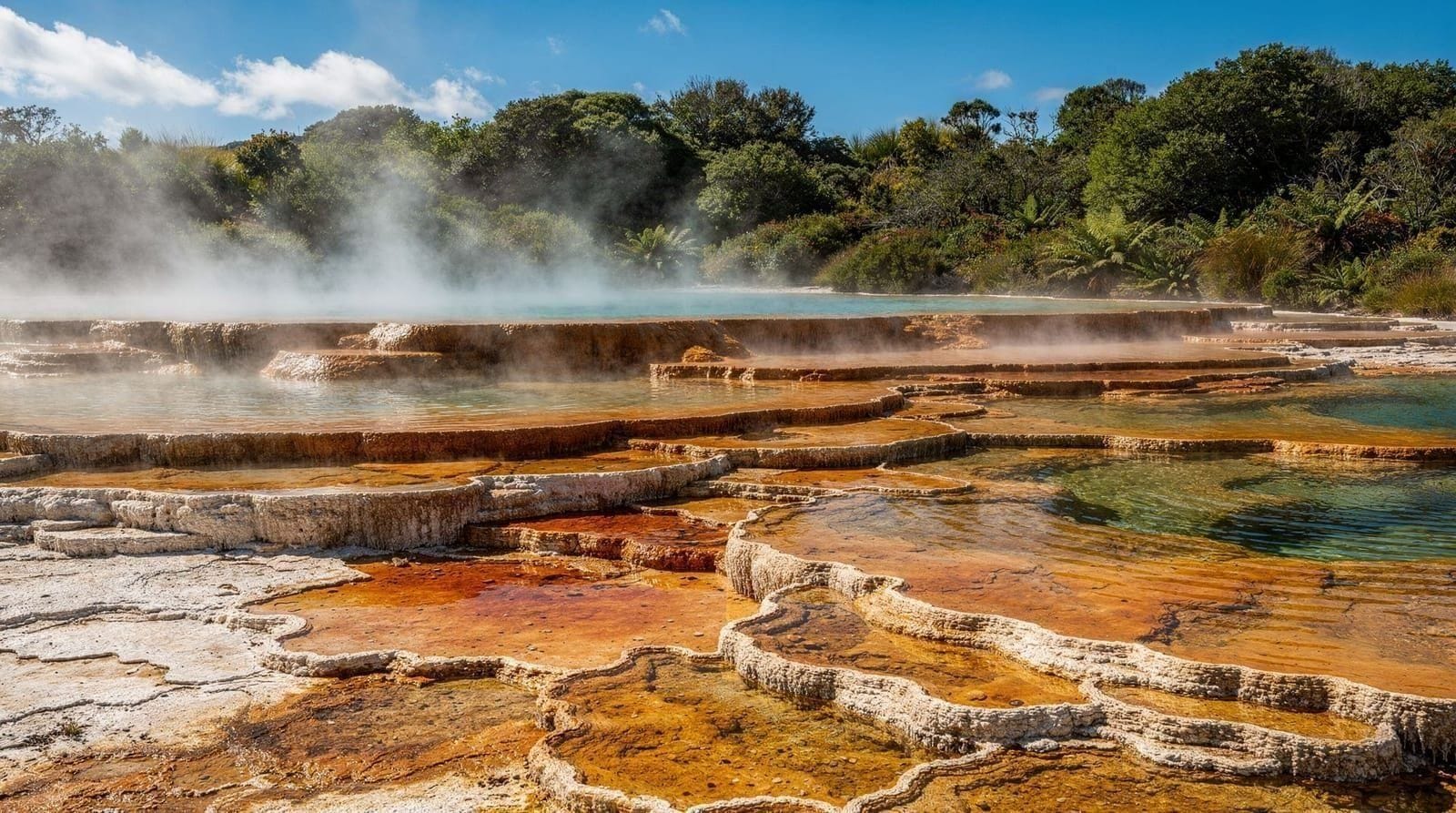
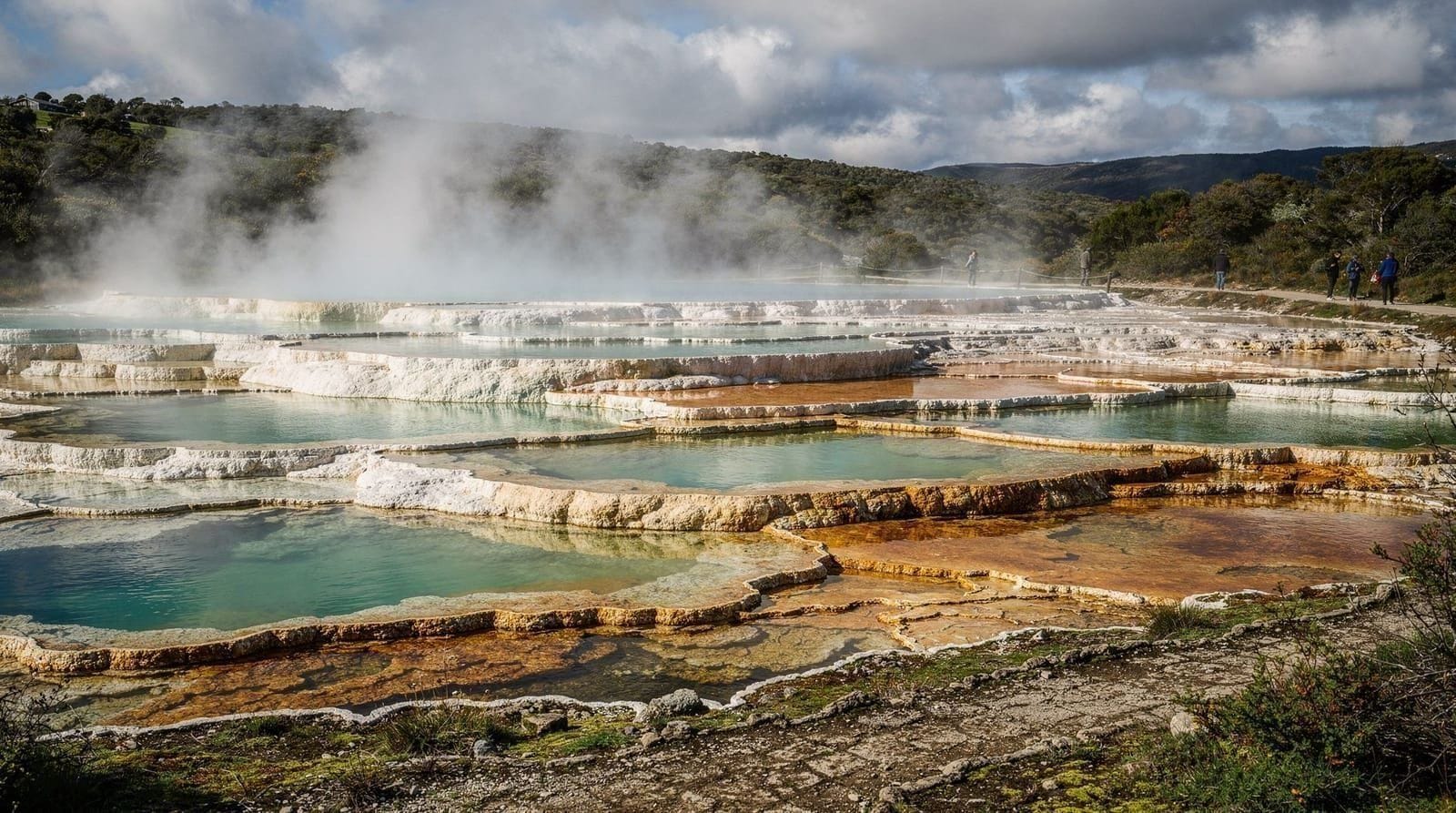
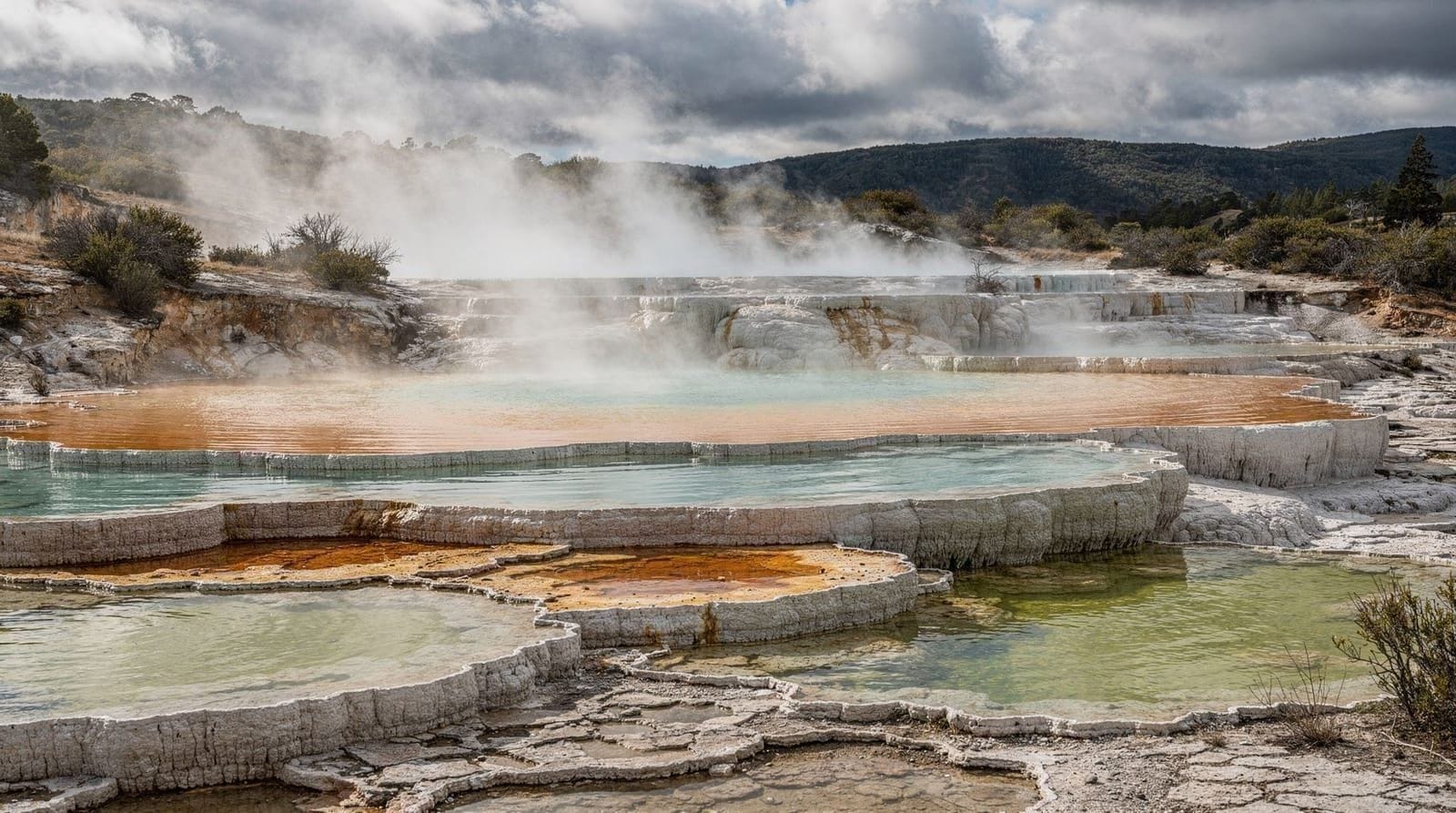
Rotorua has three main geothermal parks, and cramming more than one into a single day trip from Auckland isn’t realistic without cutting everything else. Te Puia combines the Pohutu Geyser (one of the Southern Hemisphere’s most reliable, erupting roughly hourly) with a working Māori cultural centre, including a traditional meeting house and craft demonstrations — making it the most time-efficient choice if you want geology and culture in a single stop. Wai-O-Tapu, about 30 minutes further south of Rotorua town, is the most visually striking of the three, with mineral-stained terraces in vivid oranges and greens, though it adds meaningfully to your total driving time. Waimangu Volcanic Valley, formed by the 1886 Tarawera eruption, offers a walkable valley trail through steaming terraces without the same crowds as the other two.
This Te Puia Māori village and geothermal tour is the most efficient single booking if your day trip only allows one major stop. Our Te Puia vs Wai-O-Tapu comparison breaks down which suits your priorities if you’re torn between the two.
Māori cultural experiences: what to expect
Rotorua’s Māori cultural tourism is genuinely well-established and, done through reputable operators, respectfully presented rather than staged spectacle. A typical experience includes a pōwhiri (formal welcome), a guided walk through a marae or cultural village explaining tikanga (customs) and history, a demonstration of traditional weaving or carving, and often a kapa haka performance, sometimes paired with a hāngī meal (food cooked in an earth oven). This combined Hobbiton and Rotorua day tour including Te Puia is worth considering if you want both Hobbiton and a meaningful cultural stop, though be aware this makes for a genuinely long single day given both destinations’ distance from Auckland.
For visitors wanting to understand the cultural context more before visiting, our Māori experiences in Rotorua guide and respectful Māori tourism guide both cover what makes an experience authentic versus commodified — an important distinction given Rotorua’s status as the country’s most tourism-saturated centre for Māori cultural experiences.
Why an overnight beats a single day here
The single biggest thing a day trip sacrifices in Rotorua is the evening — and Rotorua’s evening cultural performances with hāngī dinner are, for many visitors, the highlight of a Rotorua visit. Trying to fit an evening show into a same-day return to Auckland means either skipping it entirely or arriving back in Auckland close to midnight after a full day of driving and touring. An overnight also opens up mountain biking at the Redwoods (some of the best purpose-built trails in the country), the Skyline Gondola and luge, and a second geothermal park the next morning without rushing.
If your schedule allows even one extra night, our Auckland-Rotorua 3-day itinerary lays out a realistic version that includes Hobbiton on the way down, a full day and evening in Rotorua, and a relaxed return. This combined Hobbiton, Rotorua and Wai-O-Tapu day tour is a middle-ground option if you want to see more in a single (very long) day rather than commit to an overnight stay.
If you’re set on a single day: a realistic itinerary
Leave Auckland by 7-7:30am to arrive in Rotorua around 10:30-11am. Spend 2.5-3 hours at your chosen geothermal park (Te Puia if you also want the cultural centre included), grab a quick lunch in Rotorua town (Eat Streat, on Tutanekai Street, has the widest concentration of casual options), then either add a short lakeside stop at Lake Rotorua or head straight back to Auckland by 3-3:30pm to arrive home around 6:30-7pm. This is a genuinely full day with minimal slack for delays, so build in buffer if you’re not comfortable with a tight schedule.
Rotorua vs Taupo: worth knowing before you commit
Some visitors weigh Rotorua against Taupo, a further 1-1.5 hours south, which offers its own geothermal features (Orakei Korako, Craters of the Moon) alongside Lake Taupo and the Tongariro Alpine Crossing trailhead. As a single-day trip from Auckland, Taupo is genuinely too far — closer to 3.5-4 hours each way — making it impractical without an overnight. Our Rotorua vs Taupo comparison covers which destination suits different priorities if you’re planning a longer North Island trip that includes both.
Is Rotorua worth the drive?
For most visitors, yes — the combination of visible, walkable geothermal activity and genuinely well-run Māori cultural tourism isn’t replicated anywhere else easily accessible from Auckland. The caveat is honest expectation-setting around a single day trip: you’ll leave feeling like you saw a solid slice of Rotorua rather than the full picture, and many visitors who do the single-day version later say they wished they’d stayed the night. We go deeper on where Rotorua does and doesn’t live up to the hype in our is Rotorua worth it breakdown, and for a wider view of how Rotorua compares to Auckland’s other day-trip options, see best day trips from Auckland.
Budget breakdown for a Rotorua day trip
Costs stack up quickly in Rotorua compared to some other day trips, since the appeal spreads across several separately ticketed attractions rather than one bundled entry fee. A geothermal park entry alone runs NZD 55-70 for Te Puia, similar for Wai-O-Tapu, or NZD 30-45 for Waimangu. An evening Māori cultural performance with hāngī dinner, if you extend into an overnight, typically adds NZD 100-150 per person. Fuel for the 456 km round trip runs roughly NZD 70-90, plus a rental car’s daily rate if needed separately.
For a single-day trip covering one geothermal park, fuel, and lunch, budget around NZD 130-180 per person self-driving, or NZD 200-280 for an all-inclusive guided day tour that bundles transport and one activity. If you extend to an overnight and add a second park plus an evening cultural experience, total costs for a two-day Rotorua trip typically land in the NZD 350-500 per person range including accommodation, noticeably more than a rushed single day but proportionate to how much more you actually see and do.
Mountain biking at the Redwoods
One of the things a single-day Rotorua trip sacrifices almost entirely is the Redwoods (Whakarewarewa Forest), widely regarded as one of the best purpose-built mountain biking trail networks in the Southern Hemisphere, threading through a striking forest of towering, century-old Californian redwood trees planted in the early 1900s. Trails range from gentle, well-graded loops suitable for beginners and families on hired bikes, through to genuinely technical, internationally rated tracks that draw competitive riders from overseas specifically for this destination.
Even non-riders find the Redwoods worth a visit for the treewalk — an elevated boardwalk strung between the redwood canopy, lit dramatically at night — but neither the treewalk nor a proper mountain biking session realistically fits into a single-day Rotorua round trip from Auckland once you’ve allocated time to a geothermal park and the drive itself. This is one of the clearest arguments for the overnight version of this trip if outdoor activity beyond walking appeals to you.
What a Rotorua evening cultural experience actually involves
For visitors extending into an overnight, an evening Māori cultural experience is worth understanding in more detail before booking, since offerings vary in quality and authenticity across operators. A well-run experience typically opens with a pōwhiri (formal welcome ceremony) at the entrance to a marae or cultural village, followed by a guided walk through the grounds where a host explains tikanga, carving symbolism, and local iwi history in genuine depth rather than a rushed summary. The evening usually builds toward a kapa haka performance — traditional song, dance and haka — performed with evident pride and skill by performers who are often iwi members themselves rather than hired actors.
Dinner is typically a hāngī, food slow-cooked in an earth oven using heated stones, a genuinely different cooking method that produces a distinctive smoky, tender result across meats and vegetables cooked together. Reputable operators frame the evening around genuine cultural exchange and education rather than spectacle, and it’s worth reading recent reviews for whichever specific operator you’re considering, since quality and authenticity can vary meaningfully between them.
Where to stay if you extend to an overnight
Rotorua town itself has a wide range of accommodation given its long-established tourism industry, from budget motels to mid-range hotels and a genuine cluster of properties built directly around natural hot pools, letting you soak in geothermally heated water right at your accommodation rather than only at a dedicated park. Lakefront properties along Lake Rotorua offer pleasant views and an easy walk into town, while properties slightly further out, closer to the Redwoods forest, suit visitors prioritising mountain biking or early access to the treewalk. Booking ahead matters more in the December-February peak, when Rotorua’s accommodation, like its geothermal parks, sees considerably heavier demand than shoulder or winter months.
A note on Rotorua’s sulphur smell indoors
One practical detail worth knowing before an overnight stay specifically: some accommodation in central Rotorua, particularly older properties built directly over geothermal ground, can carry a faint sulphur smell indoors, especially in bathrooms with older plumbing. This isn’t universal and most modern or well-maintained properties don’t have a noticeable issue, but it’s worth checking recent reviews for smell-related comments if you’re sensitive to it, rather than being caught off guard on arrival.
Rotorua’s lakes beyond the geothermal parks
Rotorua sits on the shore of Lake Rotorua, the largest of a cluster of lakes formed within and around the wider Rotorua volcanic caldera, and while a single-day trip rarely leaves time to properly explore beyond the geothermal parks, it’s worth knowing these lakes exist as a genuinely different side of the region for a longer stay. Lake Tarawera, a short drive from town, sits at the base of Mount Tarawera, the volcano responsible for the catastrophic 1886 eruption that also formed the Waimangu Volcanic Valley — boat tours and short lakeside walks here offer a quieter, more scenic alternative to the geothermal parks for visitors with an extra day. Blue Lake and Green Lake, two strikingly different-coloured lakes near each other despite their close proximity, make for an easy, short scenic drive if time allows beyond the standard single-day itinerary.
Shopping and souvenirs specific to Rotorua
Rotorua has a genuinely strong concentration of Māori arts and crafts retailers, reflecting the region’s status as a centre for both traditional and contemporary Māori art. Pounamu (greenstone) carving, traditional weaving, and contemporary Māori-designed jewellery and clothing are all more readily available here, and often from artists directly connected to local iwi, than in most other North Island towns. If purchasing pounamu or other culturally significant items, buying from a reputable retailer who can speak to the piece’s origin and the artist behind it is worth prioritising over the cheapest generic souvenir shop option, both for authenticity and as a more respectful way to engage with items carrying genuine cultural weight.
Cellphone coverage and connectivity on the drive
Coverage along SH1 and SH5 between Auckland and Rotorua is generally solid on the major networks, with only brief gaps through some of the hillier stretches near Tirau — enough to plan around if you’re relying on a phone map for navigation, but not a serious concern for a well-planned day trip. Rotorua town itself has reliable coverage and widespread wifi at cafes and geothermal park visitor centres, so staying in touch or looking up last-minute logistics isn’t an issue once you arrive.
Frequently asked questions about the Rotorua day trip
Can I see the Pohutu Geyser on a single-day Rotorua trip from Auckland?
Yes, it’s part of the Te Puia geothermal park and erupts roughly hourly (sometimes more, sometimes less predictably), so a 2-3 hour visit gives good odds of catching an eruption.
Is it better to book a guided tour or drive myself to Rotorua?
For a single-day round trip, a guided tour lets you rest during the 6-hour round trip rather than driving all of it, which many visitors find preferable given the length of the day. Self-driving suits those who want to control timing precisely or plan to add unplanned stops along the way.
What should I eat in Rotorua on a day trip?
Eat Streat on Tutanekai Street has the widest concentration of casual dining for a quick lunch. If your itinerary includes an evening cultural experience, a hāngī-style meal is typically included as part of that package rather than eaten separately.
Is Rotorua smelly because of the geothermal activity?
There’s a noticeable sulphur smell in parts of town and around the geothermal parks, generally described as similar to rotten eggs, though it fades from notice within the first 20-30 minutes for most visitors and is far more pronounced right at the geothermal features than elsewhere in town.
Can I combine Rotorua with Hobbiton in a single day from Auckland?
It’s possible but genuinely long — Matamata (Hobbiton) sits roughly an hour before Rotorua on the same route, so combining both means 8+ hours of driving alone in a single day. It’s a better fit for a 2-day trip than a single-day round trip.
What’s the best season for a Rotorua day trip?
Any season works, since the geothermal features aren’t weather-dependent, but shoulder season (March-May, September-November) offers the most comfortable driving conditions and thinner crowds at the parks compared to the December-February peak.
Is Rotorua safe given all the geothermal activity?
Yes — the geothermal parks are well-managed with boardwalks and clear safety boundaries around hot pools and vents. Stick to marked paths and follow posted signage, and there’s no meaningful risk to a standard visit.
Is there phone signal on the drive from Auckland to Rotorua?
Coverage is generally reliable on SH1 and SH5, with only brief gaps in hillier sections near Tirau. Rotorua town has solid coverage and widespread wifi, so staying connected isn’t a practical concern.
Can I do Rotorua as a day trip without a car or a tour booking?
Not realistically — there’s no train service, and InterCity buses take 4-5 hours each way, too slow for a same-day return. Self-driving or a guided day tour are the two workable options for a single-day visit.
Top experiences
Bookable activities with verified prices and instant confirmation on GetYourGuide.