Auckland's best beaches, ranked honestly
Auckland: Piha beach rainforest mount eden private tour
What is Auckland's best beach?
For scenery and surf, Piha on the west coast is unmatched but has dangerous rip currents — swim only between the flags. For safe swimming with kids, Mission Bay and Takapuna on the east coast are calm, patrolled and close to the city.
Two coastlines, two very different beaches
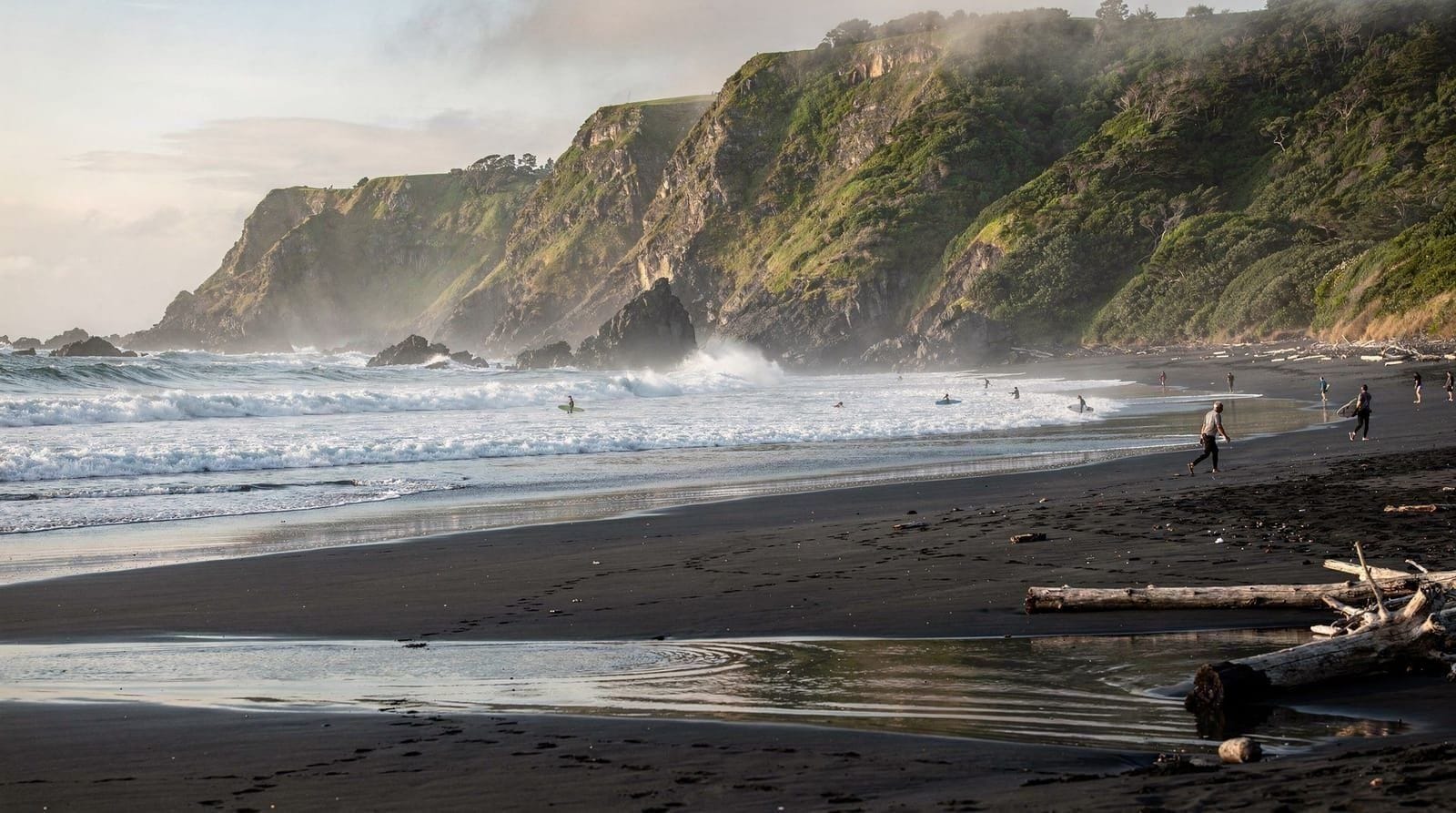
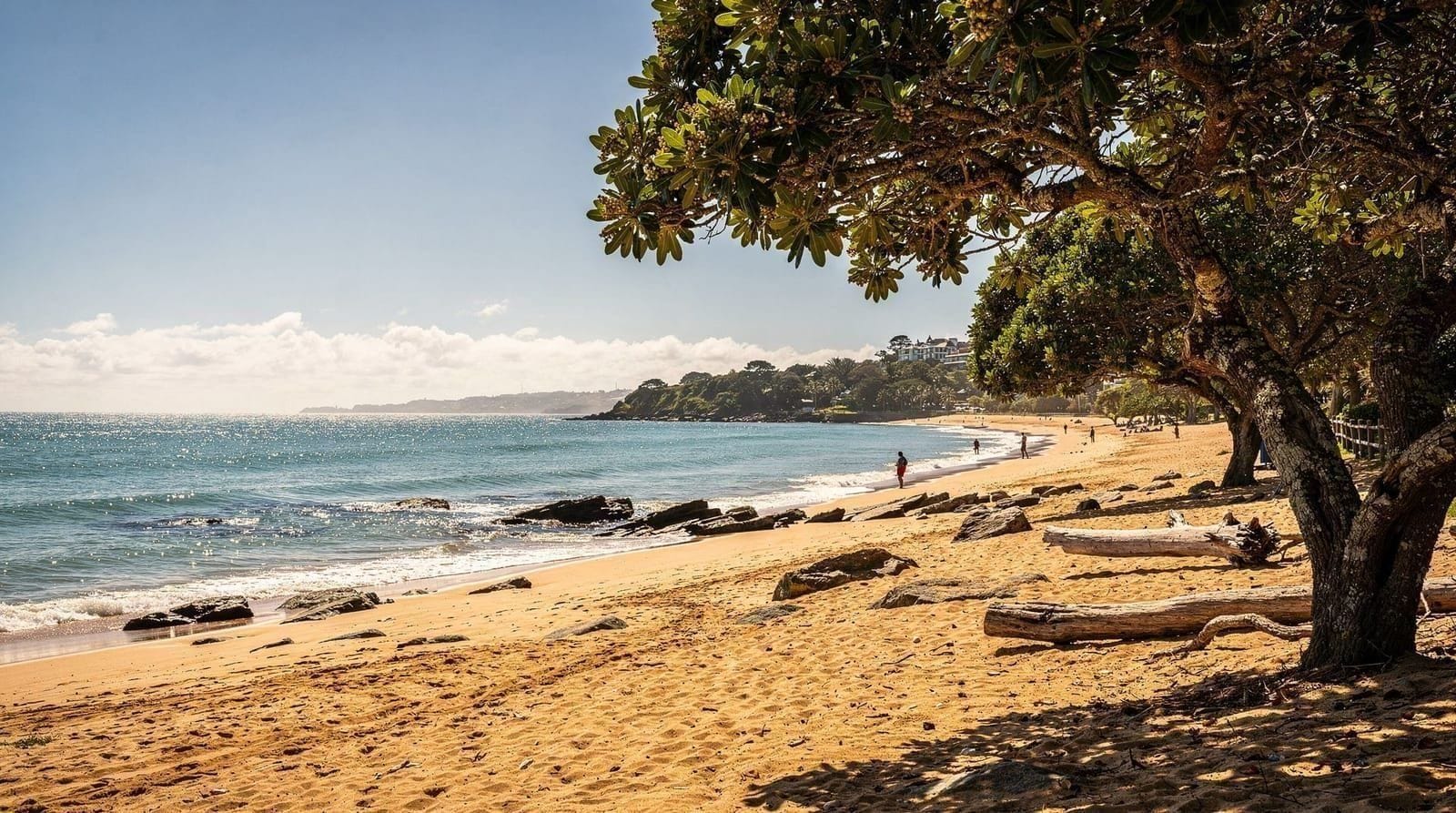
Auckland sits on an isthmus between two coastlines, and they could not be more different. The west coast — Piha, Karekare, Muriwai, Bethells — is wild, black-sand, and genuinely dangerous if you don’t respect it: Pacific swells roll in unbroken, rip currents form and shift daily, and the surf is a real drawcard for surfers rather than a safe paddling spot for toddlers. The east coast — Mission Bay, Takapuna, Cheltenham, Long Bay — sits inside the sheltered Hauraki Gulf, with calm water, golden sand, and views across to Rangitoto Island. Neither coastline is “better”; they suit different trips, and most visitors end up doing at least one of each.
This guide ranks the beaches honestly, tells you which ones are worth a dedicated half-day and which are a quick stop on the way to somewhere else, and covers the safety basics that matter more here than almost anywhere else in New Zealand.
| Where | West coast (Piha, Muriwai) 40-45 min; east coast (Mission Bay, Takapuna) 10-20 min |
| Cost | Free entry and mostly free parking |
| Time needed | Half a day per beach |
| Getting there | Bus for east coast; car or tour for west coast |
| Best time | December-February for swimming; year-round for scenery |
West coast: Piha, Karekare, Muriwai, Bethells
Piha is Auckland’s most famous beach and deserves the reputation. Black volcanic sand, the dramatic 101-metre Lion Rock splitting the bay in two, and consistent surf that draws board riders from across the city. It’s about 45 minutes’ drive from the CBD through the Waitākere Ranges, and the drive itself — winding through native bush — is part of the experience. Piha is also where the notorious rip currents live: the beach has claimed lives, and Surf Life Saving patrols the main beach from around late October through April (daily in peak summer, weekends in shoulder months). Swim strictly between the flags. Outside patrol hours or flags, don’t go past your knees unless you’re an experienced ocean swimmer.
Karekare, a few minutes further south, is quieter and arguably more dramatic — this is the beach from Jane Campion’s film The Piano. No cafés, no lifeguards most of the year, and a longer unpatrolled stretch of coast, so it suits a scenic stop and short walk rather than a swim unless conditions are calm and you know what you’re doing.
Muriwai, about 40 minutes north-west of the city, pairs a black-sand surf beach with one of the most accessible gannet colonies in the world — thousands of Australasian gannets nest on the cliffs from around August to March, with viewing platforms a short walk from the car park. It’s an easy half-day combining beach, birdlife, and a short coastal walk, and one of the few west coast beaches with a genuinely worthwhile non-swimming reason to visit.
Bethells (Te Henga), further north again, is the least developed of the four — black sand backed by dunes, a freshwater lake, and a walking track to a waterfall. It’s the pick for visitors who want west coast scenery without any crowds, but it’s also the least convenient to reach and has no facilities to speak of.
Parking at Piha deserves a specific mention because it catches people out. The main car park behind the surf club fills by mid-morning on any warm summer weekend, and once it’s full you’re circling narrow roadside verges looking for a legal spot, which eats into your beach time and frustrates locals. Arriving before 10am on weekends, or visiting on a weekday, sidesteps this completely. There’s no parking fee at Piha itself, which is one advantage it holds over some east coast alternatives with paid parking during peak periods.
Karekare’s approach road is a single-lane, partly unsealed stretch through farmland and bush that takes a few minutes longer than the drive to Piha, and the beach itself has essentially no infrastructure — no shop, no toilets beyond a basic block at the car park, and no lifeguard presence for most of the year. That isolation is exactly why photographers and film location scouts love it, but it also means you should bring water and anything else you need before you arrive, and tell someone your plan if you’re walking the surrounding tracks alone.
Muriwai’s gannet colony is genuinely one of the best free wildlife experiences in the Auckland region — Te Ākau Point and Otakamiro Point put you within a few metres of nesting birds without a boat, a guide, or an entry fee. The breeding season (roughly August to March) is when the platforms are busiest with birds; outside that window the colony empties out considerably as the gannets head back out to sea, so if wildlife is your main reason for visiting, plan around the season rather than assuming it’s a year-round spectacle. The short paved path from the car park to the main viewing platform is manageable for most visitors, including those with limited mobility, which isn’t true of the other three west coast beaches.
If you’d rather not drive yourself, the Piha, rainforest and Mount Eden private tour covers the beach plus a Waitākere Ranges stop and a volcanic cone in one half-day, and the Piha beach shuttle transfer is a simple no-frills option if you just want drop-off and pick-up. For Muriwai specifically, the Muriwai beach and gannet colony private tour handles the drive and gives you proper time at the colony, or combine several west coast stops on the wild west coast black sand beaches tour .
East coast: Mission Bay, Takapuna, Cheltenham, Long Bay
Mission Bay, ten minutes from the CBD along Tāmaki Drive, is Auckland’s classic city beach — a wide strip of golden sand, a promenade lined with cafés and gelato shops, a fountain, and calm, shallow water that’s genuinely safe for young children. It gets busy on summer weekends but is easy to reach by bus and needs no advance planning.
Takapuna, across the harbour on the North Shore, offers similar calm water with the added bonus of Rangitoto Island filling the horizon — arguably Auckland’s best beach photo without leaving the city. A pleasant café strip sits right behind the beach.
Cheltenham, tucked beside Devonport, is smaller and quieter, with views toward North Head and the harbour entrance — a good pick if you want the calm-water experience without Mission Bay’s crowds.
Long Bay Regional Park, further north on the Shore, is the largest and least crowded of the east coast options, with a grassy reserve behind the beach that suits picnics and longer stays. It’s a 30-40 minute drive or bus ride from the city, which keeps day-tripper numbers down.
None of the east coast beaches charge for parking, though Mission Bay’s roadside spaces along Tāmaki Drive fill quickly on sunny weekends — arrive by mid-morning or plan to walk a block or two from a side street. Takapuna has a larger dedicated car park behind the shops, which tends to have more capacity than Mission Bay even at peak times. If you’re staying centrally and don’t want to deal with parking at all, both Mission Bay and Takapuna are a short, cheap bus ride from the CBD using an AT HOP card, which is often less hassle than driving and circling for a park.
Food is genuinely part of the Mission Bay and Takapuna experience in a way it isn’t on the west coast. Mission Bay’s promenade has a dense strip of cafés, gelato counters, and casual restaurants where a coffee and pastry runs around NZ$12-15 and a proper lunch NZ$25-35 per person — busy enough in summer that a Saturday lunch booking is worth making if you want a table with a view. Takapuna’s café strip is smaller but similarly priced, and slightly less crowded. Piha and Muriwai, by contrast, have minimal or no food options at the beach itself (Piha has a small general store; Muriwai has none at the beach car park), so pack food and water if you’re heading west.
If you only have a few hours: which beach to pick
If you’re staying centrally with a single free afternoon and no car, Mission Bay is the obvious choice — a short bus ride, guaranteed safe swimming, and a walkable café strip means you can’t really get it wrong. If you’ve rented a car and have a full morning or afternoon free, Piha rewards the drive with the west coast’s signature scenery, though you should check the tide and flag status before committing to swimming. Travelling with young kids and want the lowest-effort option: Takapuna or Cheltenham, both calm and close to parking, with Takapuna adding the bonus of a genuinely great Rangitoto photo. If you’re chasing wildlife rather than swimming, Muriwai’s gannet colony is worth the drive on its own merits, independent of beach weather — it’s a good rainy-day-adjacent option since much of the colony viewing happens from covered platforms.
Common mistakes visitors make
The single most common mistake is treating Piha or Muriwai like a resort beach and swimming wherever looks calm, rather than checking for lifeguard flags first. Rip currents at both beaches can look deceptively flat from the shore — the water pulling out to sea often appears smoother than the breaking waves either side of it, which is precisely why inexperienced swimmers get caught. A second common mistake is underestimating driving time: Google Maps’ estimate for the west coast beaches doesn’t always account for the winding, single-lane sections of road, so add a buffer, especially if you’re driving back at dusk. A third: skipping sunscreen because it’s “just a beach walk” rather than a swim — New Zealand’s UV index frequently hits extreme levels in summer, and sunburn from an hour on exposed sand or lava rock happens faster than most visitors from the northern hemisphere expect.
Accessibility notes
Mission Bay and Takapuna both have flat, paved promenades right along the beach, making them the most wheelchair- and pushchair-friendly options on this list, with accessible parking near the main entrances. Muriwai’s main gannet-viewing platform is reached via a short paved path from the car park and is manageable for most mobility levels, though the platform itself has some steps in places. Piha, Karekare and Bethells all involve walking across soft or uneven sand to reach the water, and none have formal accessible beach access, so factor that in if mobility is a concern for anyone in your group.
Safety: the part you can’t skip
New Zealand’s UV levels are among the highest in the world, and sunburn happens fast — within 20 minutes of unprotected exposure in summer, even on overcast days. SPF 50+, a hat, and reapplication every two hours are non-negotiable, not just for the beach but for any outdoor day in Auckland.
Rip currents are the real hazard on west coast beaches. If you’re caught in one, don’t fight it — swim parallel to the shore until you’re clear of the current, then angle back in. Panicking and swimming straight against a rip is how most drownings happen. Lifeguard-patrolled hours (roughly late October to April) are the safest window to swim at Piha and Muriwai; outside those months, treat both as sightseeing beaches rather than swimming spots unless you’re highly experienced.
How the beaches compare for a day trip
If you have one half-day and want the classic Auckland beach experience, Piha wins for drama and the Waitākere Ranges drive. If you’re travelling with young children or nervous swimmers, Mission Bay or Takapuna deliver a relaxed, low-risk afternoon with cafés close by. If wildlife is the draw, Muriwai’s gannet colony is unlike anything on the east coast. For a longer look at how these fit into a wider itinerary, see our guide to best beaches near Auckland, which also covers Waiheke and further-flung options, and our Waitākere Ranges hiking guide if you want to pair a west coast beach with real trail time.
Getting there without a rental car
Mission Bay, Takapuna and Cheltenham are all reachable by public bus from central Auckland using an AT HOP card — see our getting around Auckland guide for route basics. Piha, Karekare, Muriwai and Bethells are not on the regular bus network in any practical way; you’ll need a rental car (see our car rental Auckland guide) or a shuttle/tour like the ones linked above. If you’re deciding between self-driving and a tour for west coast day trips generally, our self-drive vs tour comparison walks through the trade-offs.
When to go
Summer (December-February) is peak beach season, with the warmest water (around 20-22°C) and the biggest crowds — expect full car parks at Piha and Mission Bay by mid-morning on weekends. Shoulder months (March-May, September-November) bring milder crowds and still-pleasant conditions for walking, if not always swimming. Winter beaches are for photography and fresh-air walks rather than swimming; water temperatures sit around 14-16°C and lifeguard patrols stand down. If you’re planning your trip around beach weather specifically, cross-check our best time to visit Auckland guide, and see our Auckland weather by month breakdown for more granular detail than “summer” and “winter” alone.
Month by month, December and January are the busiest and warmest, with school holidays pushing Mission Bay and Piha to their fullest — arrive early or accept crowds as part of the experience. February often has the warmest sea temperatures of the year, sometimes better swimming weather than December despite being later in summer. March and April cool gradually but frequently deliver the clearest, calmest days of the year as humidity drops, arguably the best month for photography at Piha without summer’s traffic. May through August is genuinely cold for swimming and increasingly wet, though a bright winter’s day at Mission Bay with nobody else around has its own appeal, and Muriwai’s gannets are largely absent this period.
September and October see the first gannets return to Muriwai and lifeguard patrols resume at some beaches, though water is still cool. November is a reliable shoulder month — warming water, lengthening days, and crowds not yet at summer peak, arguably the best all-round month to combine beach time with everything else on an Auckland itinerary. For visitors specifically comparing summer and winter trade-offs beyond the beaches, see our Auckland in summer and Auckland in winter guides.
Beach days on a budget
A beach day in Auckland can cost nothing beyond transport — all the beaches in this guide are free to enter, with free parking everywhere except a few paid car parks in central Devonport.
The cheapest version of a beach day is a bus to Mission Bay or Takapuna (a few dollars each way on an AT HOP card), a swim, and a picnic brought from a supermarket rather than bought on the promenade. At the other end, a private tour to Piha with lunch included can run several hundred New Zealand dollars for a small group, which buys convenience and local knowledge rather than anything you strictly need. For a broader sense of where beach outings sit within an overall trip budget, our Auckland budget guide and is Auckland expensive guides put daily costs in context, and our Auckland packing list covers what’s worth bringing from home versus buying locally (reef shoes and a decent hat, for instance, are cheap and easy to pack but not always easy to buy last-minute near the beach itself).
Beaches with kids
Families weighing up which beach suits young children should lean firmly toward the east coast — see our Auckland with kids and kid-friendly beaches Auckland guides for a fuller rundown of facilities, shade, and toilet access at each spot. Mission Bay in particular has a playground right behind the sand, which buys parents a break if the kids tire of the water before the adults do. West coast beaches are not recommended for unsupervised children of any age given the rip current risk, though older kids who are strong swimmers and stay within the flags can enjoy Piha’s bodyboarding conditions under close supervision.
Frequently asked questions about Auckland beaches
Which Auckland beach is safest for swimming?
East coast beaches — Mission Bay, Takapuna, Cheltenham and Long Bay — sit inside the sheltered Hauraki Gulf and have gentle, predictable surf. They’re the better choice for young children or weak swimmers.
Are Piha and Muriwai dangerous?
The west coast black-sand beaches have genuine rip currents and unpredictable surf. Both are patrolled by lifeguards from around late October to April (weekends outside peak summer) — always swim between the red-and-yellow flags, and never swim if no flags are up.
Do I need a car to reach Auckland’s beaches?
For east coast beaches like Mission Bay and Takapuna, no — buses run regularly from the CBD. For Piha, Karekare and Muriwai on the west coast, you need a car or an organised tour; public transport doesn’t reach them.
Which Auckland beach is best for photos?
Piha, for the black sand and Lion Rock silhouette at sunset. Muriwai runs a close second for its gannet colony perched on cliffs above black volcanic sand.
Are Auckland’s beaches free to visit?
Yes, all public beaches are free. Parking at popular spots like Piha and Mission Bay can fill up on summer weekends, so arrive early or use nearby side streets.
Can you swim at Auckland beaches in winter?
Technically yes, but water temperatures drop to around 14-16°C from June to August and lifeguard patrols stop outside summer. Most visitors treat winter beaches as walking and photography spots rather than swimming destinations.
Top experiences
Bookable activities with verified prices and instant confirmation on GetYourGuide.