How many days do you need in Auckland?
Auckland: Skywalk with sky tower entry ticket
How many days do you need in Auckland?
Two to three days covers Auckland's genuine highlights — the Museum, waterfront, and one harbour crossing to Waiheke or Devonport — without padding. Beyond three days, extra time is better spent on North Island day trips like Hobbiton, Waitomo and Rotorua than repeating city neighbourhoods.
The short answer
Two to three days is the right amount of time for Auckland itself. That’s enough to see the Auckland War Memorial Museum, walk the waterfront, take one harbour crossing (Waiheke Island or Devonport), and explore a neighbourhood or two without rushing between attractions. Fewer than two days means cutting something worthwhile; more than three, and you start running into diminishing returns unless you’re deliberately slowing down or using extra days for day trips rather than more city time.
| Days | Covers | Best for |
|---|---|---|
| 1 | Museum or waterfront + Sky Tower | Layovers, cruise stops |
| 2-3 | Museum, waterfront, one ferry crossing | Most first-time visitors |
| 4-5 | 2 city days + Hobbiton/Waitomo loop | North Island first-timers |
| 7+ | 2 city days + Hobbiton-Waitomo-Rotorua loop | Full North Island trips |
This is a slightly unusual answer compared to how most travel guides frame city trips, and it’s worth being upfront about why: Auckland’s core attraction density is genuinely thinner than a European capital or even Wellington’s compact centre. What makes an Auckland-based trip memorable is mostly outside the city — Hobbiton, Waitomo, Rotorua, the Bay of Islands — not inside it. Our is Auckland worth visiting verdict covers this trade-off directly if you’re still deciding whether the city deserves a stop at all.
What one day looks like
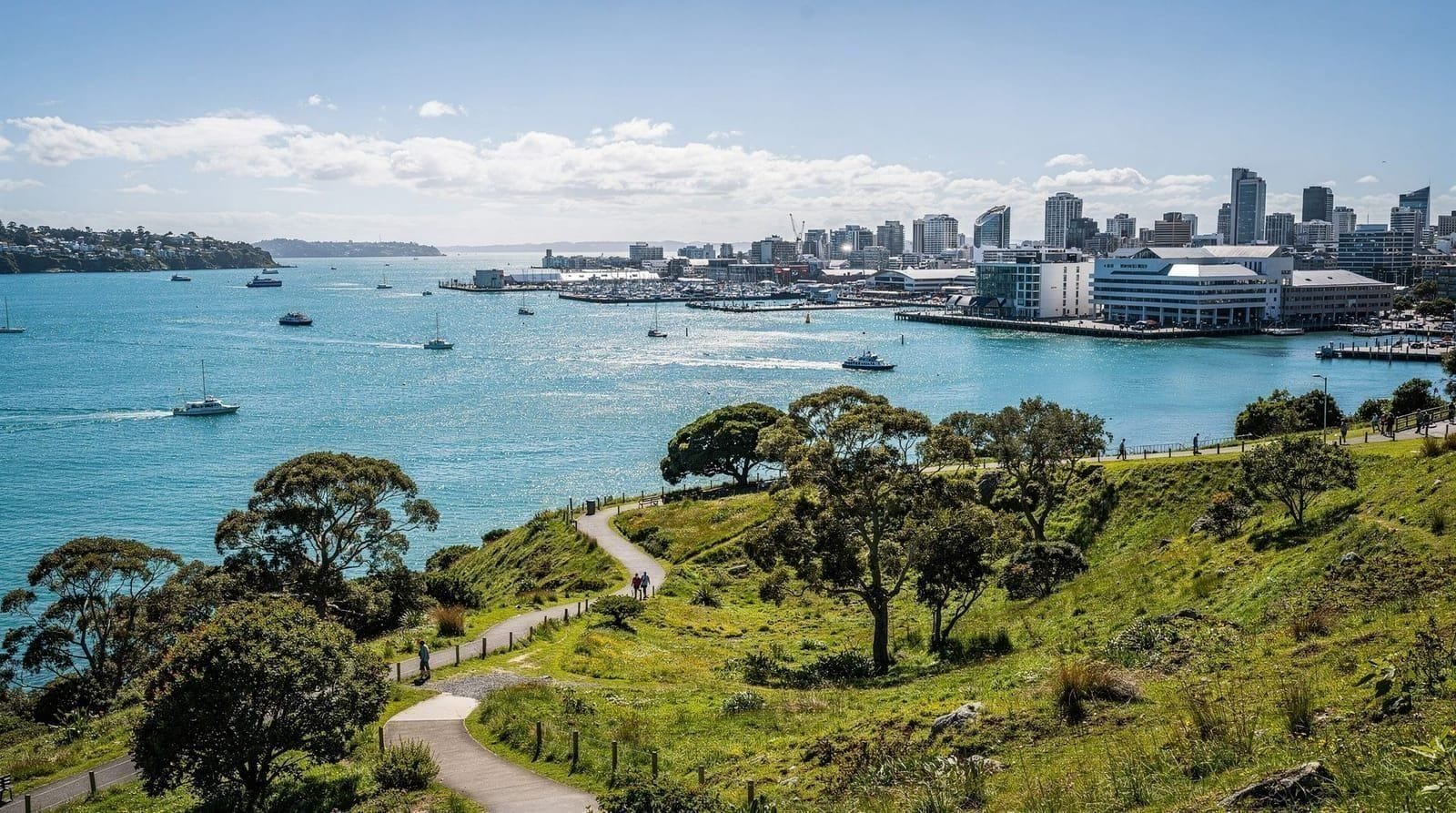
A single day in Auckland is a real constraint, but it’s not wasted time if you plan it tightly. The realistic version starts early: the Auckland Museum from opening, allowing two hours rather than the three you’d give it on a longer trip, followed by a walk down through the Domain toward the waterfront. From there, the Sky Tower is the natural anchor for the middle of the day — an observation deck visit takes under an hour, leaving the afternoon for the Viaduct and Wynyard Quarter’s waterfront promenade before an early dinner.
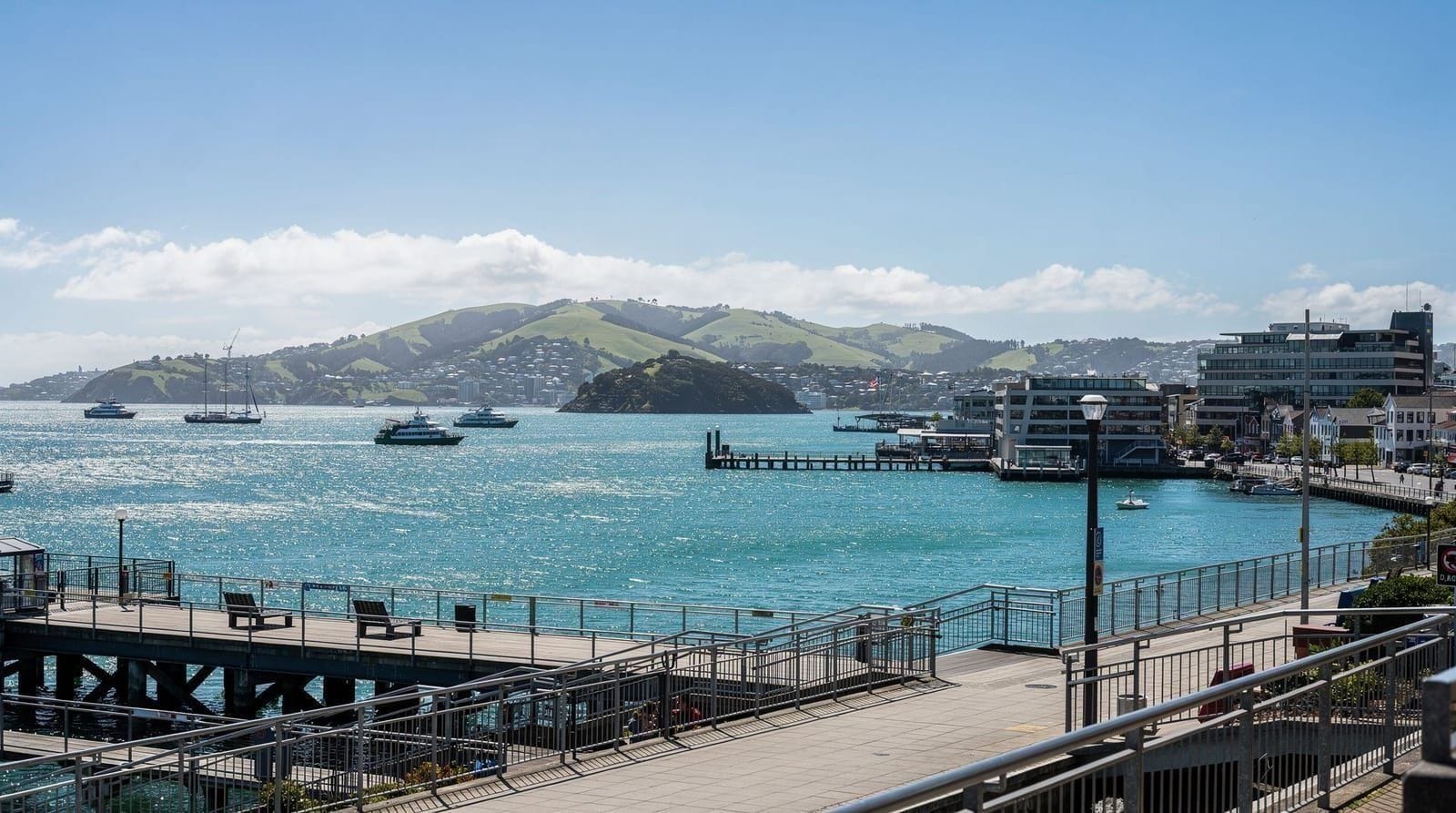
What doesn’t fit into one day is a harbour crossing; Waiheke or Devonport both require enough transit time that adding them to an already-packed single day usually means arriving rushed and leaving early, which undercuts the point of going at all. Our Auckland in a day guide lays out this exact route hour by hour, including realistic buffer time for Auckland’s unpredictable traffic.
Cruise passengers face a slightly different version of this constraint, since ship departure times are fixed and non-negotiable. The safest approach is to build in at least 90 minutes of buffer beyond what a normal itinerary would need, and to treat anything beyond the CBD and immediate waterfront as genuinely off the table unless your ship is in port for 10+ hours.
By traveller type
Layover or cruise passengers (under 8 hours): If you have at least 5-6 hours between the airport or cruise berth and your next connection, the Sky Tower and immediate waterfront are reachable and worthwhile — see our Auckland in a day guide for a tight, realistic single-day route. Under 4 hours, don’t attempt the CBD; stay close to your terminal.
First-time visitors with a short New Zealand trip (2-3 days): This is the sweet spot. Day one for the Museum and CBD waterfront, day two for a half or full day on Waiheke Island or Rangitoto, day three (if you have it) for a neighbourhood deep-dive in Ponsonby or Devonport, or an early start toward Hobbiton.
Visitors building a North Island loop (4-7 days total, including Auckland): Give the city itself two days, then commit the remainder to a Hobbiton-Waitomo-Rotorua loop or a Bay of Islands add-on. This is where most well-planned North Island itineraries land, and it’s the structure behind our 5-day Auckland and Auckland first-timer 4-day itineraries.
Longer stays (8+ days) with Auckland as a full base: At this length, Auckland can comfortably absorb more city time — additional neighbourhoods, food tours, a full day dedicated to the Coromandel or Bay of Islands rather than a rushed day trip. The north Island 7-day loop itinerary is a good template if this describes your trip.
What two days actually covers
Day one: Auckland Museum (allow 2-3 hours for the Māori and Pacific collections alone), a walk through the Domain, and an afternoon on the waterfront finishing at the Sky Tower — an Auckland Skywalk with Sky Tower entry ticket is a genuinely good way to close out day one with a 360° city view. Day two: a ferry crossing, either to Devonport for a relaxed village walk and beach, or to Waiheke Island for a half-day of vineyards. Our 2-day Auckland itinerary spells this out hour by hour.
What three days adds
A third day gives room for either a deeper neighbourhood exploration — Ponsonby’s café scene, Mission Bay’s waterfront, or the volcanic cones scattered across the city — or a full day trip that doesn’t require an overnight stay, such as Rangitoto Island or Piha Beach. This is genuinely the length most travel writers quietly recommend even when their headline itineraries run longer, because it’s the point where you’ve covered the city’s real highlights without starting to repeat yourself. Our 3-day Auckland itinerary builds this out fully.
What four to five days looks like
Four to five days is where an Auckland trip starts to feel genuinely complete rather than compressed. The standard structure is two days in the city — Museum, waterfront, one harbour crossing — followed by two to three days on a single day-trip loop, most commonly Hobbiton and Waitomo combined, or a Hobbiton-Rotorua pairing with an overnight stop. This length also comfortably absorbs a slower pace: rather than treating each city day as a checklist, you can spend a full morning in Ponsonby without feeling like you’re stealing time from something else. Our 5-day Auckland itinerary is built around exactly this rhythm, and it’s genuinely one of the most-booked trip lengths for first-time North Island visitors because it balances city time against day trips without requiring difficult trade-offs.
At this length, it’s also worth deciding early whether Rotorua gets a day trip or an overnight stay. A single long day to Rotorua and back (roughly six hours of driving alone) is doable but leaves little time to properly experience the geothermal parks and Māori cultural experiences once you’re there. An overnight in Rotorua, by contrast, turns a rushed day into a relaxed one and opens up an evening hāngī and Māori cultural experience that a same-day round trip simply can’t accommodate.
What a full week looks like
Seven days gives real flexibility, but only if the extra days go toward day trips rather than more city time — a point worth repeating because it’s the single most common planning mistake for this length of trip. A well-balanced week looks like two days in Auckland, three to four days on a Hobbiton-Waitomo-Rotorua loop (with at least one overnight outside Auckland to avoid excessive same-day driving), and a flexible day or two held back for weather, a slower pace, or a Bay of Islands add-on if time allows. Our Auckland-Rotorua 3-day itinerary covers the middle chunk of this structure in detail, and it slots cleanly into a full week either side of two Auckland city days.
The alternative — spending the full week entirely within Auckland — is technically possible but rarely satisfying. By day five in the city alone, most travellers have exhausted the genuinely distinct neighbourhoods and are re-visiting waterfront blocks or padding the itinerary with lower-priority stops. If a full week in one place is the goal for logistical reasons (a slow, low-key trip, working remotely, or travelling with very young children who don’t do well with frequent moves), it’s worth explicitly choosing that trade-off rather than defaulting into it.
How trip length changes your budget
Trip length and budget are more connected than most itineraries acknowledge. A tightly packed two-day city trip actually costs less per day than a longer trip, since you’re not paying for extra accommodation nights or a rental car sitting mostly idle. Once day trips enter the picture, though, the calculation shifts — a four-to-five day trip with a Hobbiton-Waitomo combo typically costs more in total than a bare two-day city stay, but often less per experience, since tours and rental cars have fixed costs that get spread across more useful days. Our Auckland budget guide and Auckland trip cost breakdown both build out day-by-day cost tables that pair naturally with the trip lengths discussed here — worth checking before finalising how many days to book accommodation for.
Why more than three city days rarely pays off
Auckland’s CBD and immediate surrounds don’t have the density of sights that would sustain, say, five straight days without repetition. Travellers who book a week entirely in the city often end up revisiting the same waterfront blocks or padding with lower-priority attractions. The better move — and the one local guides consistently recommend — is to treat days four onward as day-trip or overnight-excursion time rather than additional city time. Our best day trips from Auckland guide ranks the options, and the Auckland-Rotorua 3-day itinerary shows how a week-long trip splits sensibly between city and excursion time.
How day trips change the calculation
This is really the key planning insight for Auckland: it’s not that the city lacks things to do, it’s that the best uses of extra time sit one to three hours outside it. Hobbiton (2 hours), Waitomo (2.5 hours) and Rotorua (3 hours) can each be done as a single long day or combined into a two-to-three-day loop, and Waiheke Island’s vineyards are reachable in a 40-minute ferry ride for a half-day trip that doesn’t even require leaving “Auckland” in a strict administrative sense. If you’re deciding between a fourth city day and a first day trip, the day trip almost always wins on memorability per hour spent.
Solo travellers, couples and groups
Trip length preferences shift somewhat by travel style. Solo travellers and couples tend to move faster through the city — two days genuinely covers what they want to see, and day trips are easy to book solo since most run as small-group tours rather than requiring a full car of people. Groups of three or more, on the other hand, often find that a rental car becomes cost-competitive with organised tours once split three or four ways, which changes the calculus toward self-driving and, often, a slightly longer trip since you’re not tied to a tour schedule. Families with young children generally do better with a slower pace and more buffer time between activities — the “four to five day” structure above tends to suit families better than the tighter two-to-three day version aimed at time-constrained couples or solo travellers.
Does the season affect how many days you should plan
Season interacts with trip length in a few concrete ways beyond the daylight-hours point covered in the FAQ below. Summer’s peak crowds at Hobbiton and on Waiheke ferries mean popular time slots can sell out days in advance, so a tight schedule leaves less room to shift a booking if your first-choice slot isn’t available — worth booking key day trips before you land rather than on arrival.
Winter’s wetter months (June-July) make outdoor-heavy days less reliable, so building in a flexible “spare” day, especially on a week-long trip, gives you somewhere to move activities if a specific day turns out wet. Shoulder season (March-April, September-November) is the most forgiving for tight scheduling, since crowds and weather risk are both lower. Our best time to visit Auckland guide goes through this trade-off across the whole year, not just how it affects trip length.
Arrival day and jet lag
Most long-haul flights into Auckland land early morning, often after an overnight or two-night flight from North America or Europe. It’s worth treating arrival day as a partial day rather than counting it fully in your trip-length math — jet lag genuinely affects how much you can enjoy the first afternoon, and a light schedule (checking into accommodation, a short waterfront walk, an early dinner) sets up the rest of the trip far better than trying to hit the Museum on zero sleep. If your flight lands before 8am, a hotel offering early check-in or luggage storage makes a meaningful difference to how usable that first day actually is. Travellers arriving from Australia or elsewhere in the Pacific, with shorter flight times, don’t face this issue nearly as much and can generally treat arrival day as a full day.
Combining Auckland with a wider New Zealand trip
For travellers continuing beyond the North Island — to Wellington, the South Island, or elsewhere — Auckland’s day count often gets compressed to make room for the rest of the country, and that’s a reasonable trade-off provided you’re deliberate about it. Two days in Auckland plus a Hobbiton-Waitomo day trip is a workable minimum that still captures the city’s and the region’s highlights without eating too far into a longer New Zealand itinerary.
What doesn’t work well is trying to also fit in Rotorua or the Bay of Islands on top of that minimum without adding at least two extra days — the drive times simply don’t compress, and rushing them tends to produce a trip that remembers more traffic than scenery. If Auckland is one stop among several on a longer New Zealand trip, it’s worth deciding upfront whether the North Island or South Island is the higher priority, since that decision should drive how many of your total days Auckland gets.
A practical decision framework
If your total North Island time is under 3 days, keep it all in Auckland and its immediate ferry-reachable islands. If you have 4-6 days, split roughly 2 days city / 2-4 days day trips. If you have a full week or more, consider 2 days city, 3-4 days on a Hobbiton-Waitomo-Rotorua loop or Bay of Islands extension, with the remainder flexible for weather or a slower pace. Our auckland trip cost breakdown can help you sanity-check what each additional day actually costs before you commit to it.
As a rule of thumb, work backwards from what you actually want to experience rather than forward from an arbitrary number of days. If Hobbiton is a must-do, that’s a minimum of one full day beyond the city, or two if paired with Waitomo. If Māori cultural experiences are a priority, Rotorua’s depth of offerings justifies an overnight rather than a rushed day trip. If wine and island scenery matter more than film sets and geothermal parks, Waiheke’s 40-minute ferry means it can be added to almost any trip length without much extra planning. Matching day count to priorities, rather than the other way around, consistently produces better-reviewed itineraries than working from a fixed number of days and trying to cram everything in.
Renting a car and how it interacts with day count
Whether you need a rental car at all is really a function of how many day trips you’re planning, not how many days total your trip runs. A 2-day city-only stay needs no car whatsoever — public transport and ferries cover everything. The moment Hobbiton, Waitomo or the west coast beaches enter the itinerary, a car (for those specific days) or an organised tour becomes necessary, and it’s usually more cost-effective to rent just for the day-trip days rather than the whole stay if a meaningful chunk of your trip is city-based. Our car rental Auckland guide covers pricing and what to expect when booking for a short window like this.
Where you stay changes how many days feel like enough
Trip length and accommodation choice are more connected than most people plan for. Staying centrally means you can pack more into fewer days since transit time between activities shrinks, while a base further out — quieter, sometimes cheaper — often means adding a half-day’s worth of extra travel time across a short trip. Our where to stay in Auckland guide covers the trade-offs by neighbourhood, and our getting around Auckland guide covers which trip lengths genuinely need a rental car versus public transport alone. If you’re new to the city and want the broader orientation basics before diving into day-count math, our first-time Auckland tips guide is a good starting point.
Weather-proofing your day count
New Zealand’s weather can shift meaningfully within a single trip, and it’s worth building this into your day count rather than treating it as a risk you’ll deal with if it happens. Our Auckland weather by month guide gives realistic expectations for whichever month you’re travelling in, and if your trip runs during the wetter months, adding one flexible “spare” day to a longer itinerary gives you somewhere to shift an outdoor-heavy day trip if the forecast turns. This matters more for longer trips with multiple day trips planned than for a tight 2-day city stay, where the Museum and other indoor options already provide a reasonable weather buffer.
Toddlers and very young children change the calculation
Families travelling with toddlers or very young children generally need more days than the structures above suggest, since the pace has to slow down considerably — fewer attractions per day, more downtime for naps, and shorter travel legs between stops. Our Auckland with toddlers guide covers this in detail, and it’s worth reading before locking in a trip length if your group includes very young kids, since the standard “2-3 days” answer above assumes an adult or older-child pace.
Frequently asked questions about how many days to spend in Auckland
Is one day enough for Auckland?
One day is enough to hit the essentials — the Museum or waterfront plus a Sky Tower view — but it’s tight. It suits cruise passengers or long layovers rather than a deliberately chosen trip length.
Is 3 days too long for Auckland?
No, three days is close to ideal for most first-time visitors, especially if one of those days includes a half-day trip like Waiheke Island or Rangitoto rather than staying entirely within the CBD.
Should I spend more time in Auckland or on day trips?
Day trips generally win. Auckland’s CBD highlights are covered comfortably in two to three days, while Hobbiton, Waitomo and Rotorua are widely considered the most memorable parts of a North Island trip.
How long should a layover in Auckland be to see the city?
At least 5-6 hours to comfortably reach the Sky Tower or waterfront and return to the airport. Under 4 hours, stay near the terminal or limit yourself to the closest attractions.
Is a week in Auckland worth it?
Not if you spend the whole week in the city — attraction density thins out fast after day three. A week works well if it includes 2-4 days of day trips or overnight excursions to Rotorua, Waitomo or the Bay of Islands.
What should I cut if I only have 2 days?
Skip a second neighbourhood deep-dive and keep the ferry crossing — the Museum, waterfront and one island crossing (Waiheke or Devonport) are the highest-value uses of a tight two-day window.
Does the season change how many days I should plan?
Slightly. Winter’s shorter daylight hours (sunset around 4:30pm) make ambitious single-day plans harder, so add a half-day buffer if visiting June-August. See our Auckland in winter guide for specifics.
Do I need a rental car regardless of how many days I have?
Not for a 2-3 day city-only stay — public transport and ferries cover the Museum, waterfront and island crossings comfortably. Once day trips like Hobbiton or Waitomo enter the plan, a rental car or organised tour becomes necessary for those specific days. See our getting around Auckland guide for the full breakdown by itinerary type.
Top experiences
Bookable activities with verified prices and instant confirmation on GetYourGuide.