Where to stay in Auckland: a neighbourhood-by-neighbourhood guide
Auckland: City highlights tour with hotel pickup
Where should I stay in Auckland?
First-time visitors with limited time should stay in the CBD or Viaduct Quarter for waterfront walkability. Ponsonby suits travellers prioritising food and neighbourhood atmosphere over convenience, while Devonport offers a genuinely charming base for those happy with a 12-minute ferry commute into the centre.
How to think about location in Auckland
Auckland doesn’t have a single obvious “old town” the way some cities do, so choosing where to stay comes down to trading off convenience, atmosphere and budget against each other. The CBD and Viaduct Quarter offer the most walkable, tourist-ready base; Ponsonby and Grey Lynn trade some convenience for genuinely better food and a residential feel; Devonport and Mission Bay trade a short commute for a quieter, more local pace. None of these are wrong choices — they suit different trip styles, and this guide is built around matching neighbourhood to traveller rather than picking a single “best” answer. Once your base is sorted, a city highlights tour with hotel pickup is an easy way to see the main sights without worrying about transit from your neighbourhood.
| Most convenient | CBD / Viaduct Quarter — walk to Sky Tower, ferries, waterfront |
| Best food scene | Ponsonby / Grey Lynn |
| Quietest, most distinctive | Devonport — 12min ferry commute |
| Best for families | Mission Bay or Viaduct Quarter |
| Typical price tier | CBD/Viaduct highest, motels/outer suburbs lowest |
Three questions are worth answering before you start comparing specific listings: how many days are you staying (short trips reward convenience over atmosphere), how central is a rental car to your plans (if you’re renting for the whole trip, walkability to the CBD matters less and parking availability matters more), and how much of your time is ferry-dependent versus road-dependent (heavy ferry use points toward the CBD or Viaduct; heavy road use flattens the advantage of any one neighbourhood, since you’ll be driving or being picked up regardless of base). Answering these three first narrows the five neighbourhoods below to two or three realistic candidates before price and atmosphere even enter the decision.
Types of accommodation available
Auckland’s accommodation market covers the full range, and which type suits you often matters as much as which neighbourhood. International and boutique hotels cluster in the CBD and Viaduct, generally NZD 200-400+/night for a mid-range to upper mid-range room, and offer the most predictable standard for first-time visitors. Serviced apartments, available across the CBD, Viaduct and increasingly Ponsonby, add a kitchen and separate living space for often a similar or only slightly higher price than a hotel room, and are genuinely worth considering for stays of four nights or longer where self-catering some meals adds up to real savings.
Motels, more common in outer suburbs and along arterial roads, are the budget-to-mid-range workhorse of New Zealand accommodation — less central, but often good value with parking included, which matters if you’re renting a car. Hostels are concentrated in the CBD and Ponsonby, running NZD 25-35/night for a dorm bed, with private rooms in the same buildings typically NZD 80-120/night. Holiday homes and short-term rentals are available across every neighbourhood covered here and tend to offer the best value for groups or families who can split a multi-bedroom property, though pricing varies enormously by exact location and season.
Whichever type you settle on, check the listing’s exact location and whether parking is included if you are renting a car, as motels and holiday homes vary widely from one street to the next. Filter by the facilities you actually need, such as a kitchen or a separate bedroom, and read the cancellation terms before paying, so you can compare Auckland stays on Booking.com for your dates.
CBD and Viaduct/Wynyard Quarter
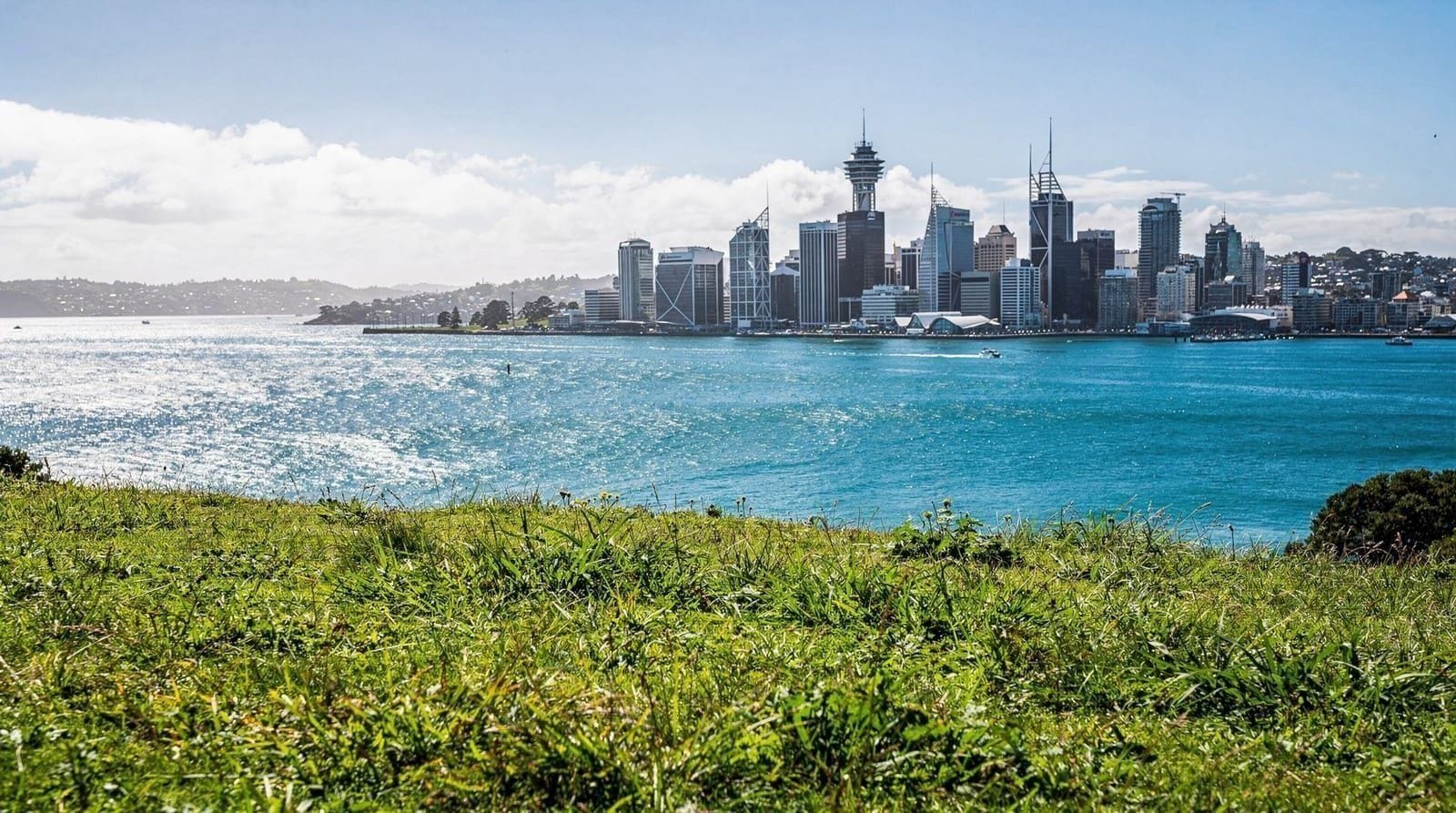
This is the default choice for first-time visitors, and for good reason. You’re within walking distance of the Sky Tower, the ferry terminal (for Waiheke, Devonport and Rangitoto), the waterfront promenade, and a dense cluster of restaurants and bars. It’s also the most convenient base for the SkyBus airport connection. The trade-off is that it’s the most touristy and, in peak season, the busiest and priciest part of the city. For anyone doing a tight 2-3 day trip, this is genuinely the least-stress option — see our Viaduct and Wynyard Quarter guide for specifics on the area itself.
Within this area, Wynyard Quarter specifically has emerged as the newer, slightly quieter half — a former industrial waterfront redeveloped with restaurants, a waterfront park and family-friendly open space, a short walk from the busier Viaduct marina strip. The core CBD around Queen Street and Britomart is the most transport-connected pocket, with the main train station and bus interchange both here, useful if your plans lean on public transport for day trips as well as city exploring. Expect to pay a genuine premium for this location — it’s rarely the cheapest neighbourhood on a like-for-like comparison — but for a first visit, the time saved on transit each day is a real, quantifiable benefit rather than just a convenience nicety.
Ponsonby and Grey Lynn
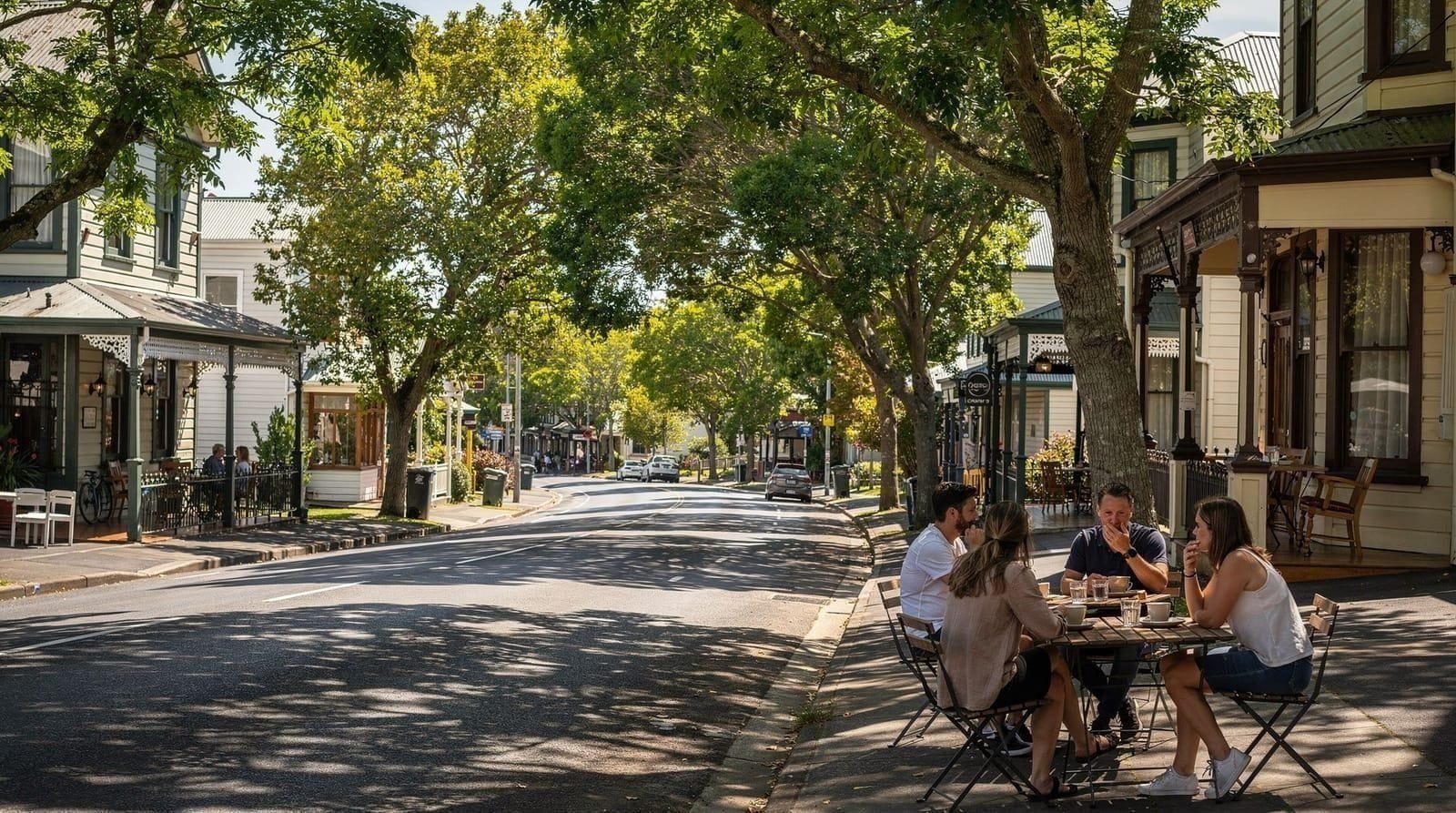
Ponsonby is Auckland’s café-and-boutique neighbourhood, a short bus ride or 15-20 minute walk from the CBD. It’s the pick for travellers who want a more residential, genuinely local feel and prioritise food — Ponsonby Road has one of the city’s densest concentrations of good restaurants and cafés. The trade-off is a slightly longer commute to the waterfront and ferry terminal, which matters if island day trips are central to your plan. Our Ponsonby cafés guide covers the food scene specifically, and Auckland neighbourhoods puts Ponsonby in context against the city’s other areas.
Accommodation here ranges from boutique hotels and heritage villas converted into guesthouses through to a handful of hostels, generally at a slightly lower price point than equivalent CBD options for the mid-range and above categories, since you’re trading some walkability for the neighbourhood premium instead of the waterfront premium. It particularly suits travellers on a second or third New Zealand trip who’ve already covered the core CBD sights, or first-timers who prioritise food and a slower, more local pace over ticking off every waterfront attraction on foot.
Devonport
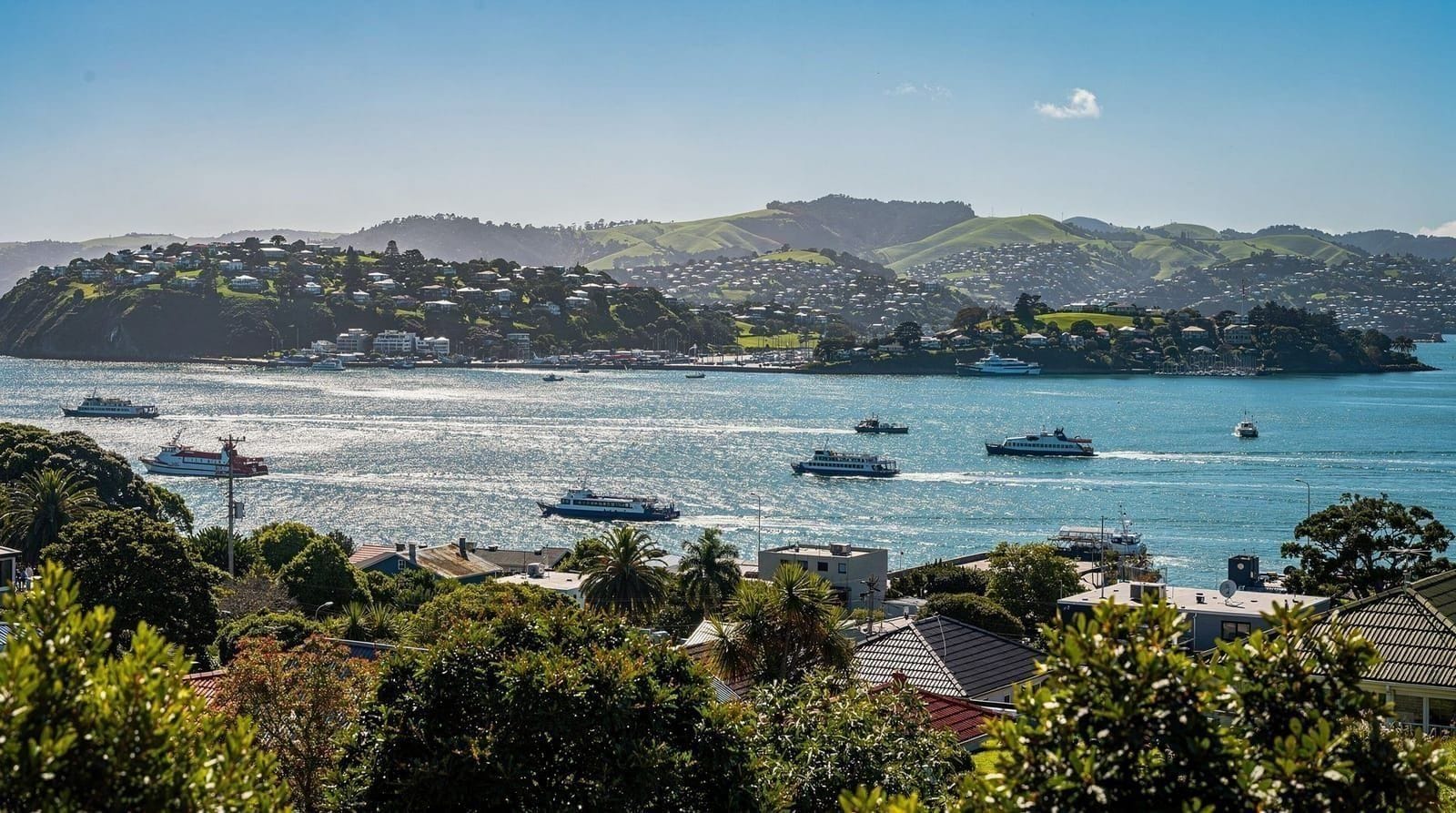
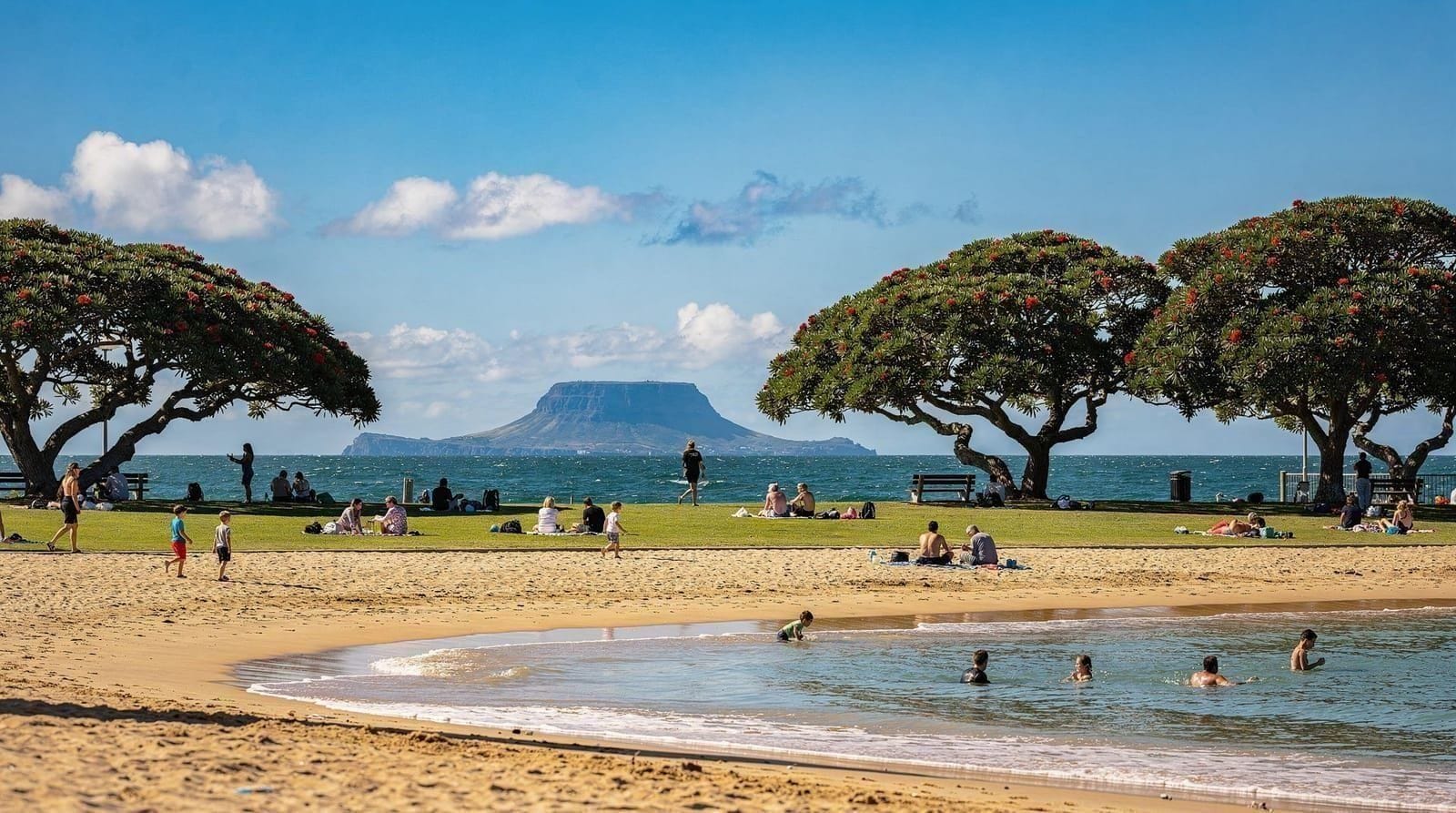
Across the harbour by a 12-minute ferry ride, Devonport is one of Auckland’s most charming bases — Victorian villas, a walkable village centre, its own beach, and volcanic cone views from Mount Victoria. The ferry commute is genuinely part of the appeal rather than a drawback for most visitors, since it’s scenic and frequent. It suits travellers who don’t mind a short crossing each way in exchange for quieter evenings and a distinctly different atmosphere from the CBD. Our Devonport destination guide and Devonport eats guide cover what to do once you’re there. If you want some local context on arrival, a guided food and history walk around Devonport is a good way to get your bearings.
The one practical detail worth planning around is ferry timetables — services are frequent during the day but thin out later in the evening, so a Devonport base works best for travellers who don’t need to be out in the CBD until the small hours. Accommodation is concentrated in villa-style guesthouses and boutique B&Bs rather than large hotel chains, which gives the area its distinctive character but means less choice at the very top and very bottom of the price range compared to the CBD.
Mission Bay and Tāmaki Drive
Mission Bay offers a genuinely good beach within a short drive or bus ride of the CBD, with a family-friendly waterfront strip of cafés and a playground right on the sand. It works well for families or anyone prioritising a beach-adjacent stay without leaving the mainland. It’s less central than the CBD for museum or Sky Tower access, but Tāmaki Drive’s cycling and walking path makes it an easy, scenic connection back into town. See our Mission Bay and Tāmaki Drive guide for the full picture.
Accommodation here leans toward serviced apartments and motels rather than large hotels, generally good value for families needing extra space, and often including parking as standard — a genuine advantage if a car is part of your plans. It’s a quieter evening base than the CBD or Ponsonby, with fewer late-night options, which suits families and couples prioritising a relaxed pace over nightlife.
Other neighbourhoods worth a look
Beyond the five areas covered above, a few other pockets of Auckland come up often enough to mention, even if they don’t warrant a full destination guide of their own. Parnell, just east of the CBD, is a leafy, slightly upmarket area with a strong café and boutique-shopping scene and a short walk or bus ride into the centre — a reasonable middle ground between CBD convenience and Ponsonby’s neighbourhood feel. Mount Eden, built around one of Auckland’s most-visited volcanic cones, offers a quieter residential base with good value accommodation and easy bus access into town, appealing to travellers who want a genuinely local feel without Devonport’s ferry commute.
Newmarket, Auckland’s main shopping and dining strip south of the CBD, works well for visitors prioritising retail and food over waterfront proximity, with good train and bus links into the centre. Herne Bay, adjacent to Ponsonby, is a quieter, more residential extension of that neighbourhood with harbour views, generally suiting travellers who want Ponsonby’s atmosphere with a slightly calmer pace. None of these are wrong choices, but for a first Auckland trip, the five neighbourhoods covered in detail above remain the more reliable starting point.
Near the airport
Worth considering only for a very early departure or late arrival flight, since it puts you 30-40 minutes from everything worth seeing with no walkable attractions nearby. If your itinerary has a genuine need for airport proximity on one specific night, it’s a reasonable trade-off; otherwise, it doesn’t offer enough upside to justify the isolation. Most airport-area accommodation is chain hotels aimed squarely at this exact use case — reliable and functional rather than memorable, with shuttle services to the terminal that make an early flight considerably less stressful than crossing the city from the CBD at 4am.
Matching neighbourhood to traveller type
First-timers with 2-3 days: CBD or Viaduct Quarter, for the walkability to the Museum, waterfront and ferry terminal.
Food and atmosphere-focused travellers, or return visitors: Ponsonby or Grey Lynn, accepting a slightly longer commute in exchange for a better neighbourhood feel.
Families: Mission Bay for the beach access, or Viaduct Quarter for restaurant convenience and ferry proximity for day trips to the islands.
Travellers wanting a quieter, more distinctive base: Devonport, provided the ferry commute fits your daily plans.
Anyone with an early flight or late arrival: an airport-area hotel for that specific night only, not the whole trip.
Booking timing and price patterns
Auckland accommodation pricing swings meaningfully with the seasons, and booking timing genuinely changes what you pay. Peak summer (December-February) sees the highest rates of the year across every neighbourhood and accommodation type, often 20-30% above shoulder-season pricing, and popular CBD and Viaduct properties can sell out well in advance around the New Year period specifically. Shoulder seasons (March-April, September-November) offer the best combination of good weather and lower prices, and are generally the easiest time to find availability without booking months ahead. Winter (June-August) brings the lowest prices of the year, though it’s worth weighing that against shorter daylight hours and wetter weather when deciding if the savings are worth the trade-off.
As a general rule, booking two to three months ahead secures reasonable rates and full choice of neighbourhood for a trip in shoulder season or winter; for peak summer, particularly if a specific CBD or Viaduct property is a priority, four to six months ahead is safer. Last-minute bookings (under two weeks out) can still work, especially outside peak season, but narrow your choices considerably and tend to skew toward either the most expensive remaining rooms or the least convenient locations.
What to actually look for in a listing
Beyond price and neighbourhood, a few practical details are worth checking before booking. Parking is a bigger deal than it might seem if you’re renting a car for day trips — CBD hotels often charge NZD 30-50/night for parking on top of the room rate, while properties in Devonport, Mission Bay or the outer neighbourhoods more often include it free. Air conditioning isn’t universal in Auckland accommodation, since the city’s temperate climate means many older buildings were never fitted with it — worth checking specifically if visiting in peak summer, when a room without it can be genuinely uncomfortable on the hottest days.
Proximity to a bus stop or train station matters more than straight-line distance to the CBD, since Auckland’s public transport network doesn’t run in a simple grid — a property that’s technically closer to the centre but poorly served by transport can be less convenient than one slightly further out on a frequent bus route. And for anyone planning ferry-based day trips, checking walking distance to the Downtown Ferry Terminal specifically, rather than just “CBD,” is worth the extra few minutes of research.
Matching budget to neighbourhood
Every neighbourhood covered here has options across the price spectrum, but the mix shifts noticeably. The CBD and Viaduct skew toward mid-range and luxury, with hostels providing the main budget option and few motels in between — if you want budget accommodation with genuine walkability, options are more limited than in other areas. Ponsonby and Grey Lynn offer a broader spread, from hostel dorms to high-end boutique stays, reflecting the neighbourhood’s genuinely mixed character. Devonport skews toward mid-range boutique accommodation — villas and small guesthouses — with fewer rock-bottom budget options, partly a function of its smaller size and heritage-property character.
Mission Bay sits mostly mid-range, with fewer hostels than the CBD or Ponsonby but reasonable value on motels and serviced apartments slightly back from the beachfront strip itself. If budget is the primary constraint, the CBD or Ponsonby’s hostels remain the most reliable starting point regardless of which neighbourhood otherwise appeals; our Auckland budget guide covers accommodation costs across all tiers in more depth.
Neighbourhoods to reconsider if your priorities shift
If you booked expecting to prioritise the waterfront but end up spending most of your time on road-based day trips (Hobbiton, Waitomo, the Coromandel), a CBD or Viaduct base loses some of its relative advantage, since you’re picking up a rental car or tour pickup each morning regardless of where you’re staying — Ponsonby or even Mount Eden can work just as well in that case, often at a lower nightly rate. Conversely, if you arrive planning a road-trip-heavy stay but end up gravitating toward ferry-based islands and harbour activities instead, it’s worth knowing that switching a remaining portion of your stay to the CBD or Viaduct, even for the last couple of nights, can meaningfully cut down on daily transit friction for the rest of the trip.
Staying in one place vs moving around
For trips of five days or fewer, staying in a single base and day-tripping out is almost always the better choice — the time and hassle of packing, checking out and relocating rarely pays for itself over such a short window, even if a second neighbourhood genuinely appeals. For longer trips, particularly a full week or more with a mix of city time and an overnight excursion to Rotorua or the Bay of Islands, splitting the stay makes more sense: a few nights in the CBD or Viaduct for the city portion, then either returning to the same base or, for travellers who want to sample two neighbourhoods, a switch to Ponsonby or Devonport for the remaining nights.
The one combination worth avoiding is switching neighbourhoods within Auckland itself on a short trip purely for variety — the logistics cost (re-packing, a taxi or rideshare between areas, re-orienting to a new base) rarely justifies the marginal benefit of experiencing two neighbourhoods instead of one when your total time in the city is already limited.
What to check before you book a specific listing
Beyond neighbourhood and accommodation type, a handful of listing-level details are worth confirming before you commit. Check whether breakfast is included or charged separately, since Auckland hotel breakfast pricing varies widely and can meaningfully change the effective nightly rate. Look at the cancellation policy carefully if your itinerary has any flexibility built in, since flexible-rate bookings often cost slightly more upfront but can be worth it if your North Island plans (weather-dependent day trips especially) might shift. And check guest reviews specifically for noise, since older heritage buildings in Ponsonby and Devonport can have thinner walls than purpose-built hotels, worth knowing if you’re a light sleeper.
Solo travellers, couples and larger groups
Solo travellers generally do well in the CBD or Ponsonby, both with a good hostel and boutique-hotel spread and enough foot traffic and evening activity to make solo dining and exploring comfortable. Couples have the widest range of options across every neighbourhood covered here, with Devonport and Ponsonby often edging out the CBD for atmosphere if a romantic, less transactional feel matters more than walkability. Larger groups and families are usually best served by a holiday home or a multi-bedroom serviced apartment rather than multiple hotel rooms, both for cost efficiency and for having shared living space — Mission Bay and the outer neighbourhoods tend to have a stronger supply of these larger properties than the CBD’s more hotel-dominated market.
How location interacts with your itinerary
If your plan leans heavily on ferry-based day trips — Waiheke Island, Rangitoto, or Devonport itself — staying in the CBD or Viaduct minimises the daily friction of getting to the ferry terminal. If your plan leans toward road-based day trips — Hobbiton, Waitomo, the Coromandel — location matters less, since you’re likely picking up a rental car or tour pickup regardless of neighbourhood. Our best day trips from Auckland guide is worth reading before locking in accommodation, since it can shift which base makes the most logistical sense.
Planning the rest of your trip around your base
Once you have a shortlist of neighbourhoods, it helps to read a little further before you commit, because the best base depends on what the rest of your trip looks like. If you are still deciding how long to stay, how many days in Auckland and the first-time Auckland tips will help you judge whether a convenient base or an atmospheric one is the better trade. The Auckland attractions top 25 is a useful way to see where the sights cluster, and therefore which neighbourhood keeps most of them within easy reach.
Arrival day is worth thinking about too. The airport to city guide explains the transfer options, and which of them suits you can nudge you toward a base with a simple connection. Once you are settled, the AT HOP card guide and public transport vs car cover how far a transit-only stay can take you, while car rental in Auckland is worth a look if parking is likely to influence your choice of listing.
If ferries are central to your plans, the Auckland ferries guide and the Auckland waterfront guide show why a base near the harbour pays off. Island-minded travellers can compare the Waiheke Island guide with the Rangitoto Island guide before deciding how much of the stay will be spent on the water. And if your priority is eating well, the best restaurants in Auckland guide shows how the food scene is spread across the neighbourhoods above.
Timing affects the choice as well. Auckland in summer and Auckland in winter describe what each season feels like on the ground, which can shift whether a beach-adjacent base or a walkable city base makes more sense. Travellers watching their spending can pair this guide with is Auckland expensive, and those travelling with children will find the Auckland with kids guide helpful when weighing Mission Bay against the Viaduct. For a ready-made plan to sit your base against, the 3 days in Auckland itinerary is a good place to start, and Auckland city centre gives more detail on the area most first-time visitors choose.
Neighbourhood comparison at a glance
| Neighbourhood | Commute to CBD | Vibe | Best for |
|---|---|---|---|
| CBD/Viaduct | Walkable | Touristy, convenient | First-timers, 2-3 day trips |
| Ponsonby/Grey Lynn | 15-20min walk or short bus | Café culture, residential | Food-focused, return visitors |
| Devonport | 12min ferry | Villas, quiet, scenic | Travellers wanting a distinct base |
| Mission Bay | Short drive/bus | Beach-adjacent, family-friendly | Families |
| Near airport | 30-40min from centre | Functional, chain hotels | One night only, early/late flights |
Frequently asked questions about where to stay in Auckland
Is it better to stay in the CBD or Ponsonby?
The CBD wins on convenience — walking distance to the Sky Tower, waterfront and ferry terminal. Ponsonby wins on atmosphere and food, with a short bus or drive into the centre. First-timers with 2-3 days usually do better in the CBD; return visitors often prefer Ponsonby.
Is Devonport a good base for Auckland?
Yes, if you don’t mind a 12-minute ferry commute each way. It’s one of Auckland’s most charming neighbourhoods, quieter than the CBD, and the ferry itself is a scenic, low-hassle connection to the city centre.
Where should families stay in Auckland?
Mission Bay or the Viaduct Quarter both work well for families — Mission Bay for its beach and playground access, Viaduct for waterfront restaurants and proximity to the ferry terminal for island day trips.
Is it worth staying near the airport in Auckland?
Only for a very early flight or late arrival. Airport-area hotels save on transfer stress but put you 30-40 minutes from everything worth seeing, with no walkable attractions nearby.
What’s the safest area to stay in Auckland?
Auckland is a safe city overall, and all the neighbourhoods covered here — CBD, Viaduct, Ponsonby, Devonport, Mission Bay — are considered safe for visitors, including at night, with normal city precautions.
Do I need a car if I stay outside the CBD?
Not necessarily — Ponsonby, Devonport and Mission Bay are all well connected to the CBD by bus or ferry using an AT HOP card. A car becomes more useful for day trips beyond the city than for getting around within it. See our getting around Auckland guide for details.
How far in advance should I book Auckland accommodation?
Two to three months ahead is generally enough for shoulder season or winter; for peak summer (December-February), especially for a specific CBD or Viaduct property, four to six months ahead is safer.
Is Ponsonby or Devonport better for a quieter stay?
Both are quieter than the CBD, but in different ways — Ponsonby is a lively residential neighbourhood with strong food and nightlife, while Devonport is genuinely calmer and more villa-scale, at the cost of a ferry commute each way.