AT HOP card guide: how to use Auckland's transport card
Auckland Region: Hop on hop off explorer bus 1 day pass
What is the AT HOP card and do I need one?
AT HOP is Auckland's rechargeable prepaid transport card, covering bus, train and ferry travel at roughly 20% cheaper fares than paying cash. If you're spending more than a day or two in central Auckland using public transport, it's worth getting — a small card fee is offset quickly by the fare discount.
The AT HOP card is Auckland’s answer to London’s Oyster or Sydney’s Opal — a single rechargeable card covering bus, train and ferry travel across the region at a meaningful discount over cash fares. For any visitor planning to use public transport in Auckland for more than a day trip, it’s close to essential. This guide covers where to get one, how it works, and whether it’s actually worth the setup for your specific trip. If you’d rather skip the card and simply see the main sights in one go, a hop-on hop-off explorer bus day pass is a simple alternative, and the Waiheke hop-on hop-off tour covers the island without any ticketing to figure out.
| Where | Airport, supermarkets, convenience stores, train station vending machines |
| Cost | Small one-off card fee, plus your top-up balance |
| Time needed | A few minutes to buy and load |
| Covers | Bus, train, most ferries within greater Auckland only |
| Best for | Visitors using public transport more than a couple of times |
The card itself is a small, credit-card-sized piece of plastic with an embedded chip, tapped against a reader when boarding and again when leaving each service. There’s no need to register it with personal details unless you specifically want the option of a balance refund later, though registering does add a layer of protection if the card is lost — an unregistered card’s remaining balance is effectively gone if misplaced, while a registered one can potentially be replaced with the balance intact.
Where to buy an AT HOP card
AT HOP cards are available at Auckland Airport (both terminals), most supermarkets (Countdown, New World), a wide range of convenience stores, dedicated AT HOP retailers, and vending machines at train stations. A small one-off card fee applies on purchase — check the current fee, since it changes periodically, but it’s modest and quickly offset by the fare discount if you’re taking more than a handful of trips.
How fares and discounts work
Paying with AT HOP rather than cash gives roughly 20% off standard fares across bus and train travel, with a smaller equivalent discount on ferries. Bus and train single journeys typically run NZD 2.50-3.70 depending on how many zones you cross; ferry journeys cost more, generally NZD 6-8.50 or higher per trip, especially at peak times. If you’re travelling as a group, note that HOP is a per-person card system — each traveller (with some child concessions) needs their own card rather than sharing one between multiple people tapping in sequence.
The 7-day fare cap
Auckland Transport caps most travellers’ HOP spending at around NZD 50 over a rolling 7-day period — once you hit the cap, further eligible trips within that window are effectively free. This mainly benefits visitors staying a week or more and using public transport daily; for a two- or three-day city visit, you’re unlikely to hit the cap and the discount alone is the main benefit.
Topping up your card
You can top up at retailer terminals (the same shops that sell the card), vending machines at train stations, online through the AT HOP website, or via the AT Mobile app, which also lets you check your balance and trip history. Most visitors top up NZD 20-30 at a time for a short stay; heavier users on a longer trip may prefer larger, less frequent top-ups to save time.
Does it cover ferries to Waiheke and Rangitoto?
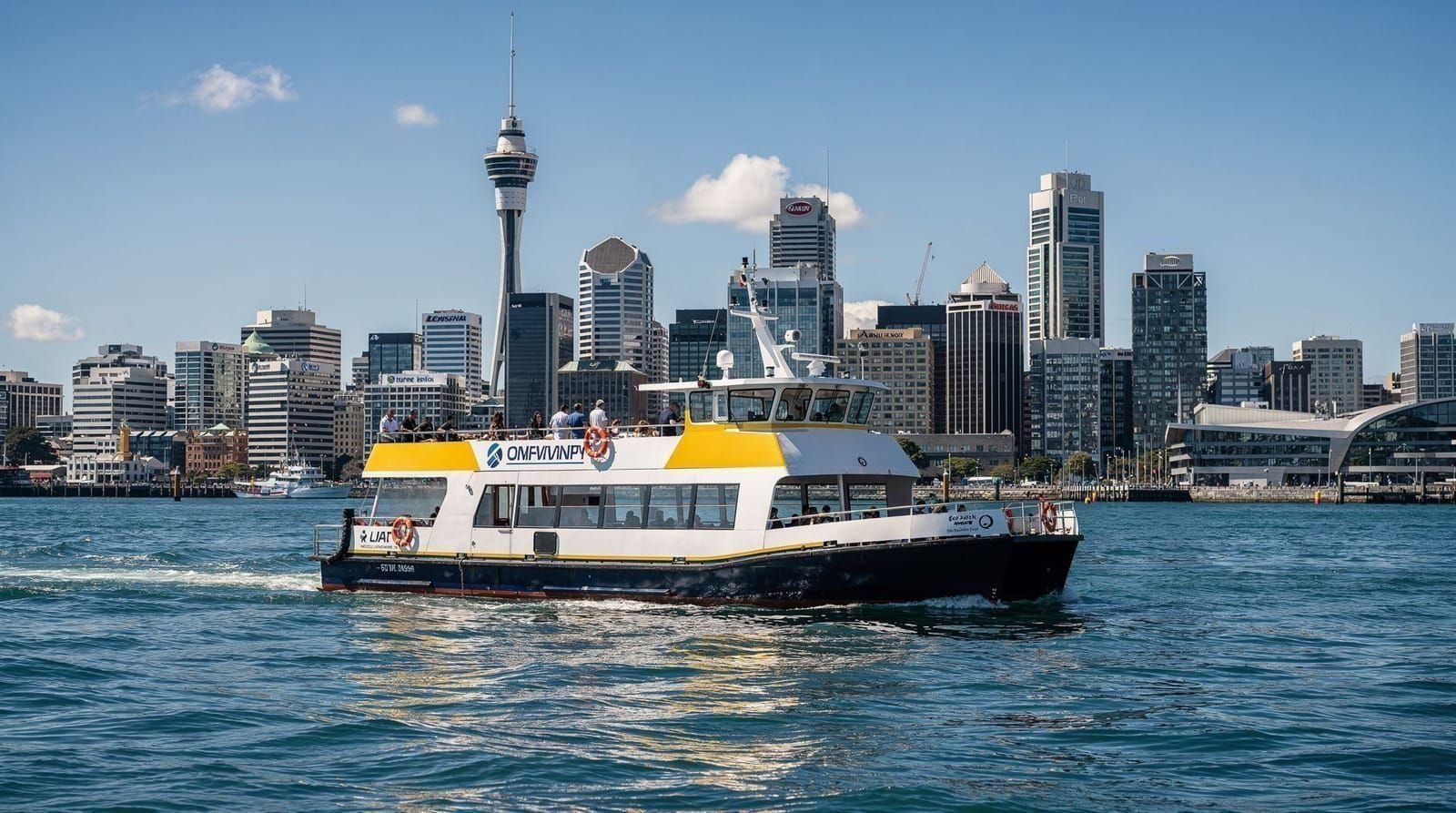
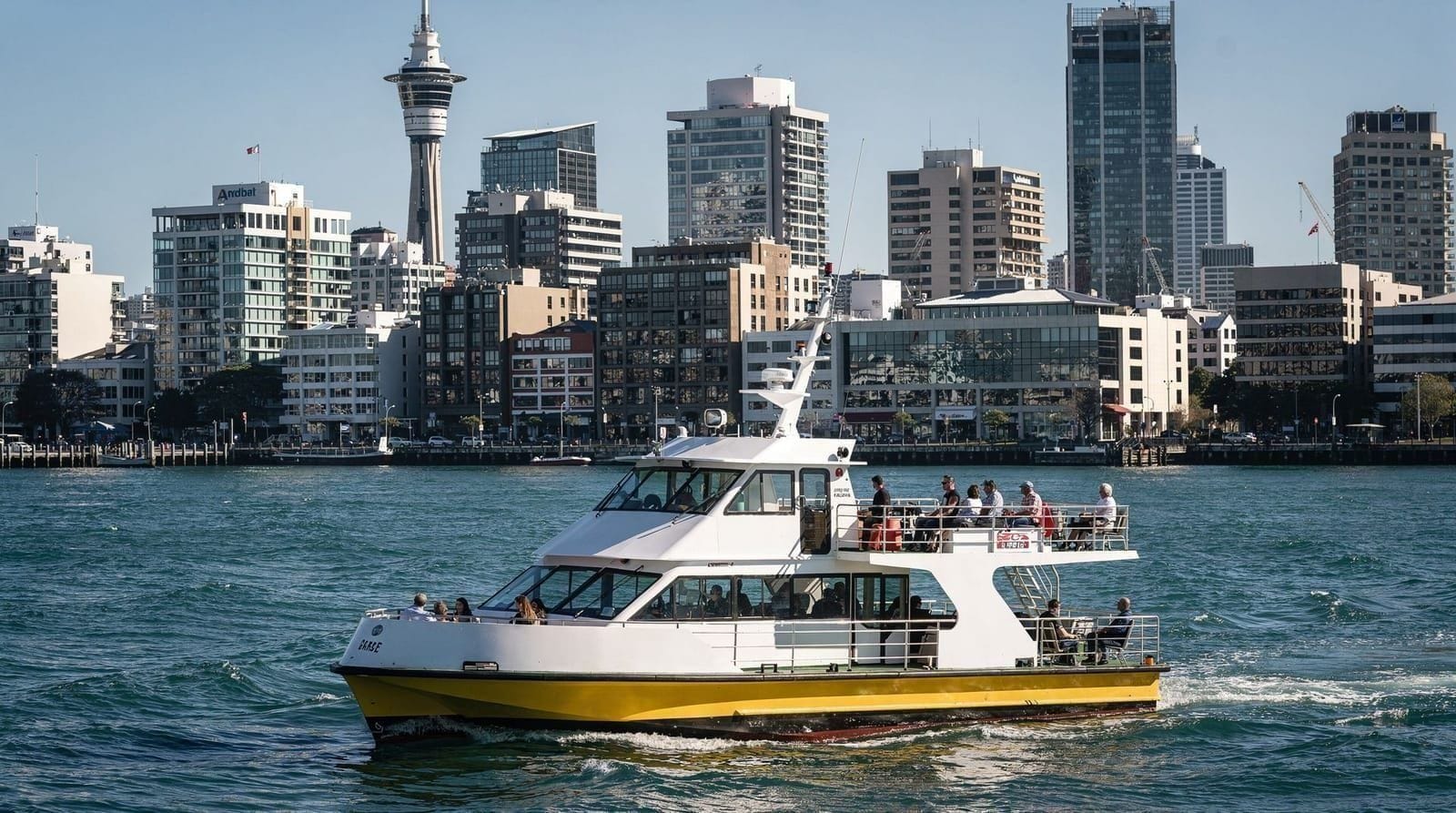
AT HOP works on most Fullers360-operated routes, including the Devonport ferry, but it’s worth double-checking your specific route before travelling — some tourist-oriented or outer-island ferry services use separate ticketing systems rather than standard HOP fares. See our Auckland ferries guide for a route-by-route breakdown of which services take HOP and which need a separate ticket.
What the card doesn’t cover
It’s worth being clear about the limits of AT HOP alongside everything it does well. It has no relevance to intercity travel, rental cars, tours, or any North Island day trip beyond the Auckland region — Hobbiton, Waitomo, Rotorua and the Bay of Islands all require separate transport arrangements entirely outside the HOP system. It also doesn’t cover taxis, rideshare, or parking. Treat it specifically as your tool for getting around within greater Auckland — the CBD, North Shore, West Auckland, and the Hauraki Gulf ferry network — and plan separately for everything beyond that boundary.
Is it worth getting for a short visit?
If your Auckland stay is genuinely one or two days and you’re mostly walking within the CBD and waterfront, a full AT HOP setup may not be worth the hassle — occasional cash fares or single-journey tickets could work out simpler. But if you’re using buses, trains or ferries more than a couple of times (a Devonport ferry trip, a bus to Mission Bay, a train somewhere), the fare discount and convenience of not fumbling for exact change make the card worthwhile almost immediately. For a broader look at how transport costs fit into your overall trip budget, see our Auckland budget guide, and for the full transport picture beyond just the card, our getting around Auckland guide.
Using the AT Mobile app instead of a physical card
Auckland Transport’s AT Mobile app offers digital ticketing on some services as an alternative or supplement to a physical HOP card, letting you check balances, top up, and view real-time bus and train arrivals from your phone. For a short visit, some travellers prefer managing everything through the app rather than carrying and topping up a physical card, though a physical card remains the more universally accepted option across the full network, including all ferry routes. Downloading the app before your trip and setting it up alongside a physical card gives you the flexibility of both — real-time departure information even when you’re not near a physical top-up point, plus the reliability of a card that works everywhere.
Common mistakes visitors make with AT HOP
A few recurring issues trip up first-time users. Forgetting to tap off at the end of a bus or train journey results in being charged the maximum possible fare for that route, so always tap both on boarding and alighting, not just when you get on. Buying a card at the airport and then discovering the nearest top-up point isn’t obvious once you’re settled into accommodation — check for a nearby supermarket or dairy displaying the AT HOP logo shortly after arrival, rather than waiting until your balance runs low and you need it urgently. Assuming a single HOP card covers weekend day trips to Waitomo, Hobbiton or Rotorua is another common misunderstanding — HOP is an Auckland regional transport card only, and none of the wider North Island day trips are covered by it; you’ll need a separate tour booking, rental car, or intercity bus ticket for those.
AT HOP compared to other city transport cards
For visitors familiar with cards like London’s Oyster, Sydney’s Opal, or Hong Kong’s Octopus, AT HOP will feel broadly familiar in concept — tap on, tap off, automatic fare calculation, and a discount over cash. The main practical difference worth noting is that Auckland’s network is smaller and less frequent outside peak hours than those larger cities, so factor in slightly more buffer time between HOP-based transport legs than you might in a bigger, denser transit system. The fare cap system is also less generous in absolute terms than some equivalents, reflecting Auckland’s smaller overall network and lower trip volumes per traveller.
What happens to unused balance when you leave
Auckland Transport has a refund process for registered cards with remaining balance, but it can take time to process and isn’t always practical to arrange around a departure flight. Most short-term visitors either spend down the balance deliberately on their last day (a final ferry ride, one more bus trip) or simply keep the physical card for a future return visit, since the card itself doesn’t expire.
AT HOP for families and groups
Because HOP is a per-person card system, a family or group travelling together needs one card per fare-paying traveller rather than a single shared card — an important budgeting note if you’re arriving with several children. Check current child concession policies before your trip, since these can change; historically, younger children have travelled free with a fare-paying adult while school-age children need their own concession or full-fare card. For a group of adults travelling together, it’s worth topping up each card by a similar amount at the start of the trip and tracking balances via the AT Mobile app, rather than letting one person’s card run low mid-journey while everyone else’s still has credit — a minor inconvenience, but one that’s easily avoided with a bit of upfront coordination.
AT HOP versus other ways of getting around
If your Auckland stay mixes public transport with driving, it’s worth weighing AT HOP against the alternative rather than assuming one suits your whole trip. Our public transport vs car guide breaks down the trade-offs directly, and if you land needing to get into the city first, our Auckland Airport to city guide covers the AT HOP-eligible SkyBus alongside taxi, rideshare and rental options. A HOP card and a rental car aren’t mutually exclusive — many visitors use HOP for CBD and inner-suburb days, then pick up a car specifically for day trips beyond Auckland that HOP doesn’t reach.
Setting up AT HOP before you land
You cannot buy or load an AT HOP card before arriving in New Zealand — it’s a physical card purchased in person, not something ordered online in advance. The practical move is to buy one at the airport arrivals area before heading into the city, so you’re ready to tap onto the SkyBus or a taxi-alternative bus straight away rather than fumbling with cash on your first Auckland transaction. If you’re staying somewhere central, our getting around Auckland guide covers the wider network AT HOP unlocks once you’re set up.
Where the card fits into a wider Auckland plan
The card is most useful when you know what your days look like, so it helps to sketch the trip first. If you’re still deciding how long to stay, our guide on how many days in Auckland is a good starting point, and the Auckland in a day guide shows how much of the centre can be covered with very little transport at all. For a first visit, the first-time Auckland tips collect the small practical habits that make arrival smoother, and the Auckland trip cost breakdown puts transport spending next to accommodation, food and activities so you can judge how much to load onto the card.
If you plan to build days around a particular area, the card pairs naturally with a few specific outings. A tap-on ferry ride to Devonport makes an easy half-day, and Mission Bay and Tāmaki Drive is a classic waterfront stretch to combine with a bus ride. Staying near Ponsonby and Grey Lynn or the Viaduct and Wynyard Quarter means you’ll often be close to a stop, while the Auckland city centre itself is compact enough that you may walk more than you ride. If you’d like a ready-made structure rather than building your own, the one day in Auckland and three days in Auckland itineraries show how transport can slot between the main sights.
Choosing where to sleep also shapes how much you’ll lean on the card. Our where to stay in Auckland guide and the Auckland neighbourhoods overview explain which areas put you within easy reach of stops and ferry terminals, and the Auckland waterfront guide is useful if you want to pair your tap-on, tap-off journeys with time by the harbour. Finally, if you’re travelling on a tight budget, the Auckland on a budget post and the is Auckland expensive guide help put the savings from a fare discount in context.
Frequently asked questions about the AT HOP card
Where can I buy an AT HOP card in Auckland?
At Auckland Airport, most supermarkets (Countdown, New World), convenience stores, AT HOP retailers across the city, and vending machines at train stations. A small one-off card fee applies, refundable in some cases if you return the card.
How much does it cost to top up an AT HOP card?
You can top up in any amount from a few dollars upward, at retailer terminals, station vending machines, online, or via the AT Mobile app. Most visitors top up NZD 20-30 at a time depending on planned usage.
Does the AT HOP card work on ferries?
Yes, on most Fullers360-operated ferry routes including Devonport, though it’s worth checking your specific route, since some tourist and outer-island ferries use separate ticketing. Ferry fares are the most expensive HOP-eligible trips, typically NZD 6-8.50 or more per journey, before the discount.
Is there a daily or weekly cap on AT HOP fares?
Yes — a rolling 7-day cap limits most travellers’ bus and train spending to around NZD 50, after which further trips within that window are free. This mainly benefits longer stays with heavy daily transport use rather than short visits.
Do children need their own AT HOP card?
Generally yes for school-age children, though under-5s typically travel free with a fare-paying adult — check current Auckland Transport child concessions before your trip, since policies can be updated.
Can I get a refund for an unused AT HOP card balance when I leave?
Auckland Transport offers a refund process for registered cards with remaining balance, though it can take time to process and may not be practical for a short visit. Many visitors simply use up the balance before departure or keep the card for a future trip.
Can I buy an AT HOP card before I arrive in Auckland?
No — it’s a physical card bought in person, most conveniently at Auckland Airport on arrival, rather than something you can order or load online in advance of your trip.