The best hikes in and around Auckland
Auckland: Waitakere ranges wilderness experience tour from auckland
What is the best hike near Auckland?
For an easy, high-reward walk, Mount Eden's summit track is unbeatable — 20 minutes for a free 360-degree city view. For a proper half-day hike, the Waitākere Ranges' Kitekite Falls and Fairy Falls loops combine native bush with waterfalls, about 45 minutes' drive from the CBD.
Auckland is a genuinely good hiking city
Most visitors don’t associate Auckland with hiking — it’s the gateway city, the place you fly into on your way to the “real” New Zealand scenery further south. That undersells it. Within the city limits you’ve got a chain of free volcanic cone summit walks with 360-degree views, and 45 minutes away sits the Waitākere Ranges, 16,000 hectares of native rainforest with waterfalls, black-sand coastline, and everything from 20-minute strolls to a genuine four-day backcountry trail. You can build a full, satisfying hiking day without ever leaving greater Auckland.
This guide ranks the options by effort and reward, so you can match a walk to however much time you’ve actually got.
| Where | City volcanic cones, Waitākere Ranges, Rangitoto Island |
| Cost | free (cones/Waitākere) to around NZ$45-65 return ferry (Rangitoto) |
| Time needed | 20 minutes to a full day |
| Getting there | on foot/car for cones, car for Waitākere, ferry for Rangitoto |
| Best time | March-May and September-November for reliable, cooler conditions |
Volcanic cone summit walks (15-40 minutes, free)
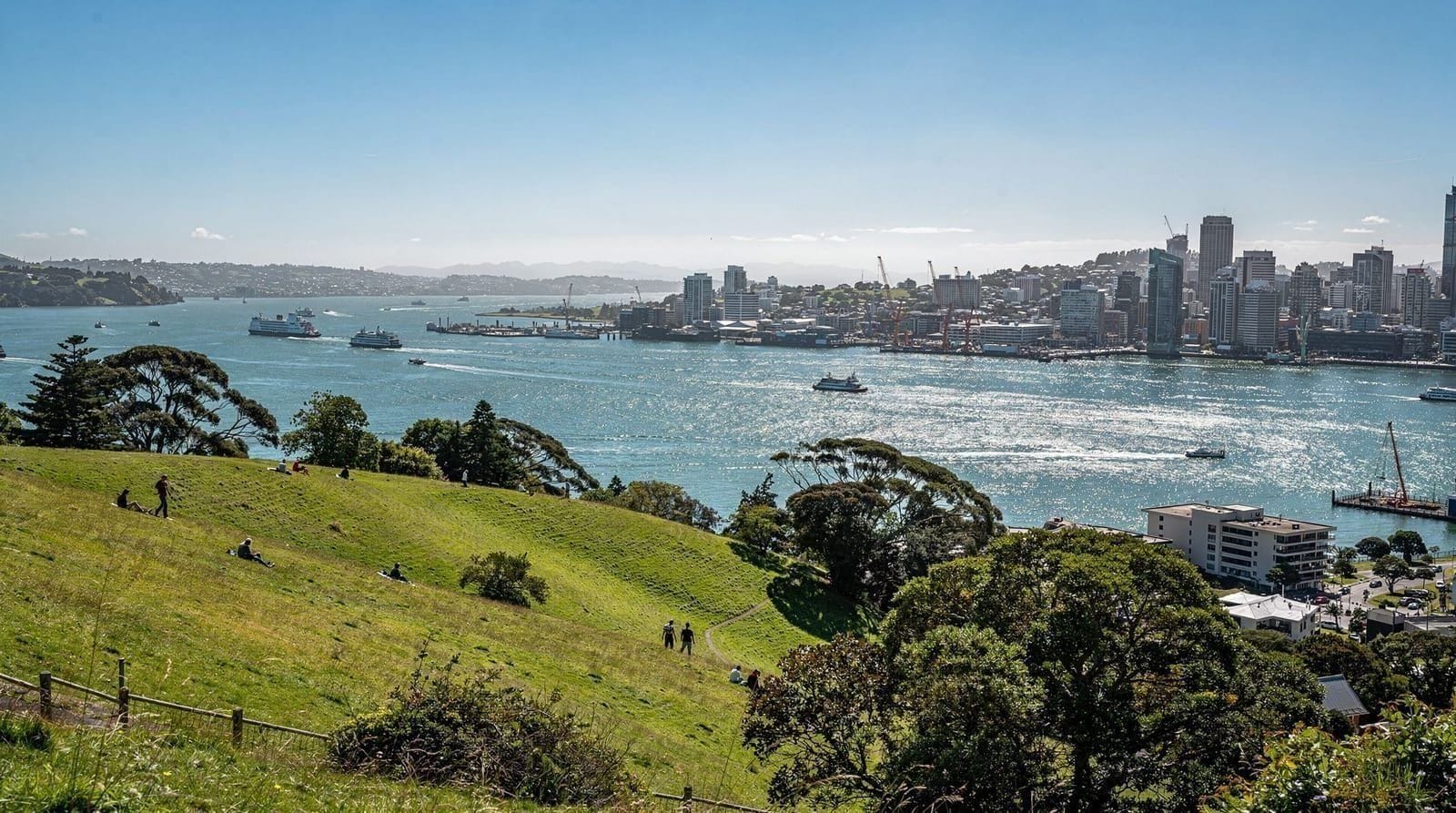
Auckland sits on a volcanic field of around 50 cones, and several of the best are free public walks within the city itself. Mount Eden (Maungawhau), at 196 metres the highest natural point in Auckland, has a paved summit path about 20 minutes up from the car park, with a genuinely spectacular 360-degree panorama over the CBD, harbour and out to Rangitoto — arguably the best free view in the city. One Tree Hill (Maungakiekie), inside the sprawling Cornwall Park, adds a longer, gentler walk through grazing paddocks and old pōhutukawa trees to a summit obelisk. North Head (Maungauika) at Devonport combines the volcanic cone walk with WWII gun emplacements and tunnels you can explore, plus a harbour-entrance view that rivals Mount Eden’s. Mount Victoria (Takarunga), also in Devonport, is the shortest of the four and pairs well with a North Head walk on the same visit.
We cover all four in more depth in our volcanic cones of Auckland guide, including which ones to prioritise if you only have time for one or two.
If you’d rather have a guide explain the volcanic geology and Māori history of these sites as you walk, the sunrise Mount Eden summit tour is a good early-morning option that also beats the crowds.
None of the four cone walks require any booking or entry fee, and all are open from dawn to dusk daily. Mount Eden’s summit car park is small and fills quickly on weekends and public holidays; if you arrive to find it full, there’s overflow parking on the surrounding residential streets, or you can walk up from Mount Eden Village at the base, which adds about 15 minutes each way but avoids the parking hunt entirely. One Tree Hill has a much larger car park inside Cornwall Park itself, and rarely fills. North Head and Mount Victoria both have reasonable roadside and dedicated parking in Devonport, though summer weekends when the ferries are busiest see spillover onto nearby streets too.
For a deeper comparison of all four cones — including which pairs work well together in a single outing and which ones to skip if you’re short on time — our dedicated volcanic cones of Auckland guide goes into more depth than is practical here, including the cultural significance of each site as a former pā (fortified Māori settlement).
Waitākere Ranges: half-day walks (2-4 hours)
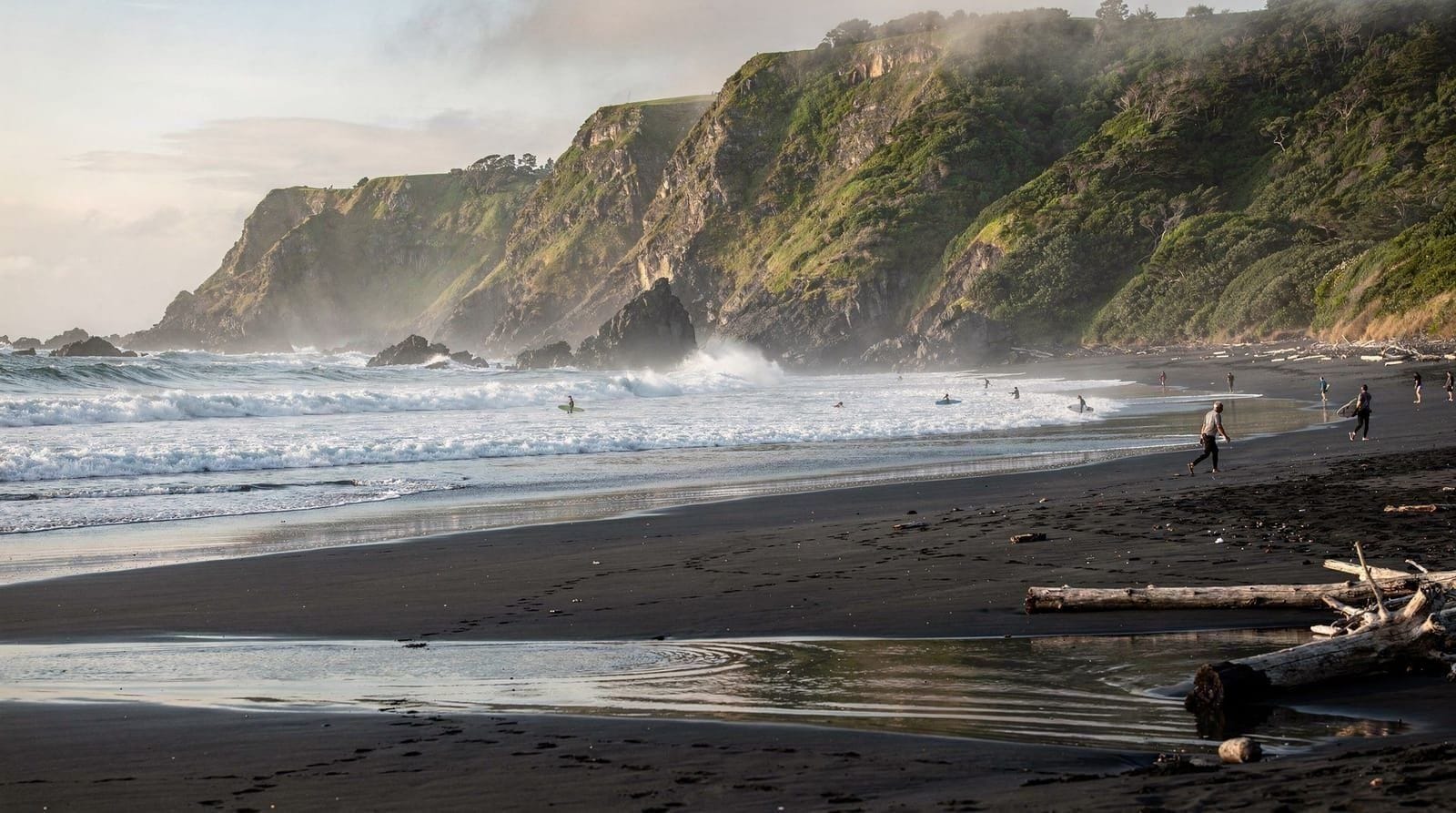
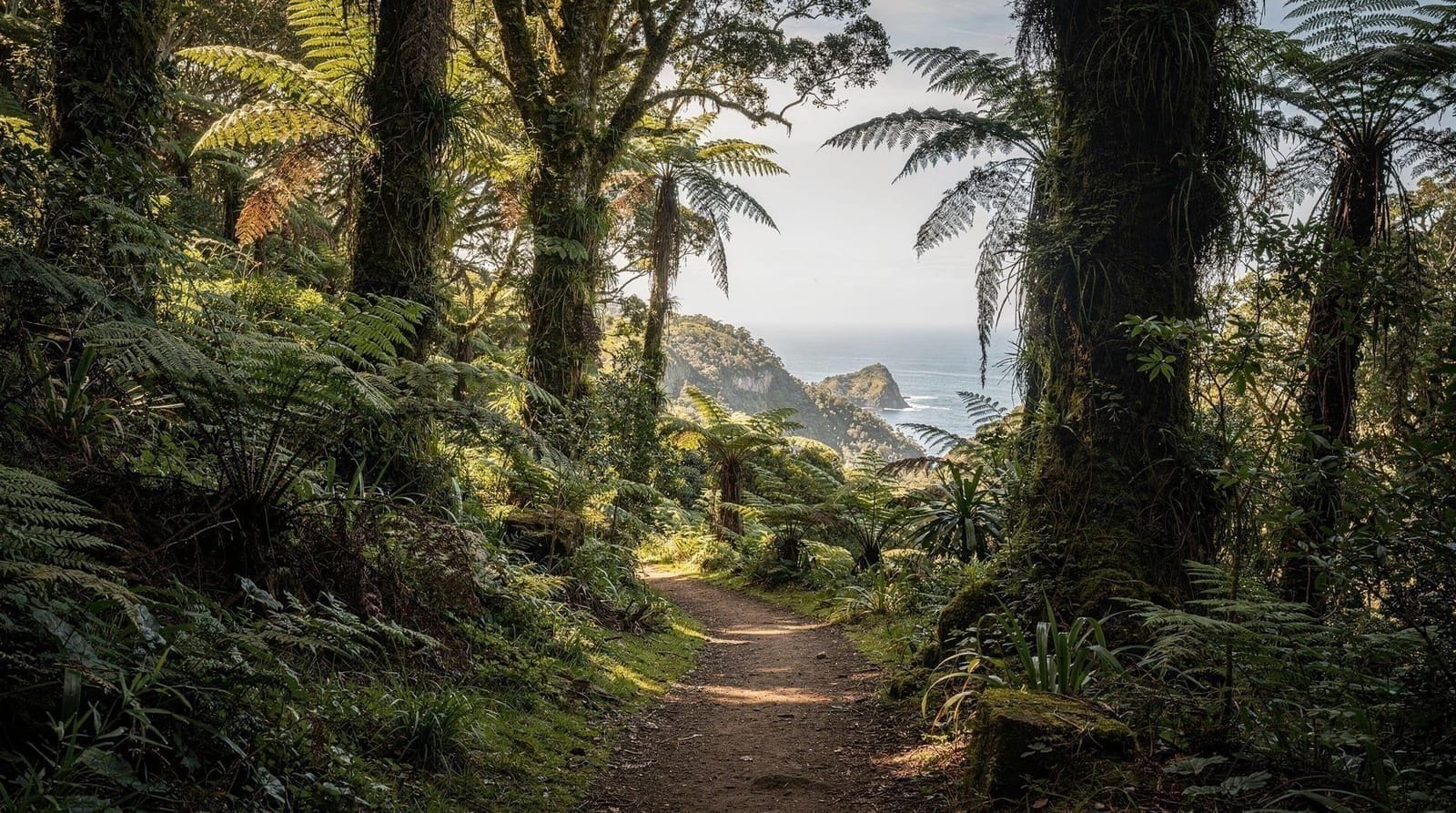
The Waitākere Ranges Regional Park, roughly 40-50 minutes’ drive west of the CBD, is Auckland’s proper wilderness escape. Start at the Arataki Visitor Centre for maps and current track closures (kauri dieback disease means some tracks rotate in and out of closure — always check before you go), then choose based on your time:
Kitekite Falls near Piha is the most popular short walk in the park — a well-formed 1.5-hour return track through native bush ending at a wide, multi-tiered waterfall with a swimming hole at the base in summer. Easy grade, suitable for most fitness levels.
Fairy Falls loop track, also near Piha, runs about 2-3 hours and connects two waterfalls with a ridge section giving glimpses of the coast — slightly more demanding than Kitekite but still a day-walker’s track, not a backcountry route.
Whatipu, at the southern end of the ranges, offers coastal walks through dune systems and old logging-era relics, with a genuinely wild, empty feel — fewer visitors make it this far, which is part of the appeal.
All of these tracks sit inside a kauri dieback protection zone, and Auckland Council rotates track closures depending on where the soil-borne pathogen is being actively monitored — a track that was open last month may not be open this month, so always check current status before driving out, rather than relying on an older blog post or a map that hasn’t been updated. Boot-cleaning stations sit at most trailheads; using them properly (a thorough spray and brush, not a token wave over the mat) is a small effort that genuinely matters for protecting the remaining kauri.
None of these walks have on-track water refill points, cafés, or toilets beyond a basic block near some car parks, so treat a Waitākere half-day the way you’d treat a genuine hike rather than a park stroll — pack water, snacks, and sun protection before you leave the city.
Pairing any of these with a beach stop at Piha makes for a complete half-day; see our dedicated Waitākere Ranges hiking guide for track-by-track detail, current closures, and trailhead directions. If you’d prefer a guided introduction rather than working out track closures yourself, the Waitākere Ranges wilderness experience tour covers a curated loop with a local guide, and the Piha beach and Arataki Centre private day tour combines a rainforest walk with beach time in one trip.
The Hillary Trail: multi-day option
For hikers with genuine backcountry experience and time to spare, the Hillary Trail is a 75-kilometre, four-day route through the length of the Waitākere Ranges, named after Sir Edmund Hillary. It requires hut or camping bookings through DOC, proper wet-weather gear, and self-sufficiency between resupply points. This isn’t a casual add-on to a city trip — it’s a dedicated tramping trip in its own right, and most Auckland visitors won’t have the time for it, but it’s worth knowing it exists if multi-day hiking is genuinely your priority. Our full Waitākere Ranges hiking guide covers the Hillary Trail’s logistics, booking process, and section breakdown in more detail if you’re seriously considering it.
Rangitoto Island: a hike with a ferry attached
Rangitoto Island, Auckland’s youngest and most recognisable volcanic cone, sits a 25-minute ferry ride from the Downtown Ferry Terminal and makes for one of the best half-day hikes near the city precisely because of the novelty — lava fields, boardwalks through pōhutukawa forest that’s regenerated straight out of black rock, and a summit view back across the harbour to the city skyline. The summit walk runs 1-1.5 hours each way from the wharf. It deserves its own detailed guide because of the ferry logistics and timing — see our Rangitoto hike guide for a full walkthrough, or book the full-day kayak and hike to Rangitoto summit if you want to combine the hike with a genuinely memorable paddle out.
Common mistakes on Auckland hikes
The most frequent mistake, especially among visitors used to the well-serviced tracks of Europe or North America, is assuming a walk will have a café, shop, or water tap somewhere along the way. None of the walks in this guide do — not the volcanic cones, not the Waitākere tracks, and not Rangitoto — so carry everything you need from the start. A second mistake is underestimating New Zealand sun: overcast days can still deliver a UV index that would be considered extreme elsewhere, and Rangitoto’s exposed lava field in particular offers almost no shade on the upper track. A third mistake, specific to Rangitoto, is cutting the return timing too close — missing the last ferry back means a very long, awkward wait with no facilities, so build in a comfortable buffer before your booked sailing rather than trying to summit right up until the last possible minute.
What a hiking day costs
The volcanic cone walks and most Waitākere day tracks are entirely free beyond the cost of getting there — a genuine advantage if you’re watching your budget, since New Zealand’s paid attractions can add up quickly elsewhere in a trip. A rental car for a day to reach Waitākere trailheads typically runs NZ$70-120 depending on season and vehicle size; parking itself is free at all the trailheads covered here. Rangitoto’s main cost is the ferry, generally in the NZ$45-65 return range per adult depending on the operator and whether you book a bundled tour.
Guided options — the Mount Eden sunrise tour, the Waitākere wilderness experience, or the Rangitoto kayak-and-hike — cost more but remove the need to navigate track closures, timetables, or driving yourself, which some visitors will happily pay for. For a broader sense of how a hiking day fits into overall trip costs, see our Auckland budget guide and Auckland trip cost breakdown guides.
Accessibility
Of the walks covered here, Cornwall Park around One Tree Hill has the gentlest gradients and widest paths, making sections of it manageable for visitors with limited mobility even if the full summit isn’t accessible to everyone. Mount Eden’s summit path is paved but genuinely steep in places since vehicle access was removed; it’s a fitter walker’s track despite being short. The Waitākere tracks and Rangitoto’s summit route both involve uneven, sometimes muddy or rocky ground with no accessible surfacing, and neither is suitable for wheelchairs or those with significant mobility limitations. If accessibility is a priority for your group, Cornwall Park plus a scenic drive through Waitākere (without committing to the walking tracks) is a reasonable way to see the scenery without the terrain challenge.
What to pack
New Zealand’s UV levels rank among the highest in the world — SPF 50+ is not optional, even on short walks, and even under cloud cover. Waitākere tracks are frequently muddy regardless of season, so proper closed shoes (not sandals) matter more than they might elsewhere. Weather can shift quickly on exposed ridgelines and coastal sections, so a light rain layer is worth carrying even on a clear-looking morning. Bring your own water; none of these walks have refill points on the trail itself.
Choosing based on your time
If you have under an hour: Mount Eden or North Head, both free and unforgettable for the effort required. If you have a half-day: Kitekite Falls plus Piha beach, or the Rangitoto summit walk if you’re comfortable with ferry timing. If you have a full day and want variety: combine two volcanic cones in the morning with a Waitākere afternoon, or do the Fairy Falls loop with a stop at Muriwai’s gannet colony on the way back.
If you’re staying in Auckland for several days and want to spread hiking across your trip rather than cramming it into one day, a sensible split looks like this: use a spare early morning or late afternoon (when you’d otherwise be doing nothing useful) for a volcanic cone, since 20-40 minutes doesn’t need to eat into a dedicated sightseeing day; reserve one half-day specifically for Waitākere, since the drive alone makes it inefficient to squeeze in around other plans; and treat Rangitoto as its own half-day given the ferry timing constraints. Trying to combine Waitākere and Rangitoto in the same day is technically possible but rushed and not recommended — you’ll spend more time in transit than actually hiking.
If you’re travelling with kids, Mount Eden, One Tree Hill and Kitekite Falls are all manageable for reasonably fit children from about age six or seven upward, while the Rangitoto summit walk and Fairy Falls loop suit older, more confident kids given the longer distances and uneven ground. See our Auckland with kids guide for a fuller family-specific breakdown, including which walks work with a pushchair (short answer: only sections of Cornwall Park around One Tree Hill) and which don’t.
If hiking is genuinely the priority for your whole New Zealand trip rather than just an Auckland add-on, it’s worth knowing the city’s walks are a warm-up compared to what’s further afield — the geothermal walking trails around Rotorua and the alpine tracks of Tongariro National Park operate on a different scale entirely. Auckland’s cones and Waitākere day tracks are best understood as excellent, convenient options for the days you’re based in the city, not a substitute for a dedicated tramping trip if that’s what you’re after.
For a broader look at how hiking fits into a wider Auckland itinerary, see our best day trips from Auckland and free things to do in Auckland guides — most of these walks cost nothing beyond transport. If you’re planning a longer stay, our how many days in Auckland guide and 3 days Auckland itinerary both build in hiking time alongside the city’s other highlights, and our 1 day Auckland itinerary shows how to fit a cone walk into an otherwise packed single day.
Seasonal conditions, month by month
Auckland’s hiking conditions vary more by rainfall than temperature, since the city rarely gets genuinely cold. December through February is driest and warmest, ideal for the Waitākere tracks and Rangitoto’s exposed sections, but also the busiest — expect full car parks at Piha and Kitekite Falls, and book Rangitoto ferries ahead. March to May cools gradually with generally reliable weather and thinning crowds, arguably the best window for serious walking without midsummer heat on Rangitoto’s shadeless lava field. June to August is Auckland’s wet season — Waitākere tracks turn genuinely muddy and some sections become slippery enough to slow you down significantly, though the volcanic cone walks (mostly grass and paved paths) hold up better in the rain.
September to November brings improving, increasingly stable weather and lengthening days, a strong shoulder-season choice for hiking specifically. Whatever month you’re visiting, our Auckland weather by month guide has more granular detail, and it’s worth building a wet-weather backup into any hiking day — see our rainy day activities guide for indoor alternatives if a Waitākere trail turns out to be closed by weather or dieback controls on the day.
| Season | Conditions | Best for |
|---|---|---|
| Dec-Feb | Warm, dry, busiest | Waitākere tracks, Rangitoto — book ferries ahead |
| Mar-May | Cooling, reliable, thinning crowds | Serious walking without midsummer heat |
| Jun-Aug | Wet, Waitākere tracks muddy and slower | Volcanic cone walks (grass/paved) hold up better |
| Sep-Nov | Improving, stable, lengthening days | Strong shoulder-season choice overall |
Frequently asked questions about Auckland hikes
Are there good hikes within Auckland city itself?
Yes — the volcanic cones (Mount Eden, One Tree Hill, North Head, Mount Victoria) are all short, free summit walks of 15-40 minutes with genuinely great views, and don’t require a car if you’re staying centrally.
Do I need hiking experience for Waitākere Ranges trails?
No, most day walks (Kitekite Falls, Fairy Falls, Arataki loop tracks) are well-formed and suit reasonably fit casual walkers. The multi-day Hillary Trail is a different proposition and does require backcountry experience.
What should I bring on an Auckland hike?
Water, sunscreen (SPF 50+ — UV is extreme even on short walks), sturdy shoes since Waitākere tracks get muddy year-round, and a light rain layer, since weather can change quickly.
Can I hike Rangitoto Island in a day trip?
Yes, easily — it’s a half-day round trip from the CBD by ferry, with the summit walk taking about 1-1.5 hours each way. See our dedicated Rangitoto hike guide for the full breakdown.
Are Auckland’s hiking trails well signposted?
Generally yes for the popular tracks covered here — DOC (Department of Conservation) and Auckland Council maintain clear markers. Some Waitākere tracks close temporarily for kauri dieback protection, so check the Auckland Council website before heading out.
Do I need a car to reach Auckland’s hikes?
Not for the volcanic cones — Mount Eden, One Tree Hill and Devonport’s cones are all reachable by public transport or a short taxi from the CBD. The Waitākere Ranges genuinely need a car or a guided tour, and Rangitoto is reached by ferry, not car.
Is the Waitākere Ranges Regional Park free to enter?
Yes, entry and all standard day-walk trailheads are free. The only costs are getting there (fuel or a guided tour) and, if you extend into a multi-day Hillary Trail attempt, DOC hut or camping fees.
Top experiences
Bookable activities with verified prices and instant confirmation on GetYourGuide.