The best beaches near Auckland, from city to day trip
Auckland: From auckland taste of waiheke island day tour
Duration: 5.5 hours
What is the closest good beach to central Auckland?
Mission Bay, about 10 minutes from the CBD along Tāmaki Drive, reachable by bus with calm, safe swimming water and a café strip right on the sand.
Beaches at every distance from the city
Auckland’s relationship with beaches works on a sliding scale: the closer you stay to the CBD, the calmer and more convenient the water, but the further you’re willing to go, the more dramatic the scenery gets. This guide organises the best options by how much time and effort you actually have, from a 10-minute bus ride to a full day trip, and is deliberately structured around realistic travel windows rather than a flat list, since the right beach for a spare afternoon is rarely the right beach for a dedicated day trip.
| Closest, no car needed | Mission Bay, 10 min from CBD by bus |
| Best for surf/scenery | Piha, ~45 min drive |
| Best for wildlife | Muriwai, gannet colony |
| Best island beach | Onetangi, Waiheke, 40-min ferry |
| Most photogenic overall | Cathedral Cove, ~2.5-3 hrs |
| Swim season | Roughly November-April |
Many of these beaches carry Māori names that predate their English ones, and knowing a little of that history adds real texture to a beach day. Mission Bay’s coastline sits within land connected to Ngāti Whātua Ōrākei, whose relationship with the Waitematā Harbour goes back centuries before the Tāmaki Drive promenade existed. Piha and Muriwai carry their original Māori names into everyday use already, unlike some more heavily anglicised parts of the city. If the cultural layer of Auckland’s coastline interests you beyond the beach itself, Auckland’s own history and Māori culture guides are good starting points for more context, and it’s a genuinely rewarding lens to bring to what might otherwise read as a simple list of nice sand.
If you only have half a day
With only a few hours free, don’t try to combine a west coast beach with a city beach in the same outing — the driving alone eats most of your window. Pick one tier and commit: Mission Bay or Takapuna if you want beach time plus lunch without wasting any of your afternoon on the road, or Piha if the dramatic scenery matters more than convenience and you’re happy to spend close to two hours of a half-day window actually driving. A common mistake first-time visitors make is trying to squeeze in both a west coast beach and Waiheke Island in one day — the geography doesn’t cooperate, since they sit in opposite directions from the city, and attempting both usually means rushing both.
Under 20 minutes: city beaches, no car needed
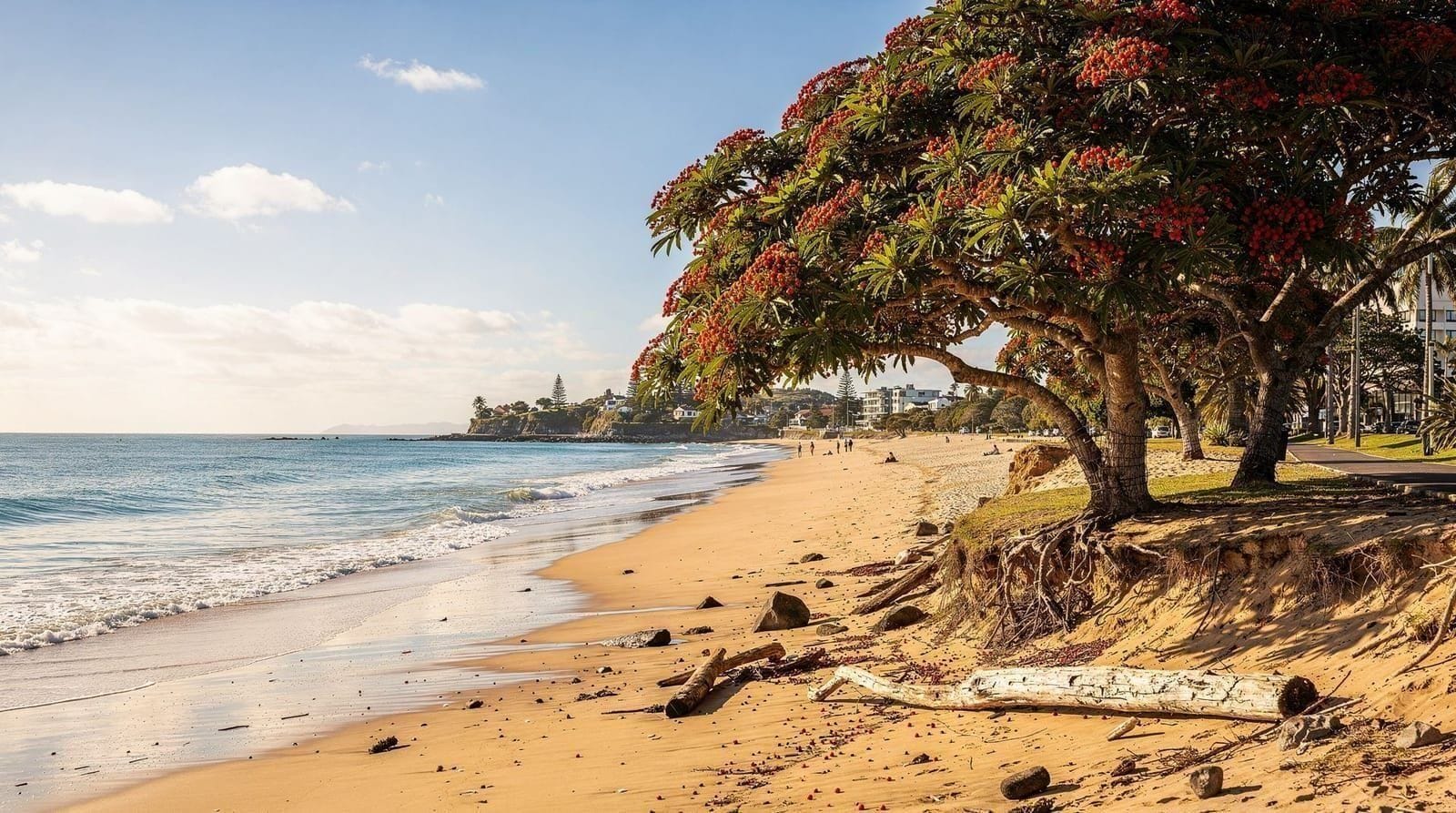
Mission Bay, ten minutes from the CBD along the Tāmaki Drive waterfront, is the easiest good beach in Auckland — golden sand, calm shallow water safe for children, and a café and gelato strip right behind the beach. Reachable by regular bus.
Takapuna, across the harbour on the North Shore, matches Mission Bay’s calm water and adds a genuinely great view: Rangitoto Island fills the horizon directly offshore, making this arguably Auckland’s most photogenic easy beach.
Cheltenham, next to Devonport, is smaller and quieter than either, with views toward North Head — worth combining with a Devonport ferry trip and volcanic cone walk (see our volcanic cones of Auckland guide).
Further beaches in the same easy category include Kohimarama and St Heliers, both a little further east along Tāmaki Drive from Mission Bay, quieter than Mission Bay itself but with the same calm, safe swimming water and each with its own small café strip. Judges Bay, tucked beside the Auckland Domain and close to the CBD, is smaller again and popular with local swimmers rather than tourists, useful if you want a quick swim without leaving the city centre area at all. All of these sit along or near Tāmaki Drive, Auckland’s signature waterfront drive, which is worth doing in full by bike or on foot if you have the time, not just as a route between beaches.
Long Bay, a further 20-25 minutes north of Takapuna on the North Shore, is a genuinely underrated regional park beach — a long stretch of sand backed by grassy reserve, popular with local families on weekends but notably quieter than Mission Bay on weekdays, and it comes with walking tracks through the adjoining regional park if you want to extend the visit beyond just the sand.
30-45 minutes: the west coast, worth a rental car
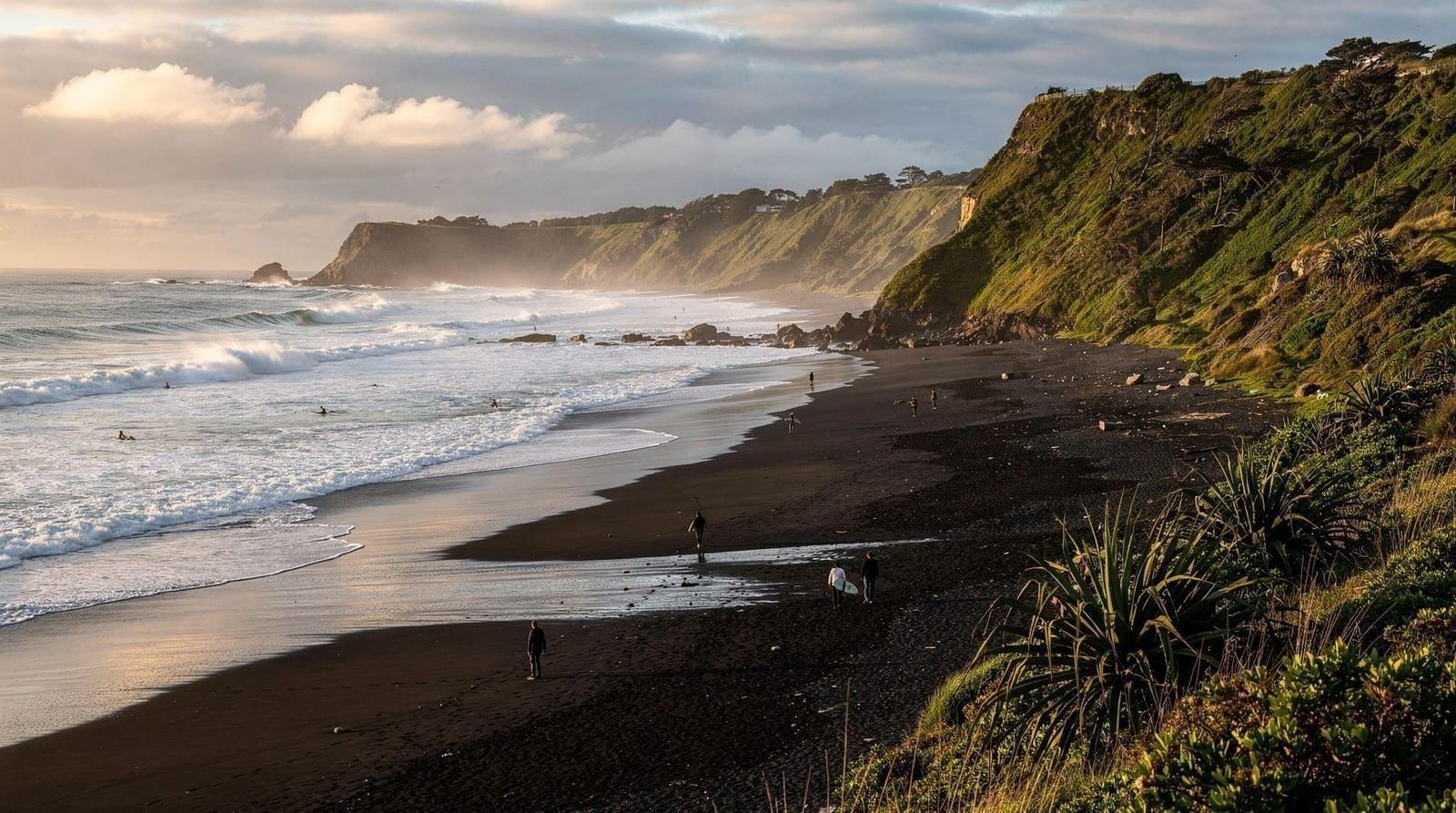
Piha is Auckland’s signature beach — black volcanic sand, the striking Lion Rock, and consistent surf, about 45 minutes’ drive through the Waitākere Ranges.
Genuine rip currents mean you should swim only between the lifeguard flags (patrolled roughly late October-April). Muriwai, a similar drive away, pairs black sand with an accessible gannet colony on the cliffs above the beach. Both are covered in more depth, including safety specifics, in our Auckland beaches guide, and both sit within the Waitākere Ranges hiking area if you want to combine beach time with a forest walk. Neither is reachable by regular public transport; the Piha, rainforest and Mount Eden private tour is a straightforward way to see Piha without renting a car yourself.
Further along the same coastline, Bethells Beach (Te Henga) offers a wilder, less-visited alternative to Piha and Muriwai — black sand, dunes, and a genuinely remote feel, though it demands more driving on unsealed roads toward the end and has no facilities to speak of. It suits visitors who’ve already done Piha or Muriwai and want something quieter, rather than as a first west coast beach choice.
The west coast beaches are also a reasonable base for spotting wildlife beyond the gannets at Muriwai — dolphins occasionally appear close to shore, though for a reliable wildlife encounter you’re better off booking a dedicated trip; see our whale and dolphin watching guide, which departs from the Waitematā Harbour rather than the west coast beaches themselves.
Piha and Muriwai, the two most commonly compared west coast beaches, aren’t quite interchangeable. Piha has the more dramatic single landmark in Lion Rock and a slightly livelier village feel with a couple of cafés; Muriwai adds the gannet colony, a genuinely rare thing to see this close to a major city, and slightly easier, flatter beach access from its car park. If you can only fit one west coast beach into your trip and wildlife interests you, Muriwai edges it; if you want the classic, most-photographed Auckland beach image, Piha edges it. Neither is a wrong choice, and both are covered together in more depth in our Auckland beaches guide.
40-minute ferry: Waiheke Island
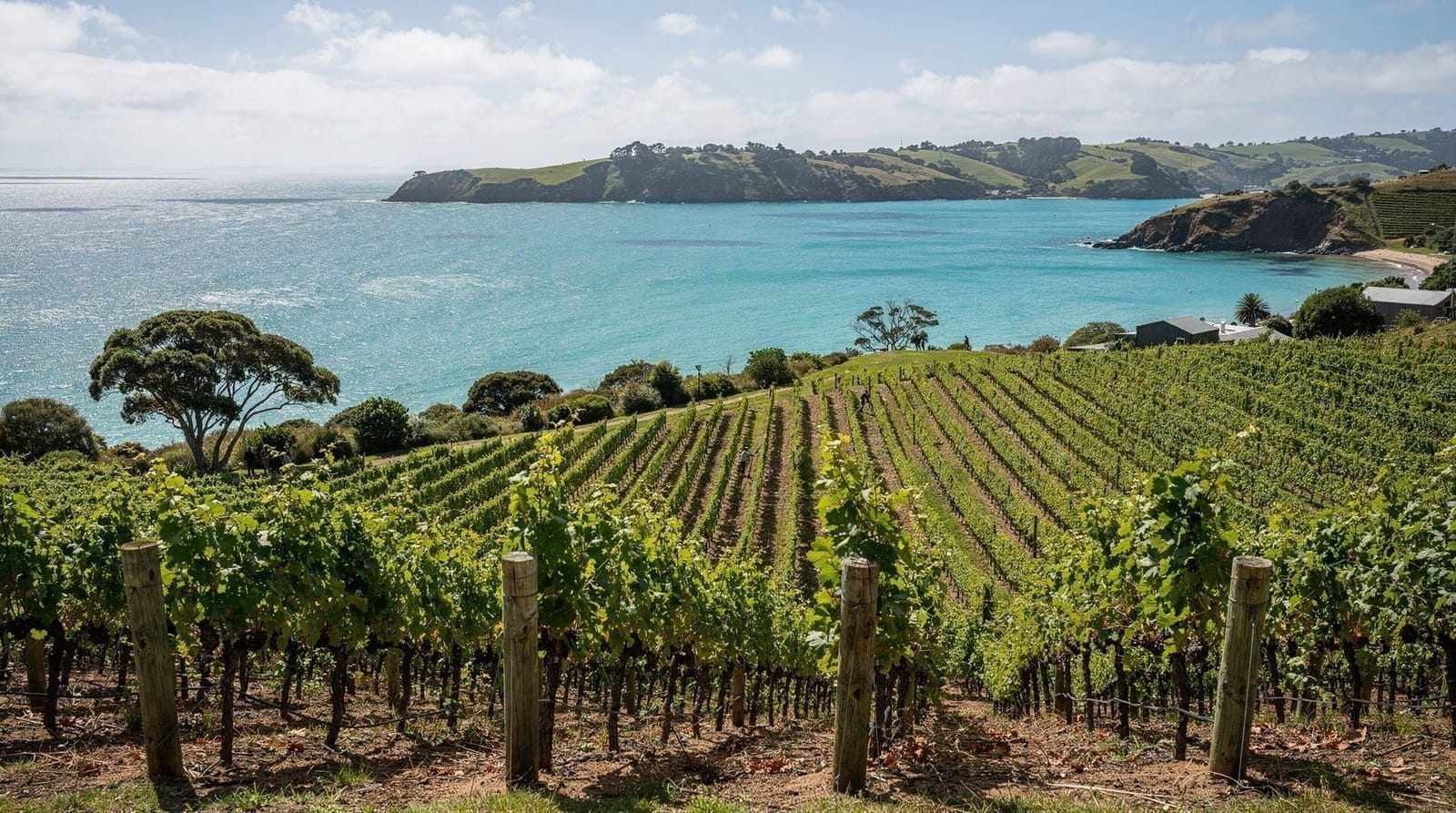
Waiheke Island, best known for its vineyards, also has genuinely excellent beaches that often surprise first-time visitors. Onetangi is the island’s longest sandy beach, wide and gently sloping, good for swimming and a walk. Palm Beach, smaller and more sheltered, has calmer water again and a quieter, more local feel. Both are reachable from the ferry terminal via the island’s Wharf-to-Wharf bus service or a rental car/scooter. The taste of Waiheke Island day tour combines beach time with the island’s wine scene in one trip, or book the return fast ferry ticket if you’d rather explore independently. See our full Waiheke Island guide for more on the island’s beaches specifically.
Waiheke rewards a longer stay far more than a single beach visit does elsewhere on this list — most visitors who only allocate an afternoon end up wishing they’d budgeted a full day, since the ferry crossing alone takes 40 minutes each way and the island’s vineyards, beaches and lookouts are spread out enough that rushing defeats the point. If wine matters as much as the beach to you, it’s worth looking at how the different Waiheke wine tour formats combine both in one visit before you book the ferry.
2.5-3 hours: Coromandel’s Cathedral Cove and beyond
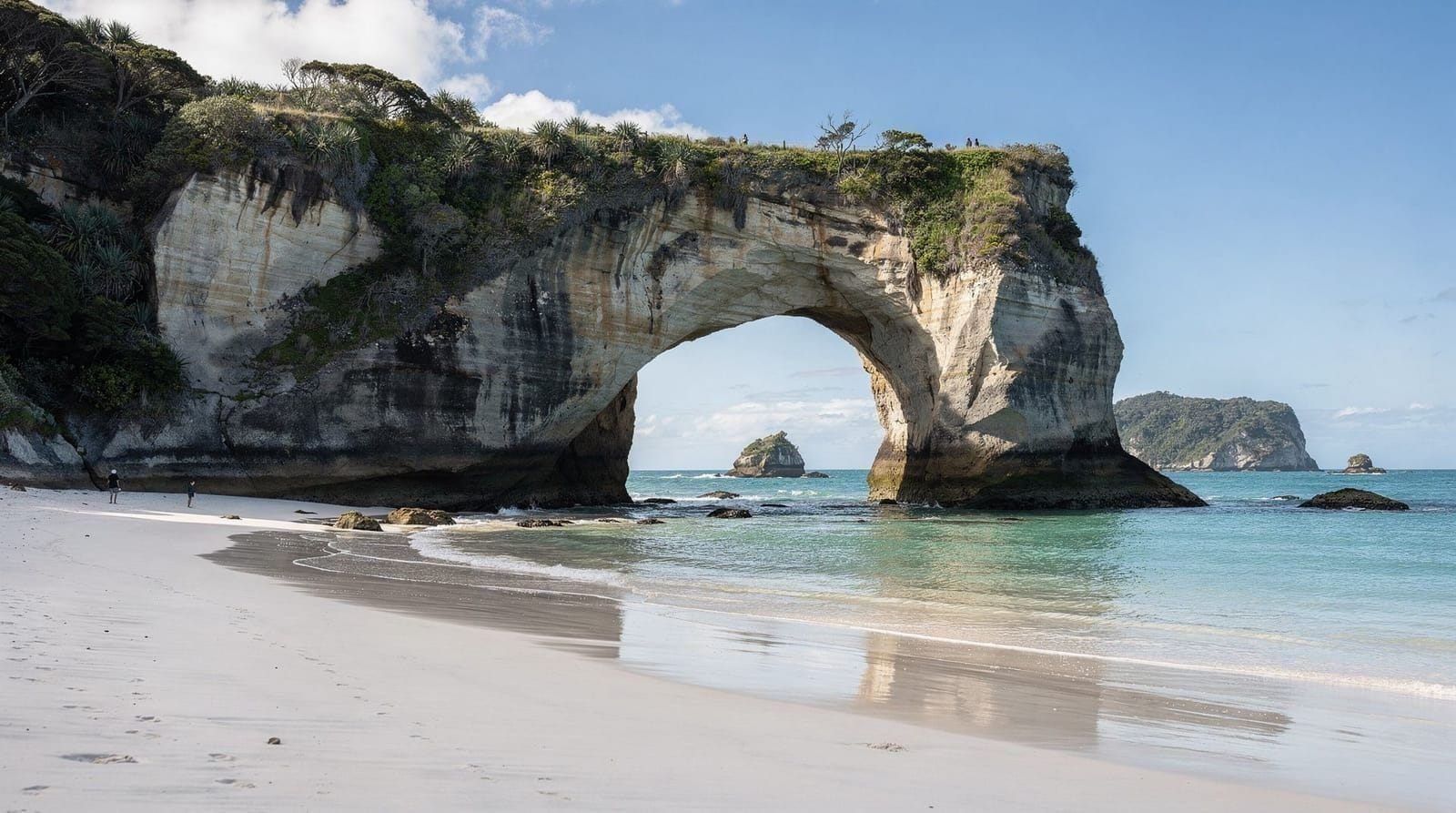
For visitors willing to commit a full day, the Coromandel Peninsula’s beaches operate on a different level of drama entirely — Cathedral Cove’s natural rock archway, Hot Water Beach’s dig-your-own geothermal pools, and the barely accessible New Chums Beach, regularly rated among the world’s best. This is too far for a casual half-day but works well as a long single-day trip or, better, an overnight stay on the peninsula. Full detail, including tide-dependent timing for Hot Water Beach, is in our dedicated Coromandel beaches guide. The Cathedral Cove and Coromandel scenic day tour handles the long drive so you’re not doing 5-6 hours behind the wheel in a single day.
| Beach | Distance | Swimming | Best for |
|---|---|---|---|
| Mission Bay | 10 min, bus | Calm, safe | Convenience, families |
| Takapuna | 15-20 min, bus | Calm, safe | Views of Rangitoto |
| Piha | ~45 min, car | Rip currents, flags only | Scenery, surf |
| Muriwai | ~45 min, car | Rip currents, flags only | Gannet colony |
| Onetangi (Waiheke) | 40-min ferry | Calm, safe | Beach + wine day |
| Cathedral Cove | 2.5-3 hrs | Tide-dependent | Photography, bucket-list |
How to choose
If you have a spare afternoon and no car: Mission Bay or Takapuna. If you have half a day and want the classic dramatic Auckland beach: Piha. If you want beaches plus wine and a proper island feel: Waiheke. If you’re willing to commit a full day (or better, a night) for the most photogenic beach in the wider region: Cathedral Cove and the Coromandel. Most first-time visitors do at least two of these across a week-long trip — a city beach for convenience, and one further-flung option for the scenery. For how these slot into a broader week, see our best day trips from Auckland guide.
Beaches for families with kids
Not every beach on this list suits young children equally. Mission Bay and Takapuna are the easiest choices for families — shallow, calm water, playgrounds nearby, and cafés for when patience runs out. Piha and Muriwai are more of a judgement call: the scenery is spectacular, but rip currents mean children should stay well within the patrolled flagged area and close supervision matters more than at the sheltered city beaches. Waiheke’s Onetangi works well for slightly older kids who can handle a longer ferry trip and enjoy a bit more independence on a bigger beach. For a dedicated breakdown by age group, see our Auckland with kids guide, our kid-friendly beaches near Auckland guide specifically, and our wider family day-trip planning for the rest of your week in the city.
Getting there without a car
Auckland’s city beaches are genuinely easy without a rental car. Mission Bay, Takapuna and Cheltenham are all on regular AT bus routes from the CBD, and a prepaid AT HOP card makes fares straightforward across the whole trip. Devonport, next to Cheltenham Beach, is best reached by ferry rather than bus — a scenic 12-minute crossing covered in our Auckland ferries guide. West coast beaches are the exception: Piha and Muriwai have no meaningful public transport option, so a rental car, rideshare, or organised tour is the only realistic way to get there independently. Waiheke, similarly, requires the ferry, and the trade-offs between taking it yourself versus joining an organised tour are worth thinking through before you commit either way.
Budget and costs
City beaches cost nothing beyond a bus fare — figure NZD 4-6 each way per person with a prepaid transit card, and the beach itself, the swimming and the sand are all free. Piha and Muriwai add a rental car or tour cost: fuel and parking for a self-driven half-day typically runs NZD 40-70 for a group, or more if you book an organised tour, though a tour removes the stress of unfamiliar roads through the Waitākere Ranges. Waiheke adds the ferry fare, currently in the NZD 45-70 return range per adult depending on operator and time of booking, before any wine tour or bike rental on the island itself. Coromandel beaches are the most expensive tier by a distance, given the fuel or tour cost of a 5-6 hour round trip. Across all of them, beach days are one of the cheaper parts of an Auckland itinerary compared with paid attractions and tours.
Accessibility notes
Mission Bay, Takapuna and Cheltenham all have flat, paved promenades right up to the sand, making them realistic options for visitors with mobility limitations, pushchairs or wheelchairs, at least as far as the water’s edge — the sand itself is still soft underfoot. Piha and Muriwai are less accommodating: parking is close to the sand at both, but the beaches themselves involve walking across soft, sometimes steep dune terrain, and neither has a formed accessible path onto the sand itself. Waiheke’s ferry terminal and its island bus service are wheelchair accessible, and Onetangi Beach has a relatively flat, easy approach from the road, making the island a reasonably accessible day trip overall. If accessibility is a firm requirement, the city beaches remain the safest choice across this whole list.
Common mistakes to avoid
The most common mistake is underestimating driving time to the west coast — Piha and Muriwai are only 40-45 minutes from the CBD in ideal conditions, but the roads through the Waitākere Ranges are narrow and winding, and traffic on a summer weekend can stretch that to over an hour each way. Build in buffer rather than cutting it fine. The second is assuming any Auckland beach is a reliable swimming beach without checking; the calm inner-harbour beaches (Mission Bay, Takapuna, Waiheke) are genuinely safe for casual swimmers, but Piha and Muriwai carry real rip current risk and should only be swum between the flags when lifeguards are on duty.
The third is visiting Piha or Muriwai outside the patrol season (roughly late October to April) and swimming anyway — outside those months there’s no lifeguard cover at all, and the beaches are better treated as scenery-and-walking destinations rather than swimming ones. Finally, visitors on a tight one-week Auckland itinerary sometimes try to fit in every beach on this list; realistically, picking one from each distance tier is plenty, and trying to do more just means less time anywhere.
Best time of year for Auckland’s beaches
Auckland’s beach season runs roughly November through April, coinciding with the warmest water and, at the west coast beaches specifically, official lifeguard patrols. December through February is peak season — warmest, busiest, and the best chance of the calm, sunny days that make Mission Bay or Takapuna feel genuinely idyllic, but also the most crowded car parks and busiest ferries to Waiheke. March and April often deliver the best overall trade-off: water is still warm from summer, but school holidays have ended and crowds thin out noticeably, particularly on weekdays.
May through September is Auckland’s cooler, wetter season — swimming becomes a cold-water proposition for most visitors, lifeguard patrols at Piha and Muriwai stop, and the west coast beaches shift from a swimming destination to a walking and photography one, still worth visiting but for different reasons. October picks back up as patrols resume and the weather warms, though water temperature lags a few weeks behind the air. For the wider seasonal picture across the whole region, see our best time to visit Auckland guide, which covers month-by-month weather patterns in more depth.
What to pack for an Auckland beach day
Regardless of which tier you choose, SPF 50+ sunscreen and a hat are non-negotiable given New Zealand’s exceptionally high UV index, even on days that feel mild — sunburn on a cloudy Auckland day catches out plenty of visitors used to more forgiving climates elsewhere. A light jumper or jacket is worth carrying even in summer, since sea breezes off the Waitematā or the Tasman can make the walk back to the car noticeably cooler than the beach itself. For the west coast beaches specifically, closed shoes for the dune and car park areas beat sandals, and a change of clothes is worth keeping in the car if you’re driving yourself, since black volcanic sand shows on clothing and skin more than the pale sand at Mission Bay or Waiheke. A well-packed day bag makes any of these beach trips smoother, whichever tier you’re doing.
Safety across all of them
New Zealand’s UV levels are extreme by global standards — SPF 50+ and reapplication every two hours matters at every beach on this list, not just the ones that feel “wild.” Rip currents are the specific hazard at unsheltered west coast and Coromandel beaches; if caught, swim parallel to shore rather than fighting the current directly. East coast and Waiheke beaches, sitting inside the sheltered Hauraki Gulf, carry much lower rip current risk but standard water safety still applies, particularly for children.
Sunrise and sunset picks
Because Auckland sits between two coasts, sunrise and sunset favour different beaches. East-facing harbour beaches — Mission Bay, Takapuna, Cheltenham — catch a genuinely good sunrise over the Hauraki Gulf, with Rangitoto’s silhouette adding a distinctive shape to the horizon from Takapuna specifically, worth an early start if photography is part of your trip. West coast beaches — Piha and Muriwai — are the sunset picks, facing directly into the Tasman Sea, and Piha’s Lion Rock makes a striking foreground silhouette in the last light. If photography matters to your beach choice, timing the visit around the right end of the day for the coast you’re on is worth building into the plan rather than an afterthought.
Dog-friendly beaches
For visitors travelling with a dog, or simply curious about local beach etiquette, several Auckland beaches allow dogs off-leash during set hours, though rules vary by beach and season and are worth checking on Auckland Council’s site before relying on them. Muriwai and parts of Long Bay Regional Park are generally more dog-friendly than the tightly patrolled swimming beaches like Mission Bay, where restrictions are stricter during peak summer swimming hours specifically. This is a minor planning detail for most visitors, but worth knowing if a beach walk with a dog is part of your trip, and it’s the kind of small local rule that’s easy to miss until you’re already standing on the sand.
Frequently asked questions about beaches near Auckland
Which beaches near Auckland don’t need a car?
Mission Bay, Takapuna, Cheltenham and Long Bay are all reachable by public bus. West coast beaches (Piha, Muriwai) and Coromandel/Waiheke beaches require a car, ferry or organised tour.
What’s the closest beach to Auckland Airport?
There’s no notable beach directly near the airport itself; the closest good options are still Mission Bay or Takapuna, roughly 30-40 minutes’ drive depending on traffic.
Is Waiheke Island good for beaches?
Yes — Onetangi and Palm Beach on Waiheke are genuinely excellent, sandy and calm, and reachable via a 40-minute ferry from the city, making the island a strong beach day-trip option beyond the mainland choices.
Which beach near Auckland is best for a short half-day trip?
Mission Bay or Takapuna for simplicity and no driving required; Piha if you want the classic black-sand, dramatic-scenery experience and don’t mind a 45-minute drive.
Are there beaches good for surfing near Auckland?
Yes — Piha and Muriwai on the west coast are Auckland’s main surf beaches, with consistent swell from the Tasman Sea. East coast beaches are too sheltered for meaningful surf.
How far is Cathedral Cove from Auckland?
About 2.5-3 hours’ drive, making it a long but achievable single-day trip, or a better fit for an overnight stay on the Coromandel Peninsula if you want a more relaxed pace.
Which Auckland beach is best for sunset photos?
Piha and Muriwai on the west coast, since they face directly into the Tasman Sea. Lion Rock at Piha makes a particularly striking silhouette in the last light.
Are dogs allowed on Auckland’s beaches?
Some, with restrictions that vary by beach and season — Muriwai and parts of Long Bay Regional Park are generally more dog-friendly than tightly patrolled swimming beaches like Mission Bay. Check Auckland Council’s current rules before relying on a specific beach.
Top experiences
Bookable activities with verified prices and instant confirmation on GetYourGuide.