Driving in New Zealand: everything visitors need to know
Auckland: Coromandel driving creek cathedral cove day tour
Is driving in New Zealand difficult for visitors?
Most visitors adjust within a day or two. The main challenges are driving on the left, New Zealand's specific give-way rule for turning traffic, narrow winding roads in some regions (notably Coromandel), and one-lane bridges. Roads to Auckland's main day-trip destinations are generally well-maintained and straightforward.
Left-hand driving: the first adjustment
New Zealand drives on the left, following the same convention as the UK, Australia, Japan and several other countries. For visitors from right-hand-drive countries — the USA, most of continental Europe, much of Asia and beyond — this is the single biggest adjustment, and it’s genuinely manageable but takes conscious attention for the first day or two. The trickiest moments tend to be at intersections and roundabouts, where habit can briefly pull you toward the wrong lane, and immediately after a rest stop, when the first few minutes back on the road require re-establishing the mental model. Many visitors find that a quiet stretch of road straight out of the rental depot, before hitting busier city streets, is the easiest place to settle in.
| Side of road | Left (like the UK, Australia, Japan) |
| Licence needed | Home licence (English) or IDP, valid up to 12 months |
| Speed limits | 100km/h open road, ~50km/h in towns |
| Trickiest routes | Coromandel (SH25A), Central Plateau in winter |
| Emergency number | 111 (police, fire, ambulance) |
Licence requirements and the International Driving Permit
Most visitors can drive in New Zealand on their home country’s full (not learner or provisional) driving licence for up to 12 months, provided it’s printed in English. If your licence isn’t in English, you’ll need either an International Driving Permit (IDP) or an accompanying official translation alongside your original licence — arrange this before you travel, since it’s far more straightforward to obtain in your home country than once you’ve arrived. Rental companies will check this at pickup, and driving without valid documentation carries real legal and insurance risk if you’re stopped or involved in an incident. See our car rental Auckland guide for the full rental process, including what documentation to bring to the counter.
New Zealand’s give-way rule
New Zealand has a specific give-way rule that trips up more visitors than left-hand driving itself: at uncontrolled intersections, a vehicle turning right must give way to oncoming traffic turning left across its path, even though the left-turning vehicle appears to be crossing into the right-turner’s path from the turner’s perspective. This differs from the give-way conventions in several other countries and takes real conscious attention at unfamiliar intersections until it becomes automatic. When genuinely unsure who has priority at a give-way or uncontrolled intersection, the safest default is to slow down and let the other vehicle go first — a moment’s delay costs nothing, a misjudged intersection can cost a lot.
Speed limits and how they’re signed
The open road limit on New Zealand state highways is generally 100km/h, dropping to lower posted limits (commonly 50km/h) through towns, and to variable, often lower limits on winding, narrow or high-risk sections — these are clearly signed and worth respecting even when the road ahead looks clear, since blind corners on rural routes are genuinely blind. Speed cameras and enforcement operate throughout the country, and speeding fines apply to rental drivers just as they do to residents, typically charged back to the card on file after the rental period ends.
One-lane bridges: a genuinely New Zealand quirk
Rural North Island routes, including some on the way to Coromandel and parts of the Waikato, feature one-lane bridges where two-way traffic shares a single lane, governed by clear signage: a red arrow at your approach means you give way to oncoming traffic already on or approaching the bridge, while a black arrow means you have the right of way. Approach these bridges at a reduced speed regardless of which arrow you see, since visibility of oncoming traffic can be limited on curved approaches, and be prepared to stop and wait if another vehicle has priority.
Road conditions on Auckland’s main day-trip routes
The roads connecting Auckland to its most popular day-trip destinations — Hobbiton and Matamata, Waitomo, Rotorua, Hamilton — are well-maintained, sealed state highways with straightforward driving for anyone comfortable with left-hand traffic. The notable exception is the Coromandel Peninsula, where the Kopu-Hikuai Road (SH25A) and the coastal route around to Cathedral Cove and Hot Water Beach involve genuinely narrow, winding sections with limited overtaking opportunity — worth extra caution and, for some visitors, a reason to consider a guided tour instead. See our Coromandel day trip guide for route-specific detail, and our self-drive vs tour day trips guide for which destinations suit self-driving best.
Weather and driving hazards
New Zealand’s weather can change quickly, and rain, fog and reduced visibility are genuine considerations on longer rural drives, particularly in winter (June-August) and on routes through the Central Plateau near Tongariro and Taupo, where conditions at elevation can differ sharply from what you experienced leaving Auckland. Reduce speed in rain regardless of the posted limit, since New Zealand’s roads — many of them older two-lane rural highways rather than modern multi-lane infrastructure — don’t always drain as well as visitors expect, and standing water can catch out an unfamiliar driver.
Tolls on North Island routes
A small number of North Island roads charge tolls, most relevantly for Auckland-based itineraries the Northern Gateway Toll Road (SH1 north toward Warkworth, on the route to Bay of Islands). Tolls are typically payable online within five days of travel via the New Zealand Transport Agency’s toll website, or through a rental company’s automatic toll account add-on. Neither option is expensive, but unpaid tolls can accrue penalties if ignored, so it’s worth settling them promptly if you do use a toll road.
Parking rules in Auckland and other towns
Central Auckland parking is metered on-street, typically NZD 4-6 per hour, with parking buildings often offering better flat daily rates. Smaller towns near day-trip destinations (Matamata, Paihia, Whitianga) generally have free or low-cost parking, though popular spots — particularly Cathedral Cove’s Hahei car park in peak season — can fill early, worth arriving before mid-morning if you want a straightforward park. Read posted signage carefully; New Zealand towns use a mix of time-limited free parking, paid parking, and resident-only zones that aren’t always obvious to visitors at a glance.
Common mistakes visitors make
Drifting toward the right lane out of habit, especially right after a rest stop or when a car park exits directly onto a road, is the single most common lapse — a conscious “stay left” reminder each time you re-enter traffic helps. Underestimating drive times is another frequent mistake: New Zealand’s winding rural roads mean a route that looks short on a map can take considerably longer than the same distance on a straight motorway, so always check realistic estimated drive times rather than raw distance. Finally, many visitors don’t budget enough time for one-lane bridges, road works, or simply pulling over to let faster local traffic pass on narrow sections — courtesy pull-over bays exist for exactly this and using them keeps traffic moving safely for everyone.
Rest stops and fatigue on longer drives
Longer North Island drives — Auckland to Bay of Islands (about 3 hours), Auckland to Rotorua (about 3 hours), or a full North Island loop — genuinely benefit from planned rest breaks every couple of hours, both for fatigue management and because New Zealand’s winding rural roads demand more sustained concentration than equivalent motorway distances elsewhere. Jet-lagged visitors driving immediately after a long-haul flight should be particularly cautious about fatigue; if you’ve just landed, consider a short rest before a long drive rather than pushing straight through. Our Auckland to Rotorua transport guide covers the self-drive route timing in more detail if that’s part of your plan.
When self-driving isn’t the right call
If you’re not confident with left-hand driving, travelling solo without anyone to share the driving on longer routes, or your itinerary includes the Coromandel’s more technical roads, a guided tour or organised transfer removes the stress entirely and lets you look at the scenery instead of the road. Our self-drive vs tour day trips and public transport vs car guides both help weigh this decision by itinerary and traveller type, and there’s no shame in choosing the tour option — plenty of confident drivers do exactly that for the Coromandel or a long Bay of Islands day specifically to enjoy it rather than navigate it. If that sounds like you, the Coromandel day tour with Driving Creek and Cathedral Cove hands the winding roads to a local driver, and the Hobbiton, Blue Springs and Waitomo Caves tour does the same for the Waikato run.
Mobile coverage and offline navigation
Cell coverage in New Zealand is reliable in and around cities and along main state highways, but genuinely patchy in some rural stretches, particularly parts of the Coromandel’s interior, the Central Plateau near Tongariro, and the far north beyond Kerikeri. Download offline maps for your planned route before setting out each day, since relying entirely on live data for navigation can leave you without directions exactly when a rural road forks unexpectedly. A local SIM card from one of the major providers (Spark, One NZ, 2degrees) generally gives broader rural coverage than international roaming plans, worth sorting on arrival if you’re doing a lot of self-driving — see our Auckland Airport to city guide for where to pick one up.
Driving with children and car seat rules
New Zealand law requires children under seven to travel in an approved child restraint appropriate to their age and size, and strongly recommends restraints for children up to 148cm tall more broadly. Rental companies supply child seats for a daily fee, but availability for specific age brackets isn’t unlimited, particularly in peak season, so book this in advance rather than assuming one will be available at the counter. Factor slightly more frequent rest stops into longer drives with young children, both for their comfort and because a fussing child in the back seat is a genuine driver distraction on unfamiliar roads.
Wildlife and other rural road hazards
Unlike Australia, New Zealand has no dangerous native wildlife to worry about on the road, but livestock crossings, farm vehicles moving between paddocks, and stock trucks are common on rural highways, particularly around dawn and dusk in farming regions. Approach any signed livestock crossing at reduced speed and be prepared to stop entirely if animals are being moved across the road — this happens without much warning in rural areas and drivers are expected to give way. Logging trucks on some Central North Island routes are large, fast-moving, and worth giving extra following distance and overtaking room given their size and stopping distance.
Seasonal driving conditions
Summer (December-February) driving is generally straightforward with clear, dry conditions, though roads to popular destinations carry noticeably more holiday traffic, particularly around Christmas-New Year. Winter (June-August) brings more rain, reduced daylight hours (affecting how late you should plan to be driving unfamiliar roads), and occasionally fog on rural routes, particularly around the Central Plateau near Tongariro and Taupo, where elevation can bring conditions — including occasional ice on higher routes — that differ noticeably from what you left behind at sea level in Auckland. Shoulder seasons (autumn and spring) generally offer the most stable, moderate driving conditions of the year. Check regional weather forecasts specifically for your route the morning of a longer drive rather than relying on Auckland’s forecast alone.
Breakdowns, accidents and emergency numbers
For genuine emergencies (accident, fire, medical) dial 111, New Zealand’s single emergency number, which connects to police, fire and ambulance services. For a non-emergency breakdown, your rental company’s roadside assistance number (provided in your rental paperwork) is the first call — most companies cover flat tyres, lockouts and mechanical faults not caused by driver error as part of the standard rental agreement. If you’re involved in an accident, even a minor one, exchange details with the other driver and photograph the scene and any damage before moving vehicles if it’s safe to do so, then notify your rental company promptly regardless of fault, since this affects your insurance excess position. Our car rental Auckland guide covers what’s typically included in roadside assistance cover across the major companies.
Reading New Zealand road signage
New Zealand’s road signage follows an internationally familiar system for the most part, but a few conventions are worth knowing in advance: yellow diamond-shaped signs indicate warnings (winding road, steep grade, one-lane bridge ahead), while regulatory signs (speed limits, no-entry) are typically white or red circular signs consistent with international norms. Distances on signage are in kilometres, and speed limits in km/h — visitors from countries using miles should mentally recalibrate before their first drive, since misjudging a 100km/h limit as equivalent to 100mph would be a serious and dangerous error. Electronic variable speed signs appear on some sections during roadworks or high-risk weather periods and should be treated as legally binding, not advisory.
A realistic first-day driving plan
If you’re picking up a rental car and driving on the left for the first time, consider structuring your first day to ease into it rather than heading straight for a demanding route. A short local drive — to a nearby beach, a suburb, or simply around your accommodation’s neighbourhood — before attempting a longer highway trip gives you a low-stakes opportunity to get comfortable with lane position, mirrors, and the give-way rule before committing to a three-hour drive to Rotorua or Bay of Islands. Most visitors report the adjustment period is shorter than expected, often just a few hours of conscious effort before it starts to feel natural, but starting with a gentler first drive removes unnecessary pressure from what’s already a big travel day.
A gentle first day starts with the pick-up itself, so choose a location that lets you reach a quiet local road quickly, and check the transmission and the fuel policy before you pay. Allow a relaxed margin after landing, since a tired arrival is the wrong moment to hurry onto a highway, and you can compare Auckland pick-ups on DiscoverCars to match the location to your first short drive.
Fuel, EV charging and running costs
Petrol and diesel are readily available throughout the North Island, including at small-town stations near most day-trip routes, and prices run somewhat higher than many visitors’ home countries — budget for this when comparing self-drive costs against a guided tour. Electric rental vehicles are increasingly available from major Auckland rental companies, and the North Island’s main highways now have a reasonably reliable network of fast chargers, though rural stretches (particularly parts of the Coromandel and the far north) still have real charging gaps worth planning around if you’ve booked an EV. Petrol stations accept international cards without issue, but it’s worth carrying a backup card in case one is declined at a rural pump, since not every small-town station has staff on-site to help troubleshoot a payment problem.
Insurance and rental excess
Standard rental car insurance in New Zealand usually carries a meaningful excess (often NZD 2,000-3,000) that you’re liable for in the event of damage, even when the accident wasn’t your fault. Reducing or waiving this excess through the rental company’s own cover, a credit card’s travel insurance, or a third-party excess-reduction policy is worth arranging before you drive away, particularly if your itinerary includes narrower Coromandel roads or gravel side-trips. Read the fine print on what counts as driver error versus a covered incident — some policies exclude damage from unsealed roads or one-lane bridge mishaps, both genuinely relevant on a North Island road trip. Our car rental Auckland guide covers excess and insurance options across the major companies in more detail.
Driving conditions by season
| Season | Conditions | What to watch for |
|---|---|---|
| Summer (Dec-Feb) | Clear, dry, longest daylight | Heavier holiday traffic on popular routes |
| Autumn (Mar-May) | Stable, mild | Generally the easiest driving window |
| Winter (Jun-Aug) | More rain, shorter daylight | Fog and occasional ice on Central Plateau routes |
| Spring (Sep-Nov) | Improving, still changeable | Sudden weather shifts on rural roads |
Planning your driving around where you are going
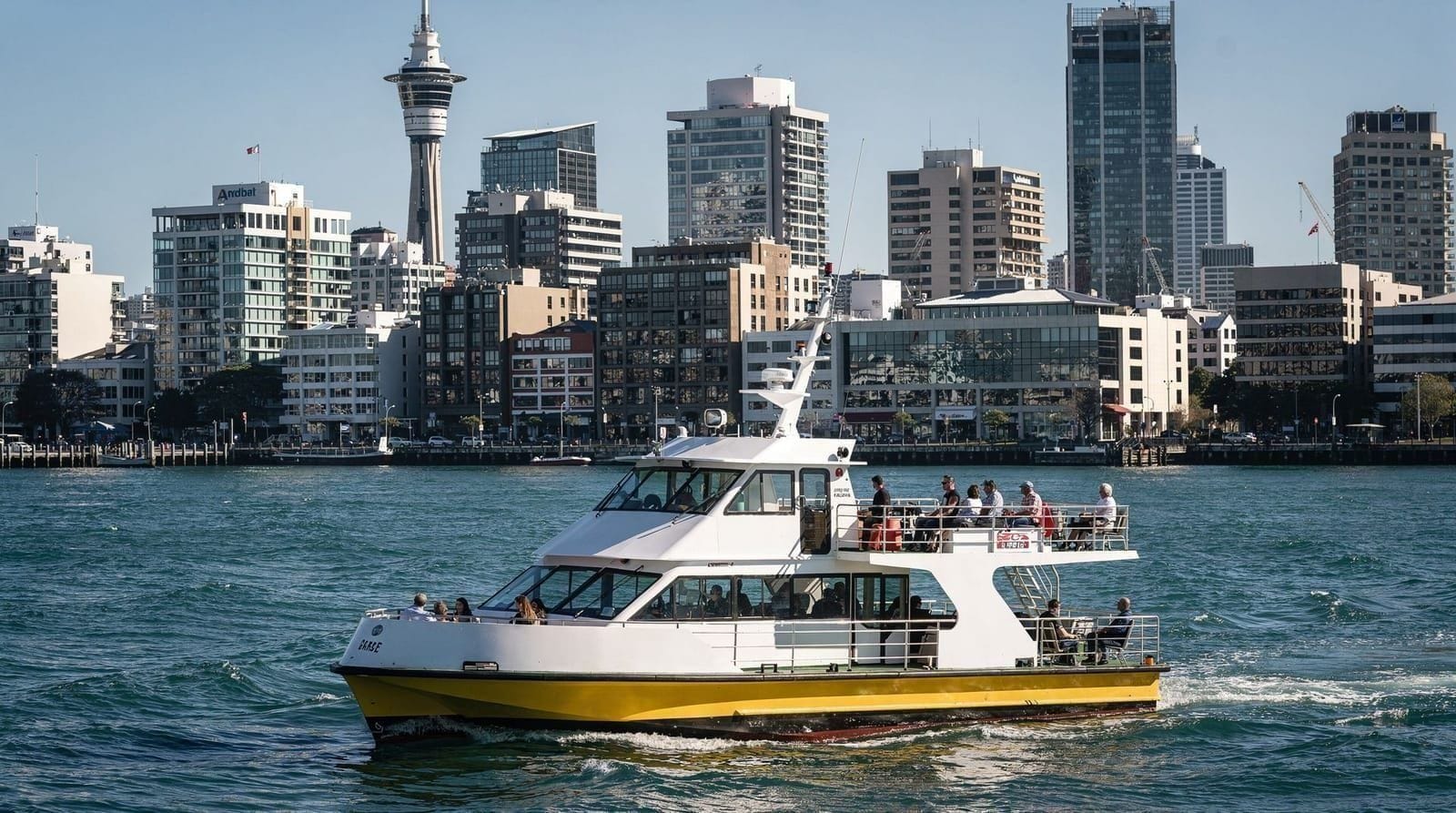
How much driving you do depends heavily on the itinerary you choose. If you’re based in the city for a few days, you may find you hardly need a car at all: our getting around Auckland guide and the AT HOP card guide show how buses, trains and ferries cover most central sights, and the Auckland ferries guide explains the harbour crossings that make a car unnecessary for islands such as Waiheke Island. Many visitors hire a car only for the days they leave town, which keeps city parking worries to a minimum.
For those day-trip days, the destinations differ a lot in how demanding the drive is. Hobbiton and Matamata and Waitomo Caves sit on straightforward state highways, so our Hobbiton day trip and Waitomo day trip guides are good starting points for a first self-drive. Rotorua is a longer run, and the Rotorua day trip from Auckland guide helps you decide whether to do it in one day or stay over. If you would rather spend the day looking at the scenery, the best day trips from Auckland guide compares your options.
Reading a few real-world accounts before you go also helps set expectations. Our New Zealand road trip tips article collects practical advice from the road, and the North Island 7-day loop itinerary shows how the stretches fit together if you want a longer drive with sensible stops. Finally, Cathedral Cove and Hahei is a good example of a destination where parking and the final approach road deserve a little forward planning, so build in time rather than rushing it.
Frequently asked questions about driving in New Zealand
Which side of the road do you drive on in New Zealand?
The left, same as the UK, Australia and Japan. Visitors from right-hand-drive countries like the USA, most of Europe and much of Asia typically need a day or two to fully adjust, particularly at intersections and roundabouts.
Do I need an international driving permit for New Zealand?
Most visitors can drive on their home country licence, valid for up to 12 months, provided it’s in English. If it isn’t, an International Driving Permit or an official translation is required alongside your original licence.
What is New Zealand’s give-way rule?
At uncontrolled intersections, traffic turning right must give way to oncoming traffic turning left across their path — a rule that catches out many visitors since it differs from give-way conventions in several other countries. When in doubt, slow down and give way.
What is a one-lane bridge and how do you use one?
A single-lane bridge, common on rural North Island routes, where traffic from one direction must give way to the other, indicated by signage (a red arrow means give way, a black arrow means you have right of way). Approach slowly and be prepared to stop if another vehicle is already on the bridge or has priority.
Are New Zealand roads dangerous for visitors?
New Zealand’s road toll is higher per capita than many visitors expect, often linked to narrow, winding rural roads, changeable weather, and driver unfamiliarity rather than poor road engineering. Driving to conditions, respecting posted speeds on winding sections, and taking rest breaks on longer drives meaningfully reduces risk.
What’s the speed limit in New Zealand?
The open road limit is generally 100km/h on state highways, with lower limits (usually 50km/h) through towns and urban areas, and variable limits on some winding or high-risk sections. Speed limit signage is consistent and easy to follow.
Is it worth renting a car versus taking guided tours in New Zealand?
It depends on your itinerary and comfort with unfamiliar roads. Self-driving gives more flexibility and often costs less for groups of three or more, while guided tours remove the stress of navigation and left-hand driving entirely, which particularly suits solo travellers or those short on time. See our self-drive vs tour comparison for a full breakdown.
Do I need to reduce my rental car’s insurance excess?
It’s strongly worth it. Standard rental excess in New Zealand often runs NZD 2,000-3,000, payable even for a no-fault incident, so most visitors reduce it via the rental company’s own cover, a credit card’s travel insurance, or a third-party excess-reduction policy before driving away.
Is fuel expensive in New Zealand?
Petrol and diesel prices tend to run higher than many visitors’ home countries, and it’s worth factoring into a self-drive budget alongside rental fees. EV rentals are increasingly available, with a reasonably reliable fast-charging network on main highways, though rural gaps exist.