Auckland to Rotorua: a 3-day itinerary
Rotorua: Whakarewarewa village guided tour
Rotorua deserves more than a rushed day trip. This itinerary spends one day getting there and settling in, one full day on geothermal parks and Māori cultural experiences, and a final morning wrapping up before the drive back — giving Rotorua the two nights it needs to actually breathe, rather than the more common (and more exhausting) single-day round trip from Auckland. A rental car or an organised tour both work; the drive is 2.5–3 hours each way via State Highway 1 and 5.
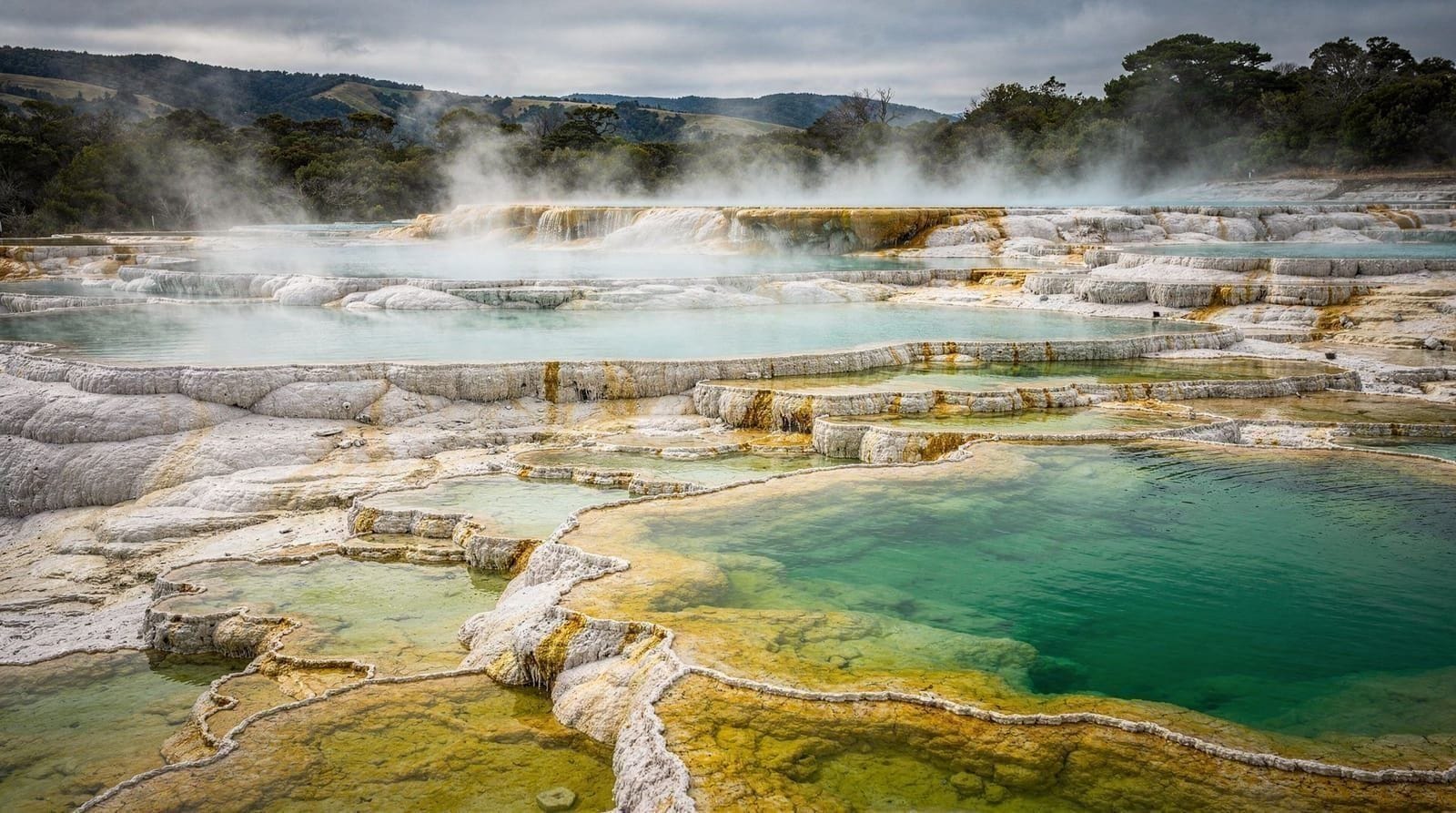
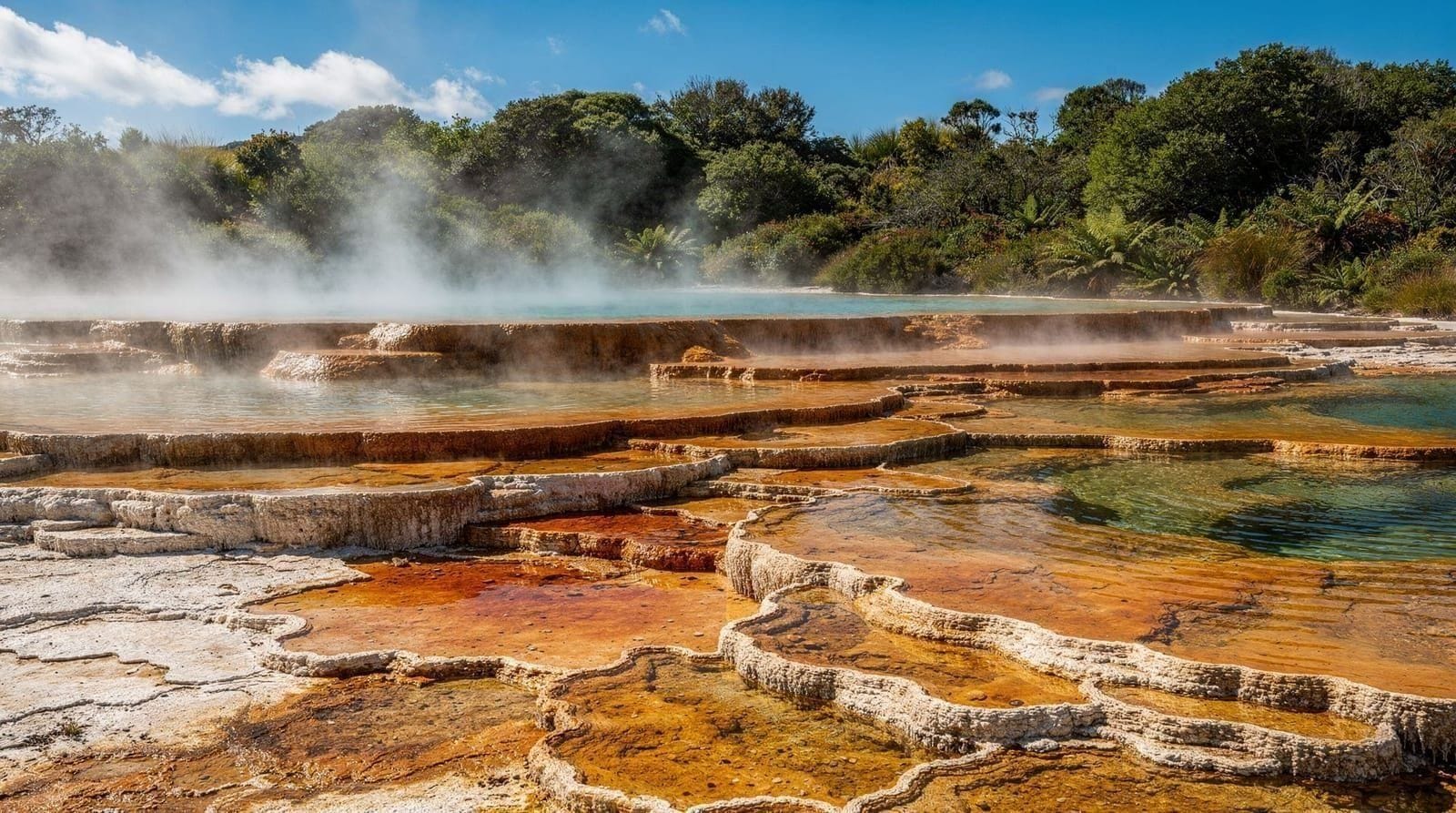
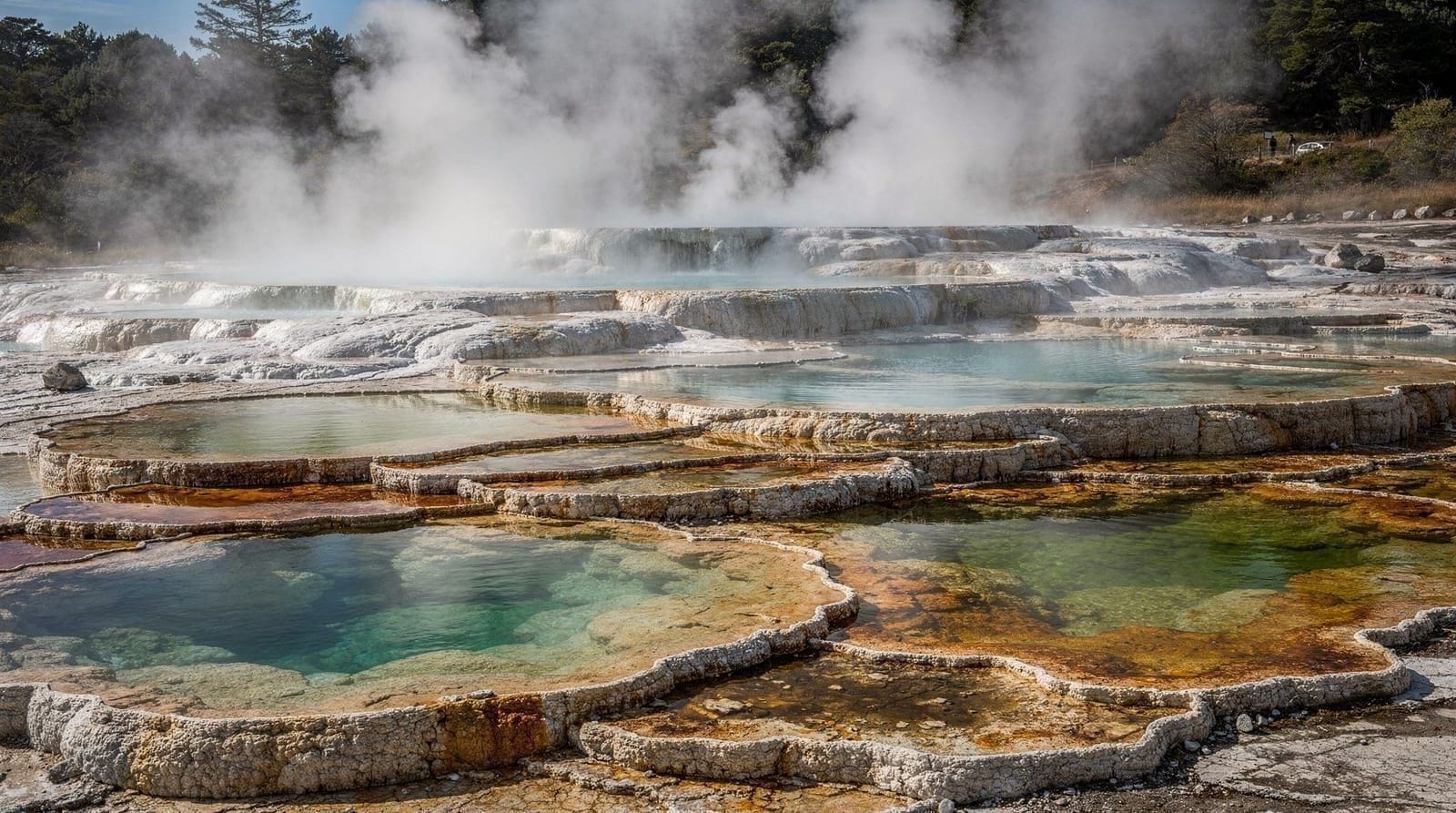
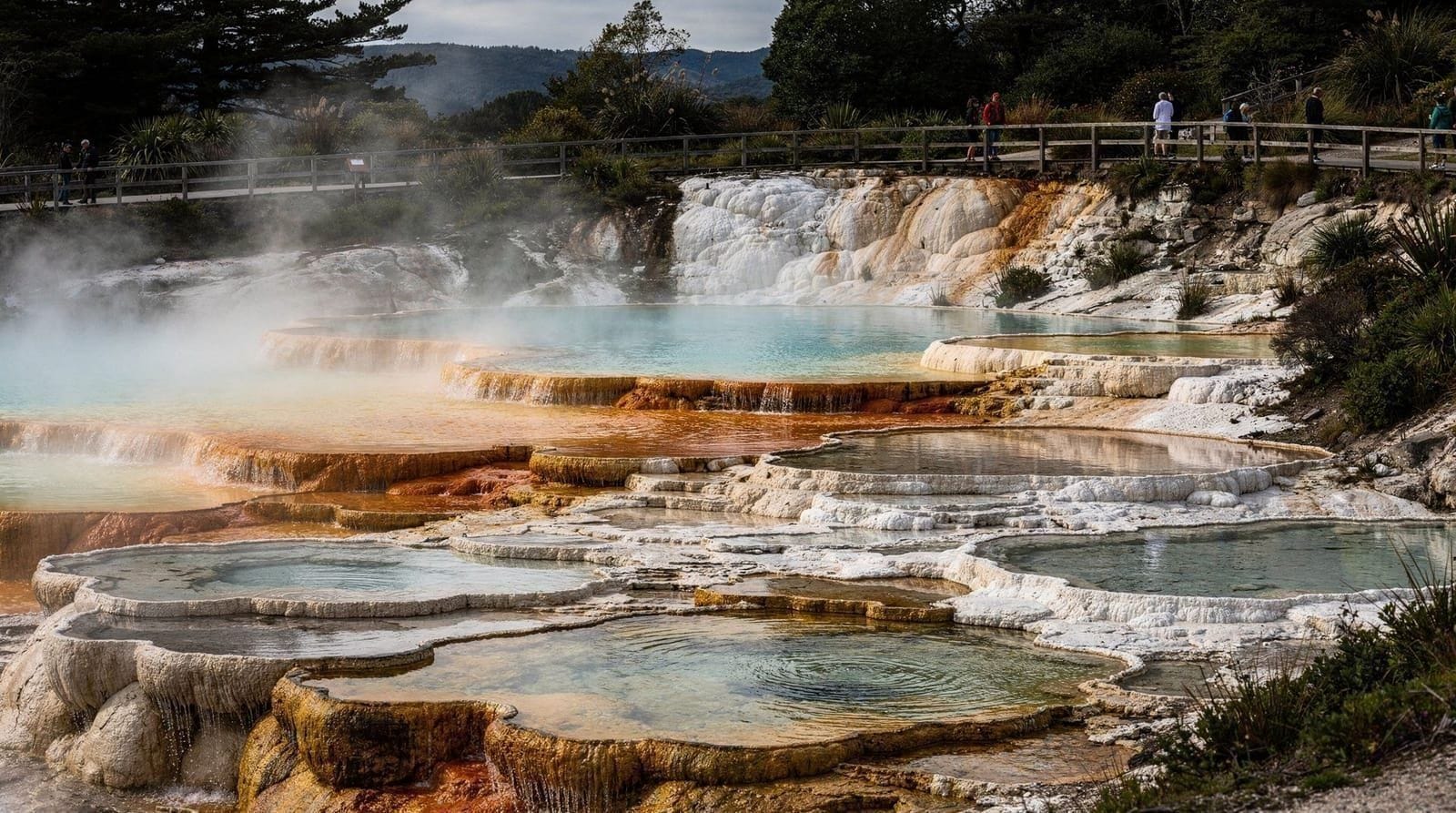
Rotorua sits on one of the most geologically active landscapes on Earth, part of the Taupō Volcanic Zone that stretches from White Island in the Bay of Plenty down through Lake Taupō. That intensity — bubbling mud pools, steaming vents, and geysers erupting on cue — is genuinely hard to appreciate properly on a single rushed day, which is exactly why this itinerary gives it a full two nights instead.
| Where | Rotorua, via optional Hobbiton stop |
| Cost | around NZD 575–840/person (excl. accommodation) |
| Time needed | 3 days, 2 nights in Rotorua |
| Getting there | self-drive (2.5–3hrs) or organised tour |
| Best time | year-round; shoulder season for walking comfort |
How this three-day itinerary works
Day one is a travel day with a stop at Hobbiton if you have not already been (or a direct drive if you have). Day two is Rotorua’s headline day: a geothermal park in the morning, a Māori cultural evening with hangi in the evening. Day three is a relaxed morning before heading back to Auckland. If you would rather do Rotorua as a single very long day, see Rotorua day trip from Auckland — but this three-day version is considerably less rushed and lets you actually enjoy Rotorua’s geothermal spas in the evening rather than driving straight past them exhausted.
Day 1: drive to Rotorua
Morning: leave Auckland
Depart the Auckland city centre by mid-morning; the drive south on State Highway 1 takes 2.5–3 hours depending on traffic through Hamilton. Fuel up before leaving — petrol runs NZD 2.20–2.50/litre and options thin out on the more rural stretches south of Hamilton.
Afternoon: optional Hobbiton stop
Hobbiton sits roughly on the route between Auckland and Rotorua, making it a natural stop if you have not already visited. Book a combined Hobbiton and Rotorua tour if you would rather not self-drive both legs, or see our Hobbiton day trip guide for a self-drive version. If Hobbiton does not interest you, continue straight through and arrive in Rotorua by early afternoon instead, leaving time to settle in and explore the town centre before dinner.
Evening: arrive and settle in
Check in to your Rotorua accommodation and take an easy first evening — Rotorua’s sulphur smell (from its geothermal activity) is noticeable on arrival but fades from awareness within a day, something almost every first-time visitor comments on and then quickly forgets about. A casual dinner in the town centre, which has a solid range of restaurants for a town this size, is a good low-key start; Eat Streat, a covered dining precinct near the lakefront, is a reliable option for a relaxed first-night meal.
Day 2: geothermal parks and Māori culture
Morning: geothermal park
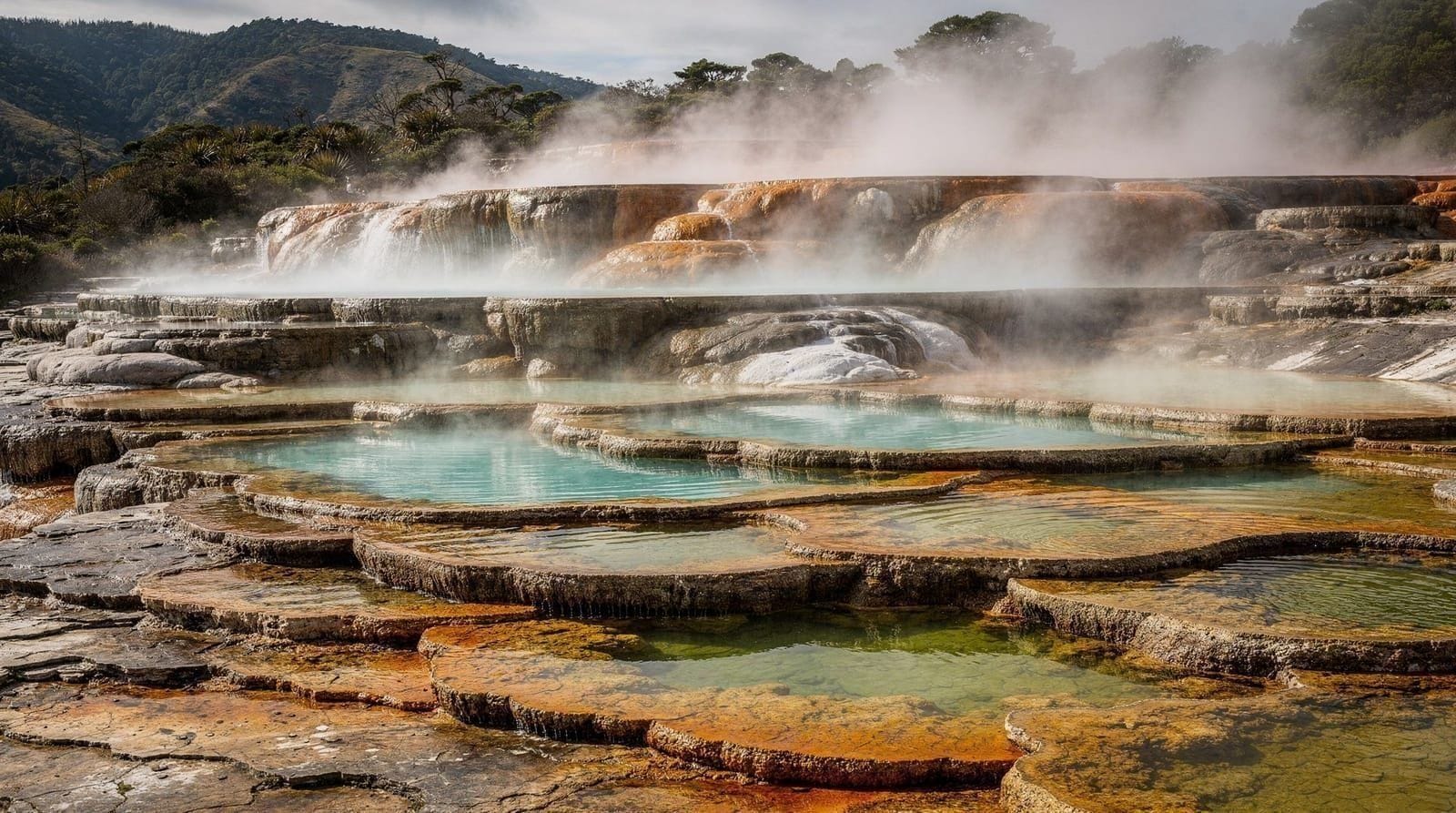
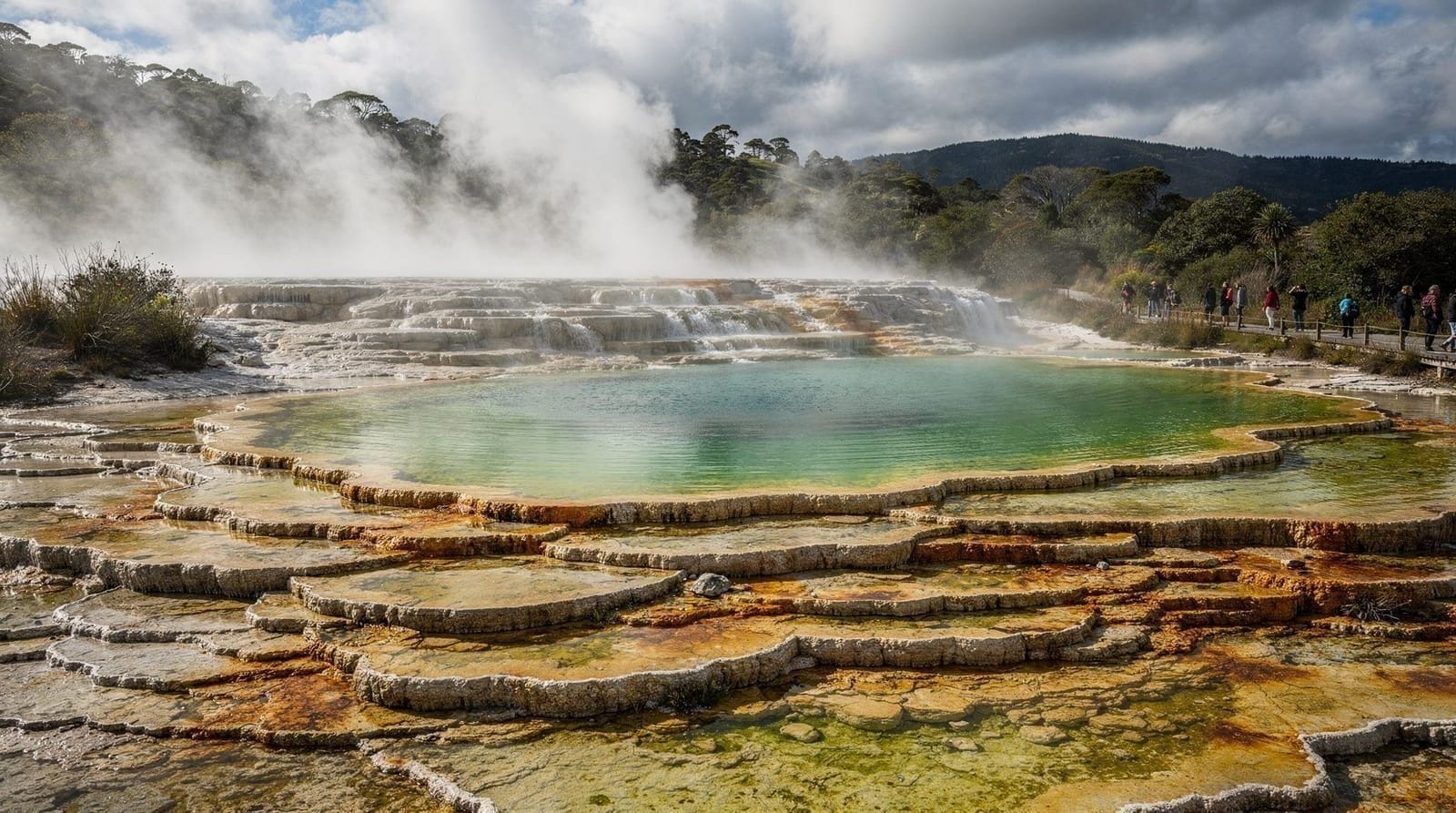
Rotorua sits on one of the most active geothermal fields in the world, and choosing the right park matters — our Te Puia vs Wai-O-Tapu comparison breaks down which suits your interests best. Book the Wai-O-Tapu geothermal wonderland tour for the widest range of colourful thermal pools and the famous Lady Knox Geyser eruption (typically 10.15am daily), or see our Rotorua geothermal explained guide for the science behind what you are seeing — the vivid colours across pools like the Champagne Pool come from mineral deposits (sulphur, antimony and arsenic compounds) rather than any artificial treatment.
Afternoon: Skyline gondola or Redwoods
If you have energy left after the geothermal park, the Skyline gondola offers sweeping views over Lake Rotorua and the Bay of Plenty, plus a luge track that is genuinely fun for all ages. Alternatively, the Redwoods Whakarewarewa Forest treewalk is a gentler, shaded option after a morning spent in the heat of a thermal park — a network of suspended walkways strung through a century-old Californian redwood plantation that feels almost otherworldly by late afternoon light.
Evening: Māori cultural experience and hangi
Close the day with a proper Māori cultural evening — book the geothermal hangi and traditional Māori experience , which typically includes a welcome ceremony (pōwhiri), cultural performance with haka and waiata, and a hangi feast (food cooked in an earth oven using geothermal or traditional methods). This is one of the most substantial, respectfully presented Māori cultural experiences available in New Zealand — read our Māori experiences in Rotorua guide and respectful Māori tourism piece beforehand for context on tikanga (customs) you will encounter, including appropriate etiquette during the pōwhiri and what to expect if selected as a visiting “chief” for the ceremony.
Day 3: relaxed morning and drive back
Morning: hot pools or a slow start
Rotorua’s geothermal hot pools (the Polynesian Spa is the best-known) are a genuinely good way to spend a final relaxed morning before a long drive — soaking in mineral-rich thermal water is said to ease muscle soreness, which is a fitting close after a day of walking geothermal parks and cultural sites. The Polynesian Spa’s Lake Spa complex, with pools set directly on Lake Rotorua’s shoreline, is worth the slightly higher price over the more basic public pools if this is a special part of your trip rather than an afterthought.
Midday: depart for Auckland
Leave by early afternoon to arrive back in Auckland before evening traffic builds around the city’s approach roads. If you have not visited Hobbiton yet and skipped it on day one, this is the other natural point to fit it in en route, since it adds only a modest detour to the return drive.
Evening: arrive back in Auckland
A straightforward return leaves you with an evening free in the city — a good time for a relaxed dinner rather than another packed itinerary day, and a gentle way to close out a trip that has covered considerable geological and cultural ground in a short space of time.
Who this three-day route suits
This pacing suits couples, culture-focused travellers and anyone who finds the standard single-day Rotorua tour from Auckland unsatisfyingly rushed — two nights genuinely change how much of the geothermal and cultural experience you absorb versus racing between a park and a hangi before an evening drive home. It suits confident drivers comfortable with 5–6 hours behind the wheel across the trip, or travellers happy to hand that over entirely to a combined tour instead. Solo travellers do particularly well here, since the cultural evening is designed around communal seating rather than private tables, and geothermal parks are equally enjoyable alone or in company.
Combining with Waitomo or Taupo
Rotorua’s position in the central North Island makes it a natural anchor for extending this trip further if three days is not the ceiling. Waitomo’s glowworm caves sit roughly on the route from Hobbiton, so travellers doing the optional day-one Hobbiton stop can add a Waitomo detour with only a modest extra driving time — see the Hobbiton and Waitomo combo guide for how this changes day one’s pacing. Taupo, about an hour south of Rotorua, is the other natural extension for travellers who want adventure activities (skydiving, jet boating) alongside the geothermal and cultural focus of this itinerary — see Rotorua vs Taupo for how the two compare if you are deciding whether a fourth day is worth adding.
Is Rotorua worth a dedicated three-day trip?
For anyone with a genuine interest in geothermal landscapes or Māori culture, yes — Rotorua offers a concentration of both that is genuinely unmatched elsewhere in New Zealand, and the extra time this itinerary allows makes a real difference to how much you get to absorb rather than just tick off. Visitors purely chasing photo opportunities with limited time may find the shorter Rotorua day trip from Auckland sufficient instead, though most who have done both report the three-day version leaves a considerably deeper impression, particularly around the cultural evening, which benefits enormously from not being rushed straight afterward into a long drive home.
Getting to Rotorua: driving vs flying vs organised tours
Self-driving gives the most flexibility and is the cheapest option if you are already renting a car elsewhere in your trip, but it does mean 5–6 hours of driving across the three days. Domestic flights (Auckland to Rotorua, roughly 45 minutes) exist but are rarely cost-effective for such a short distance once airport transfers are factored in, and you would still need transport once in Rotorua itself. An organised combined tour handles all transport and often bundles in Hobbiton, geothermal park entry and the cultural evening into a single upfront price, which suits travellers who would rather not manage several separate bookings. See Auckland to Rotorua transport for the fuller comparison.
What to pack for this trip
Comfortable, closed walking shoes matter for the geothermal park (some paths are uneven boardwalk over active thermal ground) and the Redwoods treewalk. A swimsuit is essential if you plan to visit the Polynesian Spa on day three. Layers help, since Rotorua’s inland climate swings more between day and night temperatures than coastal Auckland, and a light jacket is worth having for the evening cultural experience, which often includes some time outdoors during the welcome ceremony regardless of season.
Where to stay for this three-day trip
Stay in central Rotorua for both nights on days two and three — it puts you within walking distance of restaurants and close to most geothermal parks and cultural venues, many of which offer hotel pickup. Auckland accommodation is only needed for the night before departure and after return, if at all, since most travellers doing this itinerary fly in and out of Auckland on the same day as the drive.
Central Rotorua, near the lakefront and Eat Streat precinct, has the best concentration of mid-range hotels and motels, typically NZD 150–250 a night for a comfortable double. Lakeside properties command a premium (NZD 250–400) but offer genuinely striking views over Lake Rotorua, particularly at sunrise when mist often sits over the water. Budget travellers can find backpacker accommodation scattered through the town centre, generally NZD 30–45 for a dorm bed.
A handful of Rotorua properties have their own private geothermal hot pools on-site, which is worth seeking out specifically if soaking is a priority for you beyond the single Polynesian Spa visit built into day three — it turns what would otherwise be a single scheduled activity into something available any time across both nights.
What if it rains?
Rotorua’s geothermal parks and cultural evening both work regardless of weather — Wai-O-Tapu’s boardwalks are covered enough to manage light rain, and the hangi and cultural performance are typically held in a purpose-built indoor venue. The one exception is the Redwoods treewalk, which is more pleasant in dry conditions but not unsafe or unworkable in drizzle. If a full day of rain is forecast, the Polynesian Spa becomes an even better use of time than usual — soaking in warm mineral pools in the rain is, if anything, a more atmospheric experience than doing so on a clear day.
Local tips for this trip
Book the Lady Knox Geyser viewing at Wai-O-Tapu for the very start of your visit — the geyser is triggered (with a small amount of biodegradable soap, a practice dating back over a century) at a fixed time each morning, and arriving just before ensures a good viewing position before the boardwalks fill with the day’s tour groups. If your cultural evening includes a pōwhiri (formal welcome), listen for instructions on selecting a “chief” from your group beforehand — this is a genuine part of the ceremony and being prepared to participate respectfully, rather than being caught off guard, makes for a considerably better experience.
Budget breakdown: Auckland to Rotorua, 3 days
| Item | Cost (NZD) |
|---|---|
| Rental car (3 days) or combined tour | $120–240 or $250–350 (tour) |
| Wai-O-Tapu geothermal park | $55–70 |
| Skyline gondola | $45–55 |
| Māori cultural evening + hangi | $140–180 |
| Polynesian Spa | $35–55 |
| Meals (3 days) | $180–240 |
| Accommodation (2 nights, Rotorua) | $300–500 |
| Total per person (excl. accommodation) | $575–840 |
See Auckland to Rotorua transport for a full comparison of driving versus flying versus organised tours, and is Rotorua worth it for an honest look at whether the trip earns the time and cost involved.
Frequently asked questions about this itinerary
Is three days too long for Rotorua?
Not for most visitors — a single geothermal park plus a Māori cultural evening genuinely fills day two, and having a relaxed day three (rather than a 3-hour drive straight after a packed day) makes the whole trip feel far less rushed than the common single-day version most tour operators sell.
Can I do this itinerary without a car?
Yes, using a combined day tour from Auckland for transport and booking geothermal and cultural experiences separately once in Rotorua, where many operators include hotel pickup. It is less flexible than self-driving but entirely workable, and removes any concern about navigating unfamiliar roads.
Should I visit Te Puia or Wai-O-Tapu?
They serve different purposes — Te Puia combines geothermal features (including an active geyser) with a strong Māori cultural and arts centre on-site, while Wai-O-Tapu is purely geothermal with a wider range of colourful thermal pools. See our full Te Puia vs Wai-O-Tapu comparison for which suits your priorities.
Does the sulphur smell get overwhelming to live with for two nights?
For almost everyone, no — the smell (from hydrogen sulphide released by the geothermal activity) is most noticeable right at arrival and around the parks themselves, but most visitors report it fades from conscious awareness within hours, and it is barely detectable inside most accommodation away from the most active thermal areas. It is worth mentioning to genuinely sensitive travellers in advance, but it is rarely cited as a regret by anyone who has done this three-day version.
Is Rotorua family-friendly?
Yes — the Skyline luge, Agrodome farm shows and gentler geothermal boardwalks all suit children well. See our Rotorua with kids guide for an itinerary adapted specifically for families, including which geothermal parks handle strollers best.
What is the best season for this itinerary?
Rotorua’s geothermal parks and hot pools work year-round, since the thermal activity is unaffected by season. Shoulder seasons (March–May, September–November) offer the most comfortable outdoor walking temperatures; winter mornings can be cold enough to make the hot pools especially appealing, while summer brings the warmest weather but also the busiest cultural evenings and geothermal parks.
Does the hangi cultural evening suit solo travellers?
Yes — these evenings are typically run for groups of unrelated travellers, with communal seating and a shared performance, making them a genuinely good option for solo visitors wanting company and context on Māori culture without needing to organise anything themselves.
Is it safe to walk around Rotorua’s geothermal areas independently?
Only within marked, maintained tracks at established parks like Te Puia or Wai-O-Tapu — the ground in unmarked geothermal areas can be genuinely dangerous, with thin crusts over boiling mud or water in places. Never venture off marked paths regardless of how solid the ground looks, and always follow posted safety signage at any geothermal site you visit.
How does this itinerary compare to visiting Taupo instead?
Rotorua and Taupo both sit within the same volcanic zone but offer different experiences — Rotorua leans more heavily into geothermal parks and Māori cultural tourism, while Taupo centres on its enormous lake and adventure activities like skydiving and jet boating. See our Rotorua vs Taupo comparison if you are deciding between the two for a shorter trip, though both feature together on our longer North Island 7-day loop.
Is it worth adding a spa treatment beyond the pools themselves?
Many Rotorua spas, including the Polynesian Spa, offer massage and mud-wrap treatments alongside the standard mineral pools, and it is a genuinely fitting way to close a three-day trip built around geothermal landscapes. Book any treatment in advance rather than walking in on day three, since the best slots (particularly late morning before the drive back) fill up quickly, especially on weekends when local visitors also use the spa.
Can I extend this trip to include Waitomo Caves as well?
Yes, and it is a natural add-on given Waitomo’s position roughly between Hobbiton and Rotorua — see our Hobbiton and Waitomo combo guide for how to slot a Waitomo stop into day one without significantly disrupting this itinerary’s overall pacing, though it does make for a longer first day.
Top experiences
Bookable activities with verified prices and instant confirmation on GetYourGuide.