Sky Tower SkyJump and SkyWalk: what you need to know
Auckland: Skyjump skywalk combo
What's the difference between SkyJump and SkyWalk?
SkyJump is a 192-metre wire-controlled base jump off the Sky Tower's edge, lasting about 11 seconds of freefall-style descent. SkyWalk is a harnessed walk around an open-air platform circling the tower's exterior at height, no jumping involved — a milder adrenaline experience focused on the view and the exposure.
| Where | Sky Tower, Victoria Street, Auckland CBD |
| Cost | SkyJump ~NZD 220-230; SkyWalk ~NZD 160-170; combo discounted |
| Time needed | 60-90 minutes total including briefing and gear-up |
| Getting there | Walkable from most CBD hotels |
| Best time | Morning slots for calmer wind conditions |
Two very different ways to scare yourself on the same tower
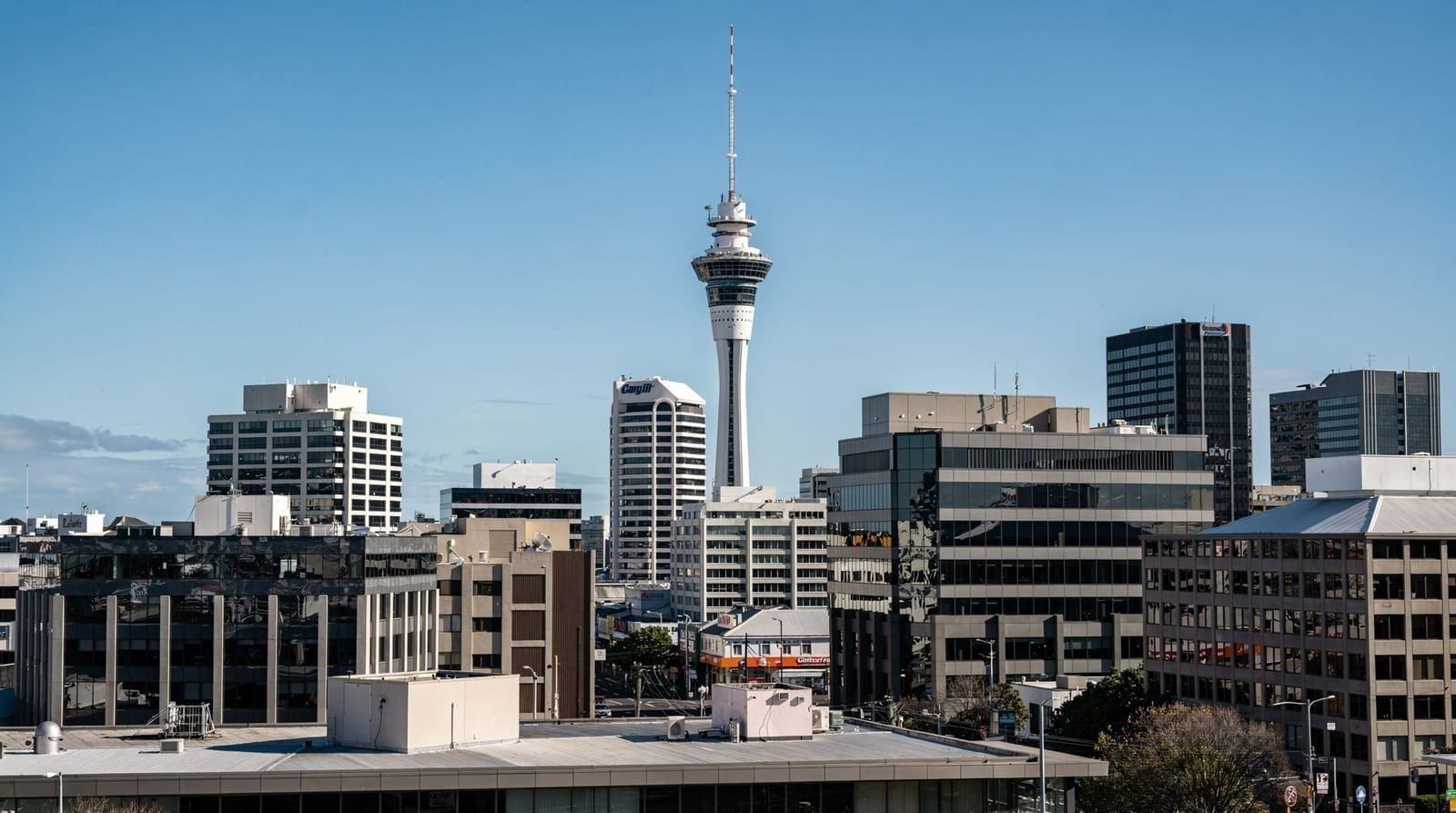
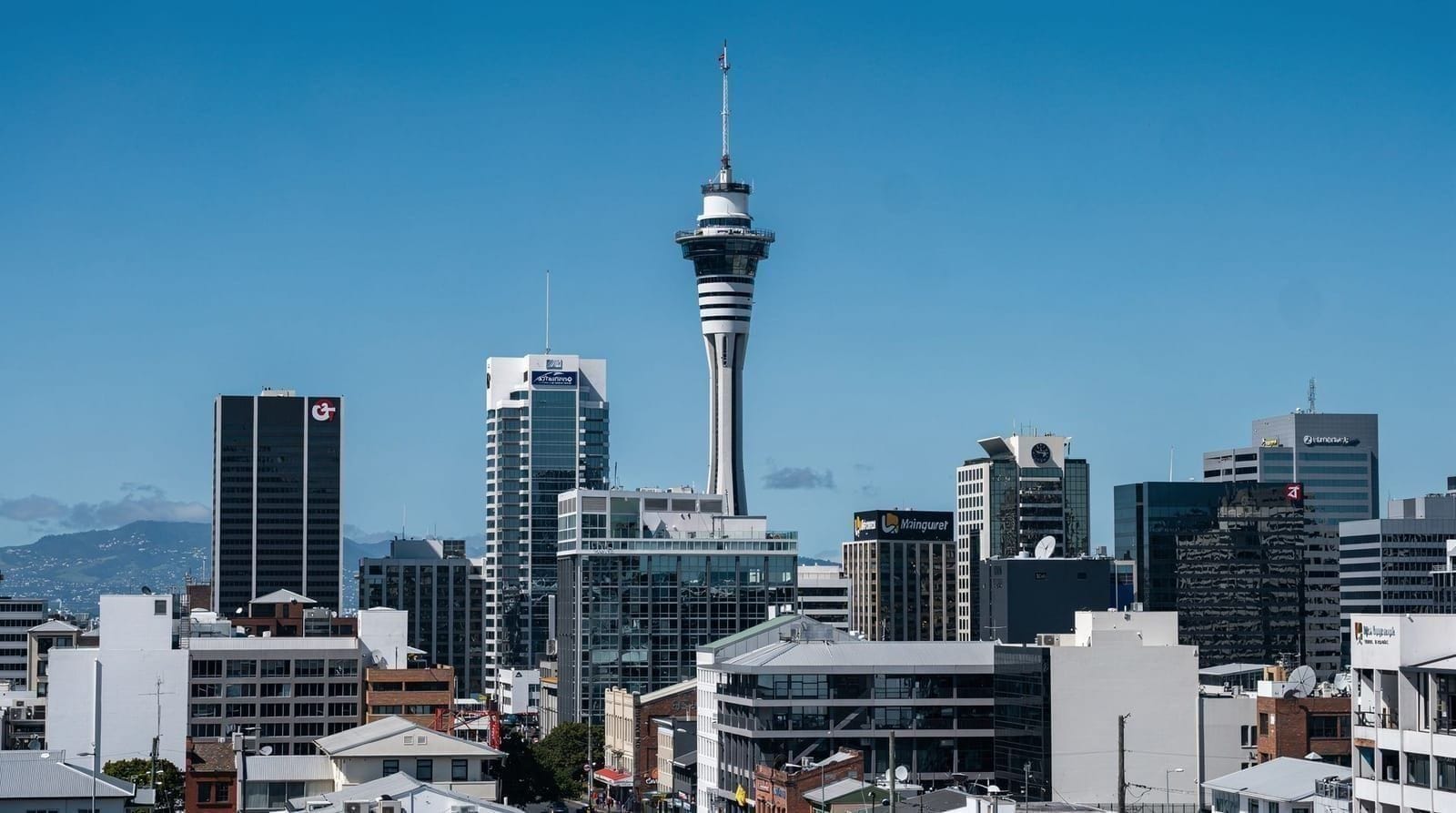
The 328-metre Sky Tower dominates Auckland’s skyline, and beyond the standard observation deck, it hosts two of the city’s signature adventure activities: SkyJump, a wire-controlled leap off the tower’s edge, and SkyWalk, a harnessed walk around an open-air platform circling the exterior. They’re often confused with each other, but the experiences are genuinely different — one is a single intense jump, the other a sustained, slower burn of exposure and height. This guide breaks down both so you can decide which (or whether both) suits your trip.
The tower’s place on the Auckland skyline
The Sky Tower opened in 1997 on Federal Street in the heart of the CBD, and at 328 metres it remains the tallest freestanding structure in the Southern Hemisphere — a fact repeated so often on tours it’s become a kind of local shorthand for civic pride. The land it sits on is part of Tāmaki Makaurau, the Māori name for the wider Auckland isthmus, which translates roughly to “Tāmaki desired by many,” a reference to the fertile volcanic land and multiple harbours that made this stretch of coastline contested territory between iwi long before European settlement. Neither SkyJump nor SkyWalk builds a formal cultural component into the experience itself, but if that broader history interests you, our Auckland history guide covers it in more depth than a jump ticket ever will.
On a clear day, the observation deck and the SkyWalk circuit both offer views stretching roughly 80 kilometres in every direction — south toward the Bombay Hills, west to the Waitākere Ranges, north across the Waitematā Harbour to the North Shore, and east over the Hauraki Gulf toward Rangitoto and the wider island chain. It’s genuinely one of the best orientation points in the city if you’re early in your trip and want to visually map out where things sit relative to each other before you start exploring on the ground — see our complete Auckland city guide for how the CBD, waterfront and inner suburbs relate to one another, and our top 25 Auckland attractions list for how the tower ranks against the city’s other major draws.
SkyJump: what actually happens
SkyJump is a 192-metre controlled descent using a cable and braking system rather than an elastic bungy cord — think of it as closer to a rapid, guided zip line straight down the side of the tower than a classic bounce-back bungy. You’re harnessed into a jumpsuit, walked out onto a small external platform, and after a countdown, step off into an 11-second-or-so descent before the braking system slows you to a controlled landing on a target pad at street level. There’s no free-fall sensation of tumbling — the harness keeps you upright and facing outward the whole way down, so the dominant sensation is speed and the view rushing past rather than disorientation.
Operators set weight limits (roughly 40-120kg) and a minimum age (usually around 10, with under-16s needing to jump with a consenting adult present), so check current requirements when booking if you’re travelling with younger family members or fall near either end of the weight range.
The sensation people describe most often isn’t fear exactly — it’s the strange lag between your brain registering that your feet have left the platform and your body catching up to the fact that you’re already falling. Because the cable system controls your speed from the very first metre, there’s none of the stomach-drop free-fall you’d get from an unrestrained jump; instead it reads more like being launched down an invisible slide at speed, face-first toward the street below, with the wind noise and the rapidly closing gap to the landing pad doing most of the work of convincing your nervous system this is real. Most first-timers say the walk out onto the external platform and the seconds before stepping off are more nerve-wracking than the descent itself, which is over quickly enough that plenty of jumpers report wanting to go straight back up and do it again.
SkyWalk: what actually happens
SkyWalk is a different kind of intense — you’re harnessed to an overhead rail and walk a loop around a narrow, open-air platform encircling the tower’s exterior at height, hands-free, no railing to hold onto in front of you. There’s no jumping involved; it’s the sustained sensation of being exposed at height with nothing but the harness system between you and the drop that makes it a genuine adrenaline activity in its own right, distinct from a jump-based rush. Guides walk the circuit with your group, pointing out landmarks and, on some tours, encouraging optional poses (leaning out over the edge) for photos.
The full circuit typically takes around 30-40 minutes including the safety briefing and gear-up, with the walk itself covering the platform at a relaxed pace rather than rushing you through — this is deliberately the slower, more contemplative of the two experiences. Groups are usually kept small, which means more one-on-one time with your guide for questions and photo opportunities, and because you’re not free-falling anywhere, it’s a viable option for visitors who want a height-based thrill without a body position (face-down, feet-first) that some find disorienting. Where SkyJump peaks and ends within seconds, SkyWalk’s intensity builds gradually as you get further from the platform door and more aware of the drop beneath the mesh flooring, which is exactly why some visitors find it the more unsettling of the two despite involving no actual jumping.
Which one should you book?
If you want a short, intense hit of adrenaline and don’t mind a genuine jump, SkyJump is the more dramatic single moment. If height exposure without an actual jump sounds more manageable, or you want more time to actually take in the view rather than a fast descent, SkyWalk suits better. Many visitors do both — the SkyJump and SkyWalk combo bundles them into a single visit and is the simplest option if you’re not sure which you’ll prefer, since it avoids paying separate tower access twice.
If you’ve decided SkyJump alone is your priority, book the SkyJump with Sky Tower entry ticket or the more basic SkyJump Auckland ticket. For SkyWalk alone, the Skywalk with Sky Tower entry ticket includes general observation deck access as well.
Prices and what’s included
Expect SkyJump to run roughly NZD 220-230 (about USD 130-140) and SkyWalk around NZD 160-170 (about USD 95-100) as standalone activities, both typically including general Sky Tower observation deck admission so you’re not paying twice for entry. Combo tickets covering both usually offer a modest discount versus booking each separately. Prices shift periodically, so treat these as a planning guide rather than a guaranteed quote — the linked booking pages show current pricing.
Safety systems
Both activities operate under New Zealand’s adventure tourism safety regulations, which require regular equipment inspection and certified operator standards. SkyJump’s cable and braking system undergoes routine maintenance checks, and SkyWalk’s harness rail system is a fixed, engineered installation rather than improvised rigging. Neither activity is risk-free — this is genuine height-based adventure tourism — but both have long operating track records under New Zealand’s adventure activity regulatory framework.
Accessibility and health considerations
Both activities require a reasonable level of mobility — you need to be able to walk to the platform, stand through the safety briefing, and in SkyJump’s case, step off unassisted, since staff can’t push you. Neither is well suited to visitors with significant mobility restrictions, and standard adventure-activity health exclusions apply: pregnancy, uncontrolled heart conditions, epilepsy, recent surgery, and severe vertigo or panic disorders are typically listed as reasons operators will decline a booking on medical grounds, both for your safety and theirs. If you have a borderline condition and aren’t sure whether you’ll be cleared, it’s worth contacting the operator directly before booking rather than finding out at check-in, since tickets are frequently non-refundable once purchased outside the standard cancellation window.
If you use a wheelchair or have limited mobility but still want the view and the height experience without the physical demands, the standard Sky Tower observation deck — covered in full in our Sky Tower guide — is fully accessible by lift and doesn’t require the same physical capability as SkyJump or SkyWalk.
Common mistakes visitors make
A few patterns come up often enough to be worth flagging before you book. First, leaving it to a same-day or last-minute booking during peak season (December-February, and to a lesser extent school holiday weeks) and finding everything sold out — both activities have hard capacity limits per hour, and popular slots fill fast. Second, scheduling SkyJump or SkyWalk as the very last thing before a flight, which turns a routine weather delay into a genuine problem if the slot gets pushed by an hour or two, or cancelled and rebooked for the next day entirely. Third, underestimating how long the whole process takes — between check-in, the safety briefing, gearing up, and the activity itself, budget 60-90 minutes total, not just the few minutes of jump or walk time.
Finally, some visitors assume a standard observation deck ticket automatically includes SkyJump or SkyWalk access; it doesn’t — they’re separate add-on activities with their own capacity and pricing, bundled with basic tower entry rather than the other way round.
Weather and cancellations
Both activities can be cancelled or delayed for high wind or severe weather, since safety margins narrow considerably at height in strong gusts. If you’re booking during a trip with limited flexibility, consider an earlier-in-your-stay slot so a weather cancellation leaves room to rebook, rather than scheduling it for your last available day.
Wind is the main disruptor — both activities have maximum wind speed thresholds beyond which staff won’t run them, since margins that are perfectly fine in calm conditions narrow quickly in gusts at height. Rain alone rarely causes a full cancellation on its own (you’ll get a bit wet on the platform, but that’s manageable), though heavy rain combined with wind often does trigger a pause or stop for the day. If your slot is cancelled or delayed, operators typically offer a rebooking for later the same day if a calmer window opens, or a reschedule to another day within a reasonable window — refunds for genuine weather cancellations are standard practice, though policies vary by operator and ticket type, so read the fine print on your specific booking before you rely on it.
Is it worth it compared to just the observation deck?
Our honest take, covered in full in is Sky Tower worth it, is that the standard observation deck alone is a solid but not essential Auckland experience, while SkyJump and SkyWalk are what actually justify the premium price for adrenaline-seekers specifically — if heights and adventure activities aren’t your thing, the standard Sky Tower guide covers the deck-only experience, which is considerably cheaper. For comparison, our bungy off Auckland Harbour Bridge guide covers a genuinely different height-based adventure activity elsewhere in the city if the Sky Tower’s booking slots don’t suit your schedule.
Booking tips
Book ahead for weekend and peak summer (December-February) slots, both of which sell out regularly. Morning slots tend to have calmer wind conditions than afternoon, improving your odds of the activity actually running as scheduled. If your schedule allows, building in a buffer day before you fly out means a weather-related reschedule doesn’t cost you the experience entirely.
Budget tiers: how much should you actually plan for
How much you’ll spend depends on how many of the tower’s experiences you stack together. At the low end, a standard observation deck ticket alone runs a fraction of the adventure activity prices and gets you the view without any adrenaline component — fine if heights-with-a-harness isn’t your thing. The middle tier is SkyWalk or SkyJump individually, each in the price ranges noted above, both including deck access. The top tier is the combo ticket covering both SkyJump and SkyWalk in one visit, which costs more in absolute terms but saves against booking each separately and paying for tower entry twice. For a family of four doing the full combo, budget roughly NZD 1,400-1,600 total (about USD 830-950) — a meaningful chunk of an Auckland day, worth weighing against our broader Auckland budget guide if you’re tracking overall trip costs.
Best time of day and season to visit
Morning slots, generally before 11am, tend to have calmer wind conditions than afternoons, when thermal winds build up over the harbour and CBD as the day heats up — this matters because both activities can be paused or cancelled if wind speeds exceed operator safety thresholds.
Winter (June-August) mornings are often crisp and still, though shorter daylight hours mean fewer available slots across the day. Summer (December-February) offers the longest operating windows and the clearest long-distance views, but is also peak tourist season, meaning higher demand for the same number of daily slots — book at least several days ahead, and a week or more ahead for weekend slots in January. If you’re building a full day around it, see our Auckland in a day itinerary for how SkyJump or SkyWalk can slot into a single-day CBD-focused plan alongside the waterfront and inner-city sights.
How SkyJump and SkyWalk compare to Auckland’s other adventure activities
Auckland has no shortage of alternative ways to get your heart rate up if the Sky Tower’s booking slots don’t line up with your schedule, or if you’d rather spread adventure activities across your trip rather than stacking them all at one venue. Bungy jumping off Auckland Harbour Bridge is the closest comparison in terms of height and adrenaline, though it uses a genuine elastic bungy cord rather than SkyJump’s cable-braking system, so the sensation is meaningfully different — a bounce-back swing over the harbour rather than a controlled straight descent.
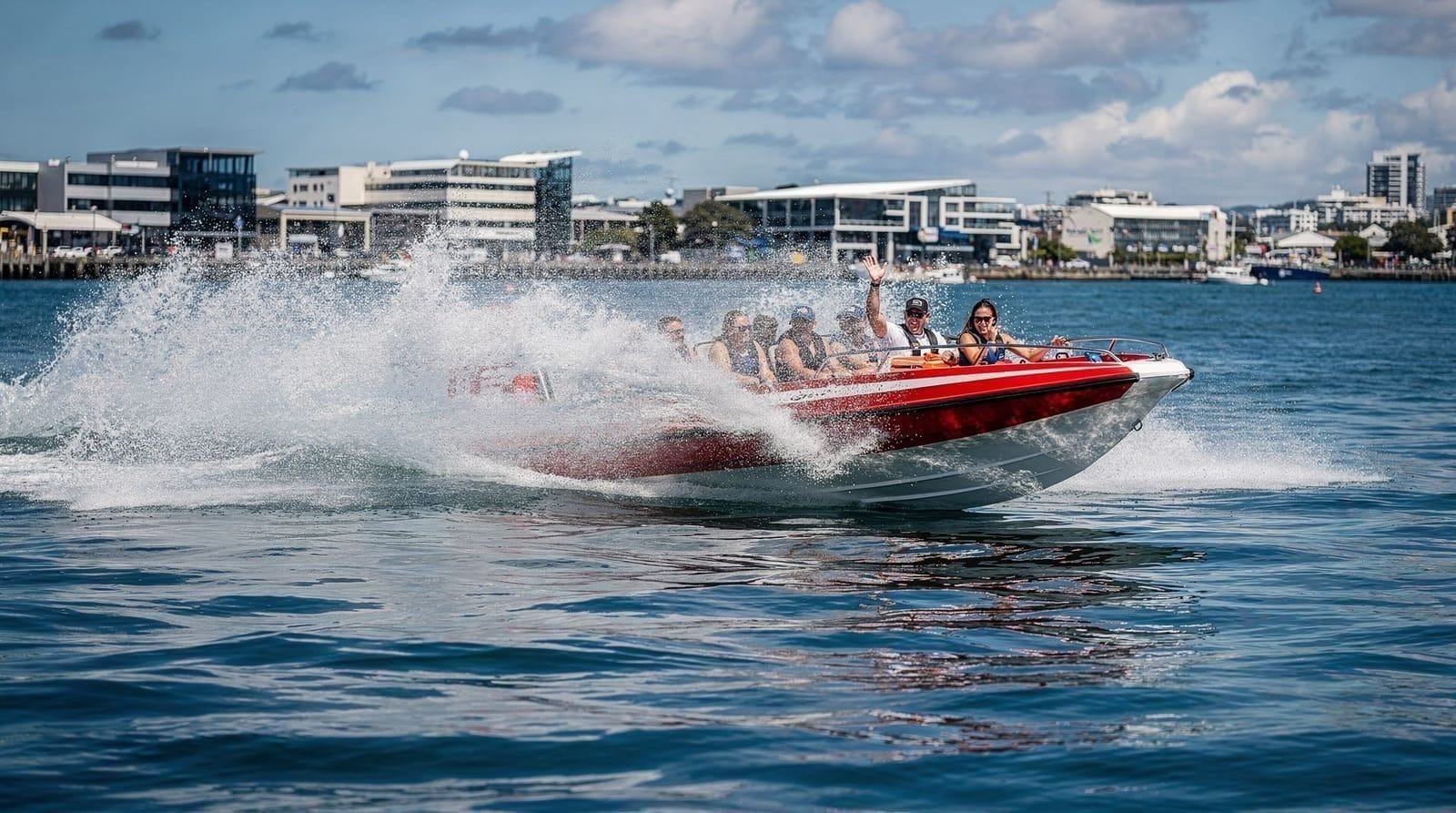
For something water-based rather than height-based, jet boating on the Waitematā delivers speed and sharp turns rather than exposure to height, and sailing on Auckland Harbour is the calmer, scenery-focused alternative if you want harbour views without any adrenaline component at all. If your trip extends beyond Auckland proper, ziplining on Waiheke Island pairs height-based adventure with vineyard scenery, and Rotorua’s broader adventure activity scene is worth considering if you’re doing a North Island loop rather than an Auckland-only trip.
Where to go afterwards
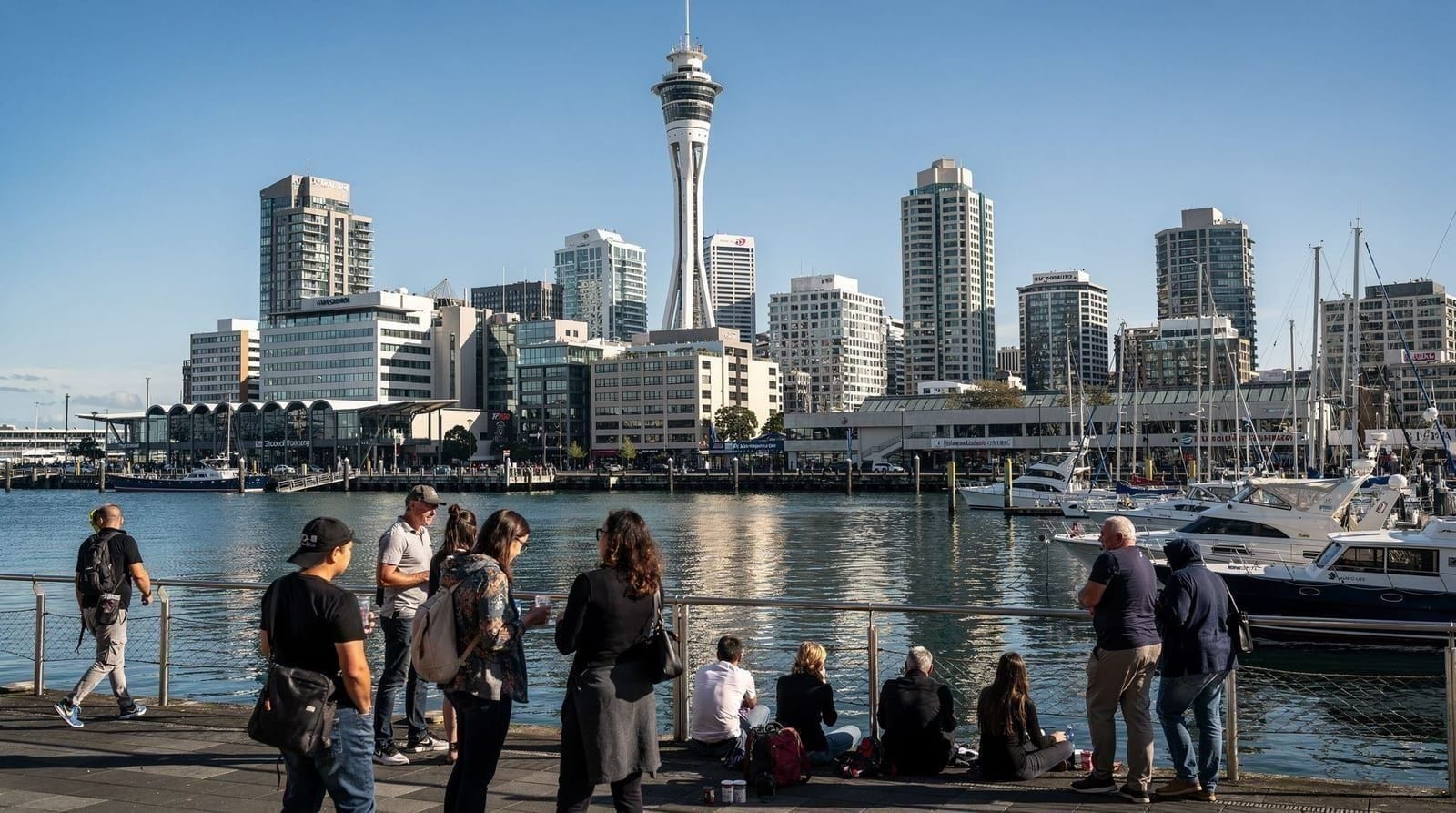
The Sky Tower sits within easy walking distance of Auckland’s waterfront precinct, so once you’ve come back down — literally, in SkyJump’s case — it’s worth building the rest of your day around the surrounding CBD rather than treating the tower as an isolated stop. Viaduct Harbour and Wynyard Quarter are a 10-15 minute walk away and offer waterfront dining and bars if you want to decompress with a meal and a view of the boats. Our broader Auckland waterfront guide covers the full stretch from the Viaduct to the ferry terminals if you want to keep exploring on foot. For something calmer and indoors, the Auckland Museum is a short taxi or rideshare from the CBD and makes a sensible lower-adrenaline pairing for the rest of the day.
What to do with glasses, hats and other loose items
Both activities require securing or leaving behind loose items — hats, sunglasses on a loose strap, jewellery and phones — before you’re harnessed, since anything that can fall becomes a genuine hazard from that height. Free lockers are provided at check-in for exactly this purpose. If you wear glasses, ask staff about a retention strap; most operators can supply one, but it’s worth mentioning at check-in rather than assuming it’s automatic.
Frequently asked questions about Sky Tower SkyJump and SkyWalk
Is SkyJump actually a bungy jump?
No — SkyJump uses a wire-controlled cable system (similar to a zip line descent) rather than an elastic bungy cord, so there’s no bounce. You descend at a controlled speed and land on a target pad.
How high is the Sky Tower?
328 metres total, with the SkyJump and SkyWalk platforms situated around the 192-metre mark on the tower’s observation deck level.
Is there a weight or age limit for SkyJump?
Yes — operators set minimum and maximum weight limits (roughly 40-120kg) and a minimum age (usually around 10, with under-16s needing an accompanying adult). Check current limits when booking since they can be adjusted.
Do I need to book SkyJump or SkyWalk in advance?
Booking ahead is strongly recommended, especially for weekend and summer (December-February) slots, which sell out. Walk-up availability exists but isn’t reliable in peak periods.
Is SkyWalk scarier than SkyJump?
Most visitors find SkyJump more intense in the moment (the actual jump) but shorter, while SkyWalk’s fear factor is more sustained — you’re walking on an open platform at height for the full circuit, which some find more unsettling than a quick jump.
What should I wear for SkyJump or SkyWalk?
Operators provide jumpsuits over your clothes, so wear comfortable clothing underneath and closed-toe shoes. Loose items like hats, jewellery and phones need to be secured or left behind per the safety briefing.
Can you do both SkyJump and SkyWalk in one visit?
Yes — combo tickets exist and are the practical choice if you want to do both, since separate visits mean paying tower entry twice.
What happens to my phone, glasses or hat during SkyJump or SkyWalk?
Loose items must be secured or left in a free locker provided at check-in, since anything that could fall is a genuine hazard from that height. Ask staff about a glasses retention strap if you wear glasses.
Are there medical restrictions for SkyJump or SkyWalk?
Yes — standard exclusions typically include pregnancy, uncontrolled heart conditions, epilepsy, recent surgery and severe vertigo or panic disorders. Contact the operator directly if you have a borderline condition before booking.
Top experiences
Bookable activities with verified prices and instant confirmation on GetYourGuide.