Piha and Waitakere Ranges day trip from Auckland
Auckland: Piha beach rainforest mount eden private tour
How far is Piha Beach from Auckland and do I need to book anything?
Piha is about 45 minutes (40 km) from central Auckland by car, and no booking is needed for the beach or hiking trails — it's free, self-drive, and easily done as a spontaneous half-day trip.
The closest genuine escape from Auckland
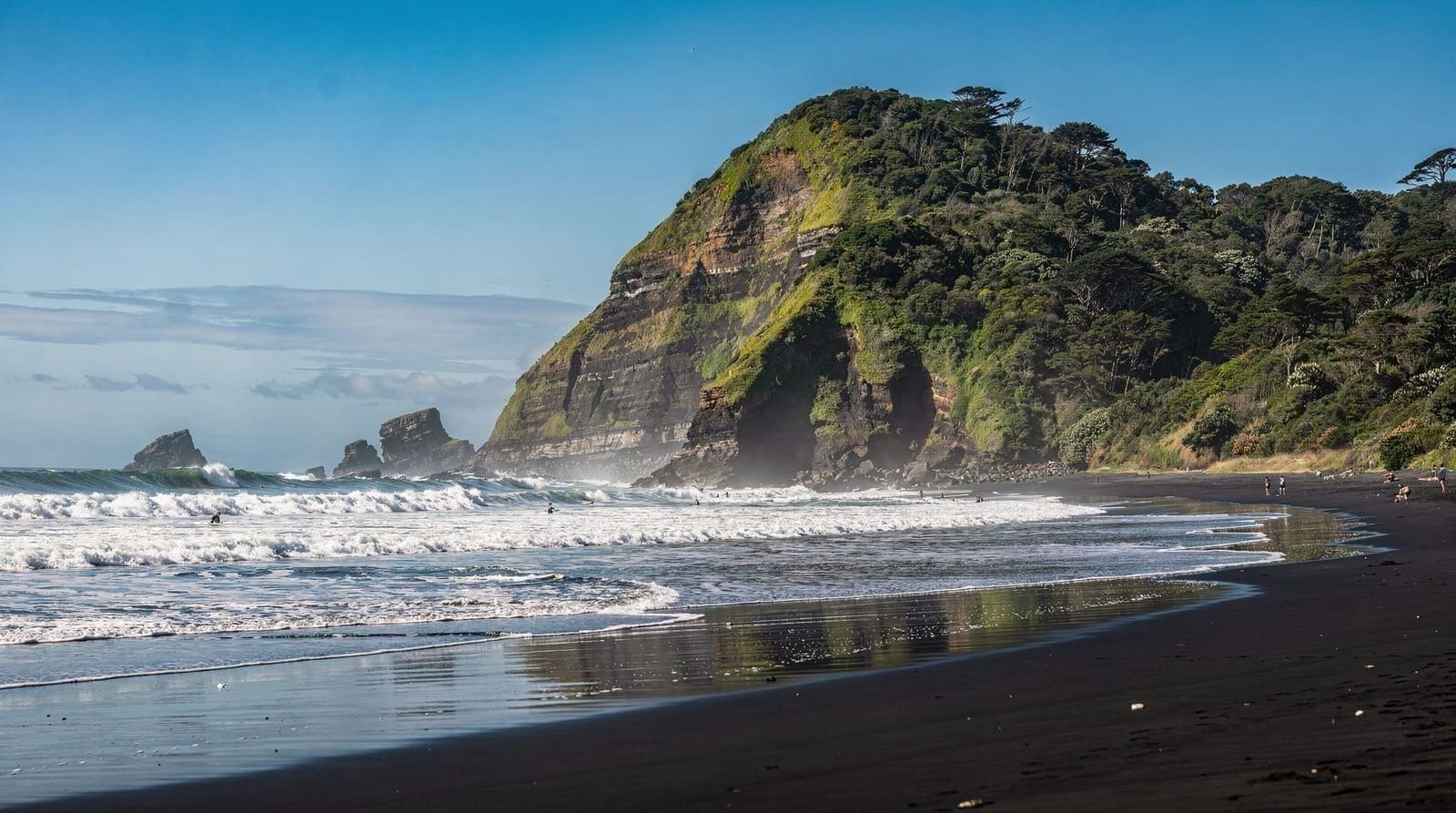
If every other day trip on this site involves a significant chunk of your day just getting there, Piha is the exception. At about 45 minutes (40 km) from central Auckland, it’s close enough to visit on a whim — no advance booking, no long highway drive, no tour to reserve weeks ahead. What you get for that short drive is a dramatic change of scenery: a black iron-sand beach backed by native rainforest hills, with a surf culture and slightly wild, unpolished character that feels a world away from the city itself.
| Where | West Auckland, Waitakere Ranges Regional Park |
| Cost | Free beach and trails; around NZD 20-25 fuel round trip |
| Time needed | Half a day (4-5 hours including Kitekite Falls) |
| Getting there | Self-drive via SH16 and Piha Road, or a shuttle transfer |
| Best time | Late Oct-Apr for swimming; year-round for the beach and walk |
Piha sits within the Waitakere Ranges Regional Park, a large area of native bush on Auckland’s west coast that also includes several other well-known beaches (Muriwai and Karekare among them) and an extensive hiking trail network.
Getting there: route and drive time
From central Auckland, Piha is reached via SH16 and then Piha Road, a scenic but winding route through the Waitakere Ranges that takes about 45 minutes in normal traffic. The road itself is sealed throughout but genuinely narrow and winding in sections as it climbs through the ranges, so a slightly slower, more attentive drive than a straightforward highway trip is worth expecting, particularly if visibility is reduced by rain or fog.
There’s limited public bus service to Piha, but it runs infrequently and isn’t well suited to a spontaneous or flexible day trip. This Piha Beach shuttle transfer from Auckland is a straightforward option if you’d rather not drive the winding Waitakere roads yourself, particularly useful for visitors not otherwise renting a car during their Auckland stay.
The beach and the surf
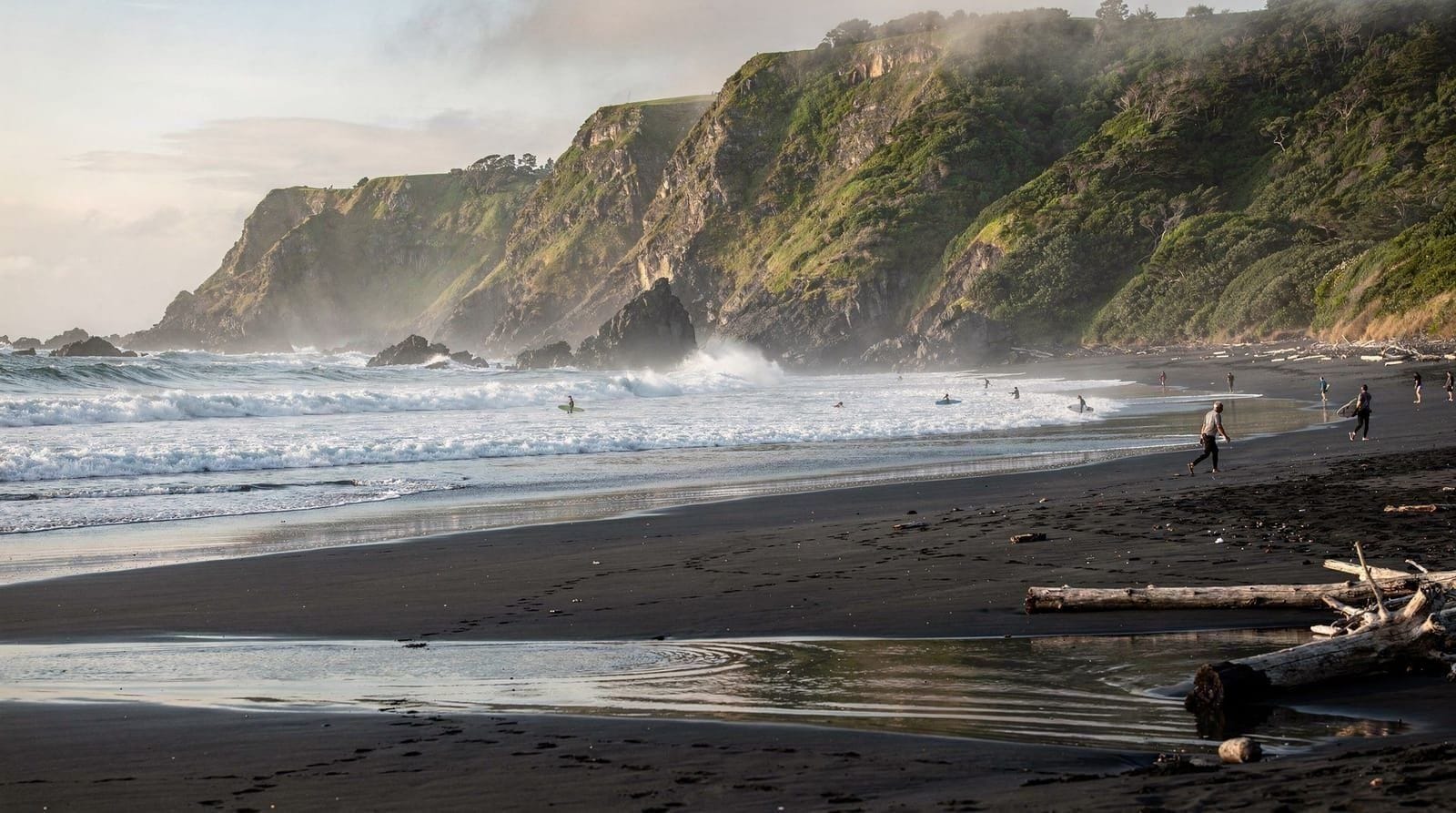
Piha’s black iron-sand beach is one of the most recognisable and photographed in New Zealand, with the volcanic Lion Rock formation dominating the middle of the beach and genuinely striking surf conditions that draw serious surfers year-round. That same surf, though, comes with real risk: strong rip currents are common, and swimming is only recommended within the flagged, lifeguard-patrolled area during patrol hours, roughly late October through April (New Zealand’s warmer months). Outside patrolled hours, or beyond the flags, the currents can overpower even strong swimmers, and Piha has a sobering history of drownings among visitors who underestimated the surf.
None of this means avoid the water — thousands of visitors swim safely at Piha every year — it just means respecting the flags and patrol hours rather than treating it like a calm swimming beach.
Hiking in the Waitakere Ranges
The Waitakere Ranges Regional Park surrounding Piha has a genuinely extensive network of native forest walking trails, ranging from short 20-30 minute loops to multi-hour hikes through dense, mature bush. The most popular short walk from Piha is the track to Kitekite Falls, a broad, multi-tiered waterfall reached via an easy, well-formed track taking about 40 minutes each way — one of the more accessible and rewarding short walks in the wider Auckland region, suitable for most fitness levels including families with older children.
For visitors wanting a longer hike, several trails climb into the ranges proper with lookout points over the coastline; our Waitākere Ranges hiking guide covers specific trail options and difficulty levels in more detail, and our Auckland hikes guide situates Piha’s trails within the wider regional hiking scene.
A realistic half-day itinerary
Leave Auckland by late morning (10-11am works well, since there’s no early booking pressure), arrive at Piha by 11-11:45am, and spend an hour or two on the beach before tackling the Kitekite Falls walk (about 1.5 hours return including time at the falls). Grab a coffee or light lunch at one of Piha’s small cafes — options are limited but sufficient for a casual meal — before heading back to Auckland by mid-to-late afternoon. This whole loop comfortably fits into 4-5 hours, making it one of the easiest half-day trips on this site to slot in alongside other Auckland sightseeing on the same day.
Combining Piha with other West Auckland stops
This private tour combining Piha Beach, rainforest and Mount Eden pairs Piha with a stop at Mount Eden, one of Auckland’s volcanic cones with panoramic city views, making efficient use of a single day if you want both a coastal escape and a city viewpoint. This Auckland highlights tour combining Mount Eden, the Botanical Gardens and Piha Beach extends this further with a garden stop, suited to visitors wanting a broader single-day sampler of Auckland’s natural attractions rather than a beach-focused visit alone.
For a deeper dive into Māori history and perspective alongside the west coast landscape, this Auckland west coast day tour with a Māori guide covers Piha and the surrounding Waitakere coastline with cultural and historical context woven through the visit, a genuinely different angle from a standard scenic day trip.
Muriwai: the alternative west coast beach
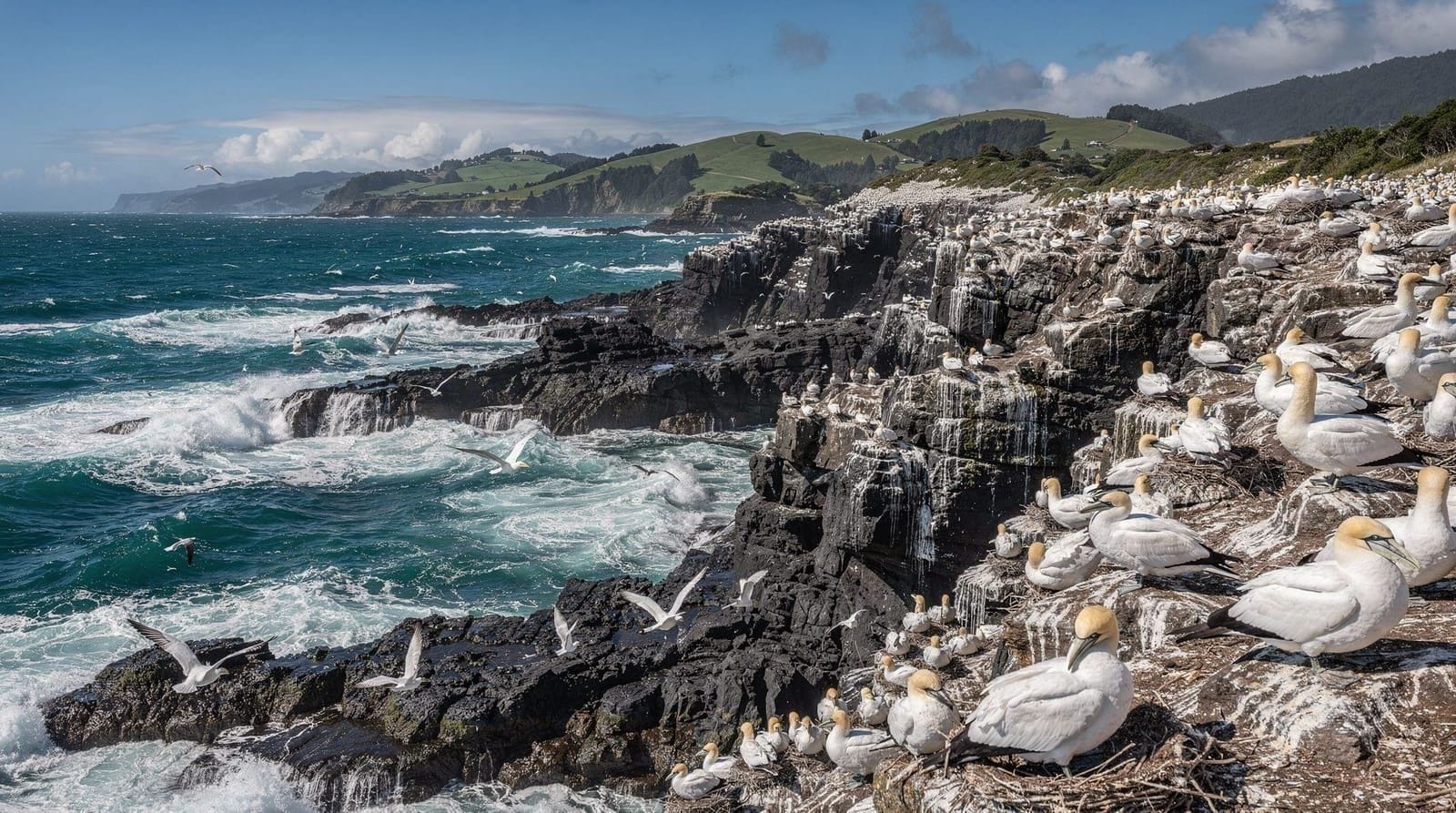
If Piha’s crowds or narrow access road put you off, Muriwai Beach, about 40 minutes from Auckland via a more direct route, offers a similar black-sand west coast experience with the added draw of a resident Australasian gannet colony, visible from a short clifftop walk. Our Muriwai destination guide covers this alternative in full, and many visitors choose between Piha and Muriwai based on whether the gannet colony or Kitekite Falls appeals more.
When to visit
Piha works year-round, though the experience shifts meaningfully by season. Summer (December-February) brings warm swimming weather and lifeguard patrols, but also the biggest weekend crowds — arriving early on a summer weekend is worth it for parking alone. Shoulder season (March-May, September-November) offers a quieter, cooler visit still well suited to the beach walk and Kitekite Falls hike, though swimming is less appealing without the summer warmth. Winter (June-August) is genuinely atmospheric at Piha — dramatic surf, moody skies, and a near-empty beach — though swimming isn’t advisable given the cold water and absence of lifeguard patrols outside the main season.
| Season | Swimming | Crowds | What to expect |
|---|---|---|---|
| Summer (Dec-Feb) | Yes, lifeguard-patrolled | Busiest, parking fills early | Warm, sunny, peak surf culture |
| Shoulder (Mar-May, Sep-Nov) | Limited, cooler water | Quiet | Comfortable walking and hiking weather |
| Winter (Jun-Aug) | Not advisable | Near-empty | Dramatic surf, moody skies, atmospheric |
For a broader sense of how Piha compares to Auckland’s other day-trip options, see our best day trips from Auckland roundup, and our Auckland beaches guide for how it stacks up against other beach options closer to the city centre.
Budget breakdown for a Piha day trip
Piha is genuinely one of the cheapest day trips on this site, since the beach and hiking trails are both free and the drive is short. Fuel for the 80 km round trip runs roughly NZD 20-25, negligible against nearly every other destination on this list. A shuttle transfer, if you’d rather not drive the winding Waitakere road yourself, typically runs NZD 60-90 per person round trip. Add a casual lunch or coffee (NZD 10-20 per person) at one of Piha’s small cafes, and a self-driving day trip for two people sharing a car totals around NZD 45-65, or roughly NZD 20-35 per person — making this comfortably the most budget-friendly full outing on this site’s day-trip list.
Piha’s surf culture and what makes it distinct
Beyond the beach itself, Piha holds a genuinely significant place in New Zealand’s surf history — it’s one of the country’s most iconic surf breaks, with a local surfing community that traces back decades and a slightly wild, unpolished character that distinguishes it from Auckland’s more manicured eastern beaches. The annual Piha Longboard Classic and other local surf events reflect this deep-rooted culture, and even non-surfing visitors often notice the difference in atmosphere compared to a more conventionally “tourist” beach — locals, dogs, and a lived-in West Auckland community feel alongside the visitors.
For anyone tempted to try surfing themselves, a small number of local instructors offer casual lessons for visitors, though this isn’t something to book last-minute given limited capacity — worth researching ahead if surfing specifically is a goal for your Piha visit rather than just sightseeing.
Muriwai’s gannet colony in more detail
If you’re weighing Piha against Muriwai specifically, it’s worth understanding what makes Muriwai’s gannet colony genuinely special: it’s one of only a few mainland-accessible gannet colonies in the world (most gannet colonies are on remote offshore islands), housing several thousand Australasian gannets during the breeding season from roughly August through March. A short, well-formed clifftop walk from the Muriwai car park brings you within close, safe viewing distance of nesting birds on the rocky outcrops below, an experience genuinely different from anything Piha offers and worth prioritising if wildlife-watching appeals more than Kitekite Falls’ forest walk. Outside the breeding season, the colony thins considerably as birds disperse out to sea, so timing matters if the gannets specifically are your priority.
Accessibility and facilities at Piha
Piha has genuinely limited facilities compared to more developed tourist beaches — public toilets near the main car park, a handful of small cafes, but no large supermarket or extensive retail. Parking around the main beach access fills up on busy summer weekends, with overflow parking along the roadside further from the beach on the busiest days. The beach itself and the main viewing areas are reasonably accessible on foot from the car park, though the surrounding hiking trails, including Kitekite Falls, involve uneven natural terrain not suited to wheelchairs or standard strollers.
Sunset at Piha
One of Piha’s most consistently recommended experiences doesn’t require any particular booking or planning: watching sunset over the Tasman Sea from the beach, with Lion Rock silhouetted against the changing sky. Because Piha faces west, unlike Auckland’s eastern beaches, it’s one of the more genuinely rewarding sunset spots within easy reach of the city, and worth timing a visit around specifically if you have flexibility in your schedule — arriving mid-to-late afternoon rather than earlier in the day, spending time on the beach and the Kitekite Falls walk, then staying for sunset before the roughly 45-minute drive back to Auckland in the early evening.
Longer hikes for experienced walkers
Beyond the accessible Kitekite Falls track, the Waitakere Ranges hold a genuinely extensive network of longer, more demanding trails for visitors with more time and hiking experience. Multi-hour routes connect Piha to neighbouring Karekare Beach (itself notable as a filming location for The Piano) and further afield to other West Auckland beaches, traversing dense native forest with significant elevation change. These longer options aren’t realistic within a single half-day Piha trip from Auckland, but worth knowing about for hikers planning a dedicated Waitakere Ranges day separate from a standard beach-focused Piha visit — see our Waitākere Ranges hiking guide for specific route recommendations at this longer end of the difficulty spectrum.
Piha in film and popular culture
Beyond its surf culture, Piha has featured prominently in New Zealand film and television, most notably as a filming location tied to the wider Waitākere Ranges’ association with Jane Campion’s The Piano, much of which was shot along this stretch of west coast. The beach’s dramatic black sand, Lion Rock’s distinctive silhouette, and the surrounding native bush have made it a recurring backdrop for local productions over the decades, contributing to its status as one of the more recognisable, photographed beaches in New Zealand despite its relatively modest size and limited infrastructure compared to more developed tourist beaches. For visitors with a specific interest in New Zealand film history, this adds another dimension to a visit beyond the beach and hiking appeal alone.
Weather patterns specific to the west coast
Auckland’s west coast, including Piha, tends to run noticeably wetter and windier than the city’s eastern beaches and the CBD itself, a result of prevailing weather systems moving in off the Tasman Sea and hitting the Waitakere Ranges first. It’s genuinely common to leave a sunny central Auckland morning and arrive at Piha to find more cloud cover or a stronger breeze than the city forecast suggested, so checking a west-coast-specific forecast (rather than a general Auckland one) the morning of your visit gives a more accurate picture than relying on conditions you see from your accommodation before setting out.
Why locals treat Piha differently from tourist beaches
Unlike many of the destinations on this site’s day-trip list, Piha has a genuine, ongoing life as a local community beach rather than existing primarily for visitor tourism — a real, if small, permanent population lives in Piha year-round, and generations of Auckland families have holidayed there long before it appeared on international travel itineraries.
This shows up in small but noticeable ways: a slightly more informal, unpolished feel than more purpose-built tourist beaches, local surf clubs and community groups that predate any tourism infrastructure, and a general sense that visitors are guests in a genuine local community rather than the primary audience the place was built for. Respecting this — parking considerately, not leaving rubbish, being mindful around residential areas near the beach access points — goes a long way toward keeping Piha the kind of place locals are happy to share.
Phone signal and connectivity
Mobile coverage around Piha and through the Waitakere Ranges is patchy, particularly on the winding stretch of Piha Road itself and in the lower parts of the Kitekite Falls track. Download or screenshot any directions, tide times, or trail maps before you leave Auckland rather than relying on live signal once you’re in the ranges, and let someone know your rough return time if you’re hiking further than the main falls track, given how easily a weak-signal area can delay a check-in message. Coverage improves again once you’re back on the main highway toward the city, so it’s a localised gap rather than a trip-wide concern.
Parking and arrival tips
Piha’s main car park sits close to the beach and Kitekite Falls trailhead, but it fills genuinely fast on summer weekends and public holidays, sometimes before midday. If you’re driving yourself, arriving before 10:30am on a summer weekend gives you a real shot at a close park; arriving mid-afternoon on a busy day may mean roadside overflow parking a longer walk from the beach. Weekday visits, or shoulder-season weekends, rarely have this problem, and it’s one more reason a spontaneous weekday trip is genuinely one of the easier ways to enjoy Piha without the crowd-management thinking a summer weekend requires.
Combining Piha with a wider West Auckland day
Beyond the tour combinations already covered, self-driving visitors sometimes extend a Piha day by adding a stop at Titirangi, the gateway village to the Waitakere Ranges, which has a small but genuinely good café and gallery scene worth a short stop on the drive in or out. It’s not a destination in itself worth a special trip, but pairing a Titirangi coffee stop with a Piha day makes efficient use of the same drive without meaningfully extending your day. Our best day trips from Auckland roundup covers how Piha compares to other similarly efficient half-day options if you’re deciding between several for the same day.
Where Piha fits in a wider Auckland plan
Because Piha asks so little of your schedule, it works well as the flexible piece of a longer stay. If you only have a short window in the city, our one day in Auckland itinerary is better spent on the waterfront and the main sights, while a slightly longer visit leaves room to swap in a west coast half-day. The 3 days in Auckland itinerary is a natural place to slot Piha in on whichever day the forecast looks best.
Weather matters more than usual here, so it helps to keep the day loose and decide the morning of your visit. Our Auckland weather by month guide gives a feel for what each season tends to bring, and our guide to driving in New Zealand is worth a read if you are renting a car for the first time and the narrow, winding Piha Road is your first taste of local roads. If you are still deciding whether to hire a car at all, our car rental in Auckland guide lays out the trade-offs.
Travelling with children? Piha’s surf and rip currents call for extra care, so our kid-friendly beaches near Auckland guide is a useful companion for choosing calmer water on the days you want a relaxed swim.
Frequently asked questions about the Piha day trip
Is Piha Beach patrolled by lifeguards?
Yes, during the warmer months, roughly late October through April, lifeguards patrol a flagged section of the beach. Outside these hours or the flagged area, swim with caution or avoid the water given the genuine rip current risk.
How long does the Kitekite Falls walk take?
About 40 minutes each way (roughly 1.5 hours return) on a well-formed, mostly flat track suitable for most fitness levels.
Can I do Piha as a spontaneous, unplanned day trip?
Yes, more than almost anywhere else on this site — no advance booking is needed for the beach, parking, or hiking trails, making it one of the few genuinely last-minute day trips from Auckland.
Is the drive to Piha difficult?
The road is sealed throughout but narrow and winding through the Waitakere Ranges, requiring a bit more attentive driving than a straightforward highway route, particularly in wet or foggy conditions.
What should I bring to Piha?
Swimwear and a towel if visiting in the warmer months, sturdy shoes for the Kitekite Falls walk, sunscreen (New Zealand’s UV is genuinely extreme even on overcast days), and a light jacket, since coastal weather can shift quickly.
Are there cafes or restaurants at Piha?
A small number of casual cafes operate in Piha village, sufficient for coffee and a light lunch, though options are limited compared to Auckland’s city cafes — this isn’t a destination with an extensive dining scene.
Can I combine Piha with Muriwai in the same day?
It’s possible, since both are on Auckland’s west coast, though the connecting road between them is longer and more winding than either individual drive from the city, so most visitors choose one or the other rather than both in a single day.
Is Piha good for a first-time visitor to Auckland without a rental car?
Yes, via a shuttle transfer or a guided tour — public bus service is too infrequent to rely on, but a shuttle or tour removes the need to navigate the narrow Waitakere roads yourself while still delivering the same beach and Kitekite Falls experience.
Where should I park at Piha?
The main car park near the beach and Kitekite Falls trailhead is closest, but it fills quickly on summer weekends; arrive before 10:30am for the best chance of a close park, or expect roadside overflow parking further out on busy days.
Top experiences
Bookable activities with verified prices and instant confirmation on GetYourGuide.