New Zealand first trip tips: what to know before you go
A first trip to New Zealand tends to go one of two ways: visitors either underestimate the distances and try to cram both islands into ten days, or they overestimate what a single Auckland-based week can cover and end up disappointed they missed Rotorua or the Bay of Islands. Neither is necessary if you plan around the actual geography and logistics. Here’s what matters most for a first trip.
| Entry | NZeTA required for most visa-waiver nationalities, apply 72hrs+ ahead |
| Cost | ~NZD 120 total for NZeTA + Visitor Levy |
| Budget | NZD 100-150/day budget to NZD 600-1000+/day luxury |
| Best time | Shoulder season (Mar-May, Sep-Nov) — comparable weather, fewer crowds |
| Car or no car | Rental car opens up Hobbiton, Waitomo, Piha; tours cover the same ground |
Sort your entry requirements early
Most visa-waiver nationalities (US, UK, EU, Canada) need an NZeTA — a New Zealand Electronic Travel Authority — applied for online before departure, not on arrival. It costs NZD 17-23 depending on how you apply, plus a mandatory NZD 100 International Visitor Levy, so budget around NZD 120 total. It’s valid for two years, but apply at least 72 hours ahead since airlines check for it at check-in. Full details in our NZeTA and visa guide.
Decide: one island or two
This is the single biggest planning decision for a first trip, and it’s worth being honest with yourself about time. The North Island (Auckland, Rotorua, Bay of Islands, Wellington) and South Island (Queenstown, fiords, glaciers) are genuinely different trips connected by an 3-hour Cook Strait ferry or a short domestic flight. Trying to do both properly in under two weeks means a lot of driving and not much time to actually enjoy each place. If this is your first visit and you have 10-14 days, we’d lean towards doing one island well rather than both islands rushed — our North Island vs South Island comparison guide lays out the trade-offs honestly.
Auckland is the practical starting point
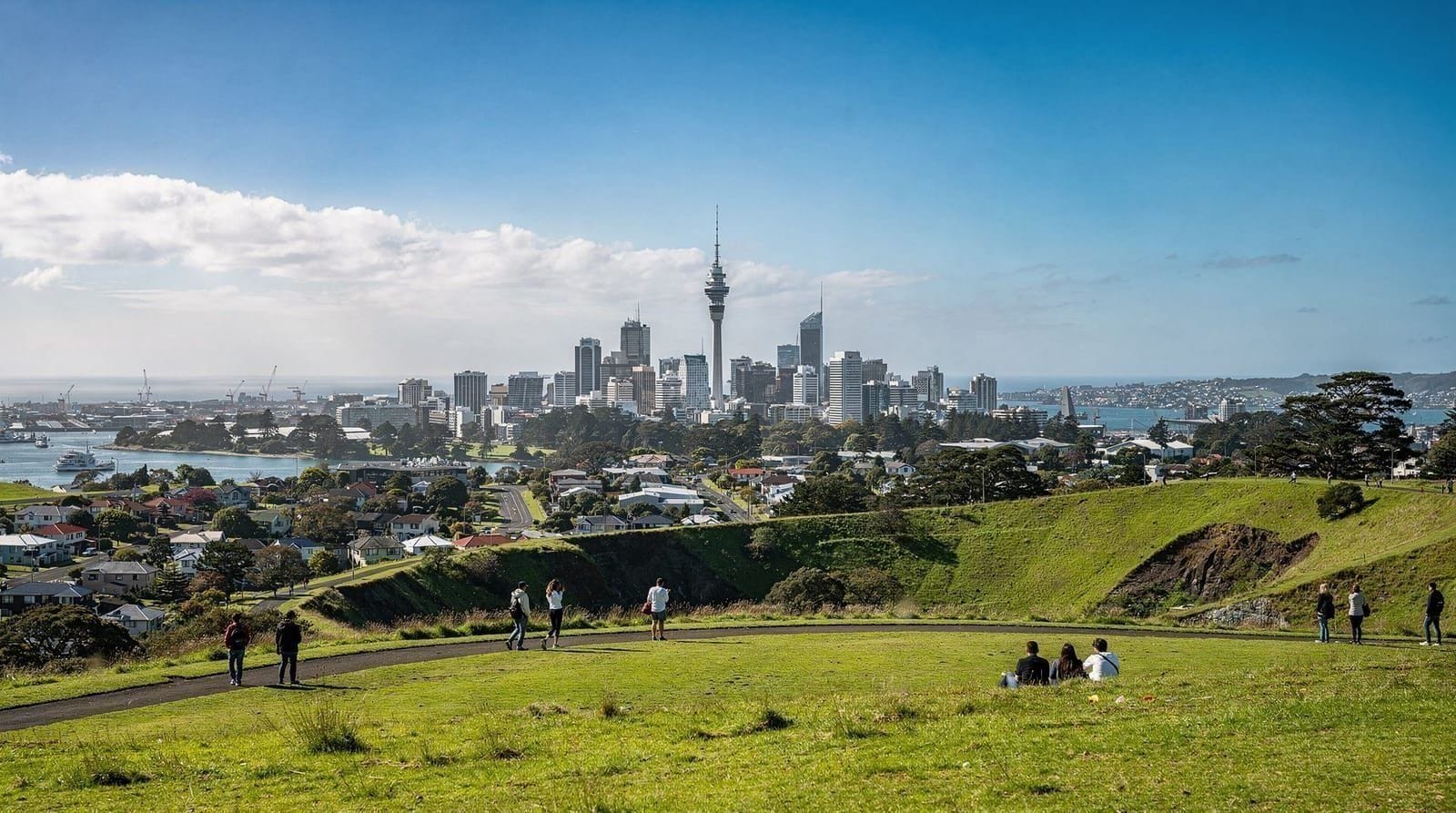
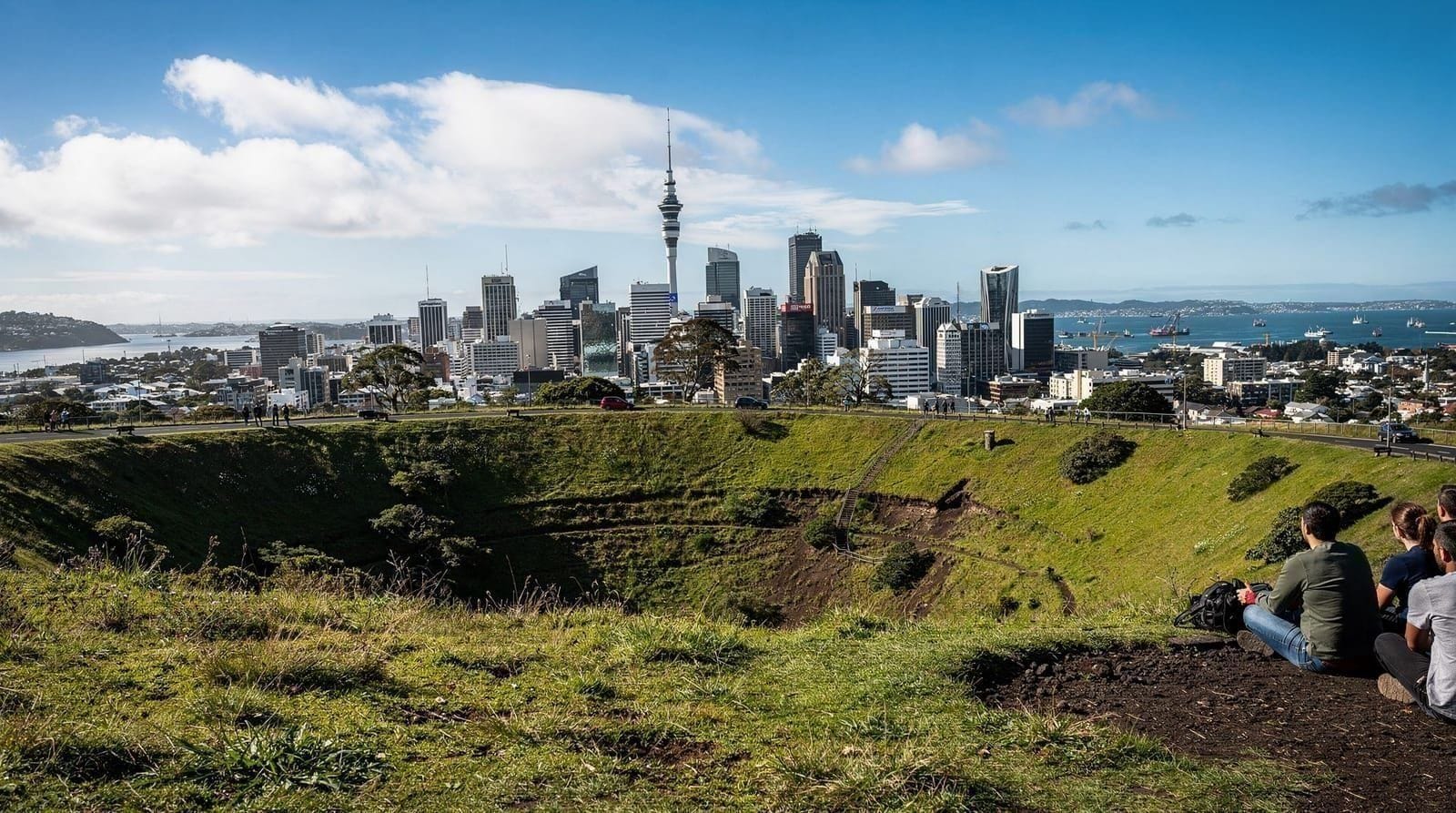
Most international flights land in Auckland, and it makes sense to build your itinerary around it as a base for the first several days regardless of where you head next. From Auckland, Hobbiton (2 hours), Waitomo’s glowworm caves (2.5 hours), Rotorua (3 hours) and the Bay of Islands (3 hours) are all realistic day trips or short overnight add-ons. Our how many days in Auckland guide covers how to structure the opening leg of a trip and set realistic expectations for the days that follow.
Budget realistically, not optimistically
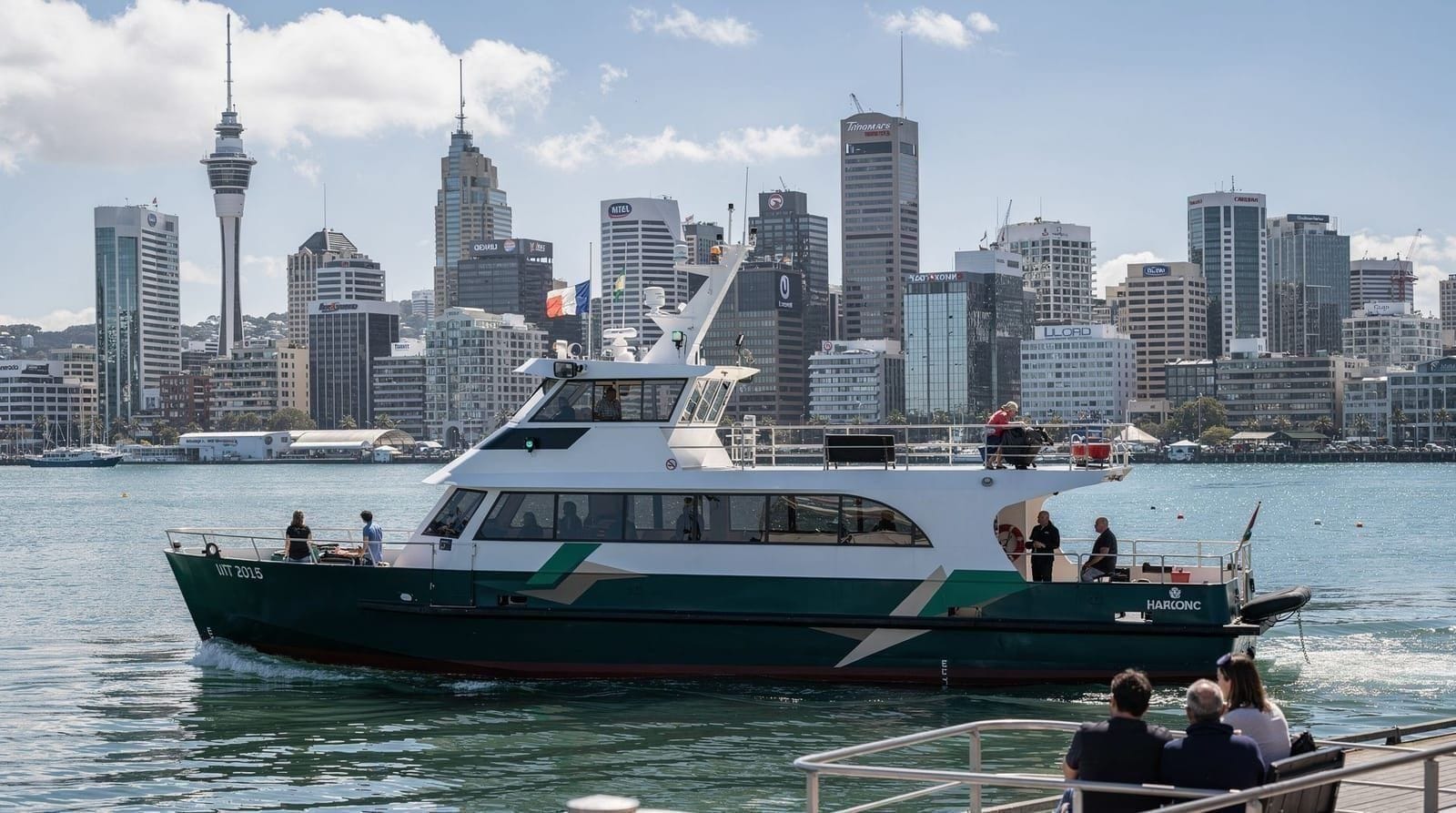
New Zealand isn’t a cheap destination, and first-time visitors often underestimate day-to-day costs. As a rough guide: budget travellers spend NZD 100-150/day, mid-range NZD 250-350/day, and luxury NZD 600-1000+/day, covering accommodation, food, transport and one activity. Big-ticket single activities add up fast too — Hobbiton runs NZD 130-145, a Waiheke ferry return is NZD 50-60, Sky Tower entry is around NZD 40. Our Auckland trip cost breakdown and Auckland budget guide go deeper on real numbers.
A rental car changes what’s possible
Public transport in Auckland and between North Island towns is workable but limited — most of the country’s best scenery and day trips (Hobbiton, Waitomo, Piha, Cathedral Cove) sit outside rail and bus networks. If your budget allows it, a rental car (NZD 40-80/day plus fuel around NZD 2.20-2.50/litre) opens up far more of the country on your own schedule. If driving on the left feels daunting, organised day tours cover most of the same ground without the responsibility — our self-drive vs tour guide and driving in New Zealand guide help you decide.
Pack for four seasons in a day, regardless of season
New Zealand’s weather is genuinely changeable — locals aren’t exaggerating with that phrase. Even in summer (December-February, 20-25°C), pack a light rain layer and something warmer than you’d expect for evenings. Winter (June-August) is mild rather than harsh (10-15°C) but wetter, with shorter days. SPF 50+ is non-negotiable year-round; the UV index here is unusually strong. Our Auckland packing list covers what to actually bring.
Book the big-ticket experiences ahead
Hobbiton, Waitomo’s Black Water Rafting, and popular Bay of Islands cruises all run timed sessions that sell out in peak season (December-February, and around Easter and school holidays). If you have specific must-do experiences, book them before you land rather than hoping for availability. A Hobbiton Movie Set guided tour and a Waitomo glowworm caves boat tour are the two most commonly pre-booked North Island experiences, and both benefit from locking in a morning slot to beat the coach-tour crowds.
Learn a handful of Māori terms and the basic etiquette
Te reo Māori is genuinely part of daily New Zealand life, not a museum exhibit — Tāmaki Makaurau (Auckland), kia ora (hello/thanks), and a handful of other terms appear constantly on signage and in conversation. At cultural sites, ask before photographing people, don’t touch carvings, and follow guide instructions around tapu (sacred) places. Our respectful Māori tourism guide covers this properly, and it’s genuinely worth ten minutes of reading before your first cultural experience rather than working it out as you go.
Shoulder season is the sweet spot, not summer
Everyone assumes December-February is the best time to visit, but it’s also the most crowded and most expensive, with school holidays overlapping on both ends. March-May (autumn) and September-November (spring) offer genuinely comparable weather with noticeably thinner crowds and better rates. Our best time to visit Auckland guide covers this trade-off month by month.
Build in slack
New Zealand distances look shorter on a map than they feel on winding, often single-lane roads with lower speed limits than visitors expect. A “two hour” drive to Hobbiton or Waitomo can easily become two and a half once you factor in a coffee stop or a slower rural road. Our first-timer four-day Auckland itinerary builds in realistic pacing rather than back-to-back scheduling, and the same principle applies if your trip stretches into a longer North Island loop.
Currency, cards and connectivity
New Zealand runs on NZD, worth roughly USD 0.60, and contactless card payment is accepted almost everywhere, including market stalls and parking meters — carrying cash is rarely necessary. Tipping isn’t expected or built into pricing. For connectivity, a local prepaid SIM (available at the airport and most convenience stores) or an eSIM arranged before you fly is worth sorting on day one; coverage is solid in cities and main towns but drops out on some rural roads, so don’t rely on constant signal if you’re self-driving to remote spots like Cape Reinga or the Coromandel’s more isolated beaches.
Time zone and jet lag
New Zealand sits well ahead of most of the world (UTC+12, or UTC+13 during daylight saving from late September to early April), which means a genuinely long flight for most visitors and real jet lag on arrival. Building a light first day or two into your itinerary — rather than diving straight into a full Hobbiton day trip on day one — makes a noticeable difference to how much you actually enjoy the early part of the trip.
Get your accommodation sequence right
A common first-trip mistake is booking accommodation in a straight line without accounting for how day trips actually work. If Hobbiton and Waitomo are both on your list, for instance, it’s often more efficient to base yourself in Rotorua for a night rather than doing both as long return trips from Auckland — Rotorua sits closer to both, and basing there for a night frees up a full extra day compared to two separate Auckland round trips. Think in terms of loops and overnight stops rather than a single fixed base for the whole visit, particularly if your trip runs longer than five or six days.
Check what your accommodation actually includes
New Zealand accommodation listings can be inconsistent about what’s included — some motels and holiday parks include kitchen facilities and free parking as standard, others charge extra or don’t offer them at all. If self-catering matters to your budget, or you’re planning to rent a car, confirm parking and kitchen access before booking rather than assuming. Holiday parks, a distinctly New Zealand accommodation category combining camping, cabins and motel-style units on one site, are worth considering for families or budget travellers — they’re more common and better equipped than the name might suggest to visitors unfamiliar with the format.
Don’t skip travel insurance
New Zealand’s public healthcare doesn’t extend free treatment to most visitors beyond immediate accident cover under the country’s ACC scheme, which covers injuries but not illness, lost luggage, or trip cancellation. Genuine travel insurance covering medical treatment, activity-related injury (particularly if you’re doing anything adventure-related like black water rafting or bungy jumping) and cancellation is worth arranging before you fly, not something to sort out once you’ve landed.
Get these fundamentals sorted — entry requirements, realistic distances, a genuine budget, and appropriate expectations about weather — and the rest of a first New Zealand trip tends to run smoothly. For the Auckland-specific version of this advice, see our full first-time Auckland tips guide.
First trip vs return trip: what changes
If this genuinely is your first visit, resist the urge to front-load every well-known attraction into a single tight loop — a slightly shorter list, done at a realistic pace with slack for weather and traffic, tends to leave people with a far better impression than a rushed checklist trip.
Return visitors typically go narrower and deeper: a single region explored properly, or a specific interest (wine, hiking, Māori cultural experiences) followed in more depth rather than a broad first-timer’s survey. Neither approach is wrong, but knowing which one you’re actually planning changes how you should build the itinerary from day one. Our Auckland vs Wellington comparison and is Auckland worth visiting guide are both useful if you’re still deciding how much time the city itself deserves relative to day trips and the wider country.
A realistic first-week structure
For a genuinely first-time visitor with about a week centred on Auckland, a workable structure looks like: two to three days easing into the city itself (jet lag, orientation, a couple of the closer sights), one full day trip to Hobbiton and Waitomo combined or Rotorua, one day on Waiheke Island, and a buffer day for weather or a second choice you didn’t get to. Trying to add the Bay of Islands into the same week usually means cutting something else short, since it’s a genuine overnight commitment rather than a day trip for most people. Our Auckland first-timer four-day itinerary and 3-day Auckland itinerary both give a more detailed, day-by-day version of this pacing if a week feels tight.
Common overreach: cramming in too many day trips
The single most common first-trip mistake beyond distance-underestimation is stacking too many big day trips back to back without a rest day between them. Hobbiton/Waitomo, Rotorua, Waiheke and the Bay of Islands are all genuinely worthwhile, but each is a full day (or more) of travel and activity, and doing three or four of them in a row without a lighter day in between tends to produce a burnt-out, blurred-together second half of the trip rather than four distinct, well-remembered experiences. Our best day trips from Auckland guide ranks the options if you need to cut the list down rather than attempt all of them.
Frequently asked questions about a first trip to New Zealand
How many days do I need for a first trip to New Zealand centred on Auckland?
A week to ten days lets you properly cover Auckland, one or two major day trips (Hobbiton/Waitomo, Rotorua, or Waiheke) and a buffer day, without the rushed feeling of a tighter schedule.
Should first-time visitors try to see both the North and South Islands?
Generally not on a first trip under two weeks. The islands are genuinely different trips connected by a ferry or flight, and doing one properly beats rushing both.
Do I need a rental car for a first trip to New Zealand?
Not strictly — organised day tours cover most of the same ground as self-driving — but a rental car (NZD 40-80/day plus fuel) opens up more flexibility for reaching Hobbiton, Waitomo, Piha and similar spots on your own schedule.
What’s the biggest mistake first-time visitors make when planning?
Underestimating distances and travel time, then stacking too many big day trips back to back without a rest day, which tends to produce a rushed, exhausting second half of the trip.