Te Puia vs Wai-O-Tapu: which geothermal park to pick
Rotorua: Te puia te ra guided day tour
Should I visit Te Puia or Wai-O-Tapu?
Choose Te Puia if a genuine Maori cultural experience (haka, hangi, carving, kiwi conservation) matters as much as geothermal scenery. Choose Wai-O-Tapu if visually dramatic geothermal colour and the Lady Knox Geyser eruption are your priority. If time and budget allow, doing both on the same Rotorua day is realistic.
Two very different geothermal experiences
Rotorua sits on one of the most geothermally active stretches of land in the world, and Te Puia and Wai-O-Tapu are the region’s two most visited parks — but they deliver genuinely different experiences rather than being interchangeable versions of the same thing. Te Puia, located within Rotorua town itself, combines geothermal scenery with a serious Māori cultural programme, including performances, traditional carving demonstrations, and a kiwi conservation centre. Wai-O-Tapu, about 30 minutes south of town, is a purely geological attraction — a self-guided walking trail through some of the most visually dramatic geothermal colour and formations in New Zealand, without the cultural programming. Understanding this distinction upfront makes the choice between them far easier than comparing them purely on “which has better geysers.”
| Where | Te Puia: Rotorua town. Wai-O-Tapu: ~30 min south of Rotorua |
| Cost | Te Puia ~NZD 55-70; Wai-O-Tapu ~NZD 45-55 |
| Time needed | Te Puia 2-3 hours; Wai-O-Tapu 1.5-2.5 hours |
| Best for | Te Puia = culture + kids; Wai-O-Tapu = photography |
| Booking | Recommended for both, essential for Te Puia’s hangi packages |
Te Puia: geothermal scenery plus genuine culture
Te Puia centres on Pōhutu Geyser, the largest active geyser in the Southern Hemisphere, erupting somewhat unpredictably but frequently, often multiple times an hour to heights of up to 30 metres, alongside boiling mud pools and silica terraces spread across the site. What sets Te Puia apart is its cultural programming — this Te Puia guided day tour combines the geothermal walk with a cultural performance, traditional carving and weaving demonstrations at the New Zealand Māori Arts and Crafts Institute, and a visit to the on-site kiwi conservation centre, a genuinely good opportunity to see New Zealand’s national bird in a dedicated nocturnal house.
For a fuller evening experience, this evening hangi buffet and cultural experience adds a traditional hangi-style feast to the cultural performance, running as a separate evening ticket from the daytime geothermal visit.
Wai-O-Tapu: the most photogenic geothermal colour in the region
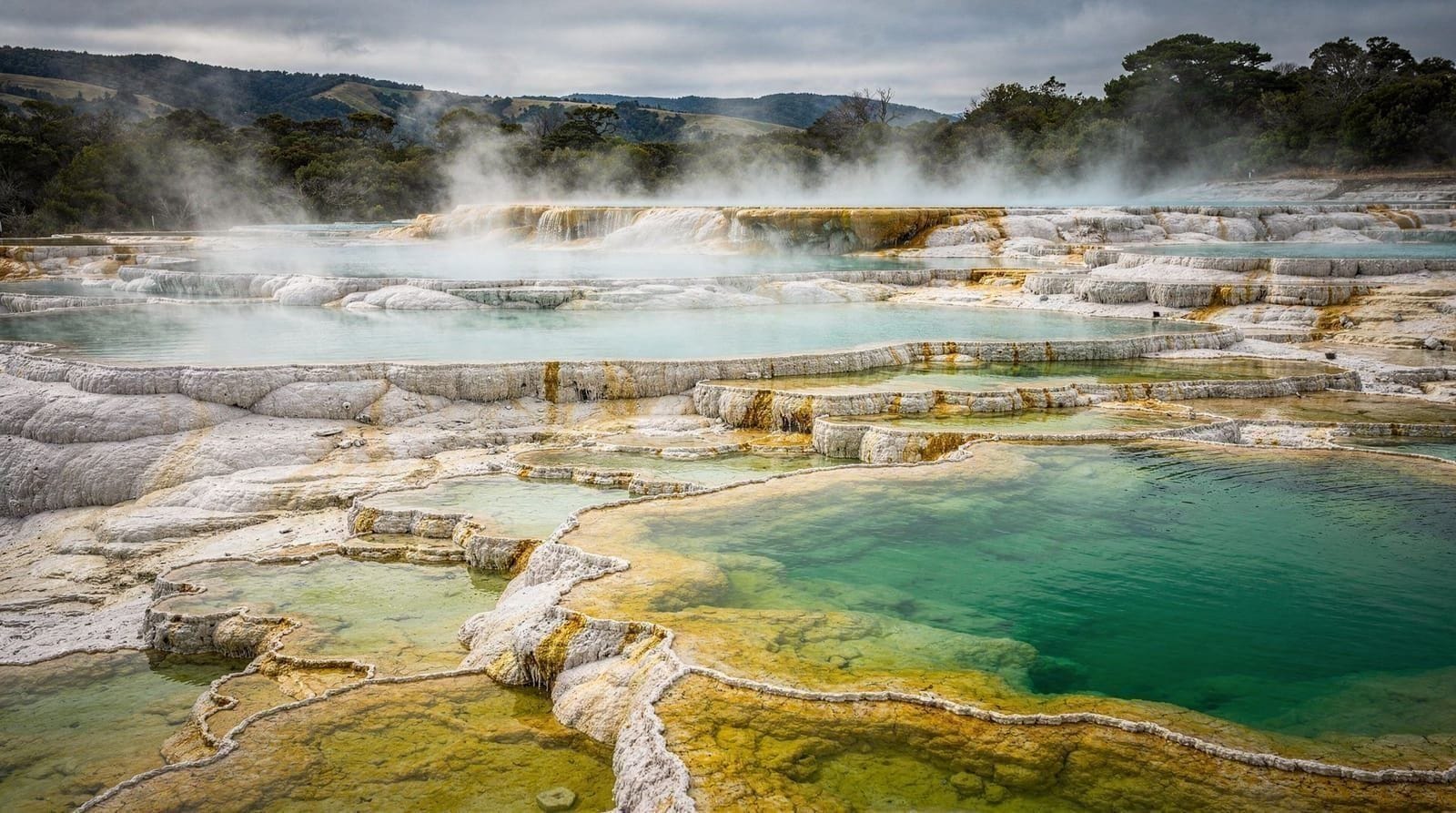
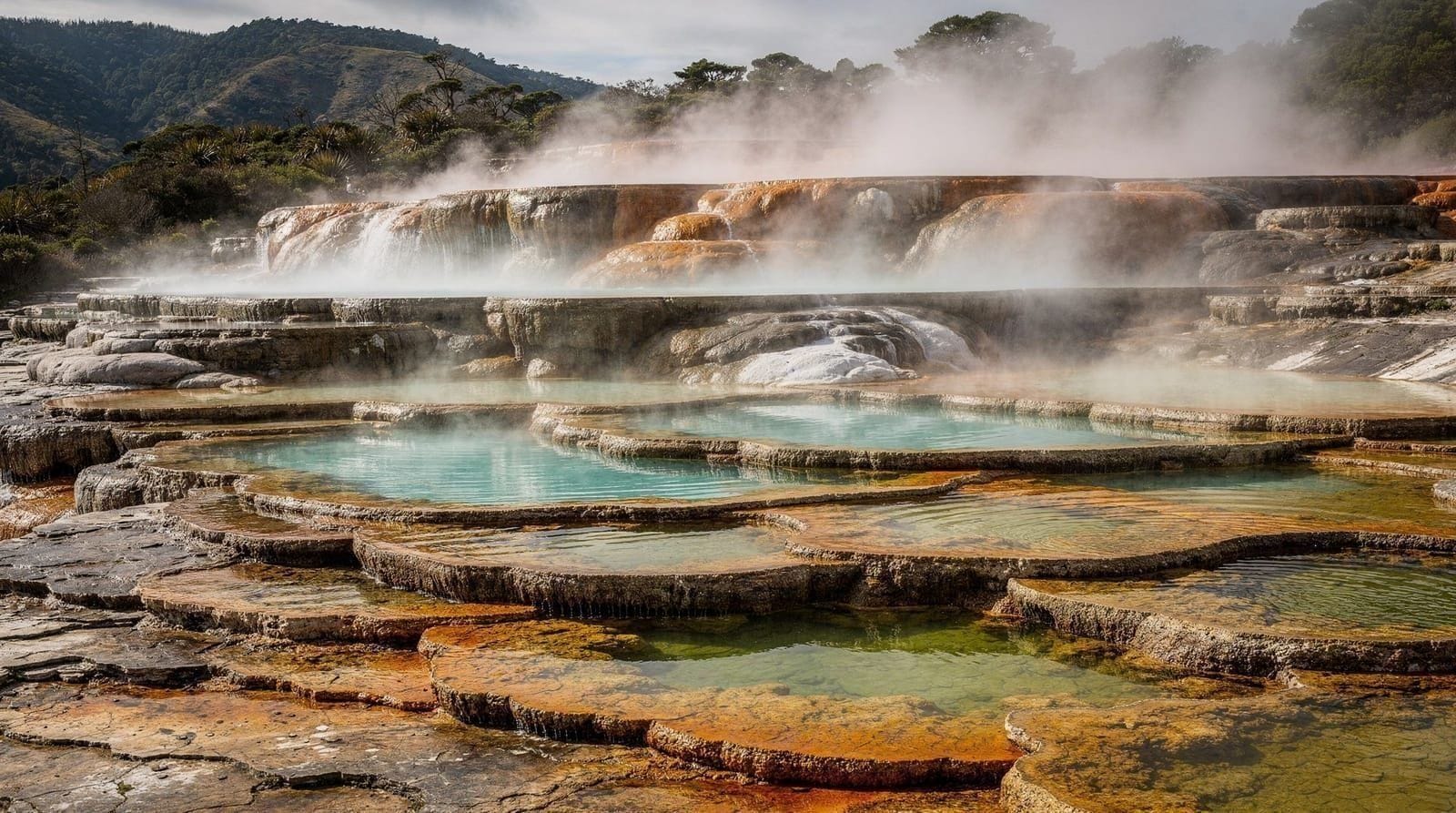
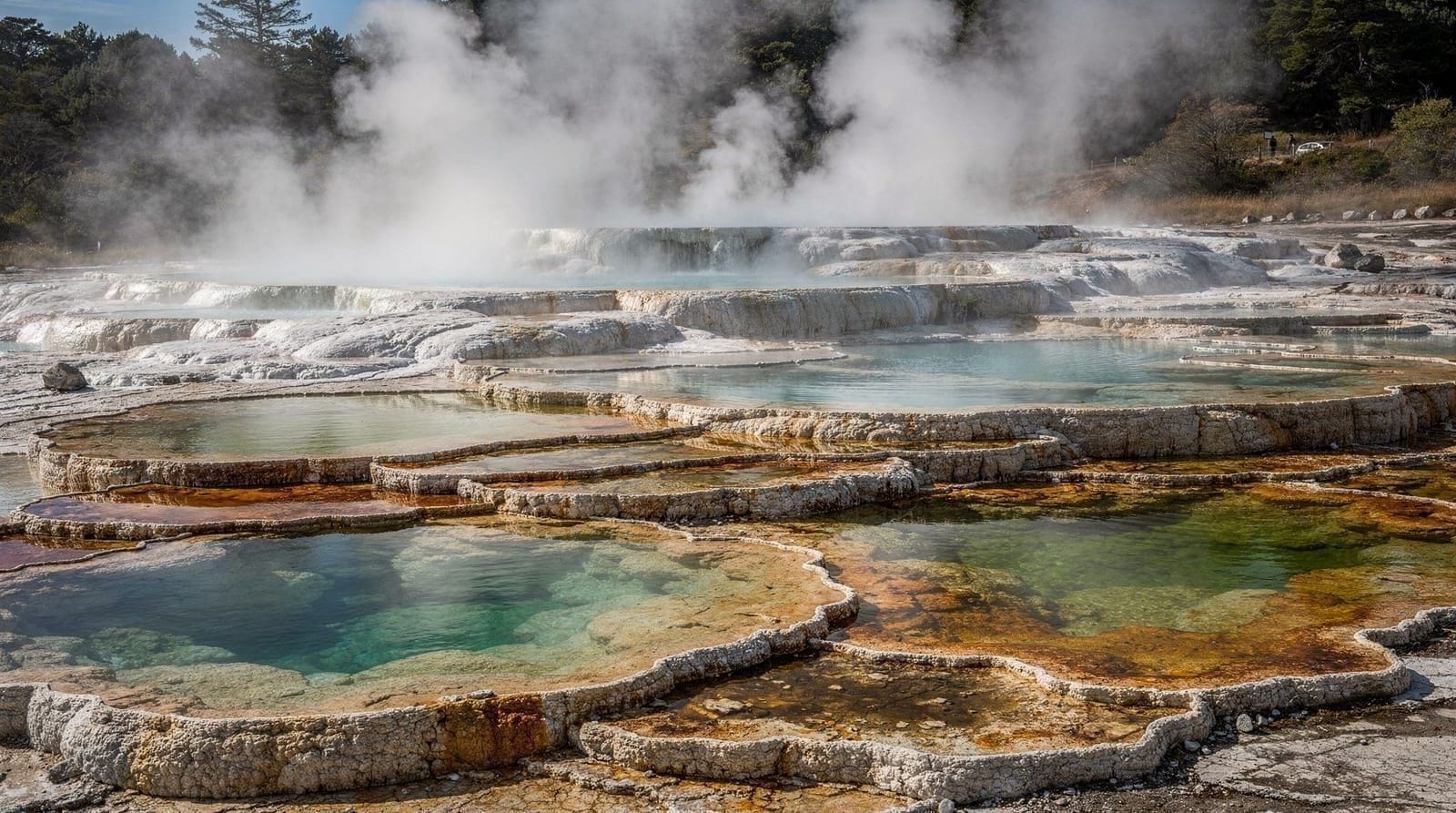
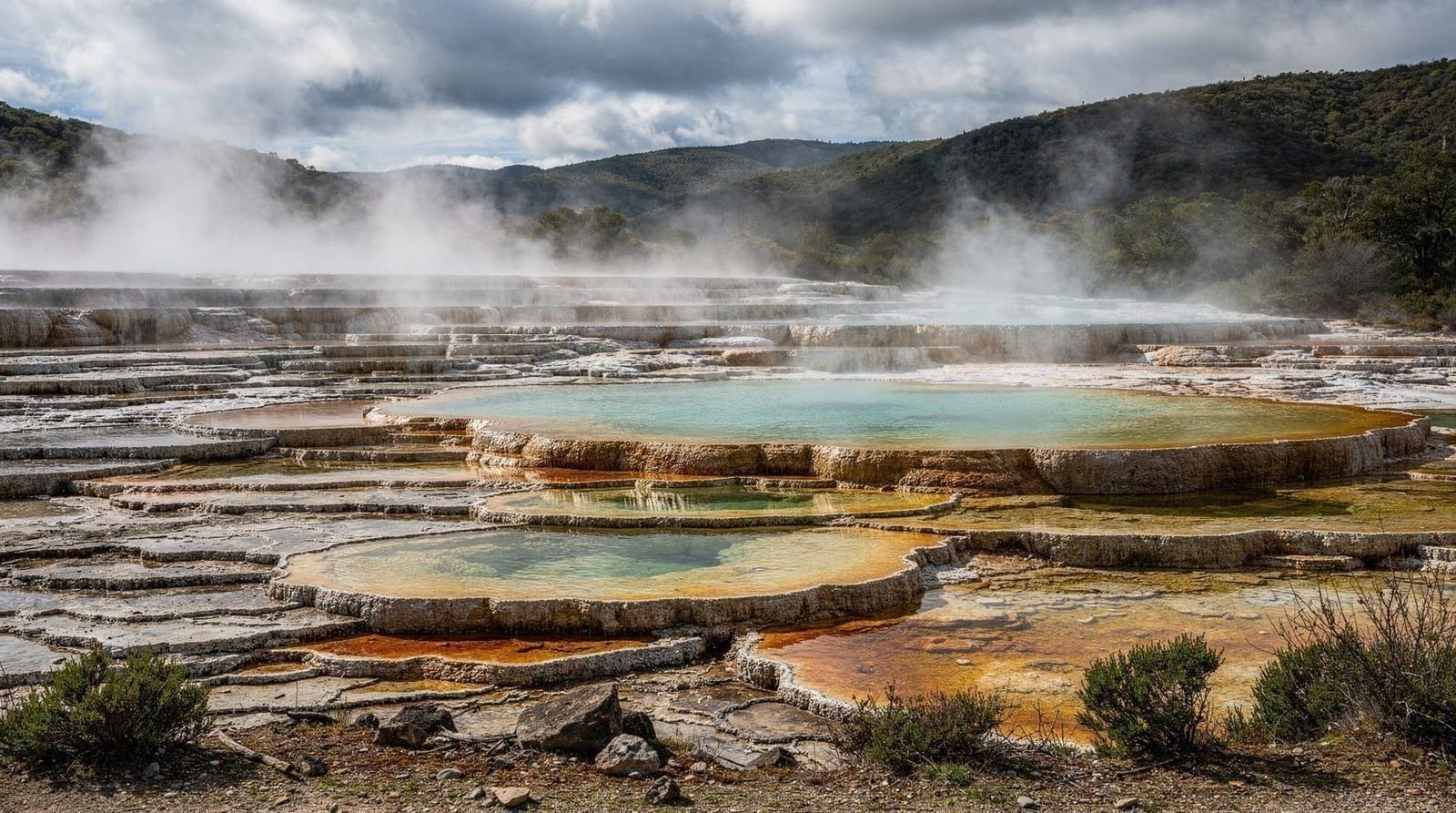
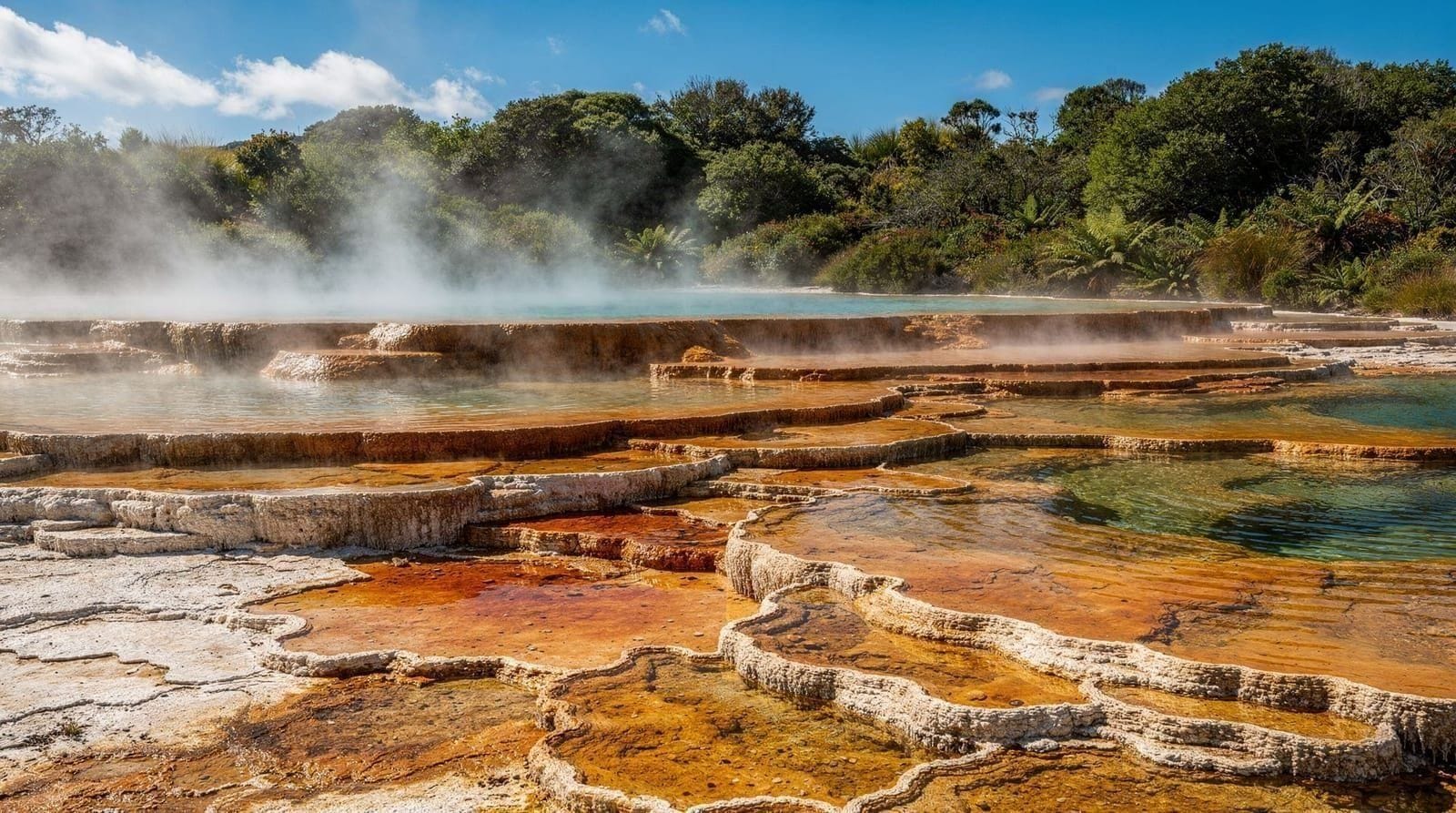
Wai-O-Tapu (“sacred waters” in Māori) is built around a self-guided walking trail through the region’s most visually striking geothermal features — the Champagne Pool, ringed in vivid orange from mineral deposits, and the Devil’s Bath, an almost fluorescent green pool created by sulphur and ferrous salts, are the two most photographed spots in Rotorua’s entire geothermal circuit. This Wai-O-Tapu entry ticket including Lady Knox Geyser covers the full walking trail plus the reliably scheduled Lady Knox Geyser eruption, triggered daily at 10:15am. Unlike Te Puia’s unpredictable but frequent Pōhutu Geyser, Lady Knox erupts on a fixed schedule (soap is added to induce the reaction), giving visitors a guaranteed, plannable geyser moment rather than a matter of luck.
A little geology: why this region is so active
Rotorua sits within the Taupō Volcanic Zone, one of the most geothermally productive regions on the planet, formed by the same tectonic forces that produced the wider central North Island’s volcanic landscape, from Rotorua’s geysers and mud pools through to Taupō and Tongariro further south. Wai-O-Tapu’s colours come directly from this geology — the orange rimming the Champagne Pool is antimony sulphide, and the Devil’s Bath’s green tint results from sulphur and ferrous salts dissolved in the water. Te Puia’s Pōhutu Geyser sits above a similarly active underground system, its unpredictable but frequent eruptions driven by pressure building in underground water chambers before releasing through the vent.
Neither park’s activity is show-controlled or artificial beyond Lady Knox’s soap-triggered eruption — everything else you see is the product of genuine, ongoing geothermal activity that has shaped this specific stretch of New Zealand for millennia. Our Rotorua geothermal explained guide goes deeper into this science if it interests you beyond the surface-level sightseeing.
The Lady Knox timing problem
The single biggest planning factor for a Wai-O-Tapu visit is the Lady Knox Geyser’s 10:15am scheduled eruption — arrive with enough buffer to find parking, walk to the geyser viewing area, and secure a decent spot before the crowd builds, particularly in peak season. This Wai-O-Tapu half-day tour from Rotorua handles this timing for you, ensuring you arrive with the geyser eruption built into the schedule rather than working it out independently. If you are self-driving, plan to arrive by 9:30-9:45am at the latest to comfortably make the 10:15am show.
The smell factor: what nobody warns you about
Both parks sit atop active geothermal systems, and sulphur’s distinctive rotten-egg smell is a genuine, unavoidable part of the experience at both — worth knowing before you go, particularly for anyone sensitive to strong smells. Wai-O-Tapu’s larger, more open trail tends to have stronger concentrations at specific points near the most active pools, though the smell dissipates quickly once you move past them. Te Puia’s more compact site means the smell is a fairly constant low-level presence throughout your visit rather than concentrated at specific points. Neither is a reason to skip either park, but it is worth mentally preparing kids or sensitive travellers rather than let it come as an unpleasant surprise.
What to wear and bring
Comfortable walking shoes matter at both parks, particularly at Wai-O-Tapu given the longer, more varied trail terrain. Sun protection is essential regardless of season, since both sites are largely open with minimal shade across the walking trails. Weather-appropriate layers are worth carrying year-round, since Rotorua’s inland climate can shift quickly, and light rain does not typically close either park (though it changes the visual character of the steam and mist rising from the thermal features, sometimes for the better photographically). Neither park allows drones without prior permission, given the sensitivity of the geothermal features and, at Te Puia, the cultural significance of the site.
A third option: Waimangu Volcanic Valley
If neither Te Puia nor Wai-O-Tapu fully answers your interests, Waimangu Volcanic Valley — the world’s youngest geothermal system, formed by the 1886 Mount Tarawera eruption — offers a third genuinely distinct option nearby, combining a walking trail through craters and coloured lakes with an optional boat cruise across Lake Rotomahana. It receives less visitor traffic than either headline park covered here, appealing to travellers who have already done the more famous sites on a previous Rotorua visit or who specifically want a quieter, less-crowded geothermal walk.
Cost comparison
| Feature | Te Puia | Wai-O-Tapu |
|---|---|---|
| Basic entry (NZD, adult) | ~55-70 | ~45-55 |
| Cultural performance | Included in most packages | Not offered |
| Geyser | Pōhutu, frequent but unpredictable | Lady Knox, scheduled daily 10:15am |
| Typical visit length | 2-3 hours | 1.5-2.5 hours |
| Guided tour with transport from Rotorua (NZD) | ~120-180 | ~80-130 |
| Kiwi conservation centre | Yes | No |
Te Puia runs slightly more expensive, largely reflecting the added cultural programming and kiwi house rather than the geothermal walk itself being more extensive.
Doing both in one day
Because Wai-O-Tapu sits only about 30 minutes south of Rotorua town, where Te Puia is located, combining both in a single day is genuinely realistic with the right timing — start at Wai-O-Tapu for the 10:15am Lady Knox eruption and the self-guided trail, then head back into town for an afternoon Te Puia visit including the cultural performance. Several combined tours package exactly this itinerary, removing the logistics of self-driving between the two and timing the geyser show correctly. If your schedule only allows one park, use the “what matters more to you” framing from this guide’s earlier sections rather than trying to force both into a rushed half-day.
A realistic combined-day timeline
If you decide to do both parks in one day, a workable schedule looks like this: leave Rotorua by 9am, arrive at Wai-O-Tapu by 9:45-10am to secure a spot for the 10:15am Lady Knox eruption, walk the full trail (roughly 1.5-2 hours depending on pace), then drive back into Rotorua for a late lunch before an early-to-mid-afternoon Te Puia visit, timed around one of its scheduled cultural performances. This gets you both parks, both signature geyser experiences, and the cultural programme, wrapping up by mid-to-late afternoon with enough daylight left for anything else on your Rotorua itinerary. It is a full day, but a manageable one given the short 30-minute drive between the two sites.
Photography: which park delivers better shots
Wai-O-Tapu is the clear winner for pure geothermal photography — the Champagne Pool and Devil’s Bath’s saturated, almost artificial-looking colours are among the most photographed natural features in New Zealand, and the self-guided trail gives you control over pacing and composition without a group schedule to keep to. Te Puia’s Pōhutu Geyser eruption makes for dramatic action shots when it fires, but the overall site is smaller and more built-up, with less of the sprawling, otherworldly colour palette that makes Wai-O-Tapu so distinctive in photographs.
Families: which suits kids better
Te Puia generally suits families better, thanks to its shorter, more structured format, the cultural performance (which tends to hold children’s attention well through music, haka, and demonstration), and the kiwi conservation centre, a genuine highlight for younger visitors who may never otherwise see New Zealand’s iconic (and famously nocturnal, hard-to-spot-in-the-wild) national bird. Wai-O-Tapu’s longer, more open walking trail works fine for older kids but can test younger children’s patience, and the geothermal smells (sulphur is a constant presence at both parks, but more concentrated at points along Wai-O-Tapu’s trail) are worth preparing kids for in advance.
How this fits your wider Rotorua day
Both parks fit naturally into a broader Rotorua day trip from Auckland — see our Rotorua day trip guide for full logistics on the roughly 2.5-3 hour drive, and our Rotorua geothermal explained guide for the science behind why this specific region is so thermally active. If Māori cultural experiences are a priority beyond just Te Puia’s offering, our Māori experiences in Rotorua guide covers the wider range of cultural tourism available in the area.
Combining a geothermal park with Hobbiton
Many Auckland-based visitors combine Rotorua’s geothermal parks with a Hobbiton stop on the same broader North Island trip, given the two attractions sit roughly an hour apart via Matamata. Our Hobbiton day trip from Auckland guide and Hobbiton morning vs evening comparison both help plan the timing if you want to fit a geothermal park and Hobbiton into an efficient loop rather than treating them as entirely separate trips.
Is a full Rotorua day trip worth it just for these parks?
For visitors weighing up whether the roughly 2.5-3 hour drive from Auckland each way is worth it purely for a geothermal park visit, our is Rotorua worth it guide tackles this directly — the honest answer is that Rotorua’s appeal extends well beyond just Te Puia or Wai-O-Tapu, and pairing either park with the region’s adventure activities or additional Māori cultural experiences makes the long drive considerably easier to justify than a single-attraction visit would.
Adventure activities alongside the geothermal parks
If you want to build a fuller Rotorua day around either park, the region offers a genuinely strong range of adventure activities — Skyline Gondola and luge, mountain biking through the Redwoods forest, and other adrenaline options that pair well with a morning geothermal visit. Our Rotorua adventure activities guide covers how to build this into a fuller day without overloading your schedule.
Families revisited: a practical itinerary
For families choosing between the two, our Rotorua with kids guide goes deeper into which specific Te Puia package (with or without the hangi and cultural performance) suits different age groups, and how a Wai-O-Tapu visit can be shortened for younger children who may not have the stamina for the park’s full, longer walking trail.
Booking strategy
Book Te Puia’s cultural performance and hangi packages at least a few days ahead, since these run on fixed schedules with capped capacity, more so than the geothermal walk itself which has more flexible entry. Wai-O-Tapu entry is generally easier to book close to your visit date outside peak season, though summer (December-February) and New Zealand school holidays warrant booking at least a week ahead for both parks, and combined tours covering both parks in one day should be booked with even more lead time given their more complex, less frequent scheduling. Our Auckland budget guide covers how these entry costs and tour prices fit into a broader North Island trip budget.
Our honest take
Neither park is objectively “better” — they answer different questions. If you want New Zealand’s most striking geothermal photography and do not mind a self-guided pace, Wai-O-Tapu wins clearly. If you want geothermal scenery paired with a genuine, well-produced cultural experience and are travelling with kids, Te Puia is the stronger single choice. For visitors with a full day in Rotorua and the budget to match, doing both remains the best answer of all, and the roughly 30-minute proximity between them makes it a realistic itinerary rather than an ambitious stretch.
Visiting with limited time in Rotorua
If your Rotorua stop is genuinely brief — a few hours on the way through to Taupō or back to Auckland, rather than a dedicated Rotorua day — picking one park rather than attempting both is the honest recommendation. Te Puia suits a time-pressed visit slightly better, since its more compact site and structured cultural performance schedule deliver a complete experience in a predictable window, where Wai-O-Tapu’s open trail rewards a more unhurried pace and can feel rushed if you are watching the clock. If Rotorua is just a brief stop on a longer North Island loop rather than your main destination, our Rotorua day trip guide and is Rotorua worth it guide both help decide how much time the wider region deserves relative to Te Puia or Wai-O-Tapu alone.
Parking and arrival logistics at both parks
Both Te Puia and Wai-O-Tapu have dedicated on-site car parks, and neither typically requires the kind of early arrival scramble that Mount Maunganui or Hobbiton can demand on a busy weekend — the bigger timing pressure is Wai-O-Tapu’s 10:15am Lady Knox show rather than parking availability itself. Te Puia sits within Rotorua town, a short drive or even a walkable distance from many central Rotorua accommodations, making it the more convenient of the two if you are staying centrally and want to avoid a longer drive first thing in the morning. Wai-O-Tapu’s more rural setting, about 30 minutes south, means budgeting genuine drive time into your morning regardless of where you are staying in Rotorua — leave with a buffer beyond the bare 30-minute estimate, since the final stretch of road can be slower than a straight highway drive.
What weather does to each park
Neither park closes for typical rain, but the experience changes considerably. At Wai-O-Tapu, a wet trail means slicker footing on the boardwalks and less vivid colour photography, since the Champagne Pool and Devil’s Bath both photograph best in bright, even light rather than flat grey skies. Te Puia’s cultural performance venue and much of the carving and weaving demonstration space is under cover, so a wet morning barely affects the core experience, though the outdoor geothermal walk around Pōhutu Geyser is still exposed. If your Rotorua day happens to land on genuinely poor weather, Te Puia is the safer booking of the two.
Frequently asked questions about Te Puia vs Wai-O-Tapu: which geothermal park to pick
Can I visit both Te Puia and Wai-O-Tapu in one day?
Yes — several combined tours run both parks in a single day, and independently they sit close enough to Rotorua (Te Puia in town, Wai-O-Tapu about 30 minutes south) to combine with careful timing around Wai-O-Tapu's 10:15am Lady Knox Geyser eruption.What time does the Lady Knox Geyser erupt at Wai-O-Tapu?
The geyser is triggered daily at 10:15am (soap is added to induce the eruption), so arrive at Wai-O-Tapu with enough time to secure a viewing spot beforehand — this is the one fixed scheduling point that shapes how most visitors plan their Wai-O-Tapu visit.Is Te Puia or Wai-O-Tapu better for kids?
Te Puia generally works better for families thanks to its cultural performances, kiwi conservation centre, and shorter, more structured visit format. Wai-O-Tapu's walking trail is longer and less structured, though the dramatic colours genuinely engage curious kids too.How much does it cost to visit Te Puia and Wai-O-Tapu?
Te Puia entry runs roughly NZD 55-70 depending on package (higher with cultural performance and hangi included); Wai-O-Tapu entry runs around NZD 45-55. Combined tours from Auckland or Rotorua covering both, plus transport, typically run NZD 150-270.Which park has the most impressive geysers?
Te Puia is home to Pohutu Geyser, the largest active geyser in the Southern Hemisphere, erupting somewhat unpredictably but frequently (often multiple times an hour). Wai-O-Tapu's Lady Knox Geyser erupts reliably once daily at a fixed, scheduled time.Do I need to book Te Puia or Wai-O-Tapu in advance?
Advance booking is recommended for both, particularly in summer and for Te Puia's cultural performance and hangi packages, which run on set schedules with limited capacity. Wai-O-Tapu entry is more flexible but still benefits from pre-booking in peak season.Which is better for a rainy day, Te Puia or Wai-O-Tapu?
Te Puia handles rain better, since its cultural performance, carving demonstrations and kiwi conservation centre sit under cover, giving you a genuinely worthwhile visit even if the weather turns. Wai-O-Tapu's appeal is almost entirely the open-air walking trail, so a wet day dampens the visit more directly, though light rain doesn't close the park and can make the steam and colour look striking in its own way.
Top experiences
Bookable activities with verified prices and instant confirmation on GetYourGuide.