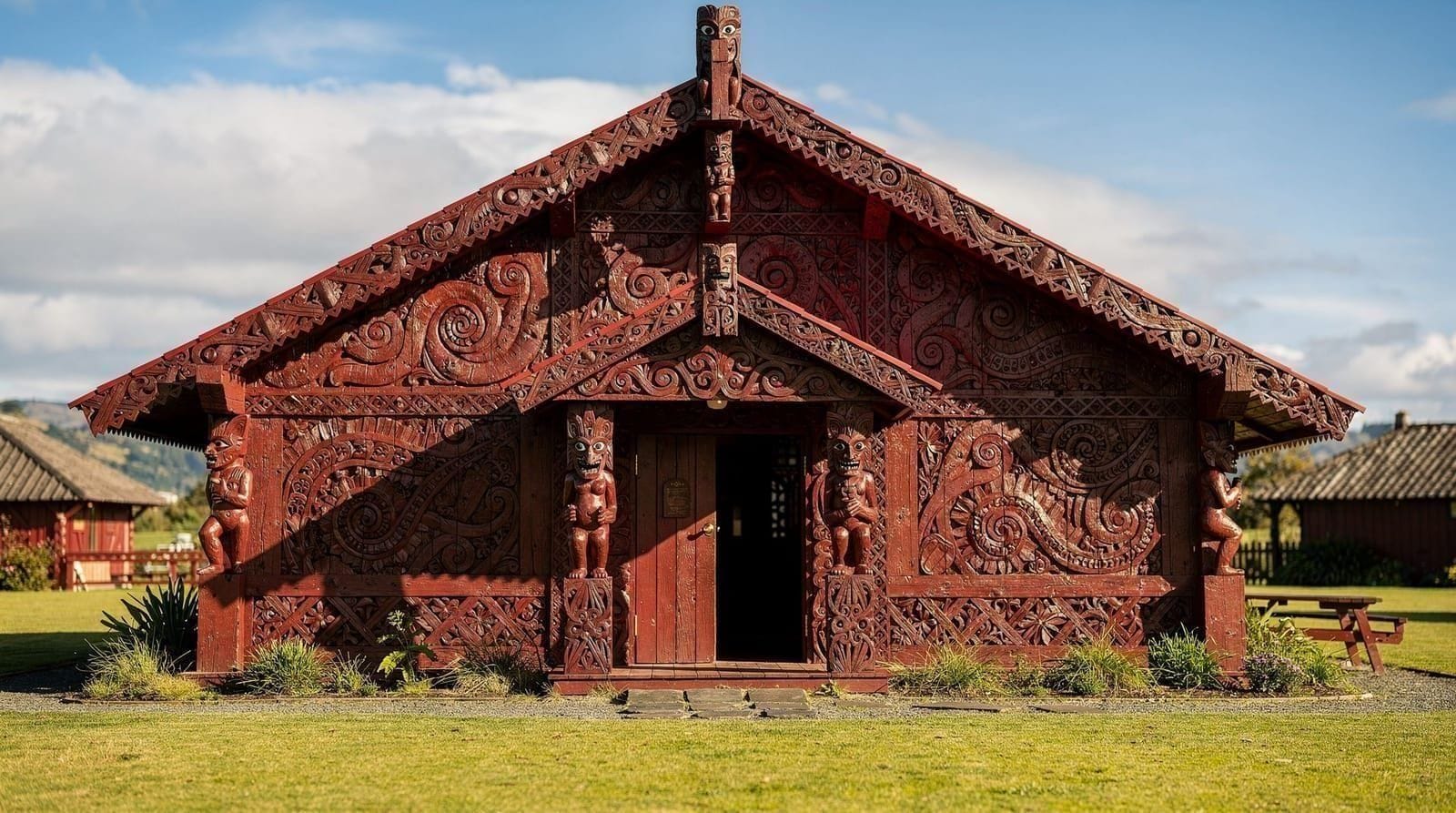
Te reo Māori basics for visitors to New Zealand
Auckland: Excursao pela experiencia cultural maori
What are the most useful te reo Māori words for a visitor to New Zealand?
Kia ora (hello, and also thank you/cheers), ka kite (see you later), and correctly pronouncing place names — Māori, Tāmaki Makaurau, Waitematā, Rotorua — cover most everyday situations. Getting the pronunciation reasonably right matters more than a large vocabulary.
Why a few words of te reo genuinely go a long way
Te reo Māori is an official language of New Zealand and a living, everyday part of the country — heard on public transport announcements, seen on bilingual road signs, spoken as a first or second language by a meaningful and growing proportion of New Zealanders, and used constantly in casual conversation well beyond formal cultural contexts. You don’t need to become fluent to travel through New Zealand respectfully, but learning a handful of pronunciation rules and common words genuinely changes how you experience the country — place names stop being strings of unfamiliar syllables and start carrying actual meaning, and a correctly pronounced “kia ora” tends to be warmly received rather than treated as a performance.
| Cost | Free — this is a language guide, not a booking |
| Time to learn basics | 20-30 minutes reading, ongoing practice through your trip |
| Most useful word | Kia ora (hello / thanks / cheers) |
| Where to hear it spoken | Guided Māori cultural experiences in Auckland and Rotorua |
| Key rule | ”Wh” sounds like an English “f” |
Pronunciation: the rules that unlock almost everything
Te reo Māori has consistent, phonetic pronunciation — once you learn the rules, you can read and pronounce most words accurately, which is a genuine relief compared to English’s many spelling exceptions.
The five vowel sounds are short and consistent: a (as in “car” but shorter), e (as in “egg”), i (as in “fee”), o (as in “or”), u (as in “moon” but shorter). A macron (a horizontal line over a vowel, as in Māori, Tāmaki, Waitematā) lengthens that vowel sound and can change meaning — Māori pronounced with the correct long “ā” is genuinely a different word, in pronunciation terms, from a shortened, anglicised version.
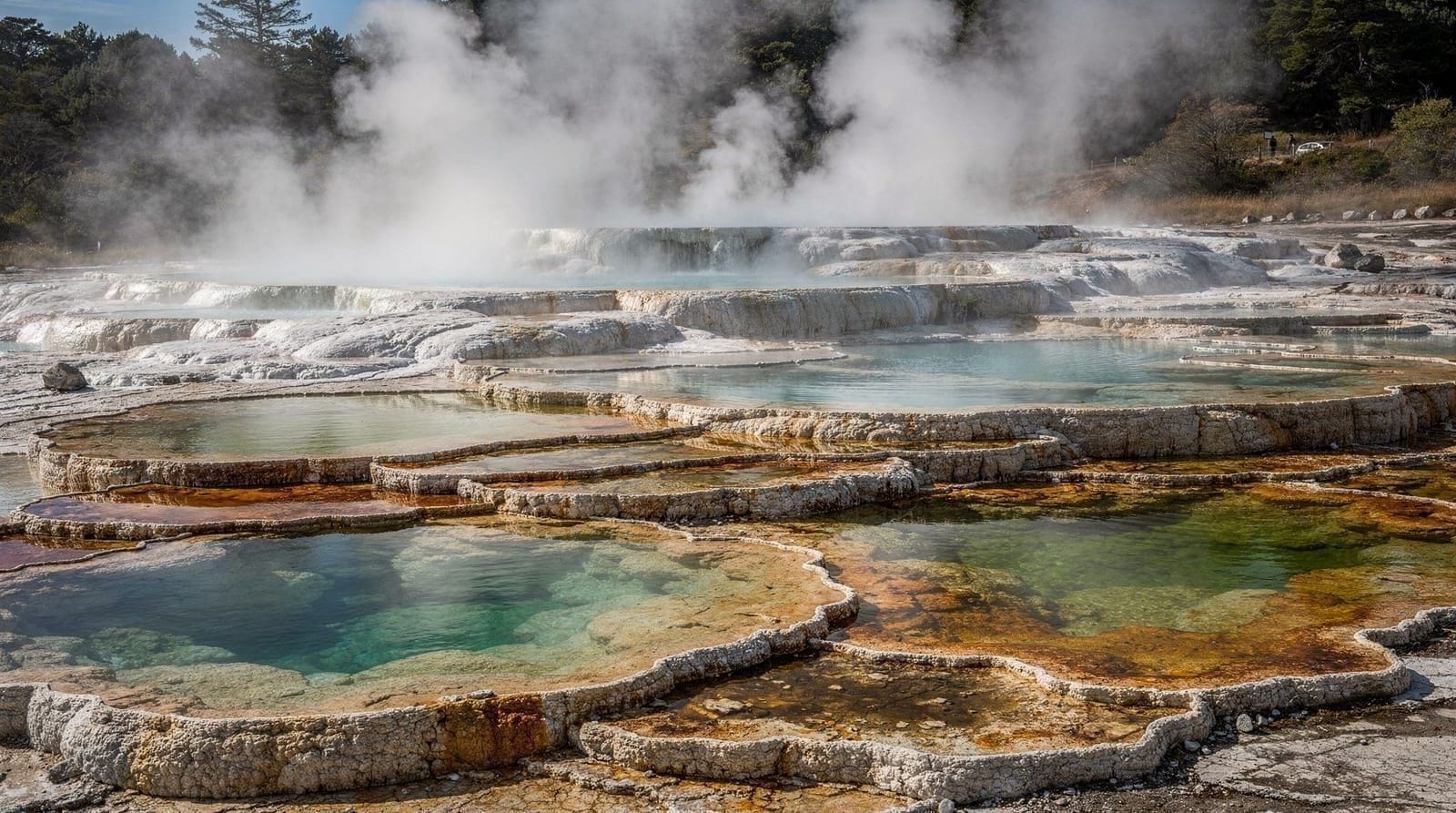
Wh is generally pronounced like an English “f” in modern standard pronunciation — so Whakarewarewa (the Rotorua geothermal valley and village) is roughly “fah-kah-reh-wah-reh-wah,” and whānau (family) is roughly “fah-noh.” This single rule alone unlocks correct pronunciation of a huge number of Māori words and place names you’ll encounter.
Ng is pronounced as a single sound, like the “ng” in the English word “singer” (not “finger,” which has a harder “g” sound) — so Maungawhau (Mount Eden) starts with that soft “ng” sound rather than a hard “n-g.”
R is lightly rolled or flapped, closer to a Spanish or Italian “r” than an English one, and every vowel is pronounced distinctly — Māori doesn’t have silent letters or vowel combinations that collapse into a single sound the way English often does, so a word like “waka” is genuinely “wah-kah,” two clear syllables, not run together.
Everyday greetings and useful phrases
Kia ora — hello, and also widely used to mean thank you, cheers, or as a general expression of agreement or appreciation. Genuinely the single most useful word to know, used constantly across New Zealand in casual, everyday contexts well beyond formal greetings.
Tēnā koe — a more formal greeting to one person (literally closer to “there you are” as a greeting of respect); tēnā koutou for greeting a group of three or more.
Ka kite — see you later, casual and commonly used as a sign-off, similar to “catch you later.”
Whānau — family, used both for immediate family and, often, a wider sense of extended family or close community.
Kai — food; you’ll see this constantly on menus and in casual conversation (“let’s get some kai”).
Aotearoa — New Zealand’s Māori name, usually translated as “land of the long white cloud,” now used interchangeably with “New Zealand” in official and everyday contexts, including on currency and government communications.
Haere mai — welcome, come here; commonly seen on signage welcoming visitors.
Ngā mihi — thanks, or greetings, a slightly more formal alternative to a casual thank-you.
Place names that carry real meaning
Understanding a handful of common place name translations changes how you experience travelling through the North Island — these aren’t arbitrary labels, they describe the places specifically.
Tāmaki Makaurau (Auckland) — usually translated as “Tāmaki desired by many,” referencing how fiercely the fertile, harbour-flanked isthmus was contested between iwi over centuries. See our Māori culture in Auckland guide for the fuller history behind this name.
Waitematā (Auckland’s main harbour) — referencing the glistening, reflective quality of the harbour’s waters.
Rotorua — roughly “second lake,” from “roto” (lake) and “rua” (two), reflecting the region’s sequence of volcanic lakes.
Waitomo — “water passing through a hole,” a strikingly literal description of the underground river system running through the glowworm caves.
Waitangi — “weeping waters,” the site in the Bay of Islands where the Treaty of Waitangi was first signed. See our Waitangi Treaty Grounds guide for the full history.
Maunga — mountain, and specifically used in Auckland for the city’s volcanic cones (Maungawhau/Mount Eden, Maungakiekie/One Tree Hill), which carry deep ancestral significance beyond their geological interest. See our volcanic cones of Auckland guide.
Aotearoa — New Zealand’s Māori name, “land of the long white cloud,” referencing the distinctive cloud formations early Polynesian voyagers reportedly saw approaching the islands.
A quick note before diving into vocabulary: none of what follows requires memorisation before you land. Referring back to this guide during your trip, or simply picking up words naturally as you encounter them on signage and in conversation, works just as well as pre-trip study.
Numbers, days and a few more everyday words
Counting and days of the week come up often enough while travelling that a basic grasp is genuinely useful. The numbers one to ten are: tahi (one), rua (two), toru (three), whā (four), rima (five), ono (six), whitu (seven), waru (eight), iwa (nine), tekau (ten). Days of the week largely follow English structure with a Māori prefix — Rāhina (Monday), Rātū (Tuesday), Rāapa (Wednesday), Rāpare (Thursday), Rāmere (Friday), Rāhoroi (Saturday), Rātapu (Sunday). A few further everyday words worth knowing: wai (water), whenua (land), moana (sea/ocean), maunga (mountain), awa (river), and pai (good), a versatile word used constantly in casual conversation to mean “good,” “fine,” or “okay.”
Māori Language Week and everyday visibility
Te Wiki o te Reo Māori (Māori Language Week) is an annual national event, typically held in September, promoting the use and visibility of te reo Māori across media, business, government and everyday life. If your visit coincides with it, you’ll notice an even higher-than-usual concentration of te reo on signage, radio, television and public announcements — a good opportunity to pick up further vocabulary from context. Even outside that specific week, te reo’s presence has grown steadily across New Zealand in recent years: bilingual road signs, place name restorations (many locations now display both their English and Māori names), and te reo greetings as standard practice in customer service and public sector communications are all now considerably more common than a visitor from a decade or two ago might expect.
A pronunciation practice tip
If you want to build genuine confidence before or during your trip, practising a handful of common place names out loud — Auckland (Tāmaki Makaurau), Rotorua, Waitomo, Waiheke, Whakarewarewa — using the vowel and consonant rules above is a genuinely effective way to internalise the system quickly, since you’ll be seeing and hearing these specific words constantly throughout your trip regardless. Most New Zealanders, Māori and non-Māori alike, are used to hearing visitors attempt these names with varying success, and a good-faith effort using correct vowel sounds and the “wh” as “f” rule will get you most of the way to accurate pronunciation even before you’ve heard a local speaker say the word aloud.
How te reo fits into New Zealand’s official languages
Te reo Māori became an official language of New Zealand in 1987, alongside English and, more recently, New Zealand Sign Language. This official status underpins its increasing visibility in government communications, broadcasting requirements, and public signage over the decades since, and reflects a broader, ongoing national effort toward language revitalisation after a long historical period of decline driven by colonial-era policy actively discouraging its use. Understanding this history — that te reo’s current visibility is the result of deliberate, relatively recent revitalisation effort rather than something that was always this prominent — adds useful context to why correct pronunciation and respectful use genuinely matters to many New Zealanders today.
A short glossary of words you’ll see constantly
A handful of further words appear so frequently on signage, menus and in casual conversation across New Zealand that they’re worth adding to your working vocabulary beyond the core list above: iwi (tribe/people), hapū (sub-tribe), rangatira (chief/leader), taonga (treasure), tangata whenua (people of the land, referring to Māori as indigenous people), Pākehā (New Zealanders of European descent, a widely used and generally neutral term), and mana (a concept covering prestige, authority and respect, used constantly across formal and everyday contexts alike). None of these need active use in your own speech, but recognising them when you encounter them in museum text, signage or conversation will noticeably deepen your understanding of what you’re reading and hearing throughout your trip.
Where to hear te reo spoken and used properly
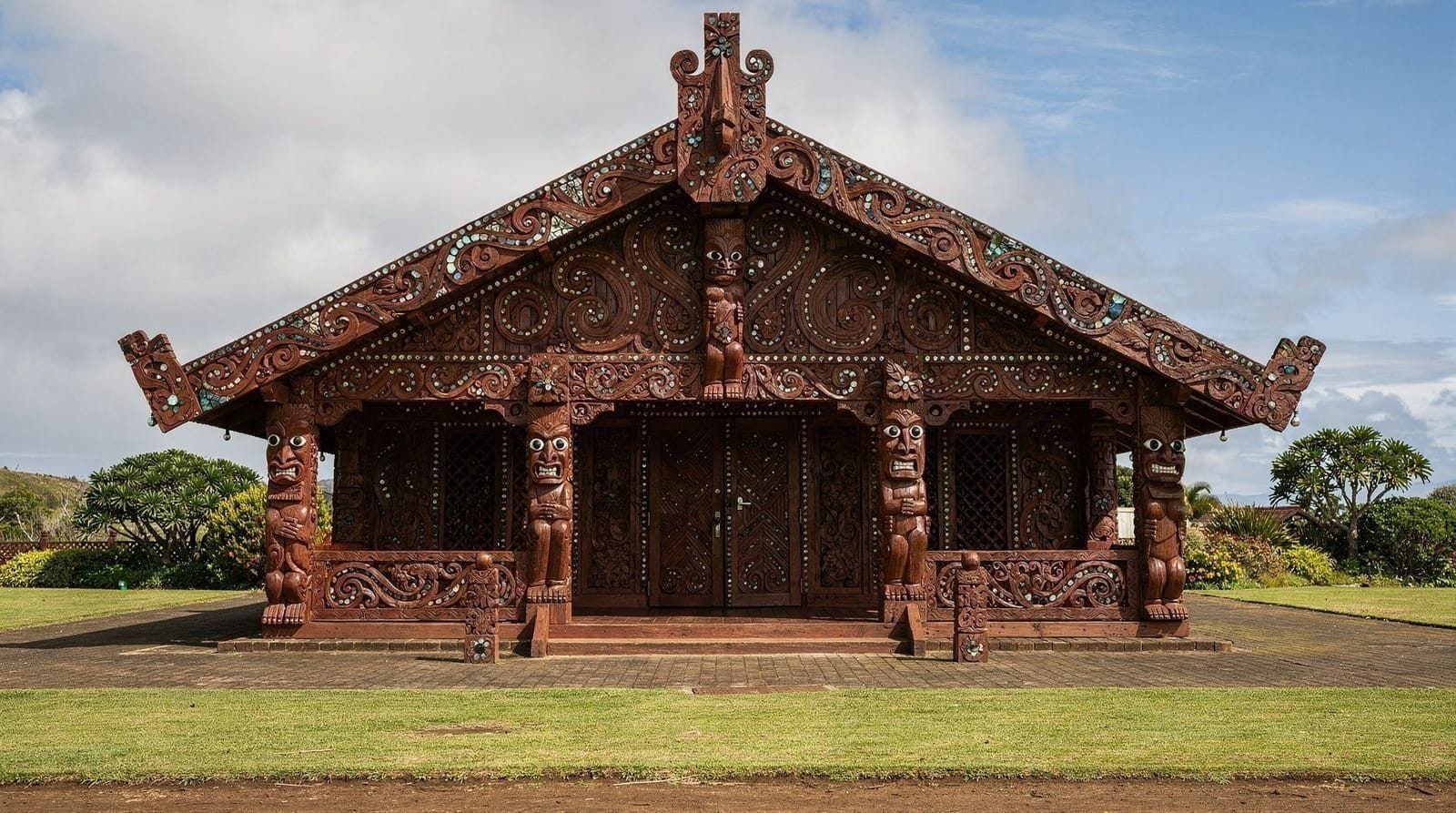
Reading pronunciation rules only gets you so far — hearing te reo spoken by fluent speakers, in context, is genuinely the better way to build real familiarity during your trip. A guided Māori cultural experience in Auckland includes direct engagement with Māori guides using te reo naturally in conversation and performance, and Te Puia’s guided day tour in Rotorua does the same in a setting where te reo is used constantly throughout the visit, from welcome through to performance commentary. Both are considerably more useful than any pronunciation guide, this one included, for building genuine familiarity.
Regional and dialect variation
Te reo Māori has some regional dialect variation across different iwi areas, similar to regional accents and word choices within English — a word or pronunciation you learn in Auckland may sound slightly different from how it’s used in Rotorua or Northland. This isn’t a sign of inconsistency or error; it reflects genuine regional linguistic diversity within te reo, the same way British, American and Australian English differ in accent and vocabulary while remaining clearly the same underlying language. As a visitor, this is worth knowing simply so you’re not confused if pronunciation or word choice varies slightly as you travel between regions — both versions are correct te reo, not one right and one wrong.
A note on using te reo as a visitor
Making a genuine effort with pronunciation is consistently well received in New Zealand — it’s read as respect and curiosity rather than presumption. That said, it’s worth keeping expectations realistic: a few words and correct place-name pronunciation is a meaningful, appropriate level of engagement for a short visit, not an expectation to reach conversational fluency. If you mispronounce something, correction (if offered) is almost always given warmly, as encouragement rather than criticism — take it in that spirit and keep trying. Our respectful Māori tourism guide covers the broader etiquette that sits alongside language use, worth reading together with this guide before any significant cultural experience during your trip.
Frequently asked questions about te reo Māori basics
Is it hard to pronounce Māori words correctly?
Not especially — te reo Māori has consistent, phonetic pronunciation rules, unlike English’s many exceptions. Five vowel sounds and a handful of consonant rules (wh as “f,” ng as in “singer”) cover most words.
What does ‘wh’ sound like in Māori?
In most modern standard pronunciation, “wh” sounds like an English “f” — Whakarewarewa is roughly “fah-kah-reh-wah-reh-wah,” and whānau (family) is roughly “fah-noh.”
Why do some Māori words have a line over a vowel?
That macron indicates a long vowel sound, changing pronunciation and often meaning. Correct macron use is increasingly standard in New Zealand media, signage and official communication.
What does ‘kia ora’ actually mean?
Literally close to “be well” or “be healthy,” but used in everyday speech much like “hello,” and also commonly to mean “thank you” or as a general expression of appreciation.
Is it appropriate for visitors to use Māori greetings and words?
Yes, generally welcomed as a sign of genuine engagement, provided you make a reasonable effort at correct pronunciation.
What do common Auckland and North Island place names actually mean?
Tāmaki Makaurau (Auckland) means “Tāmaki desired by many.” Waitematā references glistening waters. Rotorua means roughly “second lake.” Aotearoa means “land of the long white cloud.”
Where can I hear te reo Māori spoken properly during my trip?
Guided Māori cultural experiences in Auckland and Rotorua, including Te Puia’s guided tours, involve fluent speakers using te reo naturally throughout the visit — a far better way to build familiarity than any written guide.
Should I try to learn more than the basics before my trip?
Not necessarily. A handful of greetings, correct place-name pronunciation, and a genuine willingness to try is a meaningful, appropriate level of engagement for a short visit — it’s not expected that visitors reach conversational fluency, and over-preparing beyond this guide is rarely necessary unless you have a particular personal interest in the language.
Reading bilingual signage confidently
New Zealand’s public signage — road signs, transport announcements, government buildings, and museum displays — increasingly presents information in both te reo Māori and English side by side, and knowing what to expect helps you read it confidently rather than skimming past the Māori text entirely. Place names typically appear in their Māori form either alongside or in place of an older English name, government agency names often carry both a te reo and English title, and public transport announcements on trains and buses frequently include a Māori greeting or phrase alongside the English announcement. None of this requires active translation on your part — simply recognising that the Māori text usually mirrors or complements the English rather than containing separate information is enough context to read New Zealand’s public spaces comfortably.
A few more everyday phrases worth knowing
Beyond the core greetings, a handful of further phrases come up often enough in tourist-facing contexts to be worth adding to your list. Tino pai — very good, a slightly stronger version of the versatile “pai.” Kei te pēhea koe? — how are you?, with kei te pai (I’m fine/good) as the standard reply. E noho rā — a formal goodbye said by the person staying to the person leaving, distinct from haere rā, the goodbye said by the person leaving. Hei konā mai — a casual “see you around,” similar in register to “ka kite.” These won’t come up as constantly as “kia ora,” but recognising them on signage or hearing them used by a guide adds another layer of understanding to your trip.
Reading a marae welcome respectfully
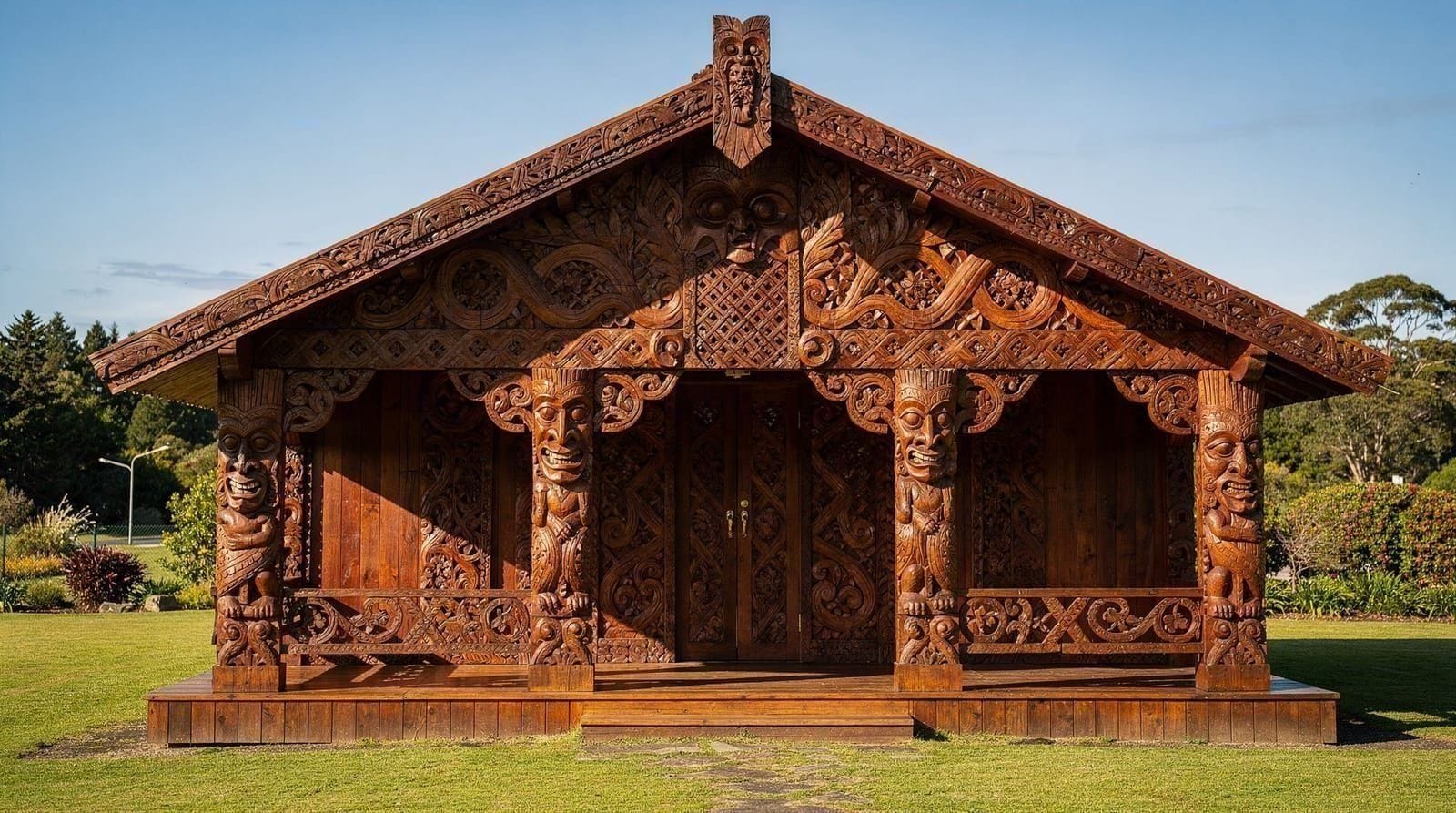
If your itinerary includes a marae visit or a formal pōwhiri (welcome ceremony) — common on cultural tour packages in both Auckland and Rotorua — a little advance knowledge of what’s happening helps you engage respectfully rather than just watching politely. A pōwhiri typically opens with a karanga (a ceremonial call, usually from a woman), followed by whaikōrero (formal speeches, traditionally from men, though this varies by iwi), waiata (song, usually sung as a group following a speech), and finally the hongi (a pressing of noses and foreheads exchanged as a personal greeting). Guests are usually guided through each step by their host or guide, so there’s no need to memorise a script — but understanding the shape of the ceremony in advance means you’re not caught off guard by what’s happening or unsure when it’s appropriate to speak, sing, or simply remain respectfully quiet.
Putting te reo to use around the North Island
The best way to make these words stick is to meet them in real places. Around the city, the names on the map are a good start: the Auckland city centre, the Viaduct and Wynyard Quarter and the ferry terminal all put Māori and English side by side, which makes them an easy place to practise reading and saying place names out loud. Out on the water, the Rangitoto Island guide is a natural place to apply the vowel rules to a name you’ll hear constantly, and our Auckland history guide explains the stories that many of these names point back to.
If you’re heading south, Rotorua is where the “wh” rule gets its biggest workout, with Whakarewarewa on the doorstep. Our guide to Māori experiences in Rotorua shows where you can hear te reo in context, and Māori heritage sites covers places where the names carry history as well as meaning. For the wider picture of how language connects to everything else you’ll see, the Auckland travel guide and our first-time Auckland tips are good companions to this page.
Top experiences
Bookable activities with verified prices and instant confirmation on GetYourGuide.