Waitangi Treaty Grounds: a complete visitor's guide
Waitangi: Treaty grounds guided tour
What is the Waitangi Treaty Grounds and why does it matter?
Waitangi Treaty Grounds, near Paihia in the Bay of Islands, is where the Treaty of Waitangi — New Zealand's founding constitutional document — was first signed in 1840 between Māori chiefs and the British Crown. It's one of the country's most significant historical sites, combining the original Treaty House, a carved meeting house, the world's largest ceremonial waka, and a museum covering the treaty's ongoing significance.
Why Waitangi matters
Waitangi Treaty Grounds, just across the bridge from Paihia in the Bay of Islands, is where the Treaty of Waitangi — New Zealand’s founding constitutional document — was first signed on 6 February 1840, between Governor William Hobson, representing the British Crown, and a group of Māori rangatira (chiefs). It’s genuinely one of the most historically and culturally significant sites in the country, and unlike many historical sites that require imagination to picture what happened, Waitangi retains the actual grounds, the Treaty House itself, and a landscape that still carries real weight for both Māori and the wider nation. Visiting isn’t a detour from a Bay of Islands trip — for many travellers, it’s the most meaningful single stop in the region.
| Where | Paihia, Bay of Islands, across the bridge from the town centre |
| Cost | around NZD 40-60 for international visitors |
| Time needed | 1.5-2 hours minimum; add an hour for a guided tour or performance |
| Getting there | about 230km / 3hrs drive from Auckland via SH1 |
| Best time | morning, before tour-bus groups arrive mid-late morning |
The history, honestly explained
The treaty was drafted rapidly by Hobson and his officials in early 1840, translated into Māori overnight, and presented to assembled rangatira at Waitangi on 5 February. After a long day of debate, the first signatures were added on 6 February, and copies of the treaty subsequently circulated around the country over the following months, eventually gathering signatures from over 500 chiefs — though notably, not every iwi signed, and the process and its aftermath varied considerably by region.
A crucial and genuinely important part of this history, and one that’s worth understanding before you visit rather than glossing over, is that the Māori-language and English-language versions of the treaty differ in some key respects, particularly around the nature of sovereignty being ceded versus governance being granted. This difference in interpretation has been central to New Zealand’s legal and political history ever since, including the establishment of the Waitangi Tribunal in 1975 to investigate treaty breaches and the ongoing settlement process between the Crown and iwi that continues today. The Museum of Waitangi (Te Kōngahu) on-site covers this history directly and even-handedly, and is genuinely worth the time to properly engage with rather than rushing through en route to the waka photo.
What’s on the grounds
The Treaty House — a modest colonial-era timber house built in 1833-34 for James Busby, the British Resident, and the site where the treaty’s terms were negotiated and first presented. It’s the oldest surviving building of its kind in New Zealand and has been carefully preserved, giving a genuinely tangible sense of the setting where this history unfolded.
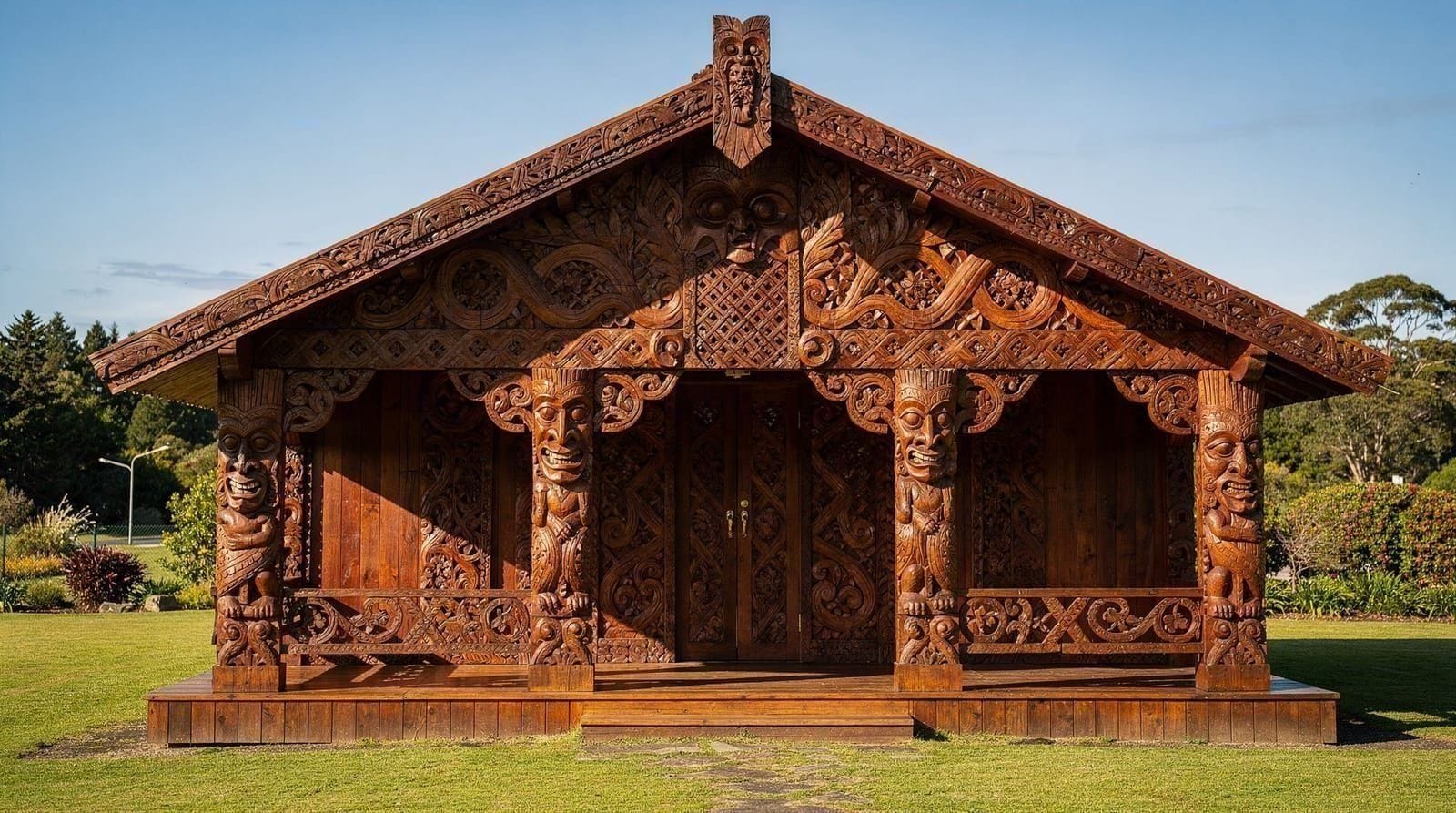
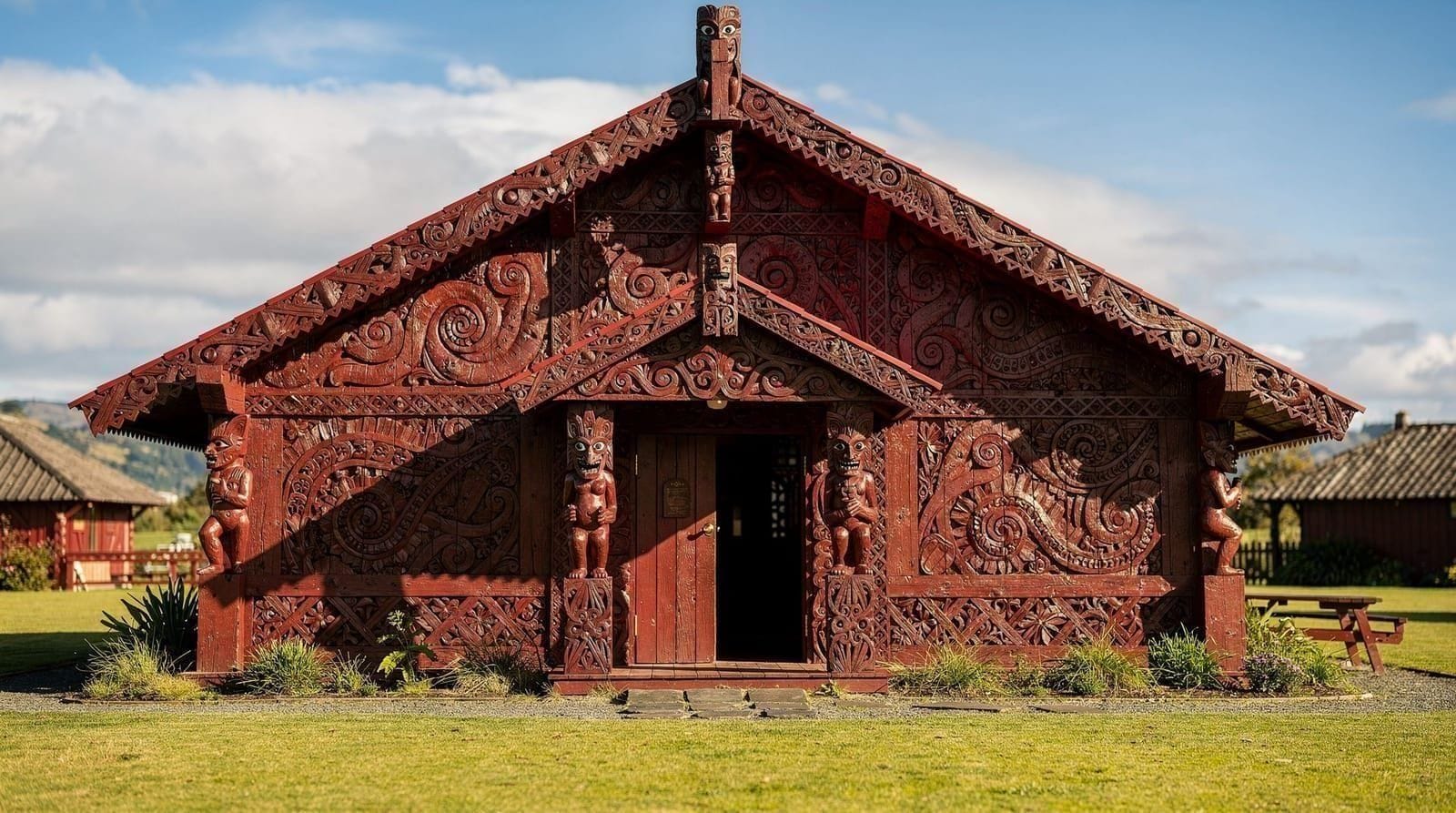
Te Whare Rūnanga — a carved Māori meeting house completed in 1940 for the treaty’s centenary, notable for representing carving styles from iwi across the country rather than a single tribal tradition, a deliberate choice symbolising national unity. It’s an active, still-used meeting house, not solely a museum piece.
The waka taua — Ngātokimatawhaorua, the world’s largest ceremonial war canoe, built for the same 1940 centenary and capable of carrying around 80 paddlers. It’s launched on Waitangi Day each year and is a genuinely striking sight even at rest, housed under cover near the grounds.
Te Kōngahu Museum of Waitangi — the site’s dedicated museum, covering the lead-up to the treaty, its text and translation issues, the treaty’s subsequent history, and its role in contemporary New Zealand.
A guided tour of the Waitangi Treaty Grounds covers all of the above with a guide providing historical and cultural context, generally a better way to properly absorb the site’s significance than a self-guided walk-through, particularly if this is your only stop with deep New Zealand historical content on your itinerary.
Cultural performances and hāngī
Beyond the historical grounds themselves, Waitangi also hosts cultural performances — waiata (song), poi and haka performed in the carved meeting house or an adjacent performance space — giving visitors a live cultural dimension alongside the historical site. This Waitangi Treaty Grounds visit with hāngī and cultural concert combines the historical grounds with a traditional Māori cultural performance and hāngī-cooked meal, a genuinely worthwhile add-on if your schedule allows the extra time, though fitting this into a single-day round trip from Auckland alongside the Hole in the Rock cruise is tight — most single-day visitors choose one or the other rather than both.
If you’d like more time across two visits or a slower pace overall, the Waitangi Treaty Grounds 2-day pass lets you return on a second day without paying full entry twice, worth considering if you’re staying overnight in Paihia.
Getting there from Auckland
Waitangi sits about 230 km north of Auckland via SH1, roughly a 3-hour drive, putting it within the same day-trip radius as the wider Bay of Islands. If you’re combining Waitangi with the region’s other headline attraction, this combined Hole in the Rock cruise and Waitangi Treaty Grounds tour covers both in a single guided day with transport included, a practical option if you’d rather not self-drive and coordinate two separate bookings.
Our Bay of Islands day trip guide covers the full logistics of reaching the region from Auckland, including the honest reality that fitting both the Hole in the Rock cruise (4-4.5 hours) and a proper Waitangi visit (1.5-2 hours minimum) into a single day leaves almost no buffer on top of 6 hours of driving. If you genuinely want to do justice to both, the Bay of Islands 2-day itinerary lays out how they fit comfortably into an overnight stay in Paihia instead.
Waitangi Day and why it matters nationally
Waitangi Day, 6 February, is New Zealand’s national day, marking the anniversary of the treaty’s first signing in 1840. It’s a public holiday observed across the country, with the Treaty Grounds themselves hosting the most significant ceremonies — the day carries genuine national weight, functioning simultaneously as a commemoration and an ongoing forum for discussion about the treaty’s legacy and its place in contemporary New Zealand. If your trip happens to coincide with Waitangi Day, visiting the grounds themselves offers a genuinely different, more significant experience than a standard visit, though expect larger crowds and a more ceremonial atmosphere than a typical day.
If you’d like the wider backstory before you go, our Auckland history guide sets out how the region’s Māori and colonial past fit together, which makes the Waitangi story easier to place. A few words of te reo also go a long way on site, and our te reo basics for visitors is a quick, useful read on the way north.
Comparing Waitangi to Auckland Museum’s historical coverage
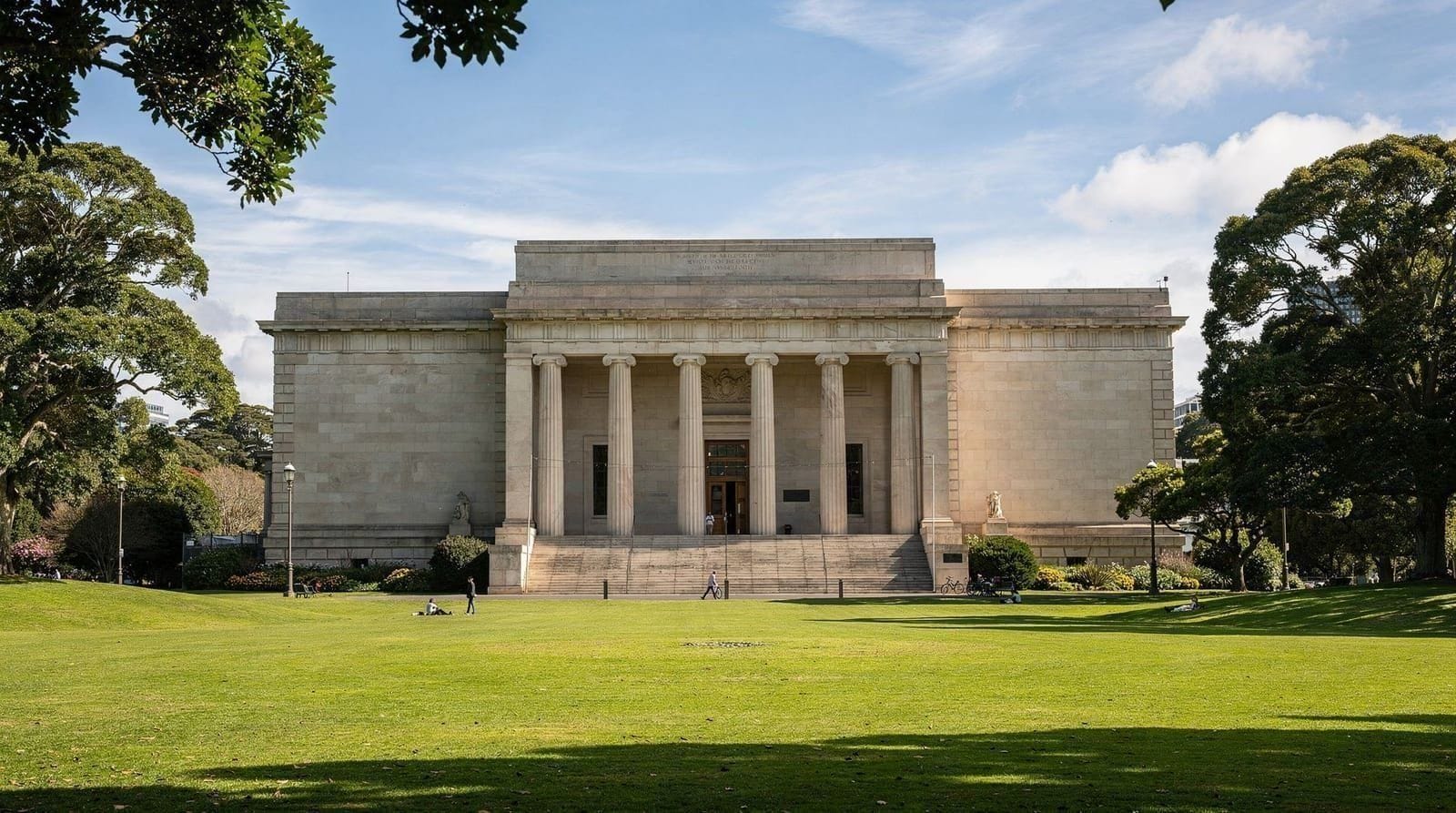
If you’ve already visited Auckland Museum earlier in your trip, Waitangi genuinely complements rather than repeats that experience — the museum’s strength is its Māori and Pacific taonga collection and natural history breadth, while Waitangi’s strength is the specific, tangible historical setting of a single pivotal national moment. Visiting both across a longer North Island trip gives a fuller picture than either alone: the museum for cultural depth and collection scale, Waitangi for the specific place where New Zealand’s founding constitutional document was actually signed, standing on the same ground where it happened rather than viewing artefacts in a gallery case.
The wider Waitangi National Trust grounds
Beyond the core buildings and museum, the Waitangi National Trust manages the wider grounds as a protected reserve, including coastal walking tracks along the Waitangi River and views back across the Bay of Islands itself. These wider grounds are free to walk once you’ve paid entry to the core historical area, and give a genuinely pleasant, scenic complement to the indoor and historical parts of the visit — worth building in an extra 20-30 minutes if the weather’s good and you’d like a slower, more reflective end to your visit than heading straight back to the car park.
Visiting respectfully
Waitangi is a place of real historical and ongoing significance, not solely a tourist attraction, and it’s worth approaching with that in mind. Listen properly during guided tours and performances rather than treating them as a photo backdrop, follow any specific protocol asked of you during a pōwhiri or performance (including staying seated or standing as directed), and engage with the museum’s coverage of the treaty’s more difficult history rather than skipping straight to the more photogenic waka and meeting house. Our respectful Māori tourism guide covers this kind of etiquette in more general depth, useful reading before any significant cultural site visit in New Zealand.
Practical facilities on-site
The Treaty Grounds visitor centre includes a cafe with waterfront outdoor seating, a gift shop carrying New Zealand and Māori-made design and craft, and clean, accessible restroom facilities near the main entrance. Parking is on-site and generally straightforward outside peak periods, and the grounds themselves are largely flat and accessible, with paved paths connecting the main buildings, making the site genuinely manageable for visitors with mobility considerations or travelling with young children in pushchairs. Budget time for the walk between the Treaty House and the whare rūnanga specifically, since the grounds are more spread out than some visitors expect from photographs alone.
Kiwi conservation and Haruru Falls nearby
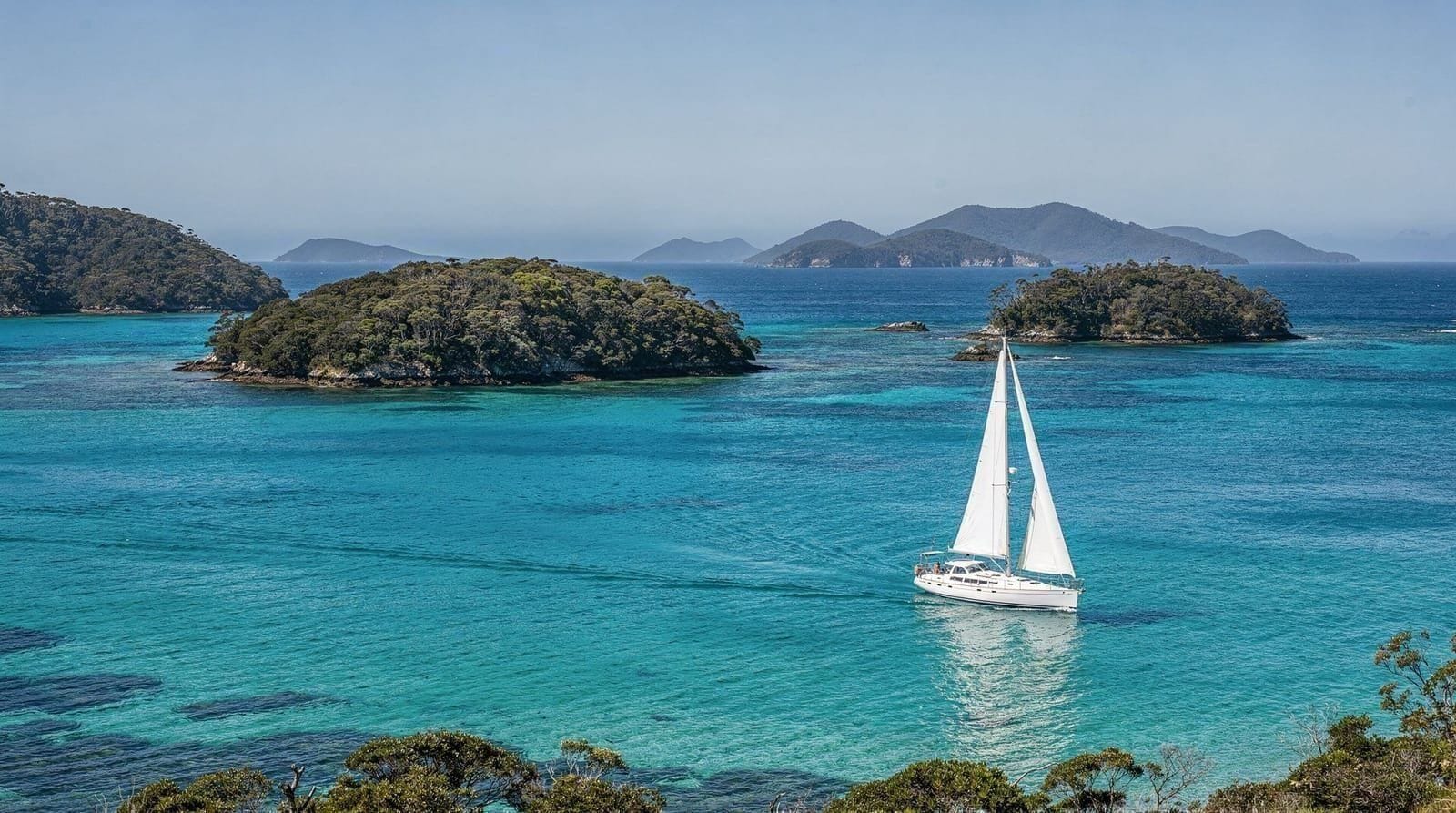
If you have extra time in the immediate area beyond the Treaty Grounds themselves, the wider Waitangi and Paihia area includes a couple of worthwhile nearby stops: Haruru Falls, a wide, horseshoe-shaped waterfall a short drive from Waitangi, and various local kiwi conservation and wildlife experiences in the wider Bay of Islands region, given Northland’s status as another strong area for spotting New Zealand’s iconic, elusive kiwi bird outside of Rotorua. Neither requires a dedicated extra day, but both are worth knowing about if you have a spare hour or two built into an overnight Paihia stay beyond the Treaty Grounds visit itself.
Combining Waitangi with the rest of the Bay of Islands
Waitangi sits within easy reach of Paihia’s waterfront and the wider Bay of Islands attractions, making it straightforward to combine with a Hole in the Rock cruise, a wander through Paihia’s cafes and shops, or a short ferry across to historic Russell, New Zealand’s first permanent European settlement and former capital, with its own layered colonial and Māori history. If you’re staying overnight rather than day-tripping, spreading Waitangi, the cruise, and Russell across two unhurried days gives each the time it deserves rather than compressing all three into a single rushed day. Our Māori heritage sites guide places Waitangi alongside other significant sites across the North Island if you’re building a longer, culturally-focused itinerary.
Guided tour vs self-guided visit
Both options work, but they suit different visitors. If your time or interest is limited to a quick walk-through, self-guided is fine — the grounds are well signposted. If you want the history to actually land, a guide makes a real difference.
| Self-guided | Guided tour | |
|---|---|---|
| Time | 1-1.5 hours | 1.5-2.5 hours |
| Depth | Signage and museum panels only | Live context, translation nuance, Q&A |
| Best for | Tight schedules, repeat visitors | First-time visitors, history-focused travellers |
| Add-on option | — | Hāngī and cultural concert available |
Book the guided Waitangi Treaty Grounds tour if you’re weighing this up — most first-time visitors who compare the two afterward say the guide was worth the extra time, particularly for the treaty-translation nuance that’s easy to skim past on a self-guided walk through the museum.
Best time of day to visit
Waitangi gets a steady flow of coach tours through the late morning and early afternoon, particularly in peak summer (December-February), so arriving at opening or in the first hour tends to mean a noticeably quieter Treaty House and whare rūnanga before the grounds fill up. Late afternoon, closer to closing, is the second-best window — by then most day-tour groups have moved on to their next Bay of Islands stop. If your schedule is flexible and you’re staying overnight in Paihia rather than day-tripping from Auckland, either end of the day gives a more contemplative visit than the crowded midday window.
If Waitangi leaves you wanting more cultural context, the Māori experiences in Rotorua guide shows how a different region presents living Māori culture, and our Māori culture in Auckland guide covers what you can explore closer to the city. Planning the drive north on your own terms? The driving in New Zealand guide and the car rental guide cover the practicalities.
Photographing the grounds respectfully
Photography is generally permitted across the outdoor grounds, the Treaty House exterior and the waka taua, but check specific signage inside Te Whare Rūnanga and during any cultural performance, since some areas and moments (particularly during a pōwhiri or haka) restrict photography out of respect. When in doubt, ask a staff member rather than assuming — it’s a working cultural site with ongoing significance, not a static museum backdrop, and the people performing or hosting you deserve that basic courtesy.
Frequently asked questions about the Waitangi Treaty Grounds
What actually happened at Waitangi in 1840?
On 6 February 1840, the Treaty of Waitangi was first signed at this site between Governor William Hobson and a group of Māori rangatira. Over 500 chiefs eventually signed copies circulated around the country, though not every iwi signed, and interpretation of the treaty has remained central to New Zealand’s history since.
How much does it cost to visit the Waitangi Treaty Grounds?
General entry runs roughly NZD 40-60 for international visitors, varying by season and inclusions. New Zealand residents and citizens generally receive free or discounted entry.
How long should I spend at the Waitangi Treaty Grounds?
Budget at least 1.5-2 hours for the Treaty House, whare rūnanga, waka taua and museum, plus another hour if you add a guided tour or cultural performance.
Can I visit Waitangi as a day trip from Auckland?
Yes, but it’s tight — Waitangi sits within the Bay of Islands day trip, roughly 3 hours each way, and fitting in both the Hole in the Rock cruise and a proper Waitangi visit leaves little buffer. Most single-day visitors prioritise one.
What is the significance of Waitangi Day?
Waitangi Day, 6 February, is New Zealand’s national day, marking the treaty’s first signing. It’s a public holiday with ceremonies at the Treaty Grounds and events nationwide, a day of both commemoration and ongoing discussion.
What’s inside the museum at Waitangi?
Te Kōngahu Museum of Waitangi covers the lead-up to the treaty’s signing, its Māori and English texts and translation differences, its subsequent history, and its role in contemporary New Zealand law and society.
Is Waitangi worth visiting if I’m not particularly interested in history?
Yes — the site itself, the carved meeting house and waka, and the setting on the Bay of Islands waterfront are worth seeing on their own merits, and most visitors come away finding the history more engaging than expected once they’re actually there.
Is a guided tour worth it at Waitangi, or is self-guided enough?
Self-guided works for a quick visit, but a guide adds real value here — the treaty’s translation nuance and the site’s layered history are easy to skim past on signage alone. Most first-time visitors find the guided tour a genuinely worthwhile upgrade.
What time of day has the fewest crowds at Waitangi?
Early morning, right at opening, or the last hour before closing — coach tour groups tend to fill the grounds through late morning and early afternoon, especially in peak summer.
Top experiences
Bookable activities with verified prices and instant confirmation on GetYourGuide.