Avoiding crowds on the North Island: a practical guide
Hobbiton Movie Set: Movie set guided tour
Duration: 2.5 hours
How do I avoid crowds on the North Island?
Travel in shoulder seasons (March-May, September-November), book the first morning slot at ticketed attractions like Hobbiton, visit Cathedral Cove at low tide on a weekday, and choose lesser-known alternatives (Rangitoto over Waiheke, Waimangu over Wai-O-Tapu) when crowd tolerance is low.
Why crowds matter more than most guides admit
Most North Island content focuses on what to see, not when to see it without three tour buses ahead of you. Crowds genuinely change the experience at several headline attractions — Hobbiton’s photo opportunities, Cathedral Cove’s beach space, Waiheke’s winery tasting rooms — and a little timing knowledge goes a long way toward avoiding the worst of it.
| Biggest single lever | Shift the whole trip to shoulder season |
| Quietest Rotorua park | Waimangu Volcanic Valley |
| Quietest gulf island | Rangitoto over Waiheke on weekends |
| Best Hobbiton slot | First tour of the day, weekday |
| Booking lead time for early slots | 6-8 weeks ahead |
Shift your trip to shoulder season
The single biggest lever is timing your entire trip for March-May or September-November rather than the December-February peak. Shoulder seasons offer noticeably thinner crowds at every major attraction, better accommodation prices, and — as a bonus — milder, less humid weather than summer. Our best time to visit Auckland guide covers the full seasonal trade-offs, and this single decision does more crowd-avoidance work than any individual tactic below.
Hobbiton: book the first slot
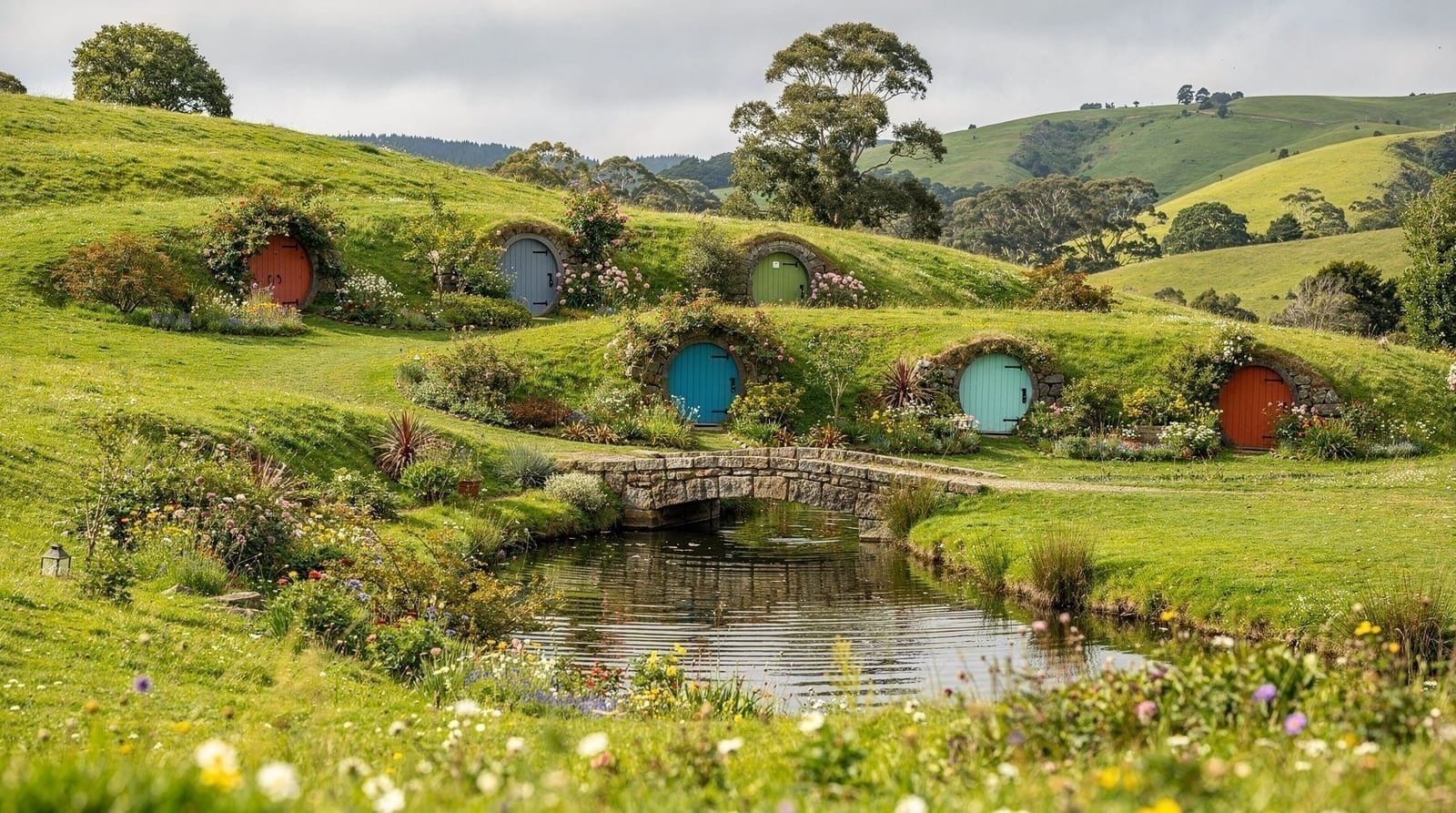
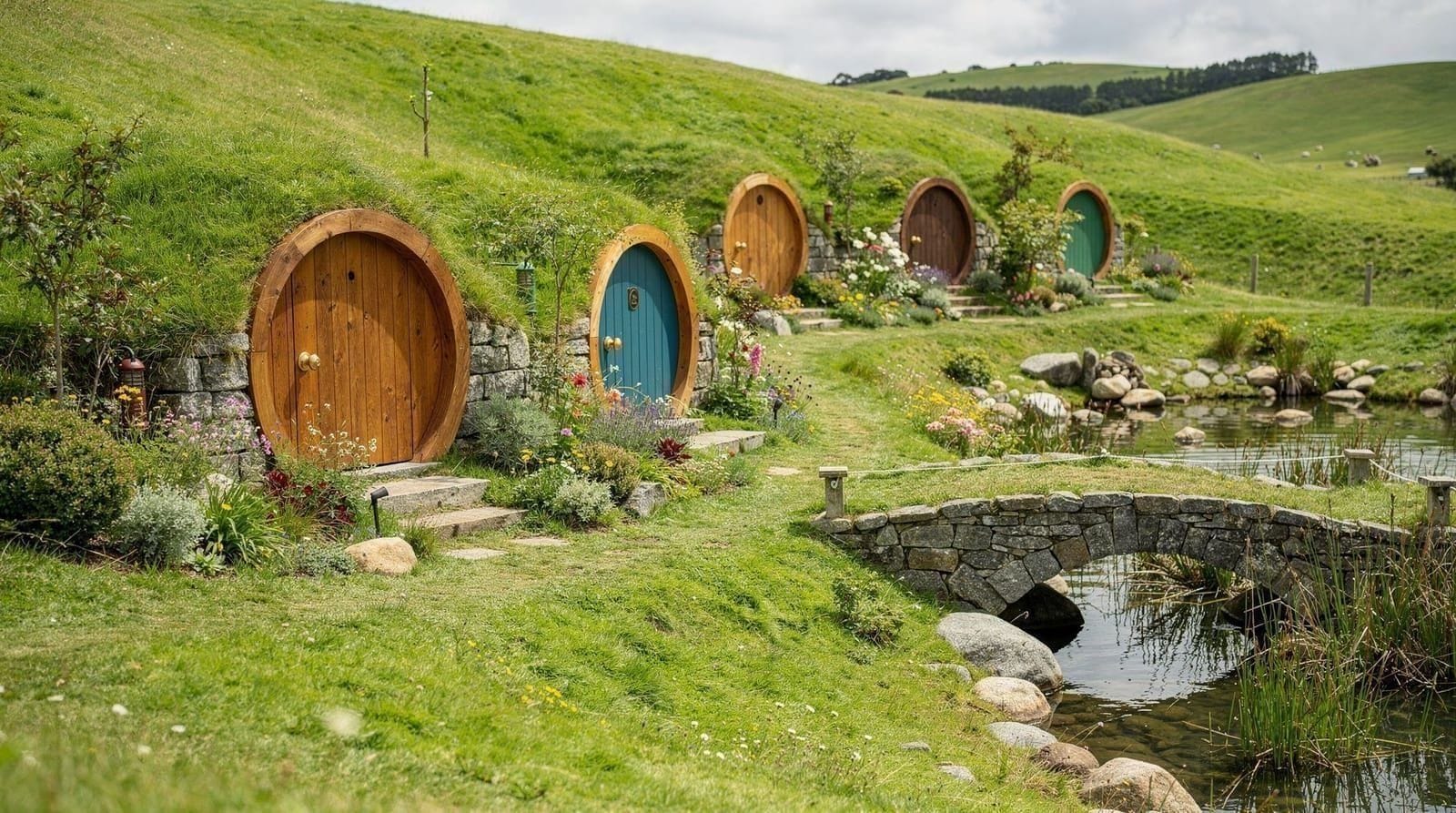
Hobbiton’s tour groups run on a fixed schedule, and the first slot of the day (typically 9am) consistently has fewer overlapping groups on the paths than midday sessions, plus better morning light for photos. Weekday visits beat weekends regardless of season. Book the Hobbiton Movie Set guided tour for the earliest available slot, and see our Hobbiton morning vs evening comparison for the full timing breakdown, including why evening tours (where offered) trade a later finish for a quieter, more atmospheric set.
Cathedral Cove: tide and timing both matter
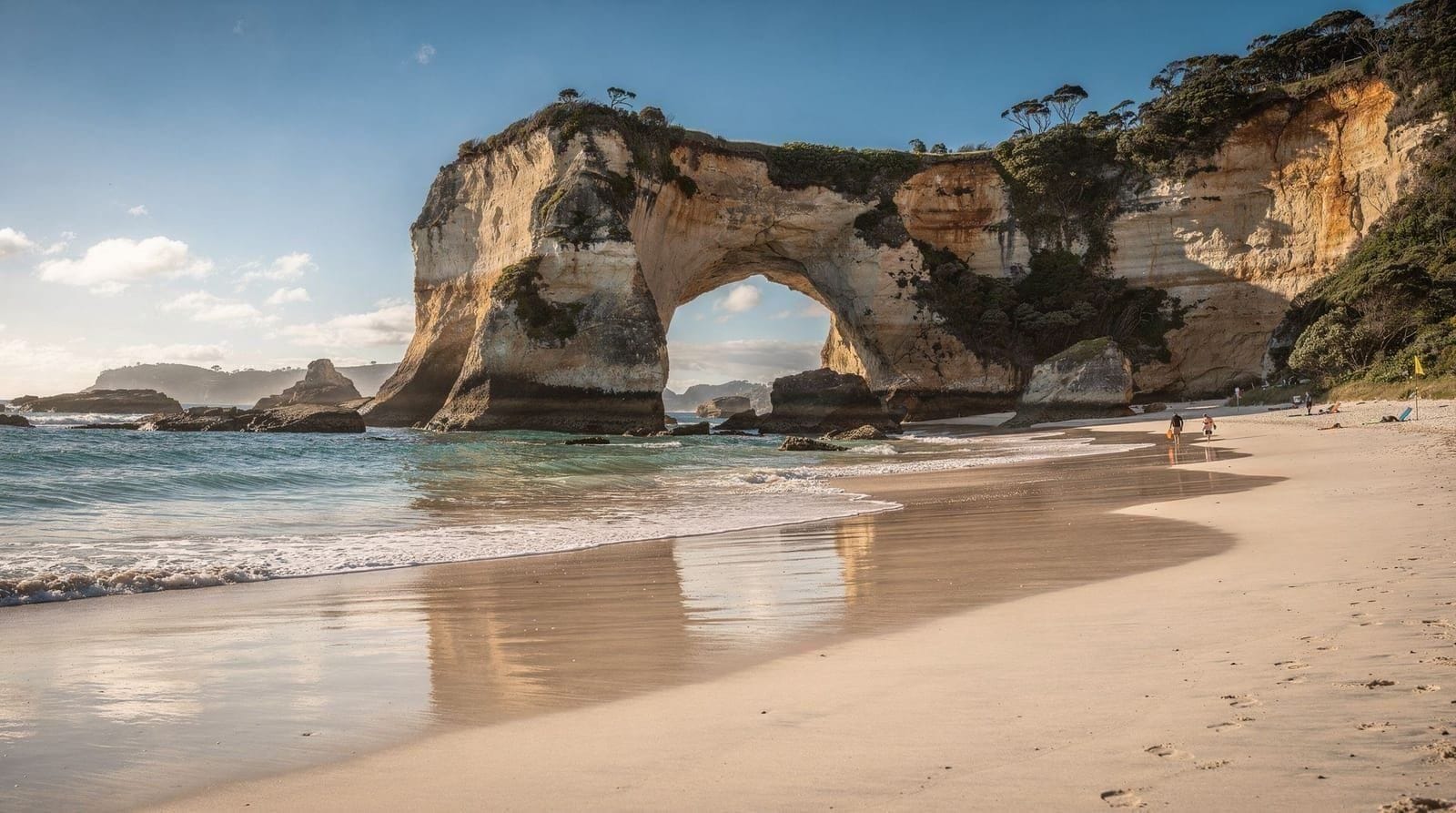
Cathedral Cove gets crowded for two compounding reasons — high tide narrows the beach dramatically, and midday parking at Hahei genuinely fills up in summer. Check tide tables before you go and aim for a low-tide window before 9am or after 4pm. Our Cathedral Cove vs Hot Water Beach comparison covers a genuinely less crowded alternative nearby if timing doesn’t work out.
Rotorua’s geothermal parks: choose the quieter option
Te Puia and Wai-O-Tapu see the heaviest tour bus traffic given their fame and proximity to the Lady Knox Geyser’s scheduled eruption. Waimangu Volcanic Valley, a short drive further out, delivers a comparable geothermal experience with consistently thinner crowds — see our Te Puia vs Wai-O-Tapu comparison for the full trade-offs, and is Rotorua worth it for the broader context. If you’d rather not drive yourself, a half-day Waimangu Volcanic Valley tour keeps things simple.
Waiheke: go weekday, or pick Rangitoto instead
Waiheke’s main wineries fill up on weekends and throughout summer, with tasting rooms and lunch reservations both affected. A weekday visit noticeably thins the crowds. If your schedule is fixed to a weekend, consider Rangitoto Island instead — closer, cheaper, and consistently less crowded despite offering a genuinely good half-day out.
Waitomo: early or late, not midday
Waitomo’s glowworm cave tours run on set time slots throughout the day; midday slots see the heaviest tour-bus traffic. Early morning or late afternoon slots are noticeably quieter, and the glowworms themselves are visible regardless of time of day since the caves are naturally dark. Check best time for Waitomo glowworms for the full seasonal and timing picture.
Bay of Islands: early departures beat midday cruises
Hole in the Rock boat cruises from Paihia run multiple departures daily, and the earliest morning slot consistently sees calmer water (better for photos and comfort) and smaller groups than the popular midday sailing, which tends to combine with lunch-hour tour bus arrivals from day-trippers. If you’re staying overnight in the Bay of Islands rather than day-tripping from Auckland, this flexibility is easier to use to your advantage.
Piha and Muriwai: weekday mornings are dramatically quieter
Auckland’s west coast beaches see heavy weekend traffic from locals as well as tourists, particularly on hot summer days when the whole city seems to head west. A weekday morning visit — even in peak season — sees a fraction of the weekend crowd, and parking (which genuinely fills up at Piha on summer weekends) is rarely an issue outside those peak windows.
A seasonal crowd calendar at a glance
| Period | Crowd level | Trade-off |
|---|---|---|
| Dec-Feb (summer) | Highest | Best weather, worst crowds and prices |
| Mar-May (autumn) | Low-moderate | Strong weather-to-crowd balance |
| Jun-Aug (winter) | Lowest | Fewest tourists, wettest, early sunsets |
| Sep-Nov (spring) | Low-moderate | Blooming gardens, fresh but variable weather |
Building a low-crowd itinerary from scratch
If crowd avoidance is genuinely your top priority, structure your whole trip around it rather than treating it as an afterthought: book shoulder-season dates first, then work backward — choose Waimangu over Wai-O-Tapu, Rangitoto over a weekend Waiheke trip, and self-drive rather than joining fixed-schedule guided tours wherever your comfort with independent driving allows. Combined, these choices meaningfully change the texture of a North Island trip, trading a small amount of convenience for a noticeably calmer experience at nearly every stop.
Booking strategy as a crowd-avoidance tool
Beyond timing your visit itself, when you book matters too. Booking well ahead for fixed-schedule attractions (Hobbiton, Waitomo) doesn’t reduce the crowd at the attraction, but it does guarantee you the specific time slot that best suits a low-crowd strategy — first-of-the-day slots sell out fastest precisely because experienced travellers already know they’re the quietest. Last-minute bookings, by contrast, often leave you with whatever midday slots remain, which tend to be the most crowded regardless of season. If crowd avoidance genuinely matters to your trip, book your key attractions 6-8 weeks ahead specifically to secure early or late slots, rather than the standard 2-3 week booking window that’s sufficient for availability alone.
Weekday versus weekend planning across a whole trip
If your itinerary has any flexibility, structure it so weekend days fall on quieter, less crowd-sensitive activities (driving days, beach time, self-guided walks) and weekdays cover the attractions where crowds matter most (Hobbiton, Cathedral Cove, Waiheke wineries). This single scheduling decision, applied across a multi-day North Island trip, does more cumulative crowd-avoidance work than any single tactic covered above, since it compounds across every crowd-sensitive stop on your itinerary rather than addressing just one.
Crowds versus safety: when avoiding crowds isn’t the priority
It’s worth noting one exception to all of the above: at patrolled beaches like Piha and Muriwai, the presence of lifeguards (patrolling roughly October-April) is a genuine safety feature, not just a crowd indicator, given the real rip current risk at these beaches. Avoiding crowds by swimming outside patrol hours or at unpatrolled locations trades a real safety margin for solitude — not a trade-off we’d recommend making. For beach-specific crowd avoidance, arrive early within patrolled hours rather than outside them entirely.
Alternative attractions that see almost no crowds at all
For travellers whose crowd tolerance is genuinely low, several North Island attractions covered elsewhere on this site remain reliably uncrowded even in peak season, simply because they’re less marketed than the headline sights. Lesser-known Hauraki Gulf islands beyond Waiheke and Rangitoto, quieter Coromandel beaches away from Cathedral Cove specifically, and Hamilton Gardens (a genuine highlight that gets a fraction of Hobbiton’s visitor numbers despite sitting on a similar driving route) all deliver strong experiences without the crowd-management planning the headline attractions require. If your trip has flexibility, weighting your itinerary toward one or two of these alongside the must-see attractions gives a genuine change of pace.
How group size affects crowd sensitivity
Solo travellers and couples generally have more flexibility to adapt to crowd conditions in real time — arriving early, waiting out a busy period with a coffee, or shifting plans on short notice. Larger groups and families with young kids have less flexibility, since coordinating a change of plan takes longer and children’s schedules (naps, meals) constrain timing more rigidly. If you’re travelling as a larger group, front-load your crowd-avoidance planning into the booking stage (securing early slots well ahead) rather than relying on in-the-moment flexibility that a bigger group simply won’t have.
Reader questions we see most often
“Does travelling in shoulder season really make a noticeable difference, or is it marginal?” Genuinely noticeable — visitor numbers at headline attractions like Hobbiton and Cathedral Cove drop meaningfully outside December-February, not just at the margins, and this is consistently reported across independent visitor reviews rather than being a marketing claim. “Is it worth paying more for a private tour purely to avoid crowds?” Only if crowd avoidance is a genuinely high priority for you personally — private tours control your specific group’s pace but don’t reduce the number of other visitors at a shared attraction like Cathedral Cove or Hobbiton’s broader visitor numbers.
“Are New Zealand’s school holidays a crowd factor domestically, separate from international tourist seasons?” Yes — New Zealand and Australian school holidays (particularly the summer break, December-January, and shorter breaks through the year) add a domestic crowd layer on top of international peak season, worth checking against a New Zealand school calendar if you’re trying to avoid the absolute busiest windows.
Putting it all together: a sample low-crowd 5-day plan
Day one: Auckland CBD midweek, using free volcanic cone climbs over the Sky Tower for the crowd-free version. Day two: Hobbiton’s first slot, then Waitomo’s late-afternoon glowworm tour, both booked 6-8 weeks ahead. Day three: Rotorua, choosing Waimangu over the busier Te Puia or Wai-O-Tapu. Day four: Waiheke on a weekday rather than a weekend. Day five: Cathedral Cove at low tide, early morning, followed by Hot Water Beach as the quieter alternative. This sequencing applies nearly every tactic covered above across a realistic multi-day trip, without requiring a fundamentally different itinerary from what most visitors already plan — just deliberate timing choices layered onto a standard route.
Digital tools that help with real-time crowd assessment
Beyond advance booking and timing strategy, a few practical tools help in the moment: checking a tour operator’s current availability calendar often reveals which days and times are already filling up, functioning as an informal crowd indicator even before you arrive. Live tide tables (essential for Cathedral Cove specifically) are freely available online and take the guesswork out of timing that particular visit. And simply asking your accommodation host or a local tour operator which days tend to be quieter — they generally know the patterns better than any generic online guide, including this one, since they see booking volumes directly.
When avoiding crowds isn’t actually your priority
It’s worth acknowledging honestly that some travellers genuinely prefer the energy of a busier attraction — a fuller Hobbiton tour group, a livelier Waiheke winery on a Saturday — and there’s nothing wrong with prioritising convenience or social atmosphere over solitude. This guide assumes crowd avoidance matters to you, but if it doesn’t, the standard peak-season, weekend-friendly version of any of these attractions remains a perfectly valid choice; just budget more time for queues and expect a busier, more energetic version of the same experience.
Coromandel and Cape Reinga: applying the same tactics further afield
The crowd-avoidance principles covered above for Auckland’s near-in attractions apply just as well to longer trips further north and east. Cape Reinga, at the very top of the North Island, sees a genuine but very different crowd pattern — bus tours cluster around a handful of scheduled departure windows from the Bay of Islands, so an early self-drive start or a tour with a less common departure time avoids the worst of the convoy effect near the lighthouse itself.
The wider Coromandel Peninsula beyond Cathedral Cove specifically — Hot Water Beach at the right tide window, the Coromandel Coastal Walkway, smaller settlements like Whitianga’s quieter beaches — sees a fraction of the visitor volume that concentrates at the single headline sight, making it a genuinely good crowd-avoidance region overall, not just for the one famous cove.
How accommodation booking timing interacts with crowds
A less obvious crowd-avoidance lever: booking accommodation early in high-demand areas like Hahei (for Cathedral Cove) or central Rotorua doesn’t just secure a room, it often secures a room within walking or short-driving distance of the attraction itself, letting you reach a low-tide or first-tour-slot window without the extra drive time that late-booking travellers staying further out have to build in. Late bookers in these towns often end up staying 20-40 minutes away during peak periods once the closest options sell out, which quietly erodes the timing advantage of an early-slot strategy even if the booking itself was made with good crowd-avoidance intentions.
Where to read next for each stop
Each tactic above has a fuller guide behind it. For Auckland itself, Auckland neighbourhoods and free things to do in Auckland help you fill quiet weekday hours without queuing, and volcanic cones in Auckland are a natural way to get a view without a crowd. If you are weighing how long to stay, how many days in Auckland helps you leave enough slack to move things around when a day looks busy.
For the day trips, best day trips from Auckland lays out the options side by side, and self-drive vs tour day trips is worth reading before you commit, since the flexibility of driving yourself is one of the strongest crowd-avoidance tools. Driving in New Zealand covers what to expect on the road if you go that way. On the islands, lesser-known Gulf islands and Waiheke Island guide cover the quieter end of the Hauraki Gulf, while Hamilton Gardens day trip is a good change of pace away from the headline sights.
If you would rather see the whole thing laid out as a route, the North Island 7-day loop and the Auckland to Rotorua 3-day itinerary are easy to adapt: keep the stops, then shift each one to the early or late window described above. For the Coromandel leg, Hot Water Beach and Cathedral Cove at Hahei are worth checking together so you can pick whichever suits the tide on the day.
The trade-off: winter is quietest but wettest
June-August genuinely sees the fewest tourists across the North Island, but it’s also the wettest period with sunsets as early as 4.30pm — a real trade-off between solitude and comfortable conditions. For most travellers, shoulder season remains the better balance; winter suits those specifically prioritising low crowds over ideal weather.
Frequently asked questions about avoiding North Island crowds
What’s the single best way to avoid crowds on the North Island?
Shift your trip to March-May or September-November — shoulder seasons combine mild weather with noticeably thinner crowds and better prices than December-February peak.
How do I avoid Hobbiton crowds specifically?
Book the first tour slot of the day, typically 9am, and visit on a weekday. Peak season sees the largest crowds regardless of time slot, so shoulder-season timing helps most.
How do I avoid Cathedral Cove crowds?
Visit at low tide (check tide tables in advance) and arrive before 9am or after 4pm — midday high season sees both parking and beach space become genuinely constrained.
Are Rotorua’s geothermal parks crowded?
Te Puia and Wai-O-Tapu see the most tour bus traffic; Waimangu Volcanic Valley is consistently quieter for a comparable geothermal experience.
Is Waiheke Island crowded?
On weekends and in summer, yes, particularly the main wineries. Weekday visits or a shift to Rangitoto Island both reduce crowd exposure.
What time of year has the fewest tourists on the North Island?
June-August (winter) sees the fewest tourists overall, though it’s also the wettest period with early sunsets — a genuine trade-off between solitude and weather comfort.
Do crowds affect self-drive itineraries differently than guided tours?
Yes — self-drivers have more flexibility to shift timing (arriving before opening, choosing off-peak days) than guided tour participants, who are locked to the tour’s fixed schedule. This is a genuine argument for self-driving if crowd avoidance is your top priority.
Is Cape Reinga crowded?
Bus tours cluster around a handful of scheduled departure windows from the Bay of Islands, creating convoy-like crowding near the lighthouse at those specific times. A self-drive trip or an off-peak tour departure avoids most of it.
Does booking accommodation early actually help avoid crowds?
Indirectly, yes — securing a room close to attractions like Cathedral Cove or central Rotorua early means you can reach a low-tide or first-slot window without extra drive time. Late bookers in high-demand towns often end up staying 20-40 minutes further out once the closest options sell out.
Top experiences
Bookable activities with verified prices and instant confirmation on GetYourGuide.