Cathedral Cove vs Hot Water Beach: which to prioritise
Auckland: Cathedral cove coromandel scenic day tour
Should I visit Cathedral Cove or Hot Water Beach first?
Visit Cathedral Cove first thing in the morning (by 8-9am) to beat both crowds and the car park filling up, regardless of tide. Then time Hot Water Beach around whichever low tide falls that day — the two combine well as a single Coromandel day since they sit only about 20 minutes apart.
Two headline Coromandel stops, two different planning problems
Cathedral Cove and Hot Water Beach are the Coromandel Peninsula’s two most famous natural attractions, sitting close enough together (about 20 minutes apart by road, both near the small settlement of Hahei) that almost every visitor tries to combine them in a single day. But they demand genuinely different planning approaches — Cathedral Cove is a walk-in scenic attraction best tackled early to beat crowds regardless of tide, while Hot Water Beach is entirely tide-dependent, with a narrow daily window when the geothermal sand is actually diggable. Getting the sequencing right matters more here than at almost any other Auckland-area day trip.
| Where | Near Hahei, Coromandel Peninsula, ~2.5-3 hrs from Auckland |
| Cost | Both free (Hot Water Beach spade rental NZD 10-15) |
| Time needed | Full day for both, plus drive time |
| Best strategy | Cathedral Cove by 8-9am, Hot Water Beach around the day’s low tide |
| Booking | No booking needed self-drive; tours worth it for tide timing |
Cathedral Cove: the scenic walk
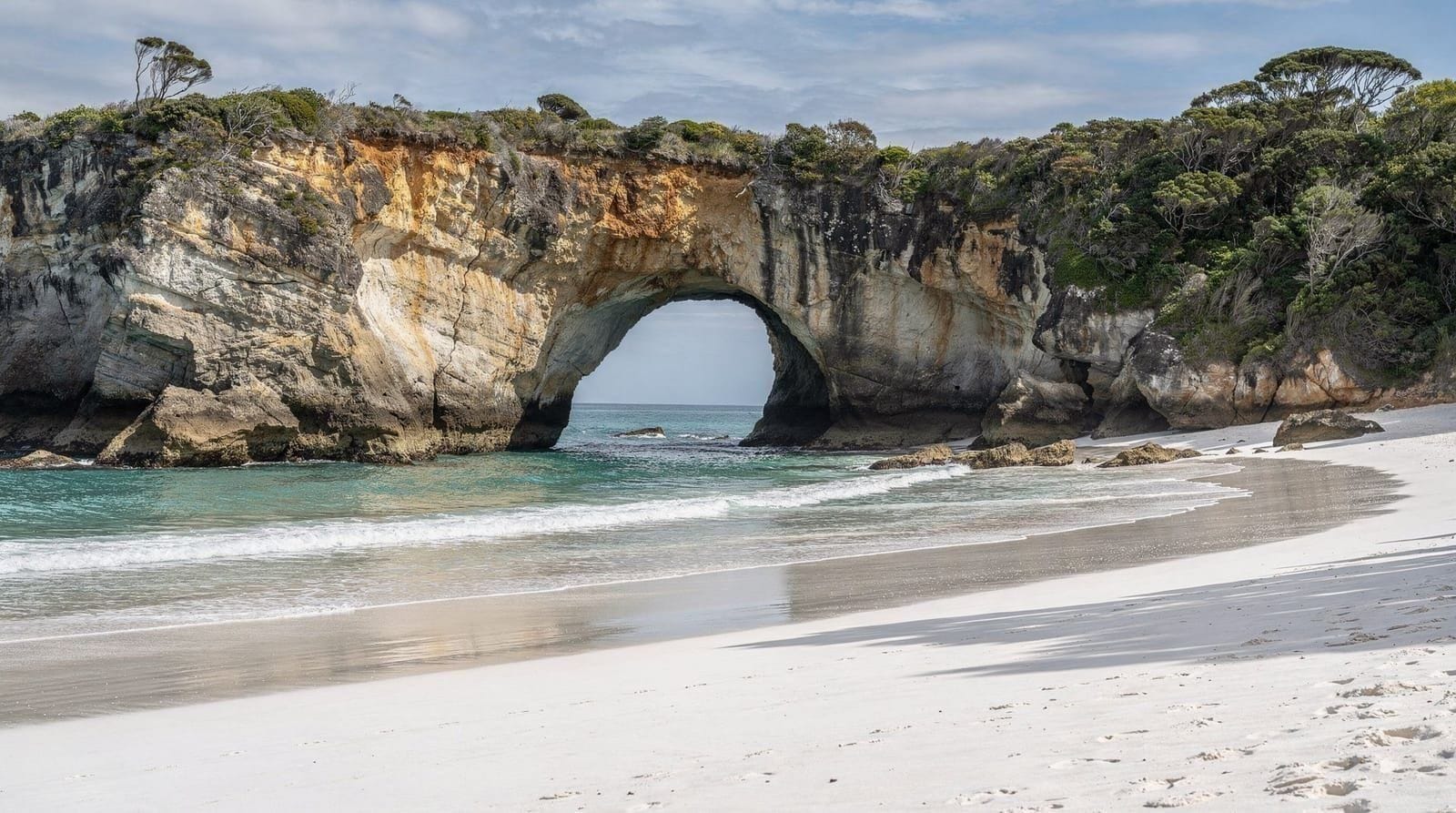
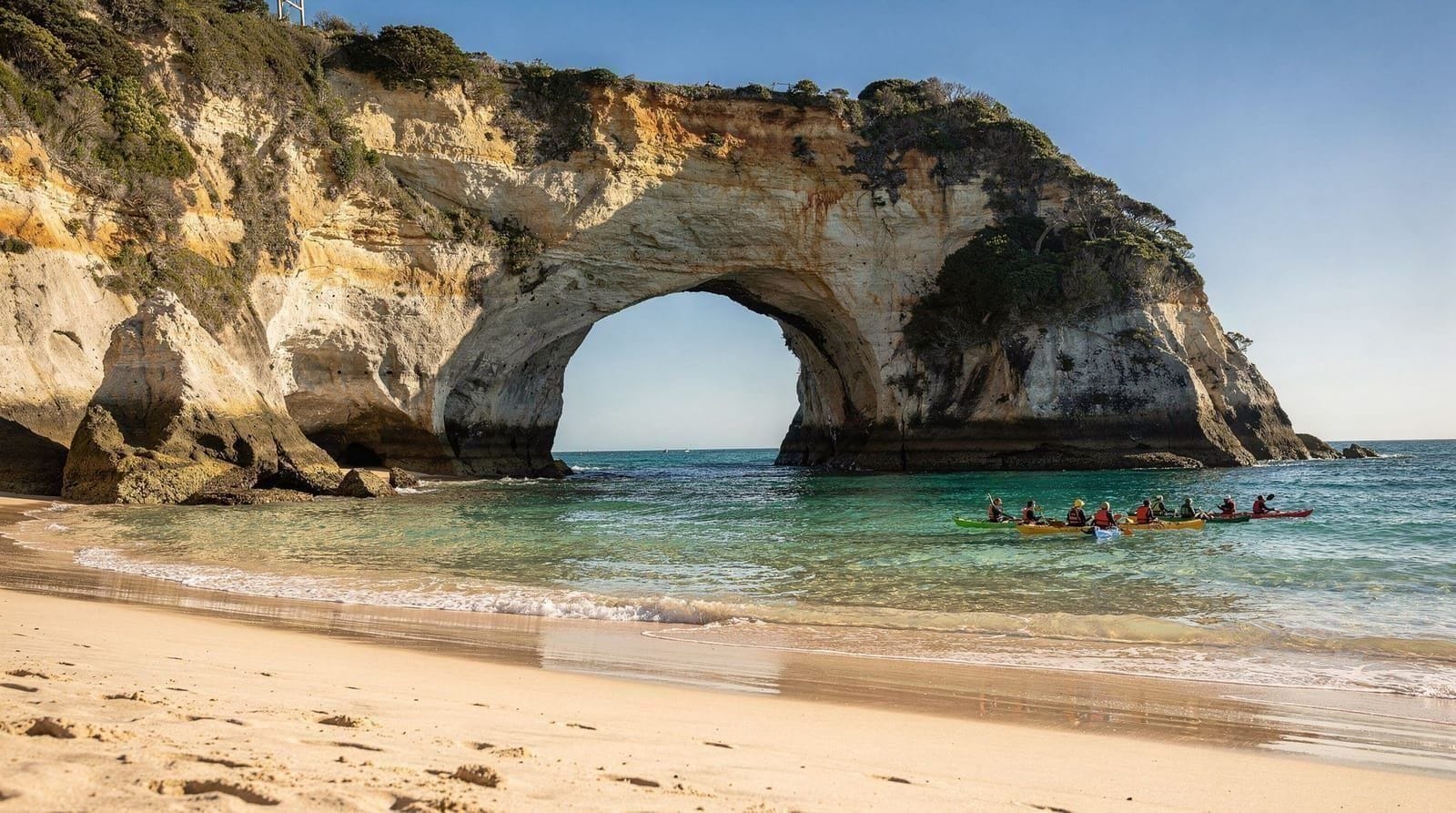
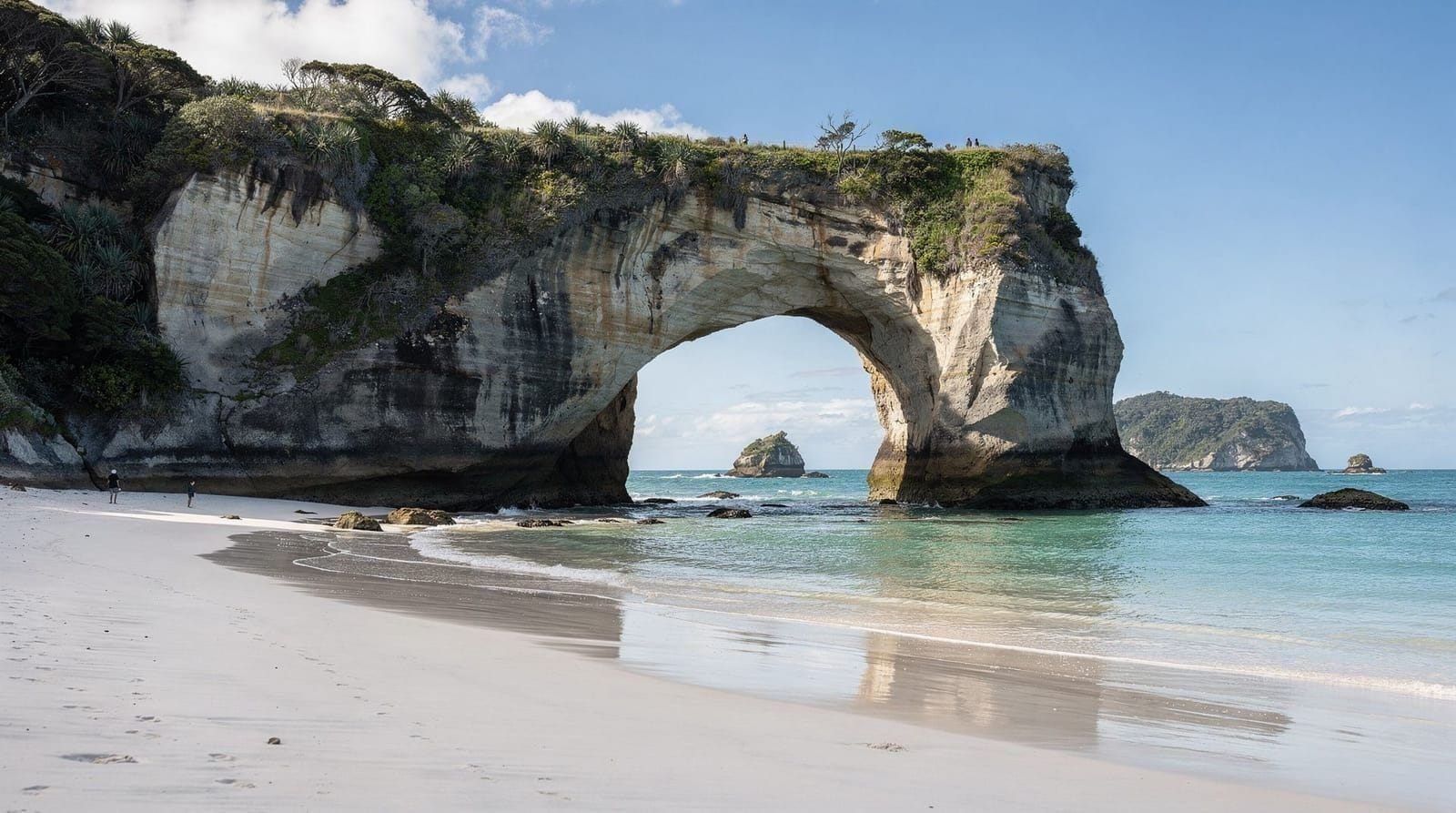
Cathedral Cove is reached by a roughly 45-minute walk each way from the Hahei car park, covering about 2.4 km each way through native bush with some moderate hill sections, leading to a dramatic natural sea arch and a pristine, sheltered beach on the other side. There is no vehicle access directly to the cove — the walk is mandatory, which is part of what keeps it feeling relatively unspoiled despite its fame. This Cathedral Cove and Coromandel scenic day tour from Auckland handles the drive and gets you to the trailhead without self-driving the roughly 2.5-3 hour route from Auckland.
Hot Water Beach: the tide-dependent dig
Hot Water Beach works on an entirely different mechanic — underground geothermal streams heat a specific stretch of sand to around 64°C, diggable into a private hot pool for roughly two hours either side of low tide. Outside that window, there is simply nothing to dig; the tide covers the hot sand entirely. This Coromandel day tour including Hot Water Beach and this combined Cathedral Cove and Hot Water Beach day tour from Coromandel Town both handle the tide timing for you, a genuine advantage over self-driving and having to check tide tables independently.
The critical difference: fixed morning vs floating tide
This is the single most important thing to understand when planning a day covering both. Cathedral Cove’s car park fills early regardless of the day’s tide — arriving by 8-9am is the main lever for avoiding crowds there. Hot Water Beach has no equivalent “arrive early” strategy, since its accessibility is governed entirely by the tide chart, which shifts daily and by season. This means your Cathedral Cove visit should always happen first thing in the morning, while your Hot Water Beach visit gets built around whatever low tide the day actually delivers — sometimes that means Hot Water Beach comes right after Cathedral Cove, sometimes it means a gap of several hours in between.
Side-by-side comparison
| Feature | Cathedral Cove | Hot Water Beach |
|---|---|---|
| Access | 45-minute walk each way, no vehicle access | Direct from car park, 5-minute walk |
| Timing dependency | Best early morning (crowds), visitable most tides | Strictly tide-dependent (2 hours either side of low tide) |
| Cost | Free | Free (spade rental NZD 10-15) |
| Physical effort | Moderate walk, ~5 km round trip | Minimal walking, digging effort |
| Best for | Photography, scenery, swimming | Hands-on activity, families, novelty |
| Crowd pattern | Busiest by mid-morning onward | Busiest around the daily low-tide window |
Swimming safety at each beach
Cathedral Cove’s sheltered bay generally offers calmer swimming conditions than the open Coromandel coastline nearby, though conditions can still change quickly, and it is worth checking conditions before swimming rather than assuming shelter guarantees safety. Hot Water Beach’s dug pools themselves are shallow and safe, but the open ocean beyond them carries a genuine, well-known rip current and is not patrolled by lifeguards, meaning swimming in the surf itself (as opposed to the pools) is only advisable for strong, experienced swimmers. Neither beach should be treated as casually safe simply because they are popular tourist stops — New Zealand’s beaches, even famous ones, carry real hazards that catch visitors unfamiliar with rip currents off guard.
Checking the tide before you go
Tide times shift daily and by season, so check a current, Coromandel-specific tide table — MetService and the NIWA tide predictor both publish accurate local tides — rather than relying on a generic Auckland tide time, since the coasts differ by an hour or more. This matters far more for Hot Water Beach’s strict digging window than for Cathedral Cove, though checking tide levels for Cathedral Cove too helps you anticipate how much beach will actually be exposed when you arrive, particularly useful for photography planning around the sea arch itself.
What to bring for each stop
For Cathedral Cove, sturdy walking shoes handle the track’s hills and roots better than sandals, and swimwear is worth packing since the sheltered cove itself invites a swim once you arrive. For Hot Water Beach, bring or rent a spade, a towel, and footwear you don’t mind getting wet and sandy — jandals (flip-flops) are fine here since there’s no real walking involved beyond the flat stretch from the car park. Both stops benefit from a reusable water bottle and sun protection, since shade is limited at both, particularly on the exposed sand at Hot Water Beach during the digging window.
Kayaking as an alternative way to see Cathedral Cove
For a genuinely different perspective on Cathedral Cove beyond the standard walking track, guided sea kayak tours paddle along the coastline and through the arch itself from the water, avoiding the 45-minute walk entirely while delivering arguably even better photography angles of the cove’s dramatic rock formations. This suits visitors who want to prioritise Hot Water Beach’s tide window without sacrificing time on the Cathedral Cove walk, or simply anyone who prefers paddling to hiking.
Which one to prioritise if you can only pick one
If your Coromandel day is genuinely tight and only one of the two fits, the honest answer depends on what you value. Cathedral Cove delivers more classic, dramatic natural scenery and photography, and works regardless of tide (with reduced beach area at high tide). Hot Water Beach delivers a more unique, hands-on activity unlike almost anything else in New Zealand, but only within its narrow tide window, and offers less to look at if the tide is against you. For most first-time visitors chasing the classic Coromandel photo, Cathedral Cove wins; for families wanting an interactive activity, Hot Water Beach wins.
Planning a combined day
The general pattern that works best: hit Cathedral Cove first thing in the morning (by 8-9am in peak season) before the car park fills and before the walk gets crowded, then check that day’s low tide and time your Hot Water Beach visit accordingly — either straight after Cathedral Cove if the tide cooperates, or with a break for lunch in Hahei or nearby Whitianga if the low tide falls later in the day. If low tide happens to fall in the morning instead, flip the order: dig your Hot Water Beach pool first, then walk to Cathedral Cove once you’ve dried off. Either way, budget a full day for both, plus the roughly 2.5-3 hour drive back to Auckland if you are not staying overnight on the peninsula.
Practical logistics: parking and getting there
Both attractions have limited car parking that fills quickly in peak season — Hahei’s car park for Cathedral Cove reaches capacity by mid-morning on busy summer days, sometimes requiring a walk from an overflow area further away, adding time to your visit beyond the standard 45-minute track. Hot Water Beach’s car park similarly fills around popular daytime low tides, particularly weekends in December-February. If self-driving, arriving early for Cathedral Cove and planning some buffer time for Hot Water Beach parking, especially if the low tide falls at a convenient midday time, will save real frustration. Both are roughly 2.5-3 hours’ drive from Auckland via SH25, with the exact route and timing covered in more depth in our Coromandel day trip guide.
Self-drive or tour: which handles this better
Because Hot Water Beach’s timing is so tide-dependent and Cathedral Cove rewards an early start, a guided tour genuinely earns its price tag here more than on some other Auckland day trips — getting the tide wrong at Hot Water Beach wastes the entire stop, and a tour operator handles that calculation for you. Our self-drive vs tour comparison covers this trade-off in more depth, but this specific pairing is one of the clearer cases where a tour’s built-in local knowledge pays for itself.
Where to stay if doing both properly
Given the early start Cathedral Cove rewards and the potential for Hot Water Beach’s low tide to fall late in the day, staying overnight in Hahei, Whitianga, or Coromandel Town rather than attempting a rushed there-and-back day from Auckland gives considerably more flexibility to do both attractions justice. Our Coromandel day trip guide lays out both single-day and overnight itinerary options depending on how much time you have.
Photography tips for both spots
Cathedral Cove is best photographed in the first hour or two after sunrise, when the low-angle light catches the arch and the golden sandstone cliffs at their most dramatic, and before the day’s crowds fill the frame — another reason the early-morning strategy pays off twice over, for both crowd avoidance and light quality. The classic shot looks through the arch itself toward the cove beyond, best composed from slightly back on the beach rather than standing directly underneath. Hot Water Beach photographs less predictably, since the interest lies in the steam rising off the dug pools and the communal digging activity itself rather than a single iconic composition — arriving as the tide first exposes the hot sand, before pools multiply and crowd the frame, gives the cleanest shots of steam rising off freshly dug holes.
How this pairing compares to Auckland’s other day trips
Among Auckland’s roster of day trips, the Cathedral Cove and Hot Water Beach combination stands out for requiring more active planning around a fixed external factor (the tide) than almost any other option, including Hobbiton or Waitomo, where timing is largely at your own discretion. Our best day trips from Auckland roundup places this Coromandel pairing alongside the region’s other headline excursions, and if beaches specifically are your priority across the wider Auckland region, our best beaches near Auckland guide and Auckland beaches guide both help you decide whether a full Coromandel day trip is worth it compared to closer, easier beach options nearer the city.
Weather and seasonal considerations
Both attractions work year-round, though summer (December-February) brings the largest crowds to both, particularly around any low tide that falls during daylight hours at Hot Water Beach. Shoulder seasons (March-May, September-November) offer smaller crowds and comfortable walking conditions for Cathedral Cove’s track. Winter (June-August) is quietest at both, though the ocean at Hot Water Beach will feel considerably colder for anyone tempted beyond the dug pools into the surf itself.
Families: a more detailed comparison
Hot Water Beach’s digging activity is genuinely hands-on and engaging for kids of most ages, and the flat, short walk from the car park makes it far more manageable with young children than Cathedral Cove’s longer trek. Cathedral Cove’s 45-minute walk each way, while not difficult, is a real consideration for very young children or anyone with a stroller, since the track includes moderate hill sections and there is no vehicle alternative. For families with a mix of ages or limited stamina, prioritising Hot Water Beach and treating Cathedral Cove as optional (or reserved for older kids and adults while others rest) is a reasonable compromise. Our kid-friendly beaches guide covers how both compare to closer, easier options nearer Auckland if a full Coromandel day proves too ambitious for your family’s pace.
Avoiding the tourist-trap feeling
Both Cathedral Cove and Hot Water Beach are, by any definition, major tourist attractions, and neither delivers a secluded, undiscovered experience during peak season — that is worth setting expectations around before you go. What keeps them from feeling like genuine tourist traps is that both deliver real, tangible value rather than a manufactured photo-op: Cathedral Cove’s arch and cove are genuinely spectacular natural formations, and Hot Water Beach’s digging experience is a real geothermal phenomenon rather than a staged attraction. Our Auckland tourist traps guide covers where the genuine tourist-trap risk in the wider region actually lies, and neither of these two makes that list despite the crowds.
Extending the day: what else is nearby
If you have more than a single day on the Coromandel Peninsula, Coromandel Town itself (about an hour further north) offers a quieter, more artsy alternative to the coastal crowds, along with the Driving Creek Railway, a genuinely unusual narrow-gauge railway built by a local potter through native bush. Our Coromandel day trip guide and Coromandel Town destination guide both cover how to extend a Cathedral Cove and Hot Water Beach day into a fuller multi-stop Coromandel itinerary if your schedule allows.
Our honest take
Treat this less as “which one is better” and more as “how do I sequence both correctly,” since most visitors genuinely want to see both and the pairing works well with the right planning. Cathedral Cove rewards an early start regardless of tide; Hot Water Beach rewards checking the tide chart and building your day around it. Our broader Coromandel beaches guide covers what else is worth adding if you have more than a single day on the peninsula, but for most visitors, getting these two right in the correct order is the single best use of a Coromandel day trip from Auckland.
Frequently asked questions about Cathedral Cove vs Hot Water Beach: which to prioritise
Can I visit both Cathedral Cove and Hot Water Beach in one day?
Yes, and most visitors do exactly this — they sit about 20 minutes apart by road. The main planning constraint is timing Hot Water Beach around the day's low tide while fitting Cathedral Cove's 45-minute walk in around it, ideally with an early-morning Cathedral Cove start.Which is better for families, Cathedral Cove or Hot Water Beach?
Hot Water Beach generally suits families better — digging a hot pool is an active, hands-on activity kids enjoy, and the beach itself is flatter and easier to access than Cathedral Cove's 45-minute coastal walk each way.Do I need to check the tide for Cathedral Cove too?
Less critically than Hot Water Beach, but yes — Cathedral Cove's beach and arch are more fully exposed at low tide, and at high tide the accessible sand area shrinks considerably. It remains visitable at most tide levels, unlike Hot Water Beach's hot sand, which is genuinely inaccessible outside the low-tide window.How long does the walk to Cathedral Cove take?
About 45 minutes each way from the Hahei car park, covering roughly 2.4 km each way with some moderate hill sections. There is no vehicle access directly to the cove itself.Is Hot Water Beach free to visit?
Yes, the beach itself is free. The only cost is a spade rental (NZD 10-15 with a returnable deposit) from the cafes opposite the car park, or bring your own spade.Which is more crowded, Cathedral Cove or Hot Water Beach?
Both get busy in peak season, but for different reasons — Cathedral Cove's car park fills early regardless of tide, while Hot Water Beach's crowding concentrates specifically around the daily low-tide window, when dozens of people dig pools in the same stretch of sand simultaneously.
Top experiences
Bookable activities with verified prices and instant confirmation on GetYourGuide.