Best photo spots in Auckland
Auckland’s geography does a lot of the work for photographers — a city built across two harbours and dozens of extinct volcanic cones gives you elevation, water and skyline in combinations that are hard to find elsewhere. The trick is timing: several of these spots look completely different depending on light, tide and season. Here’s where to go and when.
| Best free spot | Mount Eden summit, sunrise or sunset |
| Best “everything in one shot” | Viaduct Harbour, blue hour |
| Needs a car or tour | Piha, Cathedral Cove, Hobbiton |
| Best further-afield day trip | Cathedral Cove (2.5hrs) or Bay of Islands (3hrs) |
| Gear worth packing | Tripod for blue/sunrise hour, polarising filter for water |
Mount Eden (Maungawhau)
The single best free viewpoint in Auckland. Mount Eden is the city’s highest volcanic cone, with a crater you can walk around and 360-degree views over the CBD, the Sky Tower, and both harbours on a clear day. Sunrise is the standout time — soft light on the crater grass and a skyline still catching the first sun, with almost nobody else there before 7am. Sunset works too, but draws a bigger crowd. It’s a short drive or a 30-40 minute uphill walk from the city centre. See our volcanic cones guide for Mount Eden and its neighbours.
One Tree Hill (Maungakiekie)
Less crowded than Mount Eden and arguably more dramatic, thanks to the obelisk at the summit and the sweep of Cornwall Park below. Late afternoon light catches the grazing sheep and old pōhutukawa trees in the park particularly well, and the summit gives a different angle on the city than Mount Eden — more green foreground, less immediate skyline.
Mission Bay and Tāmaki Drive at golden hour
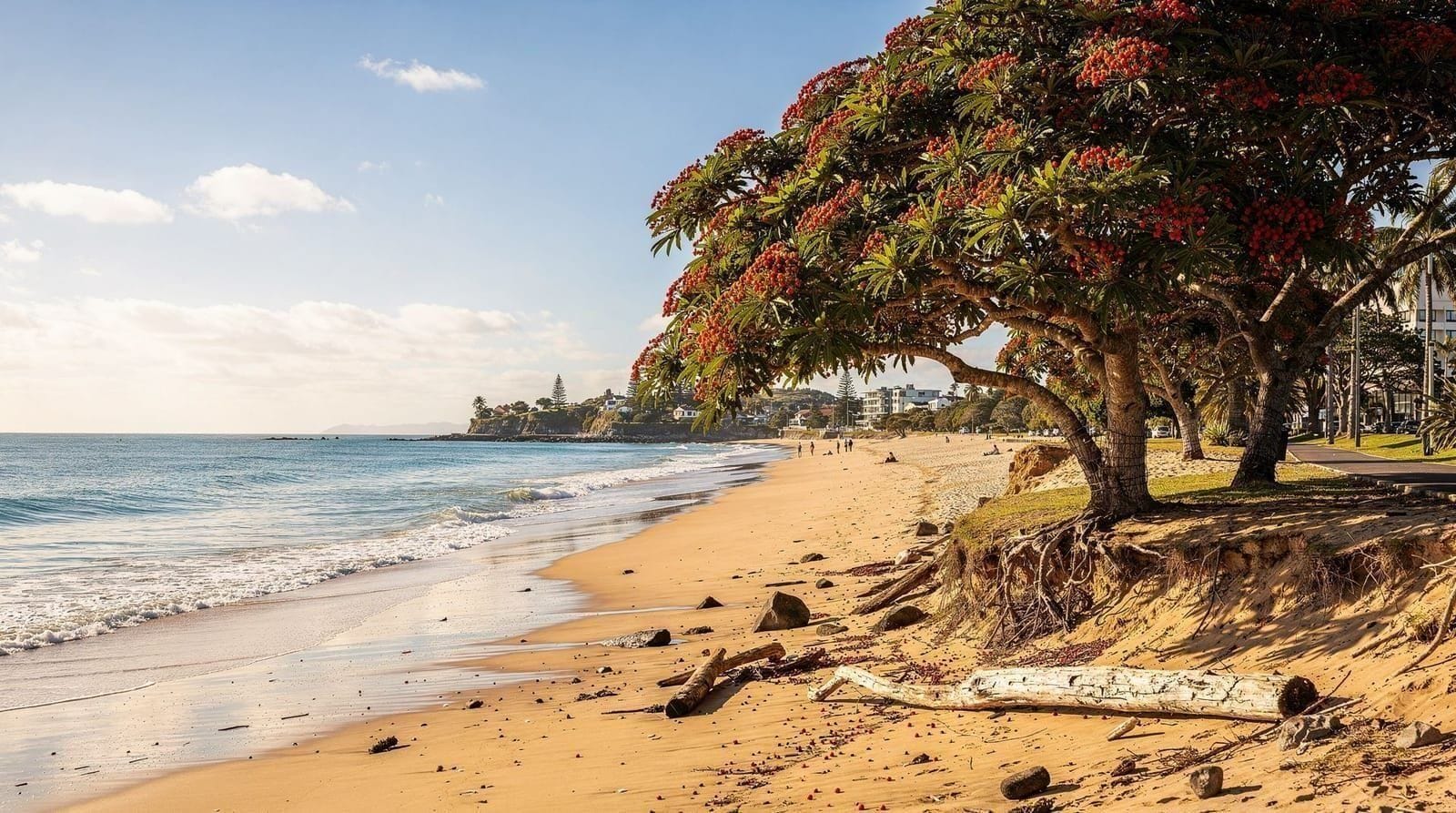
The Tāmaki Drive waterfront, running from the CBD out to Mission Bay, is where locals go for the golden-hour palm-tree-and-harbour shot. The fountain at Mission Bay itself, with Rangitoto Island’s volcanic cone as a backdrop across the water, is one of the most reliably photogenic combinations in the city — especially about 30-45 minutes before sunset, when the light turns the water gold and the island’s silhouette sharpens.
Devonport’s Mount Victoria and North Head
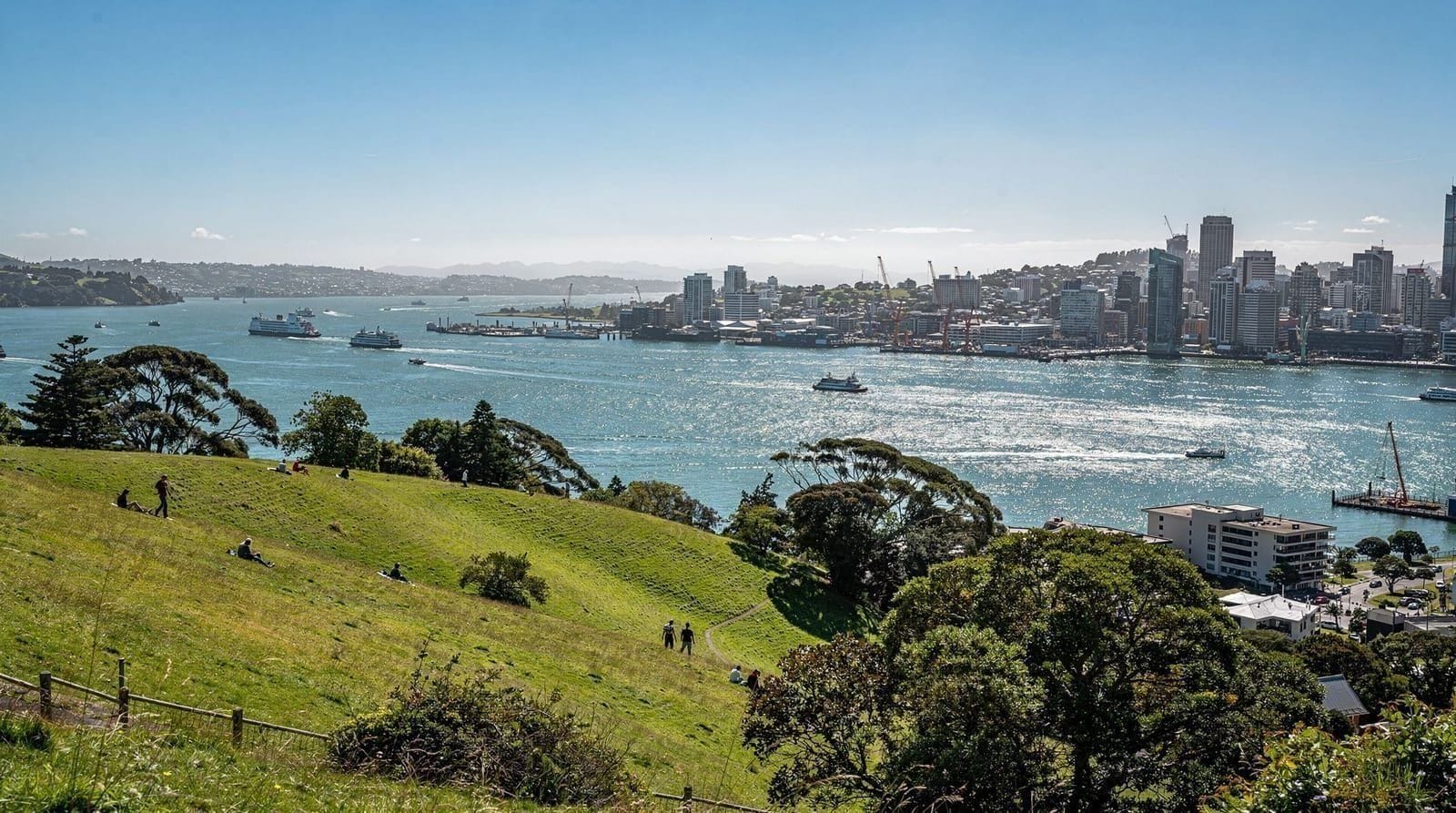
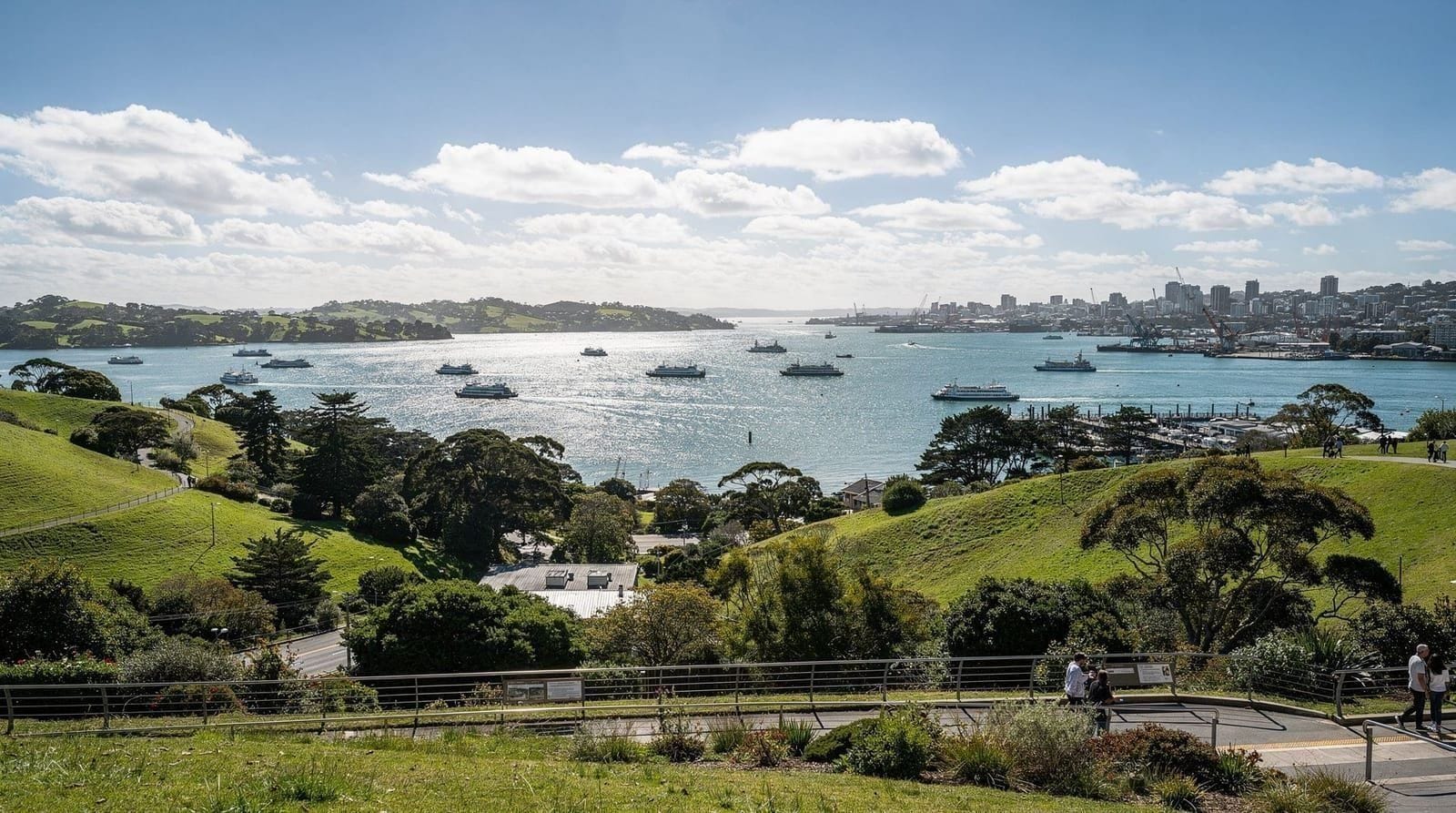
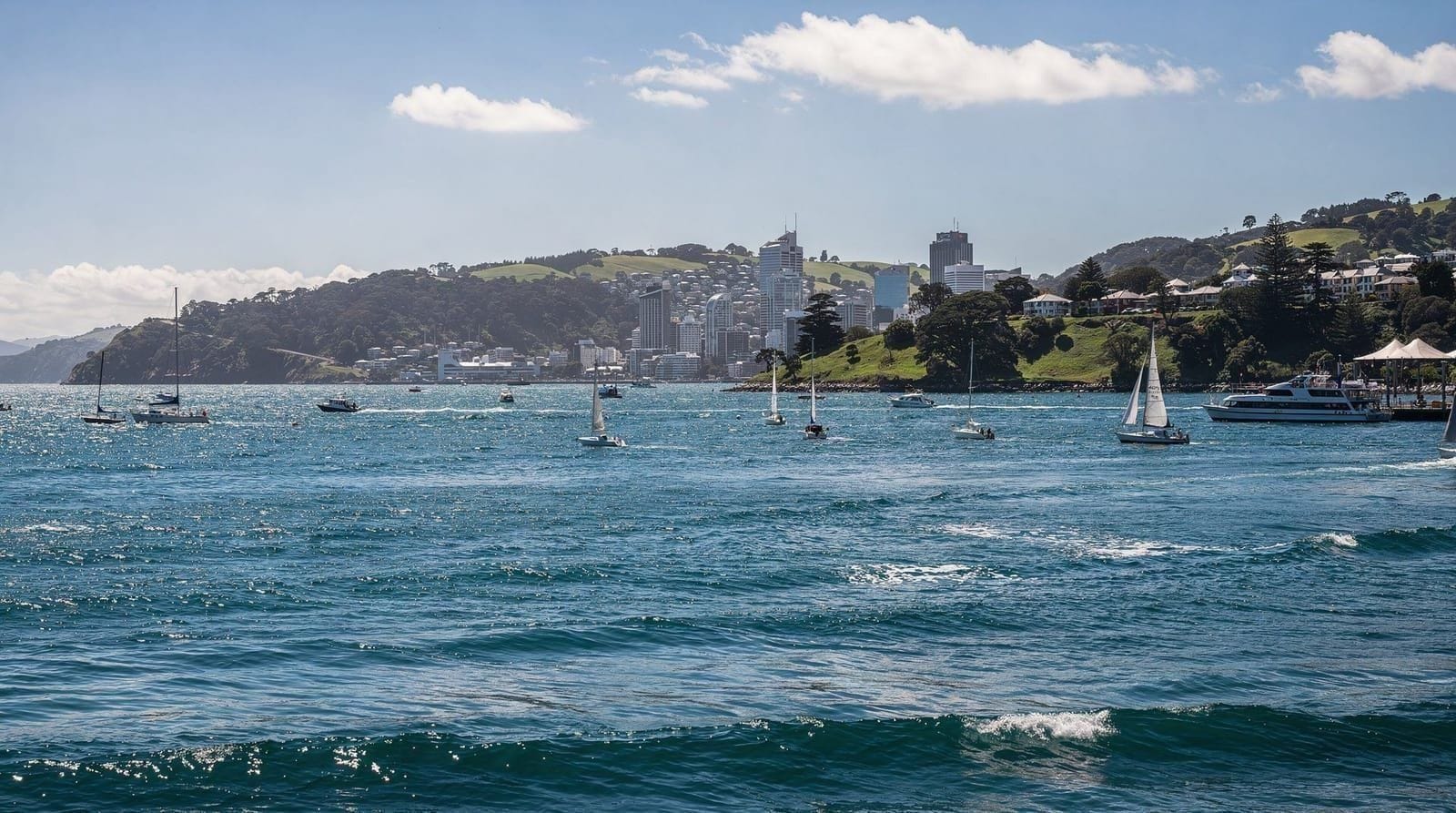
Across the harbour by a 12-minute ferry ride, Devonport gives you the reverse angle — the Auckland skyline as the subject, rather than the backdrop. Mount Victoria and the old gun emplacements at North Head both offer clean, uncluttered skyline shots across the water, and the ferry crossing itself is worth a few frames for the classic harbour-and-skyline composition. Our Auckland waterfront guide covers Devonport alongside the rest of the harbour edge.
Cathedral Cove, Coromandel
Worth the drive if your trip has room for it. The natural rock archway at Cathedral Cove, framing the beach and Te Hoho Rock beyond, is one of New Zealand’s most photographed coastal scenes — and for good reason. Arrive early (it’s a 45-minute walk in from the car park, and gets busy from mid-morning), since having the arch to yourself for even a few minutes changes the shot completely. It’s about two and a half hours’ drive from Auckland, making it a genuine day trip rather than a quick stop. Our Coromandel day trip guide covers timing and logistics, and the Cathedral Cove Coromandel scenic day tour handles the drive if you’d rather not do it yourself.
Piha Beach’s black sand and Lion Rock
Piha’s black volcanic sand and the dramatic Lion Rock sea stack make it one of the most striking beach shoots near Auckland, particularly at sunset when the sand darkens further and the surf catches the last light. It’s about 45 minutes from the city, and the short climb partway up Lion Rock gives a wide view down the beach that’s hard to get from the sand itself. See our Piha day trip guide.
Auckland Harbour Bridge and the Viaduct at blue hour
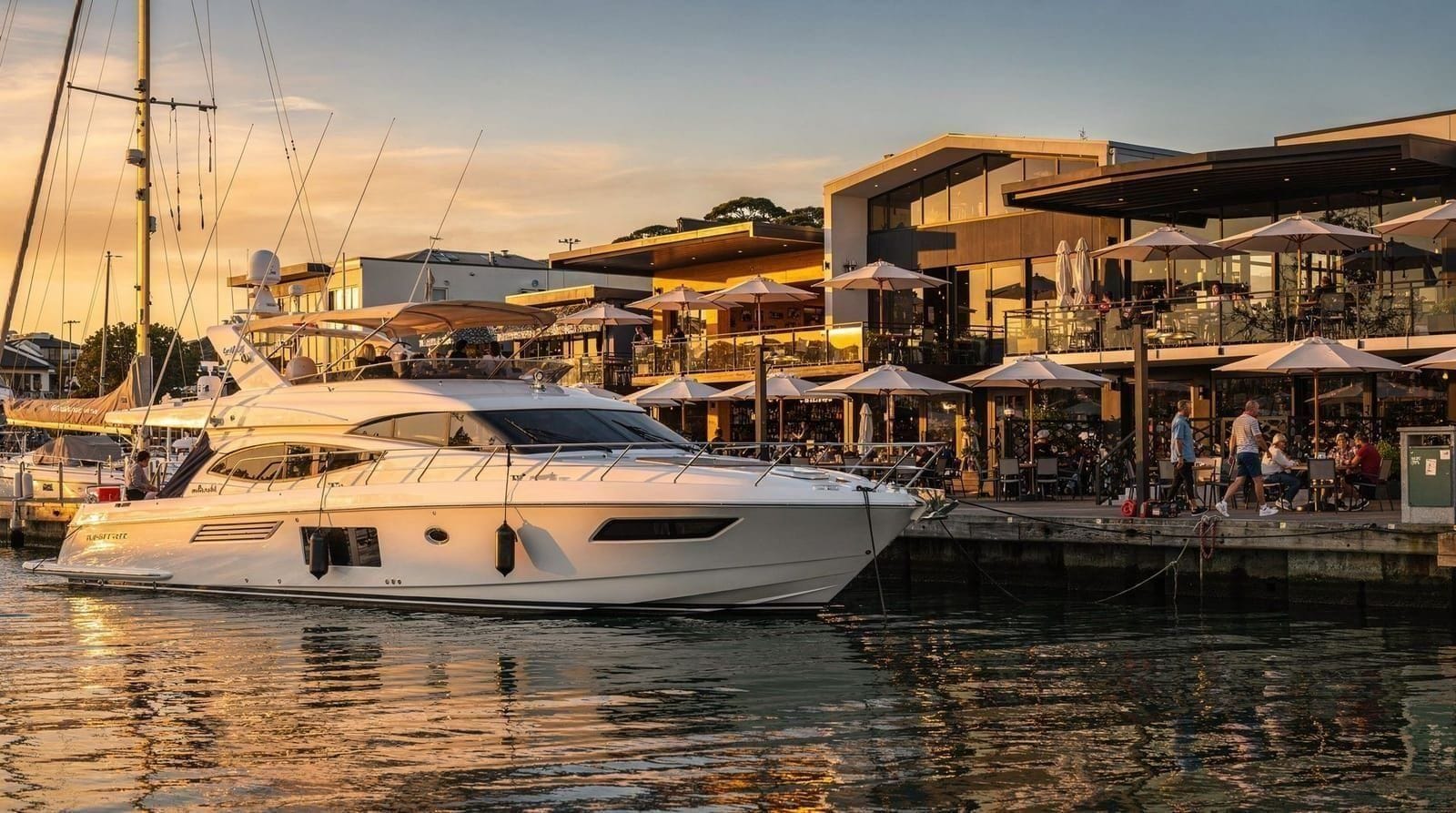
The Viaduct Harbour, just west of the CBD, comes alive at blue hour — the 20-30 minutes after sunset when the sky still holds colour but the city lights are on. The Harbour Bridge, the marina’s yachts, and the Sky Tower all sit within one frame from several points along the waterfront promenade, making this one of the easier “everything in one shot” locations.
Waiheke Island’s vineyards and coastline
The 40-minute ferry to Waiheke opens up a completely different palette — rolling vineyards, olive groves and a coastline that looks more Mediterranean than Pacific. Onetangi Beach and the elevated vineyard terraces both photograph well in the softer light of late afternoon. Our Waiheke Island destination guide has the ferry timetable and getting-around details, and a Waiheke wine tasting tour covers several of the best vineyard viewpoints in one trip.
Rangitoto Island’s summit at sunrise
Rangitoto is the youngest and most recognisable of Auckland’s volcanic cones — a near-perfect symmetrical shape visible from most of the city’s eastern beaches. Climbing it for sunrise (a roughly one-hour walk from the ferry wharf to the summit) rewards you with a view back over the entire Auckland skyline and harbour, lit from behind. It requires an early ferry, but it’s one of the few spots that photographs equally well as a subject from the mainland and as a viewpoint in its own right — our Rangitoto hike guide has the full route.
Sky Tower, for the view money can’t get elsewhere
For a genuinely elevated shot of the entire city and harbour system in one frame, the Sky Tower Skywalk observation deck delivers height (328m) that no natural viewpoint in the city can match. Overcast days actually work reasonably well here, since you’re shooting down rather than relying on a dramatic sky.
Karangahape Road’s street art and neon
For a completely different palette from the harbour and volcanic-cone shots, Karangahape Road’s mix of heritage facades, neon signage and large-scale street murals gives Auckland its most distinctly urban photo subject. It photographs best after dark, when the neon signs and shopfront lighting come into their own, and during the day for the murals themselves, several of which change over every year or two, so what’s there on your visit may not be there on a return trip. Our Auckland neighbourhoods guide covers where along the strip the best pieces tend to cluster.
Hobbiton, for the surreal and the storybook
If your photography interests run more toward set design than landscape, Hobbiton near Matamata (about two hours south of Auckland) offers something genuinely unlike anywhere else in the country — 44 hand-built hobbit holes with painted doors, a working mill, and a garden replanted seasonally so it always looks lived-in. Late afternoon light is particularly flattering here, catching the warm tones of the thatched and turfed roofs. It requires a guided walk rather than free access, so factor the two-hour tour into your day. Our Hobbiton what to expect guide covers the visit in detail.
Bay of Islands, for turquoise water and dramatic coastline
Further afield (about three hours’ drive north), the Bay of Islands offers a different coastal palette again — clearer, more turquoise water than Auckland’s harbours, and the dramatic Hole in the Rock formation that boat cruises pass directly through. It’s a genuine overnight or long day trip rather than a quick add-on, but for anyone chasing New Zealand’s most postcard-familiar coastal imagery, it delivers something the Auckland region itself can’t quite match. Our Bay of Islands destination guide has the practical details.
Timing tips that apply everywhere
Auckland’s light changes fast — genuinely, “four seasons in a day” is not an exaggeration — so build in flexibility rather than a rigid shot list. Shoulder seasons (March-May, September-November) tend to give the clearest, most stable light with fewer crowds at the popular spots, while summer’s haze and higher visitor numbers can work against you at places like Cathedral Cove and Mount Eden. For a broader look at where to base yourself to reach these spots efficiently, our Auckland neighbourhoods guide and Auckland beaches guide go into more detail on logistics and specific golden-hour timing.
Which spots need a car, and which don’t
Mount Eden, One Tree Hill, Mission Bay and the Viaduct are all reachable by public transport or a short taxi ride, so a rental car isn’t essential if you’re focused mainly on the city itself. Devonport, Rangitoto and Waiheke are reached by ferry rather than driving, which is arguably more pleasant for photography anyway since you’re not worrying about parking or timing a drive around sunset. Piha, Cathedral Cove and Hobbiton, on the other hand, genuinely need either a rental car or an organised tour, since none of them sit on Auckland’s public transport network. If you’re planning a dedicated photography day trip to one of the further-out spots, building in extra time for the drive matters more than it does for the closer, ferry-accessible locations — arriving flustered ten minutes before golden hour rarely produces your best work.
Packing light for a photo-focused day
A tripod is worth carrying for blue-hour shots at the Viaduct and sunrise sessions at Mount Eden or Rangitoto, where slower shutter speeds pay off, but it’s dead weight on the Cathedral Cove walk-in or the Rangitoto summit climb, both of which reward travelling light. A polarising filter helps cut glare on the water shots at Mission Bay and around the harbour generally, and a spare battery is worth having for early starts, since cold mornings drain batteries faster than visitors expect even in a mild Auckland winter.
Matching spots to how many days you have
If you’ve only got a single day in the city, Mount Eden at sunrise, Mission Bay or the Viaduct at golden/blue hour, and Devonport’s North Head across the harbour cover most of Auckland’s signature looks without needing a car. With two or three days, add a ferry day to Waiheke or Rangitoto and a driving day out to Piha and the Waitakere coast — our 1-day Auckland itinerary and 3-day Auckland itinerary both map out realistic pacing if photography is the priority rather than an afterthought. For visitors with a full week or a wider North Island loop planned, Cathedral Cove, Hobbiton and the Bay of Islands are worth the extra driving days — see our best day trips from Auckland guide for how to sequence them without exhausting yourself.
Weather and light through the year
Auckland’s photography conditions shift noticeably by season. Summer (December-February) gives long evenings and reliable golden hour timing, but also haze and crowds at popular spots like Mount Eden and Cathedral Cove. Shoulder seasons — March to May and September to November — tend to deliver the clearest, most stable light with noticeably fewer people in your frame, genuinely the sweet spot for serious photography trips. Winter (June-August) brings shorter days and more cloud, but also dramatic storm light over the harbour that summer rarely produces, and Karangahape Road’s neon scenes are unaffected by any of it since they’re shot after dark regardless of season. Our Auckland weather by month guide breaks down what to expect if you’re timing a trip around specific light conditions.
Frequently asked questions about photographing Auckland
What is the single best photo spot in Auckland?
Mount Eden’s summit, for the combination of a free 360-degree city view, genuine elevation, and easy access — most photographers rank it the top free spot in the city.
Do I need a car for Auckland’s best photo spots?
Not for the city itself — Mount Eden, Mission Bay, the Viaduct, Devonport and Rangitoto are all reachable by public transport, ferry or a short taxi. Piha, Cathedral Cove and Hobbiton genuinely need a rental car or an organised tour.
What’s the best time of day to photograph the Auckland skyline?
Blue hour — the 20-30 minutes after sunset — from the Viaduct Harbour, when the sky still holds colour and the city lights have come on, gives the most complete skyline shot.
Is Cathedral Cove worth the drive for photography?
Yes, if you have a full day to give it. It’s about two and a half hours from Auckland each way plus a 45-minute walk in, but the natural rock archway is one of New Zealand’s most photographed coastal scenes and genuinely delivers on that reputation.