What to expect at Hobbiton: a minute-by-minute guide
Hobbiton Movie Set: Movie set guided tour
Duration: 2.5 hours
What actually happens on a Hobbiton tour?
A shuttle bus takes you from the Matamata visitor centre onto the working farm, where a guide leads a roughly 1-hour walking loop past 44 hobbit holes, the Party Tree and the double-arched bridge, ending at the Green Dragon Inn for a complimentary drink. The full experience, including shuttle and inn time, runs about two hours.
What this guide covers
Plenty of content online covers whether Hobbiton is worth the money (see our own is Hobbiton worth it verdict for that question). This guide is different: it walks through exactly what happens once you arrive, step by step, so you know what to expect and can plan your visit — timing, photos, footwear — with real specifics rather than vague generalities.
| Where | Hobbiton visitor centre, Matamata |
| Duration | ~2 hours door-to-door (shuttle + ~1hr walk + Green Dragon Inn) |
| Walking | ~1 hour, mostly flat grass and gravel paths |
| Included | One drink at the Green Dragon Inn |
| Not included | Entering hobbit hole interiors, free-roam access |
Whether you’re a lifelong fan of the films or simply curious what all the fuss is about, knowing the shape of the day ahead of time lets you focus on actually enjoying the visit rather than figuring out logistics on the fly.
Arriving at the visitor centre
Every Hobbiton visit begins at the official visitor centre in Matamata township, roughly 15 minutes from the farm itself. If you’re self-driving, there’s ample free parking, and arriving 20-30 minutes before your booked tour time gives enough buffer to park, check in at the counter, and use the facilities before your shuttle departs — tours run on fixed timed-entry slots, and you can’t simply turn up and join whenever suits. If you’re on a guided day tour from Auckland, your coach typically drops you directly at the visitor centre in time for your allotted slot, removing this step entirely. This Hobbiton day tour from Auckland handles the return transport and timing coordination for you.
The shuttle bus onto the farm
You cannot drive yourself directly onto the film set — access is deliberately controlled, and every visitor is shuttled the final stretch by bus from the visitor centre onto the working farmland where Hobbiton sits. This short ride (a few minutes) is your first proper look at the surrounding countryside — genuinely working sheep and cattle farmland, meaning you’ll likely spot livestock grazing right alongside the road on the way in, a detail that surprises visitors expecting a purely manicured tourist site. Shuttles depart roughly every 10-15 minutes tied to tour start times.
The guided walk begins
Once on-site, your guide takes over for the roughly 1-hour walking loop through the film set itself. The path is grass, mostly flat with some gentle slopes, manageable for most fitness levels and pushchairs in dry conditions, though wet grass can make it trickier for wheelchairs — worth confirming directly with the operator if mobility access is a specific concern. Groups move together at a steady, unhurried pace, stopping at named hobbit holes and landmarks along the route while the guide shares behind-the-scenes production stories.
The hobbit holes: what you actually see
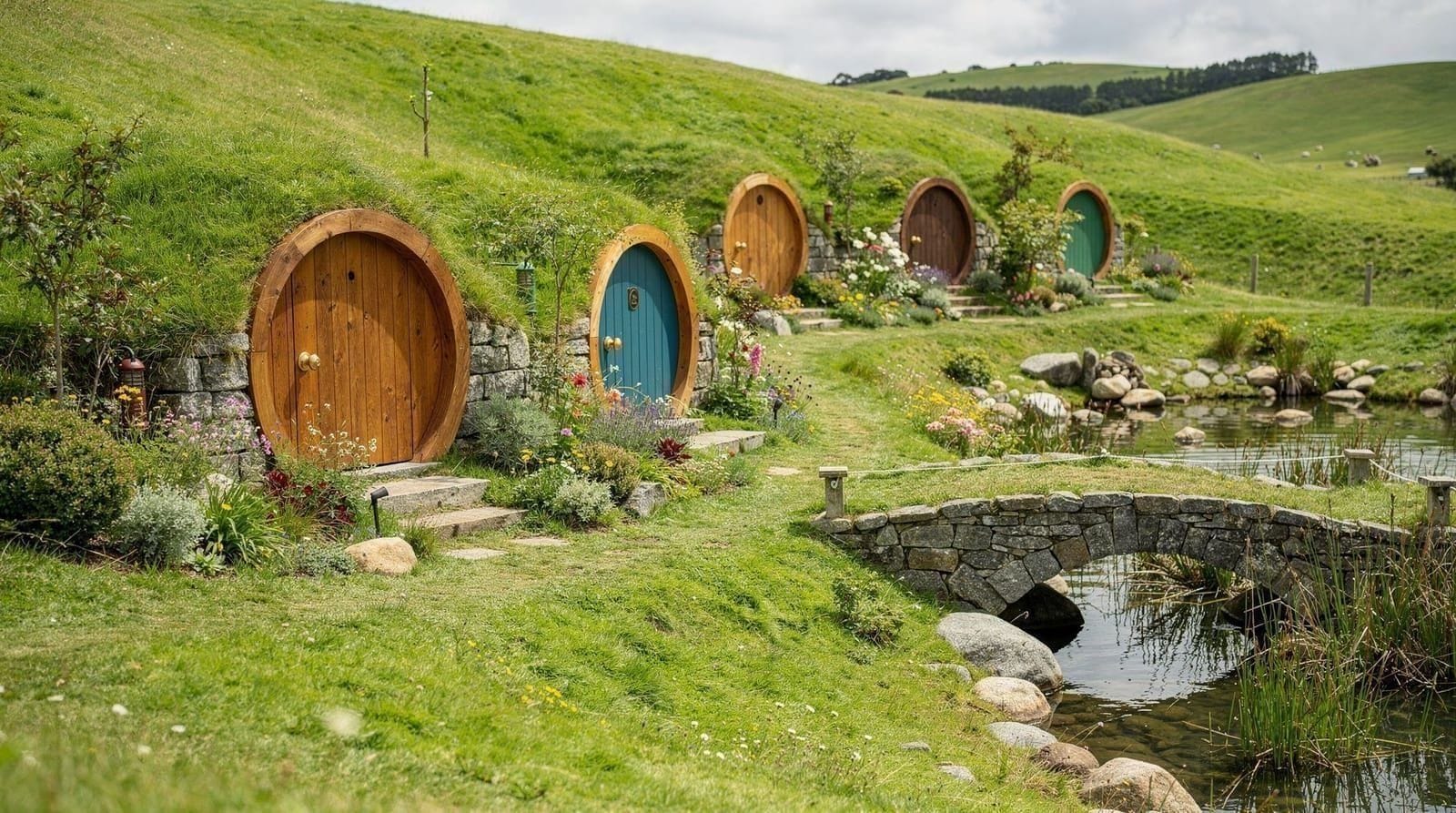
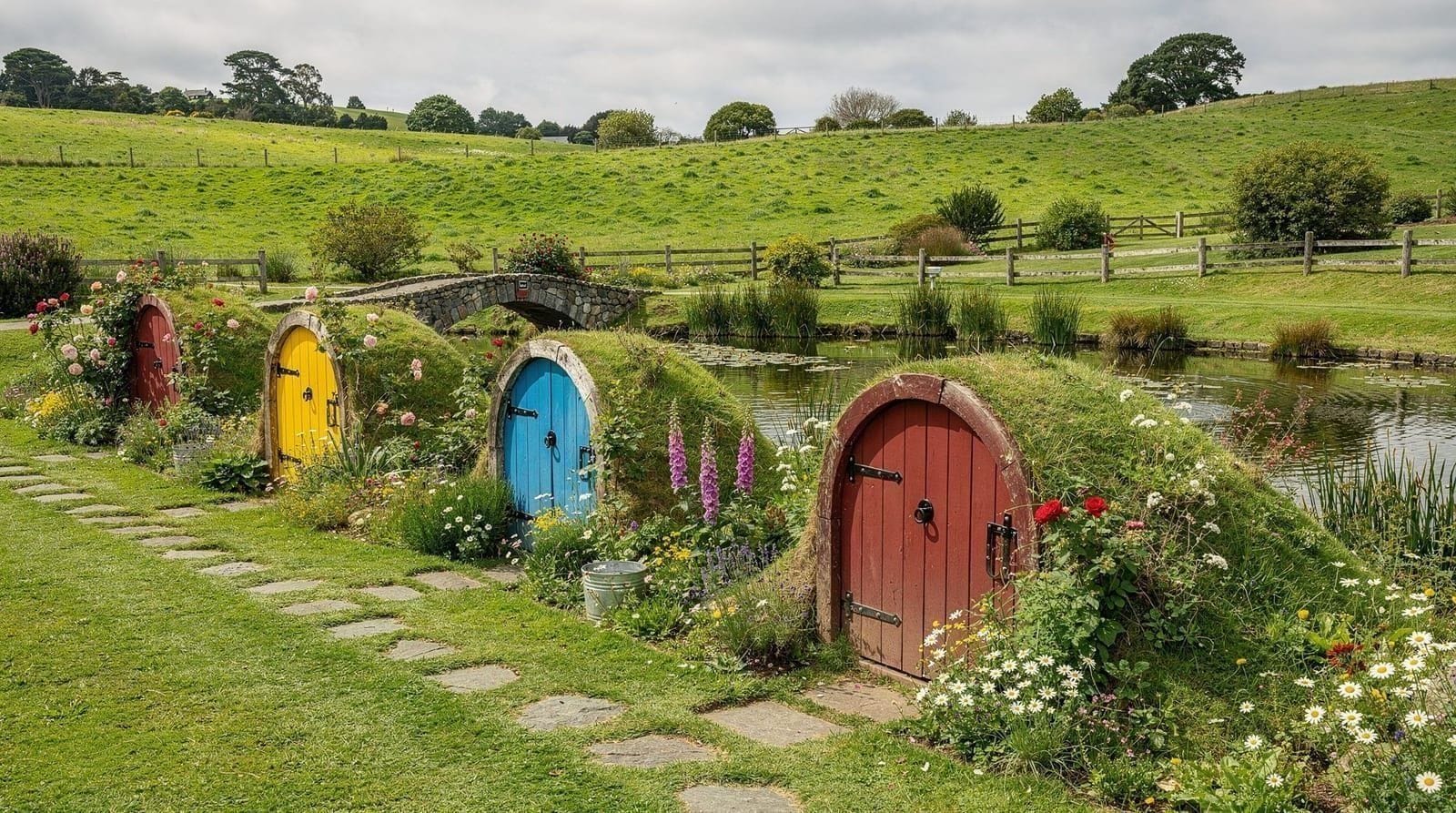
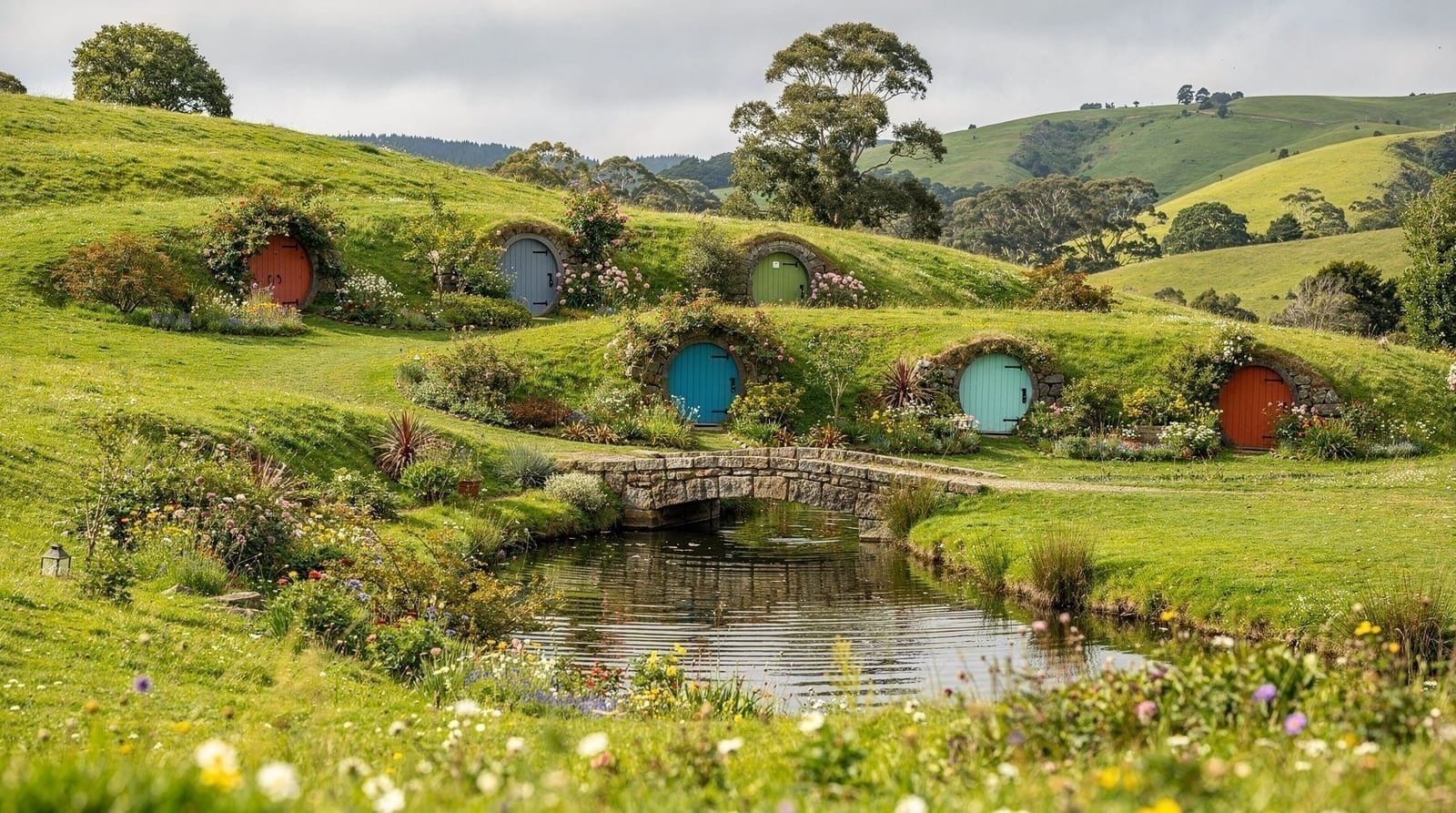
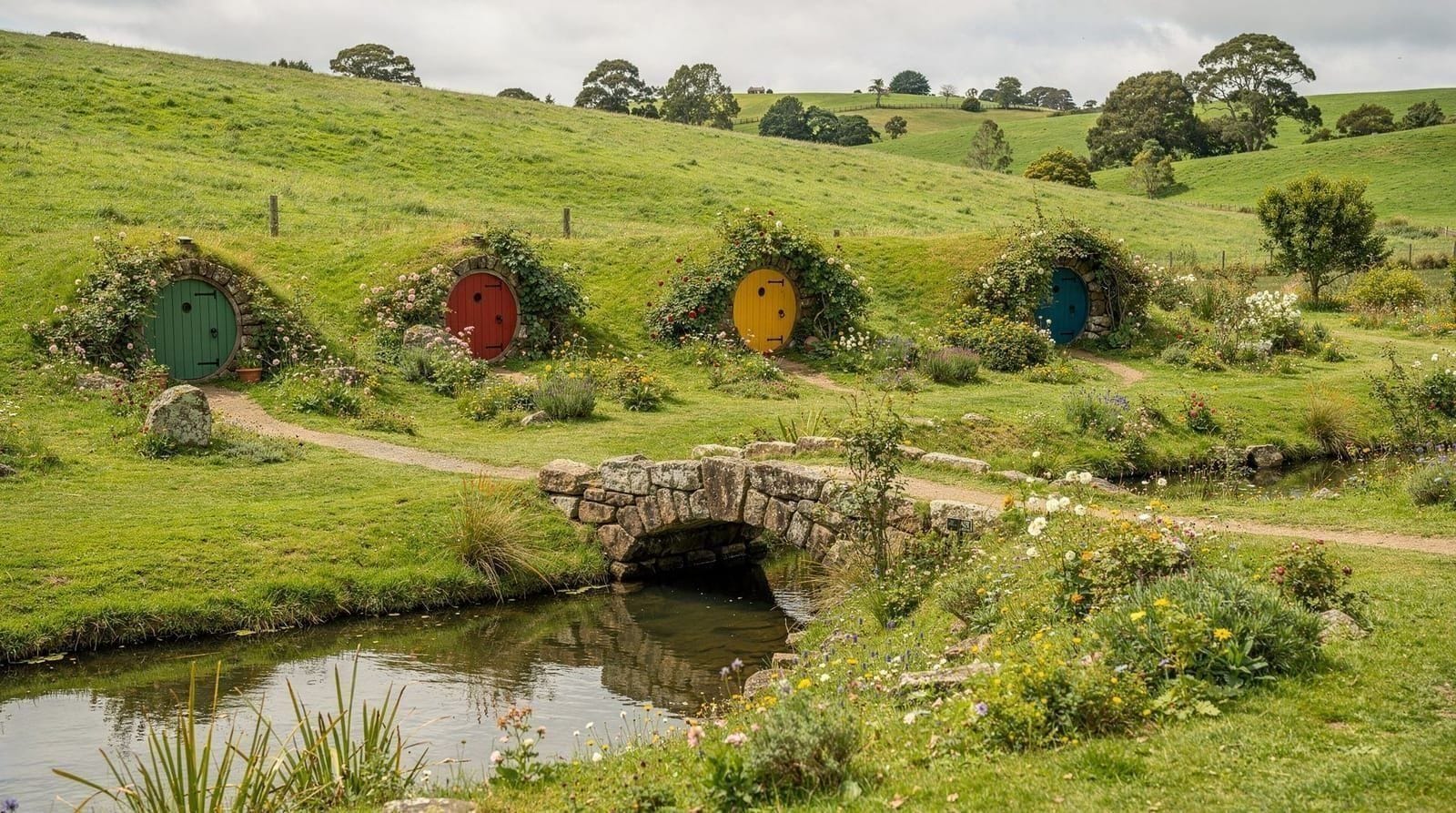
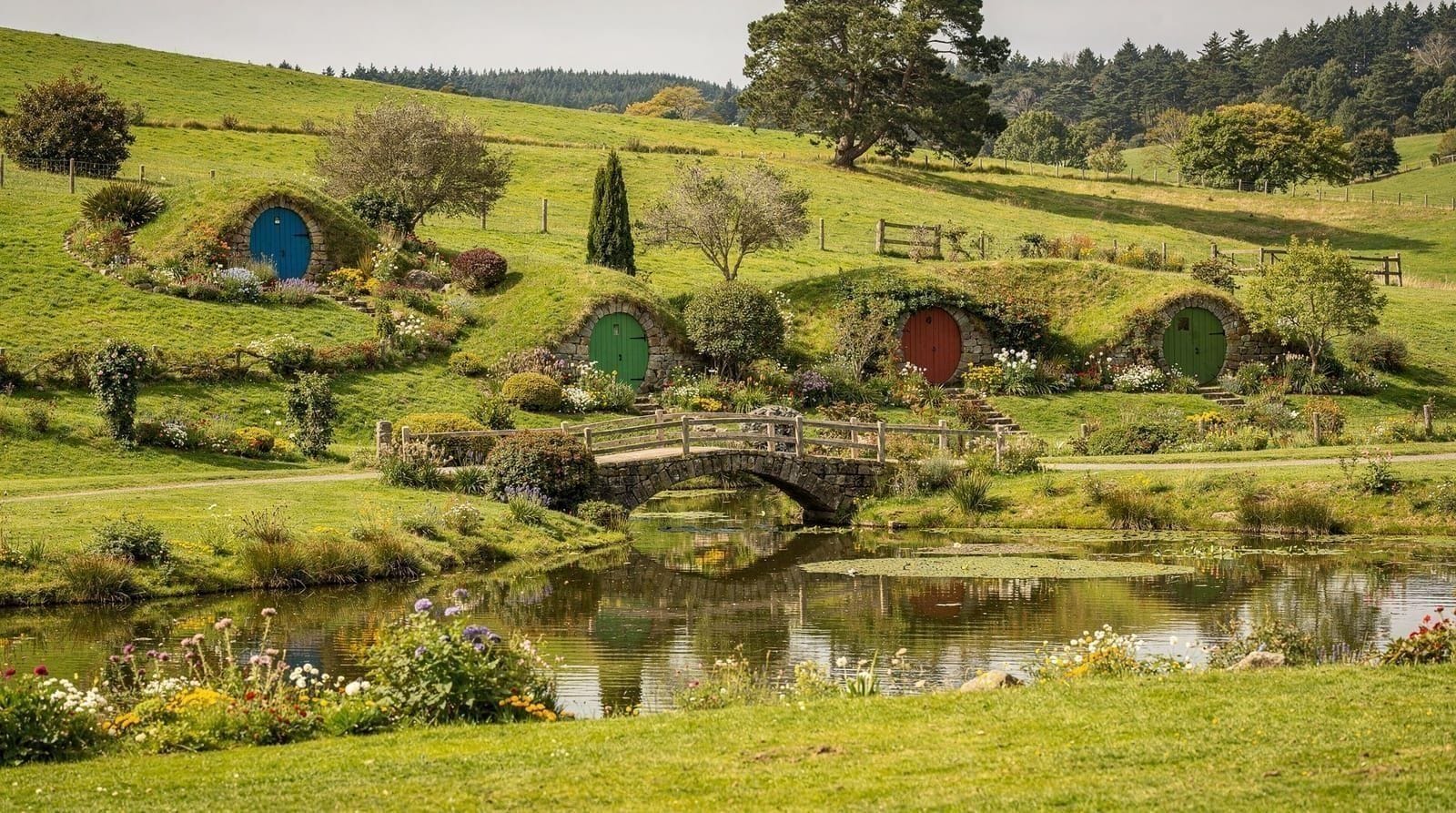
Forty-four hobbit holes are dug into the rolling hillside, each with a round door, a small garden, and often a specific detail tied to a particular Middle-earth “resident” — a fishmonger’s hole with fish-themed decorations, a baker’s hole, and so on. Almost all of the doors are viewed from outside only; interior scenes for the films were shot separately on soundstages, so the doors themselves are essentially facades, not full interiors you walk through. This surprises some first-timers who expect to step inside, but the exterior detail — real washing lines, tiny handmade props, fruit trees planted to bear fruit specifically for filming continuity — is dense enough that most visitors don’t feel shortchanged once they’re actually looking closely.
Bag End, Bilbo and Frodo’s home at the top of the hill with its iconic round green door, is consistently the most photographed single spot on the tour, and guides typically allow a few extra minutes here given its significance to fans of the films.
The Party Tree, the large tree overlooking the party field where Bilbo’s birthday celebration was filmed, and the double-arched stone bridge over the adjacent pond are the other two consistently rated most photogenic stops on the route.
Smoke, gardens and living details
Part of what makes Hobbiton feel genuinely alive rather than static is a set of deliberate maintained touches: smoke occasionally rises from hobbit-hole chimneys (a scheduled, deliberate effect), and the gardens are actively tended and change with the seasons, meaning a spring visit looks noticeably different from a winter one. This ongoing maintenance is part of why the set has remained such a popular repeat-visit destination for New Zealanders themselves, not solely a one-time tourist stop.
The Green Dragon Inn: how the tour ends
The guided walk concludes at the Green Dragon Inn, a fully built, functional pub constructed for the films and now serving a small menu of beer and cider brewed specifically on-site, plus a non-alcoholic ginger beer option. Your standard tour ticket includes one complimentary drink here, and you’re given genuine time to sit inside — a warm, detailed, atmospheric interior rather than another quick photo stop — before heading back to the shuttle pickup point. Many visitors describe this as the emotional high point of the visit: the chance to actually sit inside a real, warm piece of the set rather than just photograph it from outside.
What you won’t see or do on a standard tour
Setting realistic expectations matters as much as knowing what’s included. You won’t see filming take place (the site is purely a preserved set, not an active production location), you won’t have free-roam access to wander independently off the guided route, and beyond the single included Green Dragon Inn drink, food and additional dining are not part of the standard tour (evening banquet tours are the specific exception, and are priced and booked separately for that reason). Knowing this upfront prevents the mild disappointment some visitors report from expecting a more open-ended, self-directed experience than the guided-tour format actually provides.
Getting the timing right
Morning tours tend to have the softest natural light for photography and marginally thinner crowds before midday tour groups converge on-site. Afternoon slots are more convenient for a later start from Auckland but coincide with the busiest period, when multiple guided groups can be moving through popular spots like Bag End simultaneously. Evening tours, where seasonally available, add a genuinely different lantern-lit atmosphere, sometimes paired with a banquet experience. Our dedicated Hobbiton morning vs evening comparison breaks down these trade-offs in more depth if you’re deciding between slots. The Hobbiton-only afternoon tour is worth considering specifically if you want to pair the visit with a Waitomo or Rotorua stop earlier in the day.
Photography tips for getting the shots people expect
Wide shots of the hillside dotted with hobbit holes work best in the soft light of morning or late-afternoon tours rather than the harsh overhead light of a midday summer visit. Close-up shots of individual doors and gardens benefit from crouching to a lower angle, roughly hobbit eye-height, which is how most official promotional photography of the set is framed. Because tour groups move together on a schedule, getting an uncrowded shot of a popular spot sometimes means falling slightly behind for a few seconds once your guide moves the group on, then catching up — generally fine as long as you don’t hold up the group’s overall pace.
What surprises first-time visitors most
Beyond not being able to enter the hobbit holes, most people underestimate the scale of the site itself — 44 acres is considerably bigger than the “single photogenic hillside” many visitors picture beforehand — and are surprised by how genuinely lived-in the surrounding farmland feels, rather than a purely staged backdrop. The hobbit holes themselves also read as smaller in person than they appear on screen, since forced-perspective filming techniques made them look larger in the original films.
Group size and pacing
Tour groups typically run to a moderate size — enough that you’re not the only visitors on the path, but small enough that your guide can genuinely engage with questions and hold the group’s attention rather than shouting over a crowd. Multiple groups depart across the day at staggered intervals, and it’s normal to see other groups at a distance elsewhere on the property, though the route is designed so groups rarely bunch up directly on top of each other for more than a few minutes at any single stop. If you’re travelling with young children or anyone who walks more slowly, guides are generally accommodating of a slightly slower pace, though very large gaps from the main group aren’t practical given the route’s fixed timing.
Dietary and accessibility considerations
If you’re booking a tour that includes food or drink beyond the standard Green Dragon Inn beverage — an evening banquet tour, for instance — it’s worth flagging any dietary requirements at the time of booking rather than on arrival, since catering is planned in advance for group numbers. For mobility considerations beyond the general grass-path accessibility already covered, contacting the operator directly ahead of your visit is the most reliable way to get accurate, current guidance, since path conditions can shift with weather and reasonable accommodations vary by specific need.
What happens if the weather turns
Light rain doesn’t typically cancel or shorten a Hobbiton tour — the walk proceeds with a rain jacket, and the set arguably takes on a different, moodier character under grey Waikato skies that some repeat visitors genuinely prefer to a bright, harshly lit summer day. Only more serious weather events (severe storms, high winds) would prompt the visitor centre to adjust or reschedule tours, and this is communicated directly to booked visitors rather than something you need to monitor yourself. Bringing a compact rain jacket regardless of the forecast is sensible given how quickly Waikato weather can shift, even on a day that starts clear.
After the tour: back to the visitor centre
The shuttle returns you to the Matamata visitor centre, where the on-site shop and cafe give a reasonable stop for a coffee or souvenir before continuing your day. If you’re self-driving and combining Hobbiton with Waitomo Caves the same day, this is your departure point for the roughly 90-minute drive south. If you’re on a guided day tour, your coach typically returns you to Auckland directly from here.
What genuinely surprises repeat visitors
Even visitors returning to Hobbiton for a second time, perhaps years after their first visit, tend to notice something new — the gardens’ seasonal changes mean a spring return looks meaningfully different from a summer or winter first visit, and small maintenance updates (a newly refreshed garden bed, a repainted door) mean the set isn’t a frozen, static museum piece but a genuinely maintained, evolving property. Guides also rotate their specific production trivia and stories over time, so even the same physical route rarely feels identical across repeat tours. For fans of the films specifically, this ongoing sense that the set is a living, cared-for place rather than an aging relic is often cited as part of why Hobbiton continues to draw repeat New Zealand visitors, not solely international first-timers.
What guides actually tell you along the way
Beyond the headline production trivia, guides tend to weave in a mix of behind-the-scenes construction details and genuinely practical farm knowledge, since Hobbiton sits on working land the Alexander family still runs sheep and cattle on between tour groups. Expect stories about specific hobbit-hole doors (which ones were used for which characters, why sizes vary to create forced-perspective effects), plus smaller asides about how the gardens are maintained seasonally by a dedicated horticulture team who change plantings to keep each hole looking genuinely lived-in year-round. Guides also tend to personalise the tour somewhat based on the group’s questions, so asking about a specific detail you’re curious about — a particular scene, a specific door — often gets a more detailed answer than the standard script covers.
Planning the rest of your day around the visit
Knowing exactly what the on-site experience involves makes it easier to plan the logistics either side of it. Our Hobbiton day trip from Auckland guide covers drive time, booking windows and realistic timing for a standalone Auckland day, while the Hobbiton-Waitomo combo guide walks through pairing this same roughly two-hour visit with a Waitomo caves stop the same day. If you’re travelling with children, our Hobbiton with kids guide covers how the pacing described above translates for younger visitors specifically, and film fans building a wider itinerary around the trilogy’s locations should see our North Island film locations guide.
Building Hobbiton into a wider North Island trip
Because the visit itself is compact, Hobbiton slots easily into a longer plan. If you are still deciding how many days to give the region, our best day trips from Auckland roundup shows how it compares with other options, and the Hobbiton and Waitomo one-day itinerary shows how the two stops fit together. Travellers choosing between a coach tour and their own wheels will find the trade-offs in self-drive vs tour day trips, and anyone behind the wheel should read driving in New Zealand first. If you would rather avoid the busiest slots, avoiding crowds on the North Island has practical ideas. Fans heading on to Rotorua can continue with the Auckland and Rotorua three-day itinerary, and the Lord of the Rings in New Zealand article gives more background on the films that made the set famous.
Frequently asked questions about what to expect at Hobbiton
Do you go inside the hobbit holes?
No, with rare exceptions — most are viewed from outside only, since interior scenes for the films were shot on soundstages, not inside the physical set doors.
How much walking is involved at Hobbiton?
Roughly 1 hour of walking on mostly flat, grassy paths with some gentle slopes, manageable for most fitness levels.
What’s included in the Green Dragon Inn stop?
A complimentary drink — beer, cider, or ginger beer, brewed specifically for the on-site pub — served inside the fully furnished inn with time to sit and relax.
Can I take photos throughout the tour?
Yes, photography is actively encouraged throughout, and most of the visit’s appeal comes from photographing the hobbit holes up close.
What should I bring to Hobbiton?
Comfortable walking shoes, sun protection (SPF 50+), and a light rain jacket, since Waikato weather can change quickly.
Is the tour the same every time, or does it vary by guide?
The route and key stops are consistent, but individual guides bring their own storytelling style and production trivia, so tours vary in feel even along the same physical route.
How long does the entire visit take, door to door from the visitor centre?
Around two hours total, including the shuttle ride, the roughly 1-hour guided walk, and time at the Green Dragon Inn before returning to the visitor centre.
Do I need to pack anything specific beyond the general packing list?
Beyond comfortable shoes and sun/rain protection, no specialist gear is needed — this is a walking tour on farmland, not a hiking trip. See our Auckland packing list for the broader essentials to bring on a day trip like this one.
Top experiences
Bookable activities with verified prices and instant confirmation on GetYourGuide.