Rotorua geothermal and Maori culture tour from Auckland
Auckland: Rotorua tour mitai maori village wai o tapu
Rotorua pairs New Zealand’s most dramatic geothermal landscapes with a genuine centre of Maori cultural life, but a same-day Auckland round trip makes for a long, full day. The essentials first.
| Where | Rotorua, ~3hrs drive south-east of Auckland |
| Cost | Around NZD 250–320/adult combined day tour; NZD 150–220 Rotorua-based only |
| Time needed | 12–13 hours door to door from Auckland |
| Getting there | Coach pickup from Auckland, or self-drive with a Rotorua overnight |
| Best time | Year-round; an overnight stay eases the pace considerably |
What a Rotorua geothermal and Maori culture tour is
Rotorua sits on one of the most geologically active stretches of New Zealand’s Taupo Volcanic Zone, and the town’s economy has been built around two things visitors come for: geothermal landscapes — bubbling mud pools, steaming vents, coloured mineral pools, and geysers — and Rotorua’s status as a centre of Maori cultural life and Te Arawa iwi heritage. Combined day tours from Auckland package both into a single long day, usually pairing a geothermal park visit during daylight hours with an evening cultural performance and hangi dinner.
The specific combination varies by operator. Some pair Wai-O-Tapu, the most visually dramatic geothermal park with its Champagne Pool and Lady Knox Geyser, with an evening visit to Mitai Maori Village for a haka performance and hangi. Others build the day around Te Puia, which combines its own geothermal area (including the active Pohutu Geyser) with a cultural centre, kiwi conservation enclosure, and traditional carving and weaving schools, in a single site.
Rotorua’s geothermal activity and its role as a centre of Maori settlement are historically connected, not just geographically coincidental. Te Arawa iwi have lived around Rotorua’s geothermal fields for centuries, using the natural heat for cooking, bathing, and warmth long before tourism existed, and the region’s cultural centres — Te Puia in particular, which sits on the site of the historic Te Whakarewarewa village — present that continuity directly, rather than treating geothermal sightseeing and cultural experience as two unrelated attractions bolted together for convenience.
What’s included and what it costs
The Rotorua tour combining Mitai Maori Village and Wai-O-Tapu from Auckland typically costs NZD 260 to 300 per adult and covers return transport, Wai-O-Tapu entry, the Mitai evening cultural experience including haka performance and hangi dinner, and guide commentary throughout. It’s a genuinely full day: geothermal sightseeing in daylight, cultural programming in the evening.
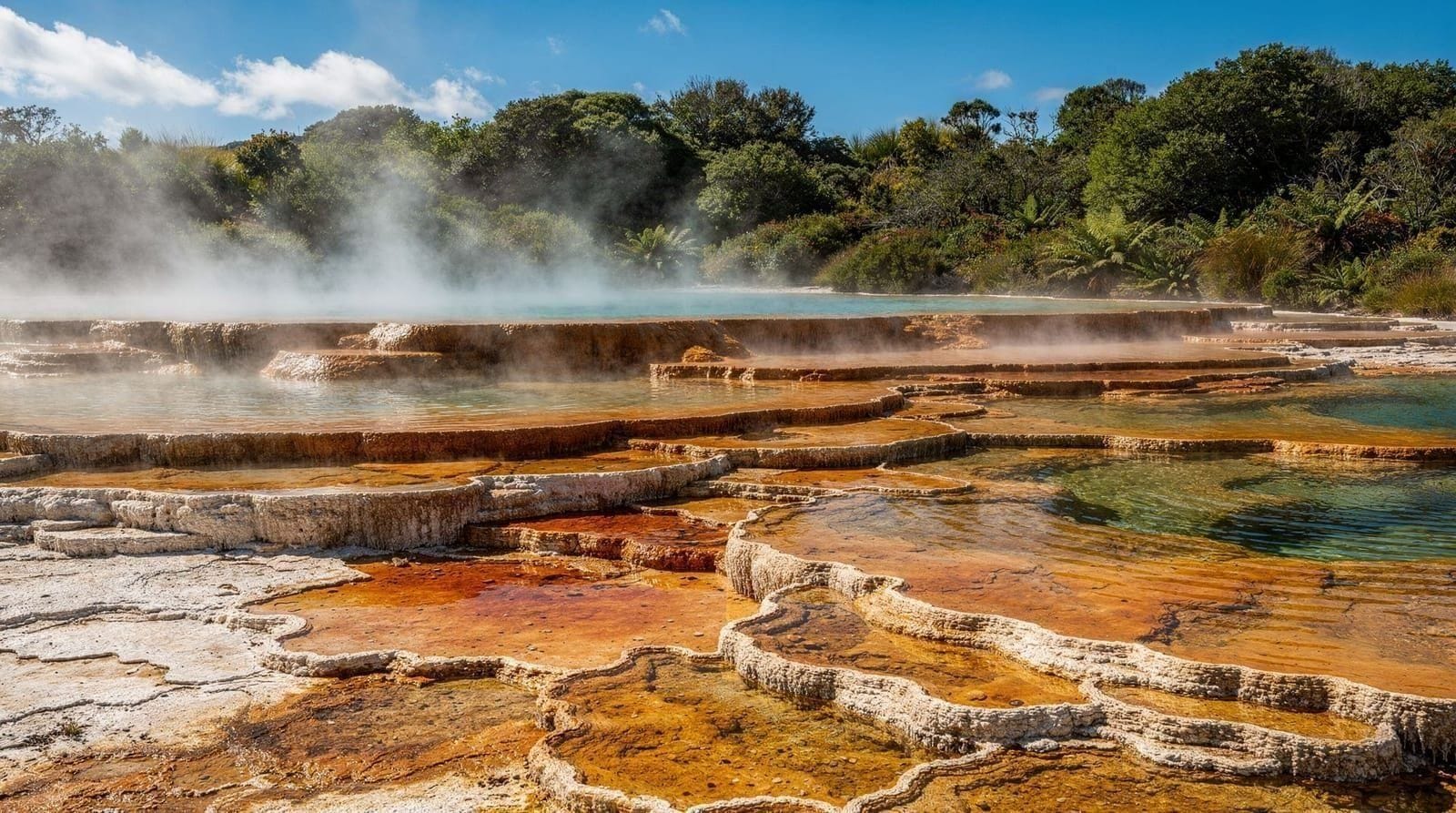
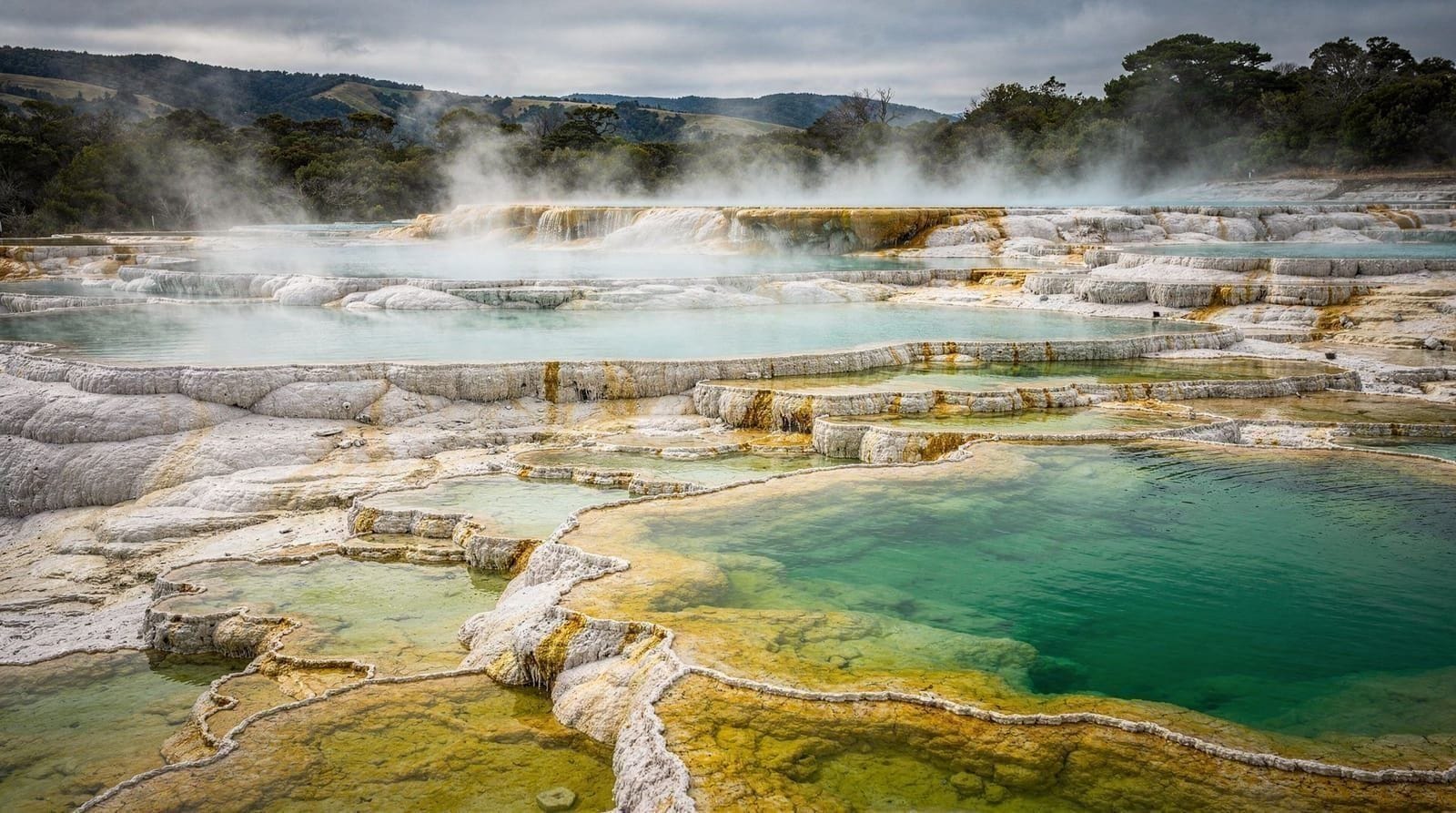
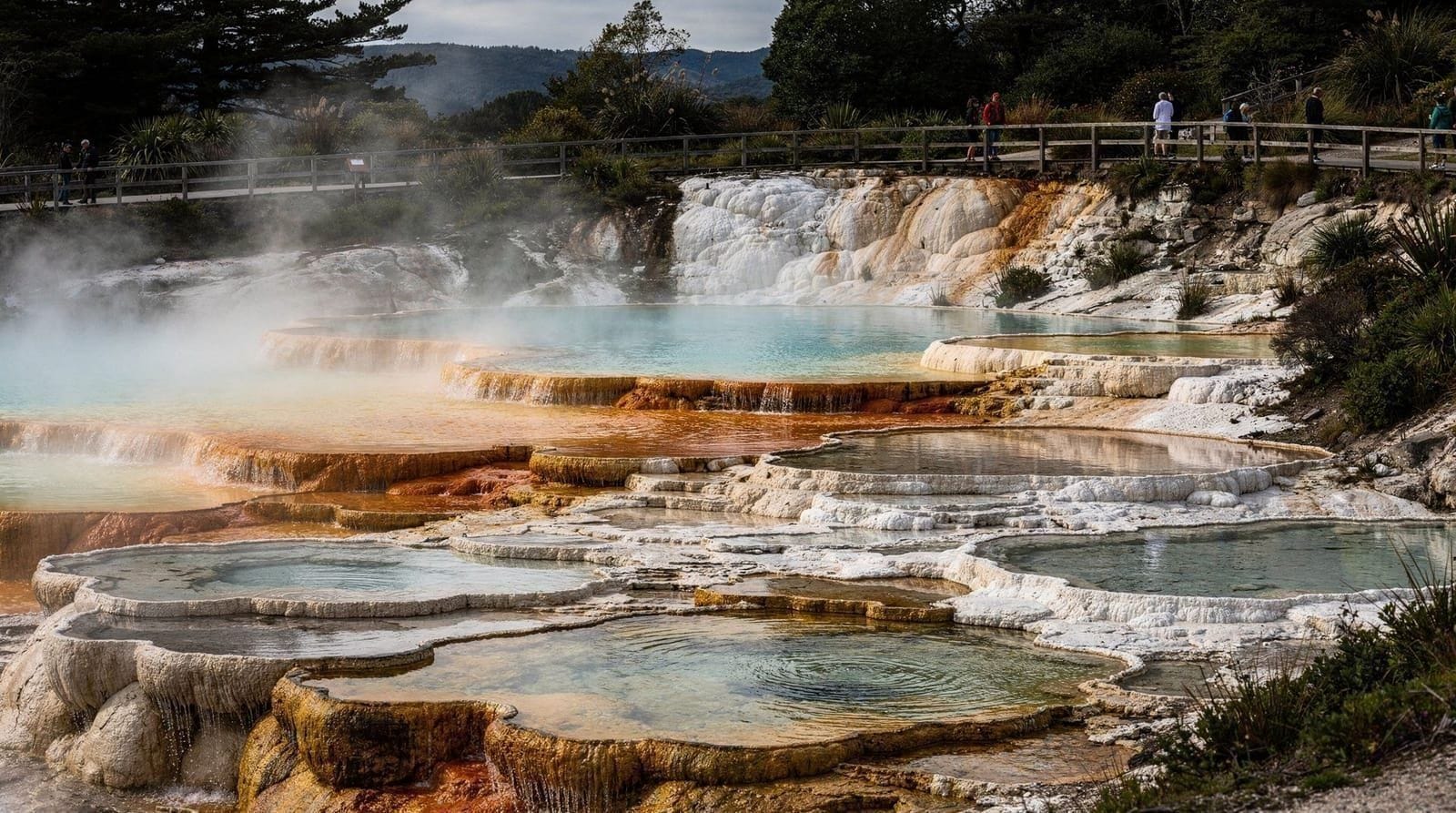
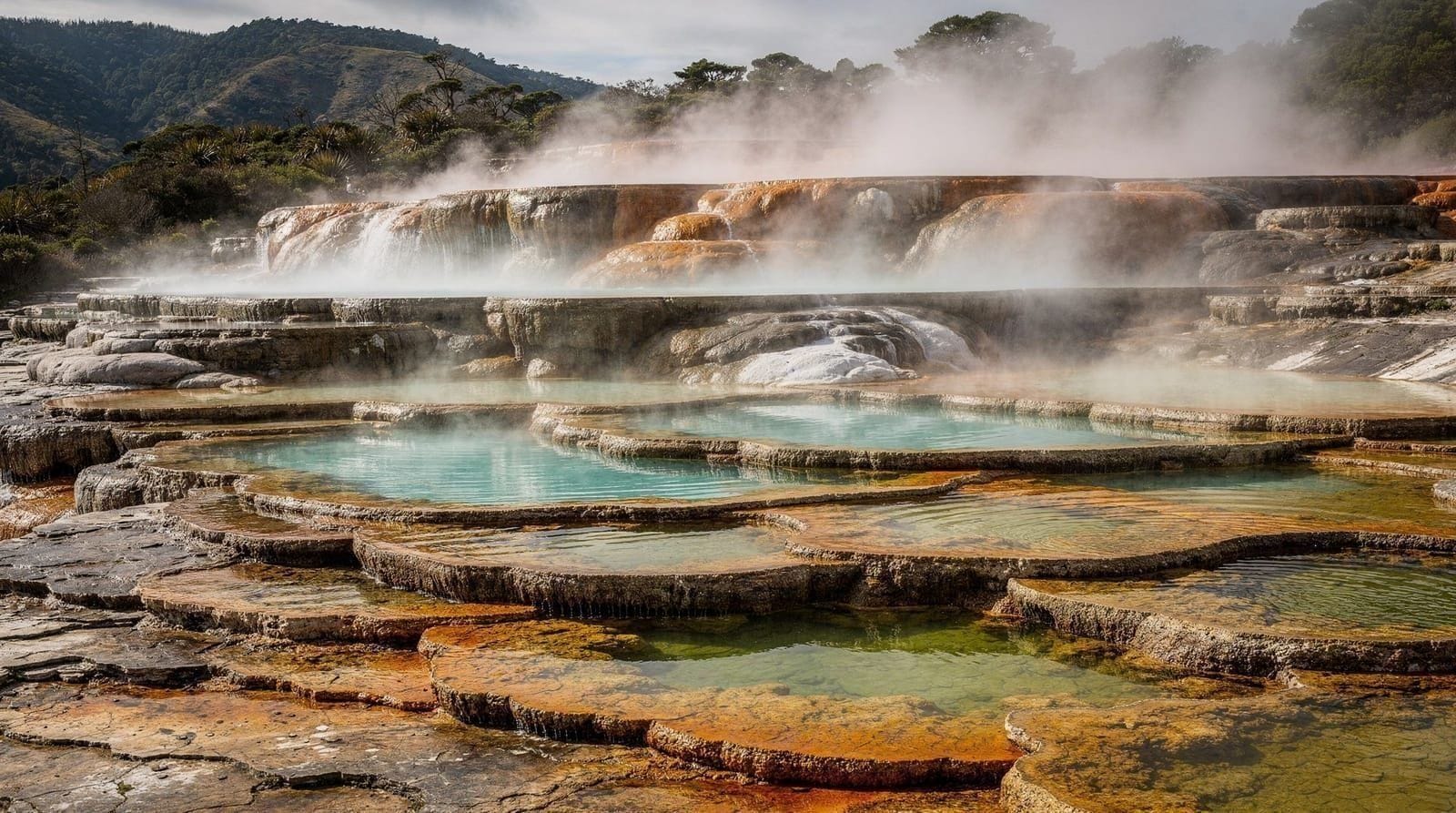
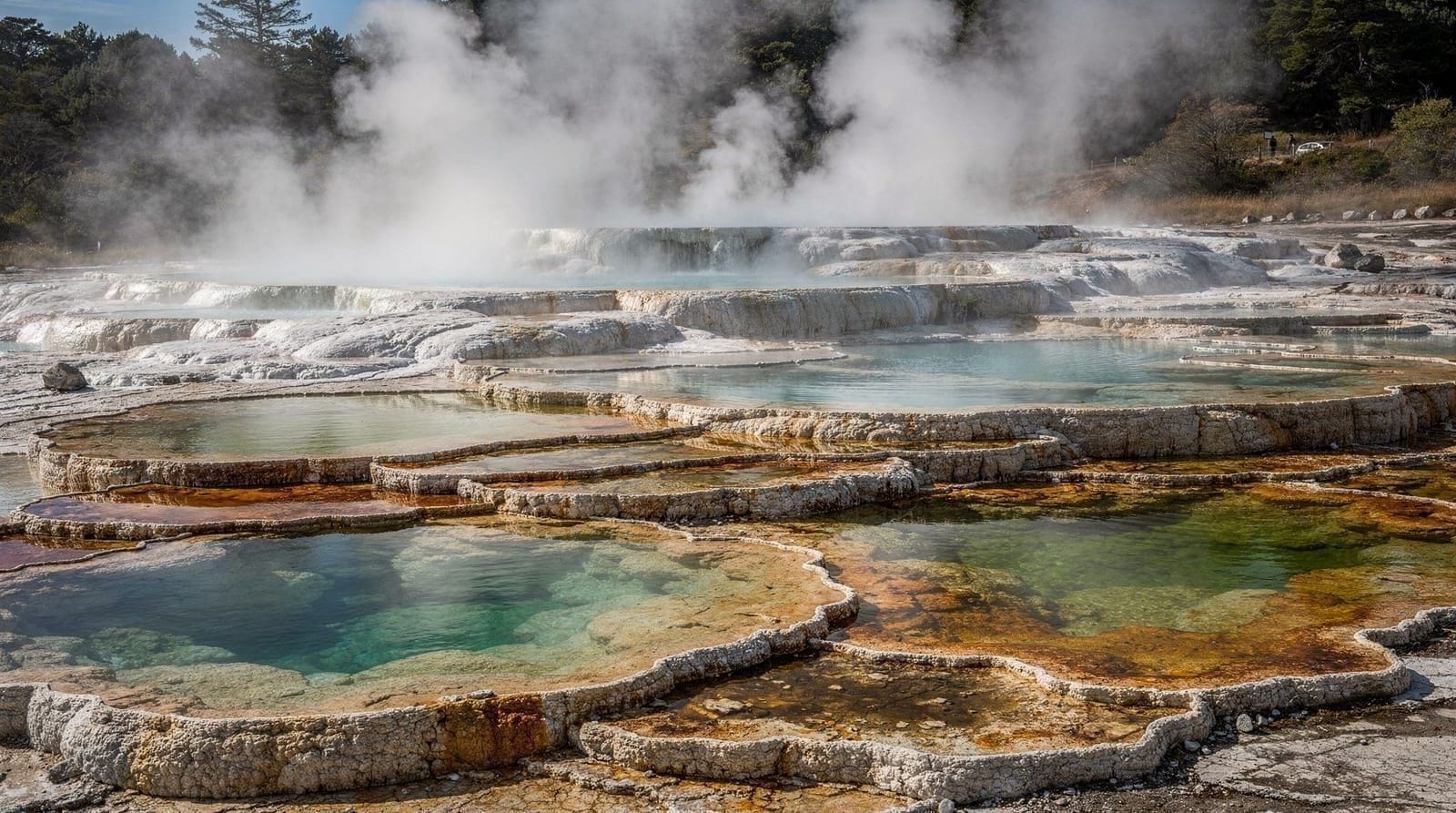
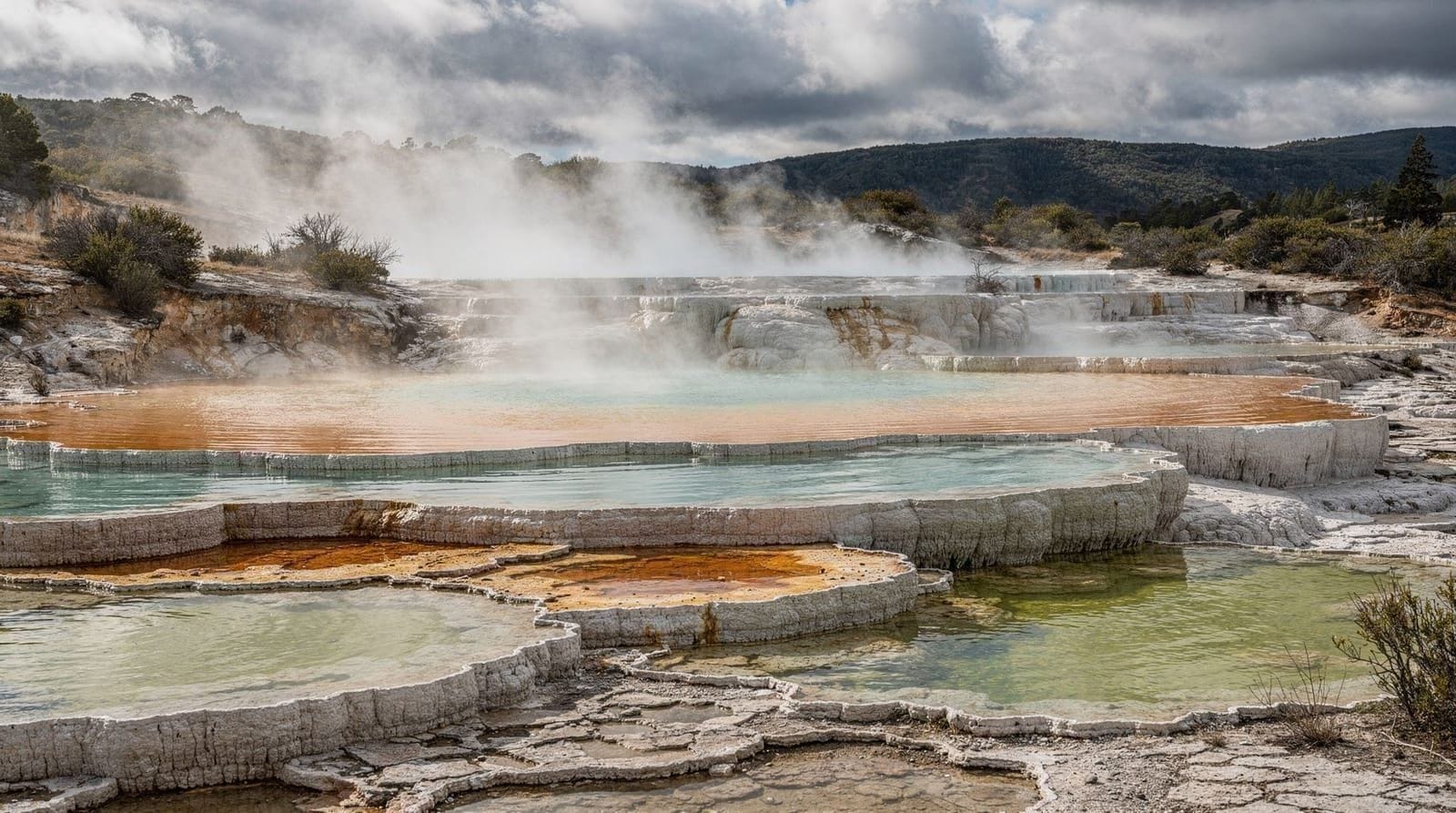
At Wai-O-Tapu, expect boardwalked paths through a series of distinct thermal features — the Champagne Pool’s striking orange mineral rim, the Devil’s Bath’s fluorescent green pool, bubbling mud pools, and (timed to a scheduled eruption, typically mid-morning) the Lady Knox Geyser, which is triggered by park staff rather than erupting naturally on a fixed schedule. The Mitai evening programme typically opens with a traditional waka (canoe) arrival on the Mitai stream, followed by the haka and cultural performance, a guided nocturnal nature walk to spot glowworms and native eels, and the hangi meal served buffet-style.
The Auckland to Rotorua day tour including Wai-O-Tapu and Te Puia instead pairs the two geothermal-adjacent sites in one day, giving a stronger geology focus with Te Puia’s cultural element built in rather than a separate evening village visit. For a Rotorua-based cultural experience without the Auckland transport, the geothermal hangi traditional Maori experience and the Te Puia Te Po evening hangi and cultural experience are strong standalone options if you’re already staying in Rotorua, typically NZD 150 to 220.
Budget breakdown
For a family of four taking the combined Auckland day tour, budget roughly NZD 950 to 1,100 in total once child discounts (typically 25 to 35 percent) are applied across the geothermal entry, transport, and hangi dinner. Doing the same combination as a Rotorua-based overnight instead — one night’s accommodation plus separate daytime geothermal entry and evening cultural tickets — often comes out at a broadly similar total cost once accommodation is included, but spreads the experience across a more comfortable two days rather than compressing it into one, which is the real trade-off rather than a straightforward cost saving.
Duration and getting there from Auckland
Rotorua is about three hours’ drive south-east of Auckland via State Highway 1 and 5, through rolling farmland and pine forest. A full-day tour from Auckland is consequently a long commitment — typically 12 to 13 hours door to door, with an early morning departure (often before 7.30am) and a late return, since the evening cultural programme and hangi dinner run into the night before the drive back.
If the length of a single day trip concerns you, staying overnight in Rotorua and doing the geothermal park and cultural evening as separate, unhurried activities avoids the compressed pacing of a same-day round trip from Auckland — our Auckland to Rotorua three-day itinerary lays out how that works.
The drive itself passes through genuinely varied North Island landscape — the Bombay Hills south of Auckland, rolling Waikato dairy country, and then pine plantation forestry as you approach the central plateau’s volcanic zone — and most coach operators build in a short rest stop roughly halfway, commonly around Tirau or Cambridge, giving a chance to stretch and grab a coffee before continuing.
Is it worth it — the honest verdict
The core experience is worth doing — Rotorua’s geothermal landscapes are genuinely unusual and photogenic, and a well-run cultural evening with haka, waiata, and hangi is a meaningful, respectfully presented introduction to Maori culture rather than a diluted tourist gimmick, provided you choose an operator connected to local iwi (Te Puia and Mitai both are). The combination of geology and culture in one day also makes efficient use of the long drive from Auckland, rather than making that three-hour trip worthwhile for just one element.
The honest caveat is pacing. Doing this as a single day trip from Auckland is a demanding 12 to 13 hour day, with six hours of that spent driving. If your itinerary allows for an overnight stay in Rotorua instead, you get a noticeably more relaxed version of the same experience — more time at each site, less rushing between the geothermal park and the evening event, and a proper night’s sleep before continuing your trip. The single-day Auckland version is a reasonable choice if time is genuinely limited, but go in expecting a full, tiring day rather than a leisurely one.
On the cultural authenticity question specifically: both Mitai and Te Puia operate with direct iwi involvement rather than as generic third-party attractions licensing Maori imagery, and both are commonly recommended in traveller feedback for striking a genuine balance between welcoming a general international audience and maintaining respect for the practices being shared. That said, any group performance staged for visitor numbers is inevitably a curated, condensed version of much deeper cultural practice — worth understanding as an introduction and a sign of respect toward a living culture, not as the full picture.
Traveller reviews of the combined tours consistently rate the hangi meal itself as a highlight — the slow-cooked, smoky flavour genuinely differs from conventionally cooked equivalents, and portions are typically generous, buffet-style with multiple meat, seafood, and vegetable options. The most common mild criticism relates to fatigue: by the time the evening cultural programme starts, travellers who began their day with an early Auckland pickup are often visibly tired, which can take some of the shine off a genuinely well-run performance. This is another point in favour of the Rotorua-overnight alternative if your schedule allows it.
Who this suits
This suits travellers with a genuine interest in geology and Maori culture who want both covered efficiently, families willing to manage a long day for kids who engage well with the performance elements, and anyone without the flexibility to add an overnight stay to their North Island itinerary. Children generally respond well to the interactive elements of a cultural evening — poi demonstrations often invite audience participation, and the haka is a memorable, high-energy moment that tends to hold attention even for kids who’ve flagged during the quieter geothermal park walking.
It suits less well travellers who prefer a slower, less structured pace, and anyone for whom the length of the round trip from Auckland (roughly six hours of driving alone) outweighs the value of fitting it into a single day. It’s also a demanding choice for anyone prone to motion sickness on long coach journeys, given the substantial time spent on the road in both directions.
Tips for visiting
Wear closed, comfortable shoes for the geothermal park walkways — some sections involve boardwalks over uneven or steaming ground, and open shoes aren’t ideal near mineral pools and mud. Bring a light jacket for the evening cultural programme, since Rotorua evenings cool down noticeably even in summer. If you have dietary requirements, mention them when booking — hangi meals are generally adaptable but need advance notice for the earth-oven cooking process. Photography is welcome at most points in cultural performances, but always follow your host’s specific guidance, since certain moments (particularly during formal welcome protocols) may be designated no-photography out of respect.
Rotorua is also known, somewhat jokingly, for its faint sulphur smell, a natural side effect of the geothermal activity that pervades parts of the town — it’s stronger near the geothermal parks themselves and fades quickly once you’re back on the coach, but it’s worth mentioning so it doesn’t come as a surprise. If you or anyone in your group has respiratory sensitivities, this is worth factoring in, though most visitors find it a minor, quickly-adjusted-to novelty rather than a genuine discomfort.
During formal Maori welcome protocols (a pōwhiri or similar), follow your host’s instructions on where to sit, when to stand, and whether photography is permitted at that specific moment — these customs carry real cultural weight, and visitor cooperation is both expected and genuinely appreciated by the hosting iwi.
Alternatives to consider
If you’d rather split geothermal and cultural experiences across two shorter, less rushed visits, Wai-O-Tapu alone (without the evening cultural add-on) makes a strong half-day geology-focused excursion, while Te Puia’s daytime cultural centre visit works well as a separate, standalone half-day if you’re staying in Rotorua for more than a day. For a direct comparison of Rotorua’s two main geothermal parks, see our Te Puia versus Wai-O-Tapu guide. For the wider question of whether Rotorua deserves a spot on a tight Auckland-based itinerary, our honest is Rotorua worth it guide weighs the trade-offs.
If you’d rather build a longer stay around Rotorua’s cultural and geothermal sites without the pressure of an Auckland round trip, see our dedicated Rotorua guide for accommodation, additional geothermal parks beyond Wai-O-Tapu, and other Te Arawa cultural experiences worth adding to a two- or three-night stay. Our Rotorua geothermal explained guide also goes deeper into the science behind the region’s volcanic activity if that’s a particular interest.
Comparing your options
| Option | Best for | Approx. cost |
|---|---|---|
| Mitai Village + Wai-O-Tapu (Auckland day tour) | Most dramatic geothermal park + evening culture | NZD 260–300 |
| Wai-O-Tapu + Te Puia combined day | Stronger geology focus with culture built in | Similar range |
| Rotorua-based evening hangi/cultural experience | Already staying overnight in Rotorua | NZD 150–220 |
Compare the main geothermal and cultural tour combinations below.
Compare alternative tours
Frequently asked questions about Rotorua geothermal and Maori culture tour from Auckland
What is included in a Rotorua geothermal and Maori culture day tour?
Most versions combine a geothermal park visit, typically Wai-O-Tapu with its coloured thermal pools and the Lady Knox Geyser, with a Maori cultural experience such as a Mitai or Te Puia village visit including a haka performance and a traditional hangi meal cooked in an earth oven. Return transport from Auckland is included, along with a guide who narrates the geology and cultural context throughout the day.How much does a Rotorua geothermal and cultural tour cost from Auckland?
Full-day tours combining both elements typically cost NZD 250 to 320 per adult, reflecting the long transport distance, park entry fees, and the cultural performance and hangi dinner. Rotorua-based versions, which skip the Auckland transport, cost less — usually NZD 150 to 220.How long is the drive from Auckland to Rotorua?
Around three hours each way by road via State Highway 1 and 5. A full-day tour from Auckland is consequently a long day — typically 12 to 13 hours door to door including the drive, geothermal park visit, and evening cultural experience.What is a hangi and is it authentic?
A hangi is a traditional Maori method of cooking food — meat, vegetables, and often stuffing — in a pit oven lined with heated volcanic rocks, covered and left to steam for several hours. The larger cultural villages that run these experiences for visitors, such as Te Puia and Mitai, work with local iwi and present the practice as genuinely rooted in tikanga (Maori protocol) rather than a stripped-down tourist reenactment, though the scale and staging is naturally adapted for group visitor numbers.Should I choose Wai-O-Tapu or Te Puia for the geothermal component?
Wai-O-Tapu has the more dramatic and colourful geothermal landscape — the Champagne Pool and the Lady Knox Geyser are the standout sights — but is purely a natural park with no cultural programme attached. Te Puia combines a smaller geothermal area (including the Pohutu Geyser) with a cultural centre, carving school, and kiwi conservation area, making it the better single-stop choice if you want geothermal and culture together without visiting two separate sites.Is the tour appropriate for children?
Yes, generally. Geothermal parks have marked, fenced walkways that are safe for supervised children, and the cultural performances — haka, poi, and waiata (song) — tend to engage kids well. The main consideration is the length of the day; a 12 to 13 hour round trip from Auckland is a long day for young children, so a Rotorua-based overnight stay may suit families better than a single marathon day trip.