Public transport vs car in Auckland: which do you actually need
Waiheke Island: Private luxury waiheke island tour auckland via car ferry
Should I use public transport or rent a car in Auckland?
Use public transport (bus, train, ferry with an AT HOP card) for city-based days — it covers the CBD, waterfront, inner suburbs and Waiheke or Rangitoto ferry trips well. Rent a car only for the specific days your itinerary includes destinations without transport coverage, like Hobbiton, Waitomo, Piha or the Coromandel.
Two different questions hiding in one
“Public transport or car” isn’t really one decision for an Auckland trip — it’s two separate questions that most visitors accidentally merge into one. The first is how you’ll get around Auckland city itself; the second is how you’ll reach North Island day trips beyond it. Answering them separately, rather than defaulting to a single transport mode for the whole stay, is the single biggest lever for getting this decision right, and it’s the approach this guide takes.
| City days | Public transport (AT HOP) — bus, train, ferry |
| Day-trip days | Rental car or guided tour, depending on route and confidence |
| Cost | ~NZD 50/week AT HOP vs NZD 40-80/day + insurance for a car |
| Getting set up | AT HOP card at any station/store, or a rental counter/app |
| Best approach | Mix both — matched to each type of day, not one mode for the whole trip |
What public transport covers well
Auckland’s AT HOP card system — a rechargeable prepaid card covering bus, train and ferry travel — comfortably handles the CBD, waterfront (Viaduct, Wynyard Quarter), inner suburbs (Ponsonby, Parnell, Newmarket), Devonport, Mission Bay and Takapuna, plus ferry access to Waiheke and Rangitoto islands. Fares run roughly 20% cheaper with an AT HOP card than cash, and a rolling 7-day cap around NZD 50 means heavy users pay a predictable maximum regardless of how much they travel within that window. Our AT HOP card guide covers setup and top-up details, and our Auckland ferries guide covers the specific island and Devonport routes.
For a trip confined to the city and its ferry-accessible islands, public transport alone is genuinely sufficient — there’s no meaningful upside to a rental car here, and real downsides (parking costs, unfamiliar one-way CBD streets, insurance) with no corresponding benefit. If you’d rather have the Waiheke day handled for you, you can book a private Waiheke Island tour that includes the car ferry , and for a city day on foot, Sky Tower entry tickets are easy to reach by public transport.
What requires a car (or a tour)
Public transport does not reach several of the region’s best-known attractions in any practical way. Hobbiton and Matamata, Waitomo’s glowworm caves, the Coromandel Peninsula and Cathedral Cove, Rotorua, the Bay of Islands, and west coast beaches like Piha and Muriwai all sit beyond Auckland’s public transport network, requiring either a rental car or an organised tour that includes transport. There is no partial public transport option for these — it’s car, tour, or don’t go.
Cost comparison: the real numbers
| Public transport (AT HOP) | Rental car | |
|---|---|---|
| Typical cost | 7-day cap ~NZD 50 | NZD 40-80/day + NZD 15-25/day insurance |
| Fuel/extra costs | None | ~NZD 2.20-2.50/litre petrol |
| Parking | None needed | NZD 4-6/hour CBD, or daily rate |
| Coverage | CBD, inner suburbs, Waiheke/Rangitoto ferries | Everywhere, including day trips |
| Best for | City-based days | Day trips beyond the transport network |
For a purely city-based multi-day stay, public transport is dramatically cheaper — a week of unlimited AT HOP travel costs less than a single day of rental car plus insurance and parking. The calculation flips the moment your itinerary includes even one day trip beyond ferry-accessible islands, since a rental car for that specific day (or days) becomes not just cost-competitive but often the only practical option short of an organised tour.
The mixed approach: what most visitors should actually do
Rather than choosing one mode for the entire stay, the most cost-effective pattern for a typical Auckland trip that includes both city time and day trips is: public transport (AT HOP) for city-based days, and a short-term rental car picked up specifically for the day or days you’re driving beyond the city, then dropped off again once you’re back. This avoids paying for a multi-day rental you don’t fully use while still covering the destinations transport can’t reach. Our car rental Auckland guide covers pickup logistics for exactly this pattern, including picking up mid-stay rather than at the airport.
If you’re planning several day trips across your visit, it can work out cheaper to rent for the full stretch between them rather than returning and re-renting each time — weekly rental rates typically undercut the sum of individual daily rates by a meaningful margin, so run the numbers both ways before deciding.
When a guided tour beats both options
For destinations with genuinely demanding driving — the Coromandel’s narrow, winding Kopu-Hikuai Road in particular, or a long Bay of Islands day involving six hours of driving round trip — a guided tour that bundles transport, driving and often lunch into a fixed price removes the self-drive question entirely. This suits solo travellers without anyone to share driving duties, visitors not confident adjusting to left-hand driving, and anyone who’d simply rather look at the scenery than navigate it. Our self-drive vs tour day trips guide compares this specifically against renting for the same destinations.
By traveller type
Solo travellers or couples on a city-focused trip: public transport only. No car needed at any point.
Solo travellers or couples adding one or two day trips: public transport for city days, plus either a short-term rental for flexible day trips or a guided tour for demanding routes like Coromandel.
Groups of three or more: a rental car for day trips usually beats public transport or tour pricing per person once split across the group, though public transport still covers city days fine if walking distances and ferry stops suit your accommodation.
Families with young children: public transport works for city sightseeing, but a rental car for day trips offers more flexibility around nap schedules and rest stops than a fixed-departure guided tour.
Visitors nervous about left-hand driving: lean toward guided tours for day trips rather than self-driving, and rely on public transport for the city — this avoids left-hand driving altogether if that’s a genuine concern.
Getting to and from the airport either way
Whichever approach you choose for the body of your trip, arrival and departure transport is a separate decision — SkyBus, taxi, rideshare or direct rental car pickup are the options, covered in full in our Auckland Airport to city guide. Many visitors use SkyBus or a taxi on arrival, rely on public transport for city days, then pick up a rental car mid-stay specifically for day trips, dropping it off before flying out — a pattern that avoids airport rental car fees for days the car sits unused.
The honest bottom line
Don’t default to renting a car simply because it feels like the “normal” way to visit a destination, and don’t force a car-free itinerary onto a trip that genuinely needs one for Hobbiton, Waitomo or Rotorua. Auckland’s transport split is unusually clean once you separate “city days” from “day-trip days” — match your transport plan to each type of day individually, and you’ll likely spend less overall while covering more ground comfortably. Our getting around Auckland guide ties all the individual transport modes together if you want the fuller picture before finalising your itinerary.
Real budget examples
A 4-day city-only trip for a couple: two AT HOP cards, each capped around NZD 50 over 7 days, covering unlimited city travel plus a Waiheke ferry day — total transport cost roughly NZD 100 for the pair, with zero parking or insurance costs to add on top.
A 6-day trip with two day trips (Hobbiton and Rotorua) for a couple: AT HOP for four city-based days (~NZD 50 each, though likely less if travel is lighter) plus a two-day rental car for the day-trip stretch (roughly NZD 80-160 rental, NZD 30-50 insurance, NZD 100-150 fuel across both days) — total transport cost in the range of NZD 350-500 for the pair, still considerably less than renting a car for the entire six days.
A week-long trip for a family of four with three day trips: AT HOP for city days plus a rental car for the day-trip stretch, split across four people, typically works out cheaper per person than public transport-only pricing would if public transport could even reach those destinations (it can’t) — this is the scenario where a car earns its cost most clearly.
Accessibility considerations
Auckland’s buses are predominantly low-floor and wheelchair-accessible, and newer train carriages offer step-free boarding at platform level on most stations, making public transport a genuinely workable option for many travellers with mobility needs for city-based days. Ferries vary more by vessel, so checking accessibility specifics directly with Fullers360 ahead of a planned crossing is worth doing if this matters to your trip. For day trips beyond the city, a rental car (with hand controls or other adaptations arranged in advance with the rental company if needed) is generally the more reliable option over relying on tour bus accessibility, which varies considerably by operator and vehicle.
The environmental angle
If minimising your trip’s environmental impact matters to you, public transport and ferries are the meaningfully lower-impact choice for any day that doesn’t require reaching a destination beyond the network — worth weighing alongside cost when your itinerary gives you a genuine choice. Our sustainable travel Auckland guide covers this in more depth, including how to think about the trade-off honestly on days when a car is genuinely the only practical option.
Common mistakes in this decision
The most common mistake is renting a car for an entire stay that’s mostly city-based, then paying for parking and insurance on days the car never really needed to leave the accommodation. The reverse mistake — trying to force a car-free itinerary onto a trip that includes Hobbiton, Waitomo or Rotorua — usually ends with an expensive, logistically awkward last-minute guided tour booking once travellers realise public transport genuinely doesn’t reach these places. Deciding this up front, day by day, rather than defaulting to one mode for the whole trip, avoids both mistakes.
Insurance, stress and the hidden cost of driving unfamiliar roads
Beyond the direct dollar comparison, it’s worth being honest about a less tangible cost: driving on the left for the first time, navigating unfamiliar rural roads, and managing insurance excess all carry a genuine stress overhead for many visitors, particularly solo travellers without anyone to share driving duties. Public transport removes this entirely for the days it can cover, and even on day-trip days, some travellers find that the cost of a guided tour is worth paying simply to remove the mental load of navigation, parking, and unfamiliar road rules — not just to save money. Our driving in New Zealand guide is worth reading in full before committing to self-driving if this is a genuine concern, since knowing what to expect in advance meaningfully reduces the adjustment period.
Combining tours with public transport days
A pattern that works well for travellers who want to avoid renting a car entirely, even for day trips, is combining public transport city days with organised tours (which include their own transport) for everything beyond the network. This costs more per day trip than self-driving with a rental car split across a group, but it removes driving from the equation completely while still reaching Hobbiton, Waitomo, Rotorua or the Coromandel. It particularly suits solo travellers, anyone not driving on the left for the first time by choice, and travellers who’d simply rather sit back and enjoy the scenery than navigate it. Our best day trips from Auckland guide lists the tour options available for each major day-trip destination.
A decision checklist
Before booking anything, run through this quickly: does your itinerary include any destination beyond Waiheke, Rangitoto, Devonport or the inner suburbs? If no, skip the car entirely and rely on AT HOP. If yes, how many separate day trips are involved — one, or several? A single day trip usually makes a guided tour or short-term rental roughly comparable in cost, so choose based on whether you want to drive or not. Several day trips shift the maths toward renting for the full stretch between them.
Finally, how many people are travelling — solo and couples often find tours and public transport combine well, while groups of three or more see rental costs drop meaningfully per person, making self-driving the more attractive default. Answering these three questions before booking accommodation or tours avoids the common trap of committing to one transport mode for the whole trip before you’ve actually mapped out what each day requires.
What changes on a return trip to Auckland
If this isn’t your first visit and you’ve already covered the city’s core sights, the calculation shifts slightly: repeat visitors are statistically more likely to be planning day trips beyond the city from the outset, since the city-only itinerary is already checked off. In that case, it’s often worth booking a rental car for your entire stay from the start, rather than the mixed approach recommended above for first-time visitors still splitting time between city sightseeing and day trips — the math tips further toward a car the more of your itinerary sits beyond Auckland’s public transport network.
A note on timing your decision
Ideally, make this decision before booking accommodation, since staying near a train station or ferry terminal versus staying somewhere only reachable by car changes how much you can lean on public transport for city days. If you’ve already booked accommodation and it happens to sit away from convenient public transport, that alone might tip the balance toward renting a car for more of your stay than this guide’s general advice would otherwise suggest — location relative to transport infrastructure matters as much as the general itinerary type discussed above.
Booking apps and real-time information
Whichever way you lean, having the right apps installed before you land saves genuine friction on the ground. The AT Mobile app covers real-time bus, train and ferry timetables, trip planning and AT HOP top-ups, and is worth installing before your first city day rather than figuring it out at a bus stop. For a rental car, most major companies now offer their own apps for pickup, roadside assistance and fuel-station locators, and a general navigation app that works offline (or that you’ve pre-downloaded relevant map areas for) is genuinely useful for the parts of the Coromandel and west coast where signal drops out, covered in more depth in our driving in New Zealand guide.
Peak hours and timing your public transport days
Auckland’s bus and train network runs a genuine weekday commuter peak, roughly 7-9am and 4-6:30pm, when both roads and public transport are noticeably busier with local commuters rather than visitors. For city-based sightseeing days, this mostly just means buses and trains are fuller rather than unusable, but if you’re also considering a rental car for part of your trip, driving into or through the CBD during these windows adds real time and stress that a mid-morning or early-afternoon departure avoids entirely. Ferries to Waiheke and Rangitoto run to a fairly consistent daytime schedule regardless of the commuter peak, so island day trips aren’t meaningfully affected either way.
What a hybrid week might actually look like
To make the mixed approach concrete: a typical seven-night Auckland-based trip might run AT HOP for days one through three (CBD, waterfront, Devonport, a Ponsonby cafe morning), a Waiheke ferry day on day four still using AT HOP, then a rental car picked up on the morning of day five specifically for a Hobbiton and Waitomo loop, kept for day six’s Coromandel trip too since the car is already in hand, then dropped back off on the evening of day six ahead of two final AT HOP city days to close out the trip. This kind of day-by-day mapping, rather than committing to one mode upfront, is what keeps the mixed approach genuinely cost-effective rather than becoming a second full-stay rental by accident.
Matching transport to specific destinations
Once you’ve split your trip into city days and day-trip days, it helps to attach a transport plan to each place on your list. Staying put in the centre, Auckland city centre and the Viaduct and Wynyard Quarter are easy on foot or with a short hop on public transport, and Ponsonby and Grey Lynn suit a relaxed bus ride followed by a wander between cafes. If you’re unsure which area to base yourself in, our Auckland neighbourhoods guide and where to stay in Auckland guide help you pick somewhere that makes a car-free city stay realistic.
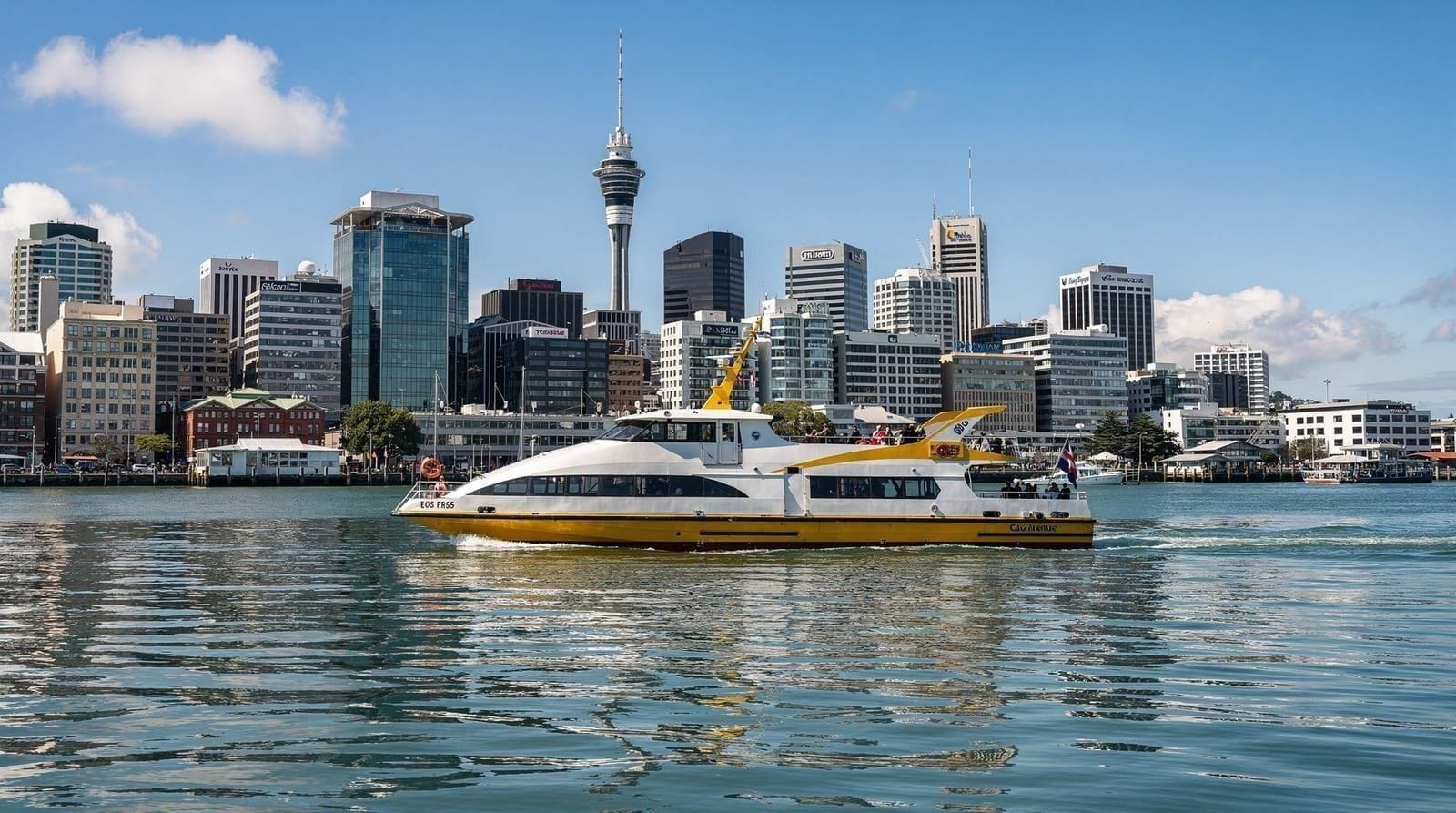
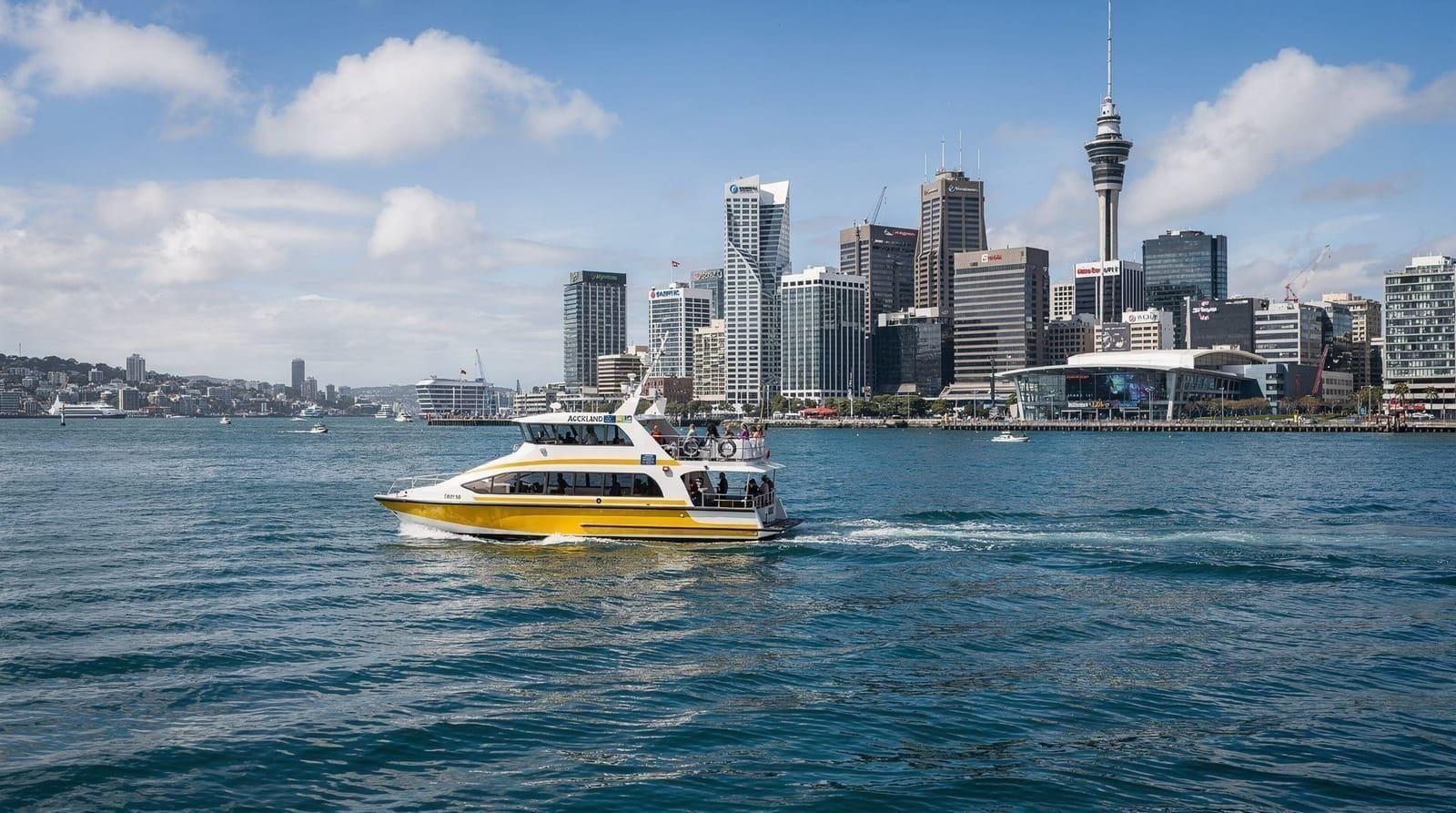
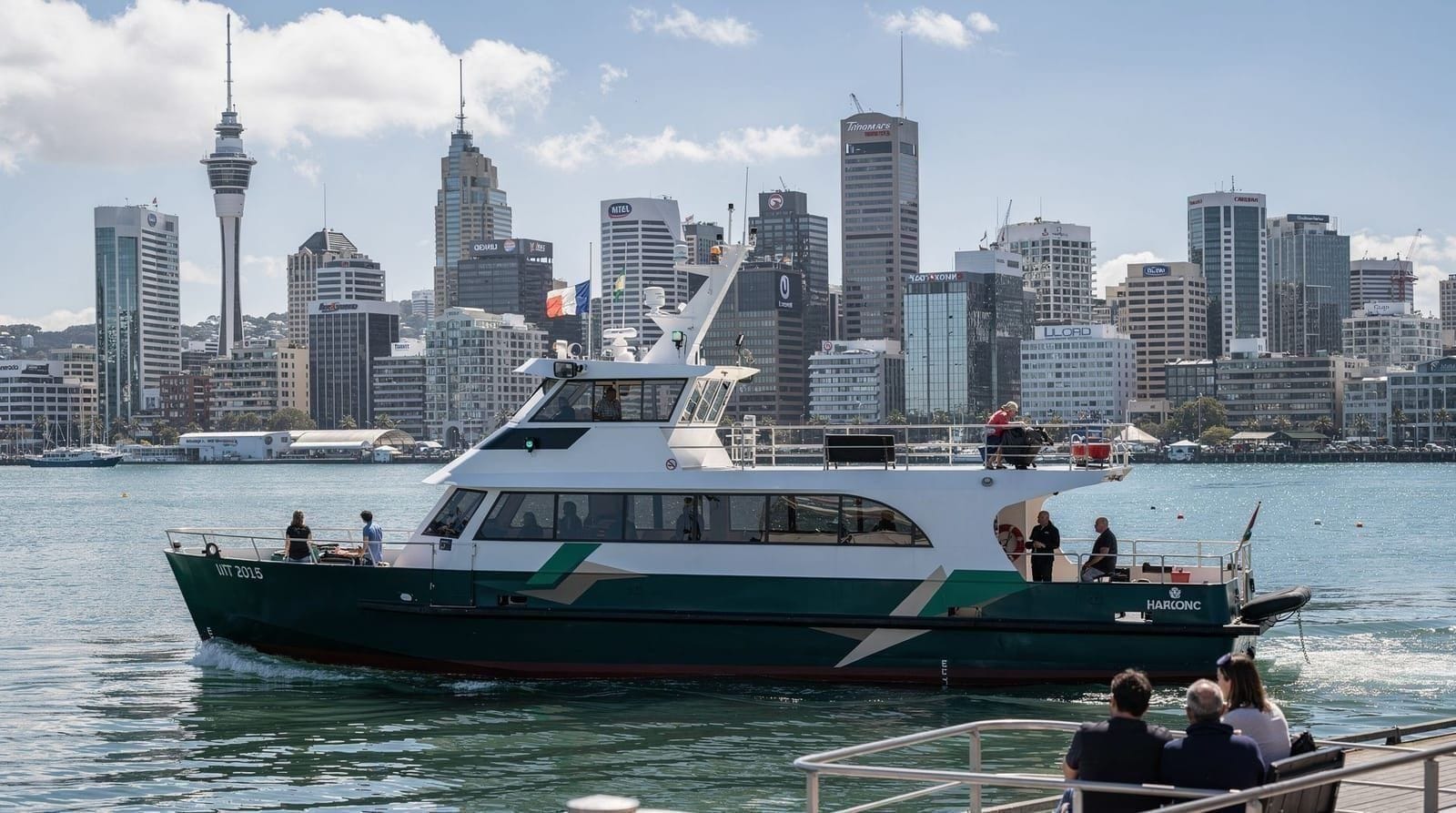
The water is where public transport really shines for visitors. Devonport and Waiheke Island are both ferry destinations, and Rangitoto Island is another easy car-free day. Our ferry vs drive for Waiheke guide explains why taking a car across is rarely worth the trouble, and the Rangitoto half-day plan shows how little logistics a gulf island outing needs. For a bigger picture of what’s reachable without wheels, the Hauraki Gulf islands guide is a useful companion.
Beyond the network, the picture changes. Hobbiton and Matamata, Waitomo Caves and Rotorua are the classic reasons visitors end up needing either a rental car or a tour, and our Auckland to Rotorua transport guide lays out the options for that particular leg. Likewise, a west coast outing to Piha rewards having your own vehicle, as our Piha and Waitakere day trip guide explains.
Putting it into your itinerary
If you’d rather see the mixed approach laid out day by day, our 3 days in Auckland itinerary is a good example of a plan that works almost entirely on public transport, while the Hobbiton and Waitomo in one day itinerary is the kind of day that justifies a car or tour. For a longer trip that combines both, the North Island 7-day loop shows how a rental fits once you leave the city for several days in a row. Taking your first steps in planning? Our first-time Auckland tips guide covers the other practical decisions that sit alongside this one, and the is Auckland expensive guide helps you see how transport fits in the wider budget.
Frequently asked questions about public transport vs car in Auckland
Is public transport enough for a city-only Auckland trip?
Yes. Buses, trains and ferries with an AT HOP card cover the CBD, waterfront, Devonport, Mission Bay and most inner suburbs comfortably, and a Waiheke or Rangitoto ferry day needs no car at all.
How much does public transport cost compared to a rental car in Auckland?
AT HOP fares are capped around NZD 50 over a rolling 7-day period, covering unlimited bus, train and ferry travel. A rental car runs NZD 40-80 per day plus insurance and fuel, so for a purely city-based stay, public transport is significantly cheaper; the calculation flips once day trips beyond the transport network enter the itinerary.
Can I do Hobbiton or Waitomo by public transport?
No — neither has practical public transport access from Auckland. You need a rental car or a guided tour with transport included for both destinations.
What’s the most cost-effective approach for a trip with both city days and day trips?
A mixed approach: public transport for city-based days, and a short-term rental car picked up specifically for the one or two days you’re driving out of the city, then dropped off again. This avoids paying for a full-stay rental while still covering destinations transport can’t reach.
Is it worth renting a car just for one day trip?
Often yes if you’re doing it solo or as a couple and comparing against a guided tour of similar cost, since a rental gives you flexibility over timing. For a single day trip only, though, a guided tour that includes transport is also a reasonable no-hassle option, especially for winding routes like Coromandel.
Does a car save money for groups?
Generally yes — rental and fuel costs split across three or more people usually undercut the equivalent public transport fares or guided tour prices per person, particularly for day trips beyond the city.
Should I book accommodation near public transport if I’m not renting a car?
Yes — staying near a train station, major bus route or ferry terminal makes a car-free city stay noticeably easier, and it’s worth checking this before booking rather than after, since it affects how much you can genuinely rely on public transport for your city days.
What app should I use for Auckland’s public transport?
The AT Mobile app covers real-time bus, train and ferry timetables, trip planning and AT HOP top-ups, and is worth installing before your first city day rather than figuring out routes at a bus stop.