Best swimming spots near Auckland, and how to swim safely at each one
Auckland has two very different coastlines
Auckland’s geography puts it between two coasts with genuinely different swimming conditions: the calm, sheltered harbour and gulf beaches to the east (Mission Bay, Cheltenham, Waiheke), and the wild, west-facing Tasman Sea beaches (Piha, Muriwai), which are dramatically more beautiful and dramatically more dangerous. Picking the right beach for your swimming ability and your appetite for risk matters more here than at most city beach destinations, so it’s worth understanding the difference before you just head to whichever one looks best in photos.
| Safest for families | Mission Bay, Cheltenham (harbour, patrolled/sheltered) |
| Most dramatic (real risk) | Piha, Muriwai (west coast, strong rip currents) |
| Patrol season | Late October to April, red and yellow flags |
| Water temp (summer) | 19-22°C harbour; a degree or two cooler on the west coast |
| Rip current rule | Never swim against it — swim parallel to shore, then in |
Mission Bay: calm, patrolled, and the easiest option
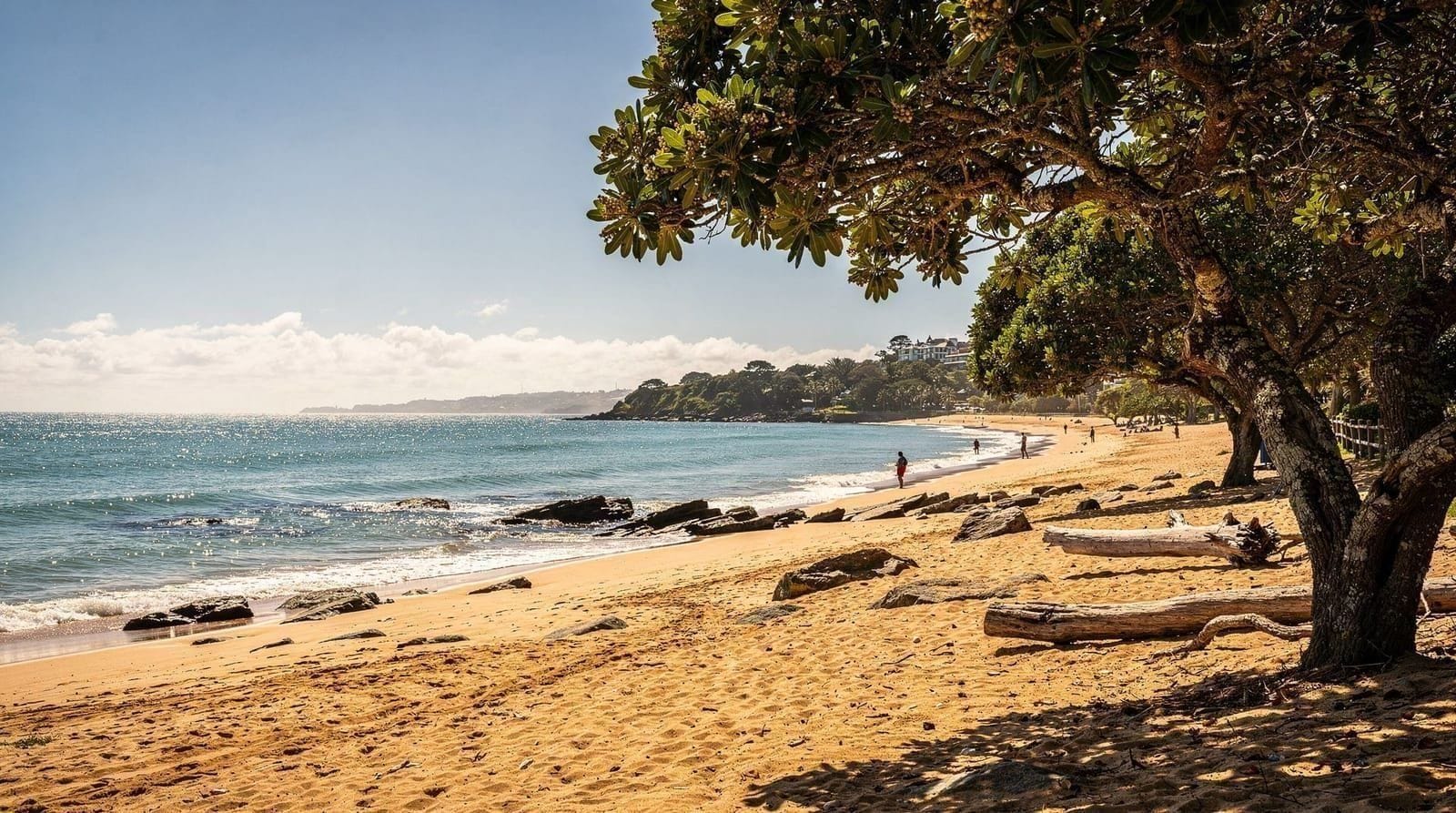
Mission Bay, on the eastern Tāmaki Drive waterfront, is the safest and most convenient swimming spot near central Auckland — sheltered harbour water, a genuinely gentle slope into the sea, lifeguard patrols in summer, and a strip of cafes and the fountain right behind the sand for when you’re done. It’s the obvious pick for families, less confident swimmers, or anyone who wants a swim without a drive out of the city. Our Auckland beaches guide covers Mission Bay alongside the city’s other harbour beaches in more depth.
Cheltenham Beach, Devonport: quiet and scenic
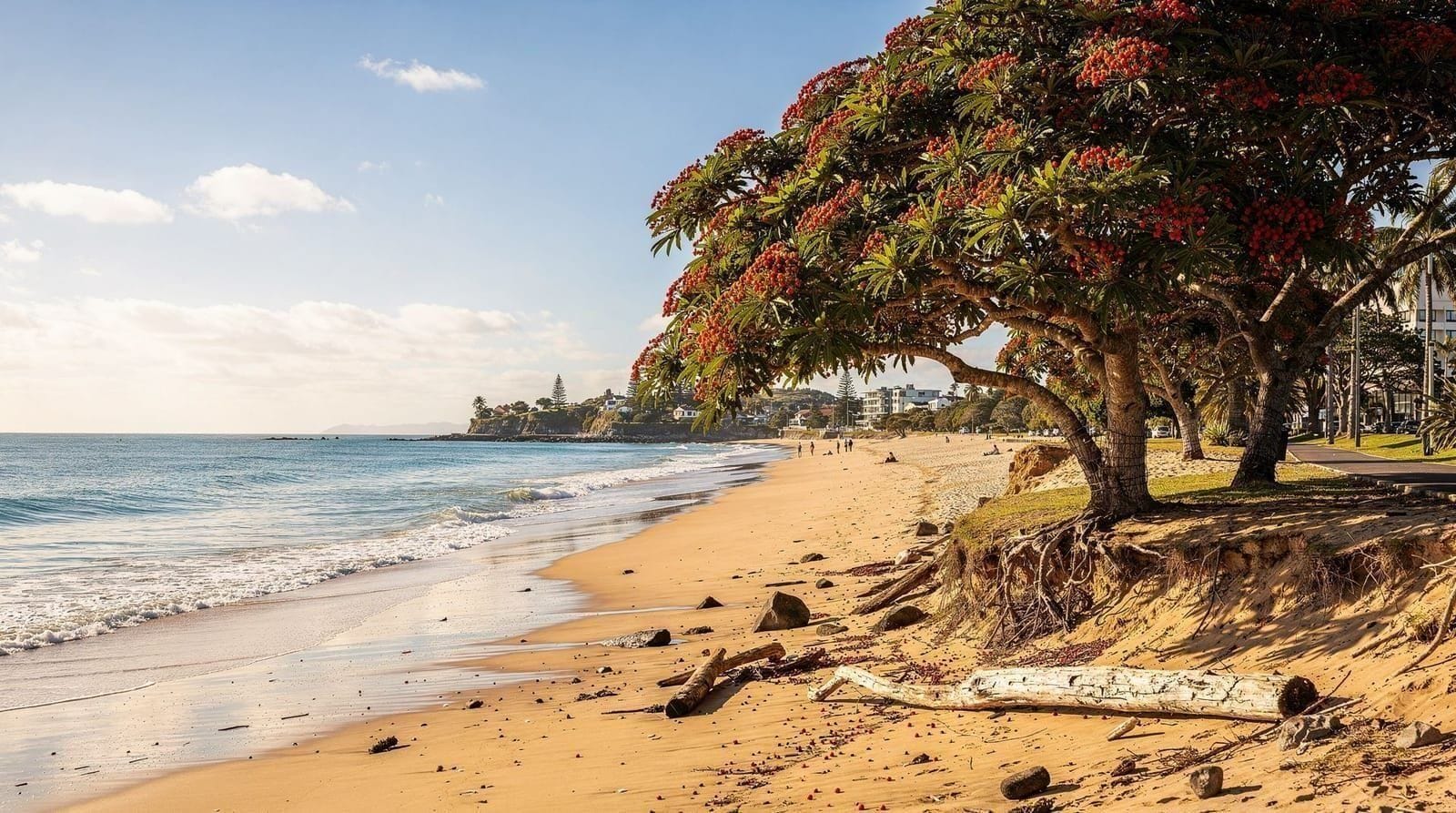
Cheltenham Beach, on the Devonport side of the harbour, is a genuinely lovely, quieter alternative to Mission Bay — calm harbour water, views across to Rangitoto, and considerably fewer crowds since it requires a ferry crossing rather than a straight drive along Tāmaki Drive. It’s a good pick if you want a swim as part of a slower Devonport day rather than a standalone beach trip, and the sheltered conditions suit families and weaker swimmers just as well as Mission Bay does.
Piha: genuinely beautiful, genuinely dangerous
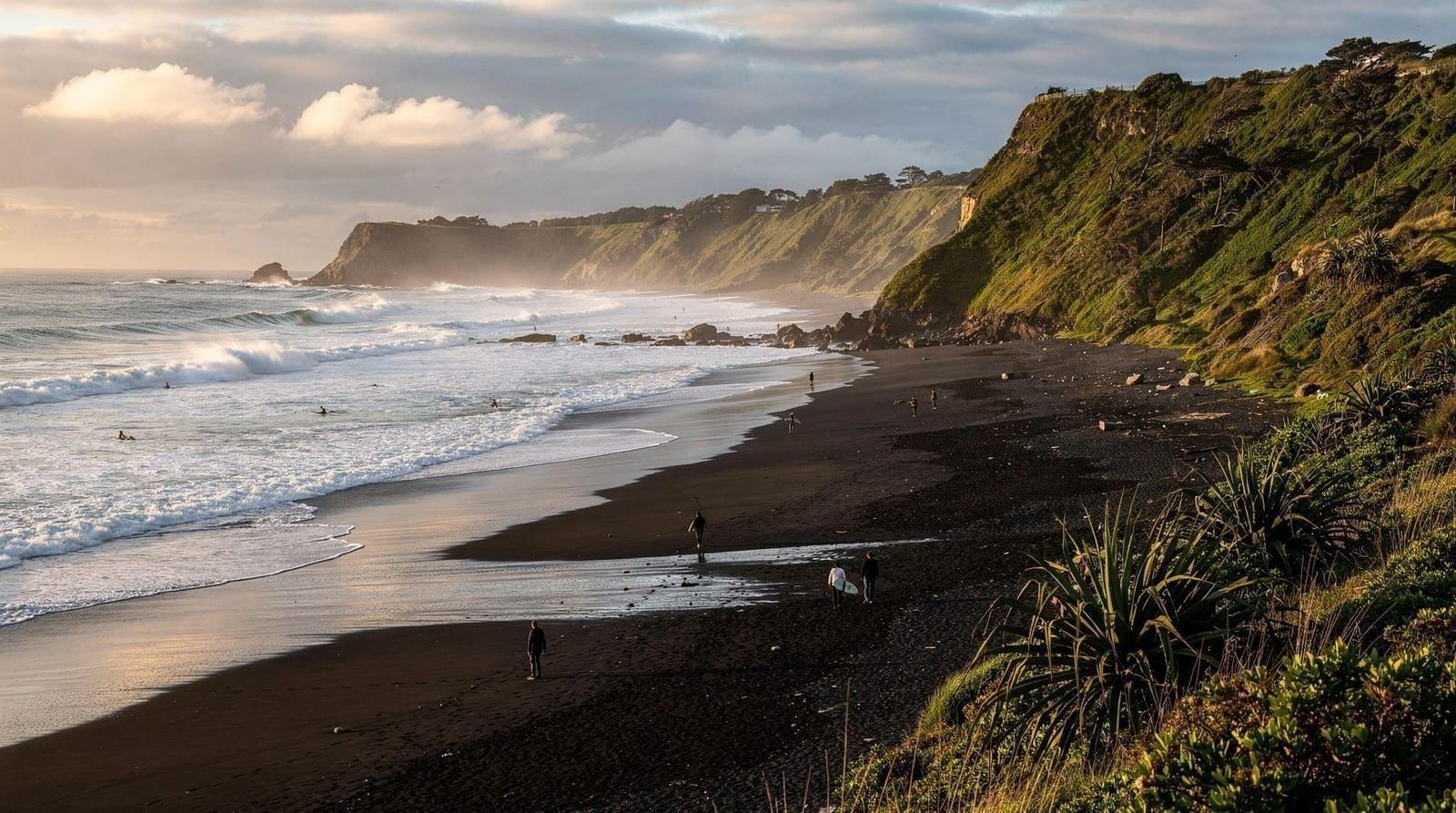
Piha is the most photogenic beach near Auckland — black volcanic sand, the Lion Rock landmark, and Tasman Sea surf that draws surfers from across the region — but it’s also the beach where you need to take rip current warnings seriously. Piha has notoriously strong rip currents, and it’s the site of the country’s longest-running volunteer surf lifesaving patrol for good reason. Lifeguards patrol the beach seasonally, typically late October through April (New Zealand’s summer), and swimming only between the red and yellow flags during patrol hours is a genuine safety requirement, not a suggestion. If you get caught in a rip current, the standard advice applies and it works: don’t fight it by swimming straight back to shore, swim parallel to the beach until you’re out of the current’s pull, then angle back in.
Outside patrol season, or if you’re not a strong swimmer, admire Piha from the sand or the surrounding Waitakere Ranges walks rather than swimming. A private Piha, rainforest and Mount Eden tour is a good way to see the beach and its surrounding scenery without needing to manage the drive yourself, and our Piha and Waitakere day trip guide has the fuller logistics.
Muriwai: surf, black sand, and a gannet colony
Muriwai, on the west coast north of Piha, shares the same black-sand, rip-current profile as Piha and Bethells Beach, and carries the same safety rules — swim only at patrolled sections in season, respect the flags, and treat the surf with real caution rather than harbour-beach confidence. What sets Muriwai apart is the gannet colony on the headland, one of the few mainland gannet colonies in the world and genuinely worth visiting even outside swimming season. A private Muriwai beach and gannet colony tour combines both, which suits visitors who want the west coast experience without self-driving the winding Waitakere roads.
Waiheke’s Onetangi: the best beach on the island
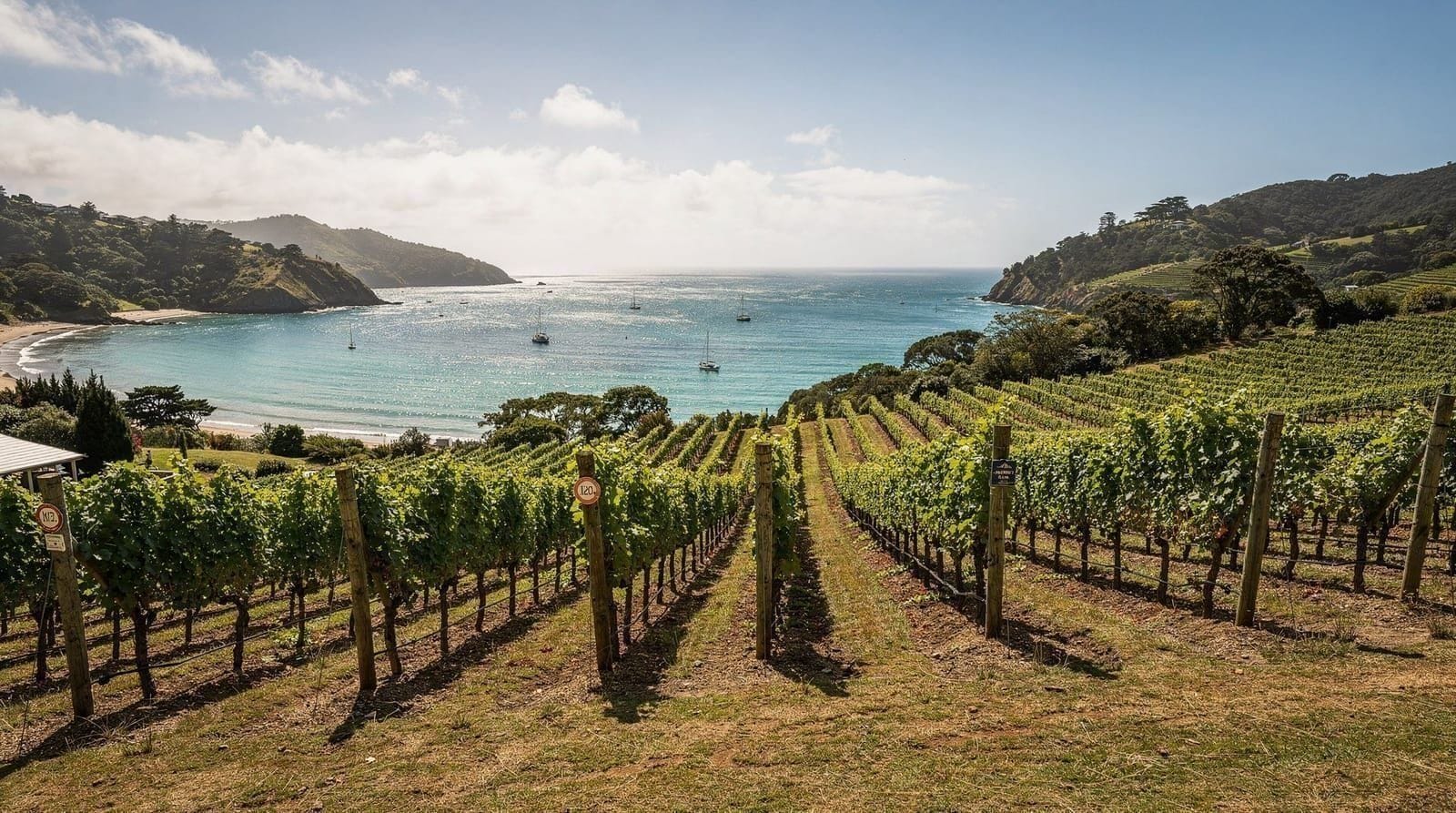
Onetangi, on Waiheke Island’s northern coast, is the island’s longest and best swimming beach — a proper stretch of sand, gentle gulf conditions, and considerably calmer water than the west coast beaches, since Waiheke sits inside the sheltered Hauraki Gulf rather than facing the open Tasman. It’s an easy add-on to a Waiheke wine day if you want a swim between vineyard stops, and it doesn’t carry the rip current risk that comes with the west coast options. Our Waiheke day trip guide covers how to fit a stop at Onetangi into a wider island visit.
Water temperatures by season
Auckland’s harbour and gulf water runs roughly 19-22°C in summer (December-February), a genuinely comfortable swimming temperature, dropping to around 14-16°C by winter (June-August), which is swimmable for the hardy but cold enough that most visitors skip it outside a wetsuit. The west coast beaches run a degree or two cooler than the harbour side year-round due to open ocean exposure and swell. Shoulder season (March-May, September-November) sits in between — swimmable on warm days, but check conditions rather than assuming.
Patrol seasons and the general safety rule
New Zealand’s volunteer surf lifesaving patrols generally run late October to April at the popular beaches, covering the main summer swimming season, with reduced or no coverage outside those months. Always check for the red and yellow flags and swim between them where they’re present — this matters far more at Piha and Muriwai than at the sheltered harbour beaches, where the actual risk is much lower even unpatrolled. If you take nothing else from beach safety advice here, take this: on any west coast beach, if you’re caught in a current pulling you out, swim parallel to the shore rather than against the current, then head in once you’re clear of it. Panicking and swimming straight against a rip is how otherwise strong swimmers get into genuine trouble.
Sun protection matters as much as the water itself
New Zealand sits under a noticeably thinner ozone layer than the Northern Hemisphere, and Auckland’s UV index climbs to extreme levels through summer, even on days that feel mild or overcast. SPF 50+ sunscreen, reapplied every couple of hours in and out of the water, is genuinely non-negotiable rather than a standard travel-blog suggestion — sunburn is by far the most common health complaint among visitors to Auckland’s beaches, more so than any rip current incident. A rash vest or light shirt for extended time in the water is worth packing alongside sunscreen, particularly for children, who burn faster and often resist reapplication.
Bethells Beach and other quieter west coast options
Beyond Piha and Muriwai, the wider Waitakere Ranges coastline has quieter black-sand beaches like Bethells (Te Henga), which share the same rip-current safety profile and are largely unpatrolled — meaning they suit confident swimmers comfortable assessing conditions themselves rather than relying on lifeguards. These are worth knowing about if Piha’s summer crowds don’t appeal, but they come with less safety infrastructure, not more, so treat an unpatrolled west coast beach with at least as much caution as a patrolled one, if not more.
Which beach for which trip
If you want an easy, low-risk swim with cafes nearby, go Mission Bay or Cheltenham. If you want the classic, dramatic black-sand Auckland photo and you’re a confident swimmer visiting in patrol season, Piha or Muriwai deliver that, with real safety awareness required. If your day already includes Waiheke for wine, Onetangi is the natural swimming add-on rather than a separate trip. Our best beaches near Auckland guide ranks the full list side by side if you’re planning more than one beach day during your stay.
What to pack for a swimming day near Auckland
Beyond sunscreen, a few small things make the difference between a good and a frustrating beach day here. Reef-safe sunscreen is worth seeking out specifically for the harbour beaches, where marine life in the shallows is part of the appeal. Sturdy sandals or reef shoes help on the volcanic rock sections at Piha and Muriwai, which can be sharp underfoot compared with the softer sand at Mission Bay or Onetangi. A light windbreaker is genuinely useful even on a hot day at the west coast beaches, where onshore Tasman wind picks up noticeably by mid-afternoon. And if you’re driving yourself to Piha or Muriwai, download an offline map before you leave the city — mobile coverage thins out through the Waitakere Ranges, and the roads have enough winding turns that losing your route mid-drive is a common, avoidable annoyance.
How the main beaches compare on safety
| Beach | Coast | Typical risk | Patrolled | Best for |
|---|---|---|---|---|
| Mission Bay | Harbour | Low | Summer | Families, easy access |
| Cheltenham | Harbour | Low | Unpatrolled | Quiet swim, Devonport day |
| Onetangi (Waiheke) | Gulf | Low | Seasonal | Swim between wine stops |
| Piha | West/Tasman | High (rip currents) | Late Oct-Apr | Photogenic, confident swimmers |
| Muriwai | West/Tasman | High (rip currents) | Late Oct-Apr | Surf, gannet colony combo |
| Bethells (Te Henga) | West/Tasman | High, largely unpatrolled | Rarely | Confident, self-sufficient swimmers |
Getting to the harbour beaches versus the west coast
Mission Bay sits on a regular bus route along Tāmaki Drive, and Cheltenham is a short walk from the Devonport ferry, so neither harbour-side option needs a car. Onetangi requires the Waiheke ferry followed by a short bus or taxi from the wharf. Piha and Muriwai are a different story — both genuinely need a rental car or an organised tour, since public transport through the Waitakere Ranges is limited and infrequent, and mobile coverage thins out on the drive itself. Our car rental Auckland guide and getting around Auckland guide both cover how to weigh a car against ferries and buses for a trip built around beach days.
Combining a swim with the rest of a day trip
None of these beaches need to be a standalone outing. Mission Bay pairs naturally with a Tāmaki Drive walk or cycle and lunch on the waterfront. Piha and Muriwai both sit within the wider Waitakere Ranges hiking network, so a morning coastal walk followed by an afternoon swim (patrol hours permitting) makes for a fuller day than swimming alone. Onetangi slots neatly into a Waiheke wine day, and Cheltenham works well tacked onto a Devonport village visit. If you’re weighing up a full west coast day, our Piha and Waitakere day trip guide lays out realistic timing for combining the hike, the beach and the drive back before dark.
Frequently asked questions about Best swimming spots near Auckland, and how to swim safely at each one
Is it safe to swim at Piha Beach?
Yes, within patrolled hours and between the flags, with genuine caution around rip currents. Outside patrol season (roughly November-April) or for weaker swimmers, it’s safer to enjoy Piha from the sand rather than swimming.
What should I do if I get caught in a rip current in Auckland?
Don’t swim directly against it. Swim parallel to the shore until you’re out of the current’s pull, then swim back to the beach at an angle. Raise an arm and call for help if you’re struggling.
Which Auckland beach is best for families with young children?
Mission Bay, for its calm harbour water, gentle slope, lifeguard patrols in summer, and cafes right on the beachfront for a full family day out.
What is the water temperature in Auckland in summer?
Around 19-22°C in the harbour and gulf during December-February, comfortable for most swimmers without a wetsuit.
Are Auckland’s west coast beaches patrolled year-round?
No — lifeguard patrols at Piha and Muriwai generally run late October through April. Outside those months, swim with extra caution or avoid entering the water at these beaches.