Best day hikes on the North Island, from easy to full-day
Matching the hike to the day you actually have
The North Island’s hiking options range from a flat 20-minute stroll to a genuinely demanding full-day alpine crossing, and picking the wrong one for your fitness level or schedule is the most common planning mistake. What follows is an honest breakdown of the four hikes that come up most often for visitors based in Auckland, ranked roughly by effort and time commitment, with the logistics you actually need rather than vague “moderate difficulty” labels.
| Best for a challenge | Tongariro Alpine Crossing (19.4km, 6-8hrs) |
| Best half-day option | Rangitoto summit (5.8km return, ~2.5hrs) |
| Best for mixed fitness | Waitakere Ranges (20min to 3hrs, pick your own) |
| Best coastal scenery | Piha (15-20min to Lion Rock lookout) |
| Cost | Free walking; Rangitoto ferry ~NZD 45-50 return |
Tongariro Alpine Crossing: the big one
If you only do one serious hike in New Zealand, this is the one people mean. The Tongariro Alpine Crossing is a 19.4km one-way track through the Tongariro National Park’s volcanic landscape — the Emerald Lakes, the Red Crater, the South Crater’s alpine desert — and it’s genuinely one of the best day hikes in the world for the effort involved. It’s also the one hike on this list that deserves real respect rather than casual planning.
The honest numbers: allow six to eight hours of actual walking for an average fitness level, plus roughly four hours’ drive each way from Auckland to the Tongariro/National Park area on the Central Plateau, which means this is not a hike you tack onto a half-day itinerary — it’s either an overnight trip with a Rotorua or Taupo base, or an extremely long single day if you’re determined to do it from Auckland directly. The elevation gain is significant (around 800 metres), the weather on the exposed alpine sections changes with little warning even in summer, and the track has genuinely closed unannounced due to wind and visibility more than once in recent years. This isn’t a hike to attempt underprepared: proper hiking boots, layers regardless of season, more water than feels necessary, and a realistic look at the day’s forecast before committing.
Given the logistics and the weather judgement involved, most visitors are better served by the Tongariro Alpine Crossing premium guided trek than attempting it independently — a guide who checks conditions daily and knows the track’s current state removes the single biggest risk factor, and transport is handled so you’re not driving four hours each way on top of the hike itself. If Tongariro doesn’t fit your itinerary’s timing, our best day trips from Auckland guide covers where else that kind of full-day commitment is worth making.
Shuttle options exist too, running from National Park village and Whakapapa to both track ends, which matters because the crossing is one-way and you can’t simply walk back to your car. If you’re building the crossing into a longer loop rather than a single push from Auckland, our Tongariro National Park guide is worth reading before you commit to a date, since track access and shuttle availability tighten in the shoulder seasons either side of summer.
Rangitoto summit: the easy-moderate half-day option
At the other end of the effort scale, Rangitoto Island’s summit track is genuinely achievable for most fitness levels and sits close enough to Auckland that it fits comfortably into a half day. The ferry from downtown Auckland takes about 25 minutes, and the summit track itself is roughly 5.8km return, climbing steadily but not steeply over black volcanic rock to a lookout with a genuinely excellent 360-degree view across the Hauraki Gulf back toward the city skyline.
Budget around two to two and a half hours for the walk itself, plus ferry time on both ends — a realistic half day out and back from Auckland, with time to spare for a picnic at the summit or a look at the lava caves lower down the track. The terrain is uneven volcanic rock in places (proper shoes matter, sandals genuinely don’t work here), but there’s no technical difficulty and no serious elevation relative to Tongariro. Our Rangitoto hike guide covers ferry times and the full track breakdown, and the Rangitoto kayak, hike and summit day trip is worth considering if you’d like to add a paddle around the island’s coastline to the standard summit walk.
Waitakere Ranges: close, varied, and genuinely underrated
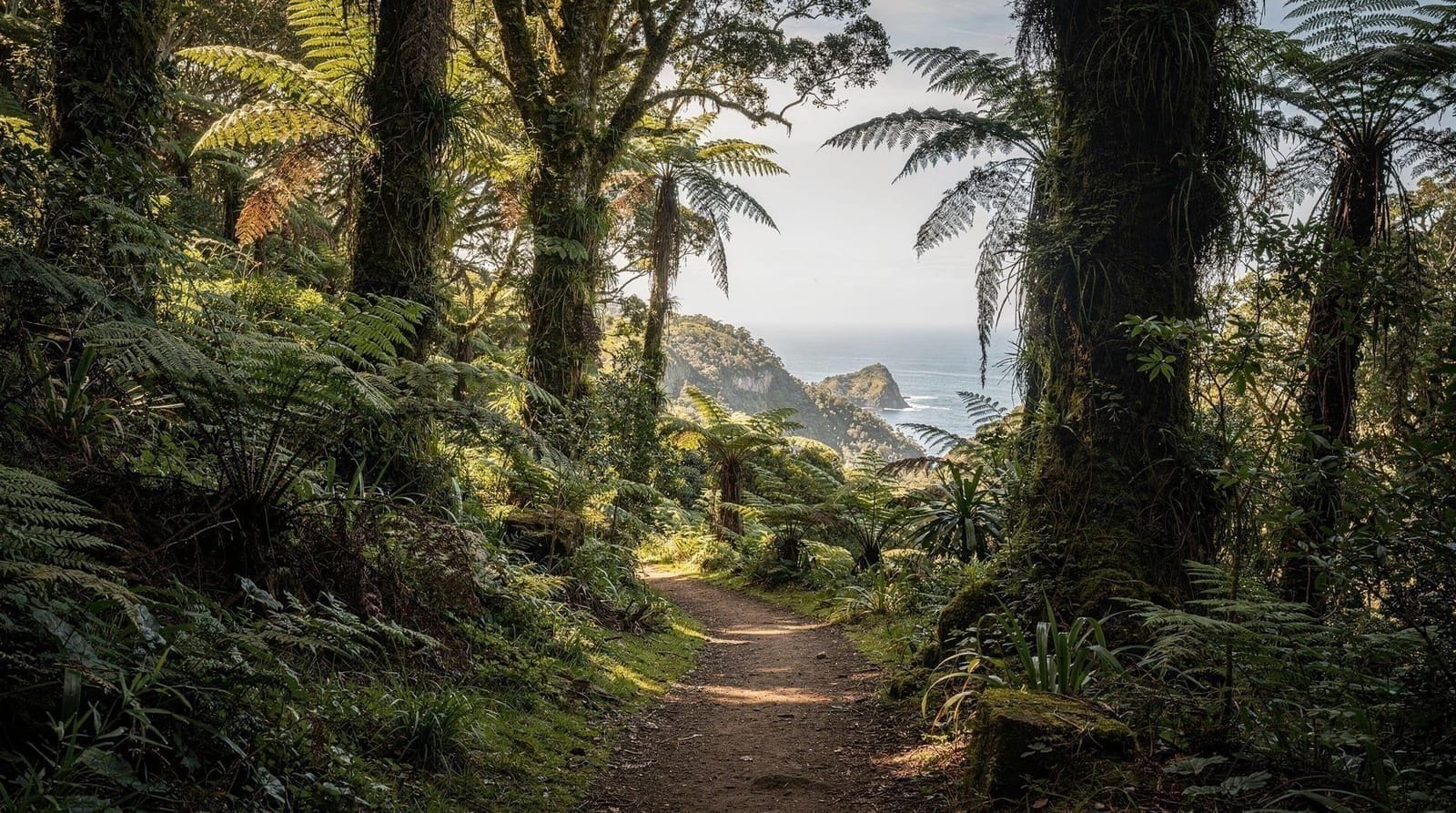
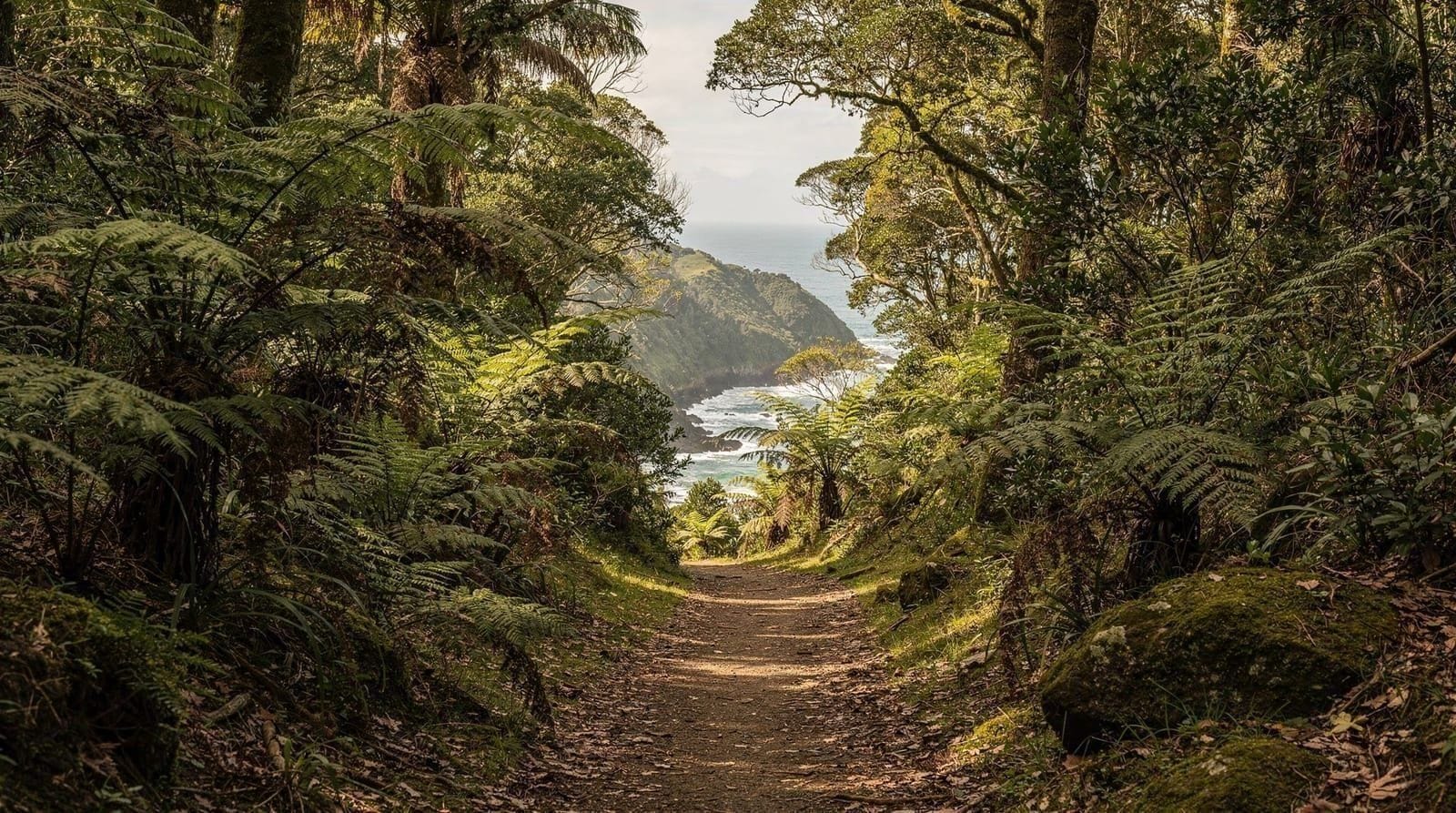
The Waitakere Ranges, just 40-50 minutes’ drive west of central Auckland, offer the widest range of track lengths on this list — anywhere from a 20-minute loop through native bush to multi-hour ridge walks, all within the same regional park. This is the pick if your group has mixed fitness levels or you simply don’t have a full day to give: you can genuinely choose a 45-minute forest walk and a strenuous three-hour ridge track from the same car park, tailoring the day to whoever’s along.
The bush here is proper native rainforest — kauri, nikau palms, tree ferns — and noticeably cooler and more humid than the open volcanic terrain of Rangitoto or the alpine exposure of Tongariro. Some tracks have been affected by kauri dieback closures in recent years, so check current track status before you go rather than assuming full network access; not every route is open at every time. For a guided option that handles the track selection and current closures for you, the Waitakere Ranges wilderness experience tour is a solid choice, particularly if you want a local guide’s read on which sections are worth the detour on the day you’re there.
Piha and the coastal walks
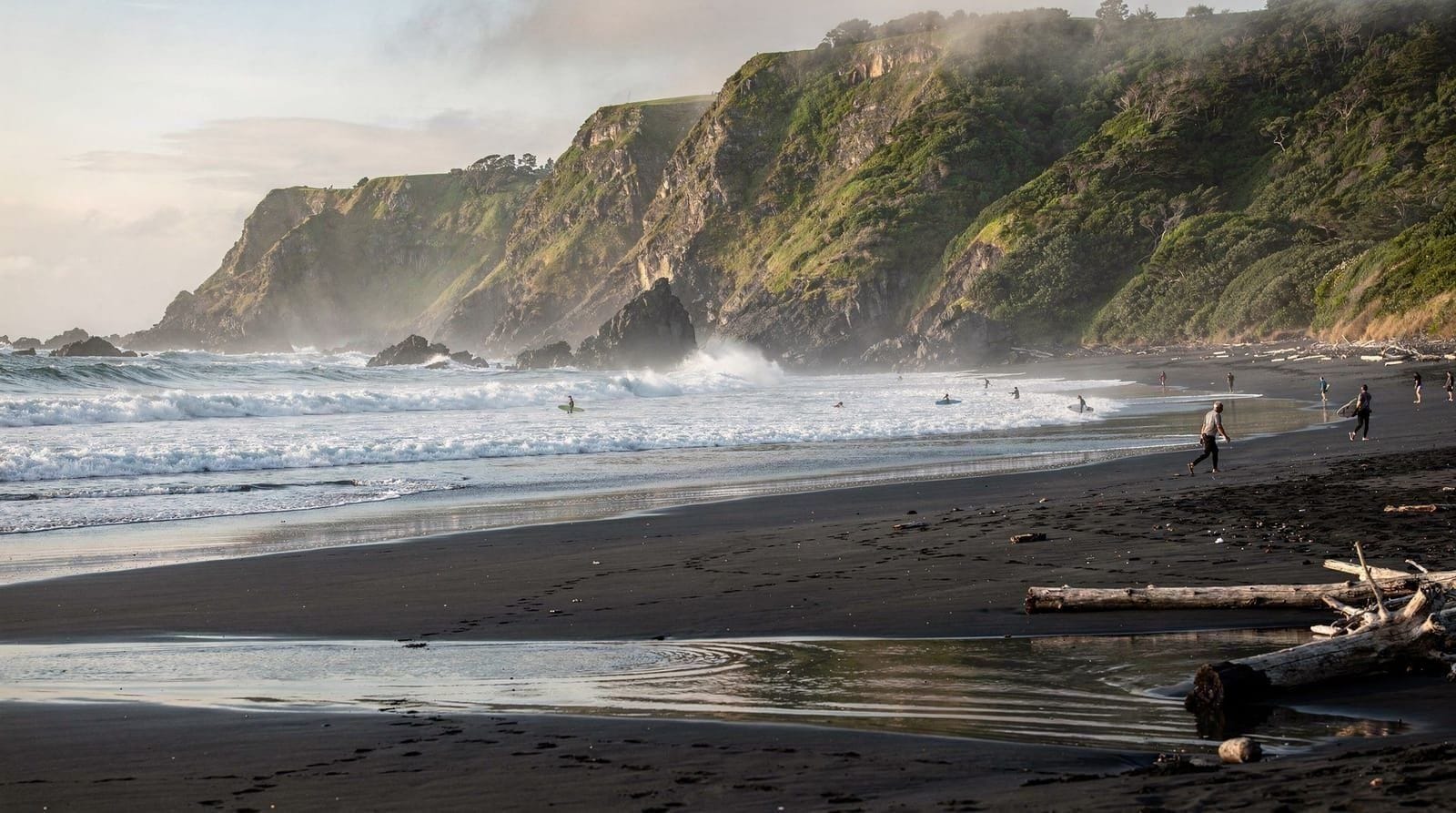
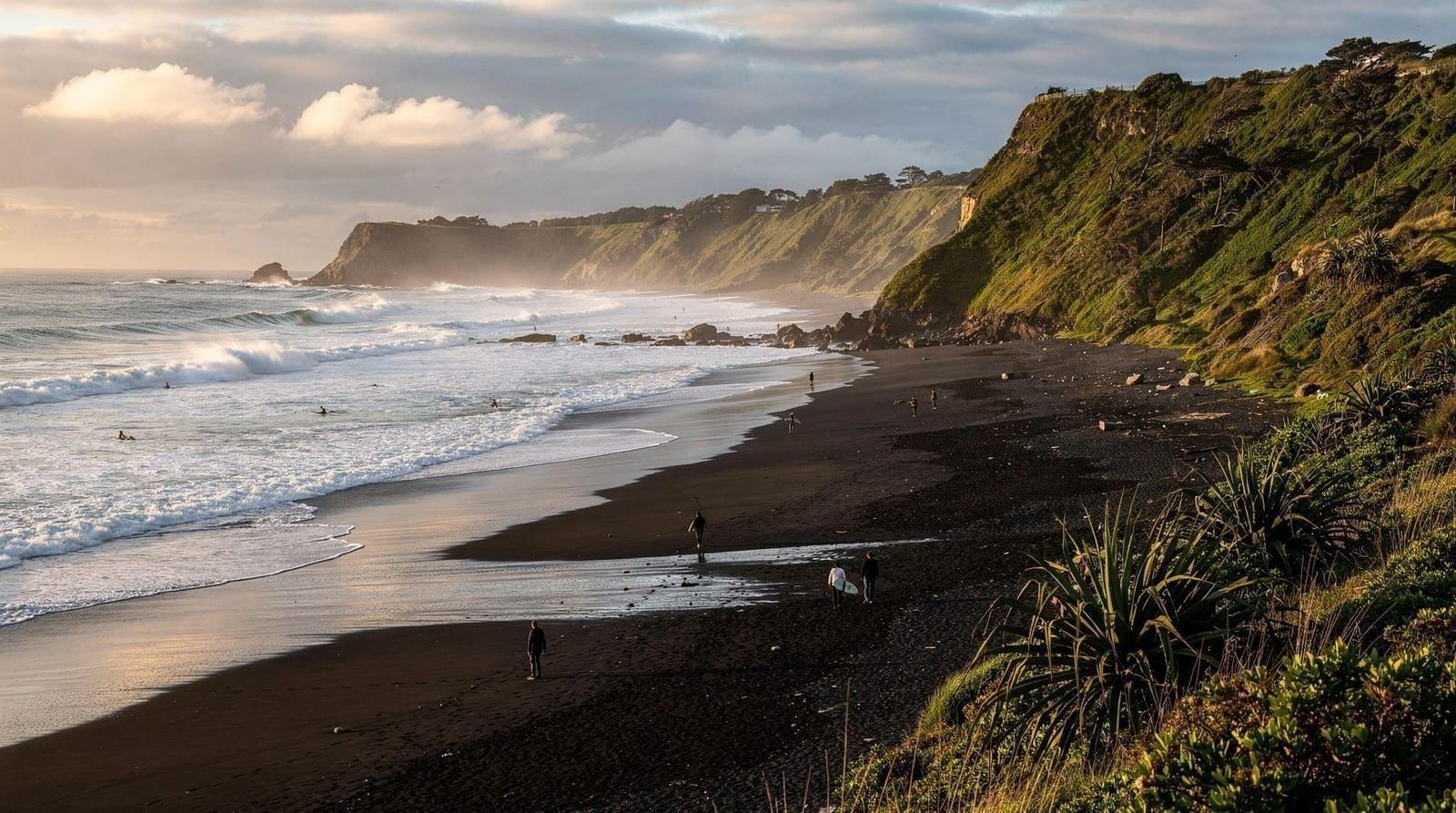
Combine a Waitakere Ranges visit with the coast and you land at Piha, roughly 45 minutes from central Auckland, where the coastal walking tracks are shorter but deliver some of the best scenery on this list. The climb up to Lion Rock’s lower viewpoint is a steep but brief 15-20 minutes, rewarded with a sweeping view down the black-sand beach in both directions. Longer coastal tracks connect Piha toward Karekare and North Piha for those wanting more distance, with genuinely striking cliff and headland scenery throughout.
The honest safety note for this stretch of coast: Piha’s surf carries some of the strongest rip currents in the Auckland region, and the swimming warnings here are serious, not boilerplate — swim only between the flags when lifeguards are present, and if caught in a current, swim parallel to the shore rather than fighting straight back in. The hiking tracks themselves are safe with normal caution; it’s the beach swimming that demands real respect. Our Piha and Waitakere day trip guide combines both the coastal walks and the ranges into a single realistic day.
Preparation that applies to all four
A few basics matter regardless of which hike you choose. Tell someone your plan and expected return time — a text to your accommodation or a travel companion not joining you costs nothing and matters enormously if something goes wrong on a track with patchy phone coverage, which describes most of the Waitakere Ranges and the more remote sections of Tongariro.
Carry more water than feels necessary; New Zealand’s tracks are generally well-marked but rarely have refill points along the way, and the UV exposure on exposed sections like Tongariro’s alpine desert or Rangitoto’s open summit track dehydrates faster than the temperature alone would suggest. And check current track status before setting out — kauri dieback closures affect parts of the Waitakere network from time to time, and Tongariro’s alpine sections close outright in genuinely severe weather, information that’s published daily and worth checking the morning of, not the week before.
Cost is worth mentioning honestly too: Rangitoto and the Waitakere Ranges tracks themselves are free to walk (only the Rangitoto ferry, around NZD 45-50 return, and any guided add-ons cost money), Piha’s coastal tracks are similarly free, and Tongariro’s track itself has no entry fee — the cost there is almost entirely about transport and, if you choose it, a guide. That makes this one of the more budget-friendly categories of activity on a North Island trip, provided you’ve got the fitness and preparation to match the hike you pick.
Booking a guide versus going independently
Whether to book a guided option or head out independently depends mostly on the hike. For Rangitoto and the Waitakere Ranges, independent walking is genuinely the norm — the tracks are well-marked, ferry and car park access is straightforward, and a guide adds convenience more than safety. For Tongariro, the calculation flips: the alpine environment, the genuine risk of rapidly changing conditions on exposed sections, and the daily weather judgement required make a guided trek a meaningfully safer choice for most visitors, not just a comfort upgrade. Piha’s coastal tracks sit in between — straightforward walking, but with a guide potentially valuable if you’re unfamiliar with reading tide and surf conditions along that stretch of coast.
Choosing between them honestly
For a genuinely challenging full-day alpine hike with real logistics to plan around, Tongariro is unmatched on the North Island — but it demands a full day (realistically an overnight base near Taupo, Rotorua or National Park village) and real weather judgement. For an easy-to-moderate half day that still delivers a proper summit view and fits around other Auckland plans, Rangitoto is the clear pick. For flexibility — mixed group fitness, shorter time windows, native bush rather than volcanic rock — the Waitakere Ranges beat both. And if coastal scenery and a beach afternoon matter as much as the walking itself, Piha rounds out the group.
None of these require technical climbing experience or specialist gear beyond solid footwear, sun protection and a rain layer — see our packing for New Zealand guide for the specific list, which applies directly to all four hikes here. Our broader Auckland hikes guide covers additional shorter options if none of these four quite match your day, and if you’re building hiking into a longer North Island loop rather than a single Auckland-based trip, it’s worth reading alongside a wider itinerary that gives Tongariro the overnight base it genuinely needs.
Getting to each trailhead without your own car
Not everyone hiking from Auckland has a rental car, and the four hikes here vary a lot on that front. Rangitoto only needs the ferry from downtown, so it’s the most straightforward car-free option on this list. Piha and the Waitakere Ranges are genuinely awkward without a car — public transport service is limited and infrequent, so most car-free visitors join an organised tour or arrange a shuttle rather than relying on buses.
Tongariro is the opposite case: because it’s a one-way track roughly four hours from Auckland, almost everyone arrives via a guided trek, an organised shuttle from a Rotorua or Taupo base, or a rental car left at one end with a shuttle back — independent public transport really isn’t a practical option for the crossing itself. If you’re weighing whether to rent a car for the wider trip, our car rental Auckland guide and driving in New Zealand guide both cover what these hikes would look like self-driven versus joining tours throughout.
Timing your hikes around New Zealand’s seasons
Summer (December to February) gives the longest daylight and the most reliable weather window for Tongariro, though it’s also the busiest — car parks at both ends fill early on clear days, and guided treks book out well ahead. Shoulder seasons (autumn and spring) can still deliver excellent Tongariro days but with a higher chance of a last-minute weather cancellation, so build a spare day into your itinerary if the crossing matters to you.
Winter closes Tongariro to casual hikers entirely unless you’re equipped and experienced for snow and ice, or joining a specialist guided winter trip — it’s not a track to attempt underprepared in July or August. Rangitoto, the Waitakere Ranges and Piha are far more forgiving year-round, though winter mud on some Waitakere tracks and shorter daylight hours are worth planning around. Our Auckland weather by month guide breaks down what to expect across the year if you’re timing a trip specifically around hiking.
Frequently asked questions about North Island day hikes
Can I do the Tongariro Alpine Crossing as a day trip from Auckland?
Technically yes, but it means roughly eight hours of driving on top of six to eight hours of walking, which makes for an extremely long single day. Most visitors base themselves overnight near Taupo, Rotorua or National Park village instead.
Is the Rangitoto summit hike suitable for kids?
Yes, most children manage the 5.8km return track fine, though the volcanic rock is uneven in places and there’s little shade, so bring water, sun protection and expect the walk to take longer with young kids than the standard two-hour estimate.
Do I need a guide for the Waitakere Ranges or Piha?
No — both are straightforward to walk independently, with well-marked tracks and normal car park access. A guide adds convenience and local knowledge of current closures rather than being a safety necessity, unlike Tongariro.
What’s the easiest hike on this list?
Rangitoto’s summit track is the most accessible full hike, achievable for most fitness levels in about two to two and a half hours. For something shorter, the Waitakere Ranges include loop walks as short as 20 minutes from the same car parks used for longer tracks.