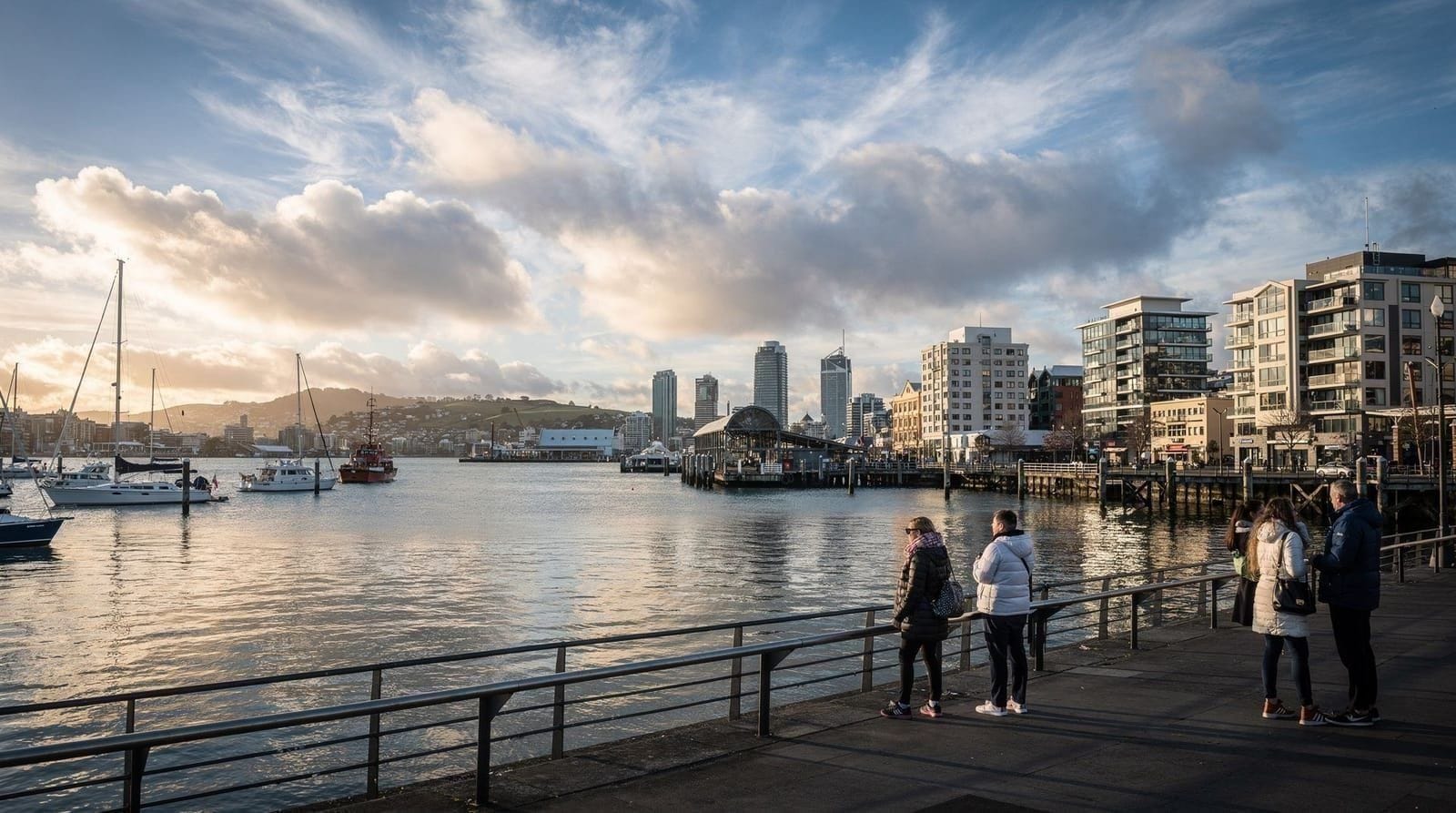
What to pack for New Zealand: a practical, season-by-season list
Packing for a climate that doesn’t behave
New Zealand’s weather is genuinely more changeable, and its sun genuinely stronger, than most visitors expect based on the latitude alone. The result is a packing list that looks fairly ordinary on paper but matters more in practice than it would for a similarly-mild destination elsewhere. Here’s what’s actually worth bringing, organised by what does the real work, followed by the honest list of what to leave at home.
| Non-negotiable | SPF 50+ sunscreen, reapplied through the day |
| Core system | Base layer, mid layer, packable waterproof rain shell |
| Footwear | One broken-in pair of closed walking shoes, hiking boots if Tongariro is on the itinerary |
| Adapter | Type I (same as Australia) |
| Best source for gaps | Pharmacies and outdoor shops throughout Auckland |
SPF 50+: the one non-negotiable item
Start here, because it’s the single most consequential thing on this list. New Zealand sits under a noticeably thinner ozone layer than equivalent northern hemisphere latitudes, and UV exposure is measurably higher here at a given temperature than visitors are used to. The genuinely important detail: this holds true even on overcast, mild days, because cloud cover cuts visible light and warmth far more than it cuts UV radiation. Pack proper SPF 50+ sunscreen (not a lower-factor “everyday” formula), reapply through the day rather than once in the morning, and bring a hat and sunglasses as standard kit for any day outdoors, hiking or otherwise. This isn’t a beach-specific precaution — it applies to a day walking Auckland’s waterfront as much as a hike.
Layers: the actual system that works
Auckland and the wider North Island can run through genuine weather swings within a single day — a bright, warm morning turning to a squally shower by early afternoon is common in any season, not a sign of unusual conditions. The system that actually works is layering: a moisture-wicking base layer, a light mid-layer (fleece or a merino jumper), and a packable, genuinely waterproof rain jacket that lives in your day bag regardless of the morning’s forecast. Skip the heavy winter coat even for a June-August trip — Auckland winter sits in the 10-15°C range, mild by most international standards, and a proper layering system handles it better than one bulky item that’s either too warm indoors or not warm enough on an exposed coastal walk.
Footwear that matches the terrain you’ll actually cover
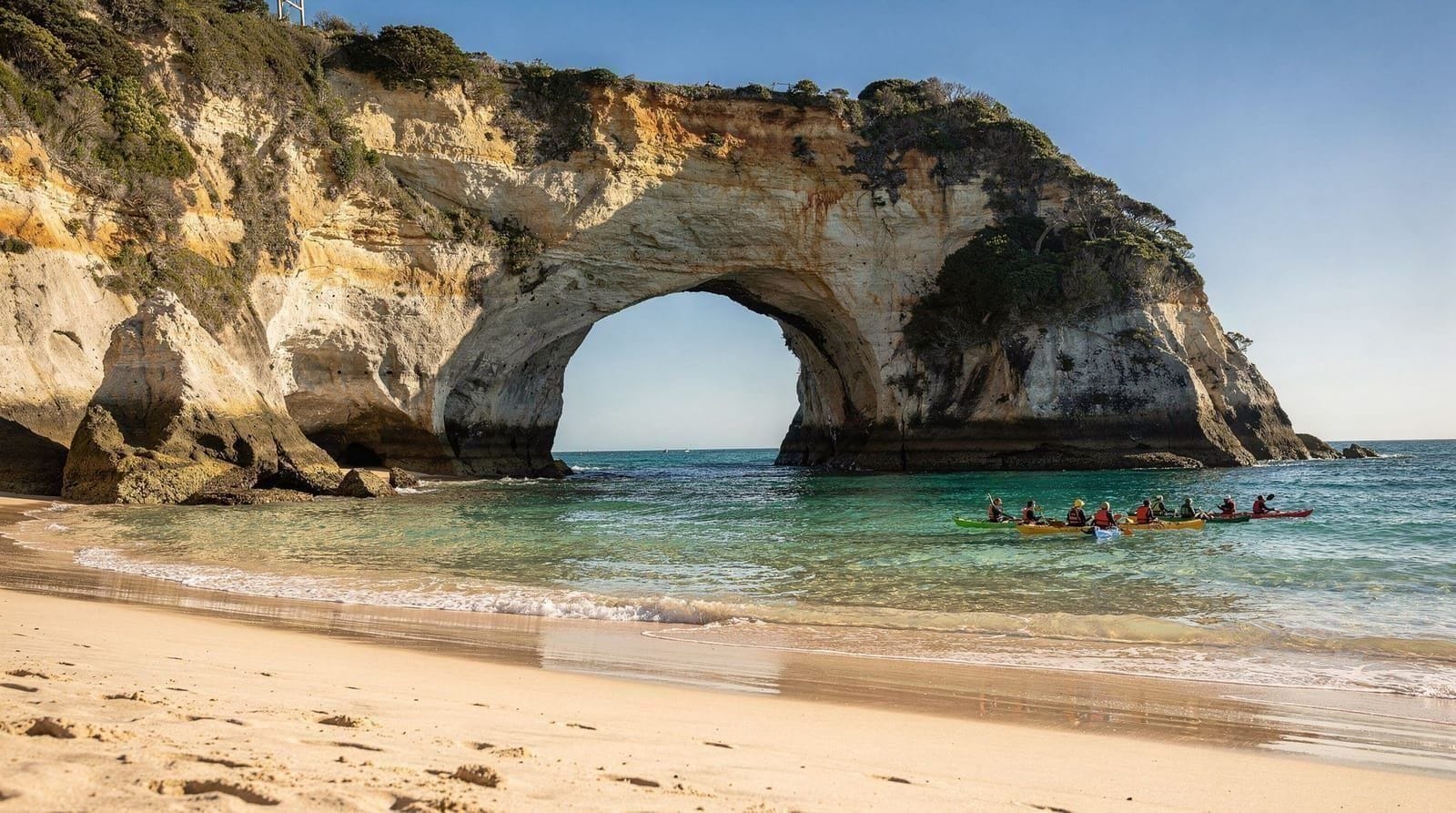
This is where generic packing lists fall short, because New Zealand day trips genuinely demand different footwear from ordinary city sightseeing. The walk out to Cathedral Cove from the Hahei car park is around 45 minutes each way on a formed but occasionally steep and uneven track — sandals and thin-soled shoes are a genuinely poor choice here, and it shows in how many visitors turn back partway. If you’d rather not organise the drive yourself, a Cathedral Cove and Hot Water Beach day tour still needs the same sturdy shoes.
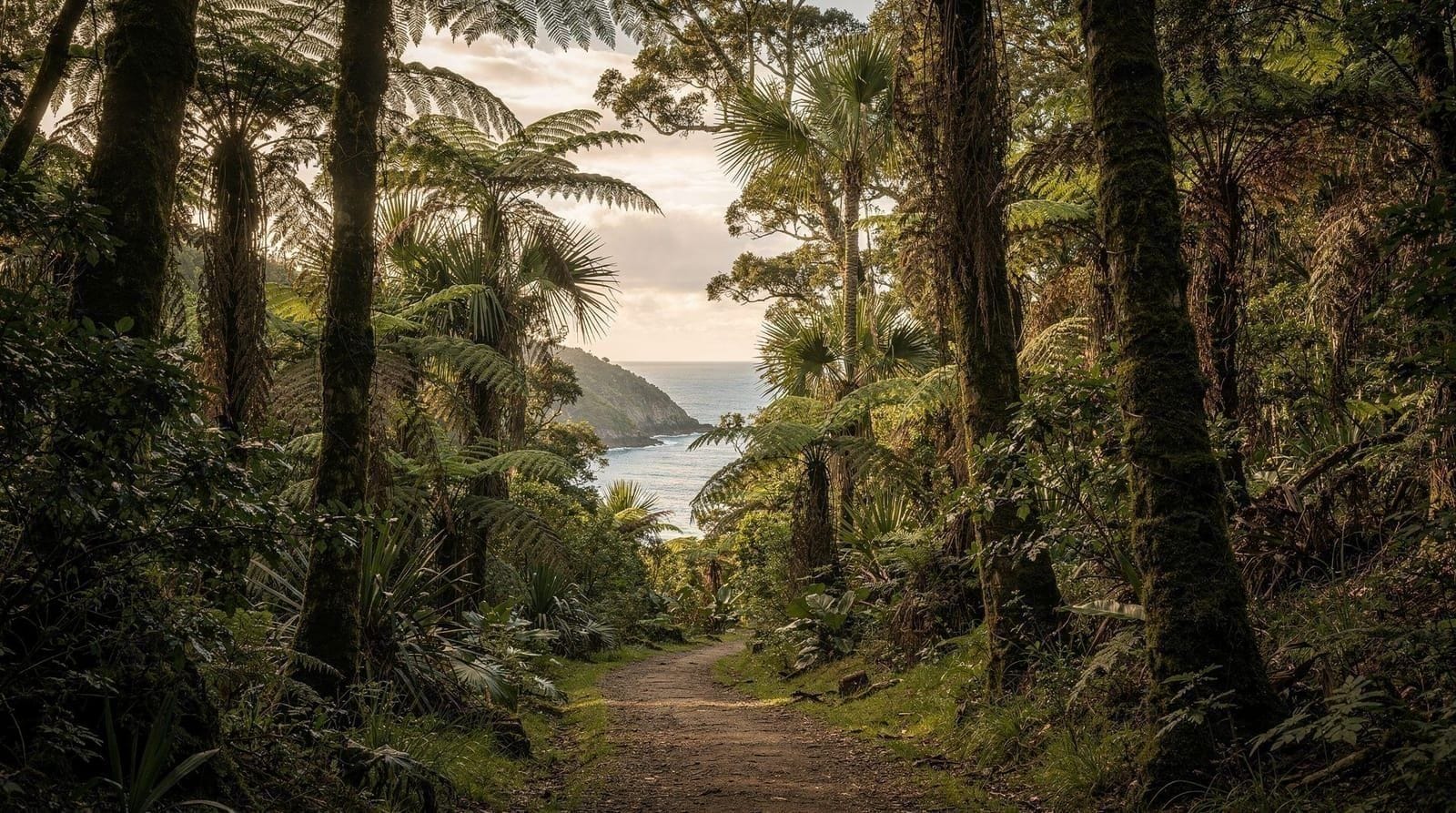
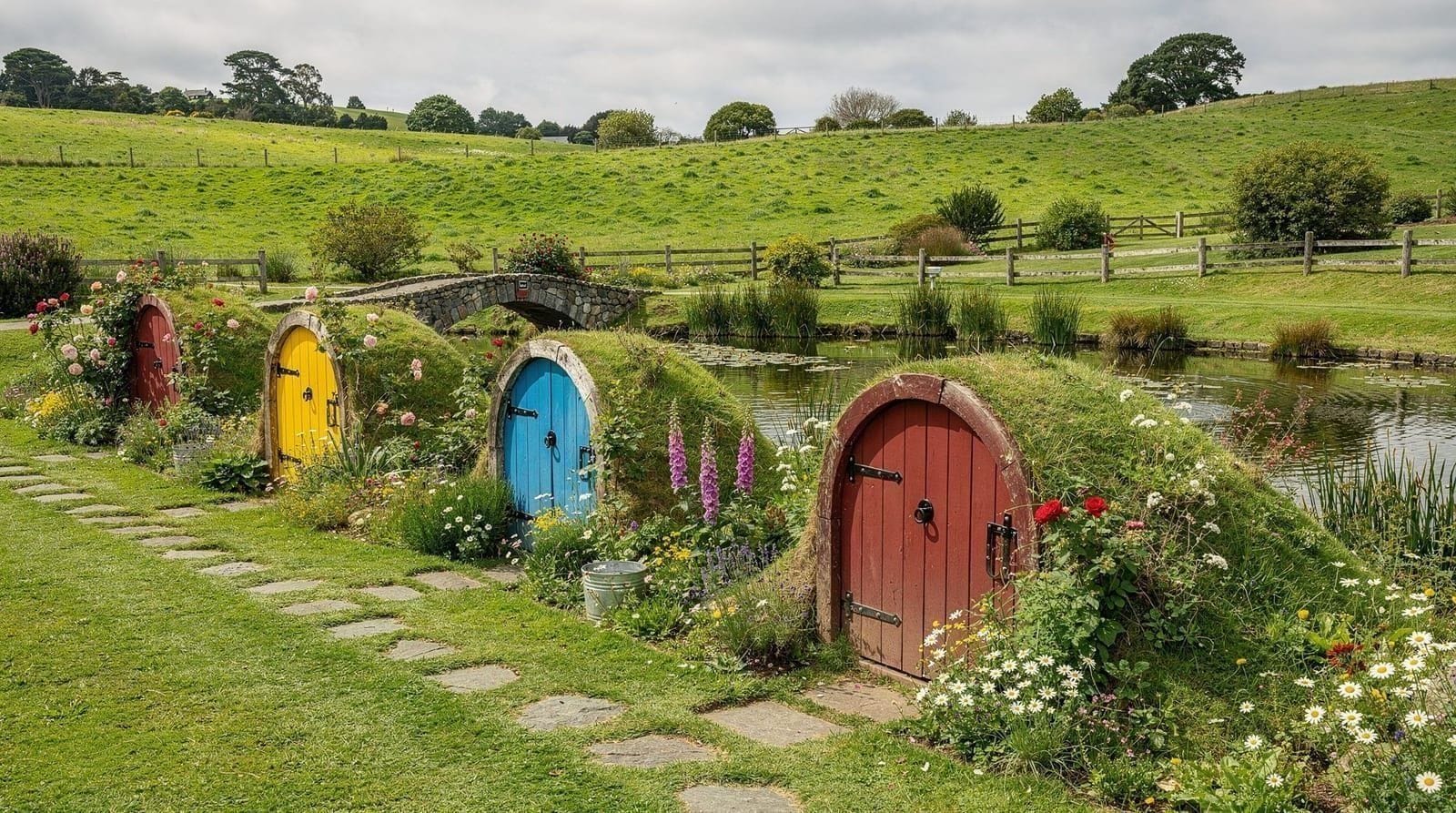
Hobbiton’s paths are flat gravel and grass, easier on footwear but still enough walking across the property that comfortable closed shoes beat anything you’d wear to a city dinner. And if a Tongariro Alpine Crossing or any of the other North Island day hikes are on your itinerary, proper hiking boots with ankle support and a broken-in fit are not optional — the alpine sections have loose volcanic scree and genuine elevation change, and this is not terrain to discover mid-hike that your shoes weren’t up to the job.
The practical takeaway: pack one genuinely comfortable, closed, broken-in pair of walking shoes or light hikers as your main day-trip footwear, and treat anything more specialised (serious hiking boots) as a decision specific to whether Tongariro or similarly demanding terrain is actually on your plan, per our Hobbiton day trip from Auckland guide and the hiking breakdown linked above.
The power adapter you actually need
New Zealand runs on 230V with a Type I plug — the same three-flat-pin standard used in Australia, not the two-round-pin European standard or the US flat-blade type. If you’re travelling from the UK, most of Europe or North America, you need a Type I adapter; pack one before you arrive, since airport shops mark them up considerably compared to buying one at home. If you’re travelling from Australia, no adapter is needed at all — the plug standard is identical. Most modern phone chargers, laptop chargers and camera battery chargers are dual-voltage and handle 230V without a separate voltage converter, but it’s worth a 10-second check on the label of anything older or specialised (hair straighteners and some older electronics are the usual exceptions) before assuming it’ll work.
What genuinely isn’t worth packing
A few things visitors consistently over-pack for New Zealand, worth cutting to save luggage space. Heavy winter clothing for a winter trip is the biggest one — even at its coldest, Auckland’s winter rarely drops below freezing at sea level, and a proper layering system (above) handles it more comfortably than one bulky coat. A universal or multi-standard travel adapter is unnecessary if New Zealand and Australia are your only stops; a single Type I adapter does the job, and the bulkier universal versions are solving a problem you don’t have on this specific trip.
Multiple pairs of “smart” shoes for evenings out is another common over-pack — New Zealand’s dress culture, even in Auckland’s better restaurants, runs considerably more casual than visitors from Europe or North America expect, and one decent pair covers both daytime walking and a reasonably dressed-up dinner. And unless you’re planning multi-day backcountry hiking specifically, specialist camping or tramping gear (tents, cooking stoves, serious pack systems) is dead weight for a standard Auckland-and-day-trips itinerary — day hikes need day-hike gear, not overnight tramping equipment.
Toiletries, medication and small essentials
Pharmacies are plentiful throughout Auckland and most day-trip towns, so there’s no need to overpack toiletries “just in case” — anything forgotten is easily replaced. The exceptions worth bringing from home: prescription medication in its original packaging with enough supply for the full trip plus a few extra days’ buffer, since matching an overseas prescription to a New Zealand equivalent can take longer than expected if you run short.
Motion sickness tablets are worth packing if you’re planning any boat trip — the ferry to Waiheke or Rangitoto, or a Hauraki Gulf wildlife cruise — since they’re most effective taken preventively before symptoms start, and having them on hand rather than needing to source them at short notice makes a real difference. A small first-aid kit with basic blister plasters is genuinely useful given how much walking most Auckland itineraries involve, particularly if new shoes haven’t been properly broken in before the trip.
Carry-on versus checked luggage for the flight in
Given how long-haul the flight to Auckland is for most visitors (from Europe or North America, this typically means one or two legs totalling well over 20 hours), pack a genuinely useful carry-on: a change of clothes in case checked luggage is delayed, any medication, chargers, and the sunscreen and rain layer covered above, since New Zealand’s weather can turn within hours of landing and you don’t want to be without either while checked luggage catches up. This matters more for a New Zealand trip than a short-haul one — delayed luggage on a long-haul route can genuinely take a day or two to catch up, and losing the first day of a short Auckland stay to a luggage delay is a worse outcome than carrying a slightly heavier bag onto the plane.
Building the list around your actual itinerary
The honest approach to packing for New Zealand isn’t a single universal list — it’s matching gear to what you’re actually doing. A trip built around Auckland’s city sights and short day trips, such as our one-day Auckland itinerary, needs less specialised gear than one built around a Tongariro crossing or multi-day hiking.
If Tongariro is on your itinerary, the terrain and weather exposure genuinely justify proper hiking boots and a harder look at conditions before you go — and if you’d rather not carry full alpine gear for a single hike, booking the Tongariro Alpine Crossing premium guided trek puts a guide’s daily weather judgement and local knowledge between you and the track’s more serious risk factors, which matters more than any single piece of gear on this list.
Seasonal quick-reference
For a summer trip (December-February): lightweight breathable clothing, swimwear, a sun hat with a proper brim rather than a cap alone, and still a packable rain layer for the odd afternoon shower. For shoulder season (March-May, September-November): the full layering system described above becomes essential rather than optional, since mornings and evenings can be genuinely cool even when midday is warm. For winter (June-August): prioritise a warmer mid-layer, a properly waterproof (not just water-resistant) outer shell, and closed waterproof footwear for wet pavements and muddy tracks — see our is Auckland winter worth it post for the fuller seasonal picture if a cooler-month trip is what you’re planning around. Our Auckland weather by month guide breaks the year down further if you’re still choosing travel dates.
| Season | Months | Pack this | Skip this |
|---|---|---|---|
| Summer | Dec-Feb | Swimwear, sun hat, light layers | Heavy coat |
| Shoulder | Mar-May, Sep-Nov | Full layering system, packable rain shell | Shorts-only wardrobe |
| Winter | Jun-Aug | Warm mid-layer, waterproof outer shell, closed shoes | Sandals-only footwear |
Extra gear if hiking or caving is on the list
Standard city-and-day-trip packing covers most Auckland itineraries, but a couple of specific activities need their own gear check.
If Tongariro National Park or another serious alpine crossing is on your route, proper hiking boots (broken in before you fly, not on day one) and a warm layer for exposed ridgelines are genuinely not optional — conditions up there change faster than they do at sea level. If Waitomo Caves is on your itinerary, most black-water rafting and cave-tubing operators supply wetsuits and helmets, but bring a spare set of dry clothes and a towel for afterwards, since you’ll come out properly wet regardless of how careful you are. Our Auckland packing list guide has the fuller city-and-day-trip version if you want a single checklist to work from before you start narrowing it down by activity.
Packing notes for the places you’ll actually go
A packing list gets easier once you know where the days will go, so here is how the advice above plays out for the most common plans.
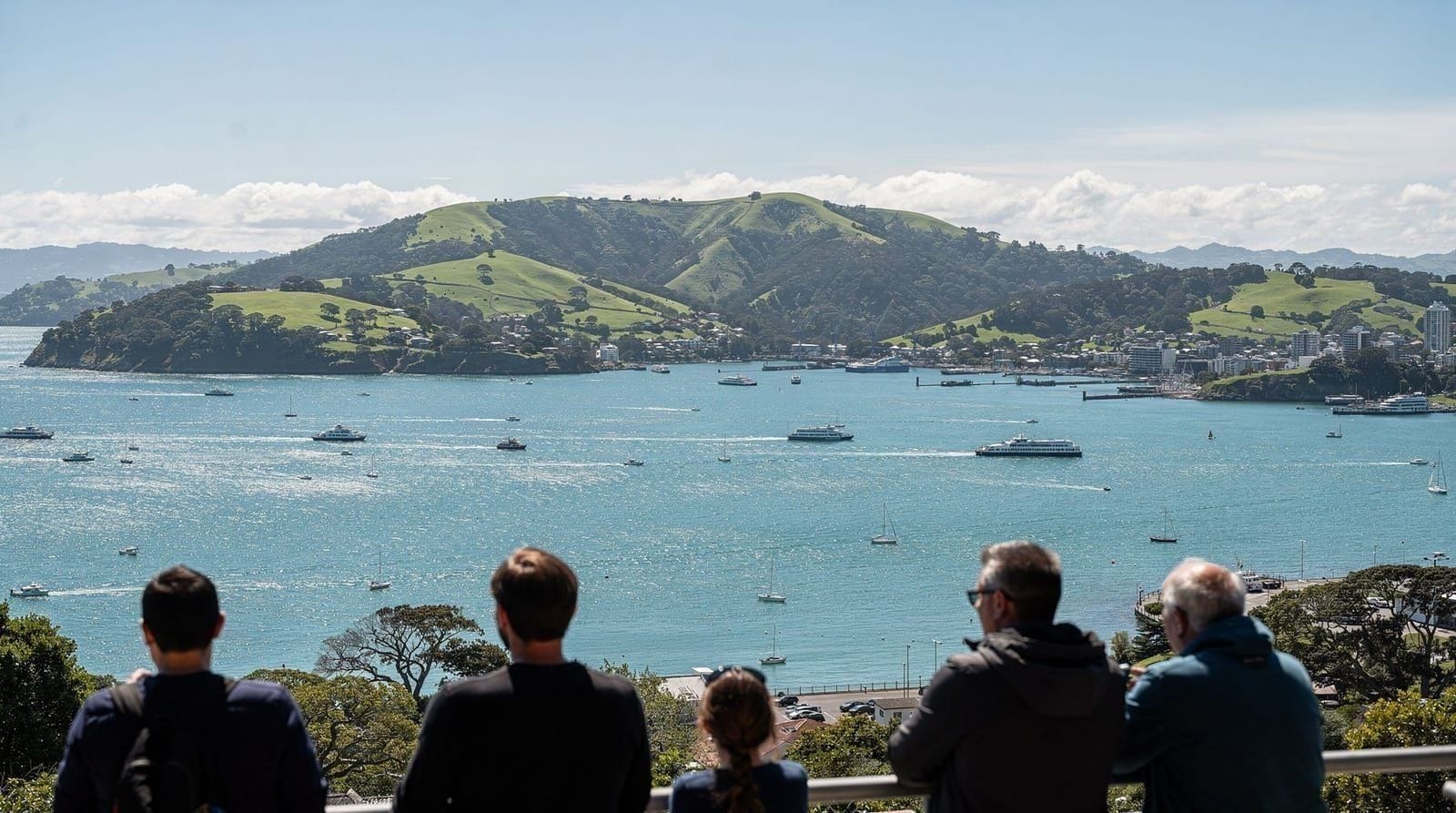
On the water, the ferry to Waiheke Island and the Rangitoto Island crossing both put you on an exposed deck where the breeze is stronger than it feels at the wharf, so the rain shell earns its place even on a bright morning. Our Rangitoto hike guide is worth reading before you choose shoes, because the volcanic rock is rough on thin soles. If you’re weighing up the islands, the Waiheke day trip guide covers what a typical day involves.
On the beaches, Piha Beach and the other west coast shores reward a towel, a hat and sunscreen kept in the day bag, and our guide to Auckland’s beaches helps you decide which ones suit your plans. For a longer drive, Rotorua adds geothermal walkways where closed shoes are the sensible choice, and the Rotorua day trip from Auckland guide gives the wider picture.
If you’re hiring a car, our driving in New Zealand guide is a useful companion to this list, since a boot full of luggage changes what you can comfortably carry. Anyone still sorting out entry paperwork should check the NZeTA visa guide before they start packing, and first-timers will find the first-time Auckland tips a good second read. Travellers planning the whole trip around the north can look at the North Island 7-day loop, and anyone heading out on the road will find more in our New Zealand road trip tips.
The condensed version
If you take away one thing from this list: SPF 50+ applied properly, a packable rain layer you actually carry rather than leave in the hotel room, one genuinely comfortable pair of broken-in walking shoes, and a single Type I adapter. Everything else is trip-specific — build outward from there based on whether hiking, beach days or city sightseeing dominate your particular itinerary, and resist the urge to pack for a version of “cold” that New Zealand’s mild maritime climate rarely delivers.
Frequently asked questions about packing for New Zealand
Do I need to pack for cold weather even in summer?
A light layer for evenings is worth having year-round, since coastal evenings cool down even in summer, but a full winter wardrobe is unnecessary from December to February — the layering system covered above handles the occasional cool evening.
Is a universal travel adapter necessary for New Zealand?
No, if New Zealand and Australia are your only stops — both use the same Type I three-flat-pin plug, so a single adapter (not a bulkier universal one) does the job.