Auckland food tours: which one is worth your time
Auckland: Flavours of our city walking food tour
Duration: 3 hours
Are Auckland food tours worth booking?
Yes, for first-time visitors and anyone without local restaurant knowledge — a three-hour guided food tour (NZD 120-160) covers six to ten tastings across multiple cuisines and neighbourhoods you would otherwise need days to discover on your own, and gets you local context most self-guided eating misses.
What Auckland food tours actually deliver
Auckland’s food scene does not announce itself the way a single famous street market or night bazaar might in some cities. It is scattered across neighbourhoods — a laneway dumpling spot in the CBD, a Pacific-fusion café in Ponsonby, a hole-in-the-wall Korean grill in the city fringe — and unless you already have local knowledge or weeks to explore, it is easy to eat perfectly fine but forgettable meals the whole trip without ever finding what makes Auckland’s food culture genuinely interesting. This is the actual case for a guided food tour here: less about convenience, more about compression. A good three-hour walking tour can cover six to ten tastings across several cuisines and two or three city blocks that would otherwise take a visitor days of trial and error to find independently.
| Where | CBD/Britomart, Federal Street, K Road, or Devonport |
| Cost | around NZD 120-160/person, private from NZD 200-300 |
| Time needed | around 3 hours |
| Group size | typically 12-15 people |
| Best time to book | first 2-3 days of your trip |
Auckland’s food identity draws on a genuinely wide mix of influences: strong Pacific and Māori threads, waves of Chinese, Korean, Japanese, and Southeast Asian migration that shaped the city’s Asian food scene into one of the most diverse in Australasia, and a café culture (more on that in our Ponsonby cafés guide) that New Zealanders take semi-seriously as a point of national pride. A food tour that samples across several of these threads rather than sticking to one cuisine gives a far more accurate picture of what Aucklanders actually eat day to day.
The main food tour options in the city
This flavours-of-the-city walking food tour is the most rounded introduction — roughly three hours through the CBD and Britomart precinct, hitting a spread of cuisines with a guide who explains not just what you are eating but why it matters to Auckland’s food story. It suits first-time visitors who want breadth over depth.
This three-hour food tasting walking tour runs on a similar format and timeframe but with a slightly different stop list, useful if you are comparing dates or the flavours-of-the-city tour is sold out on the day you need.
This best street food tour with a local guide leans harder into casual, grab-and-go style eating — food trucks, market stalls, and counter-service spots rather than sit-down café stops — and tends to suit visitors who want a more relaxed, less formal pace with a local guide who can answer questions about the city as you walk.
For something outside the CBD entirely, this Devonport food and history walking tour combines Auckland’s food with one of its most charming seaside villages — see our Devonport eats guide for more on why this neighbourhood punches above its weight for food.
What you’ll actually eat
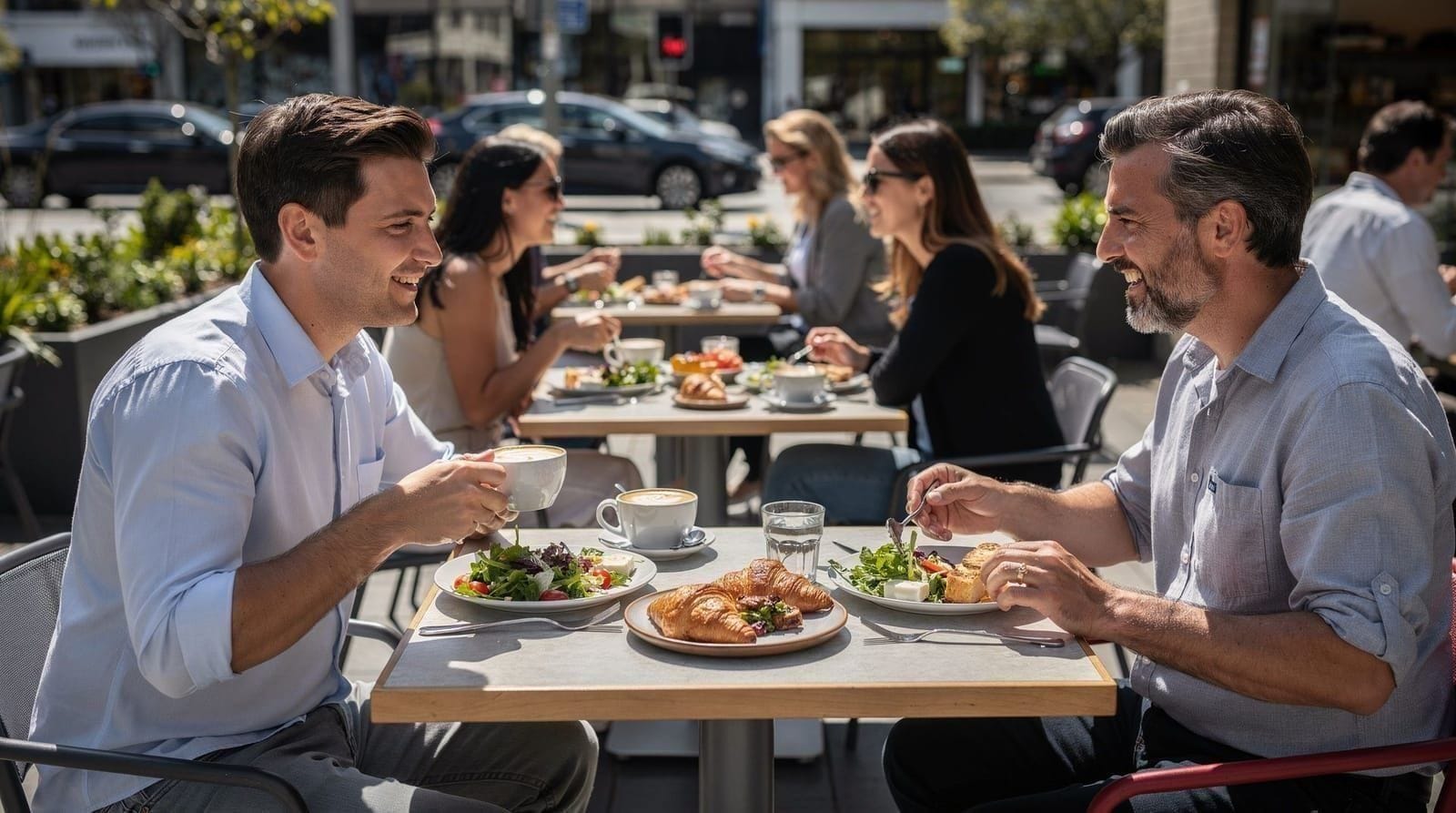
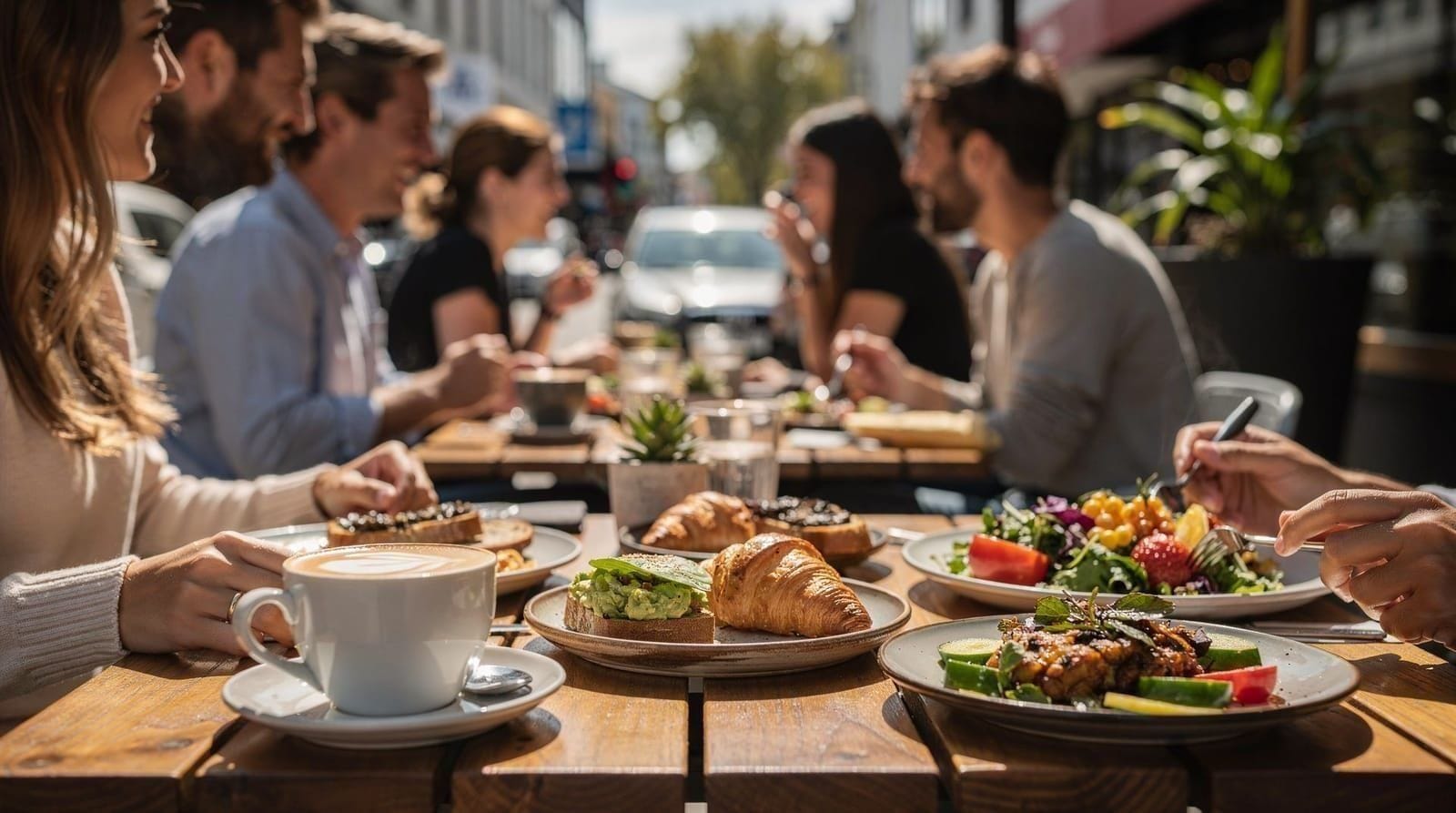
Expect a genuine mix rather than a single theme. A typical central Auckland food tour stop list might include a dumpling or bao stop in the CBD’s Asian food cluster, a Pacific-inspired small plate, a specialty coffee stop (New Zealand’s flat white culture is a real thing, not a marketing line), something showcasing local seafood — Auckland’s proximity to the Hauraki Gulf means fresh fish and shellfish feature heavily on good menus — and usually a sweet finish, whether that is a New Zealand-specific treat like a hokey pokey ice cream or a modern bakery pastry. Portions across six to ten stops genuinely add up to a full meal by the end, so most people skip breakfast or a big lunch on tour days.
Group size, pace, and what to wear
Most food tours cap groups at around twelve to fifteen people, small enough that the guide can actually interact with everyone and answer questions rather than just herding a crowd between stops. Pace is walking-tour casual — comfortable shoes matter more than anything else you pack for the day, since most tours cover 2-3 km on foot with stops every 15-20 minutes. Auckland’s weather is genuinely changeable even within a single afternoon, so bring a light rain layer regardless of season; nobody wants to be stuck outside a food stall in an unexpected downpour with no jacket.
City centre vs Devonport: which suits you
The CBD and Britomart-based tours put you in the thick of Auckland’s densest, most diverse food cluster — more variety of cuisine, more stops, and a genuinely urban energy. Devonport trades some of that variety for atmosphere: a slower-paced, harbourside village with a strong café and bakery culture, a short ferry ride from downtown, and history woven through the tour alongside the food (colonial-era buildings, naval history, and volcanic cone views over the harbour). If you only have time for one food tour and want maximum culinary variety, go central. If you are also curious about a different side of Auckland beyond the CBD skyline, Devonport earns the ferry trip.
| City centre / Britomart | Devonport | |
|---|---|---|
| Cuisine variety | Widest — multiple Asian cuisines, Pacific, café culture | Narrower, café- and bakery-led |
| Pace | Brisk, urban | Slower, village feel |
| Extras | Heritage warehouses, Federal Street restaurant row | Colonial buildings, naval history, harbour views |
| Getting there | Walkable from most central hotels | Short ferry ride from downtown |
| Best for | First-timers wanting maximum variety | Visitors wanting a different side of the city |
Combining a food tour with the rest of your trip
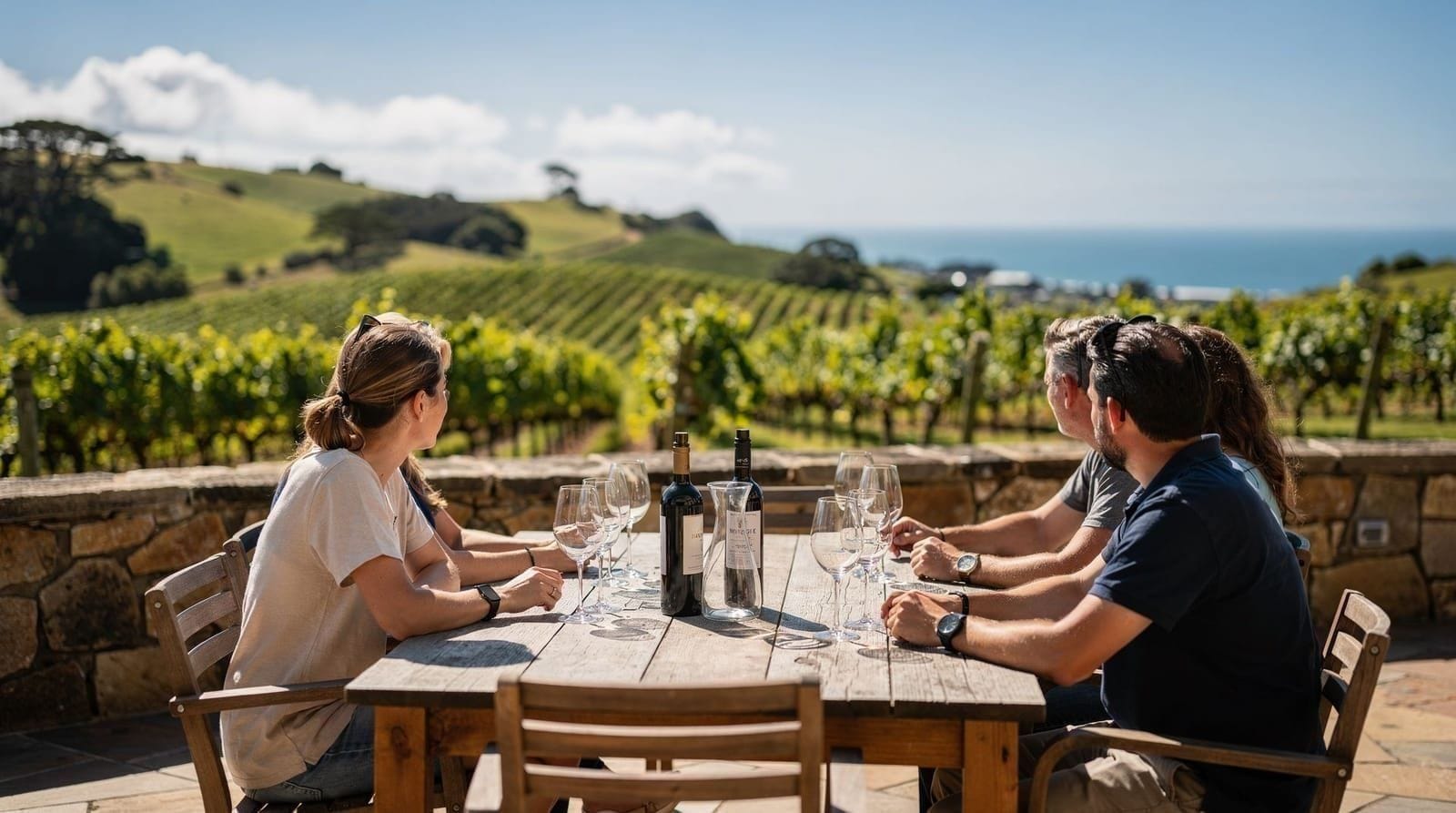
Food tours work well early in a trip because a good guide effectively hands you a shortlist of restaurants, cafés, and neighbourhoods worth a return visit later. If you book one in your first two or three days, you will spend the rest of your Auckland time eating more intentionally rather than defaulting to whatever restaurant is nearest your hotel. This pairs naturally with our best restaurants in Auckland roundup for dinner bookings later in your stay, and our Auckland craft beer guide or Waiheke wine tours guide if you want to build out a broader food-and-drink itinerary across your visit.
For self-caterers or budget travellers who want a taste of local food culture without a tour price tag, the Auckland farmers markets guide is a genuinely good free-to-browse alternative — you will not get the guided context, but you will find much of the same produce and small-batch food culture that shows up on the tours.
Is it worth the price compared to just eating out?
A NZD 120-160 food tour is not cheap set against Auckland’s already solid mid-range dining costs (see our Auckland budget guide for daily cost context), but the honest comparison is not “tour vs one dinner” — it is “tour vs guessing your way through six to ten separate meals over a week and hoping you land on the good ones.” Viewed that way, a food tour functions as a paid shortcut to local knowledge, and for visitors with limited time or without a local friend to ask, that shortcut is usually worth it. Solo travellers and couples get the most value relative to price; larger families may find a private customised experience or simply picking two or three well-reviewed restaurants from our guides a more practical (and cheaper) route.
The neighbourhoods behind the tours
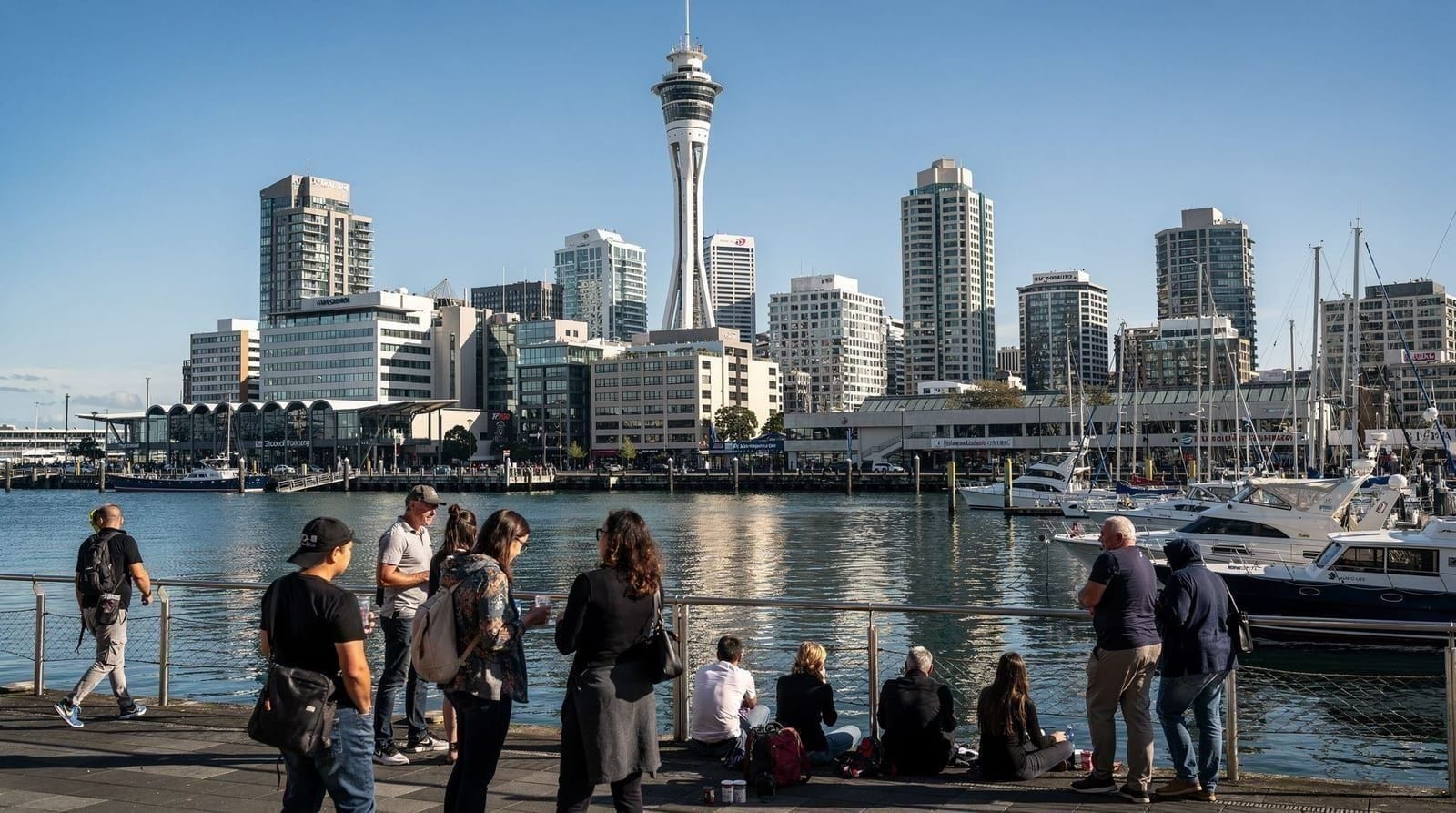
Most CBD food tours weave through a handful of precincts that are worth knowing by name, since they will keep coming up on your trip beyond the tour itself. Britomart, the restored heritage-warehouse district near the ferry terminal, has become Auckland’s most polished food-and-retail precinct, mixing upscale restaurants with casual counters in converted 1900s brick buildings. Federal Street, in the Sky Tower’s shadow, concentrates a run of well-regarded restaurants within a two-block stretch, making it a natural food-tour corridor.
Karangahape Road — known locally as K Road — sits at the opposite end of the spectrum: grittier, more countercultural, and home to some of the city’s best-value Asian eateries alongside a genuinely interesting late-night food scene. A well-designed tour usually touches at least two of these three, giving you a feel for how different Auckland’s dining personality is block to block.
Ponsonby, just west of the CBD, runs its own separate food identity built more around brunch cafés, wine bars, and a strip of restaurants along Ponsonby Road itself — most tour operators treat it as a separate excursion rather than folding it into a CBD walk, which is why our dedicated Ponsonby cafés guide is worth reading alongside this one if brunch culture interests you as much as dinner.
Coffee culture: not a side note
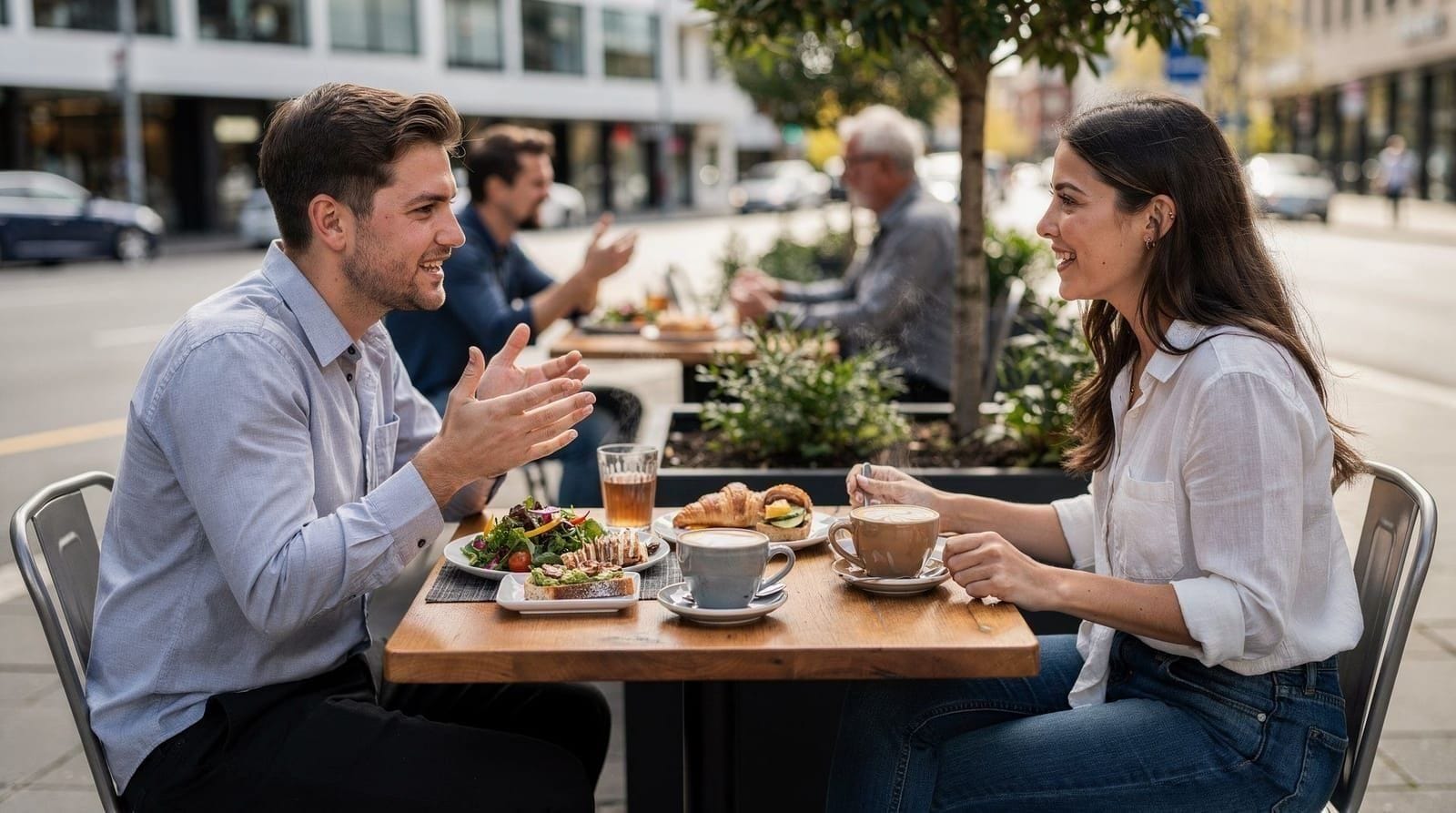
New Zealand’s flat white is often (only half-jokingly) treated as a point of national identity, and Auckland takes café culture seriously enough that most food tours build in at least one dedicated coffee stop with some explanation of local roasting traditions. Specialty coffee here tends to mean single-origin beans, careful milk texturing, and an emphasis on the coffee itself rather than syrup-heavy menu engineering. If coffee is a genuine interest rather than a passing curiosity, ask your tour operator whether the coffee stop is a quick espresso or a proper sit-down tasting — this varies by tour and is worth knowing in advance if it is a priority for you.
Vegetarian, vegan, and other dietary needs
Auckland’s food scene has kept pace with demand for plant-based options, and most food tours can slot in vegetarian versions of their standard tastings with a day or two of notice. Vegan requests usually work too, though with a smaller range of substitutions at some traditional stops (a dumpling tasting, for instance, may only have one vegan filling option versus three or four meat-based ones). Gluten-free travellers should flag this specifically, since Asian-influenced stops in particular can be tricky to navigate without advance planning by the operator. As a general rule, the earlier you communicate a dietary need when booking, the smoother the day goes — turning up and hoping the guide can improvise mid-tour is the least reliable approach.
A local’s-eye view: what tours don’t always cover
Even a great guided tour only shows you a curated slice of the city, and it is worth knowing what tends to fall outside the standard stop list. Auckland’s night market scene, which rotates through venues like the Auckland Night Markets held on different nights across several suburbs, is a genuinely good (and cheap) way to sample a huge range of Asian street food in one sitting, but it rarely appears on daytime walking tours since the markets run in the evening. Similarly, the city’s food halls — casual multi-vendor spaces where you can mix and match dishes from several kitchens at one table — are worth a self-guided visit if a tour has whetted your appetite for more. Treat a booked food tour as the orientation, not the entire syllabus.
Families and larger groups
Food tours generally work for families with older children who eat a fairly broad range of foods, though the walking pace and the amount of unfamiliar or spicier dishes on some stops can be a mismatch for younger or picky eaters. If you are travelling with young kids, it is worth calling the operator ahead to ask how flexible the tastings are, or considering a private or semi-private booking where the guide can adjust the stop list. Larger groups of six or more should book early regardless of season, since most walking tours cap total numbers to keep the experience intimate, and a big group booking can fill the remaining public spots on a given departure.
Booking tips
Book at least a few days ahead in shoulder and winter months, and one to two weeks ahead for December-February, when tour capacity fills faster alongside the general summer crush of visitors. Morning and early afternoon tours tend to have better stop availability than evening slots, since some venues used on the tour are also running their own dinner service later in the day. If you have a dietary restriction beyond a straightforward vegetarian preference, message the operator directly before booking to confirm they can accommodate it — walking through a multi-stop tour with several venues you cannot eat at defeats the purpose.
A realistic three-hour timeline
Most CBD food tours follow a similar rhythm: a 10-15 minute welcome and orientation where the guide sets context on Auckland’s food history and migration story, then five to eight tasting stops spaced 15-25 minutes apart with short walks in between, and a final stop that tends to be either dessert or a signature local specialty saved for the end. Budget around three hours total including the walking, and expect to finish reasonably full — few people need a full dinner the same evening after a well-run food tour. If your tour starts mid-morning, this timing also works well as a substitute for lunch, freeing up your afternoon for a museum visit or a walk along the waterfront rather than a sit-down meal.
Solo travellers and food tours
Food tours are one of the more solo-friendly activities in Auckland precisely because the group format does the socialising for you — you are naturally grouped with ten to fifteen other travellers and a guide, tasting the same dishes and swapping opinions as you go, which makes it an easy way to meet people early in a trip without the pressure of a formal group activity. If you are travelling alone and debating between a solo restaurant dinner and a food tour on a given evening, the tour usually wins on both value (more variety per dollar) and company.
Tipping and etiquette
Tipping is not culturally expected in New Zealand the way it is in North America, and this extends to food tour guides — a tip is appreciated for exceptional service but never assumed or added automatically to the bill. If your guide went well beyond the standard commentary (extra recommendations, accommodating a dietary need smoothly, genuine enthusiasm that made the day better), NZD 10-20 per person is a reasonable way to show appreciation, but skipping it entirely is completely normal and will not be read as rude.
Our honest take
For most first-time visitors, a central Auckland food tour is one of the better-value guided activities in the city — not because the food itself is unaffordable to find on your own, but because Auckland’s best eating is genuinely dispersed and unmarked compared to cities with one obvious food district. A good guide compresses days of exploration into an afternoon and leaves you with a working map of the city’s food culture for the rest of your trip. Skip it only if you are visiting Auckland repeatedly and already know the scene, or if your schedule is tight enough that a three-hour block is hard to justify against day trips like the ones in our best day trips from Auckland roundup.
If this is your first visit and you want the tour to slot smoothly into a broader plan, our first-time Auckland tips and Auckland in a day guides both cover where a food tour fits alongside the city’s other must-see stops, and our free things to do in Auckland guide is a good complement if you want to balance the tour’s cost with plenty of no-cost exploring afterward.
Frequently asked questions about Auckland food tours: which one is worth your time
How much do Auckland food tours cost?
Most small-group walking food tours in central Auckland run NZD 120-160 per adult for around three hours, including all tastings. Devonport's food-history tour is similarly priced. Private or fully customised tours cost more, typically NZD 200-300 per person.Do Auckland food tours include alcohol?
Some include a beer or wine pairing at one or two stops, but most are built around food tastings with a coffee or soft drink component. If alcohol matters to you, check the specific tour's inclusions before booking, since this varies by operator.Is a food tour a full meal or just tastings?
Expect substantial tastings rather than a single sit-down meal — six to ten stops with generous portions usually adds up to a full meal's worth of food by the end, but paced across the walk rather than served all at once.What cuisines does Auckland's food scene actually cover?
Auckland's food culture reflects its diversity: New Zealand-Pacific fusion, strong Asian food across Chinese, Korean, Japanese, and Southeast Asian traditions, a serious café and brunch culture, and a growing wave of Māori-influenced modern dining. A good food tour samples across several of these rather than sticking to one style.Should I book a food tour on my first or last day in Auckland?
Early in your trip works best — a good guide points you toward neighbourhoods, dishes, and restaurants worth returning to later, effectively giving you a shortcut through weeks of local knowledge in one afternoon.Are food tours suitable for dietary restrictions?
Most operators can accommodate vegetarian requests with advance notice, and some handle gluten-free or dairy-free reasonably well. Severe allergies are trickier on a multi-stop tour where you are not controlling every kitchen — flag any serious allergy directly with the operator before booking rather than assuming it will be handled on the day.Should I tip on an Auckland food tour?
Tipping is not culturally expected in New Zealand and food tour guides are no exception. A tip of NZD 10-20 per person is a nice gesture for exceptional service, but skipping it is completely normal and will not be seen as rude.
Top experiences
Bookable activities with verified prices and instant confirmation on GetYourGuide.