Whale watching from Auckland: what you'll actually see
| Where | Hauraki Gulf Marine Park, 30 min from downtown Auckland |
| Year-round residents | Bryde’s whales, common dolphins |
| Bonus season | Humpback migration, June-August |
| Trip length | Half-day (3-4hrs), some full-day options |
| Cost driver | Half-day standard vs full-day island-combo cruises |
Auckland’s underrated wildlife advantage
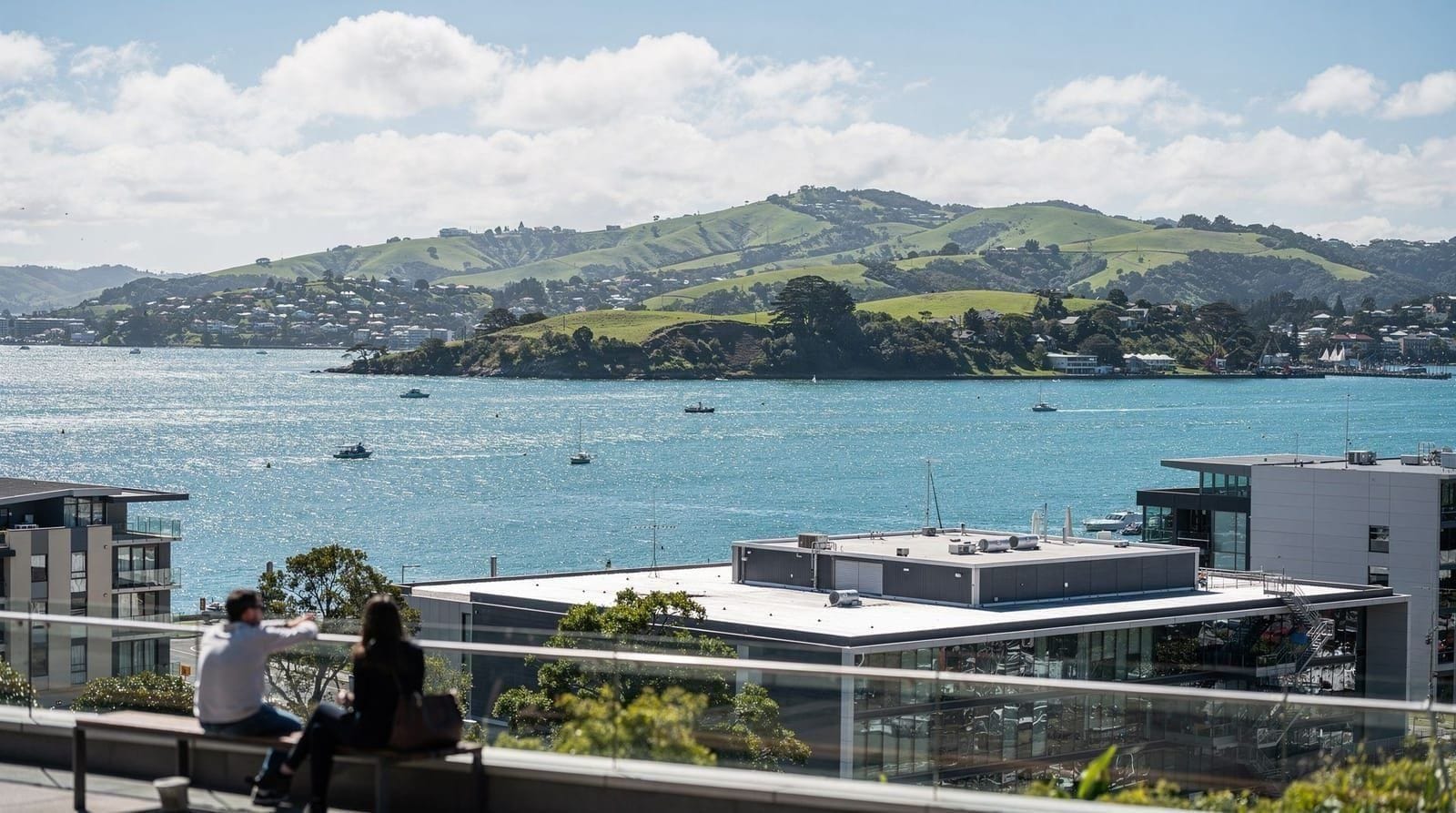
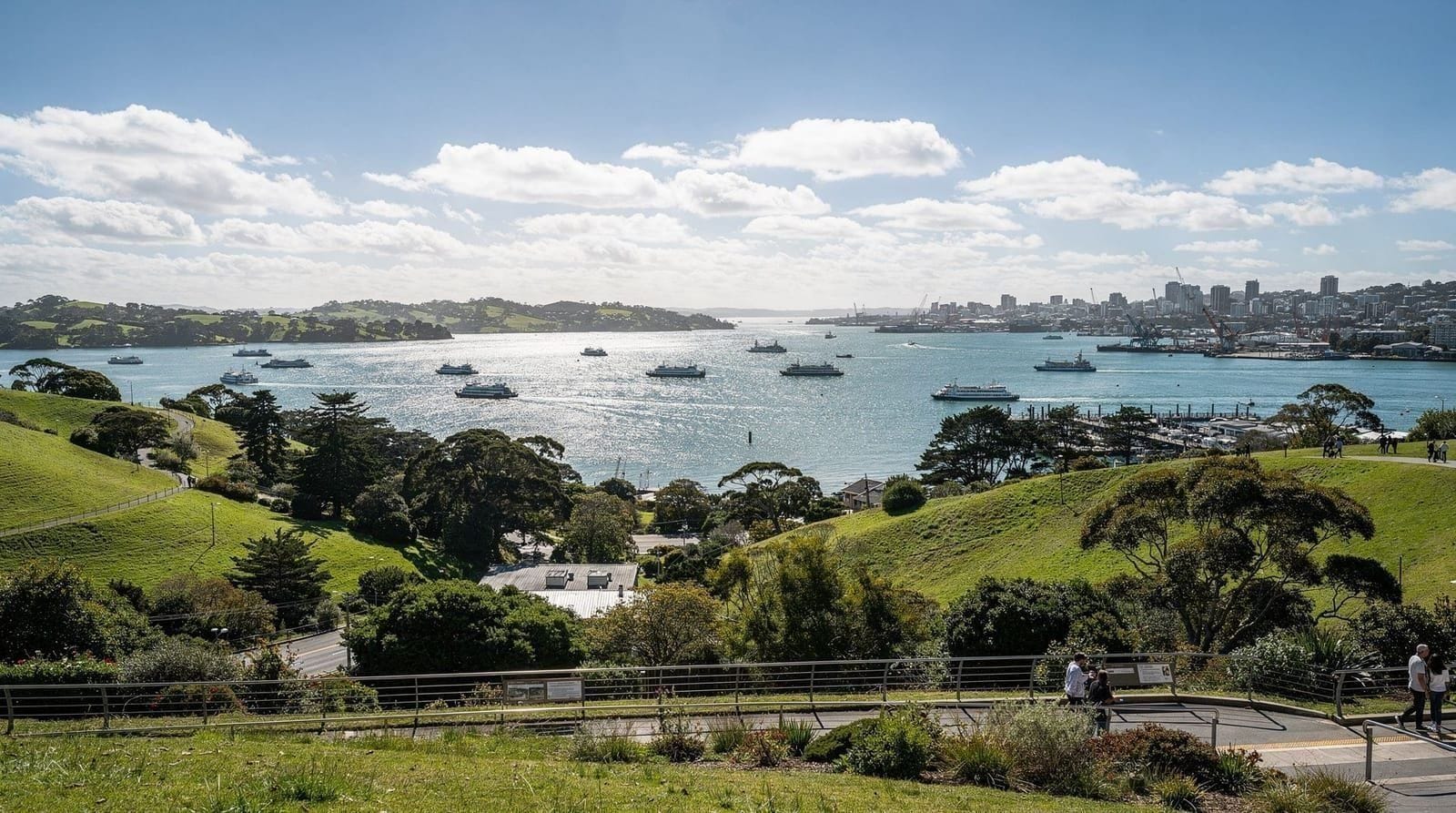
Most visitors don’t realise that one of New Zealand’s best whale and dolphin watching grounds sits a 30-minute boat ride from downtown Auckland. The Hauraki Gulf Marine Park, the sheltered stretch of water between the city and the outer islands like Rangitoto, Tiritiri Matangi and Waiheke, supports a genuinely unusual concentration of marine life for a body of water this close to a major city. It’s a working reason to book a boat trip during your stay rather than an optional add-on — the sightings here are real, not the low-odds “maybe you’ll see something” gamble that whale watching can be elsewhere in the world.
Who lives here year-round
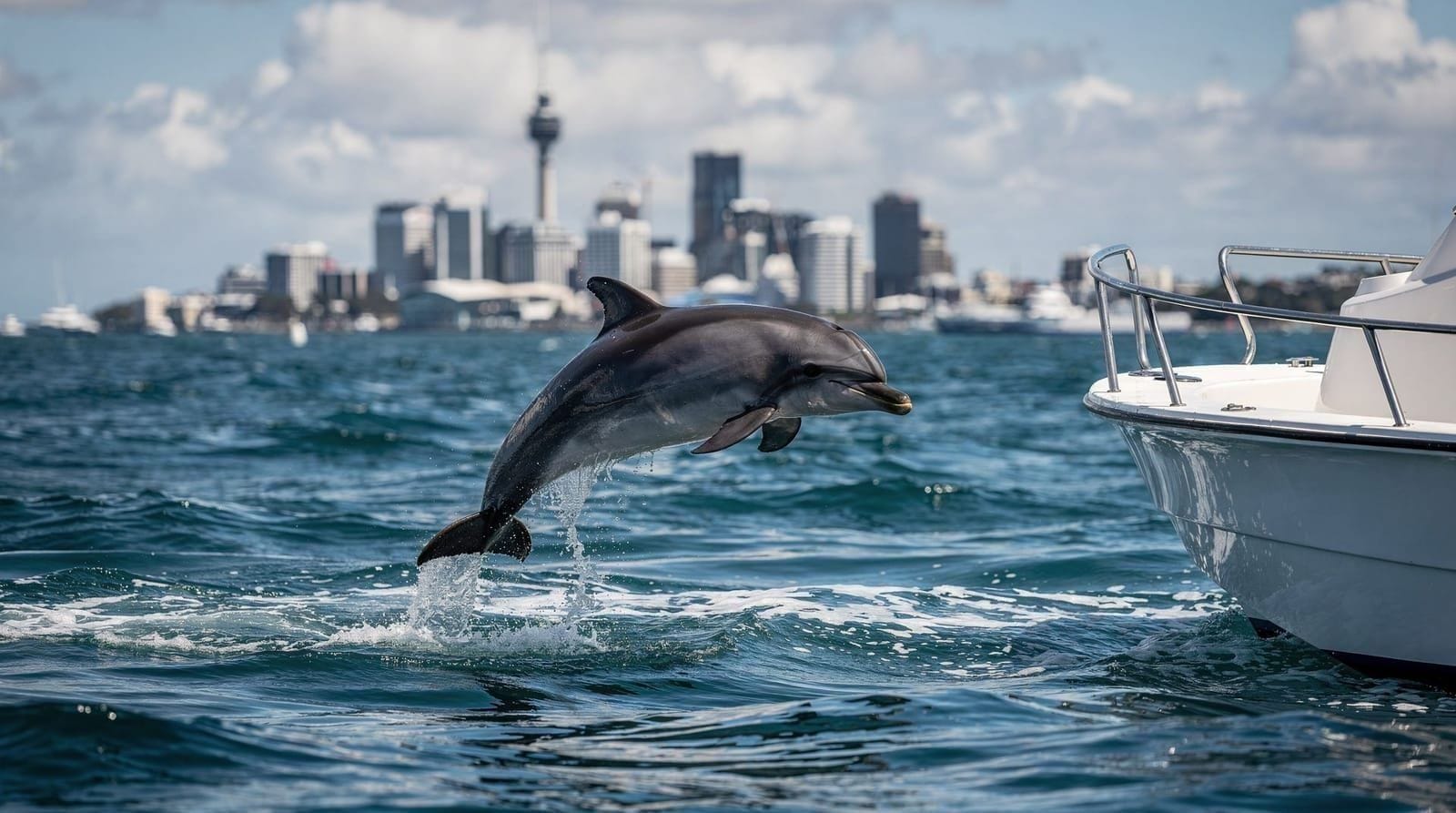
Bryde’s whales (pronounced “broo-dess”) are resident in the Hauraki Gulf year-round, one of the very few places in the world where a baleen whale species stays in the same waters through all four seasons rather than migrating. They’re big — up to around 15 metres — and feed on schooling fish close enough to the surface that a good sighting is a real possibility on most trips, not a rare stroke of luck. Common dolphins are the other year-round resident, and they show up in genuinely large pods, sometimes hundreds of animals at once, often riding the bow wave of the tour boat, which tends to be the highlight most passengers remember afterward regardless of what else the day delivers.
Because both species are resident rather than seasonal migrants, there’s no single “best month” purely for guaranteed sightings — a Hauraki Gulf tour in any season has a reasonable shot at both whales and dolphins. What does change by season is the bonus opportunity layered on top.
The humpback migration bonus: June to August
Winter (June-August) brings humpback whales through the Hauraki Gulf as part of their broader migration between Antarctic feeding grounds and warmer breeding waters further north in the Pacific. This is genuinely the best window to add a humpback sighting to the resident Bryde’s whales and dolphins already in the gulf — humpbacks are more dramatic than Bryde’s whales for most visitors, more prone to breaching and tail-slapping, and their passage through New Zealand waters during these months is one of the country’s more underrated wildlife events. It’s not guaranteed on any single trip (migration timing varies year to year), but June-August tours have a real, documented chance at it that summer tours don’t.
This pairs naturally with a broader winter Auckland trip — fewer crowds, lower accommodation prices, and a genuine wildlife bonus that summer visitors miss entirely. See our is Auckland winter worth it post for the fuller seasonal trade-off if you’re weighing up a cooler-month visit specifically around this opportunity.
Booking the trip
The Auckland whale and dolphin safari is the standard half-day option, departing from the downtown Auckland waterfront with marine biologists or trained guides aboard who explain what you’re seeing and log sightings for ongoing gulf research — a genuinely worthwhile scientific angle beyond the tourism experience.
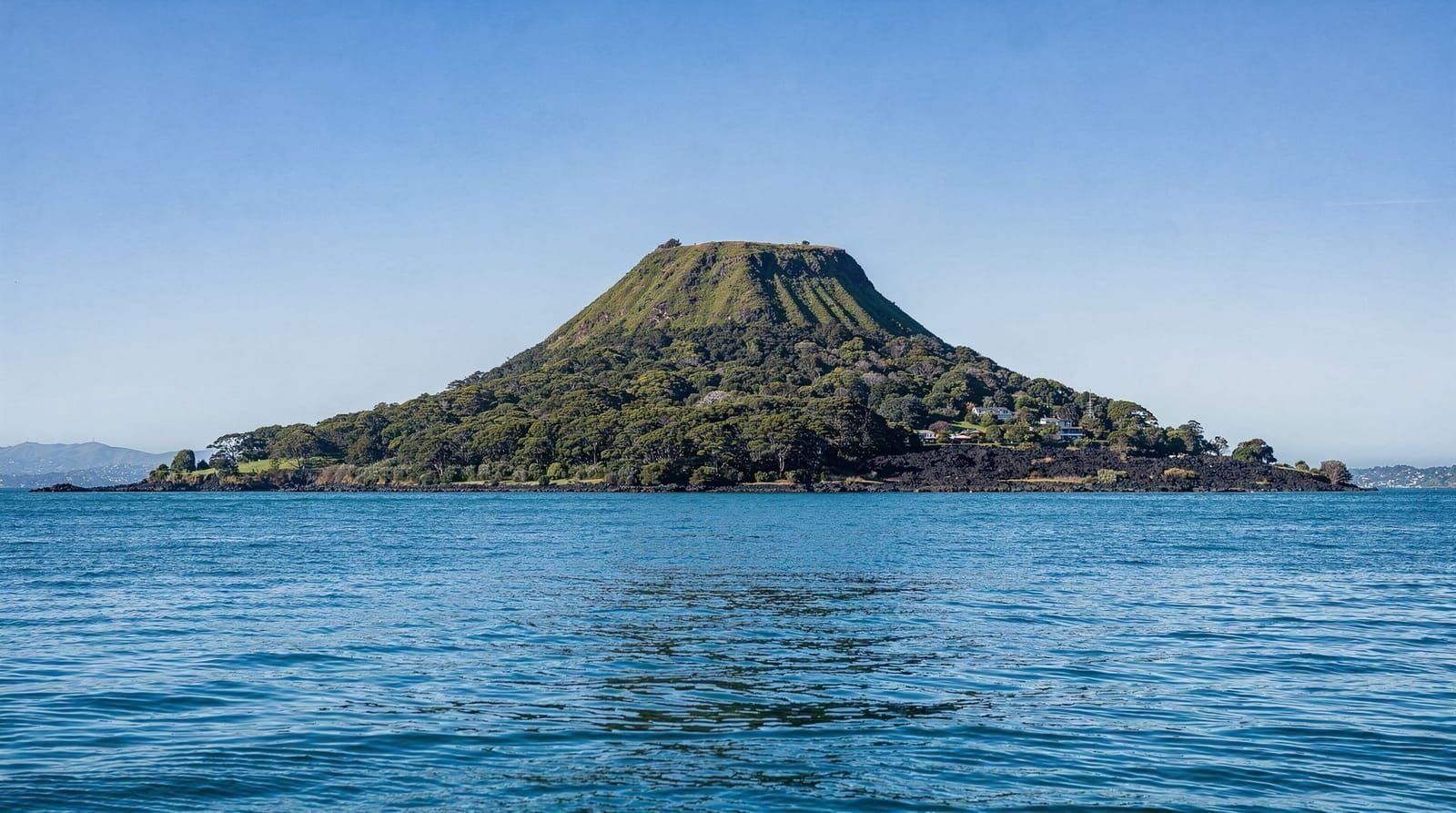
For a trip that adds island scenery to the wildlife-watching, the Tikapa Moana whales, dolphins and islands cruise extends the route past several of the gulf’s volcanic islands, worth it if you want the marine life plus a proper look at the wider Hauraki Gulf landscape rather than a pure whale-watching focus. Our dedicated whale and dolphin watching Auckland guide and Auckland whale and dolphin safari tour page both go deeper into route options and what’s included.
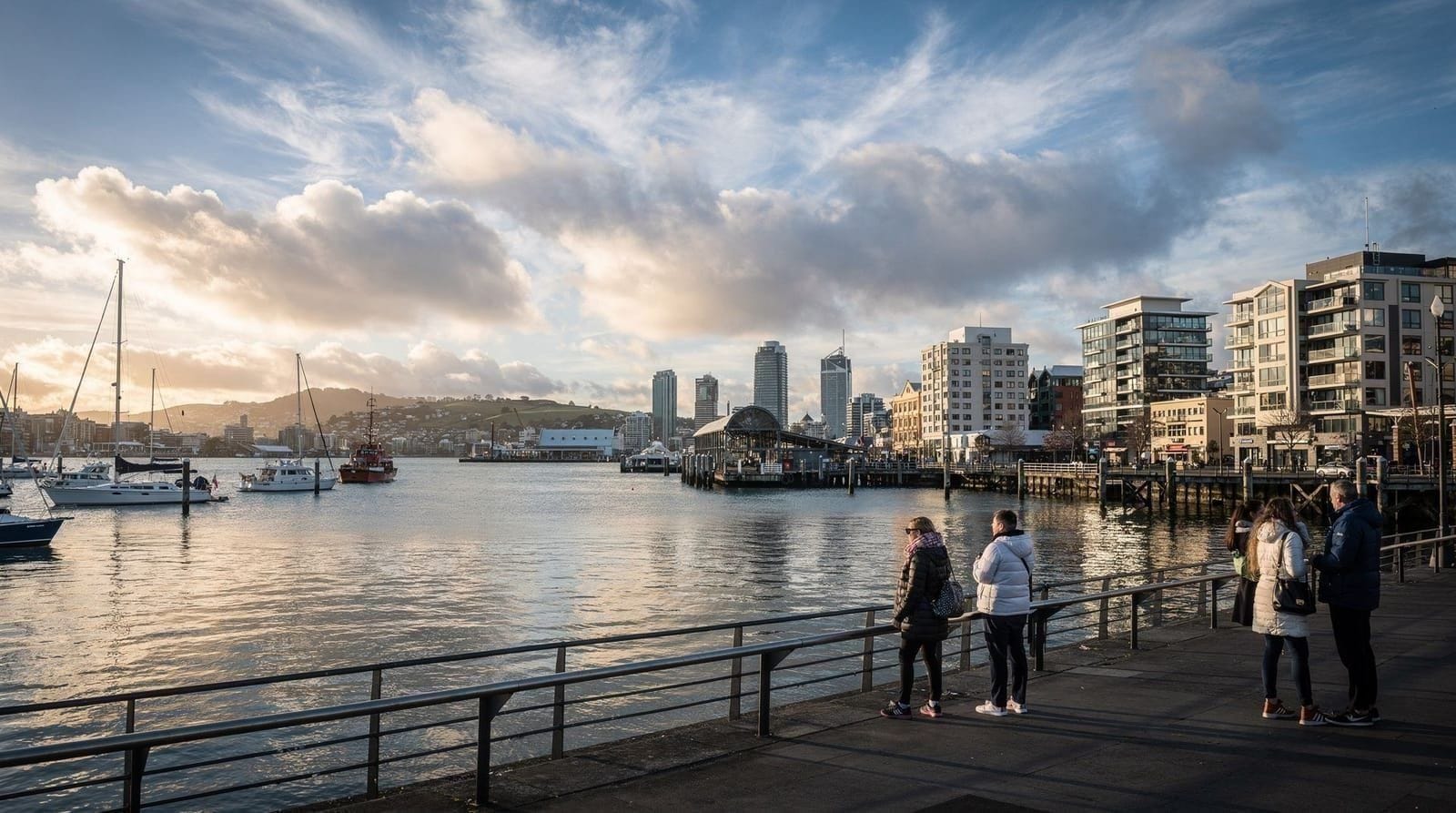
Most trips run three to four hours door to door, departing from the same waterfront area covered in our Auckland waterfront guide, and boats are generally a good size — stable catamarans rather than small charter boats, which matters for comfort on a gulf that can get choppy.
Seasickness and comfort: the honest tips
The Hauraki Gulf is more sheltered than open ocean, but it’s not flat calm every day, and a meaningful minority of passengers do feel queasy, particularly on the outer stretches of the longer island-cruise routes.
If you’re prone to motion sickness, take preventive medication (available over the counter at any pharmacy) at least 30-60 minutes before boarding, not once you’re already feeling unwell — it works far better as prevention than treatment. Sit or stand in the middle of the boat rather than the bow or stern, where movement is most pronounced, and keep your eyes on the horizon rather than a phone screen when the swell picks up. Fresh air on deck genuinely helps more than sitting inside a cabin. Dress in layers regardless of the season — the wind on open water is noticeably colder than it feels on the waterfront before boarding, and winter trips in particular need a proper jacket, not just what felt adequate walking to the wharf.
What you’re actually likely to see
Setting honest expectations matters here: most trips deliver dolphins reliably (common dolphins travel in large, active pods and are genuinely easy to spot), while whale sightings, though frequent, aren’t 100% guaranteed on any single outing — Bryde’s whales surface to breathe every few minutes but can range widely across the gulf on a given day, and marine wildlife doesn’t run on a schedule. Reputable operators are upfront about this rather than overselling a guaranteed encounter, and most offer some form of return policy or credit if no whales are sighted on a trip, which is worth checking before booking. What’s essentially certain on any outing: gulf scenery, volcanic island views, and a good chance at dolphins even on a whale-quiet day.
The conservation angle
The Hauraki Gulf’s whale and dolphin population isn’t just a tourism drawcard — it’s a genuinely significant conservation story. The gulf is one of very few places in the world where a resident baleen whale population lives this close to a city of over a million people, and increased ship traffic in and out of Auckland’s port has created real, documented risk of vessel strikes on Bryde’s whales over the past two decades. Reputable tour operators follow marine mammal protection regulations that govern approach distances and vessel speed around whales and dolphins, and several actively contribute sighting data to ongoing gulf research on population health and movement patterns.
Booking with an operator that visibly follows these guidelines — no aggressive close approaches, no chasing pods that are trying to move away — is worth prioritising over the cheapest available trip, both for the animals’ sake and because a well-regulated approach tends to produce calmer, more natural animal behaviour and better viewing anyway.
Sightings by season at a glance
| Season | Resident species | Bonus species | Notes |
|---|---|---|---|
| Summer (Dec-Feb) | Bryde’s whales, common dolphins | None specific | Calmer seas, peak crowds |
| Shoulder (Mar-May, Sep-Nov) | Bryde’s whales, common dolphins | None specific | Fewer boats on the water |
| Winter (Jun-Aug) | Bryde’s whales, common dolphins | Humpback whales (migrating) | Best odds at a humpback sighting, dress warmer |
Pairing a wildlife day with island time
Since the tour boats already pass close to several Hauraki Gulf islands, it’s worth considering a standalone island visit either side of your whale-watching day rather than treating it as an isolated activity. Rangitoto Island is a short ferry ride and a genuinely rewarding half-day summit hike with harbour views, and pairs naturally with a morning wildlife cruise if you split them across two days rather than trying to cram both into one. If native bird conservation interests you as much as marine wildlife, a Tiritiri Matangi day trip rounds out a Hauraki Gulf-focused stretch of your Auckland stay with a completely different kind of sighting.
Half-day versus full-day options
Most Hauraki Gulf whale and dolphin trips run as half-day outings, generally departing mid-morning and returning by early afternoon, which fits comfortably alongside another activity later in the day — a waterfront lunch, a museum visit, or simply recovery time if you’re prone to any seasickness. A small number of operators offer longer, full-day combined trips that add stops at outer gulf islands alongside the wildlife-watching component; these suit visitors who want to make the boat trip the centrepiece of their day rather than one part of it, and generally cover more of the gulf’s range, which can modestly improve the odds of a wider variety of sightings simply by covering more water. For most visitors on a standard Auckland stay, the half-day option is the better fit — it delivers the core experience without eating into a full day that could otherwise cover a second activity.
What to bring
Beyond the seasickness precautions above, pack sunscreen (SPF 50+, reapplied through the trip — reflection off open water increases UV exposure beyond what you’d get on land), sunglasses, and a light waterproof layer even on a day that looks clear from the wharf, since spray and wind on open water are more pronounced than conditions on shore suggest. Binoculars are genuinely useful if you have a compact pair — crew typically spot animals well before they’re visible to the naked eye, and a few extra seconds of binocular view before a whale surfaces again can make the difference between a good sighting and a great one. A basic zoom lens or telephoto phone attachment helps for photos, since boats keep a respectful legal distance from the animals that a standard phone camera won’t always capture well.
Making it part of a bigger day
A half-day whale and dolphin trip pairs naturally with a full day around Auckland’s waterfront and inner gulf — a morning cruise followed by lunch back at the Wynyard Quarter waterfront, or combined with a kayaking session earlier in the trip for a fuller marine-focused stay. For visitors specifically drawn to the gulf’s wildlife, it’s worth building at least half a day around this rather than squeezing it into a spare afternoon — the sightings, the marine biologist commentary, and the sheer scale of the gulf itself all reward a bit of unhurried time on the water.
If you’re planning which day of your stay to slot this into, our best day trips from Auckland guide helps weigh it against the other half-day options, and cruise passengers with a shorter window in port can check our Auckland cruise port guide for how a wildlife trip fits into a tighter schedule.
Frequently asked questions about whale watching from Auckland
What’s the best month to see whales from Auckland?
Bryde’s whales and common dolphins are resident year-round, so any month offers a reasonable chance at both. June to August adds migrating humpback whales to the mix, making winter the best window for the widest variety of sightings.
Is whale watching in the Hauraki Gulf suitable if I get seasick?
Yes for most people — the gulf is more sheltered than open ocean — but take preventive motion sickness medication 30-60 minutes before boarding if you’re prone to it, and sit toward the middle of the boat where movement is least pronounced.