Rangitoto Island half-day trip from Auckland
Auckland: Rangitoto island ferry roundtrip pass
How do I get to Rangitoto Island and how long does the summit walk take?
Fullers360 ferries run from downtown Auckland to Rangitoto in about 25 minutes. The summit walk takes roughly 1-1.5 hours each way on a clearly marked track through lava fields, making the whole trip, including ferry time, doable in a half-day.
Auckland’s easiest volcano
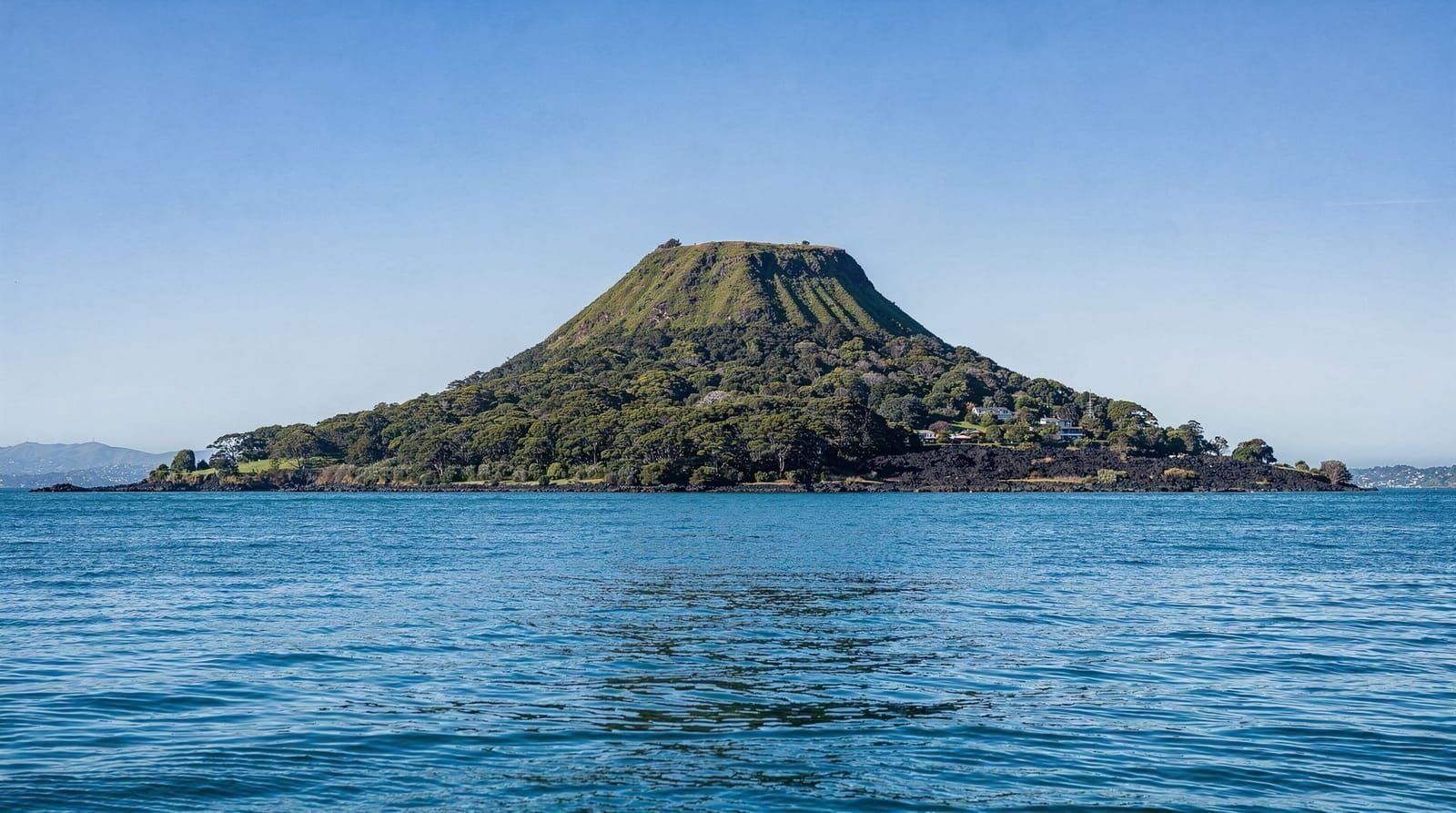
Auckland sits on an active volcanic field of roughly 53 individual cones, and Rangitoto — visible from almost every waterfront point in the city — is by far the youngest and largest of them, formed around 600 years ago in a series of eruptions substantial enough that Māori oral tradition and archaeological evidence suggest early inhabitants of the region witnessed them. What makes Rangitoto genuinely unusual as a day-trip destination is how accessible it is relative to how dramatic it looks: a 25-minute ferry ride puts you directly at the base of a real, if long-dormant, volcanic cone, with a well-marked summit track that most reasonably fit visitors can complete in a single morning or afternoon.
| Where | Hauraki Gulf, 25 minutes by ferry from downtown Auckland |
| Cost | Around NZD 40-50 return ferry; walk and lava caves are free |
| Time needed | 4-5 hours door to door, including the ferry crossing |
| Getting there | Fullers360 ferry from the downtown terminal; no car needed |
| Best time | Morning sailings, cooler months or an early start in summer |
Unlike almost every other destination on this site, Rangitoto asks almost nothing of you logistically — no long drive, no advance tour booking required, no complicated timing around tides or fixed tour slots. Just a ferry and a walk.
If you want the full picture of the island before you go, our Rangitoto Island destination page and the longer Rangitoto Island guide cover the wider context, while this page stays focused on fitting the visit into a single half-day.
Getting there: the ferry
Fullers360 runs the passenger ferry service from Auckland’s downtown ferry terminal to Rangitoto Wharf, with a crossing time of about 25 minutes — one of the shortest ferry trips to any of Auckland’s gulf islands. Sailings run several times daily, more frequently on weekends and in summer, with return tickets priced in the NZD 40-50 range for adults. This Rangitoto Island ferry roundtrip pass is the straightforward booking if you’re planning a self-guided visit, which is how most visitors experience the island — there’s no need for a guided tour unless you specifically want added context or an alternative route.
If this is your first time using Auckland’s harbour services, our Auckland ferries guide explains how the terminal and boarding work, and the Hauraki Gulf islands overview shows where Rangitoto sits among the other islands you can reach from the same waterfront.
The summit walk
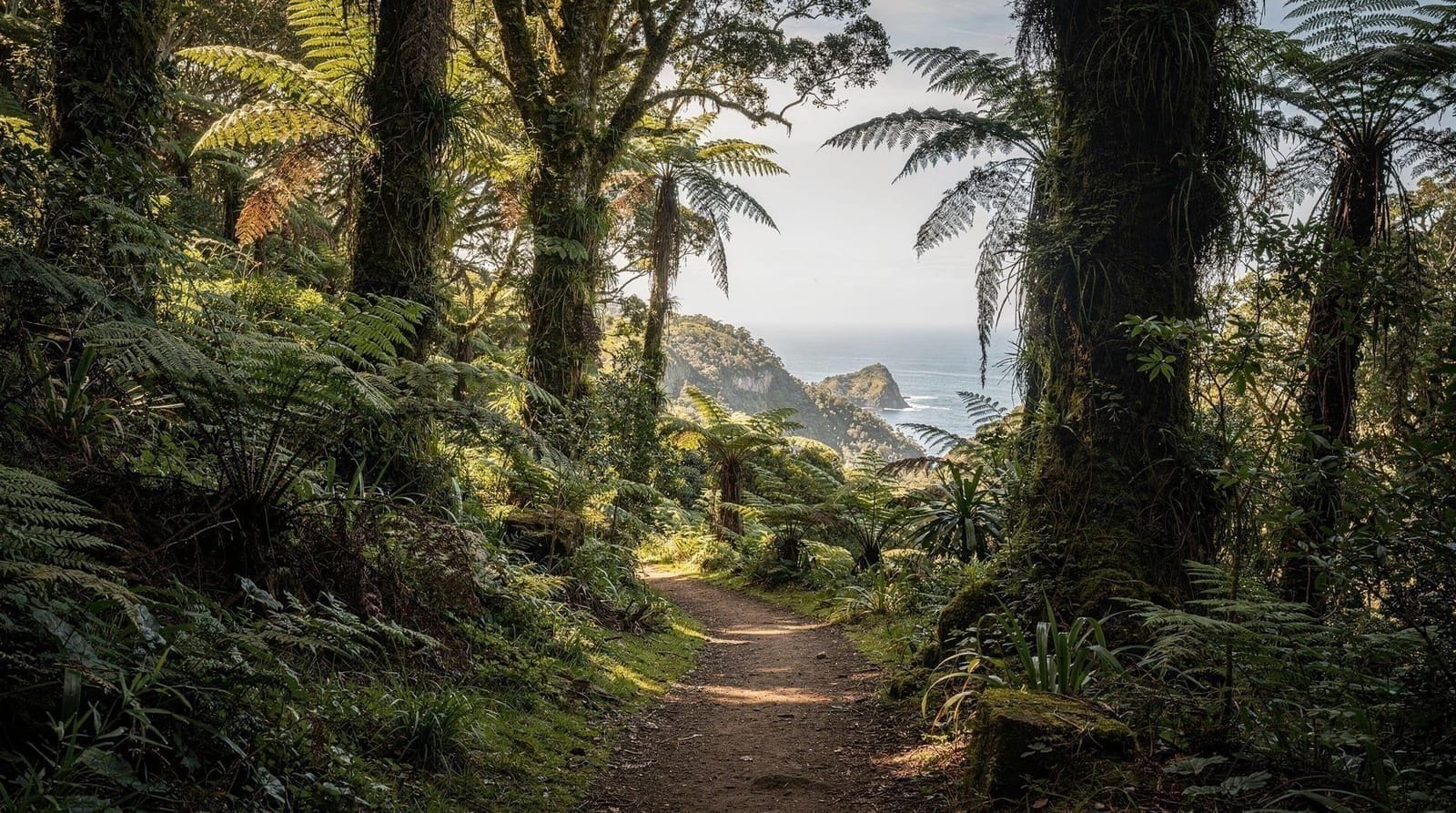
From Rangitoto Wharf, the main summit track climbs steadily through striking black lava fields and low pōhutukawa forest — some of the oldest pōhutukawa forest in New Zealand, remarkably, having established itself in the relatively young volcanic rock over the centuries since the eruptions. The walk to the summit takes about 1-1.5 hours each way on a well-formed, clearly signposted track, though it’s genuinely uphill for most of the route with minimal shade, so sturdy shoes, a hat, and sunscreen matter more here than on flatter walks.
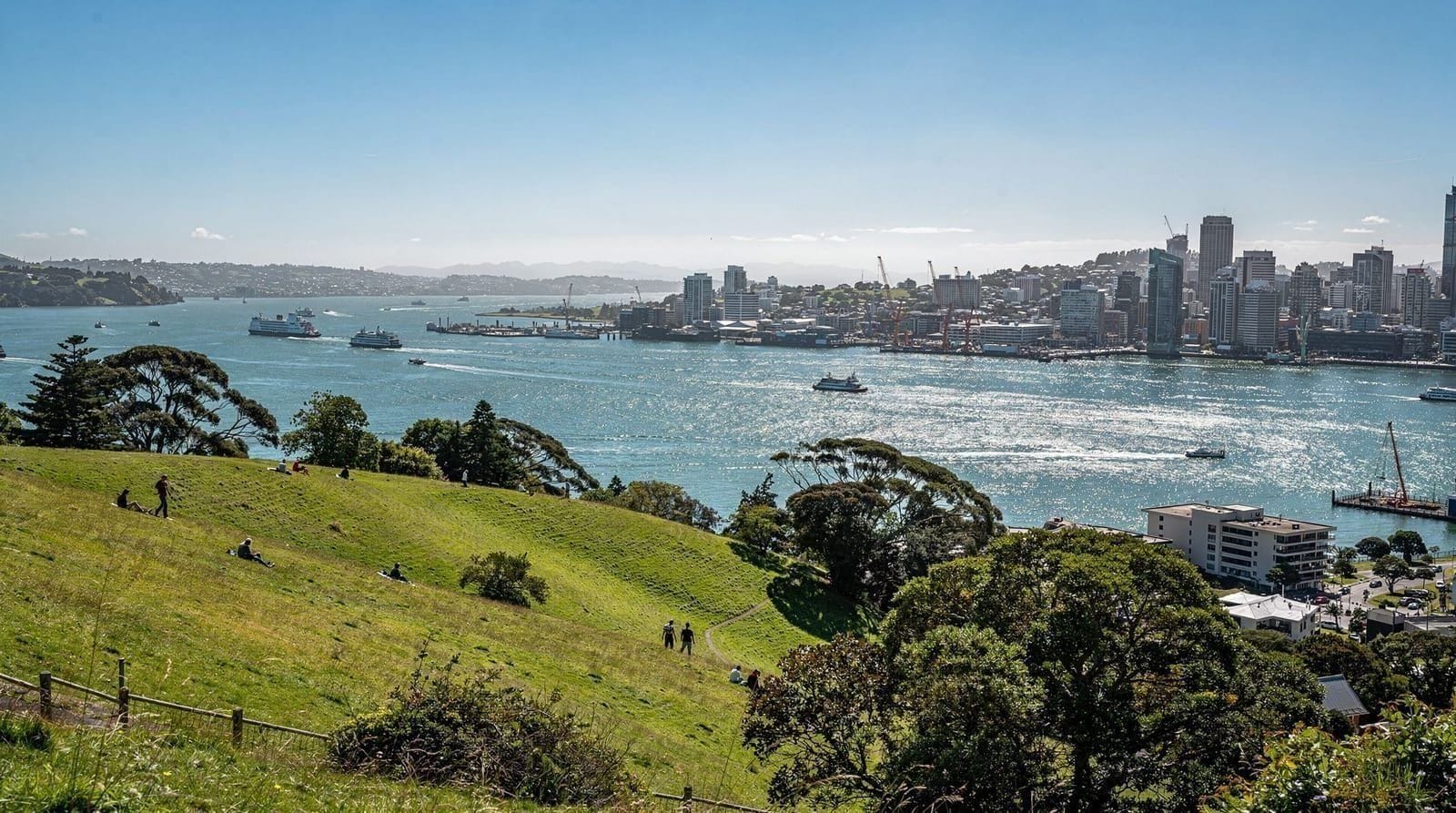
At the top, the summit crater and lookout offer sweeping views back across the Hauraki Gulf to Auckland’s skyline — on a clear day, one of the better panoramic city views available anywhere in the region, and a genuinely different perspective on Auckland than any waterfront or building-based viewpoint offers.
Lava caves along the way
A short, signposted side track partway up the main route leads to a cluster of lava cave formations, created as flowing lava cooled unevenly and left hollow tunnels beneath the surface. These are worth the modest detour if you have a bit of extra time and a torch or phone light — some of the caves are large enough to walk into for a short distance, offering a tangible, hands-on sense of the island’s volcanic origins beyond just the summit view.
No food, no water — bring your own
This is the single most important practical note for a Rangitoto visit: there are no shops, cafes, or drinking water taps anywhere on the island. Whatever water and snacks you need for the walk, you need to bring with you from Auckland before boarding the ferry. This catches out some visitors expecting at least a small kiosk near the wharf, so plan accordingly — a couple of bottles of water per person is the minimum for the full summit walk, more in summer heat.
Alternative ways to experience Rangitoto
This kayak and hike day trip to Rangitoto’s summit offers a genuinely different approach for visitors wanting more physical activity — paddling across from Auckland (or a shorter crossing point) rather than taking the standard ferry, then hiking the same summit track once on the island. This is a considerably more demanding option, better suited to visitors with kayaking experience and a higher fitness level than the standard ferry-and-walk visit. This Rangitoto explorer tour is a guided alternative for visitors who’d prefer a knowledgeable guide’s commentary on the island’s volcanic history and ecology rather than a self-guided walk.
A realistic half-day itinerary
Catch a morning ferry (9-10am sailings work well to have the cooler part of the day for the uphill walk) for the 25-minute crossing. Complete the summit walk with a stop at the lava caves along the way — budget 2.5-3 hours total for the return trip including time at the summit lookout — then catch an early-to-mid afternoon ferry back to Auckland. This entire visit, door to door, fits comfortably into 4-5 hours, leaving the rest of your day free for other Auckland activities.
Combining Rangitoto with other Auckland plans
Because a Rangitoto visit fits so comfortably into a half-day, it pairs naturally with other short Auckland activities on the same day — an afternoon exploring Devonport (itself only a short ferry ride from the same downtown terminal), a visit to the Auckland Museum, or simply a relaxed evening in the city after a morning on the volcano. This flexibility is one of Rangitoto’s biggest advantages over the longer day trips on this site, most of which consume an entire day on their own.
If you choose Devonport, the Devonport destination page and our Devonport eats guide help you pick somewhere good for a late lunch after the walk. For the museum option, the Auckland Museum guide is the place to start, and the Auckland waterfront guide suggests easy ways to spend the evening near the ferry terminal.
If Rangitoto is one piece of a longer stay, the one day in Auckland itinerary and the three days in Auckland itinerary show how a half-day on the volcano can slot in alongside the city highlights. Visitors working out their overall plan may also find our how many days in Auckland page useful.
Rangitoto vs Waiheke: which suits your day better
Both are ferry-accessible, car-free half-day (or full-day) options from downtown Auckland, but they offer genuinely different experiences: Rangitoto is a physical, volcanic-landscape hike with sweeping views and no food or shops on the island, while Waiheke is a relaxed wine-and-beach experience with restaurants, cafes and a developed township. Visitors wanting an active, outdoor half-day lean toward Rangitoto; those wanting a more leisurely, food-and-wine-focused day lean toward Waiheke. Our Waiheke day trip guide covers that alternative in full, and our Rangitoto hike guide goes deeper on trail specifics and difficulty if you want more detail before committing to the walk.
When to visit
Rangitoto works well year-round, though the exposed, largely shadeless summit track makes timing genuinely matter more here than on most walks. Summer (December-February) visits benefit from an early start to avoid the worst midday heat on the uphill lava-field sections. Shoulder season (March-May, September-November) offers the most comfortable walking temperatures. Winter (June-August) is quieter and cooler, still entirely walkable, though check ferry schedules, since winter sailings sometimes run less frequently than the summer timetable.
| Season | Walking conditions | Crowds | Note |
|---|---|---|---|
| Summer (Dec-Feb) | Hot, shadeless climb | Busiest | Start early to beat the midday heat |
| Shoulder (Mar-May, Sep-Nov) | Most comfortable | Moderate | Best all-round walking temperatures |
| Winter (Jun-Aug) | Cool, quieter | Lightest | Check reduced winter ferry timetable |
For a broader sense of how Rangitoto fits against Auckland’s other day-trip options, see our best day trips from Auckland roundup, and our volcanic cones of Auckland guide if Rangitoto sparks an interest in the city’s wider volcanic field.
Budget breakdown for a Rangitoto visit
Rangitoto is one of the cheapest outings anywhere on this site. A return ferry ticket runs NZD 40-50 per adult, and the summit walk and lava caves are entirely free with no additional entry fee. Pack your own food and water (essential, given there’s nothing to buy on the island) and total costs for a self-guided visit come to just the ferry fare — roughly NZD 40-50 per person for the whole half-day, making it, alongside Piha, one of the most budget-friendly outings on this site. A guided option like the explorer tour or kayak-and-hike trip adds NZD 80-150 per person on top of the base ferry cost, reflecting the added guiding, equipment or activity involved.
The geology of Rangitoto’s eruption
Understanding Rangitoto’s formation adds real context to the walk itself. The island formed through a series of eruptions beginning roughly 600 years ago, remarkably recent in geological terms and likely witnessed directly by Māori living in the wider Auckland area at the time — archaeological evidence, including Māori artefacts found beneath layers of volcanic material on neighbouring Motutapu Island, supports oral traditions describing the eruption. Unlike a single dramatic explosive event, Rangitoto’s formation is understood to have occurred through multiple eruptive phases over a period that may have spanned centuries, gradually building the distinctive low, broad shield-volcano profile visible from Auckland’s waterfront today.
The lava fields you walk across on the summit track are a direct, tangible result of this eruptive history — solidified basalt lava flows that cooled and cracked into the jagged, uneven surface underfoot, which is also why sturdy footwear matters more here than on most Auckland-area walks. The relatively young age of this rock, geologically speaking, is part of why plant life on Rangitoto looks and behaves differently from older volcanic cones elsewhere in the region — species that specifically tolerate minimal soil and exposed rock have colonised the island in a pattern still actively studied by ecologists.
Conservation and pest-free status
Rangitoto, along with neighbouring Motutapu Island (connected by a causeway and accessible via the same walking network), has been the subject of a major, largely successful pest-eradication programme, removing introduced predators like possums, rats and stoats that historically threatened native bird and plant life.
This conservation work has allowed native bird species, including some translocated from other predator-free sanctuaries, to establish or re-establish populations on the islands — visitors on the summit walk may notice more native birdsong than expected for an island so close to a major city, a direct result of this ongoing pest-free management. Basic biosecurity checks (checking bags and shoes for seeds, soil or pests) apply when boarding the ferry, standard practice for any pest-free island reserve in the Hauraki Gulf and worth a moment’s cooperation to support the conservation effort.
Motutapu Island: the connected neighbour
A causeway built in the 1940s connects Rangitoto directly to Motutapu, an older, considerably different island geologically — where Rangitoto is stark black volcanic rock, Motutapu is grassy, pastoral farmland with a much older geological history, offering a genuinely striking visual contrast for visitors who extend their walk beyond Rangitoto’s summit track and across the causeway.
Motutapu has its own network of walking tracks and a rich history of Māori settlement predating Rangitoto’s formation, plus more recent military history from its use as a coastal defence position during the Second World War, with remnants of gun emplacements still visible along some tracks. A full Rangitoto-to-Motutapu extended walk is a considerably longer undertaking than the standard summit-only visit, generally requiring a full day rather than a half-day, and worth planning as a separate, dedicated trip if this deeper exploration appeals.
Best viewpoints for photographing Auckland from the summit
The summit lookout offers the classic, most photographed view back toward Auckland’s skyline across the Hauraki Gulf, best captured on a clear day with good visibility — mid-morning through early afternoon generally offers the clearest light, since haze can build later in the day during summer. A slightly less crowded alternative viewpoint exists a short distance from the main summit platform, offering a similar panoramic angle without competing for space with other visitors during busy periods. For visitors specifically chasing photography, a clear winter’s day, while colder, often delivers the sharpest, haze-free visibility of the year for this particular view.
How Rangitoto compares to volcanic day trips elsewhere in New Zealand
For visitors who go on to explore the wider North Island, it’s worth knowing how Rangitoto’s easy accessibility compares to other volcanic experiences you might encounter later in a trip.
The Tongariro Alpine Crossing, one of New Zealand’s most celebrated day walks, traverses active volcanic terrain in the central North Island but demands a genuinely serious full-day commitment (typically 6-8 hours) and considerably more challenging terrain and weather exposure than Rangitoto’s accessible summit track. Rotorua’s geothermal parks showcase volcanic activity in a different, more managed form — steam and mineral pools rather than a climbable cone. Rangitoto’s particular appeal is combining a genuine, hands-on volcanic hiking experience with an unusually short, simple half-day commitment reachable directly from a major city centre, a combination that’s genuinely uncommon on this list or, arguably, anywhere else easily accessible in New Zealand.
Tips for visiting with older or less mobile family members
The summit walk’s steady uphill grade over uneven lava rock genuinely isn’t suited to every fitness or mobility level, and it’s worth being honest about this before committing a family group to the full walk. For visitors travelling with older relatives or anyone less confident on uneven terrain, the flatter area around the wharf itself still offers pleasant views and a sense of the island’s volcanic landscape without the full summit commitment, and simply enjoying this lower area while more able-bodied members of the group complete the summit walk is a genuinely reasonable way to split a Rangitoto visit across different fitness levels within the same family group, before regrouping for the return ferry.
Where Rangitoto fits in the wider Auckland picture
Rangitoto works best as one of several easy outings rather than a trip you build everything around. Our Auckland hikes guide puts the summit walk next to the region’s other trails so you can judge how it compares, and the free things to do in Auckland page is worth a look if you’re keeping costs down, since the walk itself costs nothing beyond the ferry. Travellers weighing up the whole trip can also read our Auckland budget guide.
Phone signal on the island
Mobile coverage on Rangitoto is patchy once you move away from the wharf and into the lava fields, particularly on the far side of the summit ridge. Download or screenshot the ferry timetable and any trail map before boarding rather than relying on live signal partway up the track, and keep an eye on your own time budget rather than assuming a quick signal check will confirm how you’re tracking against your planned return sailing.
Ferry timing and catching the return sailing
Because Rangitoto has no accommodation and nowhere to shelter for an extended wait beyond the wharf area, it’s worth planning your return ferry time before you set off up the summit track rather than working it out afterwards. Fullers360’s timetable typically runs a handful of return sailings across the afternoon, and missing your planned one usually just means waiting for the next rather than being stranded, but on the last sailing of the day it’s worth building in a buffer rather than cutting the timing fine — arrive back at the wharf with 15-20 minutes to spare if you’re aiming for the final ferry of the day, since the walk down takes longer than expected for many visitors after a tiring uphill climb.
What a first-time visitor often gets wrong about the difficulty
Rangitoto’s reputation as an “easy” volcano is broadly earned, but it’s worth being precise about what that means: the track is well-formed and clearly signposted throughout, not technically difficult or exposed in a way that demands hiking experience, but it is a sustained, largely shadeless uphill climb over uneven volcanic rock for the better part of an hour each way. Visitors expecting a flat, casual stroll based on the island’s easy ferry access sometimes underestimate this, particularly in summer heat. Treat it as a genuine, if accessible, hike rather than a leisurely walk, and the actual experience matches expectations far better.
Frequently asked questions about the Rangitoto half-day trip
Do I need to book Rangitoto in advance?
A ferry ticket is recommended in advance, especially on weekends and in summer, though it’s generally easier to secure last-minute than Hobbiton or other high-demand bookings on this site.
Is the Rangitoto summit walk suitable for children?
Yes for most children old enough to manage a genuinely uphill walk of 1-1.5 hours each way — it’s not technically difficult, but it is a sustained climb over uneven volcanic rock rather than a flat, easy stroll.
Can I bring a picnic to Rangitoto?
Yes, and it’s a good idea given there’s no food available on the island — pack a picnic lunch to enjoy at the summit lookout or back near the wharf before your return ferry.
Is Rangitoto wheelchair or stroller accessible?
No, the summit track’s uphill lava-rock terrain isn’t suitable for wheelchairs or standard strollers. The area immediately around the wharf is flatter and more accessible if a full summit walk isn’t feasible for your group.
How does Rangitoto compare to climbing Mount Eden or One Tree Hill in the city?
Rangitoto is a considerably longer, more physically demanding walk than Auckland’s in-city volcanic cones like Mount Eden, but rewards that effort with lava-field terrain, lava caves, and a genuinely different island setting that the city cones can’t replicate.
What should I wear for the Rangitoto walk?
Sturdy, closed walking shoes (the lava rock surface is uneven), a hat and sunscreen given the largely shadeless route, and layers, since it can be breezier on the exposed summit than at sea level.
Is Rangitoto worth visiting if I’ve already done other Auckland hikes?
Yes — the volcanic lava-field terrain, lava caves, and the specific combination of a short ferry ride with a genuine summit climb make it distinct from the forest and coastal walks found elsewhere around Auckland.
What happens if I miss my return ferry from Rangitoto?
You wait for the next scheduled sailing rather than being stranded, since Fullers360 runs several return crossings across the day, but on the last sailing of the day it’s worth arriving back at the wharf with a buffer rather than cutting the timing close.
Is Rangitoto busy, and should I book the first ferry of the day?
It can get busy on summer weekends, and an early sailing gives you the coolest conditions for the climb plus the clearest light for summit photos, but it’s rarely so crowded that a mid-morning sailing feels compromised.
Top experiences
Bookable activities with verified prices and instant confirmation on GetYourGuide.