Film locations on the North Island: where movies were made
Auckland: Lotr hobbiton day tour from auckland
What are the main film locations on New Zealand's North Island?
Hobbiton (Matamata) is the North Island's most visited and most fully preserved film location, built for Lord of the Rings and The Hobbit. Tongariro National Park served as exterior filming for Mordor and Mount Doom in the same trilogies. West Auckland's Piha and Karekare beaches featured in The Piano, and the wider region was the production base for the 1990s TV series Xena: Warrior Princess and Hercules.
New Zealand’s screen history runs deeper than one franchise
New Zealand’s international reputation as a filming destination is dominated, understandably, by the Lord of the Rings and Hobbit trilogies, and the North Island holds several genuine, visitable locations from those films. But the region’s screen history extends beyond Middle-earth — West Auckland in particular has a decades-long production history that predates and continues alongside the Tolkien connection. This guide covers the real, verifiable North Island locations reachable from an Auckland base, honestly distinguishing between fully built tourist attractions (Hobbiton) and real, unaltered landscapes that happened to appear on screen (Tongariro, West Auckland’s beaches).
| Top pick | Hobbiton, Matamata (2hrs south of Auckland) |
| Real landscape | Tongariro National Park (Mordor/Mount Doom, 4-4.5hrs) |
| Nearest option | Karekare/Piha beaches (The Piano, under 1hr) |
| Cost | Hobbiton tour NZD 120-150; Tongariro/beaches free |
| Best time | Year-round for Hobbiton; summer for Tongariro Crossing |
Hobbiton, Matamata: the essential stop
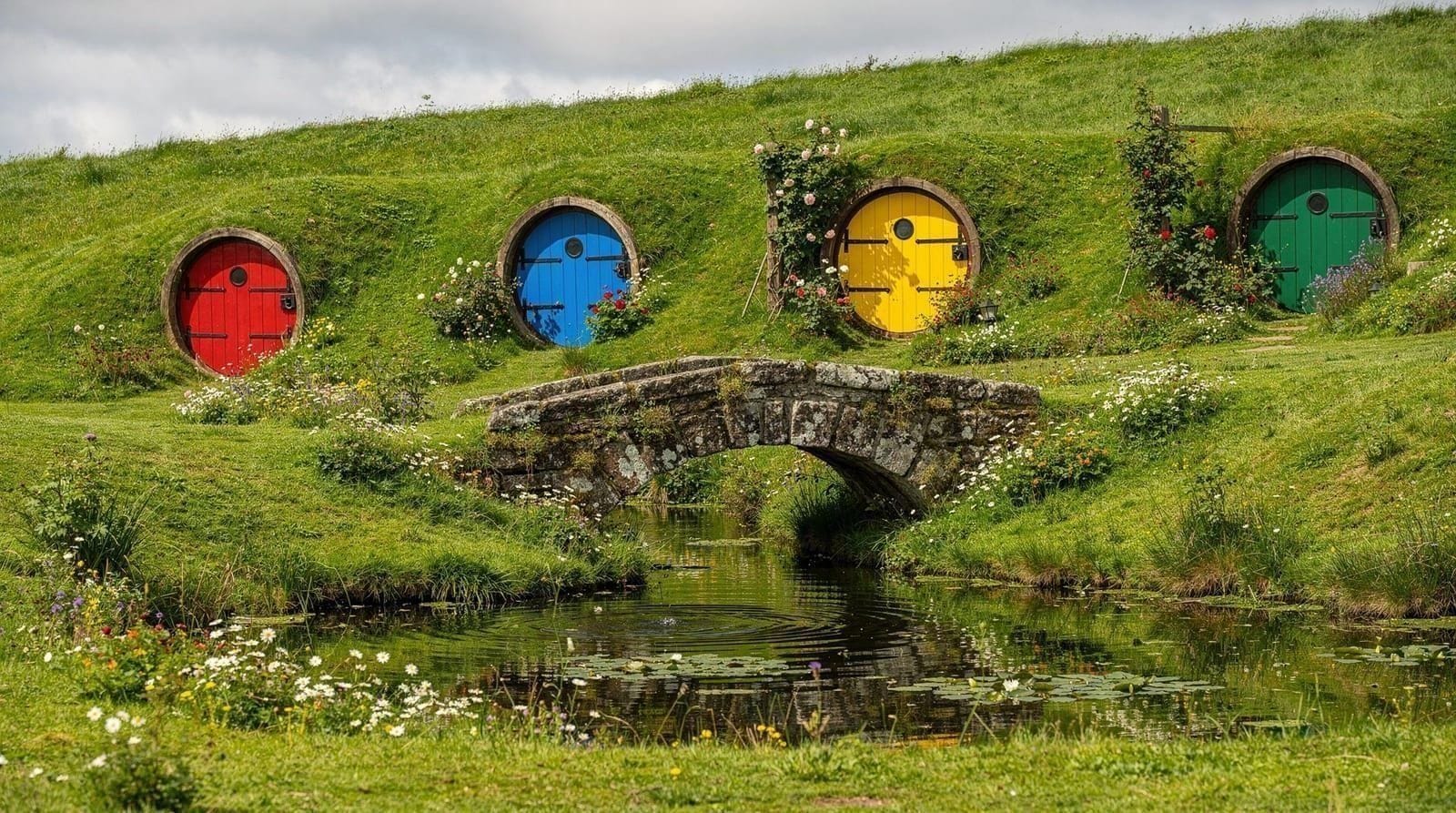
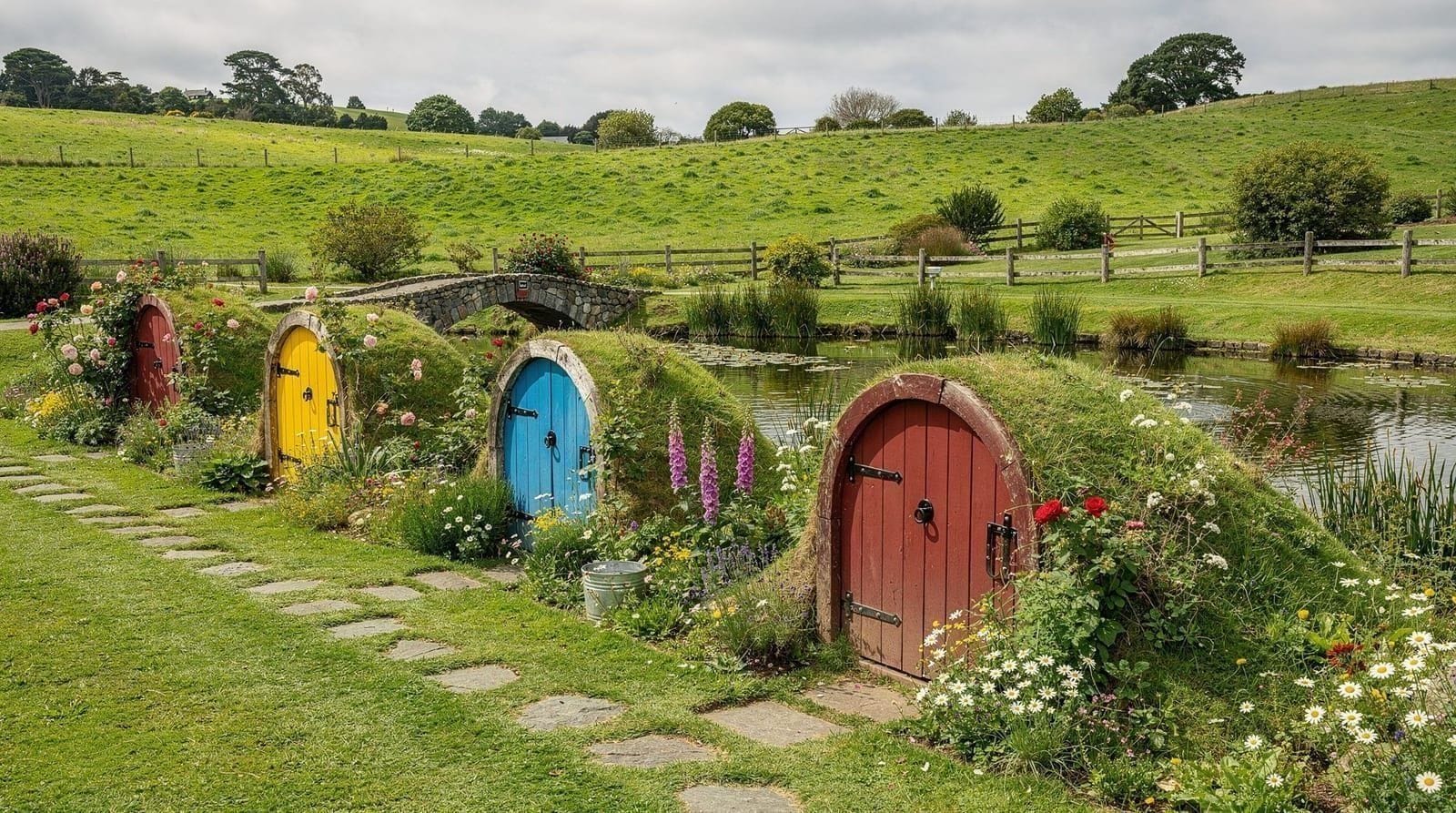
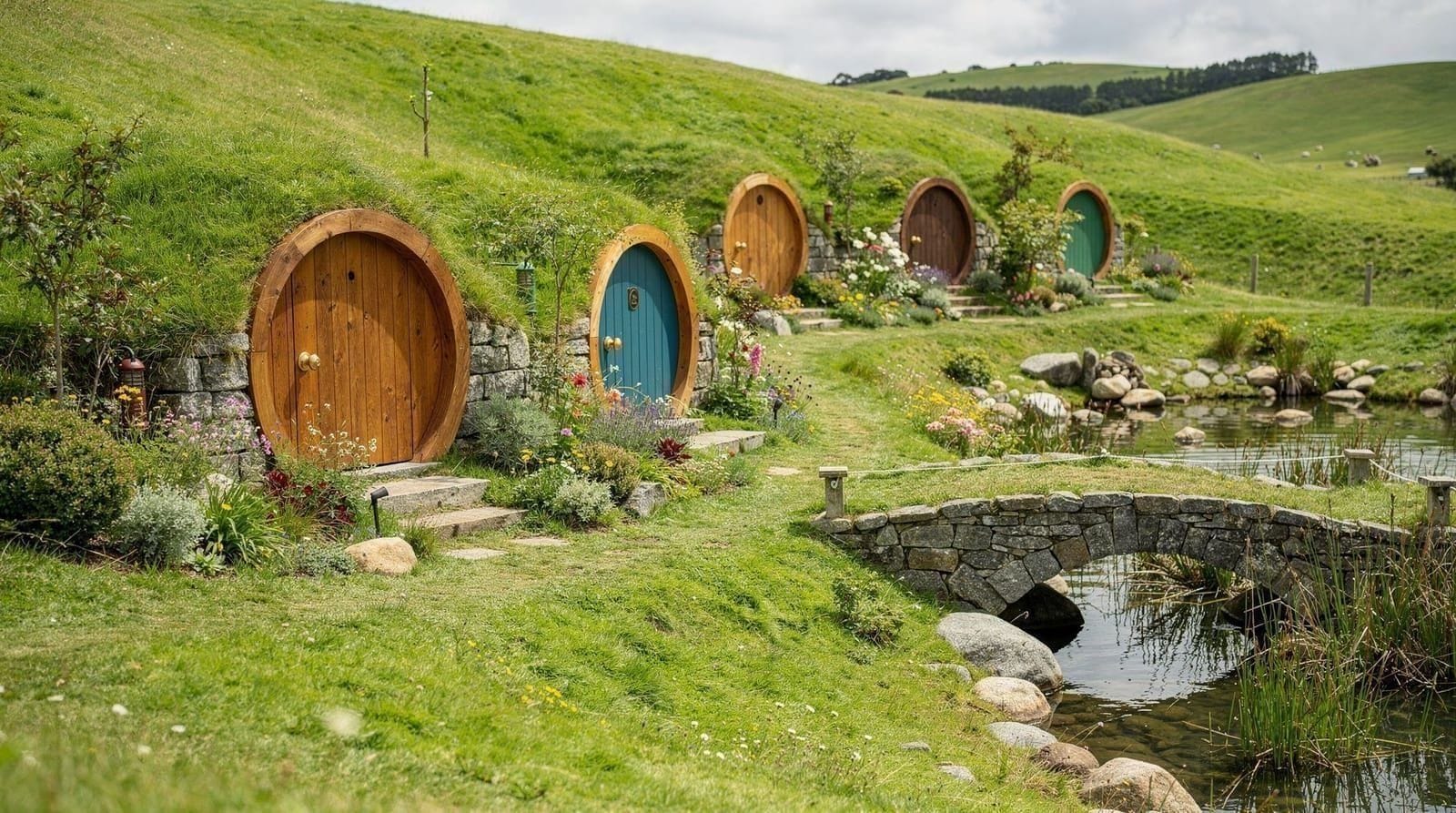
Hobbiton, about 2 hours south of Auckland near Matamata, is the North Island’s most visited and by far most fully preserved film location — a permanent, purpose-rebuilt set of 44 hobbit holes, the Party Tree and the Green Dragon Inn, maintained specifically as a standalone tourist attraction since The Hobbit trilogy wrapped filming. Unlike most film locations, which offer visitors little beyond a landscape and their imagination, Hobbiton is a genuinely immersive, guided experience covering roughly 44 acres of built set. The standard Hobbiton guided tour is the only way to access the site, and our what to expect at Hobbiton guide covers the full visitor experience in detail, minute by minute.
For visitors specifically drawn to the Lord of the Rings and Hobbit connection over a general Hobbiton visit, this Lord of the Rings-focused Hobbiton day tour from Auckland frames the visit explicitly around the films’ production history, with commentary geared toward fans rather than a general sightseeing script.
Tongariro National Park: the real Mordor
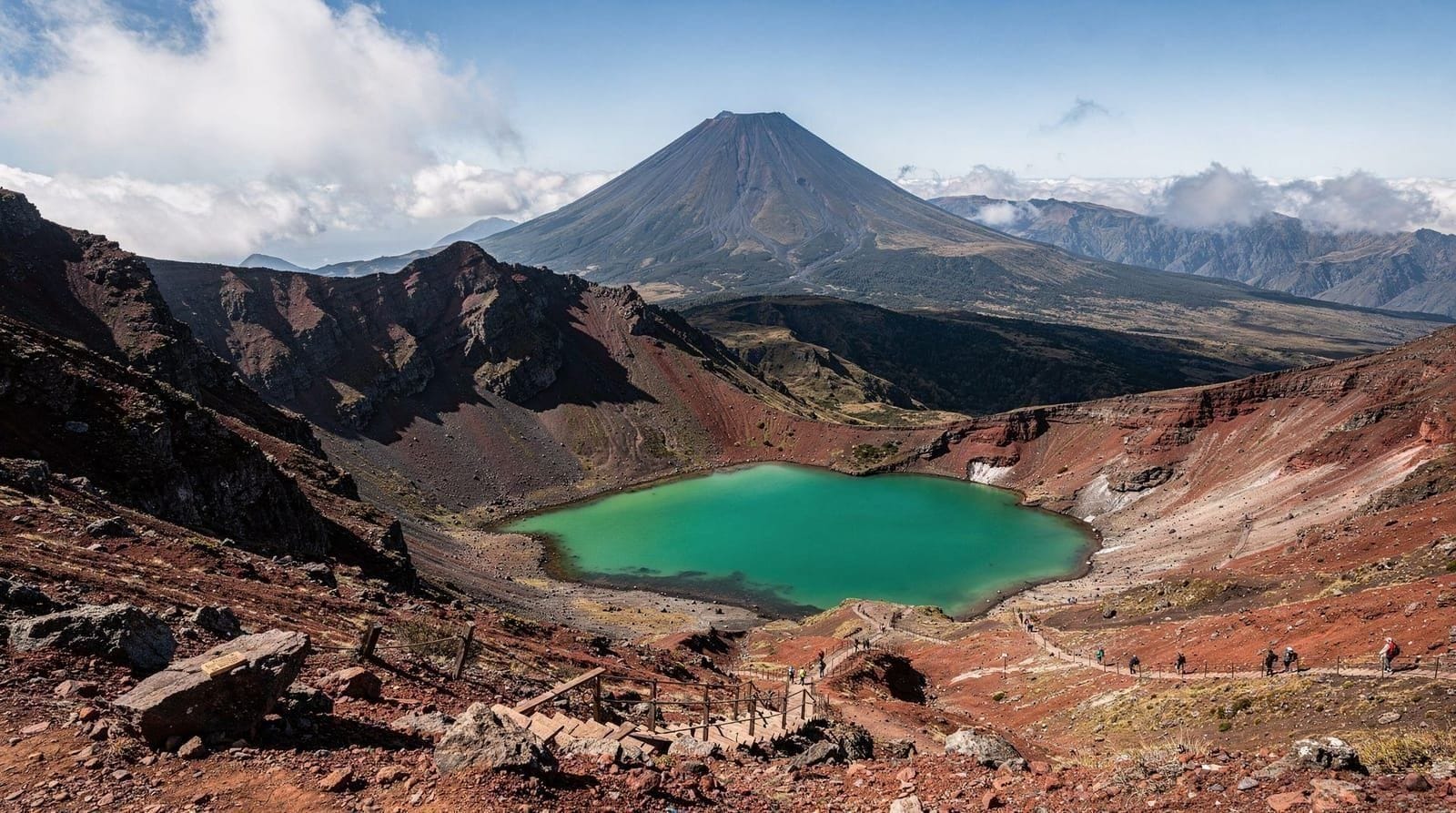
Tongariro National Park, in the central North Island, provided exterior filming locations for Mordor and Mount Doom across both trilogies — most notably Mount Ngauruhoe, the near-perfect volcanic cone used as Mount Doom’s exterior, and the surrounding volcanic plateau’s stark, otherworldly terrain, largely unaltered for filming since the landscape itself already matched Tolkien’s description so closely. Unlike Hobbiton, there’s no built set or visitor centre dedicated to the film connection here — you’re visiting the real, active volcanic landscape, most commonly via the Tongariro Alpine Crossing, a demanding but spectacular single-day walking track crossing the volcanic plateau between Mount Ngauruhoe and Mount Tongariro.
This is a genuinely different kind of film-location visit from Hobbiton: no guided tour walks you through specific shot locations, no photo-op signage marks where cameras stood, and reaching Tongariro from Auckland (roughly 4-4.5 hours’ drive to the central plateau) is a longer undertaking than the Waikato day trips covered elsewhere on this site. It’s worth building into a longer North Island loop rather than a single-day add-on, and worth attempting only with appropriate fitness, weather awareness and gear given the Alpine Crossing’s genuinely challenging, exposed terrain.
West Auckland: Karekare, Piha and decades of production history
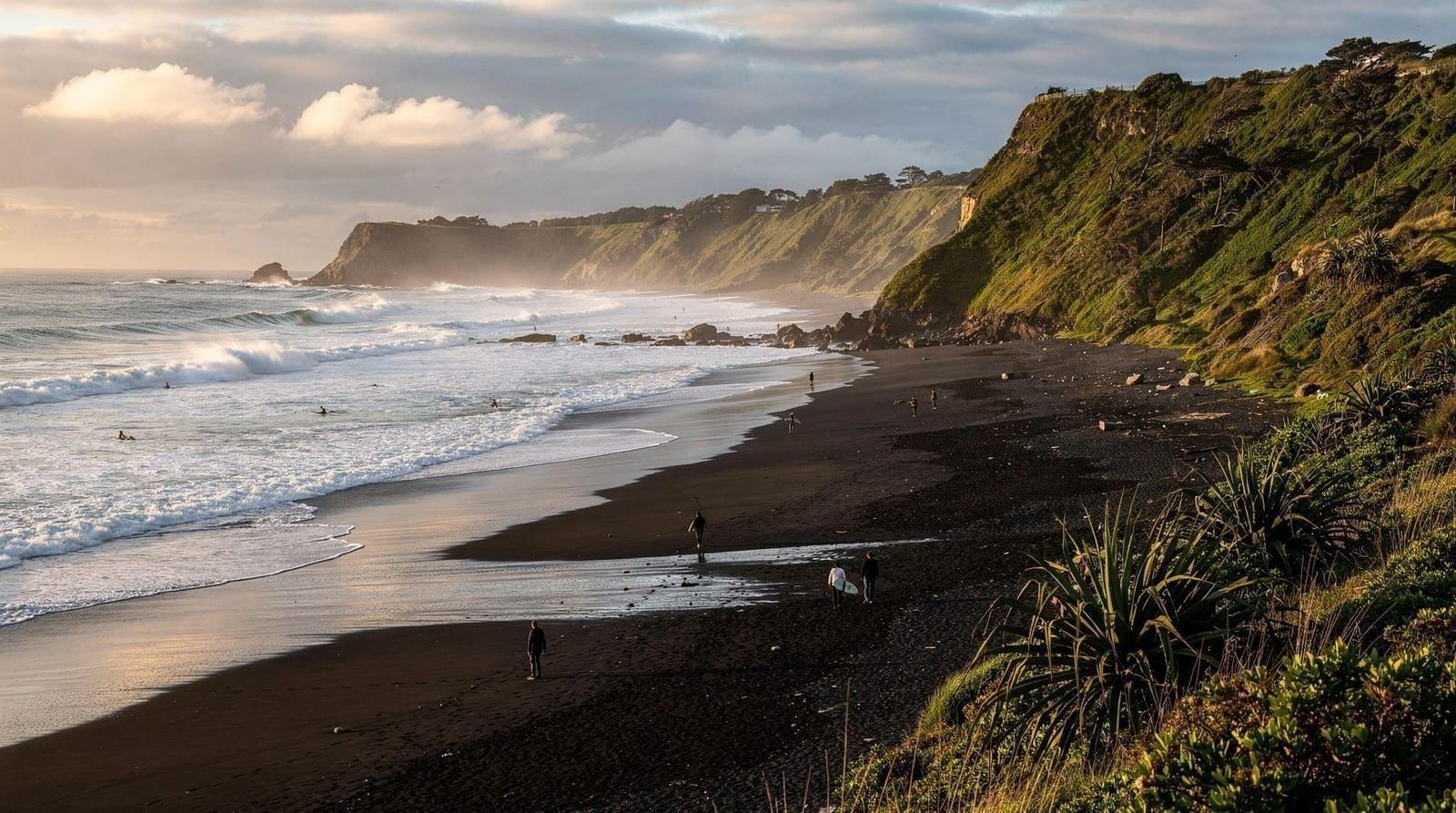
Closer to Auckland itself, the wild, black-sand beaches of West Auckland carry their own, separate screen history predating the Lord of the Rings era. Karekare Beach, near Piha, featured prominently in Jane Campion’s The Piano (1993) — one of New Zealand’s most internationally acclaimed films, winner of the Palme d’Or at Cannes — with its dramatic black sand, rugged coastline and dense native bush providing much of the film’s distinctive visual atmosphere. See our Piha and Waitakere day trip guide for visiting logistics to this same stretch of coast.
Beyond film, West Auckland — particularly around Henderson and Riverhead — served as the production base for two of the 1990s’ most internationally syndicated TV series, Xena: Warrior Princess and Hercules: The Legendary Journeys, both filmed extensively across the region’s farmland and forest locations for years, giving West Auckland a genuinely significant, if less internationally famous, place in New Zealand’s screen production history. Neither production offers a dedicated visitor attraction today in the way Hobbiton does, but the connection is well documented and adds an extra layer of interest if you’re already exploring Piha or Karekare for their beaches and hiking.
Wellington and further south, briefly
If your North Island trip extends beyond Auckland’s immediate reach — well south of the day-trip destinations covered elsewhere on this site — Wellington holds several further Lord of the Rings connections worth knowing about, including Weta Workshop (the effects and props studio behind much of the trilogies’ creature and armour work) and Kaitoke Regional Park, used as the exterior location for Rivendell. These sit considerably further from Auckland than Hobbiton or Tongariro and fall outside the scope of a standard Auckland-based North Island trip, but are worth flagging if your itinerary continues that far south.
Combining film locations into a North Island trip
Hobbiton and Tongariro sit on a broadly similar southward route from Auckland, making it realistic to combine both on a longer North Island loop — Hobbiton as an early stop, Tongariro (via Rotorua or Taupo) as a later, more demanding addition — rather than attempting both as day trips from a fixed Auckland base. Our North Island 7-day loop itinerary covers a realistic multi-stop route if film locations, alongside the region’s wider natural and cultural highlights, are a genuine trip priority. For a single, focused film-location day trip, Hobbiton alone remains the most practical and rewarding choice, given the fully guided, immersive nature of the site compared to the more self-directed, landscape-only experience of Tongariro or West Auckland.
Preparing for a Tongariro visit if the film connection draws you there
If Mordor’s on-screen presence is genuinely what’s pulling you toward Tongariro National Park, it’s worth understanding what you’re actually signing up for before committing. The Tongariro Alpine Crossing is a demanding, roughly 19-20 km one-way track across genuinely exposed alpine terrain, typically taking 6-8 hours to complete, with significant elevation change and weather that can shift rapidly and dangerously even in summer. This is a serious hike requiring proper footwear, layered clothing, sufficient water and food, and honest self-assessment of fitness, not a casual add-on to a sightseeing day. Guided options exist and are worth considering for visitors without significant hiking experience, since navigation and pacing on exposed alpine terrain carry real risk if conditions turn.
Shorter, easier options within the same national park — including views of Mount Ngauruhoe from lower, less demanding tracks — exist for visitors who want to see the “Mount Doom” landscape without committing to the full Alpine Crossing.
The broader New Zealand film industry context
New Zealand’s screen industry infrastructure — camera crews, effects studios, post-production houses — grew substantially around the Lord of the Rings and Hobbit productions and has continued attracting international film and television work in the years since, extending well beyond the specific locations covered in this guide.
Auckland itself hosts a genuinely active local film and television production scene year-round, even without a specific blockbuster connection, reflecting the country’s broader reputation as an accessible, English-speaking production destination with diverse, dramatic landscapes within relatively short distances of major cities. This context is worth knowing even if you’re specifically chasing Middle-earth locations, since it explains why New Zealand’s screen tourism appeal extends well beyond a single franchise, and why crews and equipment supporting new productions remain a visible, if easy-to-miss, part of Auckland’s economy.
Honest expectations: built set versus real landscape
It’s worth being upfront about the difference in experience between these locations before you plan around them. Hobbiton delivers a fully immersive, guided, built-environment experience — you don’t need imagination to see the film connection, because it’s physically standing in front of you. Tongariro and West Auckland’s beaches require more imagination and offer no dedicated film-tourism infrastructure — you’re visiting genuinely spectacular natural landscapes that happen to have appeared on screen, not a curated movie experience. Both are worth visiting on their own considerable natural merits regardless of the film connection, but setting expectations correctly avoids disappointment if you’re expecting a Hobbiton-style experience at either.
A note on filming locations versus filming studios
It’s worth distinguishing between on-location filming (real outdoor landscapes standing in for fictional settings, the focus of this guide) and studio-based filming (soundstages, effects work, indoor sets), since visitors sometimes conflate the two when planning a “film locations” trip. Much of the technical and effects work behind the Lord of the Rings and Hobbit trilogies happened in Wellington-based studios and workshops rather than at any outdoor location, meaning a visit to Hobbiton or Tongariro shows you the real, physical landscape used on screen, while a genuine look at the industry’s technical side would require the studio-focused Wellington attractions mentioned briefly above, well outside this guide’s Auckland-based scope.
Why Hobbiton remains the standout choice for most visitors
Weighing all of the locations in this guide honestly against each other, Hobbiton remains the clear standout for most visitors specifically because it removes every barrier the other locations carry — no long alpine hike, no need for independent navigation or imagination to picture the film connection, no risk of visiting and finding conditions unsuitable. It’s also, straightforwardly, the location built and maintained specifically for tourism, meaning your visit directly supports the ongoing preservation of the set rather than simply passing through a landscape that happens to have a film connection. For visitors with limited time and a genuine interest in seeing a real, tangible piece of New Zealand’s film history, Hobbiton alone delivers more concentrated value than combining several of the other, more logistically demanding locations covered in this guide.
Comparing the three locations at a glance
| Hobbiton | Tongariro | West Auckland beaches | |
|---|---|---|---|
| Type | Built, purpose-preserved set | Real, unaltered volcanic landscape | Real, unaltered coastline |
| Guide required | Yes, by design | Optional but recommended | No |
| Physical demand | Easy, flat guided walk | Serious full-day alpine hike | Easy walk to moderate coastal track |
| Distance from Auckland | ~2 hours | ~4-4.5 hours | Under 1 hour |
| Film connection visible on-site | Fully immersive | None — imagination required | None — imagination required |
More screen history worth knowing about
Beyond the headline locations, a handful of other North Island spots carry smaller but genuine screen connections. Auckland’s own history includes decades of local film and television production predating the international blockbusters, and Tongariro National Park itself has featured in more than just the Lord of the Rings trilogies, given its striking, otherworldly volcanic terrain. If you’re planning a Hobbiton visit and want a second opinion on whether the ticket price is worth it, our is Hobbiton worth it guide weighs the cost against the experience honestly.
Planning around the film locations
If Hobbiton is your main draw, the Hobbiton day trip from Auckland guide covers how the day fits together, and the Hobbiton morning versus evening comparison helps you choose a slot. Anyone wanting to pair the set with a second Waikato stop can look at the Hobbiton and Waitomo combo, which keeps the day realistic rather than rushed.
For the Tongariro side of the trip, the Tongariro National Park destination page is the place to start, and the Rotorua and Taupo pages are useful because either town makes a sensible overnight base on the way south. Reading about driving in New Zealand before you set off is also worthwhile if you plan to cover these longer distances yourself, and the Lord of the Rings background is told more fully in our Lord of the Rings in New Zealand blog post.
A note on responsible film-location tourism
Several of the locations covered in this guide — particularly Tongariro National Park and West Auckland’s beaches — are genuine natural landscapes and working or protected land, not purpose-built tourist infrastructure, and visiting them respectfully means treating them primarily as the significant natural sites they are, film connection aside.
Sticking to formed tracks, respecting any local iwi or conservation guidance on-site, and not treating a real, sometimes hazardous natural landscape (Tongariro’s alpine terrain in particular) as a casual photo-opportunity destination all matter here. Hobbiton, by contrast, is purpose-built tourist infrastructure and can be engaged with purely as an attraction without the same considerations, which is part of why it remains the easiest, most straightforward single stop for visitors whose primary interest is the film connection itself rather than the broader landscape.
Frequently asked questions about North Island film locations
Is Hobbiton the only Lord of the Rings location on the North Island?
It’s the most fully built and preserved one, but not the only one — Tongariro National Park served as exterior filming for Mordor and Mount Doom, and several Wellington-area locations were also used, though Wellington sits well beyond typical Auckland day-trip range.
Can you visit the actual Mount Doom filming location?
Yes — Tongariro National Park and Mount Ngauruhoe, most commonly via the Tongariro Alpine Crossing day walk. There’s no dedicated “set” here, just the real, active volcanic landscape used for exterior shots.
What films or TV shows were made in West Auckland?
Karekare Beach featured in Jane Campion’s The Piano (1993). West Auckland, particularly Henderson and Riverhead, was also the production base for 1990s TV series Xena: Warrior Princess and Hercules: The Legendary Journeys.
Is it worth combining Hobbiton with other North Island film locations in one trip?
Yes, if film locations specifically interest you — Hobbiton and Tongariro sit on a broadly similar southward route, realistic to combine on a longer North Island loop rather than a single day trip.
Do I need a guide to visit these film locations?
Hobbiton requires a guided tour by design. Tongariro and West Auckland’s beaches can be visited independently, though a guide adds useful production context.
Are there film location tours specifically focused on Lord of the Rings from Auckland?
Yes — several Hobbiton-focused day tours from Auckland are explicitly framed around the Lord of the Rings and Hobbit connection.
How far is Tongariro National Park from Auckland?
Roughly 4-4.5 hours’ drive to the central plateau, considerably further than the Waikato day trips (Hobbiton, Waitomo) covered elsewhere on this site.
Is the Hobbiton ticket price worth it for non-fans?
Yes for most visitors — the set itself is a genuinely impressive piece of landscaping and craftsmanship that appeals beyond die-hard Lord of the Rings fans, though the price naturally feels more justified if you have some familiarity with the films.
Can beginners do the Tongariro Alpine Crossing for the film connection?
Only with real preparation — it’s a demanding 6-8 hour alpine hike with genuine weather risk, not a casual walk. Beginners should consider a guided option or one of the shorter, easier tracks within the same national park instead.
Top experiences
Bookable activities with verified prices and instant confirmation on GetYourGuide.