Auckland Art Gallery Toi o Tāmaki: a visitor's guide
Auckland: The best of auckland walking tour
Is Auckland Art Gallery worth visiting?
Yes — general admission is free, the collection is the largest in New Zealand, and the building itself, combining a heritage stone facade with a striking contemporary kauri-and-glass extension, is worth seeing even for visitors who don't usually seek out art galleries. Budget an hour, longer for a special exhibition.
New Zealand’s largest art collection, and free to see
Auckland Art Gallery Toi o Tāmaki, a short walk from Queen Street in the CBD, holds the country’s largest art collection, and general admission to see it costs nothing — a genuinely rare combination for a collection of this scale and quality. It’s easy to overlook in favour of Auckland’s more heavily promoted attractions, but for visitors with any interest in art, architecture or a simply excellent free indoor stop, it’s one of the better-value hours you can spend in the city.
The gallery’s full Māori name, Toi o Tāmaki, translates roughly as “the art of Tāmaki,” directly tying the institution to the wider Tāmaki Makaurau name for Auckland covered in our Māori culture in Auckland guide — a small but meaningful naming choice reflecting the gallery’s broader effort, particularly in recent decades, to position its collection and programming within a genuinely bicultural framework rather than a purely European art-historical one.
| Where | Kitchener Street, CBD, adjoining Albert Park |
| Cost | Free general admission; touring exhibitions ticketed separately |
| Time needed | Around an hour; longer for a special exhibition |
| Getting there | Short walk from Queen Street or Britomart |
| Best time | Any day; quieter on weekday mornings |
The building itself is worth the visit
Even setting the collection aside, the gallery building is architecturally significant in its own right — a heritage stone facade from the original 1887 gallery combined with a striking contemporary extension completed in 2011, built around a canopy of interlocking kauri-timber “leaves” that fan out over the entrance and central atrium, engineered to evoke a forest canopy while flooding the interior galleries with natural light. The result is a genuinely successful piece of contemporary New Zealand architecture, not simply a functional add-on to the older building, and it’s worth pausing in the entrance atrium to appreciate the structure before heading into the galleries themselves.
Whether you visit for an hour on your way to lunch or build a slower, more deliberate afternoon around it, this guide covers what’s worth knowing before you go.
What’s in the collection
The permanent collection spans historical colonial-era New Zealand painting through to a strong modern and contemporary collection, alongside Pacific art and a smaller international collection. The historical galleries give useful visual context for early European settlement and landscape depiction of New Zealand before photography became widespread, while the contemporary and Pacific sections showcase New Zealand’s more recent artistic voice, including Māori contemporary artists working across painting, sculpture and mixed media. The gallery also holds the Walsh Memorial Library, a research collection for those with a deeper interest in New Zealand art history.
Touring and special exhibitions rotate through dedicated gallery spaces and typically carry a separate ticketed charge on top of free general admission — worth checking what’s currently showing before your visit, since these larger shows are often the gallery’s most talked-about drawcard at any given time.
How it compares to Auckland Museum
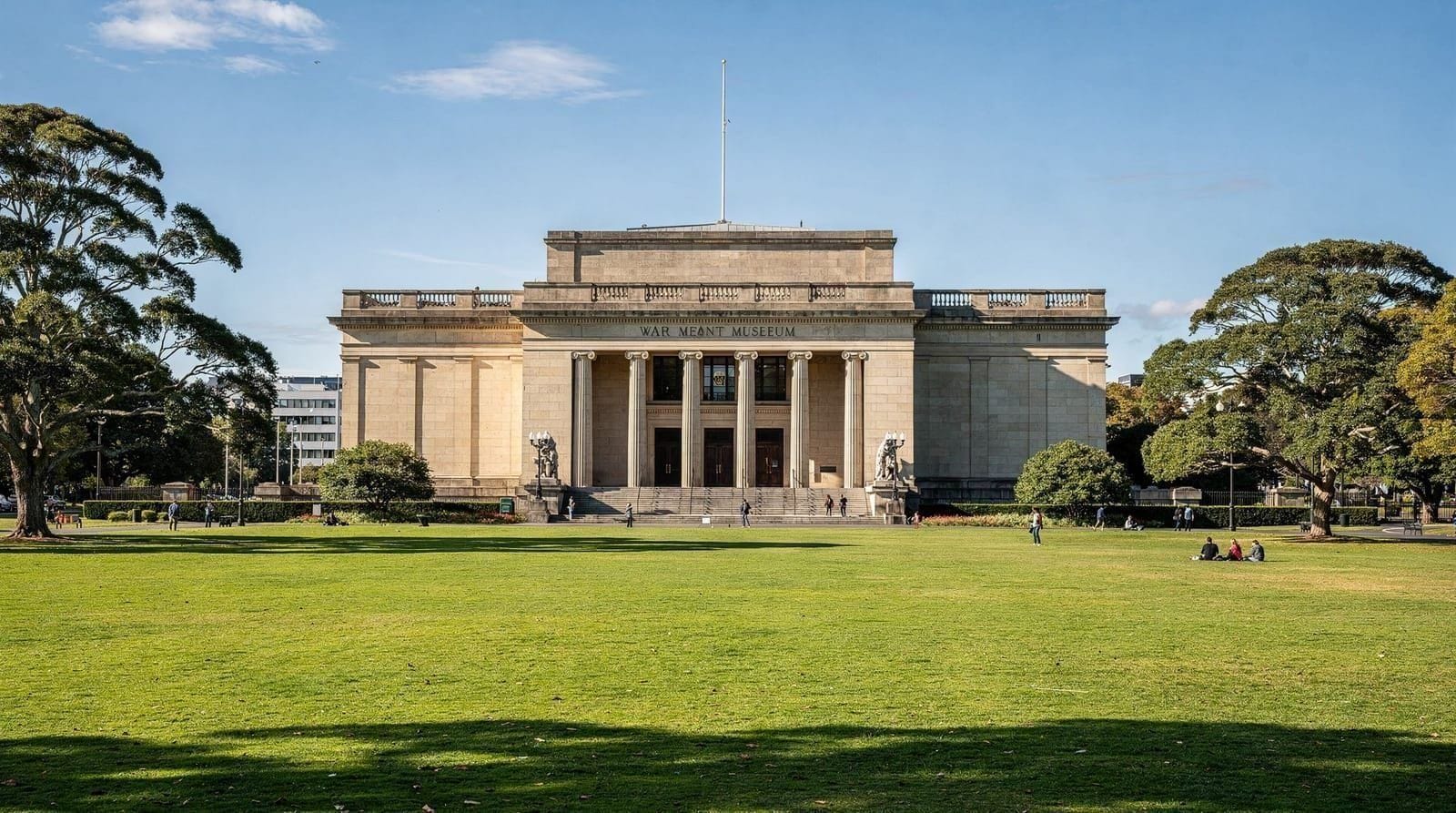
It’s worth being clear about the distinction, since visitors sometimes conflate the two: Auckland Museum is a natural history, war memorial and Māori and Pacific taonga (treasures) collection, with paid general admission around NZD 28-32; Auckland Art Gallery is specifically a fine art collection, with free general admission. They’re complementary rather than substitutes — a visitor with time for both gets a genuinely different, non-overlapping picture of New Zealand’s history and culture from each. If you’re deciding between the two on a tight schedule, the museum’s Māori Court is the stronger single must-see, but the gallery’s free entry makes it an easy add-on rather than a genuine either/or decision.
A note on New Zealand’s art history more broadly
For visitors with a genuine interest in New Zealand art beyond a single gallery visit, Auckland Art Gallery’s collection offers a useful entry point into understanding how the country’s visual art developed a distinct identity separate from its British colonial origins over the twentieth century — landscape painting moving from a purely European, picturesque lens toward a more specifically New Zealand way of seeing the country’s light, bush and coastline, and Māori and Pacific artists increasingly shaping the national conversation around what “New Zealand art” actually means in a bicultural, Pacific nation. A single gallery visit won’t make you an expert, but it gives genuine, tangible grounding in this broader story that reading about it in the abstract doesn’t provide.
Getting there and building it into your day
The gallery sits adjacent to Albert Park, a pleasant green space in its own right, and is genuinely central — a short walk from Queen Street, Britomart, and most CBD accommodation. This makes it easy to combine with other central sightseeing rather than requiring a dedicated trip. This best-of-Auckland walking tour and the more flexible private customisable walking tour both cover the CBD’s central sights and can be tailored to include time at the gallery alongside other Queen Street and waterfront highlights, useful if you’d rather have a guide stitch the day together than plan the route yourself.
Why it’s an easy rainy-day pick
Being free, centrally located and fully indoors makes Auckland Art Gallery one of the most reliable wet-weather options in the city — no booking required for general admission, no weather dependency, and genuinely engaging content regardless of how long a downpour lasts outside. It pairs naturally with Auckland Museum and the Maritime Museum as a trio of solid indoor options if a rainy day derails your original outdoor plans. See our rainy day activities guide for the fuller wet-weather list, and our free things to do in Auckland guide for how the gallery fits alongside the city’s other no-cost attractions.
How much time to budget
An hour covers the permanent collection’s highlights at a comfortable pace, even for visitors who don’t usually seek out art galleries specifically — the building and a walk through the main galleries is genuinely engaging on its own terms. If a specific touring exhibition is on and interests you, budget extra time and expect to pay a separate ticket price, since these shows are typically substantial, dedicated exhibitions rather than a small add-on room.
A brief history of the gallery
Auckland Art Gallery traces back to 1887, when the original heritage building opened as one of the country’s first dedicated public art institutions, built in a French Renaissance-influenced style with the ornate stonework and grand proportions typical of major civic buildings from that era. For well over a century, the gallery operated purely within this original heritage structure, gradually building its collection through acquisitions, bequests and, increasingly through the twentieth century, direct support for New Zealand artists.
The major turning point came with the 2011 redevelopment, which added the contemporary kauri-canopy extension while carefully restoring and integrating the original heritage building rather than replacing it — a genuinely successful piece of architectural conservation that’s since won multiple design awards, both for the new construction and for how respectfully it sits alongside the nineteenth-century original.
The historical New Zealand collection
The historical galleries house New Zealand’s most significant collection of colonial and early-settlement-era painting, giving a genuinely useful visual record of how European settlers depicted the New Zealand landscape and society before photography became widespread. Portraiture from this period, including depictions of Māori rangatira (chiefs) commissioned by or of significant historical figures, sits alongside landscape painting capturing scenery and settlements that, in many cases, have changed considerably or vanished entirely since. Viewed alongside the more contemporary galleries elsewhere in the building, this historical section gives useful context for how New Zealand’s visual self-image has shifted across nearly two centuries.
Contemporary and Māori and Pacific art
The gallery’s contemporary collection is where it feels most genuinely alive and current — rotating displays of modern and contemporary New Zealand art, including significant Māori contemporary artists working across painting, sculpture, textile and mixed media, alongside a growing Pacific art collection reflecting Auckland’s position as the world’s largest Polynesian city. This section changes more frequently than the historical galleries, meaning a repeat visit months or years later genuinely shows you different work rather than a static, unchanging display. It’s also where the gallery does some of its most interesting curatorial work, often placing historical and contemporary pieces in direct conversation with each other across gallery spaces rather than keeping eras strictly separated.
The gallery shop, cafe and Albert Park
A well-stocked gallery shop near the main entrance carries art books, prints and locally made design objects, worth a browse even if you’re not planning a purchase, and the on-site cafe offers a pleasant spot for a coffee or light lunch either before or after your visit. Immediately adjacent, Albert Park itself is worth a slow wander — a Victorian-era park with mature trees, formal gardens and a fountain, built over what was once a British military redoubt in the city’s earliest colonial years, giving the immediate surroundings their own small layer of history alongside the gallery itself.
Comparing a gallery visit against Auckland’s other CBD stops
On a tight schedule, it’s reasonable to ask how the gallery stacks up against Auckland’s other central attractions for your limited time. Against Auckland Museum, the honest answer is that the museum’s Māori and Pacific collection is the stronger single must-see if you can only choose one, but the gallery’s free entry and central, easy-to-combine location make it a low-risk addition rather than a genuine either/or trade-off — you can walk through the gallery’s highlights in the time it might otherwise take to find CBD parking or wait for a bus.
Against a Sky Tower visit or a waterfront walk, the gallery offers a genuinely different, quieter kind of experience: indoor, unhurried, and free of the queue and ticketing logistics that come with more heavily promoted paid attractions. For visitors who enjoy pacing a day with a mix of active sightseeing and slower, more contemplative stops, the gallery is a strong candidate for exactly that kind of pacing break.
Free guided tours and talks
The gallery periodically runs free guided walks of its permanent collection, led by trained volunteer guides or gallery staff, typically covering a curated selection of highlights across both the historical and contemporary galleries in around 45-60 minutes. These aren’t available every hour of every day, so checking current scheduling on arrival (or on the gallery’s own signage near the entrance) is worth doing if a guided overview appeals more than a self-directed wander. Occasional curator talks and artist events also run alongside major touring exhibitions, adding a further layer of context for visitors whose schedule allows a longer, more structured visit than the standard hour-long highlights walk.
Where it fits in a CBD neighbourhood walk
The gallery sits within easy reach of several other central pockets worth exploring the same day — see our Auckland neighbourhoods guide for how the CBD, Britomart and the waterfront connect on foot, and our Auckland history guide if the historical galleries here spark an interest in the wider story of the city beyond the collection itself. For a fuller list of Auckland’s headline sights to weigh the gallery against, see our Auckland top attractions guide.
Frequently asked questions about Auckland Art Gallery
How much does Auckland Art Gallery cost to visit?
General admission to the permanent collection is free. Ticketed special or touring exhibitions carry a separate charge, priced individually.
Where is Auckland Art Gallery located?
On Kitchener Street, a short walk from Queen Street in the CBD, adjoining Albert Park.
What is the gallery’s collection known for?
New Zealand’s largest art collection, spanning historical colonial-era painting, a strong modern and contemporary New Zealand collection, and Pacific and international works.
How long should I spend at Auckland Art Gallery?
An hour covers the highlights at a reasonable pace. Add more time for a specific touring exhibition.
Is the gallery good for a rainy day in Auckland?
Yes — free, centrally located and fully indoors, one of the most reliable wet-weather options in the CBD.
Are there guided tours of the gallery?
The gallery periodically offers free guided walks of its permanent collection; check current scheduling on arrival, or include it in a broader guided Auckland walking tour.
Is Auckland Art Gallery suitable for visitors without a strong art background?
Yes — the building itself and the historical New Zealand galleries are engaging even without prior art knowledge, and free entry means there’s no financial commitment if you only want a quick look.
Can I combine Auckland Art Gallery with a guided walking tour?
Yes — both the best-of-Auckland walking tour and a private customisable walking tour can include time at the gallery alongside other CBD and waterfront highlights, useful if you’d rather have a guide plan the route than do it yourself.
Top experiences
Bookable activities with verified prices and instant confirmation on GetYourGuide.