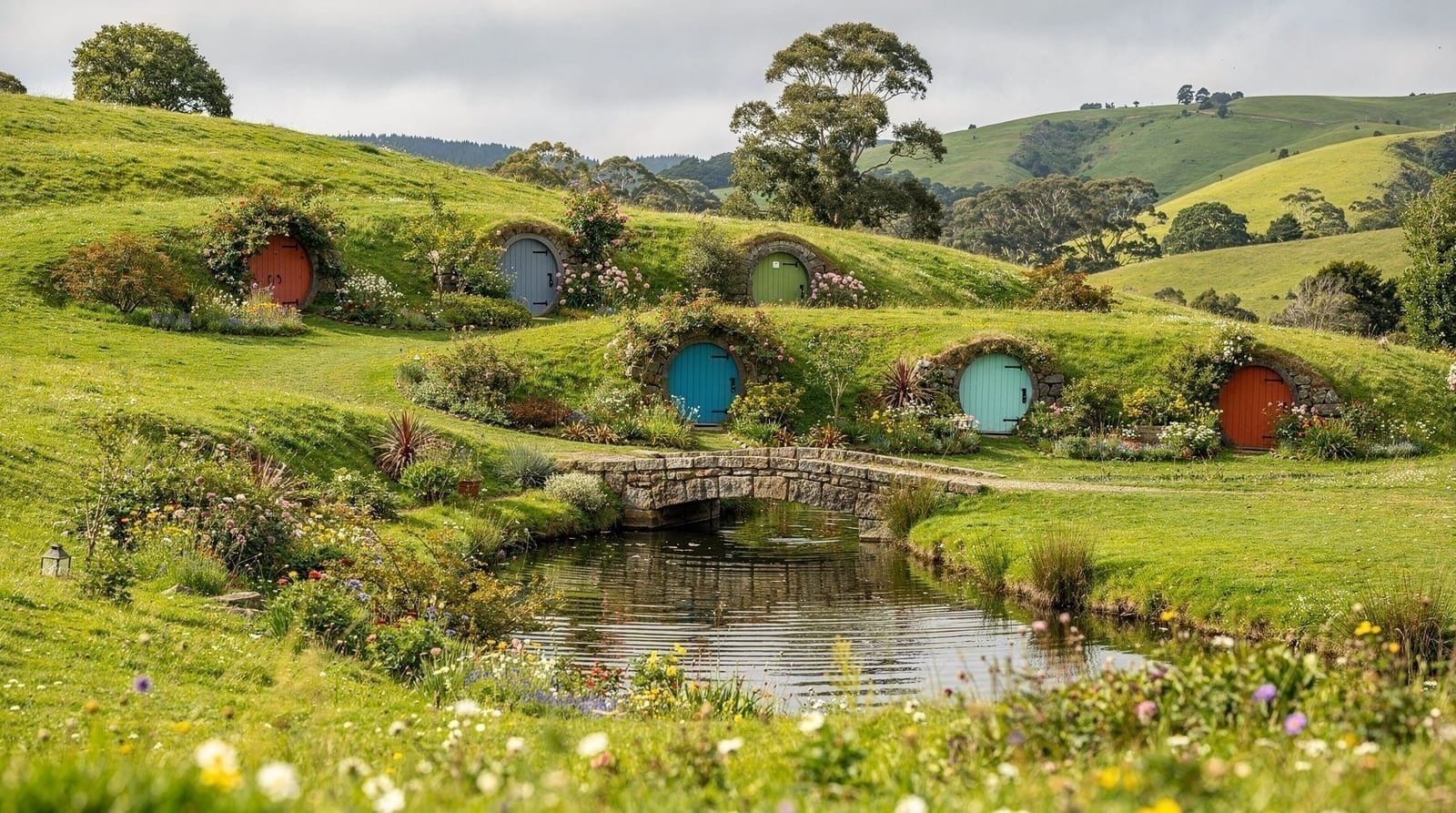
Lord of the Rings New Zealand: where to see the real film locations
New Zealand’s landscapes became genuinely inseparable from Peter Jackson’s Lord of the Rings and Hobbit trilogies, and a lot of visitors arrive hoping to retrace the films across the country. The honest picture is more specific than that: most of the actual standing sets are gone (New Zealand’s film permits generally require locations to be returned to their natural state), with one major exception near Auckland that makes the whole “visit Middle-earth” idea realistic on a North Island trip.
| Where | Hobbiton, near Matamata, ~2hrs south of Auckland |
| Visit type | Guided walk only, around 2 hours |
| Includes | Complimentary drink at the Green Dragon Inn |
| Mount Doom (Ngauruhoe) | Tongariro National Park, full-day alpine hike |
| Best base for both | Rotorua, cuts the Hobbiton drive roughly in half |
Hobbiton: the one that’s actually still there
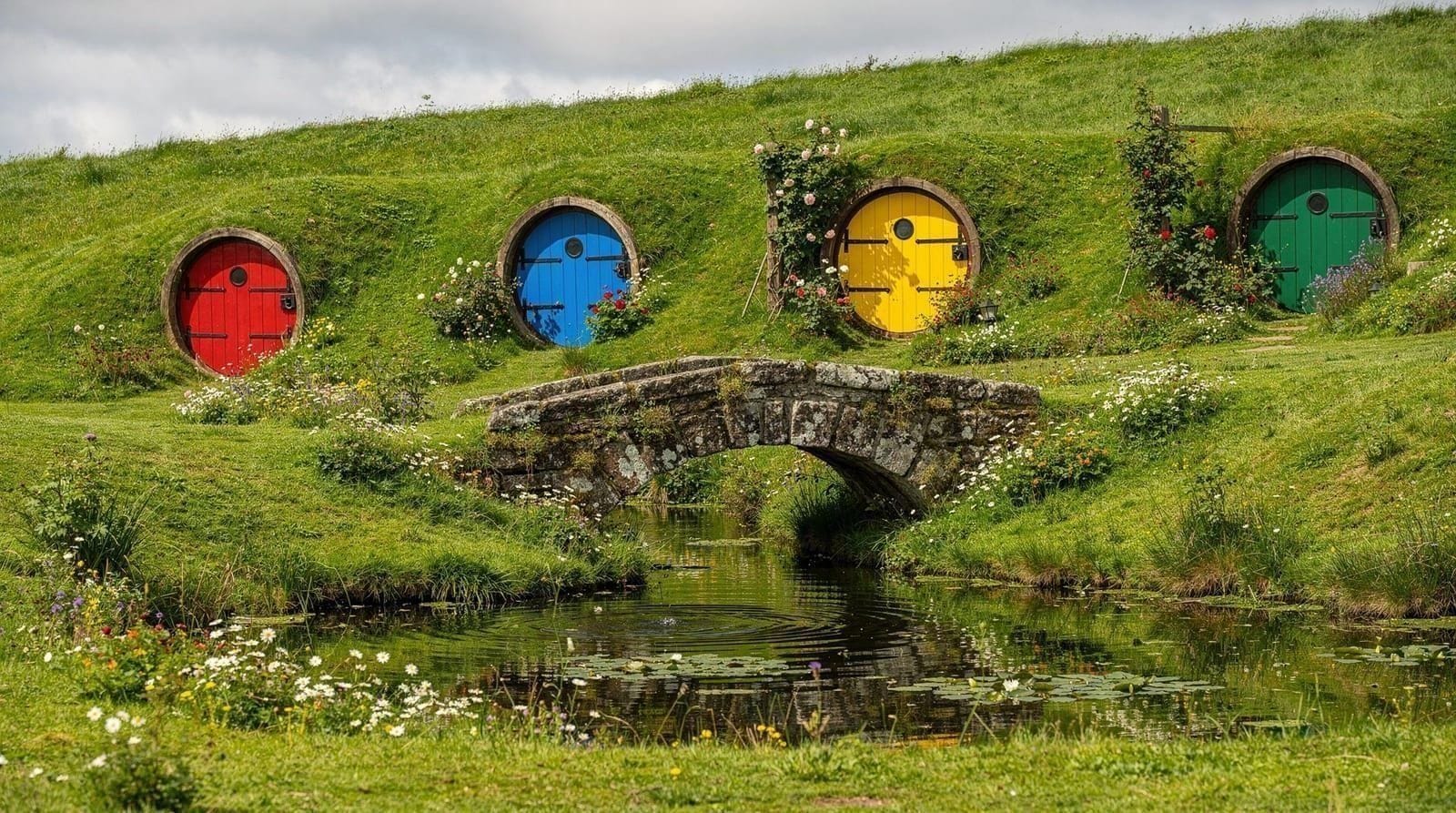
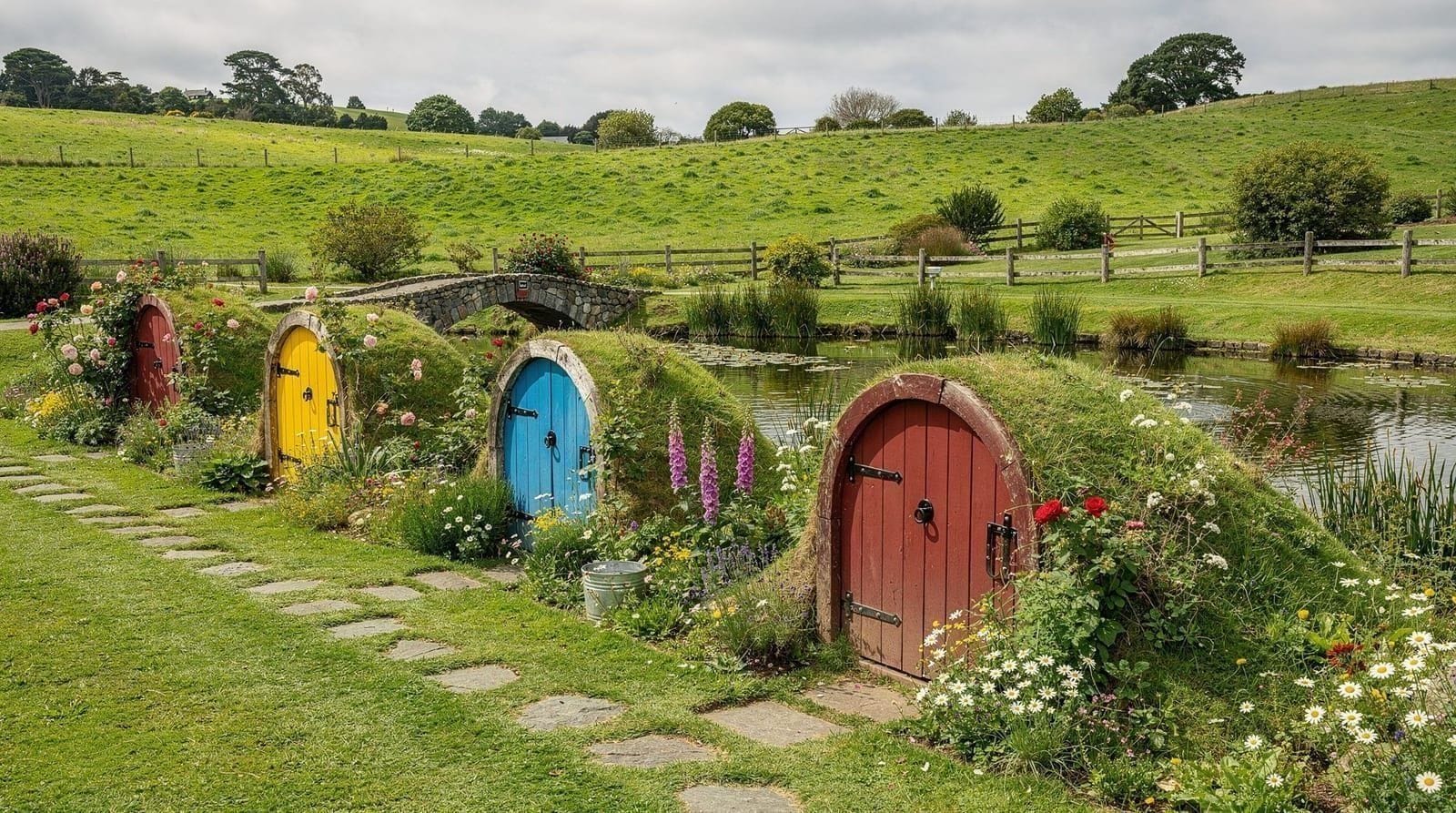
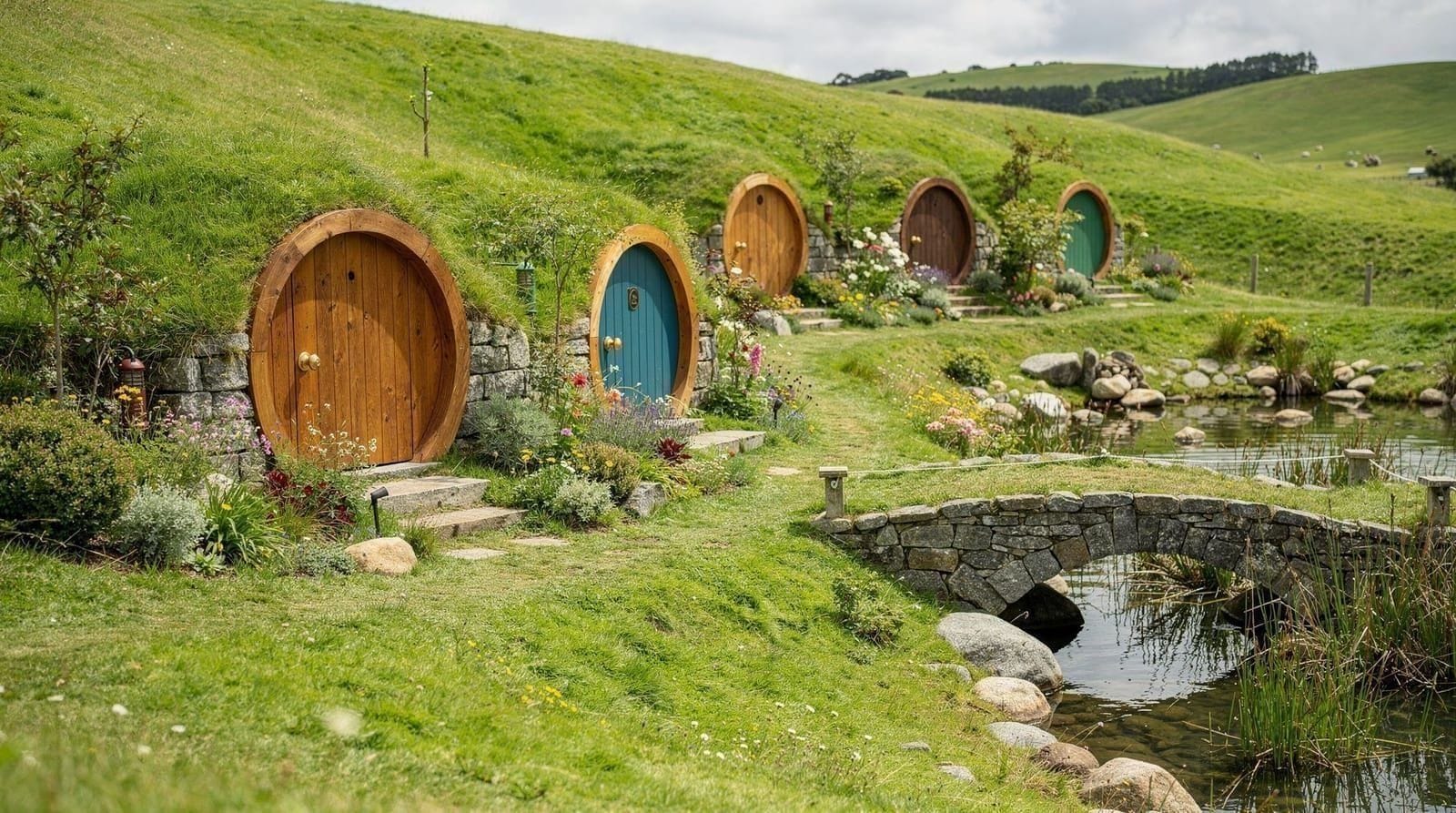
Hobbiton, near Matamata, is the exception to the rule — instead of being dismantled after filming, the set was rebuilt in permanent materials following The Hobbit trilogy and kept open as a standalone attraction. It’s the only Lord of the Rings location in New Zealand where you can walk through a fully built, still-standing set rather than an empty field with a plaque. Forty-four hobbit holes, a working vegetable garden, a functioning water mill and the Green Dragon Inn all sit on a genuine, still-operational sheep farm. It’s about two hours’ drive south of Auckland.
The standard visit is a guided walk (there’s no unguided access), running around two hours and ending with a complimentary drink at the Green Dragon Inn. The Hobbiton Movie Set guided tour covers the standalone visit if you’re driving yourself, while the LOTR Hobbiton day tour from Auckland includes return transport from the city if you’d rather not drive. Our Hobbiton what to expect guide and Hobbiton Matamata destination guide cover the details, and our honest is Hobbiton worth it guide weighs up whether the price and travel time pay off for non-fans.
Why the other locations aren’t “visit-able” the way people expect
The vast majority of Lord of the Rings filming happened on the South Island (Queenstown, Wellington region, Mount Ngauruhoe standing in for Mount Doom) and involved either temporary set dressing on public land or CGI-enhanced natural landscapes that were never physically altered. That means most “LOTR locations” are, in practice, just very beautiful natural scenery — a river valley, a mountain, a forest — with no built set to see, only the knowledge that a scene was filmed there. Worthwhile for dedicated fans with the time to travel, but a genuinely different experience from Hobbiton’s built environment.
Mount Ngauruhoe (Mount Doom) and Tongariro
The most recognisable North Island location beyond Hobbiton is Mount Ngauruhoe, which served as the visual basis for Mount Doom. It sits within Tongariro National Park, reachable via the Tongariro Alpine Crossing — a genuinely demanding 19.4km day hike across volcanic terrain, not a casual viewpoint stop. This is a serious undertaking requiring good fitness, weather awareness and proper gear, not a quick photo detour, but for hikers it delivers actual “walking through Middle-earth” scenery in a way few other spots can match. Our Tongariro National Park destination guide covers logistics, and note that Mount Ngauruhoe itself is currently closed to summit climbing out of respect for its sacred status to local iwi — the crossing trail still passes close by.
Behind the scenes: how Hobbiton actually got built
Hobbiton’s origin is worth knowing because it explains why the set feels so genuinely lived-in rather than like a stage backdrop. Peter Jackson’s location scouts found the site — a sheep farm belonging to the Alexander family near Matamata — from the air, drawn to a small lake, a rolling hill and a lone pine tree that matched descriptions of the Shire almost exactly. The original 1999 set for the first trilogy was built to be temporary and largely dismantled after filming, but when The Hobbit trilogy returned to the same farm over a decade later, the production built a permanent version using solid materials specifically so it could remain standing afterwards as a tourist attraction — a deliberate decision, not an accident of budget.
What non-fans actually get out of it
It’s worth being honest that Hobbiton doesn’t require deep familiarity with the films to be worthwhile. The craftsmanship alone — the forced-perspective trick of building certain hobbit holes at three-quarter scale so actors look proportionally larger or smaller depending on the shot, the genuinely tended vegetable gardens replanted seasonally, actual smoke occasionally rising from chimneys — holds up as a piece of design and landscaping regardless of whether you’ve seen the movies. Fans get an extra emotional layer of recognition, but plenty of visitors with no particular attachment to Tolkien still rate the two-hour walk highly purely on the strength of what’s been built.
Waitomo: not a film location, but the same trip
Waitomo’s glowworm caves weren’t used in filming, but they sit close enough to Hobbiton (about 45 minutes apart) that most fans combine the two into a single day trip, turning a Middle-earth pilgrimage into a broader North Island highlights day. Our Hobbiton day trip from Auckland guide covers how that combination typically runs.
What about Auckland itself?
Auckland wasn’t a primary filming location for the trilogies, though Weta Workshop (the effects and design studio behind much of the films’ visual identity) is based in Wellington rather than Auckland, worth knowing if film-production history interests you beyond the physical locations. If you’re specifically chasing broader film-location history across the North Island — not just Lord of the Rings — our North Island film locations guide covers other productions shot in the region.
Planning a Middle-earth-focused day
For most visitors, the realistic and rewarding version of a “Lord of the Rings New Zealand” day is: Hobbiton in the morning (booked as an early guided walk to beat the coach crowds), then either Waitomo’s glowworm caves or a Rotorua stop in the afternoon, depending on which direction you’re heading. Trying to also reach Tongariro on the same day isn’t practical — the Alpine Crossing alone is a full day’s hike — so treat it as a separate trip if it’s on your list, ideally with a night in National Park village or Taupo beforehand.
Basing yourself in Rotorua instead of Auckland
If Hobbiton is one stop on a wider North Island trip rather than a single Auckland day trip, consider basing yourself in Rotorua for a night or two instead. Rotorua sits closer to Matamata than Auckland does, cutting the return drive roughly in half, and it opens up an easy pairing with Rotorua’s own geothermal parks and Māori cultural experiences the same day or the next. Several tour operators run Hobbiton specifically as a from-Rotorua day trip for exactly this reason. Our Rotorua destination guide covers what else the town offers if you’re weighing up this alternative base.
Timing your Hobbiton visit
Hobbiton is genuinely busy in peak season (December-February, and around Easter and school holidays), when multiple coach tours land within the same hour. Booking the first guided walk of the day (typically 9.30-10.30am) or a late-afternoon slot noticeably reduces the crowd density. Our Hobbiton morning vs evening comparison breaks down which timing suits different priorities, whether that’s photography, avoiding heat, or simply having the Green Dragon Inn feel less packed.
Merchandise, food and the wider Hobbiton economy
Matamata, the small dairy town nearest Hobbiton, has leaned fully into its film-tourism identity — the town’s information centre is built to look like a hobbit hole, and several local cafes and shops carry Lord of the Rings-themed merchandise alongside standard souvenirs. The Green Dragon Inn on the set itself sells branded mugs, pint glasses and clothing if you want a genuine on-site souvenir rather than a generic tourist-shop version. It’s a small but genuine local economy built almost entirely around the set’s ongoing popularity, worth supporting with a coffee or lunch stop in town if you have time before or after your tour slot.
The honest bottom line
If Lord of the Rings is the whole reason for your New Zealand trip, be realistic about what’s achievable on the North Island versus what requires a South Island add-on. Hobbiton delivers a genuinely built, well-preserved piece of film history within easy day-trip range of Auckland — that part of the fantasy holds up. Chasing the rest of the trilogy’s locations (Queenstown’s surrounding valleys, the Wellington region, the South Island’s fiords) is a different, longer trip, and worth planning as its own leg rather than squeezing into a few rushed days around Auckland.
Set expectations accordingly and the North Island leg of a Lord of the Rings pilgrimage genuinely delivers — a well-built, carefully maintained set that rewards fans and non-fans alike, reachable without the multi-week itinerary a full trilogy-locations tour would require. For most visitors, that’s a far more satisfying outcome than an ambitious but rushed attempt to cover both islands’ film locations in a single trip.
Hobbiton versus other North Island “locations”
| Location | What’s actually there | Effort | Worth it for |
|---|---|---|---|
| Hobbiton | Fully built, standing set | Easy, 2-hour guided walk | Everyone, fans and non-fans |
| Mount Ngauruhoe / Tongariro | Natural landscape, no set | Hard, full-day alpine hike | Fit hikers wanting the real scenery |
| Waitomo | Not a filming location | Easy, half-day | Fans combining a full Middle-earth day |
| Rotorua region | Some CGI-enhanced backdrops | Varies | Fans basing themselves closer to Hobbiton |
Pairing Hobbiton with Waitomo, step by step
For visitors who want the fullest single-day version of a Middle-earth trip from Auckland, the realistic sequence is an early Hobbiton guided walk (booking the first slot of the day, typically 9.30-10.30am, to beat the coach crowds), lunch in Matamata or nearby, then the roughly 45-minute drive to Waitomo’s glowworm caves for the afternoon. It makes for a long day — often 10-12 hours door to door from central Auckland — but it’s the most efficient way to see both without an overnight stay. If you’d rather not manage the driving and timing yourself, the Hobbiton movie set tour to Blue Springs and Waitomo Caves bundles the transport and both stops into one booking.
What to know before booking a Hobbiton slot
Hobbiton access is guided-only — there’s no independent walking option, and tickets are for a specific time slot rather than a general day pass, so arriving without a booking risks being turned away on a busy day. Peak season (December-February, plus Easter and school holidays) sees multiple coach tours land within the same hour, which noticeably changes the feel of the walk compared with a quieter shoulder-season morning. If you’re planning a wider North Island loop rather than a single Auckland-based day, it’s worth deciding early whether Hobbiton fits as a day trip from Auckland or as a stop on the way toward Rotorua, since the logistics genuinely differ.
Frequently asked questions about Lord of the Rings locations near Auckland
Is Hobbiton the only real Lord of the Rings location near Auckland?
Yes, in terms of a physically built, still-standing set. Other North Island locations, like the Tongariro area used as the basis for Mount Doom, are natural landscapes without any remaining film set.
Can I visit Hobbiton without a guided tour?
No — access is guided-only, with no independent walking option. You book a specific time slot rather than a general entry ticket.
How long does a Hobbiton visit take?
The standard guided walk runs around two hours, ending with a complimentary drink at the Green Dragon Inn. Add travel time from Auckland (roughly two hours each way) if you’re not staying overnight nearby.
Should I combine Hobbiton with Waitomo in the same day?
It works well and is a common pairing, since the two sites sit about 45 minutes apart. Expect a long day overall — often 10-12 hours door to door from Auckland — so it suits visitors comfortable with a full day of touring rather than a relaxed pace.