Auckland with toddlers: what actually works with under-fives
Auckland: Kelly tarlton s sea life aquarium entrance ticket tour
Is Auckland good for travelling with a toddler?
Yes, with adjustments. Auckland's waterfront, parks and Mission Bay beach are stroller-friendly and low-stress, and Kelly Tarlton's aquarium works well for short attention spans. Skip long hikes, full-day tours and Rangitoto's summit track until children are older — the volcanic terrain and pace don't suit under-fives.
Travelling with a toddler in Auckland is a different trip from travelling with school-age children, even though a lot of general “Auckland with kids” advice doesn’t distinguish between the two. Nap schedules dictate the day more than any itinerary, attention spans measure in minutes rather than hours, and terrain matters — a hike that’s a fun scramble for a seven-year-old is simply inaccessible with a stroller or a reluctant two-year-old. This guide focuses specifically on what works with under-fives, and, just as importantly, what to skip.
| Best single stop | Kelly Tarlton’s Sea Life Aquarium |
| Ideal pace | One activity per day, built around nap time |
| Skip until older | Rangitoto summit, Waitakere hikes, full-day bus tours |
| Car seats | Required by law under 7; book with rental ahead |
| Sun protection | SPF 50+ non-negotiable, even overcast |
What genuinely works with a toddler
Kelly Tarlton’s Sea Life Aquarium in Mission Bay is close to ideal — indoor, climate-controlled, short enough to fit inside a typical toddler attention span, and the moving travelator through the shark tunnel does most of the entertaining without requiring your toddler to walk far. Book the Kelly Tarlton’s entrance ticket . Plan for 45-60 minutes rather than the full two hours an older child might spend there, and go early in the day before nap-time fatigue sets in.
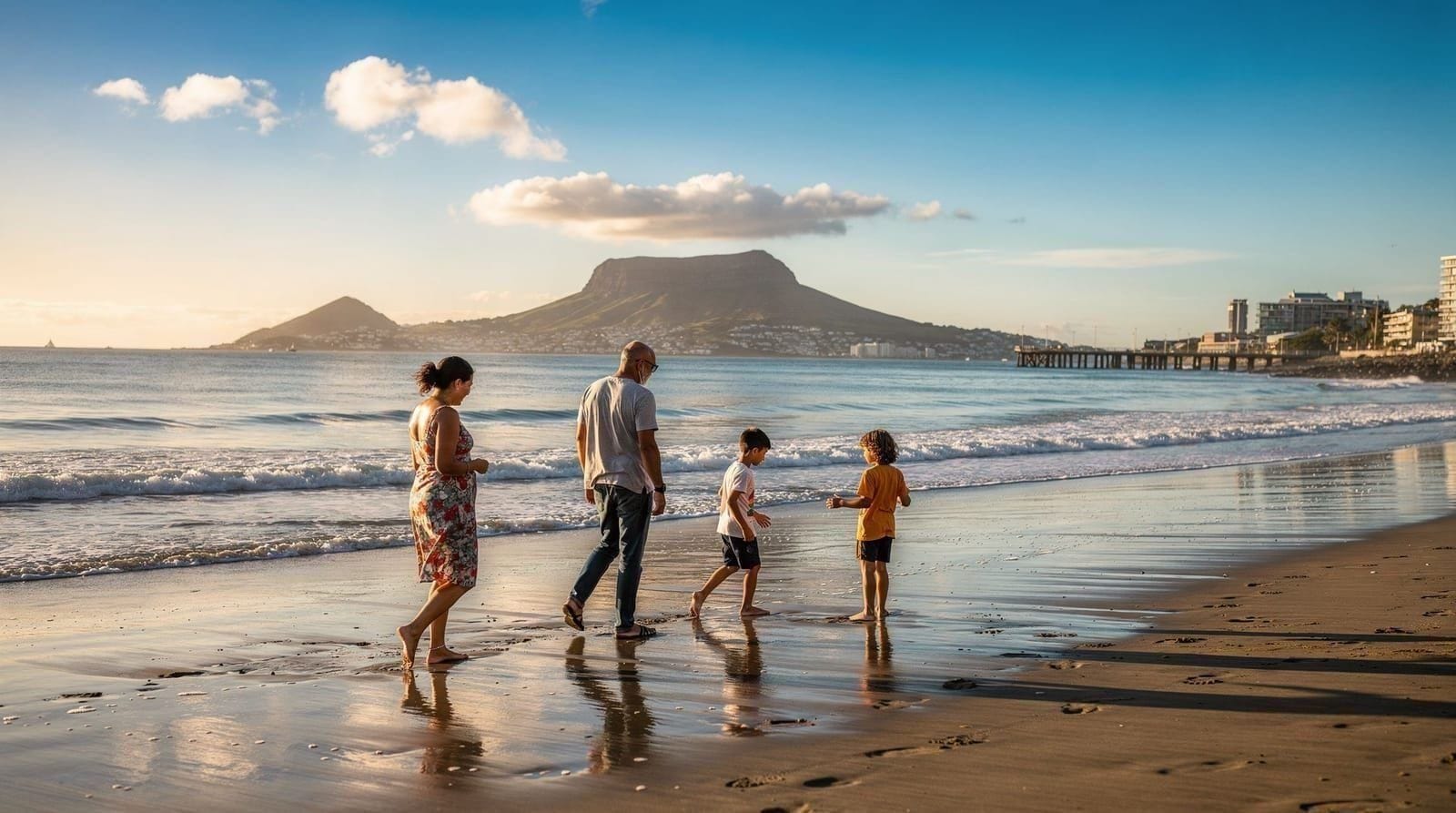
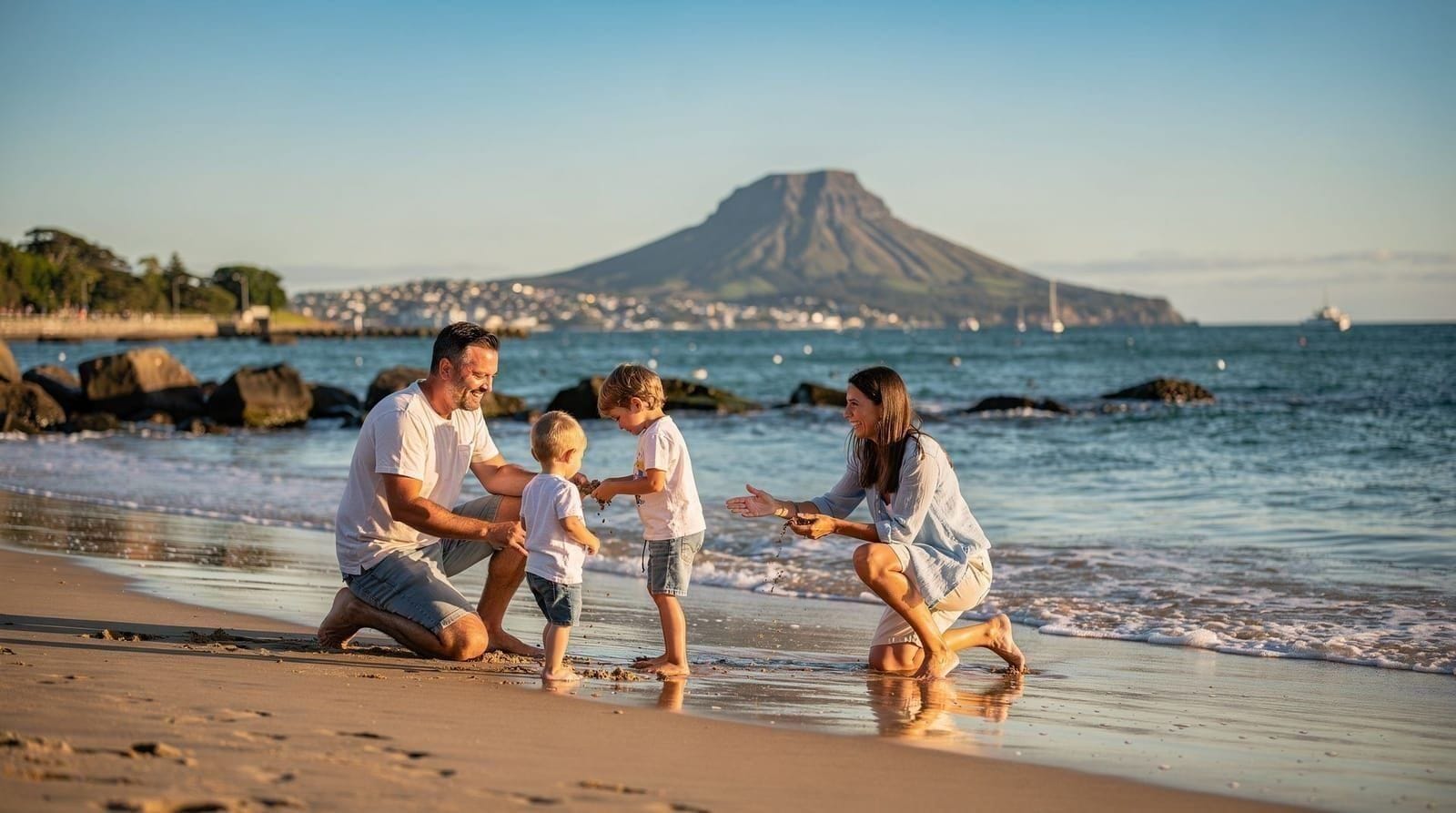
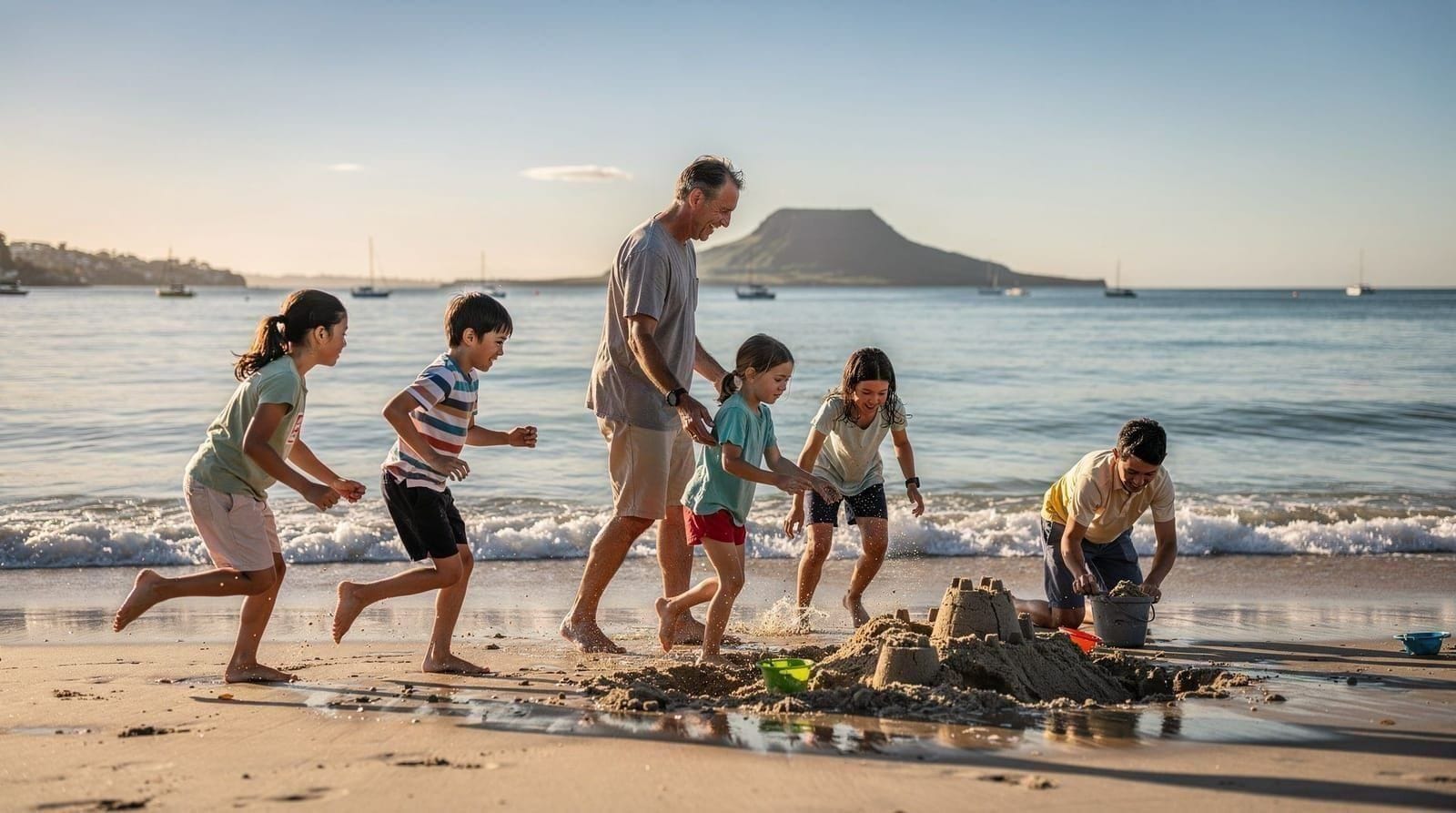
Mission Bay beach, right next to the aquarium, is calm, shallow and sand-based — ideal for supervised toddler paddling, with a playground and cafés close by for a snack break. See our kid-friendly beaches Auckland guide for the fuller ranking of which beaches suit which ages.
If the beach goes well, the Mission Bay and Tamaki Drive page shows what else lies along the same stretch of coast, and the wider Auckland beaches guide helps you pick a second spot for another day.
The waterfront and Wynyard Quarter offer stroller-friendly, flat, paved walking with playgrounds and a splash pad in summer — genuinely low-stress, and there’s no admission fee or fixed schedule to work around, which matters when a nap can derail plans at short notice.
For more on this area, see the Viaduct and Wynyard Quarter page and our Auckland waterfront guide, both useful for planning a flat, easy walk with a stroller.
The Auckland Domain and Auckland Museum combine an easy, flat park (good for a toddler to run around in) with an indoor museum fallback if the weather turns. The Maritime Museum on the waterfront is a smaller, quicker alternative with hands-on boat-themed displays that suit shorter visits.
What to skip until kids are older
Rangitoto Island’s summit hike is not a toddler activity — roughly two hours of walking round trip over sharp volcanic rock, no shade, and no practical way to carry a stroller. If you want the ferry experience anyway, the lower boardwalk sections near the wharf are manageable with a baby carrier, but treat it as a short outing rather than the full island visit.
When your children are older, the Rangitoto Island guide and the Rangitoto half-day plan are the places to start for a proper visit.
Waitakere Ranges hiking trails and most of the region’s proper bushwalks involve roots, mud and uneven ground that don’t suit strollers or unsteady walkers. A baby carrier works better than a stroller for any bush trail.
Full-day bus tours — to Hobbiton, Waitomo, or Rotorua — involve long stretches of sitting and fixed timing that fight against nap schedules. If you do want to see these attractions with a toddler, a private tour or self-drive gives you the flexibility to stop for naps; our self-drive vs tour comparison and car rental Auckland guide cover the logistics. If you do decide to attempt a day trip like Hobbiton with a toddler, plan the drive around your child’s nap window rather than a fixed departure time where possible — many toddlers sleep through a two-hour car journey if it lines up with their usual midday nap, effectively turning otherwise “dead” travel time into rest time rather than a separate item competing for space in the day.
For a family that wants to try Hobbiton anyway, our Hobbiton with kids guide covers what to expect with children in tow.
Sky Tower’s SkyJump and SkyWalk and other height-based adventure activities are adults-and-older-children-only by design, with minimum age and height restrictions that rule out toddlers entirely — worth knowing in advance if this is on your list, since it means splitting the group or skipping it for this leg of the trip.
Waitomo’s black water rafting and adventure-grade caving are explicitly not for young children — most operators set minimum ages around 12-13 for a reason.
| Activity | Stroller-friendly? | Toddler verdict |
|---|---|---|
| Kelly Tarlton’s aquarium | Yes | Genuinely ideal |
| Waterfront / Wynyard Quarter | Yes | Genuinely ideal |
| Mission Bay beach | Mostly (sand at the water’s edge) | Good, supervised paddling |
| Auckland Museum | Yes | Good, especially wet days |
| Rangitoto lower boardwalk | Partly (carrier better) | Short outing only |
| Rangitoto full summit | No | Skip until older |
| Waitakere Ranges trails | No | Skip until older |
A realistic sample day with a toddler
A workable structure for a toddler day in Auckland: a mid-morning outing after breakfast and before the midday nap window opens (Kelly Tarlton’s, a playground, or the waterfront), then home or back to accommodation for a nap around midday to early afternoon, followed by a low-key second outing — a nearby beach, a short walk, or simply staying local for the rest of the afternoon. Trying to squeeze in a second major attraction on the same day, particularly one requiring a long drive, tends to produce an overtired toddler and a difficult evening for everyone. Building trip days around this rhythm, rather than around a fixed sightseeing checklist, is the single most effective adjustment parents can make when travelling with an under-five.
Practical logistics: strollers, car seats, feeding
Strollers work fine on Auckland’s footpaths, ferries (with some crowding at peak times) and buses (fold it if the bus is busy), but struggle on volcanic or bush terrain, so pack a baby carrier as backup for anything outside the paved city core. New Zealand law requires children under 7 to travel in an approved car seat or booster; most rental car companies supply one for a daily fee if booked ahead — see our car rental Auckland guide for details, and consider bringing your own if your airline carries it free, since peak-season availability at rental counters isn’t guaranteed.
For the practicalities of moving around with a stroller, the getting around Auckland and Auckland ferries guides explain how each mode works, and the airport to city guide helps with the often tiring arrival leg after a long flight.
Baby-changing facilities are reliable in central shopping centres (Commercial Bay, Westfield Newmarket), the Auckland Museum, and Kelly Tarlton’s, but less consistent once you’re away from the CBD, so plan longer outings around known venues. Cafés across the city are generally relaxed about breastfeeding and highchairs; casual dining is more toddler-friendly than the city’s higher-end restaurants, most of which don’t cater well to young children in the evening.
Building a toddler-paced day
The single biggest adjustment from a standard Auckland itinerary is accepting that a toddler dictates roughly half the day’s usable hours. A realistic structure: one morning activity before the midday nap (Kelly Tarlton’s, the waterfront, or a playground), a nap or rest block at accommodation or in the stroller, then a low-key afternoon — a beach, a park, or simply exploring the neighbourhood on foot. Trying to cram in a second big attraction after the nap window usually backfires. For a broader family itinerary that can be adapted down to toddler pace, see our Auckland with kids guide, and for wet-weather days specifically, our rainy day activities for kids guide covers indoor options that also suit toddlers.
Feeding and sleeping away from home
Most Auckland cafés are relaxed about breastfeeding in public, and highchairs are standard at casual dining spots, though some of the city’s higher-end restaurants are less set up for young children in the evening — save those for a night without the toddler if possible.
If your toddler still naps in a cot rather than a stroller or carrier, check with accommodation ahead of time about travel cots; most hotels and serviced apartments can provide one with advance notice, but availability during peak summer (December-February) and school holiday periods can be tight, so book it as part of your original reservation rather than assuming it’ll be sorted on arrival. Supermarkets (Countdown, New World) stock a full range of formula, nappies and toddler food if you’d rather not pack heavy items for the flight — most brands familiar from Australia are available, though specific imported brands from further afield may not be.
Jet lag and adjusting to a new time zone
Toddlers adjust to time-zone changes unpredictably, and a long-haul flight from Europe, North America or parts of Asia can leave a toddler’s sleep schedule scrambled for several days on arrival. Keep the first one or two days genuinely light — a short outing in the morning, then plenty of downtime — rather than committing to a big attraction like Kelly Tarlton’s before your toddler has settled into the new schedule. Daylight exposure and a bit of gentle outdoor activity in the first days generally helps reset a young child’s body clock faster than staying indoors to “sleep it off,” even if the first day or two feels unproductive in terms of sightseeing.
Choosing accommodation with a toddler in mind
A serviced apartment or hotel room with a separate sleeping area (rather than one open-plan room) makes a real difference with a toddler who goes to bed well before the adults are ready to. It also gives you somewhere to prepare bottles, warm food, or do a load of washing without needing to plan every outing around a fully-stocked kitchen. Basing yourself centrally — the CBD, Parnell or Mission Bay — cuts down on the amount of time a toddler spends strapped into a car seat or stroller each day, which matters more for mood and nap timing than it does with older children who tolerate longer transit better. See our where to stay in Auckland guide for specific neighbourhood recommendations.
Weather and sun protection
New Zealand’s UV levels are extreme even for temperate latitudes — a toddler can burn within 15-20 minutes of unprotected exposure in summer, including on overcast days. Broad-spectrum SPF 50+, a wide-brimmed hat, and shade cover for strollers matter more here than in most destinations. Pack layers regardless of season; Auckland’s weather shifts quickly, and a warm morning can turn to a cool, damp afternoon within hours.
For month-by-month conditions, see Auckland weather by month, and the Auckland packing list is handy for deciding what to bring for a young child.
Short, low-effort outings that fill a spare hour
Not every part of a toddler-paced trip needs a planned attraction. Auckland has plenty of small, free options that work well for filling a gap between a nap and dinner: a playground in almost every suburb, the grassy expanse of the Auckland Domain, and short waterfront stretches like the Wynyard Quarter boardwalk, which has enough boats and activity to hold a toddler’s attention for twenty minutes without any admission fee or booking required.
Building a couple of these into each day, rather than relying solely on ticketed attractions, takes pressure off the schedule and gives you somewhere to go if a bigger plan falls through because of a missed nap or a meltdown. Coffee and cake at a café with an attached outdoor space — common in Ponsonby and around Mission Bay — doubles as a break for the adults while a toddler runs around a nearby patch of grass, which is a genuinely underrated way to reset everyone’s mood mid-afternoon.
Flying with a toddler to New Zealand
For international families, the flight itself often shapes the first few days more than anything in Auckland does. Long-haul routes from Europe, North America and much of Asia mean a genuinely tiring journey for a toddler regardless of how well-prepared you are, and building in a deliberately quiet first 24-48 hours in Auckland — rather than diving into Kelly Tarlton’s or a big outing on arrival day — pays off more than trying to power through jet lag with a packed schedule. Bassinet bulkhead seats, where available, make a meaningful difference on the flight itself for children still napping in a cot; request these as early as possible when booking, since availability is limited and allocated closer to departure by most airlines.
Booking accommodation with cots and kitchens in mind
Beyond the general accommodation advice above, it’s worth confirming cot or travel-cot availability directly with your accommodation before arrival rather than assuming it’s automatically included — during peak summer and school holiday periods, travel cots can be fully booked out even at properties that normally offer them. A kitchenette or at least a small fridge and kettle makes formula prep, snack storage and quick meals considerably easier than relying entirely on cafés and restaurants for every feeding, particularly during the adjustment period in the first few days. Serviced apartments in the CBD, Parnell and Mission Bay commonly offer this combination, and are worth prioritising over a standard hotel room for a toddler-specific trip even at a modest price premium.
Realistic expectations for a first trip with a toddler
It’s worth setting expectations before you arrive: a trip with a toddler will cover meaningfully less ground than the same length of trip would without one, and that’s normal rather than a sign of poor planning. Two or three solid, well-paced activities across a week is a completely reasonable outcome, and trying to match an itinerary built for older children or adults usually just produces a harder trip for everyone. Many parents find that the version of Auckland they see with a toddler — slower, more neighbourhood-based, built around naps and playgrounds — ends up being a genuinely pleasant way to experience the city, even if it looks different from a typical visitor itinerary.
Frequently asked questions about Auckland with toddlers
Which Auckland attractions are not toddler-friendly?
Rangitoto Island’s summit hike (uneven lava rock, no shade, roughly two hours round trip), Waitomo’s black water rafting, and any full-day bus tour with long fixed sitting stretches are all poor fits for toddlers. The lower boardwalk sections of Rangitoto and short, stroller-friendly walks are better substitutes.
Can I take a stroller on Auckland’s ferries and buses?
Yes — ferries and buses both accommodate strollers, though ferries can get crowded at peak times and buses require folding it if the bus is full. Trains have more space. Avoid the Rangitoto or Waitakere Ranges walking tracks with a stroller; the terrain isn’t suitable.
Are there baby-changing facilities in central Auckland?
Yes, in most shopping centres (Commercial Bay, Westfield Newmarket), the Auckland Museum, Kelly Tarlton’s, and larger cafés. Public facilities are less consistent outside the CBD, so plan around known venues for longer outings.
Do New Zealand car seat laws apply to rental cars?
Yes — children under 7 must be in an approved car seat or booster by law, and most rental companies supply capsules or car seats for a daily fee if booked in advance. Bringing your own (many airlines carry them free) avoids availability issues during peak season.
What is the best pace for a toddler itinerary in Auckland?
One activity per day, built around your child’s usual nap schedule rather than a set touring plan. Morning outings before nap time and low-key afternoons work better than trying to fit in two attractions back to back.
Should we book a private tour or self-drive for day trips with a toddler?
Self-drive or a private tour generally works better than a full-day group bus tour, since it lets you stop for naps or meltdowns on your own schedule rather than a fixed group itinerary.
Are travel cots easy to find in Auckland accommodation?
Most hotels and serviced apartments can provide one with advance notice, but availability tightens during peak summer and school holidays — book it as part of your original reservation rather than assuming it’ll be sorted on arrival.
Top experiences
Bookable activities with verified prices and instant confirmation on GetYourGuide.