Cathedral Cove and Coromandel day tour from Auckland
Auckland: Cathedral cove coromandel scenic day tour
Cathedral Cove is one of New Zealand’s most photographed coastal landmarks, reachable only via a genuine 45-minute walk each way. Here’s the practical baseline before deciding whether to pair it with Hot Water Beach or Driving Creek Railway.
| Where | Hahei, Coromandel Peninsula |
| Cost | Around NZD 150–190/adult full-day tour from Auckland |
| Time needed | ~5hrs driving round trip + ~2hrs for the walk |
| Getting there | Guided day tour or self-drive via Thames |
| Best time | Shoulder season for quieter track; low tide for swimming and Hot Water Beach |
What a Cathedral Cove and Coromandel day tour is
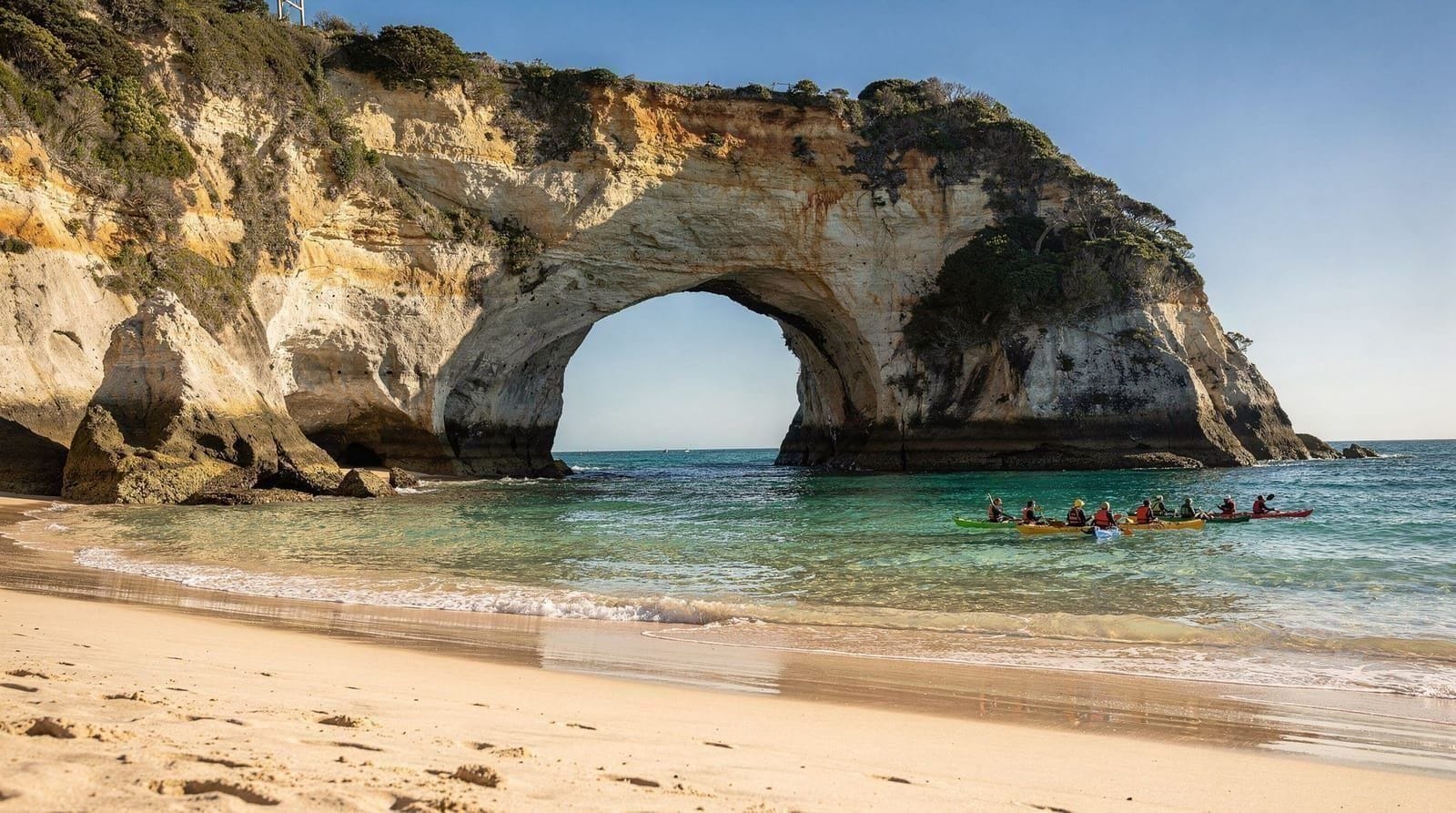
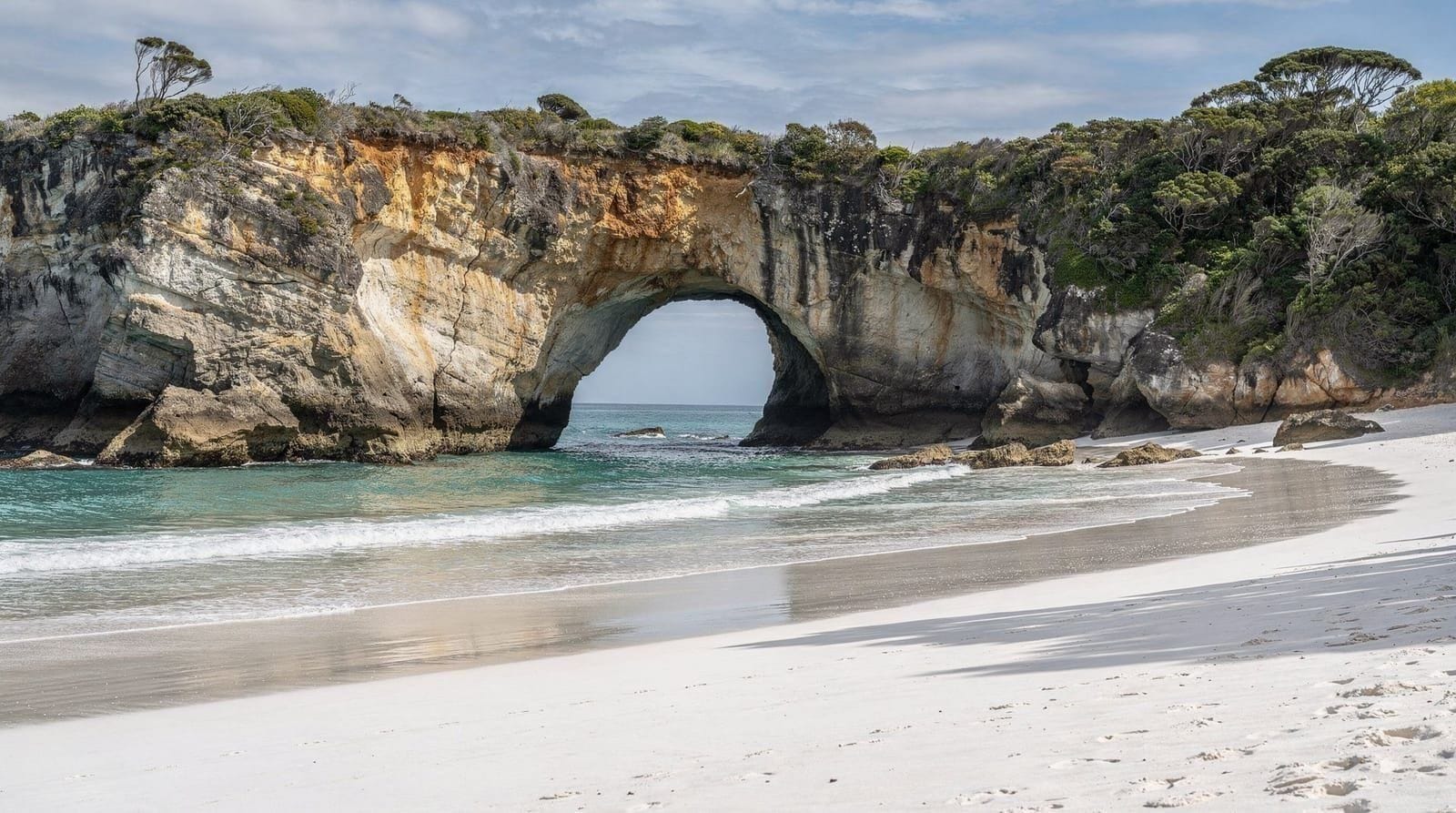
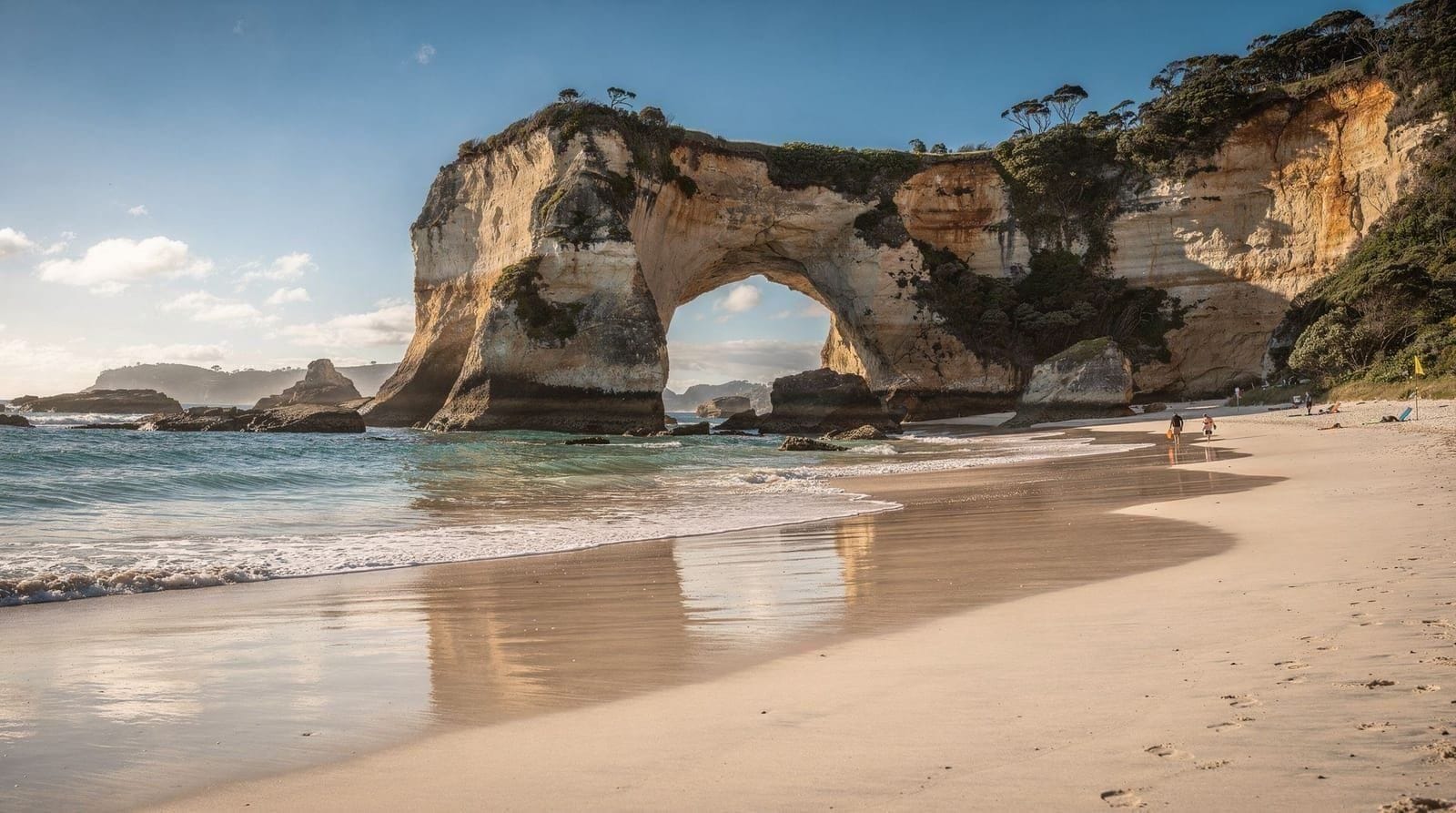
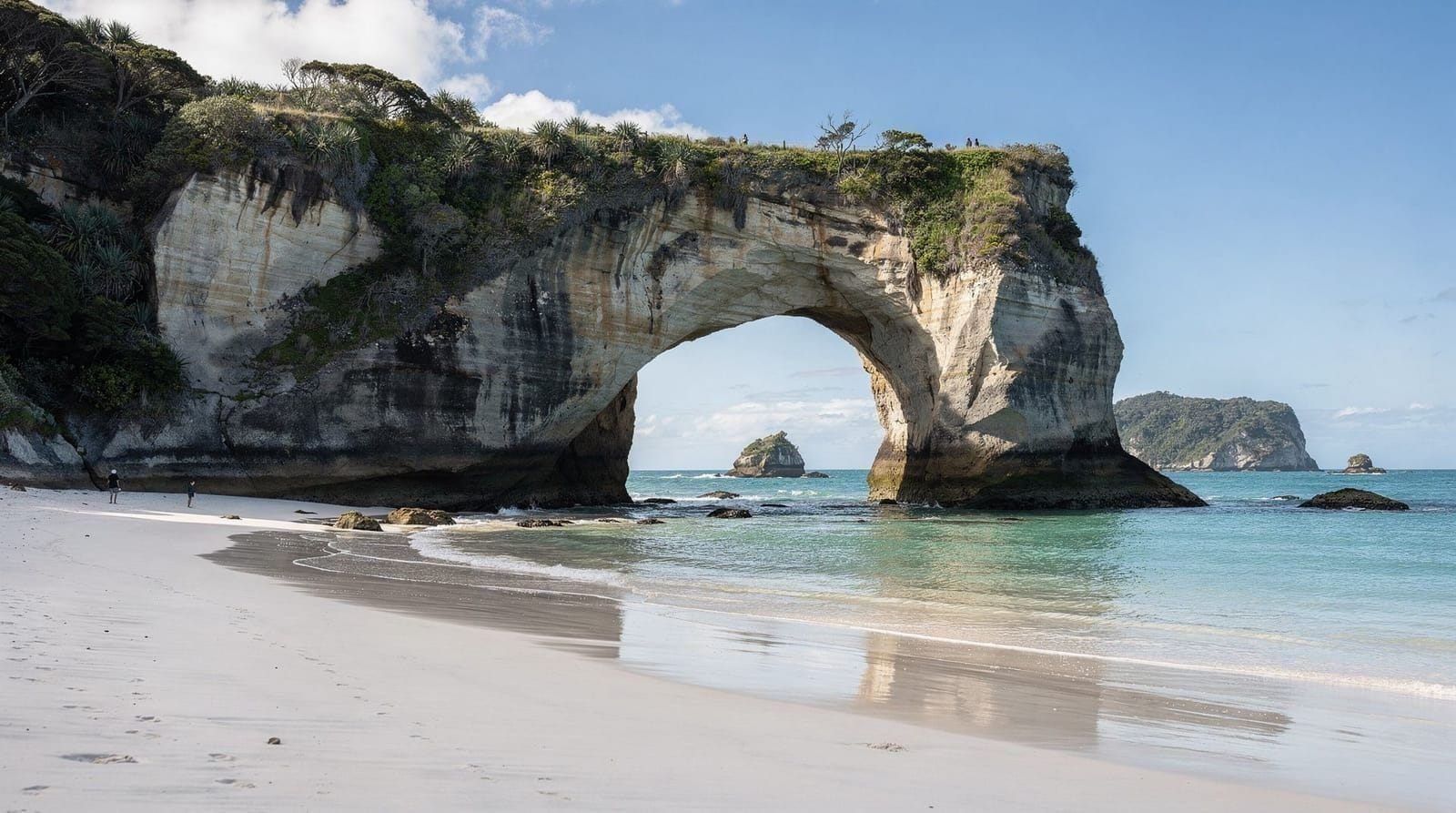
Cathedral Cove, on the eastern side of the Coromandel Peninsula near the small township of Hahei, is one of New Zealand’s most photographed natural landmarks — a dramatic sea-cut archway of white rock framing a sheltered, pale-sand beach, formed over millennia by wave erosion through a rocky headland. It’s reachable only on foot, via a coastal track from Hahei, which is part of what keeps it feeling relatively unspoiled despite its popularity.
Day tours from Auckland typically combine the Cathedral Cove walk with one or two additional Coromandel stops to make the long drive worthwhile — commonly Hot Water Beach, where you can dig your own natural hot pool in the sand at low tide, or the Driving Creek Railway and Sculpture Park near Coromandel Town, a narrow-gauge railway built by hand through native bush.
Cathedral Cove sits within the Te Whanganui-a-Hei Marine Reserve, a protected area covering the coastline around Hahei, which means the marine life in the surrounding waters — including the clear, sheltered waters right at the cove — is notably richer than unprotected stretches of coastline nearby. Snorkelling gear isn’t typically part of standard day tours, but the water clarity is good enough that even a casual swim reveals fish life most beachgoers wouldn’t expect this close to shore.
The archway itself — the cathedral-like sea cave that gives the cove its name — connects two adjoining beaches, and walking through it at low tide to the second, smaller beach is one of the more memorable moments of the visit, framed by towering rock walls on either side. The Driving Creek Railway, when included, adds a genuinely different texture to the day: a narrow-gauge mountain railway hand-built over decades by the late artist and potter Barry Brickell, climbing through native kauri and regenerating bush to a lookout point, dotted with quirky sculptural installations along the route.
What’s included and what it costs
The Cathedral Cove and Coromandel scenic day tour from Auckland covers return coach transport, the guided walk to Cathedral Cove, and time at the cove itself, priced around NZD 150 to 180 per adult for a full day. The Coromandel day tour including Hot Water Beach follows a similar structure but pairs Cathedral Cove with time to dig a hot pool at Hot Water Beach, timed around the tide.
For a different pairing, the Coromandel Driving Creek and Cathedral Cove day tour combines the coastal walk with the Driving Creek Railway near Coromandel Town, a good option if you’re more interested in native bush and a quirky, artist-built attraction than a second beach stop. The classic Coromandel and Cathedral Cove day tour offers a comparable general-interest itinerary at a similar price point.
Budget breakdown
For a family of four, a Cathedral Cove and Hot Water Beach combined tour typically comes to NZD 500 to 620 with standard child discounts applied, which covers transport and guided access to both sites for the full day — no separate entry fees apply at either location, since both are public beaches within reserve land. If you’re self-driving instead, the main costs are fuel for the five-hour round trip (NZD 70 to 90) plus Hahei’s paid car park (a modest daily fee), making self-drive noticeably cheaper for a family, at the cost of doing the navigation and timing the tides yourself.
The Coromandel Peninsula sits about two and a half hours’ drive from Auckland, typically via Thames and the peninsula’s winding coastal roads, or via a combined drive-and-ferry route in some seasons. A full-day tour is consequently a long one: five hours of driving round trip, plus around two hours for the Cathedral Cove walk itself (roughly 45 minutes each way from the Hahei car park, plus time at the cove), and additional time at whichever second stop is included.
Most day tours depart Auckland early, around 7 to 7.30am, and return by early evening, making for a full but not excessively long day compared with tours to more distant destinations like the Bay of Islands or Rotorua.
The drive itself is one of the more scenic road trips accessible from Auckland — the route through Thames follows the coastline of the Firth of Thames before climbing over the peninsula’s forested hills, with genuine lookout points along the way that most coach tours build in a brief stop for. If you’re self-driving, allow extra time for these stops rather than treating the drive as pure transit; several travellers rate the drive itself as a highlight nearly on par with the destinations.
Is it worth it — the honest verdict
Cathedral Cove itself is worth the effort — it’s a genuinely striking piece of coastal geology, and the walk to reach it, while a real commitment at 45 minutes each way over hilly terrain, adds to the sense of arrival rather than feeling like an obstacle. Photos rarely do the scale of the archway and the surrounding cliffs full justice; it’s a place that benefits from being seen in person.
Where the day-trip format shows its limits is the total drive time relative to time actually spent at the destinations. Five hours of driving for roughly two hours at Cathedral Cove and an hour or two at a second stop means more than half your day is transport. If your schedule allows it, staying a night in the Coromandel — Hahei, Whitianga, or Coromandel Town all make reasonable bases — turns the same sights into a far more relaxed one or two days rather than a single compressed round trip. For travellers with only a single day available, the tour format still delivers a worthwhile day out; it’s just an honest trade-off between convenience and pacing.
Traveller reviews of the guided day tours consistently rate the value of having a local guide manage the Hot Water Beach tide timing — getting this wrong independently is a common frustration for self-drive visitors who arrive at the wrong point in the tide cycle and find the hot water either submerged or too far from the accessible digging zone. A guided tour removes that risk entirely, which is arguably the single most practical reason to book one over self-driving if Hot Water Beach is on your list.
Reviews also frequently mention that the walking pace on guided tours is generally relaxed and inclusive, with guides pausing for photo stops and adjusting for slower walkers in the group, rather than rushing to a fixed schedule — a detail worth knowing if you’re concerned about fitness level holding the group back.
Who this suits
This suits reasonably fit travellers comfortable with a hilly 45-minute coastal walk each way, photography enthusiasts drawn to dramatic coastal landscapes, and anyone who wants a genuine beach and nature day distinct from Auckland’s city-based attractions. Families with older children (roughly seven and up) generally manage the walk well, especially with the promise of a beach and swim at the end as motivation; families with toddlers or anyone needing a pram will find the terrain genuinely difficult.
It suits less well travellers with significant mobility limitations (the track isn’t stroller- or wheelchair-accessible), and anyone who’d rather avoid a long single-day round trip in favour of an overnight Coromandel stay. It’s also a demanding day for anyone who struggles with early starts, given the 7am departure most operators use to beat both crowds and the day’s total drive time.
Tips for visiting
Wear proper walking shoes, not sandals — the track has genuine elevation change and can be muddy after rain. Check the tide times if Hot Water Beach is part of your itinerary; digging a hot pool only works within about two hours either side of low tide, so a well-organised tour times its stops around this rather than arriving at high tide when the hot water sits underwater and inaccessible. Bring swimwear regardless of season — both Cathedral Cove and Hot Water Beach offer swimming opportunities, and a hot pool at Hot Water Beach is worth having a towel ready for even on cooler days.
Summer (December to February) brings the biggest crowds to Cathedral Cove specifically, with queuing possible on the narrowest sections of track during peak midday hours; an early guided tour departure helps you beat the worst of the crowds.
Bring cash or a card for the Hahei general store if you want snacks before or after the walk — there’s no food available at the cove itself, so plan your eating around the walk rather than assuming facilities will be on hand partway through. Sun protection is essential on the exposed sections of track and especially at the beach itself, where there’s minimal natural shade; New Zealand’s UV index runs high even on cooler or overcast days on this coastline.
Bring plenty of drinking water — the walk, while not strenuous by hiking standards, is warm and exposed enough in summer that dehydration is a genuine, easily avoidable risk, and there are no refill points along the track itself. If you’re visiting outside a guided tour, note that the Hahei car park fills quickly in peak season; arriving before 9am or after 3pm noticeably improves your parking odds and reduces track congestion.
Alternatives to consider
If you’d rather avoid the busiest section of coastal track, Hot Water Beach alone makes a strong standalone half-day trip with a genuinely unique activity (digging your own hot pool) and shorter overall time commitment than the full Cathedral Cove walk. For a broader look at how Coromandel’s beaches compare, see our Coromandel beaches guide and our direct Cathedral Cove versus Hot Water Beach comparison if you’re deciding between the two rather than doing both.
For planning a longer Coromandel stay rather than a single rushed day trip, see our Coromandel day trip guide for the logistics of basing yourself on the peninsula for a night or two, and our Coromandel Town guide if the Driving Creek Railway and the town’s arts scene appeal more than a second beach.
For travellers weighing up the Coromandel against other Auckland day-trip options entirely, our best day trips from Auckland guide puts Cathedral Cove alongside Waiheke, Hobbiton, and Rotorua so you can compare drive times, costs, and what each destination actually delivers before committing a full day to any one of them.
Comparing your options
| Option | Best for | Approx. cost |
|---|---|---|
| Cathedral Cove scenic day tour | Straightforward walk + cove time | NZD 150–180 |
| Cathedral Cove + Hot Water Beach | Wanting the hot-pool experience without tide-timing risk | NZD 150–190 |
| Cathedral Cove + Driving Creek Railway | Prefer native bush and a quirky attraction over a second beach | Similar range |
Compare the main Cathedral Cove and Coromandel day tour combinations below.
Compare alternative tours
Frequently asked questions about Cathedral Cove and Coromandel day tour from Auckland
How far is Cathedral Cove from Auckland?
Around two and a half hours' drive, taking the route through the Coromandel Peninsula via Thames or the more direct ferry-assisted route from Auckland. A full-day tour is consequently a five-hour round trip in transport alone, before accounting for the walk to the cove itself and any other stops.How long is the walk to Cathedral Cove?
It's about a 45-minute walk each way from the Hahei car park to the cove, along a well-formed but hilly coastal track with some steps. Most tours budget roughly two hours total for the return walk plus time at the cove itself for photos and, tide permitting, a swim.How much does a Cathedral Cove and Coromandel day tour cost from Auckland?
Full-day tours from Auckland typically cost NZD 150 to 190 per adult, covering return transport, the Cathedral Cove walk, and usually one or two additional Coromandel stops such as Hot Water Beach or the Driving Creek Railway, depending on the specific tour.Should I visit Cathedral Cove or Hot Water Beach if I can only pick one?
Cathedral Cove is the more visually dramatic stop — a striking natural rock archway framing the beach — and works on any tide, though swimming access is easier at low tide. Hot Water Beach is tide-dependent in a different way: you can only dig your own natural hot pool in the sand within roughly two hours either side of low tide. Many day tours include both, timed around the tide, which resolves the choice for you.Is the Cathedral Cove walk suitable for all fitness levels?
The track is well-maintained but genuinely hilly, with some sustained inclines and steps, so it's manageable for most reasonably fit adults and older children but is not stroller-friendly and would be difficult for anyone with significant mobility limitations. Comfortable walking shoes are strongly recommended over sandals.What time of year is best for Cathedral Cove?
Cathedral Cove is accessible year-round, but summer (December to February) brings the warmest swimming conditions and the biggest crowds, since it's one of the Coromandel's most popular attractions. Shoulder seasons (autumn and spring) offer a quieter walk and cove with still-reasonable weather, though swimming will be cooler.