Waitomo Caves day trip from Auckland
Auckland: From auckland day trip to waitomo glow worm caves
How far is Waitomo from Auckland and what does the glowworm tour cost?
Waitomo is about 2.5 hours (202 km) from Auckland. A standard glowworm boat tour through the Glowworm Cave runs roughly NZD 65-90 for adults and takes 45 minutes to an hour, while adventure options like blackwater rafting cost more and run 3-4 hours.
What makes Waitomo different
Waitomo is one of the more genuinely unusual day trips near Auckland — not a beach, not a geothermal park, but a network of limestone caves lit from within by millions of tiny bioluminescent glowworms, native and unique to New Zealand. Glide through the main Glowworm Cave by boat in near-total darkness and silence, and the cave ceiling above you turns into something that looks, convincingly, like a sky full of stars. It’s a strange, quiet, and genuinely memorable experience, and one that photographs poorly but leaves a strong impression in person.
| Where | Waitomo, about 202km / 2.5hrs south of Auckland |
| Cost | around NZD 65-90 for the standard boat tour |
| Time needed | Tour itself under 1hr; budget 2-3hrs on-site |
| Getting there | Self-drive via SH1/SH3, or a coach day tour |
| Best time | Year-round; shoulder season for smaller crowds |
Beyond the glowworms, Waitomo has built a wider reputation as a cave-adventure hub, with blackwater rafting, abseiling and underground zip-lining all operating in the surrounding cave systems for visitors who want something more physical than a boat ride.
Getting there: route and drive time
Waitomo sits about 202 km south of Auckland, and the drive takes roughly 2.5 hours via SH1 and SH3, through Hamilton and then southwest into the limestone country around Otorohanga. The route is entirely sealed, well-signposted highway with no particularly technical sections, making it a comfortable self-drive even for visitors uneasy about New Zealand’s more winding rural roads.
There’s no train service and only limited, infrequent bus connections to Waitomo, so this is realistically a self-drive or guided-tour destination. This day trip to the Waitomo glow worm caves from Auckland handles the full round trip by coach, useful if you’d rather not drive nearly 5 hours in a single day for a relatively short in-cave experience.
The glowworm boat tour
The standard Waitomo experience is a guided tour through the Glowworm Cave, combining a walking section through limestone cavern formations with a silent boat ride along an underground river beneath thousands of glowworms clustered on the cave ceiling. The full tour runs about 45 minutes to an hour, priced roughly NZD 65-90 for adults, and requires no particular fitness — it’s suitable for most ages and mobility levels, with only modest walking involved.
This Waitomo glowworm caves guided tour by boat is the classic version of this experience. Photography inside the cave is restricted — flash photography disturbs the glowworms and is prohibited, and low-light conditions make phone photos largely ineffective regardless, so go in expecting to experience it rather than capture it on camera.
Adventure options: blackwater rafting and beyond
For visitors wanting something more physical, Waitomo’s cave systems support a well-developed adventure tourism scene. Blackwater rafting involves wetsuits and inner tubes, floating and sometimes jumping through underground river sections lit by glowworms overhead, typically running 3-4 hours including transport, briefing and gear. This Waitomo caves tubing adventure with glowworm display is the standard version of this experience, priced higher than the boat tour and requiring reasonable fitness and comfort with cold water and enclosed spaces.
More intense options — combining abseiling, rock scrambling and longer underground routes — also operate in the area for visitors seeking a full adventure-caving day. Our Waitomo blackwater rafting guide covers the full range of adventure options and what to expect from each in more detail.
How much time to budget
The standard glowworm boat tour itself takes under an hour, but Waitomo as a destination benefits from more time than that suggests. Between the visitor centre, a look at the wider caves complex, and a coffee or lunch stop in the small township, budgeting 2-3 hours on-site (beyond just the tour) makes for a properly paced visit rather than an in-and-out stop. This small group Waitomo glowworm caves day tour from Auckland builds this pacing in, running around 6 hours total including the drive and cave visit.
A realistic Waitomo-only day trip
Leave Auckland by 8am to arrive around 10:30-10:45am. Allow time to explore the visitor centre and grab a coffee before your booked tour slot, complete the roughly hour-long glowworm cave tour, then have lunch in Waitomo village (a handful of cafes cater specifically to day-trippers) before beginning the return drive by early-to-mid afternoon. This is a comfortably relaxed day trip on its own — considerably less rushed than Rotorua or Bay of Islands — since the drive is shorter and the core activity itself doesn’t demand a full day.
Combining Waitomo with Hobbiton
Waitomo and Hobbiton sit only about 75 minutes apart by road, and combining both into a single day is one of the more popular Auckland day-trip pairings, since it makes efficient use of the shared drive south. It does turn a relaxed half-day-equivalent trip into a genuinely long day — see our dedicated Hobbiton-Waitomo combo guide for the honest timing breakdown before committing to both in one day.
Best time to see the glowworms
Glowworms are visible year-round regardless of season or weather — they’re an entirely indoor, underground attraction unaffected by what’s happening on the surface. What does matter is crowd levels: summer (December-February) sees the most visitors and can mean longer waits between tour departures on busy days, while shoulder season and winter offer a quieter, more spacious experience with the same quality of glowworm display. Our best time for Waitomo glowworms guide covers this in more detail if timing flexibility matters to your trip.
Is Waitomo worth the drive on its own?
For anyone with even mild curiosity about an unusual natural phenomenon, yes — there’s genuinely nothing else quite like the Waitomo glowworm cave experience easily accessible from Auckland, and the relatively short time commitment (under an hour for the core tour) makes it one of the easier day trips to justify even with the 2.5-hour drive each way. Combined with Hobbiton or a stop in Hamilton, it becomes an efficient, well-rounded day rather than a single-purpose trip. For a broader look at how Waitomo compares to Auckland’s other day-trip options, see our best day trips from Auckland roundup.
Budget breakdown for a Waitomo day trip
Waitomo is one of the more affordable full-day trips on this site once you look at total cost per person. Fuel for the 404 km round trip runs roughly NZD 90-110, plus a rental car’s daily rate if needed. The standard glowworm boat tour itself is NZD 65-90 per adult, considerably less than Hobbiton’s entry ticket, and lunch in Waitomo village runs NZD 15-25 per person at one of the small local cafes.
For two adults sharing a rental car with the standard boat tour and lunch, total cost lands around NZD 280-340, roughly NZD 140-170 per person. Blackwater rafting and other adventure options add significantly to this — typically NZD 150-250 per person on top of transport, reflecting the specialised gear and guiding involved. A guided coach day tour bundling transport and the standard glowworm tour runs NZD 180-230 per adult, a reasonable option for solo travelers wanting to skip the 5-hour round-trip drive.
The wider Waitomo cave system
The Glowworm Cave that most visitors tour is actually one of several interconnected and separately accessible cave systems in the Waitomo area, each with a distinct character. Ruakuri Cave, a short drive from the main Waitomo village, offers a longer, more immersive walking tour through larger chambers and includes its own glowworm sections, appealing to visitors who want more time underground than the standard 45-60 minute Glowworm Cave tour provides without committing to full adventure-caving. Aranui Cave, known for its dry limestone formations — stalactites and stalagmites rather than glowworms specifically — offers a different, more geologically focused experience for visitors with a particular interest in cave formations over bioluminescence.
Most single-day visitors from Auckland stick to the main Glowworm Cave tour given time constraints, but knowing these alternatives exist is useful if you’re building a longer Waitomo visit into a broader North Island itinerary, or if the main Glowworm Cave tour happens to be fully booked on your preferred date.
The science behind the glow
Understanding what’s actually producing the light adds genuine depth to the experience. Arachnocampa luminosa, the New Zealand glowworm, is the larval stage of a fungus gnat found only in this country, and unrelated to the glowworms or fireflies found elsewhere in the world despite the shared common name. Each larva spins a nest of silk threads and hangs dozens of sticky, beaded fishing lines from the cave ceiling, then produces a soft bioluminescent glow through a chemical reaction in its tail to lure small flying insects — drawn by the light — into the sticky threads below.
The brightness of an individual glowworm’s glow is thought to correlate with hunger; a well-fed larva dims its light, while a hungry one glows more intensely to better attract prey, meaning the ceiling’s overall brightness pattern shifts subtly over time depending on how recently the colony has fed. This life cycle runs for around nine months as a larva before a brief pupal stage and an adult fly stage lasting only a few days, focused solely on reproduction before the cycle begins again — making the individual glowworms you see on any given visit a genuinely different generation than those seen by visitors even a year earlier.
Accessibility and who should skip which tour
The standard glowworm boat tour involves a mix of walking on formed paths and steps down into the cave system before boarding a small boat for the silent river section — manageable for most visitors but not fully wheelchair accessible given the uneven, sometimes steep cave terrain and boat boarding process. Visitors with mobility concerns should contact the operator directly ahead of time to discuss specific accessibility needs, since some tour variants and entry points differ in their accessibility. Blackwater rafting and other adventure caving options are considerably more physically demanding still, generally requiring a reasonable fitness level, comfort with cold water and confined spaces, and typically a minimum age requirement (often around 12-14, varying by operator) given the physical nature of the activity.
What to bring for a Waitomo day trip
A light jacket for the cave’s cooler temperature (typically 14-17°C, noticeably cooler than the surface), comfortable closed shoes for the walking sections, and cash or card for lunch in Waitomo village, since some of the smaller cafés have limited card facilities at busy times. If you’re combining with blackwater rafting, bring swimwear and a full change of clothes and towel — the boat tour itself needs no special gear beyond the jacket and closed shoes. A basic level of camera patience is worth packing too: since flash photography is prohibited and low light makes most photos ineffective, accept in advance that this is a look-don’t-shoot experience.
Parking and arriving at Waitomo village
Waitomo’s visitor centre has ample free parking directly at the main complex, making a self-drive visit straightforward without the parking-search stress that can affect more central Auckland attractions. Arrive at least 15-20 minutes before your booked tour slot to allow time to park, walk to the visitor centre and check in, particularly in peak season when the car park and check-in desk can both be busier than a quiet shoulder-season weekday. If you’re on a guided coach tour, this logistics layer is handled for you, one of the genuine conveniences of the coach option beyond simply not having to drive.
The wider Waikato limestone country
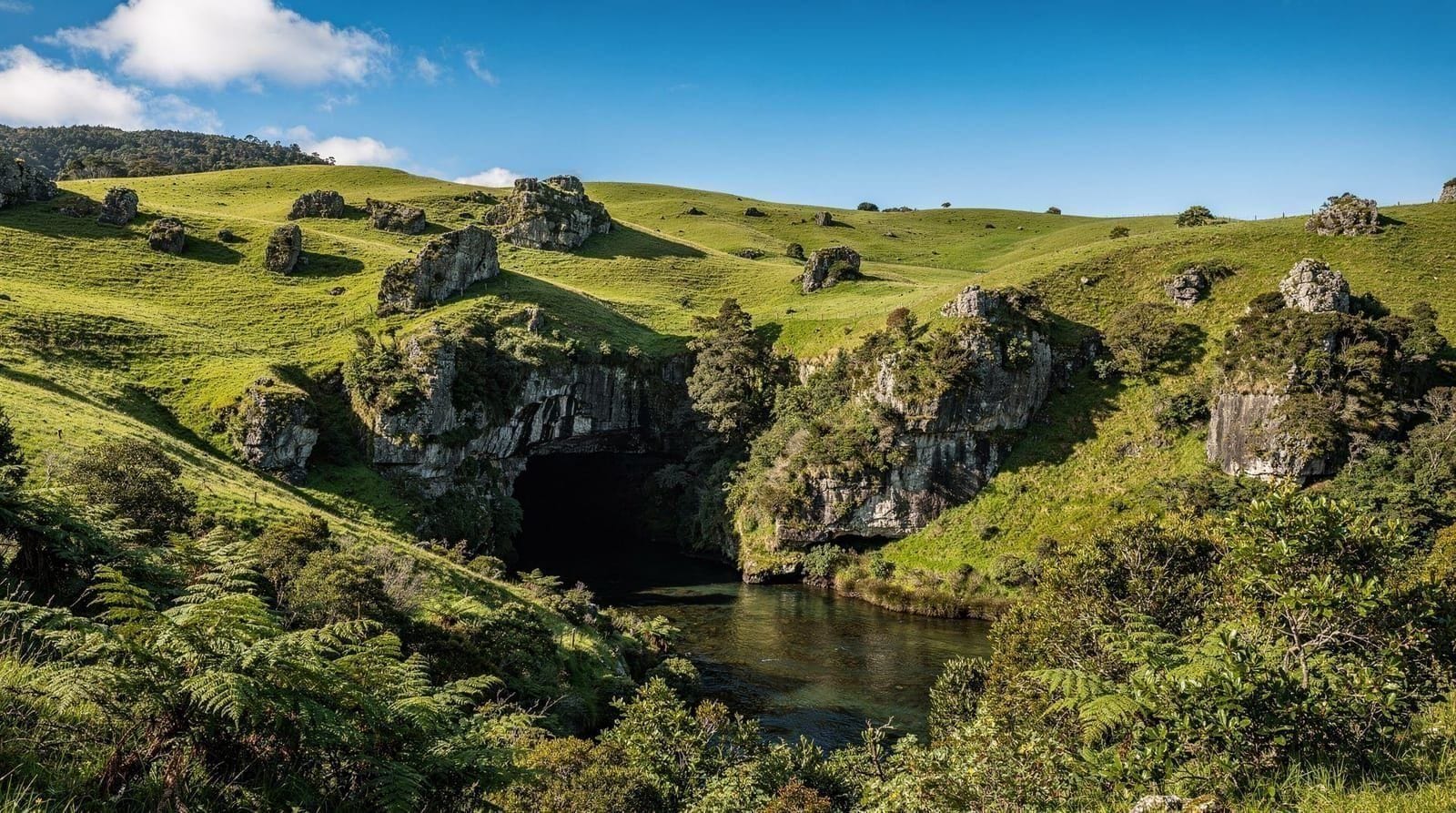
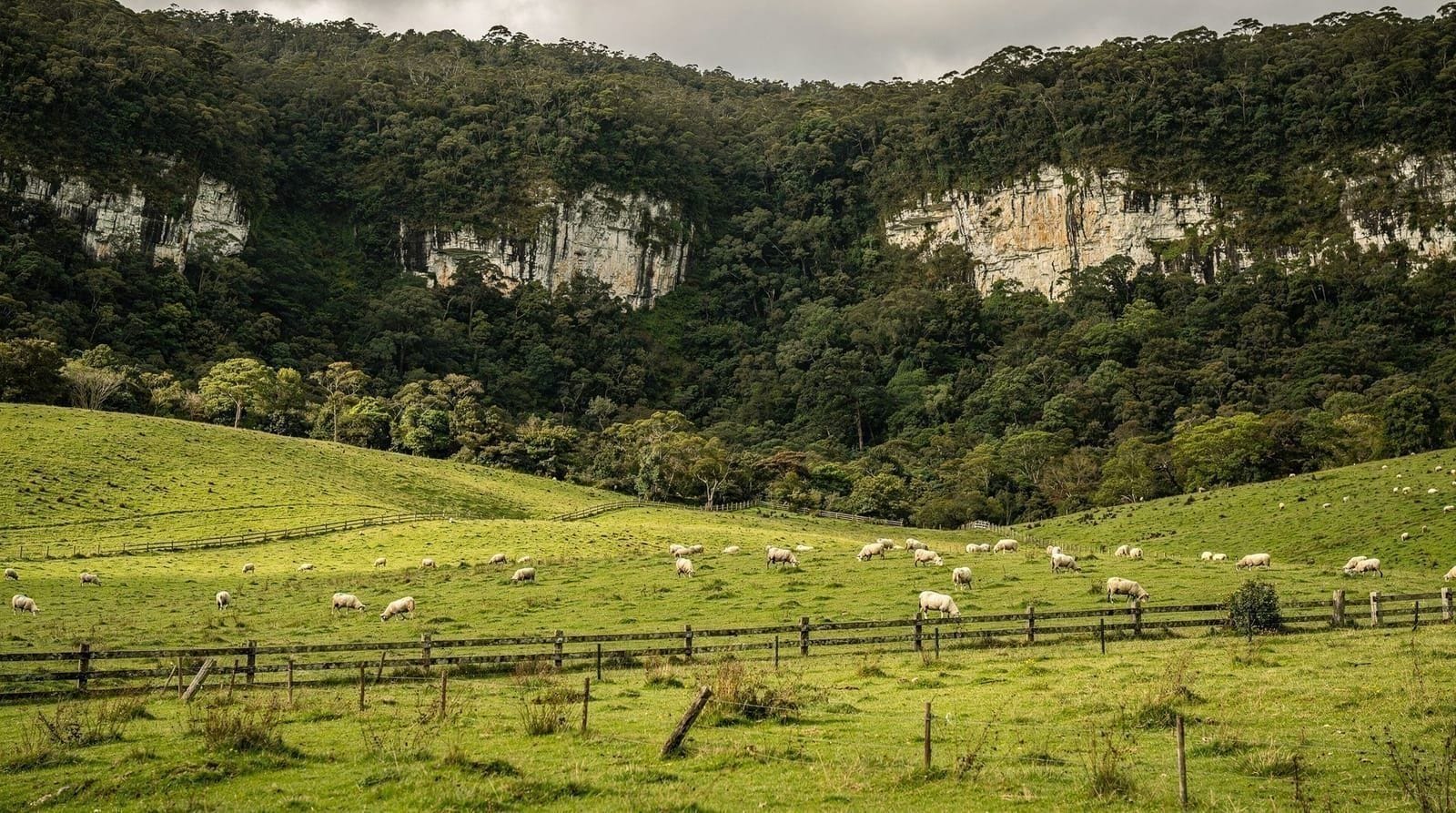
Waitomo sits within a broader limestone karst landscape that extends across this part of the Waikato region, shaped over millions of years by water dissolving the soft limestone rock into the extensive cave networks, sinkholes and dramatic surface features found throughout the area. This same geological process is responsible for the Waitomo Walkway, a surface-level walking track above the cave systems that traces the Waitomo Stream through farmland and limestone bluffs, offering a free, self-guided alternative or complement to the paid cave tours for visitors who want to understand the landscape from above as well as below. It’s a worthwhile short add-on (about an hour) if your day trip has any spare time before or after your booked cave tour.
How Waitomo Caves were discovered and opened to visitors
The Waitomo Caves have a documented history of tourism stretching back further than most visitors expect — local Māori chief Tāne Tinorau and English surveyor Fred Mace first formally explored the Glowworm Cave by raft in 1887, guided by local knowledge of the cave system that had existed long before European surveying reached the area.
Tāne Tinorau and his wife Huti opened the cave to visitors themselves shortly after, and after a period of government control in the early 20th century, ownership and guiding responsibilities were eventually returned to the local Māori landowning families, who remain closely involved in the cave’s operation and guiding today. This history is part of why Waitomo tours often include genuine cultural and family context alongside the geological and biological information about the glowworms themselves, reflecting an ownership and guiding tradition that predates most of New Zealand’s other major tourism attractions by decades.
Weekday vs weekend timing
Weekday visits to Waitomo are generally quieter than weekends, particularly for the standard glowworm boat tour, where smaller tour groups mean shorter waits between departures and a more relaxed pace through the visitor centre. Weekends, especially in summer, see more coach tour traffic and can mean booking slightly further ahead for your preferred time slot. If your North Island itinerary has any flexibility, a weekday Waitomo visit pairs well with a weekend spent in busier hubs like Rotorua or Auckland’s waterfront, spreading crowd exposure across your trip rather than concentrating it.
Combining Waitomo with a stop at Otorohanga
Otorohanga, the small town closest to Waitomo along the main highway route, is home to the Otorohanga Kiwi House, one of the more accessible places in the North Island to see live kiwi in a nocturnal house setting, alongside other native New Zealand bird species. For visitors who won’t otherwise get to see a kiwi in the wild (genuinely difficult given how nocturnal and secretive the birds are), a short stop here on the way to or from Waitomo adds a worthwhile wildlife-viewing element to the day, taking around 45 minutes to an hour including the walk-through nocturnal house itself. It’s a sensible add-on for families in particular, given the modest time investment relative to the appeal of finally seeing New Zealand’s national bird in person.
Comparing Waitomo to other glowworm experiences in New Zealand
Waitomo isn’t the only place in New Zealand to see glowworms, though it’s by far the most famous and developed for tourism. Smaller, less commercial glowworm displays exist in various forest gullies and cave systems around the North Island, including near Tauranga (covered in our Tauranga day trip guide) and in various regional parks around Auckland itself, generally free to visit but with a far smaller concentration of glowworms and none of the underground cave setting that makes Waitomo’s Glowworm Cave so distinctive. For most visitors, Waitomo remains the benchmark experience precisely because of this combination — a genuinely spectacular concentration of glowworms, in a striking natural cave setting, with well-established, professionally guided access, none of which the smaller free alternatives fully replicate.
Planning around Waitomo: related guides
If Waitomo is one stop in a longer North Island trip, a few other pages help you fit it in. The Hobbiton day trip guide and the Hobbiton-Waitomo one-day itinerary show how the two sights share a route. If you’re deciding between a coach and your own car, self-drive vs tour for day trips weighs the trade-offs, and our driving in New Zealand guide covers the rules for anyone new to driving on the left. Visitors continuing south can pair this page with the Auckland to Rotorua transport guide, and the Waitomo Caves destination page gives a wider overview of the area.
Boat tour vs blackwater rafting: which to book
Most single-day visitors default to the standard glowworm boat tour, and for good reason — it’s shorter, cheaper, and needs no particular fitness. Blackwater rafting is the pick if you want a genuine adventure activity alongside the glowworms rather than a calm sightseeing experience.
| Glowworm boat tour | Blackwater rafting/tubing | |
|---|---|---|
| Duration | 45min-1hr | 3-4hrs incl. transport & gear |
| Cost | ~NZD 65-90 | ~NZD 150-250 |
| Fitness needed | None | Reasonable fitness, comfort in cold water |
| Best for | Most visitors, families, tight schedules | Adventure-focused visitors |
Book the standard glowworm boat tour for the classic experience, or see our Waitomo blackwater rafting guide if the adventure version appeals more.
Frequently asked questions about the Waitomo day trip
Can I take photos of the glowworms?
Flash photography is prohibited inside the Glowworm Cave to protect the glowworms, and the low-light conditions mean standard phone or camera photos generally don’t capture the effect well regardless — it’s an experience better enjoyed in the moment than documented.
Is the Waitomo glowworm tour suitable for young children?
Yes, the standard boat tour involves minimal walking and no physical exertion, making it suitable for most ages, including young children, though the enclosed, dark cave environment may not suit toddlers or anyone uneasy in confined spaces.
How cold is it inside the Waitomo caves?
The caves maintain a fairly constant temperature year-round, typically around 14-17°C, noticeably cooler than the surface air outside — a light jacket is worth bringing even in summer.
Is blackwater rafting safe?
Yes, when done through a licensed operator with proper safety briefings, wetsuits and guides — it’s a genuinely popular, well-established adventure activity, though it does require comfort with cold water, enclosed spaces, and moderate physical exertion.
Do I need to book Waitomo in advance?
It’s recommended in peak season (December-February) for your preferred time slot, though Waitomo generally has more capacity than Hobbiton and same-day availability is common outside the busiest summer weekends.
Can I visit Waitomo as a stop on the way to or from Rotorua?
Yes, Waitomo sits roughly on the way between Auckland and Rotorua with only a modest detour, making it a sensible stop if you’re driving to Rotorua rather than flying or taking a direct coach.
What should I wear for the standard glowworm boat tour?
Comfortable closed shoes and a light jacket given the cooler cave temperature — no special gear is needed for the standard tour, unlike blackwater rafting, which requires a wetsuit provided by the operator.
Is it better to drive myself or take a coach day tour to Waitomo?
Self-driving gives you more flexibility on timing and lets you combine Waitomo with Hobbiton or Hamilton easily; a coach day tour suits visitors who’d rather not manage a 5-hour round-trip drive themselves and don’t mind a fixed schedule.
How does Waitomo compare to Ruakuri or Aranui Cave?
The main Glowworm Cave is the classic boat-based experience; Ruakuri offers a longer walking tour with its own glowworm sections, and Aranui focuses on dry limestone formations rather than glowworms. Most single-day visitors stick to the main Glowworm Cave given time constraints.
Top experiences
Bookable activities with verified prices and instant confirmation on GetYourGuide.